Ai Overview
Building a decentralized identity verification architecture means designing systems where users control their own identity data without relying on centralized authorities. This architecture combines blockchain anchoring, cryptographic proofs, and privacy-preserving protocols to enable trustless verification. In 2025, production-ready systems must balance user sovereignty with regulatory compliance and enterprise scalability.
Building a decentralized identity verification architecture means designing systems where users control their own identity data without relying on centralized authorities. This architecture combines blockchain anchoring, cryptographic proofs, and privacy-preserving protocols to enable trustless verification. In 2025, production-ready systems must balance user sovereignty with regulatory compliance and enterprise scalability.
Key Takeaways
- Decentralized identity verification architecture separates identity data storage from verification logic using blockchain anchoring and off-chain encrypted vaults
- Core components include DID registries, verifiable credential modules, trust frameworks, and resolver networks for persistent identifiers
- W3C standards compliance (DID, Verifiable Credentials, DIDComm) ensures interoperability across different blockchain platforms and identity systems
- Privacy is achieved through selective disclosure, zero-knowledge proofs, and user-controlled consent management without exposing raw personal data
- Production systems require robust key management, layer-2 scaling solutions, and disaster recovery protocols for enterprise deployment
What Are the Core Components of Decentralized Identity Verification Architecture?
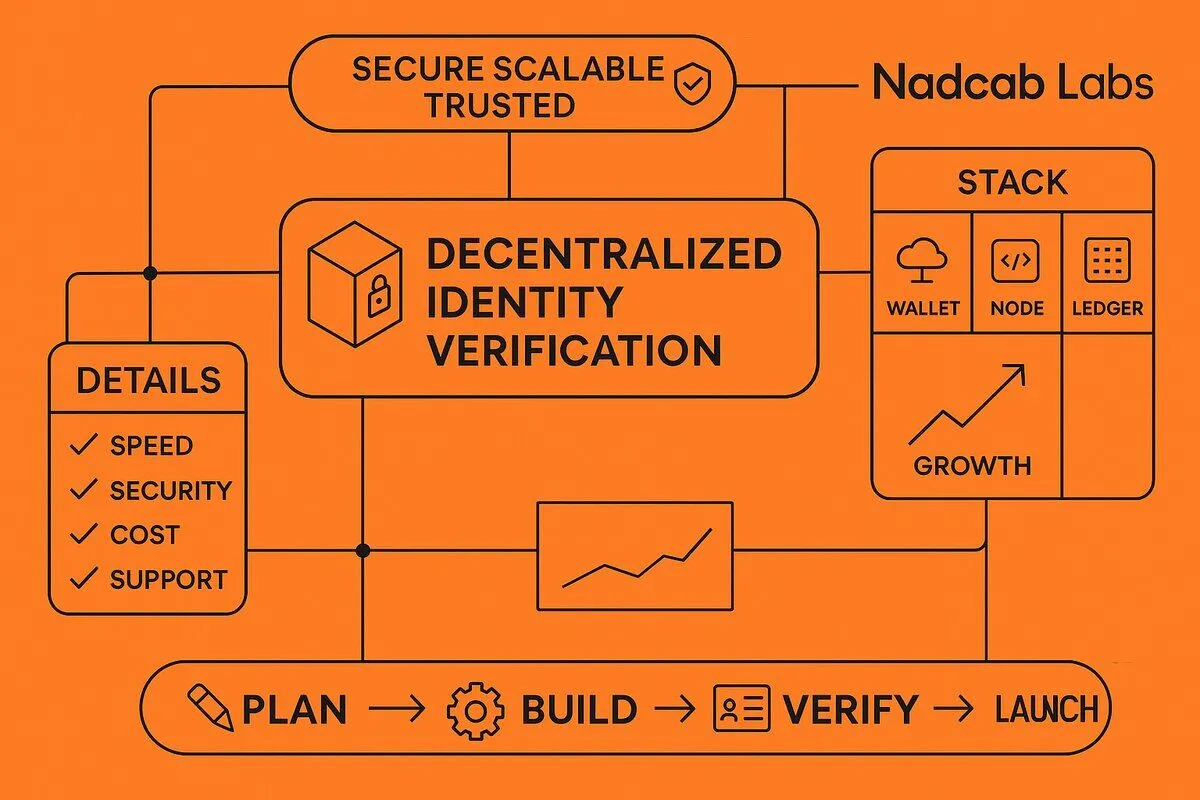
A robust decentralized identity verification architecture consists of three foundational layers that work together to enable self-sovereign identity. The DID registry layer anchors unique identifiers on blockchain networks, ensuring persistent and tamper-proof identity references. These identifiers exist independently of any centralized authority, allowing users to maintain control even if service providers disappear.
The resolver network translates DIDs into DID documents containing public keys, service endpoints, and authentication methods. Think of it like DNS for identity — when someone presents a DID, the resolver fetches the current cryptographic material needed to verify claims. Major blockchain platforms like Ethereum, Polygon, and Hyperledger support different DID methods, each optimized for specific use cases.
Verifiable credential issuance modules handle the creation and signing of digital credentials by trusted issuers. A university might issue a degree credential, a government might issue a passport credential, and an employer might issue an employment verification credential. Each credential contains cryptographic proofs that allow anyone to verify authenticity without contacting the issuer. The verification module checks these proofs against the issuer’s public key retrieved from their DID document.
The trust framework layer establishes which issuers are authoritative for specific credential types. Credential schema registries define standard formats for common credentials like age verification, professional licenses, or financial attestations. Issuer reputation systems help verifiers determine which credentials to trust, similar to how certificate authorities work in traditional PKI but without centralized control points. This architectural separation enables Decentralized Identity Wallet applications to manage credentials across multiple issuers and verifiers seamlessly.
How Do You Design the Identity Data Storage Layer for Privacy and Sovereignty?
The storage architecture must prioritize user control while maintaining data availability for verification. Off-chain encrypted storage solutions like IPFS provide content-addressed storage where credential data lives outside the blockchain, reducing costs and improving privacy. Ceramic Network offers mutable data streams anchored to blockchain state, enabling users to update their data while maintaining cryptographic proof of ownership.
Personal data vaults give users complete control over their identity information. These encrypted containers store raw credentials, with the user’s private key as the only decryption mechanism. When a verifier requests proof of age, the vault doesn’t expose the birthdate — instead, it generates a cryptographic proof that the user is over 18 without revealing the actual date. This selective disclosure mechanism fundamentally changes the privacy model compared to traditional systems that demand full data access.
Zero-knowledge proofs enable verification without data exposure. A user can prove they have sufficient income for a loan without revealing their exact salary, or prove they’re a citizen of a specific country without showing their passport number. The verification logic confirms the proof’s validity against the issuer’s signature, but the verifier never sees the underlying data. This pattern is crucial for KYC in DeFi applications where regulatory compliance must coexist with privacy.
| Storage Solution | Privacy Level | Cost per 1000 Credentials | Best Use Case |
|---|---|---|---|
| IPFS with Encryption | High (user-encrypted) | $2-5 | Large documents, diplomas |
| Ceramic Network | High (mutable streams) | $8-12 | Dynamic profiles, social graphs |
| On-chain Hash Only | Maximum (no data stored) | $15-40 | High-value credentials, licenses |
| Personal Data Vault | Maximum (local control) | $0 (self-hosted) | Sensitive health, financial data |
Consent management systems track which verifiers have accessed which credentials and when. Users can revoke access at any time, and the architecture must enforce these revocations across all integrated systems. This capability transforms identity from a static data dump into a dynamic, user-controlled relationship.
Which Protocols and Standards Should Your Architecture Implement?
W3C DID specification compliance forms the foundation of interoperable decentralized identity verification architecture. The specification defines how DIDs are structured, how DID documents are formatted, and how different DID methods can coexist. Your architecture should support multiple DID methods — did:ethr for Ethereum-based identities, did:web for domain-based identities, and did:key for simple cryptographic identities without blockchain dependencies.
Each blockchain platform requires a method-specific implementation. Ethereum DIDs anchor to smart contracts that store DID document updates, while Hyperledger Indy uses a dedicated identity ledger. The resolver infrastructure must understand these differences and retrieve the correct DID document regardless of method. This is similar to how web browsers handle different protocols (HTTP, FTP, WebSocket) through a unified interface.
The Verifiable Credentials Data Model standardizes how credentials are issued, presented, and verified. Credentials can be encoded as JSON-LD for semantic interoperability or as JWT for simpler integration with existing systems. Both formats support the same cryptographic proof mechanisms, but JSON-LD enables richer queries and automated reasoning about credential relationships. A Decentralized Identity system might use JSON-LD for complex professional credentials while using JWT for simple age verification.
Credential Verification Process Flow
Specifies required credential type and attributes
Selective disclosure with ZK proofs
Retrieves issuer’s public key
Validates signature and proofs
DIDComm messaging protocol enables secure peer-to-peer communication between identity holders and verifiers. Instead of relying on centralized servers, DIDComm uses the service endpoints in DID documents to establish encrypted communication channels. This allows a university to send a credential directly to a graduate’s wallet, or an employer to request verification directly from an applicant without intermediaries. The protocol supports both synchronous request-response patterns and asynchronous message delivery.
How Can You Integrate Verification Logic with Smart Contracts and dApps?
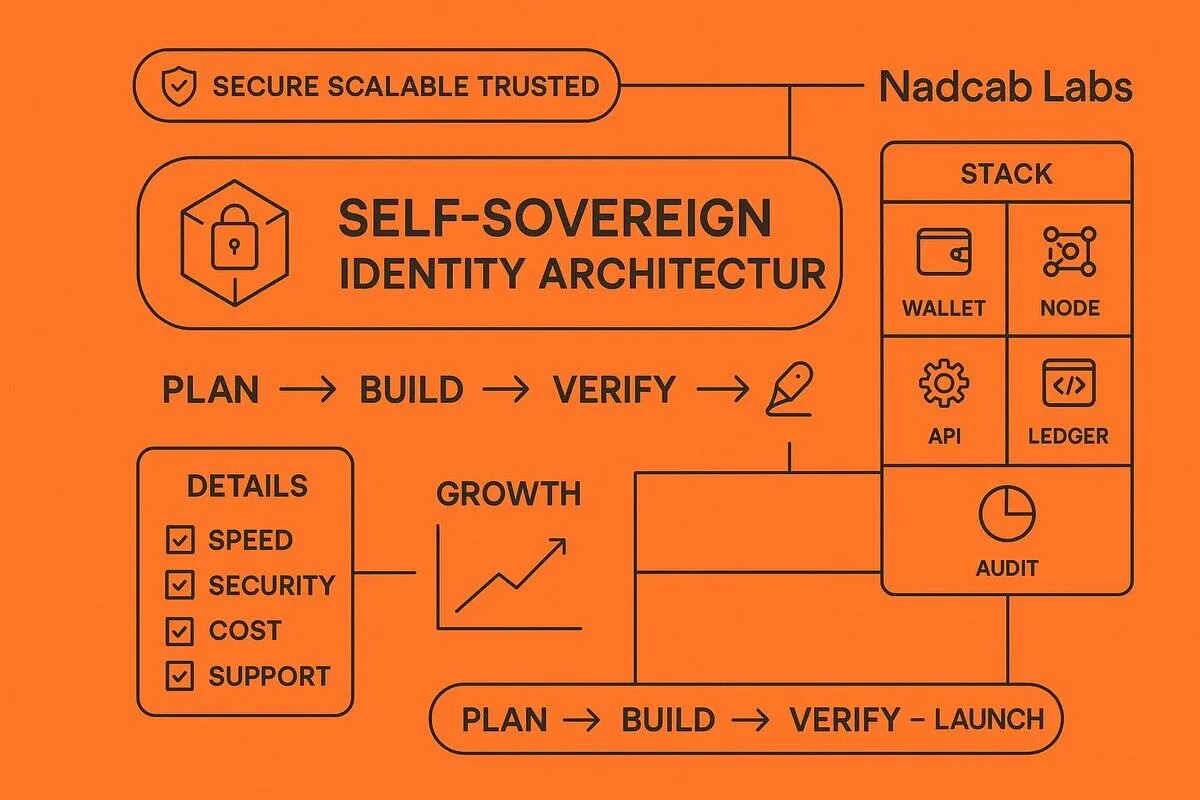
On-chain verification modules anchor credential hashes to blockchain state without exposing personal data. When an issuer creates a credential, they compute a hash of the credential content and record it in a smart contract along with the issuance timestamp and revocation status. Verifiers can check this hash to confirm the credential hasn’t been tampered with and hasn’t been revoked, all without the blockchain ever seeing the actual credential data. This pattern is essential for Decentralized Identity in dApp authentication flows.
Oracle integration patterns bridge off-chain identity proofs to blockchain state. A DeFi protocol might require proof of accredited investor status before allowing certain trades. The user generates a zero-knowledge proof off-chain, submits it to a trusted oracle network, and the oracle verifies the proof before writing a simple boolean flag to the smart contract. This keeps sensitive identity data off-chain while enabling on-chain access control. Similar patterns appear in DeFi Execution Layer Architecture where compliance checks must happen before transaction execution.
API gateway design provides seamless dApp authentication with wallet-based identity flows. When a user connects their wallet to a dApp, the gateway requests a verifiable presentation proving specific attributes. The wallet generates the presentation, the gateway verifies it against the issuer’s DID, and then issues a session token for the dApp. This flow works similarly to OAuth but without centralized identity providers — the user’s wallet becomes their identity provider.
Smart contract integration must handle credential revocation gracefully. A simple implementation stores a merkle root of all valid credentials, updated periodically by the issuer. Verifiers prove a credential is in the valid set using a merkle proof, which is gas-efficient even for millions of credentials. More sophisticated systems use accumulator-based revocation where adding or removing credentials requires minimal on-chain updates. This becomes critical when building systems comparable to Decentralized Exchange platforms where user verification must happen at transaction speed.
What Security and Scalability Patterns Ensure Production-Ready Architecture?
Key management infrastructure represents the most critical security component. Hardware security modules (HSMs) protect root keys for high-value issuers like governments or financial institutions. For individual users, multi-signature schemes and social recovery mechanisms prevent permanent identity loss if a device is lost or a key is compromised. A user might designate three trusted contacts who can collectively help recover access without any single contact having full control.
The recovery process typically involves generating a new key pair and updating the DID document to reference the new keys while revoking the old ones. This update propagates through the resolver network within minutes, ensuring verifiers use the correct keys. The architecture must support key rotation without invalidating previously issued credentials — the credential signature remains valid because it references the DID, not a specific key, and the DID document maintains a history of valid keys with validity periods.
Verification Transaction Throughput by Architecture Pattern
Layer-2 scaling solutions enable high-volume credential issuance and verification. A university issuing 50,000 diplomas can batch them into a single merkle root posted to the main chain, with individual proofs verified off-chain. Optimistic rollups allow credential operations to happen at high speed with periodic settlement to Layer-1 for security. This pattern mirrors Shared liquidity architecture where high-frequency operations happen off-chain with periodic synchronization.
Disaster recovery protocols must address credential backup, migration paths, and interoperability bridges. Users should export their credentials to encrypted backups stored across multiple locations. If a DID method becomes deprecated or a blockchain network fails, migration tools help users transfer their identity to a new system while maintaining credential validity. Interoperability bridges allow credentials issued on one blockchain to be verified on another, preventing vendor lock-in.
Production architectures implement rate limiting, DDoS protection, and monitoring for resolver networks. A popular DID might receive millions of resolution requests per day — caching strategies and content delivery networks distribute this load. Monitoring systems track resolution latency, credential verification success rates, and revocation check failures to identify issues before they impact users. These operational concerns often receive less attention than cryptographic design but determine whether the system works at scale.
The architecture must support graceful degradation when components fail. If the blockchain network experiences congestion, the system should fall back to cached DID documents with appropriate warnings about freshness. If a credential issuer’s DID resolver is temporarily unavailable, verifiers might accept credentials with recent verification timestamps. These fallback mechanisms prevent the entire identity system from failing due to a single component outage, similar to how Blockchain Identity Management systems maintain availability across distributed infrastructure.
Final Thoughts
Building production-ready decentralized identity verification architecture in 2025 requires balancing technical sophistication with practical usability. The core components — DID registries, verifiable credentials, trust frameworks, and privacy-preserving storage — must work together seamlessly while adhering to W3C standards for interoperability. Security patterns like robust key management and social recovery prevent identity loss, while layer-2 scaling solutions enable enterprise-grade throughput. As these systems mature, they’ll fundamentally reshape how individuals control their digital identity across financial services, healthcare, education, and government interactions. The architecture you build today will determine whether users truly own their identity or remain dependent on centralized gatekeepers.
Frequently Asked Questions
Q1.What is the difference between centralized and decentralized identity verification architecture?
Centralized identity verification stores user credentials in single databases controlled by organizations, creating security risks and privacy concerns. Decentralized identity verification architecture distributes identity data across blockchain networks, giving users control over their credentials through self-sovereign identity. Users manage private keys and selectively share verified attributes without intermediaries, eliminating single points of failure and reducing data breach risks.
Q2.How do DID resolvers work in a decentralized identity system?
DID resolvers translate decentralized identifiers into DID documents containing public keys, authentication methods, and service endpoints. When a verifier receives a DID, the resolver queries the appropriate blockchain or distributed ledger to retrieve the associated DID document. This enables cryptographic verification of credentials and identity claims without contacting centralized authorities, maintaining privacy while ensuring authenticity through blockchain-anchored records.
Q3.Can decentralized identity verification architecture comply with KYC and AML regulations?
Yes, decentralized identity systems can meet KYC and AML requirements through verifiable credentials issued by trusted entities like government agencies or licensed verifiers. Users store credentials in digital wallets and present cryptographic proofs to regulated institutions. Zero-knowledge proofs enable compliance verification without exposing unnecessary personal data, while audit trails on blockchain provide regulatory transparency and immutable verification records for compliance purposes.
Q4.What are the best blockchain platforms for building identity verification infrastructure?
Hyperledger Indy and Sovrin are purpose-built for decentralized identity with native DID support. Ethereum offers robust smart contract capabilities and widespread adoption for credential verification. Polygon provides scalability and lower costs for high-volume identity operations. Cardano emphasizes formal verification and security for sensitive identity data. The choice depends on requirements for throughput, privacy features, interoperability standards, and regulatory compliance needs.
Q5.How do zero-knowledge proofs enhance privacy in identity verification systems?
Zero-knowledge proofs allow users to prove specific attributes without revealing underlying data. For example, proving age over 18 without disclosing birthdate, or confirming creditworthiness without exposing financial details. This cryptographic technique enables selective disclosure, minimizing data exposure while maintaining verification integrity. Users retain control over personal information, verifiers gain necessary assurance, and privacy risks decrease significantly compared to traditional full-disclosure verification methods.
Q6.What are the main challenges when scaling decentralized identity architecture for enterprise use?
Key challenges include blockchain throughput limitations for high-volume verification requests, interoperability between different DID methods and legacy systems, and user experience complexity in key management. Enterprises face integration costs with existing infrastructure, regulatory uncertainty across jurisdictions, and credential revocation mechanisms. Recovery procedures for lost keys, standardization across industry verticals, and achieving network effects for widespread adoption remain significant obstacles requiring careful architectural planning.
Explore Services
Related Services
Reviewed by

Aman Vaths
Founder of Nadcab Labs
Aman Vaths is the Founder & CTO of Nadcab Labs, a global digital engineering company delivering enterprise-grade solutions across AI, Web3, Blockchain, Big Data, Cloud, Cybersecurity, and Modern Application Development. With deep technical leadership and product innovation experience, Aman has positioned Nadcab Labs as one of the most advanced engineering companies driving the next era of intelligent, secure, and scalable software systems. Under his leadership, Nadcab Labs has built 2,000+ global projects across sectors including fintech, banking, healthcare, real estate, logistics, gaming, manufacturing, and next-generation DePIN networks. Aman’s strength lies in architecting high-performance systems, end-to-end platform engineering, and designing enterprise solutions that operate at global scale.