Ai Overview
A market order in crypto trading is an instruction to buy or sell a cryptocurrency immediately at the best available price in the market. Current BTC price- $30,000 You place a buy limit order at $29,500 for 2 BTC. Example- You place a limit order to buy 10 BTC at $30,000. The order book only has 6 BTC available at $30,000 and 2 BTC at $30,050.
Key Takeaways
- Market orders execute instantly at the current market price and focus on speed over price accuracy.
- Limit orders allow traders to set an exact buy or sell price but may not execute immediately.
- Partial orders happen when only part of a large order can be filled due to limited liquidity.
- Stop-loss and stop-limit orders help reduce risk by triggering trades at predefined prices.
- Immediate-or-Cancel orders execute instantly and cancel any unfilled portion.
- Fill-or-Kill orders execute fully at once or do not execute at all.
- Good-Til-Canceled orders stay active until filled or manually canceled.
- One-Cancels-Other orders link two orders so only one can execute.
- Iceberg orders hide large trade sizes by executing in smaller portions.
- The right order type depends on speed needs, price control, and market conditions.
What Is a Market Order in Crypto Trading?
A market order in crypto trading is an instruction to buy or sell a cryptocurrency immediately at the best available price in the market. Instead of choosing a specific price, the trader focuses on instant execution, allowing the exchange to match the order with existing buy or sell orders in the order book.
Market orders are commonly used when speed matters more than price accuracy, such as during fast market movements or when trading highly liquid cryptocurrencies like Bitcoin (BTC) and Ethereum (ETH).
Because market orders remove existing liquidity from the order book, they are classified as taker orders, and most crypto exchanges charge slightly higher trading fees for them compared to limit orders.
How Does a Market Order Work in Crypto Trading?
When a trader places a market order, the exchange does not wait for a specific price. Instead, it instantly matches the order with the best available prices already listed in the order book.
Step-by-Step Execution Flow
- Order Submission
The trader selects Market Order and enters the quantity (price is not required). - Balance Verification
The exchange checks whether the trader has sufficient funds in the base or quote currency. - Matching Engine Processing
The order is routed directly to the matching engine, which:- Sweeps the opposite side of the order book
- Executes trades starting from the best available price
- Follows FIFO (First-In, First-Out) within each price level
4.Order Completion
The order fills instantly if liquidity is sufficient
Partial fills may occur if liquidity is limited
A market order never sits in the order book. Once placed, it is either executed immediately or partially filled based on available liquidity.
Market Order Price Discovery & Slippage
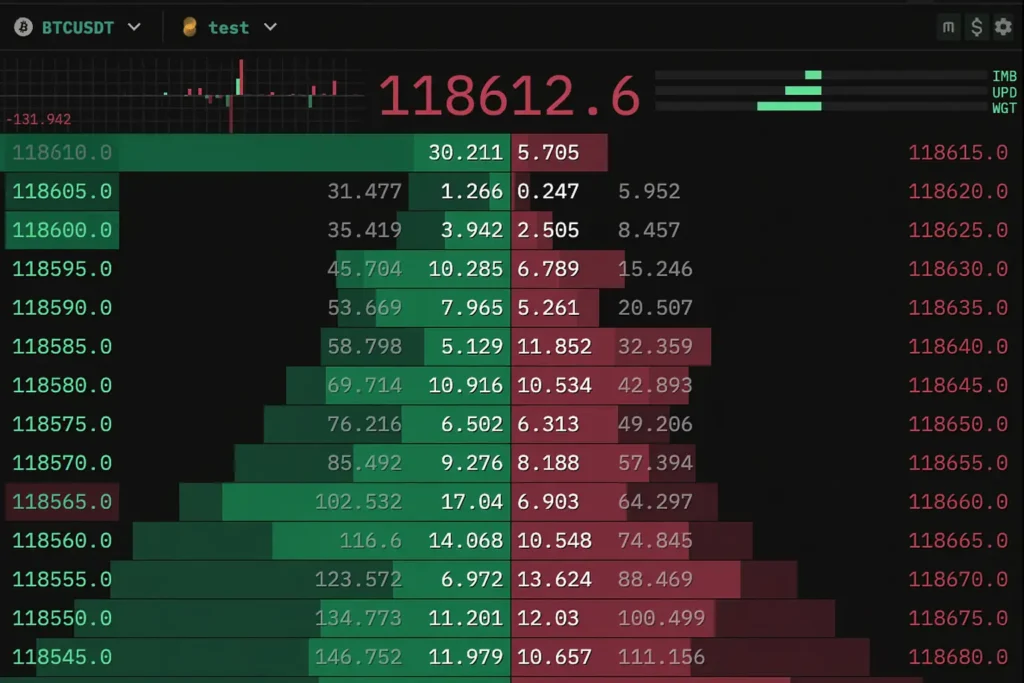
Unlike limit orders, market orders do not guarantee a fixed execution price. The final execution price is calculated as a weighted average of all matched orders across multiple price levels.
Why Slippage Happens
Slippage occurs when-
- The order size is large
- Market liquidity is low
- The market is highly volatile
This means the executed price may be slightly higher (for buys) or lower (for sells) than the price shown at the moment of placing the order.
Market Order Example- High-Liquidity Market
Scenario- Buying BTC in a Liquid Market
You place a market buy order for 2 BTC. The order book shows-
- 1 BTC at $30,000
- 2 BTC at $30,050
- 3 BTC at $30,100
Execution Result
- 1 BTC filled at $30,000
- 1 BTC filled at $30,050
Total Cost- $60,050 Average Price- $30,025
Because liquidity is high, price slippage is minimal, making market orders efficient and reliable.
Market Order Example- Low-Liquidity Market
Scenario- Buying a Low-Volume Altcoin
Order book shows:
- 1 BTC at $10,000
- 2 BTC at $10,200
- 1 BTC at $10,500
You place a market order for 5 BTC.
Execution Result
- Order fills across multiple price levels
- Final average price increases significantly
This demonstrates how market orders can become expensive in thin markets due to slippage.
Pros and Cons of Market Orders in Crypto Trading
Advantages of Market Orders
- Instant execution – ideal for urgent trades
- Simple to use – no price selection needed
- Best for high-liquidity assets like BTC and ETH
- Almost guaranteed execution
Disadvantages of Market Orders
- No price control
- Slippage risk, especially in volatile or illiquid markets
- Higher trading fees (taker fees)
- Not suitable for large orders in thin markets
Market Buy vs Market Sell Orders
- Market Buy Order
Buys crypto at the lowest available selling prices (ask side) - Market Sell Order
Sells crypto at the highest available buying prices (bid side)
In both cases, the order executes immediately by consuming existing liquidity.
When Should You Use a Market Order?
Market orders are best used when:
- You need immediate execution
- Trading high-liquidity cryptocurrencies
- Entering or exiting positions during fast price movements
- Small price differences do not significantly affect profitability
When Should You Avoid Market Orders?
Avoid using market orders when-
- Trading low-liquidity altcoins
- Placing large orders
- Markets are extremely volatile
- You want precise price control
Common Mistakes Traders Make with Market Orders
- Placing market orders during low liquidity hours
- Ignoring order book depth
- Using market orders for large trades
- Trading during news events without slippage protection
What Is a Limit Order in Crypto Trading?
A limit order in crypto trading is an order where a trader sets a specific price at which they want to buy or sell a cryptocurrency. The trade will execute only when the market reaches that exact price or a better one.Unlike market orders, a limit order does not prioritize speed; it focuses on price control and cost efficiency.
A limit order is best for traders who want to-
- Avoid overpaying while buying
- Avoid selling at a lower price than expected
- Reduce slippage in volatile markets
- Pay lower trading fees on crypto exchanges
A limit order gives control, not instant execution.
How Does a Limit Order Work in Crypto Trading?
When you place a limit order, it is added to the exchange order book instead of executing immediately.
- Buy limit order → placed below the current market price
- Sell limit order → placed above the current market price
The order stays open until:
- The market price matches your limit price
- Or you cancel it manually
- Or the order expires (if a time condition is set)
Because limit orders add liquidity to the order book, they are called maker orders, and many crypto exchanges charge lower fees for them.
Limit Order – Order Definition Layer
- Order Type- LIMIT
- Quantity- Mandatory
- Price- User-defined
- Time Condition- Optional (GTC, IOC, FOK)
- Execution- Conditional, not guaranteed
This structure ensures that the trader controls both price and execution conditions.
Limit Order Execution Flow
Once placed, a limit order follows this path-
- The order enters the order book
- Sorted by price priority
- Best price first
- If prices are equal → FIFO (First In, First Out)
- Order waits until a matching opposite order appears
- Partial fills are allowed if liquidity is limited
If no matching order appears, the limit order remains pending.
Price Logic in a Limit Order
- Buy limit → executes at limit price or lower
- Sell limit → executes at limit price or higher
- No slippage beyond the set price
- Execution price is predictable
This makes limit orders extremely useful in volatile crypto markets.
Scenario 1 – Buying Crypto Using a Limit Order
Current BTC price- $30,000 You place a buy limit order at $29,500 for 2 BTC
Order book sellers:
- $30,000
- $30,100
- $30,200
What Happens?
- No seller is ready at $29,500
- Your order stays in the order book
- Price drops later to $29,500
- Your order executes fully at your chosen price
Result-
- You avoided paying a higher price
- You got exact price control
- Execution required patience
Scenario 2 – Selling Crypto Using a Limit Order
Current ETH price- $2,000 You place a sell limit order at $2,100
What Happens?
- Market trades below $2,100
- Order remains open
- When buyers accept $2,100
- Your ETH sells at your target price
This strategy is commonly used for profit booking.
Scenario 3 – Limit Order in a Volatile Market
Price range- $29,500 – $30,500 You place a buy limit at $29,500
- Market moves up rapidly to $30,500
- Price never touches $29,500
- Your order does not execute
Key Point- Limit orders protect price, but execution is not guaranteed.
Pros of Using Limit Orders in Crypto Trading
- Full price control – no overpaying or underselling
- Lower trading fees – maker fee advantage
- Minimal slippage – especially in volatile markets
- Better for strategy trading – entry and exit planning
Cons of Using Limit Orders
- No execution guarantee
- Missed opportunities in fast-moving markets
- Requires planning and patience
- Not ideal when immediate execution is needed
When Should You Use a Limit Order?
Use a limit order in crypto trading when-
- You have a clear target price
- The market is volatile
- You want to reduce fees
- You are trading low-liquidity altcoins
- Precision matters more than speed
When Should You Avoid Limit Orders?
Avoid limit orders when-
- You need instant execution
- The market is moving rapidly due to the news
- Liquidity is extremely high, and speed matters
- You don’t want to miss the trade
Market Order vs Limit Order- Key Differences
| Feature | Market Order | Limit Order |
|---|---|---|
| Execution Speed | Immediate | Delayed until the target price is reached |
| Price Control | Low | High |
| Fees | Taker, usually higher | Maker, usually lower |
| Slippage | Possible | Minimal |
| Execution Guarantee | Almost certain | Not guaranteed |
| Best Use | Highly liquid and fast-moving markets | Volatile and low-liquidity markets |
What is a Partial Order in Crypto Trading?
When a trader places a large market or limit order, the exchange fills the available quantity at the best prices first. The remaining portion of the order stays pending in the order book until it can be matched or canceled. Partial orders help traders manage slippage and avoid overpaying or underselling.
How Do Partial Orders Work?
When a trader places a large market or limit order, the exchange fills the available quantity at the best prices first. The remaining portion of the order stays pending in the order book until it can be matched or canceled. Partial orders help traders manage slippage and avoid overpaying or underselling.
Example- You place a limit order to buy 10 BTC at $30,000. The order book only has 6 BTC available at $30,000 and 2 BTC at $30,050. The first 8 BTC are executed immediately, while the remaining 2 BTC stay pending until sellers match the price.
Why Do Partial Orders Happen?
Partial orders occur mainly due to liquidity limitations. The most common reasons include:
- Low trading volume for a crypto asset
- Large order size compared to available liquidity
- Price restrictions are set in limit orders
- High market volatility is causing rapid price changes
- Order type rules, such as IOC or FOK
How Partial Orders Affect Trading Fees
Partial orders are often filled in multiple executions, which means:
- Each fill may incur a separate trading fee
- Market partial fills are charged as taker fees
- Limit partial fills are usually charged as maker fees
This can slightly increase the overall trading cost, especially for high-frequency traders.
Pros
- Allows immediate execution of the available quantity.
- Helps avoid overpaying or underselling in low-liquidity markets.
- Reduces the risk of order rejection due to insufficient market depth.
Cons
- May result in multiple price fills, complicating average cost calculation.
- The remaining unfilled quantity may remain pending for a long time.
- Can increase monitoring requirements for traders.
Order Types in Crypto Trading
Crypto traders can use advanced order types to manage risk, control execution, and optimize trading strategies. These orders are particularly useful in volatile crypto markets and for high-frequency trading.
What Is a Stop-Loss Order in Crypto Trading?
A stop-loss order in crypto trading is an automated order that helps traders limit losses by selling (or buying) a cryptocurrency when the price reaches a predefined level called the stop price. Its main purpose is risk management, not profit generation.
A stop-loss order protects traders from unexpected market drops by exiting a position automatically, without requiring manual action.
How Does a Stop-Loss Order Work?
A stop-loss order stays inactive until the market price reaches the stop price. Once triggered, it automatically converts into a market order and executes at the best available price.
Step-by-Step Flow-
- The trader sets a stop price
- The market moves toward that price
- The stop price is hit
- Order turns into a market order
- Trade executes immediately
This makes stop-loss orders extremely useful during sudden market drops, high volatility, or emotional trading situations.
Types of Stop-Loss Orders in Crypto
1. Stop-Loss Sell Order
Used when you own crypto and want to limit downside risk.
Example-
- You buy BTC at $60,000
- You set a stop-loss at $57,000
- If BTC falls to $57,000, your BTC is sold automatically
This prevents deeper losses if the market crashes.
2. Stop-Buy Order
Used mainly by breakout traders or short sellers.
Example-
- BTC is trading at $60,000
- You expect strong resistance at $61,000
- You place a stop-buy at $61,100
- When the price breaks upward, your buy order triggers
This helps traders enter strong momentum moves.
Why Stop-Loss Orders Are Important in Crypto Trading
Crypto markets are highly volatile, often moving 5–10% within minutes. A stop-loss order removes emotional decision-making and enforces discipline.
Key Benefits-
- Protects trading capital
- Limits unexpected losses
- Works 24/7 (even when you’re offline)
- Reduces emotional trading mistakes
Stop-Loss Order Example
Scenario- Protecting a Long Position
- You buy 5 ETH at $3,000
- Total investment = $15,000
- You set a stop-loss at $2,850
If ETH drops-
- Stop-loss triggers at $2,850
- Order converts to a market sell
- ETH is sold near that price
- Loss is limited to ~$750 instead of unlimited downside
Without a stop-loss, losses could continue to grow.
Stop-Loss Order vs Stop-Limit Order
| Feature / Aspect | Stop-Loss Order | Stop-Limit Order |
|---|---|---|
| Trigger Price | Stop price triggers a market order | Stop price triggers a limit order |
| Execution Speed | Immediate execution | Executes only if limit price is matched |
| Price Control | Low | High |
| Risk of Missed Execution | Low | High if the market moves too fast |
| Ideal Use | Quick protection of open positions | Precise entry or exit in volatile markets |
What Is a Stop-Limit Order in Crypto Trading?
A stop-limit order in crypto trading is an advanced order type that combines two orders into one: a stop order and a limit order. It allows traders to control when an order is activated and at what price it can be executed.
Unlike a market order, a stop-limit order does not execute instantly. Instead, it waits for a specific stop price to be reached. Once that stop price is hit, the order becomes a limit order, which will only execute at the limit price or better.
This order type is mainly used to manage risk, avoid slippage, and control execution price, especially in volatile crypto markets.
How Does a Stop-Limit Order Work in Crypto?
A stop-limit order works in two clear steps-
Step 1- Stop Price Trigger
The trade stays inactive until the market reaches your stop price. This stop price acts as an activation trigger, not the execution price.
Step 2- Limit Order Placement
Once the stop price is hit:
- The exchange automatically places a limit order
- The trade executes only at your limit price or better
- If the price moves too fast and skips your limit price, the order will not fill
This structure gives traders price protection, but execution is not guaranteed.
Key Components of a Stop-Limit Order
A stop-limit order has three important elements:
- Stop Price – The price that activates the order
- Limit Price – The exact price at which execution is allowed
- Order Quantity – The amount of crypto to buy or sell
Understanding the difference between stop price vs limit price is critical. Many traders confuse the two, which leads to missed trades.
Example- Stop-Limit Sell Order
You own 1 BTC, currently trading at $60,000, and you want to limit your downside risk.
You set-
- Stop Price- $58,500
- Limit Price- $58,300
What Happens
- BTC drops to $58,500
- Your stop-limit order is activated
- A limit sell order is placed at $58,300
- The order fills only if buyers exist at $58,300 or higher
Outcome
- You avoid selling at an extremely low price
- But if BTC crashes too fast below $58,300, the order may not execute
This shows how stop-limit orders protect price, not execution certainty.
Example- Stop-Limit Buy Order
BTC is trading at $62,000, and you expect a breakout above resistance.
- Stop Price- $62,500
- Limit Price- $62,600
What Happens
- When the price hits $62,500, the order activates
- A limit buy order is placed at $62,600
- The trade executes only within that price range
This strategy helps traders enter breakouts without overpaying.
Why Traders Use Stop-Limit Orders
Stop-limit orders are popular because they offer precision and control.
Main Use Cases
- Risk management and stop-loss protection
- Preventing slippage during volatility
- Controlling entry price during breakouts
- Avoiding panic selling during flash crashes
They are especially useful for altcoins, where price swings are aggressive.
What Is an Immediate-or-Cancel (IOC) Order?
An Immediate-or-Cancel (IOC) order in crypto trading is a type of order that must be executed immediately, either fully or partially, and any unfilled portion is automatically canceled by the exchange.
The primary purpose of an IOC order is speed, with some flexibility. Unlike limit orders that can sit in the order book, an IOC order does not wait. It attempts to fill instantly at the available price levels, and if the full quantity cannot be matched right away, the remaining amount is canceled.
IOC orders are commonly used by active traders, institutions, and algorithmic trading systems that want fast execution without leaving open orders in the market.
How Does an IOC Order Work in Crypto Trading?
When a trader places an IOC order, the exchange follows a strict execution rule-
- The order is sent to the matching engine.
- The system immediately checks available liquidity in the order book.
- The order fills as much quantity as possible instantly.
- Any portion that cannot be filled right away is canceled automatically.
- The order never rests in the order book.
IOC orders can be placed as buy or sell orders, and they usually work with limit prices to control execution levels.
Because IOC orders consume existing liquidity, they are treated as taker orders on most crypto exchanges.
How an IOC Order Executes
Example 1- IOC Buy Order
You place an IOC buy order for 5 BTC at $30,000.
Order book shows-
- 2 BTC available at $30,000
- 1 BTC available at $30,010
Execution result-
- 2 BTC filled at $30,000
- 1 BTC filled at $30,010
- Remaining 2 BTC → automatically canceled
Example 2- IOC Sell Order
You place an IOC sell order for 2 BTC at $30,500, but buyers are only willing to pay up to $30,300.
Execution result-
- No immediate match
- The entire order is canceled instantly
This protects you from selling at an unfavorable price.
What Is a Fill-Or-Kill (FOK) Order in Crypto Trading?
A Fill-Or-Kill (FOK) order in crypto trading is a special order type that must be executed immediately and in full, or else it is automatically canceled by the exchange. If the entire order quantity cannot be filled at once at the specified price (or better), nothing is executed.
Unlike standard market or limit orders, a FOK order does not allow partial fills and does not stay in the order book. It is designed for traders who need certainty, speed, and complete execution without price compromise.
Key Definition (Simple Explanation)
- Fill → The entire order quantity must be executed
- Or Kill → If full execution is not possible instantly, the order is canceled
- No partial execution
- No waiting in the order book
This makes FOK orders ideal for large-volume trades, institutional strategies, and high-precision trading.
How Does a Fill-Or-Kill (FOK) Order Work?
When a trader submits a FOK order, the exchange follows a strict process-
- The system checks the order book instantly
- It verifies whether the full quantity is available
- The price must match the trader’s specified limit price or better
- If 100% of the order can be filled immediately, execution happens
- If even a small portion cannot be filled, the entire order is canceled
Flow of a FOK Order
1. Order Definition Layer
- Order Type- FILL_OR_KILL
- Quantity- Mandatory
- Price- Mandatory (limit price)
- Time-in-Force- FOK
2. Ingestion & Validation
- Balance availability check
- Order size validation
- Price compliance check
- Timestamp generation
3. Matching Engine Logic
- Instant scan of the opposite side order book
- Checks cumulative liquidity at or better than the limit price
- All-or-nothing execution rule
- FIFO applied within price levels
4. Execution Decision
- Full liquidity available → Order executed completely
- Liquidity insufficient → Order canceled immediately
5. Post-Execution Behavior
- No resting in the order book
- No partial fills recorded
- No market impact beyond the executed trade
Example- Buy FOK Order in Crypto Trading
Scenario- Buying BTC Using a FOK Order
You want to buy 5 BTC using a Fill-Or-Kill order with a limit price of $61,000.
Order Book Snapshot (Sell Side)-
- 2 BTC at $60,990
- 2 BTC at $61,000
- 1 BTC at $61,010
What Happens?
- Only 4 BTC are available at $61,000 or better
- The full 5 BTC requirement is not met
- Result → Order is canceled
- No BTC is purchased
Even though most of the order could be filled, FOK rules reject partial execution.
Example- Successful FOK Execution
Sell Side Order Book-
- 3 BTC at $60,980
- 2 BTC at $60,990
Your FOK Buy Order-
- Quantity- 5 BTC
- Limit Price- $61,000
Result-
- The entire 5 BTC is available instantly
- Order executes fully
- Average execution price calculated
- Trade completes successfully
What Is a Good-Til-Canceled (GTC) Order in Crypto Trading?
A Good-Til-Canceled (GTC) order is a type of trading order that remains active in the order book until it is either fully executed or manually canceled by the trader. Unlike time-limited orders, a GTC order does not expire at the end of the day or after a fixed period.
In crypto trading, GTC orders are most commonly used with limit orders, allowing traders to set a specific buy or sell price and wait patiently for the market to reach that level. This makes GTC orders ideal for traders who prioritize price control over immediate execution.
Simply put, a GTC order stays open “as long as it takes” unless you cancel it yourself.
How Does a Good-Til-Canceled (GTC) Order Work?
When a trader places a GTC order, the exchange adds it to the order book, where it waits to be matched with an opposing order at the specified price.
Here’s how the process works step by step-
- The trader sets a limit price and quantity.
- The order is submitted with a GTC time condition.
- The order remains live in the order book indefinitely.
- If the market price reaches the specified level, the order is executed.
- If liquidity is insufficient, the order may be partially filled and remain open for the rest.
- The order stays active until-
- It is filled, or
- The trader manually cancels it.
There is no automatic expiration, which is what makes a GTC order different from other time-based orders.
Example- How a GTC Order Works in Real Trading
Scenario 1- Buying Crypto with a GTC Order
Suppose Bitcoin (BTC) is trading at $42,000, and you believe the price may drop before moving higher.
You place a limit buy order–
- Buy BTC at $40,000
- Order type: Good-Til-Canceled (GTC)
What happens next:
- The order sits in the order book at $40,000.
- If BTC drops to $40,000 days or even weeks later, your order executes.
- If BTC never reaches that price, the order stays open until you cancel it.
This allows you to wait for your preferred price without constantly monitoring the market.
Scenario 2- Selling Crypto Using a GTC Order
Assume Ethereum (ETH) is trading at $2,300, and you want to sell only if the price reaches $2,600.
You place-
- Limit sell order at $2,600
- Time condition: GTC
Your order-
- Remains active in the order book
- Executes automatically when ETH hits $2,600
- Helps you lock in profits without emotional trading
Explore Crypto Order Types to Enhance Your Trading Experience
Transform Your Crypto Trading Vision into a Fully Functional Exchange
What Is a One Cancels Other (OCO) Order in Crypto Trading?
A One Cancels Other (OCO) order in crypto trading is an advanced order type that combines two conditional orders into a single setup. When one order is executed, the other order is automatically canceled by the exchange.
OCO orders are mainly used for risk management and profit protection, allowing traders to define both upside and downside outcomes in advance. This means you can lock profits and limit losses at the same time without constantly watching the market.
How Does an OCO Order Work?
An OCO order works by linking two orders together, usually:
- One limit order (to take profit)
- One stop-limit or stop-loss order (to limit loss)
Both orders are placed at the same time, but only one can be executed. As soon as one order is filled, the system automatically cancels the other order, preventing double execution.
Core Logic of an OCO Order
- Two orders are active simultaneously
- Only one order can execute
- Execution of of the other
- No manual intervention needed
This makes OCO orders extremely useful in volatile crypto markets, where prices can move quickly.
Types of Orders Used in an OCO Setup
An OCO order is not a standalone order; it is a combination of two orders-
1. Limit Order (Take-Profit Side)
- Executes at a specific favorable price
- Used to lock in profits
- Adds liquidity to the order book
2. Stop-Limit or Stop-Loss Order
- Triggers when the market reaches a certain price
- Protects against unexpected losses
- Acts as a downside safety net
What Is an Iceberg Order in Crypto Trading?
An Iceberg Order in crypto trading is an advanced order type where a large trade is broken into smaller visible parts, while the full order size remains hidden from the public order book. Only a small portion of the total order is displayed at any given time, and once that visible part is filled, the next portion is automatically placed.
Iceberg orders are mainly used by institutional traders, whales, and high-volume investors who want to execute large buy or sell orders without revealing their full position to the market. By hiding the actual order size, iceberg orders help reduce market impact, price slippage, and front-running risk.
How Does an Iceberg Order Work?
An iceberg order works by splitting one large order into multiple smaller limit orders, releasing them step-by-step into the order book.
Step-by-Step Process-
- Trader places a large order (example: buy 100 BTC)
- Trader sets a display size (example: show only 5 BTC)
- Exchange places a visible limit order for 5 BTC
- Once filled, the next 5 BTC is automatically placed
- Process continues until the full 100 BTC is executed or canceled
At no point is the full order size visible to the market.
Common Mistakes Traders Make with Market & Limit Orders
Even experienced crypto traders can slip up with market orders vs limit orders. Here are the most common Mistakes-
Placing Market Orders During Low Liquidity
Mistake– Using market orders when liquidity is thin.Example– Buying 1 BTC at $63,300 could execute at $64,323 due to slippage.Tip– Use market orders only for high-liquidity coins like BTC or ETH to avoid paying more than expected.
Setting Limit Orders Too Far from the Current Price
Mistake– Placing limit orders unrealistically far from the market price.Example– Buying a token at $0.0010 while the current price is $0.0013 — the order may never fill, missing potential gains.Tip– Set realistic limit orders based on recent price trends and volatility.
Ignoring Order Book Depth & Market Volatility
Mistake– Not checking the order book or trading during high volatility.Example– Large orders on low-liquidity altcoins can push prices higher, filling at worse rates.Tip– Always review depth and liquidity, and avoid market orders during fast-moving markets.
When to Use Market Orders vs Limit Orders in Crypto Trading
Choosing between market orders and limit orders in crypto trading depends on your trading strategy, urgency, and the type of cryptocurrency you are dealing with.
Market Orders- When Speed Matters
A market order in crypto is ideal when you need immediate execution at the current market price. This is best for:
- Urgent trades during sudden market moves or news events
- High liquidity cryptocurrencies like BTC, ETH, or USDT, where price slippage is minimal
- Traders prioritize speed over precise pricing, ensuring the order is filled immediately
Key Fact- Market orders consume liquidity from the order book, so they are considered taker orders. While execution is almost guaranteed, the exact price may vary slightly due to slippage, especially in volatile markets or for large trades.
Limit Orders- When Price Control Matters
A limit order in cryptocurrency allows you to set the exact price at which you want to buy or sell. This is perfect for:
- Traders aiming for specific price targets
- Less liquid cryptocurrencies, where market orders could cause excessive slippage
- Minimizing trading fees by acting as a maker order
- Avoiding unwanted price spikes or dips, giving full control over the execution price
Key Fact- Limit orders are not guaranteed to execute if the market never reaches your specified price. However, they protect against overpaying or underselling and can save money on fees compared to market orders.
Frequently Asked Questions
Q1.What is the Difference Between Market Orders and Limit Orders in Crypto Trading?
A market order executes immediately at the current market price, prioritizing speed over price control. A limit order waits for a specific price to be met in the order book, giving traders full control over the price but no guarantee of immediate execution.
Q2.Is a Market Order Better Than a Limit Order in Crypto Trading?
A market order is ideal when speed of execution matters more than the exact price. Traders often use market orders for highly liquid crypto assets like Bitcoin or Ethereum, where small price fluctuations are negligible. Limit orders, on the other hand, prioritize price control but may not execute immediately, making them better for strategic entry or exit points.
Q3.Are Limit Orders Cheaper Than Market Orders?
A limit order provides more control over the price and often includes features like Good-Til-Canceled (GTC) or customized execution, which may make it slightly more complex. However, many crypto exchanges offer free trading for both market and limit orders, so the actual cost difference often comes down to price slippage and taker/maker fees rather than commissions.
Q4.When Should I Use a Market Order Instead of a Limit Order?
Use a market order when you want immediate execution, especially in high-liquidity markets. Market orders are suitable for traders who are less concerned with minor price differences and more focused on entering or exiting a position quickly.
Q5.When Should I Use a Limit Order Instead of a Market Order?
Use a limit order when exact price control is more important than speed. Limit orders are ideal in volatile crypto markets or for less liquid assets, helping traders avoid slippage and pay the price they are comfortable with.
Q6.What is the Key Difference Between Stop Orders and Stop-Limit Orders?
A stop order triggers a market order when a stop price is reached, executing immediately at the best available price. A stop-limit order triggers a limit order at a specified price, giving traders control over the execution price but without a guarantee of immediate fill.
Q7.Why do market orders execute faster than limit orders?
Market orders are matched instantly with existing buy or sell orders in the order book, fulfilling the trade right away. Limit orders wait until the market price reaches your specified level, so execution can be slower or may never happen if the price doesn’t meet your criteria.
Q8.Which order type is best for beginners in crypto trading?
Beginners should start with limit orders to learn price control and avoid slippage. Market orders can be used once traders understand liquidity, volatility, and order book depth.
Explore Services
Related Services
Reviewed by

Aman Vaths
Founder of Nadcab Labs
Aman Vaths is the Founder & CTO of Nadcab Labs, a global digital engineering company delivering enterprise-grade solutions across AI, Web3, Blockchain, Big Data, Cloud, Cybersecurity, and Modern Application Development. With deep technical leadership and product innovation experience, Aman has positioned Nadcab Labs as one of the most advanced engineering companies driving the next era of intelligent, secure, and scalable software systems. Under his leadership, Nadcab Labs has built 2,000+ global projects across sectors including fintech, banking, healthcare, real estate, logistics, gaming, manufacturing, and next-generation DePIN networks. Aman’s strength lies in architecting high-performance systems, end-to-end platform engineering, and designing enterprise solutions that operate at global scale.