Ai Overview
The crypto world moves fast, but not every platform survives. Many exchanges rise quickly, but just as many disappear due to crypto exchange failure, poor planning, or hidden risks. From major crypto exchange collapse cases like FTX to early disasters like Mt. These failures weren’t random; they happened because of real issues like weak crypto exchange security, low crypto exchange liquidity, and poor crypto exchange regulation.
The crypto world moves fast, but not every platform survives. Many exchanges rise quickly, but just as many disappear due to crypto exchange failure, poor planning, or hidden risks.
From major crypto exchange collapse cases like FTX to early disasters like Mt. Gox, the industry has seen how things can go wrong. These failures weren’t random; they happened because of real issues like weak crypto exchange security, low crypto exchange liquidity, and poor crypto exchange regulation.
So, why crypto exchanges fail again and again? And more importantly, how can you avoid the same mistakes?
In this blog, we break down the biggest lessons from failed crypto exchanges to the real crypto exchange risks, and what you can do to build something stronger and safer.
Key Takeaways
- ◆Most crypto exchange failure cases happen due to poor planning, not bad luck.
- ◆Weak crypto exchange security and frequent crypto exchange hacks destroy user trust instantly.
- ◆Low crypto exchange liquidity makes platforms feel “dead” and pushes users away.
- ◆Ignoring crypto exchange regulation can lead to shutdowns and legal trouble.
- ◆High fees and bad user experience increase the chances of crypto exchange default.
- ◆Studying failed crypto exchanges helps you understand real exchange shutdown reasons.
- ◆The key to success? Focus on security, liquidity, compliance, and user trust from day one.
Understanding Cryptocurrency Exchanges
Before we talk about crypto exchange failure, let’s first understand what a cryptocurrency exchange actually is.
A cryptocurrency exchange is a platform where people can buy, sell, and trade digital assets like Bitcoin, Ethereum, and other coins. Think of it like a stock market, but for crypto.
Some popular exchanges like Binance and Coinbase handle millions of transactions every day. But not every exchange reaches that level, many face serious crypto exchange risks and eventually shut down.
Why Crypto Exchanges Fail?
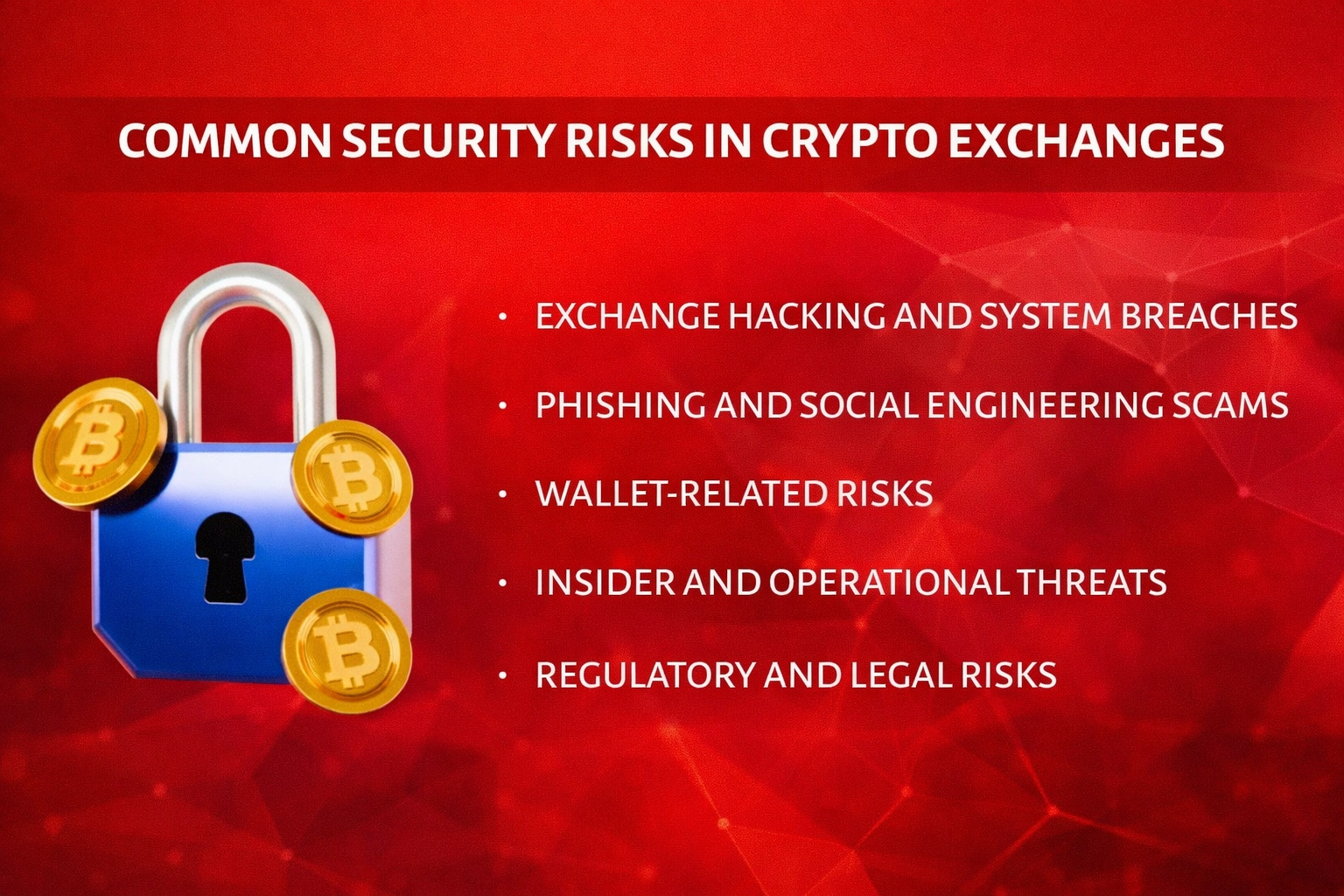
A crypto exchange failure happens when a cryptocurrency platform can no longer operate properly and is forced to shut down, freeze user funds, or stop withdrawals. Many crypto platforms don’t fail because crypto is bad; they fail because of poor decisions. A common reason behind crypto exchange failure is weak crypto exchange security, which makes platforms easy targets for crypto exchange hacks. Once user funds are at risk, trust disappears instantly. Another major issue is low crypto exchange liquidity; when there are not enough buyers and sellers, the platform feels inactive, and users quickly move away. Ignoring crypto exchange regulation is also a big mistake, as legal issues can lead to sudden shutdowns. On top of that, high fees, poor user experience, and lack of proper planning often push platforms toward crypto exchange default. In simple terms, most failures happen because exchanges are not built with the right strategy, security, and long-term vision.
Common Risks Behind Crypto Exchange Failure
Running a crypto exchange is not just about launching a platform; it’s about managing risks every single day. Most crypto exchange failure cases happen because these risks are ignored or handled too late.
Let’s break down the biggest crypto exchange risks you should never overlook
Security Failures & Crypto Exchange Hacks
Weak security is the fastest way to lose everything. One small loophole can lead to massive crypto exchange hacks, and once funds are gone, trust is gone too. Many failed crypto exchanges collapsed because they didn’t invest in strong crypto exchange security from the start.
Low Liquidity Problems
No liquidity = no trading.
If your platform doesn’t have enough buyers and sellers, users simply leave. Poor crypto exchange liquidity makes the exchange feel inactive and unreliable.
Regulatory & Compliance Issues
Ignoring crypto exchange regulation can shut down your business overnight. Many exchanges failed because they didn’t follow KYC/AML rules or operated in restricted regions.
Poor Fee Structure & Financial Planning
High fees might look profitable at first, but they push users away. Research shows that exchanges with high withdrawal fees have a higher chance of crypto exchange default.
Lack of Trust & Bad User Experience
If users don’t trust your platform, they won’t stay. Low ratings, slow support, and poor interface are silent killers behind many crypto exchange collapse cases.
Weak Infrastructure & Performance Issues
When traffic spikes, weak systems crash. Slow platforms, failed trades, and downtime increase crypto exchange risks and lead to user frustration.
Real Case Studies of Failed Crypto Exchanges
Talking about crypto exchange failure is one thing, but real stories hit harder. These failed crypto exchanges show exactly what can go wrong and why.
Let’s look at some famous crypto exchange collapse case study examples
FTX
FTX was once one of the biggest names in crypto. But behind the scenes, things were falling apart.
What went wrong?
- Misuse of user funds
- Poor financial management
- Lack of transparency
This massive crypto exchange collapse shocked the entire industry and proved that even big platforms can fail.
Mt. Gox
One of the earliest and most famous crypto exchange hacks in history.
What went wrong?
- Weak crypto exchange security
- Hackers stole huge amounts of Bitcoin
- Poor system control
It led to one of the biggest crypto exchange failure events ever.
QuadrigaCX
This case is both shocking and unusual.
What went wrong?
- CEO was the only person with wallet access
- No backup system
- Funds became inaccessible after his death
This crypto exchange collapse showed the danger of poor internal control.
Hidden Factors Most Companies Ignore
Not every crypto exchange failure happens because of big mistakes. Sometimes, it’s the small, ignored details that slowly lead to a crypto exchange collapse. Let’s uncover the hidden crypto exchange risks that many companies miss
Limited Coin Listings
If your exchange offers only a few coins, users lose interest fast.
Research shows that platforms with fewer trading options face a higher chance of cryptocurrency exchange failure.
High Withdrawal Fees
High fees may look profitable at first, but they quietly push users away.
Many failed crypto exchanges had one thing in common: expensive withdrawals, leading to low trust and eventually crypto exchange default.
No Referral or Growth Strategy
Growth doesn’t happen on its own. Exchanges without referral programs or marketing strategies struggle to attract users and often face early crypto exchange failure.
Low Ratings & Poor Reputation
Users always check reviews before trusting a platform.
Low ratings signal poor service, weak crypto exchange security, or bad user experience, all leading to higher crypto exchange risks.
Lack of Certification & Audits
No audits = no trust.
Platforms that skip security checks, certifications, or proof of reserves are more likely to face crypto exchange collapse.
Ignoring Scalability & Infrastructure
Some exchanges work fine at the start, but crash when users grow.
Weak systems can’t handle load, leading to downtime, failed trades, and eventual exchange shutdown reasons.
How to Avoid Crypto Exchange Failure
Avoiding crypto exchange failure is not about luck; it’s about making the right decisions from the very beginning. The most successful platforms focus on building strong foundations instead of chasing quick growth. The first step is prioritizing crypto exchange security. Without proper security measures like multi-layer protection, regular audits, and secure wallet systems, even a small vulnerability can lead to major crypto exchange hacks and loss of user trust.
Another key factor is maintaining healthy crypto exchange liquidity. A platform without active trading feels empty, and users quickly move to competitors. Ensuring strong liquidity through market makers and multiple trading pairs keeps the exchange alive and engaging. At the same time, following proper crypto exchange regulation is critical. Ignoring compliance requirements like KYC and AML can result in legal issues or even complete shutdowns, which is a common reason behind many crypto exchange collapse cases.
Equally important is creating a fair and transparent fee structure. High withdrawal or trading fees may generate short-term profit, but they increase the risk of crypto exchange default by driving users away. Along with this, focusing on user trust is essential. A smooth user experience, fast customer support, and positive ratings help reduce overall crypto exchange risks and build long-term loyalty.
Finally, investing in scalable technology and strong infrastructure ensures your platform can handle growth and high trading volumes without crashing. Many failed crypto exchanges didn’t fail because of bad ideas, but because they couldn’t handle real-world demand. In simple terms, if you focus on security, liquidity, compliance, user trust, and scalability from day one, you can avoid most reasons for crypto exchange failure and build a crypto exchange platform that lasts.
Avoid Crypto Exchange Failure with the Right Development Partner
Don’t let common crypto exchange risks hold you back. Build a secure, scalable, and high-performance platform with strong security, liquidity, and compliance features designed for long-term success.
Final Thoughts
The crypto industry is full of opportunities, but it also comes with real challenges. Many platforms have faced crypto exchange failure, not because the idea was bad, but because the basics were ignored. From poor crypto exchange security to low crypto exchange liquidity and weak crypto exchange regulation, the same mistakes keep repeating.
The stories of failed crypto exchanges clearly show that success is not just about launching fast; it’s about building smart. Every crypto exchange collapse teaches an important lesson: trust, transparency, and strong systems matter more than hype.
If you truly understand the crypto exchange risks and plan ahead, you can avoid the common exchange shutdown reasons that have affected so many platforms. Focus on security, compliance, user experience, and scalability, and you’ll be on the right path.
Frequently Asked Questions
Q1.Why do crypto exchanges fail?
There are many reasons why crypto exchanges fail, but the most common ones are poor planning, weak security, low liquidity, and lack of compliance. Many platforms ignore user trust and scalability in the early stages, which later leads to serious problems. Without strong systems and proper risk management, even a good idea can turn into a failure.
Q2.What are the biggest crypto exchange risks?
The biggest crypto exchange risks include security vulnerabilities, low liquidity, regulatory issues, and poor infrastructure. If an exchange cannot handle high traffic or protect user funds, it quickly loses trust. Financial mismanagement and bad user experience also increase the chances of failure.
Q3.How can crypto exchange hacks be prevented?
Preventing crypto exchange hacks requires strong security measures from the start. This includes multi-factor authentication, cold wallet storage, regular security audits, and bug bounty programs. Using advanced encryption and monitoring systems also helps detect threats early and protect user funds.
Q4.What causes a crypto exchange collapse?
A crypto exchange collapse usually happens due to a mix of factors like poor management, lack of transparency, security breaches, and liquidity issues. In some cases, ignoring regulations or misusing user funds also leads to complete shutdowns. Most collapses are avoidable with proper planning and control.
Q5.How to build a secure crypto exchange?
To build a secure crypto exchange, focus on strong crypto exchange security from day one. Use secure architecture, implement KYC/AML compliance, ensure high liquidity, and provide a smooth user experience. Regular audits, scalable infrastructure, and expert development support are also key to long-term success.
Explore Services
Related Services
Reviewed by

Aman Vaths
Founder of Nadcab Labs
Aman Vaths is the Founder & CTO of Nadcab Labs, a global digital engineering company delivering enterprise-grade solutions across AI, Web3, Blockchain, Big Data, Cloud, Cybersecurity, and Modern Application Development. With deep technical leadership and product innovation experience, Aman has positioned Nadcab Labs as one of the most advanced engineering companies driving the next era of intelligent, secure, and scalable software systems. Under his leadership, Nadcab Labs has built 2,000+ global projects across sectors including fintech, banking, healthcare, real estate, logistics, gaming, manufacturing, and next-generation DePIN networks. Aman’s strength lies in architecting high-performance systems, end-to-end platform engineering, and designing enterprise solutions that operate at global scale.