Ai Overview
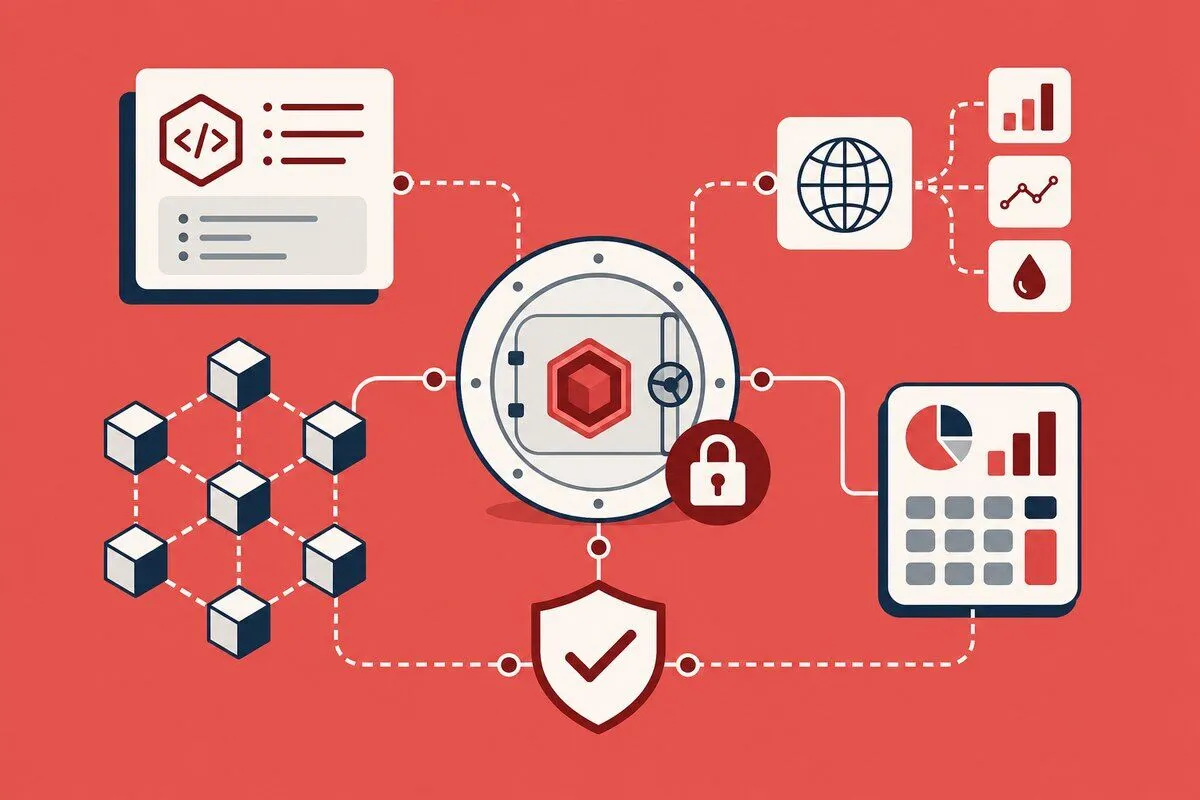
The global real estate sector faces persistent challenges managing fragmented property records across jurisdictional boundaries, with data silos creating inefficiencies costing billions annually in delayed transactions, title disputes, and fraud losses. As real estate tokenization gains traction across major markets, the underlying infrastructure for property data management must evolve beyond legacy systems incapable of supporting digital asset frameworks.
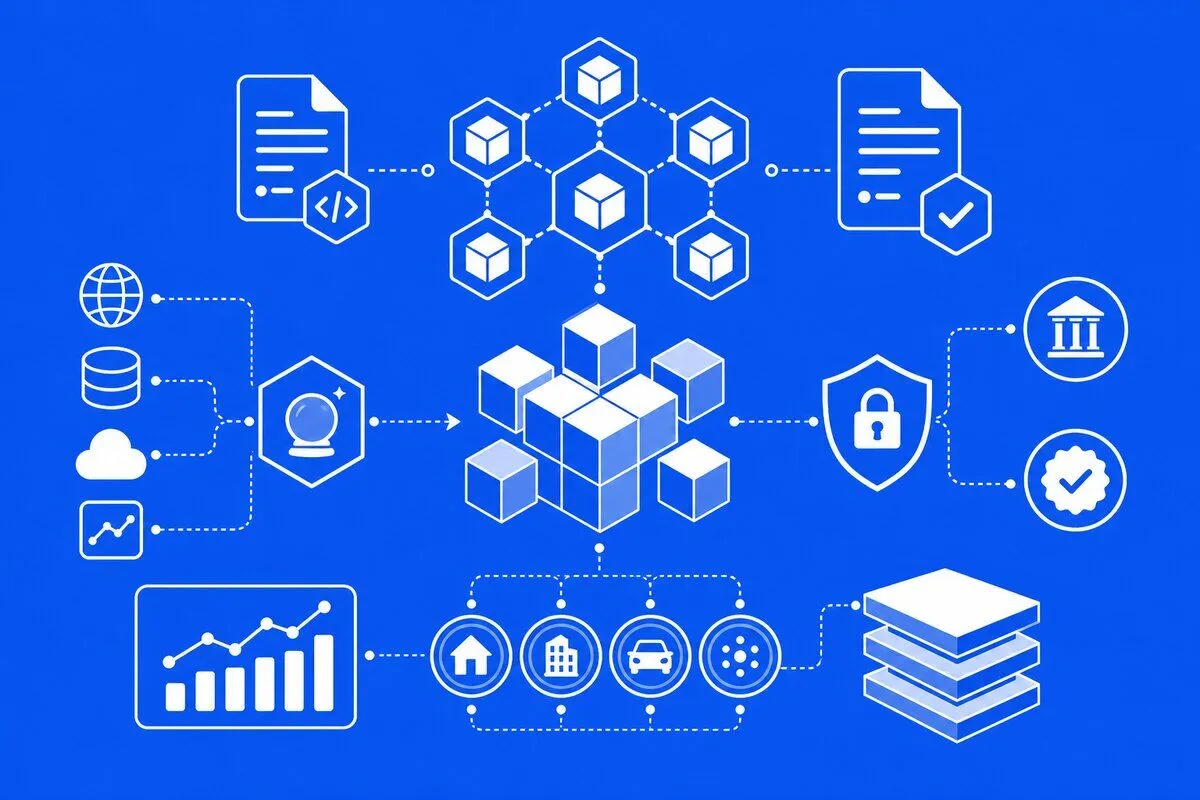
The global real estate sector faces persistent challenges managing fragmented property records across jurisdictional boundaries, with data silos creating inefficiencies costing billions annually in delayed transactions, title disputes, and fraud losses. As real estate tokenization gains traction across major markets, the underlying infrastructure for property data management must evolve beyond legacy systems incapable of supporting digital asset frameworks. Blockchain property data synchronization emerges as the foundational layer enabling trusted, real-time coordination between land registries, financial institutions, legal practitioners, and government agencies. Drawing from over 8 years implementing enterprise Blockchain Property Data solutions across the USA, UK, UAE, and Canadian markets, this comprehensive guide explores the technical architecture, regulatory considerations, and operational strategies required to execute robust property data synchronization systems that meet government-grade security and compliance standards.
Key Takeaways
- Blockchain property data synchronization eliminates data discrepancies between regional land registries by establishing cryptographically verified single sources of truth for property ownership records.
- Permissioned Blockchain Property Data architectures balance transparency requirements with privacy regulations, enabling selective data disclosure while maintaining comprehensive audit trails for government oversight agencies.
- Smart contract governance frameworks automate multi-party validation workflows, reducing property transaction settlement times from weeks to minutes while enforcing regulatory compliance rules programmatically.
- Hybrid on-chain and off-chain data models optimize storage costs and performance by anchoring sensitive documents off-chain while maintaining verifiable hashes and metadata on distributed ledgers.
- Identity and access control systems integrated with national identity schemes ensure only authorized registrars, notaries, and property owners can initiate state-changing transactions within registry networks.
- Cross-border interoperability protocols enable property verification across jurisdictions like the USA, UK, UAE, and Canada through standardized data schemas and bilateral recognition agreements.
- Event-driven synchronization architectures propagate property updates in real-time across distributed nodes, maintaining consistency while accommodating network latency and temporary node unavailability scenarios.
- Zero-knowledge proof implementations preserve transaction privacy for sensitive commercial properties while still enabling regulatory authorities to verify compliance with anti-money laundering requirements.
- Consensus mechanism selection critically impacts system performance, with Byzantine Fault Tolerant protocols preferred over proof-of-work for government registries requiring deterministic finality guarantees.
- Cybersecurity frameworks addressing DDoS attacks, private key compromise scenarios, and insider threats must exceed standards for traditional databases given Blockchain Property Data immutability characteristics preventing easy rollbacks.
Enterprise Blockchain Property Data Compliance in Cross-Registry Land Data Sync
Enterprise Blockchain Property Data compliance for land registry synchronization extends far beyond technical implementation to encompass comprehensive regulatory alignment across multiple legal domains including property law, data protection statutes, electronic signature legislation, and financial crime prevention frameworks. Organizations deploying blockchain property data synchronization systems across jurisdictions must navigate overlapping and sometimes conflicting regulatory requirements while maintaining interoperability between systems operating under different legal regimes. In the USA, compliance considerations span federal E-SIGN Act requirements alongside state-level recording statutes that vary significantly between community property states like California and title theory jurisdictions like Virginia. UK implementations must satisfy Land Registration Act 2002 provisions, Law Society electronic conveyancing standards, and GDPR Article 17 right-to-erasure challenges when dealing with immutable Blockchain Property Data records. UAE systems operating across emirates require coordination between RERA regulations in Dubai, ADDA frameworks in Abu Dhabi, and federal laws governing cross-emirate property transactions. Canadian deployments face provincial variations in Land Titles Acts requiring configurable compliance engines that adapt validation rules based on property jurisdiction while maintaining network-wide consistency.
Compliance-Driven Data Models for Property Title Synchronization
Blockchain property data synchronization requires meticulously designed data models that capture the complex legal relationships, temporal dependencies, and regulatory requirements inherent in property title systems while remaining computationally efficient for distributed ledger storage and validation. The core data structure must represent property parcels through globally unique identifiers compatible with existing cadastral reference systems, legal descriptions conforming to jurisdictional standards, geographic coordinates enabling spatial queries, and ownership chains linking current title holders to historical predecessors through verifiable transaction sequences. Encumbrance records including mortgages, liens, easements, and restrictive covenants require structured representations supporting priority ordering, partial releases, and expiration logic embedded in smart contracts that automatically update property status when temporal or conditional triggers activate. Multi-jurisdictional deployments face additional complexity harmonizing data schemas between systems using different property classification taxonomies, measurement standards converting between imperial and metric systems, and legal terminology that carries jurisdiction-specific meanings requiring careful semantic mapping. The data model must accommodate hybrid on-chain and off-chain storage patterns where high-value metadata including ownership transfers, encumbrance registrations, and title insurance records persist on-chain for immutability and transparency, while bulky supporting documents like surveys, inspection reports, and mortgage agreements remain in off-chain repositories referenced through cryptographic hashes verified during synchronization processes.
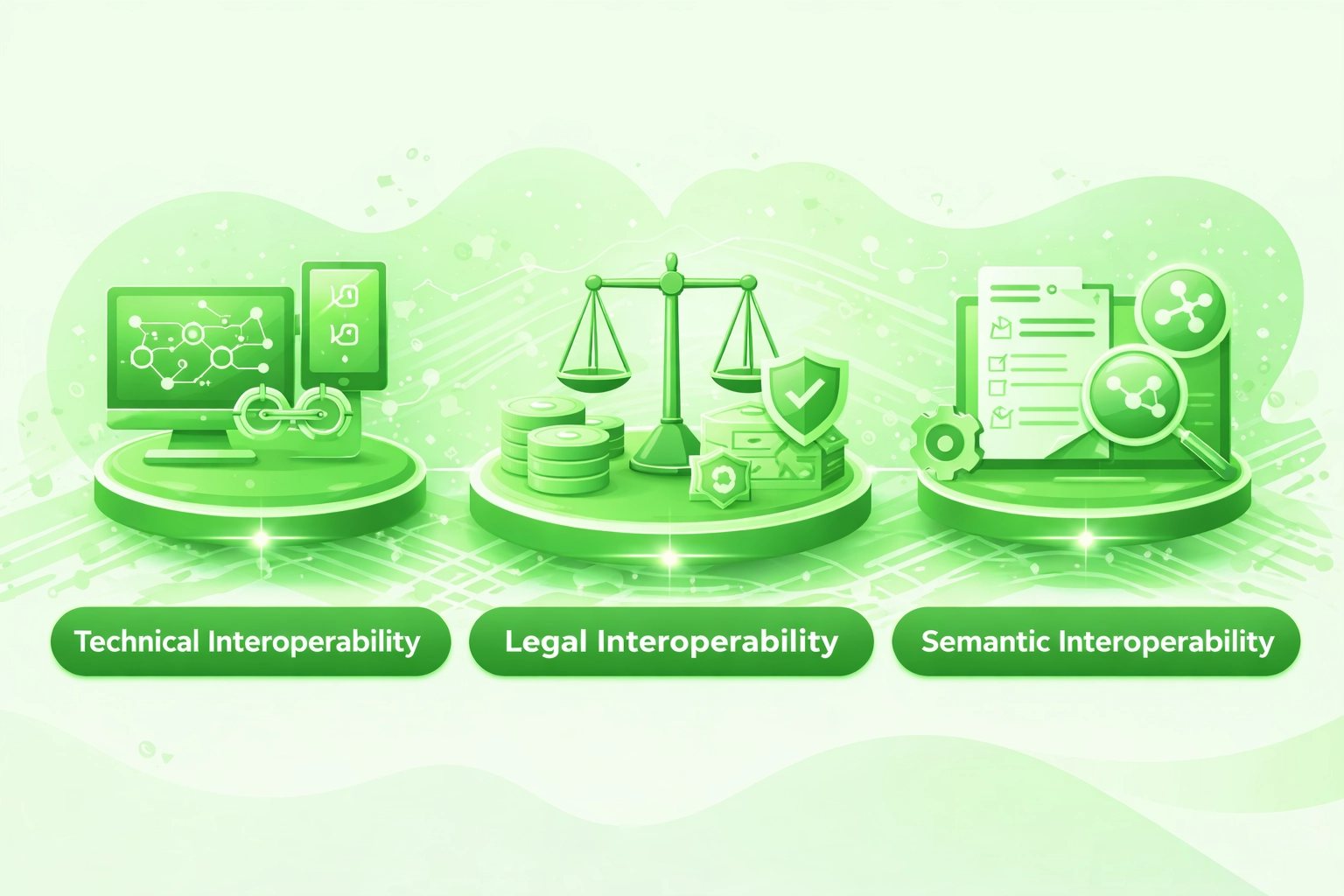 Interoperability Frameworks for Multi-Jurisdiction Registry Systems
Technical Interoperability
- Standardized API specifications enabling cross-chain property queries between incompatible Blockchain Property Data platforms deployed in different jurisdictions
- Bridge protocols facilitating atomic swaps of property tokens and settlement finality across chains using hash time-locked contracts
- Common data exchange formats based on ISO 19152 Land Administration Domain Model adapted for blockchain-specific requirements
Legal Interoperability
- Bilateral recognition agreements between USA, UK, UAE, and Canadian jurisdictions establishing legal validity of cross-border Blockchain Property Data property records
- Conflict-of-law resolution mechanisms embedded in smart contracts determining which jurisdiction’s rules govern multi-jurisdictional property disputes
- Mutual authentication frameworks enabling notaries licensed in one jurisdiction to validate property transactions recorded on foreign registry blockchains
Semantic Interoperability
- Ontology mapping systems translating property rights concepts between common law jurisdictions like Canada and civil law systems in continental Europe
- Controlled vocabulary standards ensuring consistent interpretation of terms like fee simple, leasehold, and encumbrance across linguistic boundaries
- Machine-readable legal templates expressing jurisdiction-specific property rights in formats executable by smart contract validation logic
Smart Contract Governance for Enterprise Blockchain Property Data Compliance
Smart contract governance frameworks for blockchain property data synchronization must balance automated execution efficiency with regulatory oversight requirements, implementing multi-signature approval mechanisms and emergency intervention capabilities that preserve legal authority over distributed systems. The governance model typically establishes a hierarchical approval structure where routine property transfers execute automatically upon satisfying predefined validation criteria including cryptographic signature verification, title chain completeness checks, and encumbrance clearance confirmations, while exceptional transactions involving court-ordered transfers, tax foreclosures, or disputed properties trigger manual review workflows requiring human adjudication before Blockchain Property Data finalization. Governance smart contracts define roles and permissions for different participant classes including master administrators at government agencies authorized to upgrade contract logic, regional registrars permitted to validate transactions within geographic jurisdictions, notaries empowered to attest document authenticity, and auditors granted read-only access for compliance monitoring without transaction initiation rights. Change management protocols require supermajority consensus among governance token holders before implementing contract upgrades, with mandatory comment periods allowing stakeholder feedback and legal review before changes activate. Emergency pause mechanisms enable authorized officials to halt transaction processing when security vulnerabilities emerge or court injunctions demand immediate system suspension, with recovery procedures ensuring paused transactions resume correctly after issue resolution without data loss or double-spend risks.
On-Chain vs Off-Chain Data Storage Comparison
| Data Category | On-Chain Storage | Off-Chain Storage | Rationale |
|---|---|---|---|
| Property Title Ownership | Current owner identity, acquisition timestamp, transaction hash | Historical ownership records beyond 10 years | Recent ownership requires instant verification while old records accessed infrequently |
| Encumbrances and Liens | Active mortgage records, lien amounts, priority sequences | Satisfied liens, discharged mortgages, historical encumbrance documents | Current encumbrances affect title clearance while satisfied obligations archived |
| Legal Descriptions | Cadastral identifiers, geographic coordinates, parcel boundaries | Detailed survey maps, subdivision plats, metes-and-bounds descriptions | Compact identifiers enable efficient queries while large documents stored externally |
| Transaction Records | Transfer timestamps, consideration amounts, parties’ cryptographic identities | Executed deeds, purchase agreements, supporting transaction correspondence | Metadata proves transaction validity while full legal documents hashed for integrity |
| Supporting Documents | Document hashes, file sizes, content-addressable storage references | Title insurance policies, inspection reports, appraisal documents, photographs | Hash verification ensures document integrity without Blockchain Property Data storage cost burden |
On-Chain and Off-Chain Data Reconciliation in Property Records
Hybrid architectures combining on-chain and off-chain data storage optimize Blockchain Property Data property data synchronization systems by balancing immutability requirements against storage cost constraints and performance limitations inherent in distributed ledgers. The reconciliation process maintains cryptographic binding between compact on-chain metadata and comprehensive off-chain document repositories through hash-based verification schemes where content identifiers stored on-chain enable tamper detection for externally stored files. Implementation typically employs InterPlanetary File System (IPFS) or similar content-addressable storage networks where documents receive deterministic identifiers derived from file content, ensuring any modification produces different identifiers that invalidate on-chain references. Smart contracts enforce integrity checks requiring document hash verification before accepting property transactions that reference supporting materials, preventing scenarios where parties submit altered documents post-transaction while blockchain records appear valid. Synchronization protocols implement two-phase commit patterns where off-chain document uploads complete successfully before triggering on-chain state changes, with rollback mechanisms reverting partial transactions if either phase fails. Access control integration ensures off-chain storage systems respect permission settings recorded on-chain, preventing unauthorized document retrieval even when attackers obtain storage network addresses. This architecture enables land registries to maintain complete property histories including bulky multimedia content while keeping blockchain storage requirements manageable and transaction validation computationally feasible.
Identity, Access Control, and Role Segregation in Registry Networks
Robust identity and access control systems form the security foundation for Blockchain Property Data property data synchronization, implementing multi-factor authentication, hardware security module key storage, and granular permission models that enforce separation of duties principles across registry operations. The identity layer typically integrates with national identity schemes including eIDAS in European Union contexts, USA federal PIV credentials for government employees, UAE Pass for emirates residents, and Canadian provincial digital identity frameworks, linking blockchain addresses to verified real-world identities through cryptographic certificates issued by trusted authorities. Role-based access control models define permission hierarchies where land registry administrators possess master keys enabling system configuration changes and emergency interventions, regional registrars hold signing keys authorizing property transactions within geographic jurisdictions, notaries control attestation keys validating document authenticity, and property owners maintain personal keys proving ownership without administrative privileges. Multi-signature schemes require threshold consensus among multiple authorized parties before executing sensitive operations like ownership transfers exceeding value thresholds, encumbrance registrations affecting multiple properties, or administrative corrections to historical records. Attribute-based access control extensions enable fine-grained policies considering contextual factors including time-of-day restrictions limiting transaction processing to business hours, geographic constraints requiring physical presence within jurisdiction for high-value transfers, and transaction velocity limits flagging unusual activity patterns for fraud investigation.
Property Data Synchronization Lifecycle
Initial Property Registration
Legacy property records digitized and migrated to Blockchain Property Data with cryptographic hashing of original documents, establishing genesis blocks for existing properties entering synchronized registry network.
Transaction Initiation
Authorized parties submit property transfer requests with required supporting documentation, triggering smart contract validation workflows checking title chain completeness and encumbrance clearance status.
Multi-Party Validation
Distributed validators including government registrars, notaries, and financial institutions independently verify transaction legitimacy through parallel cryptographic signature checks and compliance rule evaluation.
Consensus Achievement
Byzantine Fault Tolerant consensus protocol coordinates validator nodes, achieving agreement on transaction validity and block inclusion with finality guarantees suitable for legal registry requirements.
State Update Propagation
Confirmed transactions propagate across all network nodes updating distributed property ownership records, with merkle proofs enabling lightweight clients to verify inclusion without full blockchain storage.
Legal Notification
Automated notification systems alert relevant parties including previous owners, lienholders, tax authorities, and adjacent property owners about completed transactions per jurisdictional requirements.
Audit Trail Recording
Comprehensive event logs capturing all transaction attempts, validation decisions, and system state changes persist immutably for regulatory compliance audits and forensic investigations.
Cross-Registry Synchronization
Interoperability protocols synchronize property state changes with connected registries in other jurisdictions, maintaining consistency for cross-border property interests and multi-jurisdictional holdings.
Regulatory Alignment Across Decentralized Land Registry Nodes
Regulatory alignment across decentralized blockchain property data synchronization networks requires sophisticated governance frameworks that accommodate jurisdictional sovereignty while maintaining network cohesion and interoperability between nodes operating under different legal regimes. The architecture typically implements a federated governance model where each participating jurisdiction retains ultimate authority over property records within its geographic boundaries, operating sovereign nodes that enforce local regulatory requirements through jurisdiction-specific smart contract modules activated based on property location metadata. Compliance rules encode jurisdiction-dependent validation logic including transfer tax calculations, regulatory approval workflows, foreign ownership restrictions, and environmental assessment requirements that automatically execute when transactions involve properties subject to specific regulations. The system accommodates regulatory heterogeneity through configurable policy engines that interpret machine-readable legal rules published by participating jurisdictions, enabling automated compliance checking without requiring manual intervention for every transaction. Cross-border coordination mechanisms implement mutual recognition agreements where jurisdictions agree to honor each other’s validation decisions for specific transaction types, reducing redundant regulatory reviews while preserving each jurisdiction’s right to impose additional requirements for properties within its territory. This federated approach enables global property data synchronization while respecting the fundamental principle that land law remains inherently territorial and subject to local sovereign control.
Event-Driven Synchronization for Real-Time Property Updates
Event-driven architectures optimize Blockchain Property Data property data synchronization by implementing reactive patterns where property state changes trigger cascading updates across distributed systems, maintaining consistency without constant polling or batch reconciliation processes. The design employs smart contract event emission mechanisms where property transactions, encumbrance registrations, ownership transfers, and administrative corrections generate standardized event logs containing transaction metadata, affected property identifiers, and timestamp information captured immutably on the blockchain. Off-chain listener services subscribe to relevant event streams, filtering notifications based on jurisdiction, property type, or transaction value thresholds to process only pertinent updates without overwhelming downstream systems with irrelevant data. Event processing pipelines implement idempotent handlers ensuring duplicate event delivery, common in distributed systems with at-least-once delivery guarantees, produces identical state changes without unintended side effects. Real-time indexing services consume event streams to maintain optimized query databases enabling fast property lookup by owner name, address, parcel identifier, or encumbrance type without expensive Blockchain Property Data scanning. Integration adapters translate blockchain events into legacy format notifications expected by existing land registry systems, enabling gradual migration strategies where blockchain and traditional databases operate in parallel during transition periods. This event-driven approach provides real-time visibility into property state changes while decoupling Blockchain Property Data consensus mechanisms from application-layer processing requirements.[1]
Consensus Mechanism Selection Criteria
| Consensus Type | Finality Characteristics | Registry Suitability | Performance Impact |
|---|---|---|---|
| Practical Byzantine Fault Tolerance | Absolute finality within 1-3 seconds of consensus round completion | Excellent for government registries requiring immediate legal certainty | Limited to ~100 validators; network communication overhead increases quadratically |
| Tendermint BFT | Instant finality upon block commitment with single-round consensus | Optimal balance of performance and legal finality for multi-node registries | Supports hundreds of validators; typical transaction throughput 1,000-10,000 TPS |
| Proof of Authority | Deterministic finality based on trusted authority signatures | Suitable for single-jurisdiction registries with clear regulatory authority | Very high performance; potential single-point-of-failure risk requires redundancy |
| Raft Consensus | Crash fault tolerant with leader election providing ordering guarantees | Appropriate for trusted consortium networks with benign fault assumptions | Excellent throughput and latency; not Byzantine fault tolerant |
| Proof of Work | Probabilistic finality increasing with subsequent block confirmations | Generally unsuitable due to lack of deterministic finality for legal transfers | Low throughput and high energy consumption; finality takes 10+ minutes |
Auditability and Forensic Traceability in Land Data Blockchain Property Data
Comprehensive auditability represents a fundamental requirement for blockchain property data synchronization systems, providing government oversight agencies, tax authorities, and law enforcement with forensic capabilities to investigate suspicious transactions, detect fraud patterns, and ensure regulatory compliance across property markets. The Blockchain Property Data architecture inherently supports audit requirements through immutable transaction logs capturing complete property transfer histories, cryptographic signatures linking transactions to verified identities, and timestamp proofs establishing incontrovertible chronological sequences. Advanced audit interfaces enable authorized investigators to query transaction graphs, tracing property ownership chains backward through multiple transfers, identifying beneficial owners behind corporate holding structures, and detecting circular transaction patterns indicative of money laundering schemes. Smart contract event logs provide detailed execution traces showing validation logic paths, approval workflows, and exception conditions encountered during transaction processing, supporting post-mortem analysis when disputes arise. Privacy-preserving audit mechanisms implement selective disclosure protocols where auditors receive decryption keys enabling them to unmask anonymized transaction participants without compromising privacy for unrelated parties, balancing transparency requirements against individual privacy rights. Integration with financial intelligence units enables automated suspicious activity reporting when transactions match predefined risk patterns including rapid sequential transfers, inconsistent property valuations, or involvement of sanctioned entities, supporting anti-money laundering enforcement in real estate markets across the USA, UK, UAE, and Canada.
Enterprise Blockchain Property Data Compliance for Cross-Border Property Records
Data Localization Requirements
- Jurisdictions like Canada and UAE mandate local data storage for citizen property records requiring geographically distributed node placement
- Hybrid architectures maintain jurisdiction-specific data partitions while enabling cross-border verification through cryptographic proofs
- Compliance with GDPR Article 44 restrictions on EU data transfers necessitates adequacy determinations or standard contractual clauses
International Tax Reporting
- Automated reporting protocols transmit property transaction data to tax authorities in both property location and owner residence jurisdictions
- Common Reporting Standard integration enables international tax information exchange for foreign-owned property holdings
- Smart contracts calculate withholding tax obligations on cross-border property sales under bilateral tax treaty provisions
Foreign Ownership Restrictions
- Validation logic enforces country-specific restrictions on foreign property acquisition in sensitive sectors and locations
- Identity verification integrates with immigration databases confirming citizenship status before authorizing restricted property transfers
- Reciprocity frameworks automatically apply equivalent restrictions based on purchaser home country policies toward foreign buyers
Dispute Resolution Mechanisms Embedded in Registry Smart Contracts
Sophisticated dispute resolution mechanisms embedded within blockchain property data synchronization smart contracts provide automated arbitration pathways for common conflicts while preserving ultimate judicial authority for complex cases requiring human judgment and legal interpretation. The contract architecture implements tiered dispute resolution supporting negotiation periods where conflicting parties attempt direct settlement, mediation stages involving neutral third-party facilitators with power to propose non-binding solutions, and arbitration procedures producing binding decisions enforceable through smart contract execution or traditional court systems. Escrow functionalities automatically lock disputed property transfers pending resolution, preventing irreversible state changes while investigations proceed and ensuring both parties maintain positions equivalent to pre-dispute status quo. Evidence submission interfaces enable parties to attach supporting documentation, witness statements, and expert reports that become part of the immutable case record accessible to arbitrators and reviewing courts. Time-bound resolution protocols impose automatic deadlines preventing indefinite dispute suspension, with default rules activating when parties fail to respond within prescribed periods. Appeal mechanisms enable dissatisfied parties to escalate arbitration decisions to designated courts while smart contracts recognize and enforce judicial orders through governance override functions. This embedded dispute resolution reduces costs and delays compared to traditional litigation while maintaining compatibility with existing legal frameworks governing property rights and judicial review in the USA, UK, UAE, and Canada.
Consensus Design Choices for Government-Grade Registry Systems
Consensus mechanism selection critically impacts blockchain property data synchronization system performance, security guarantees, and regulatory compliance capabilities, requiring careful evaluation of finality characteristics, fault tolerance properties, and throughput limitations inherent to different approaches. Government-grade land registries generally favor Byzantine Fault Tolerant consensus protocols like Tendermint or PBFT over proof-of-work systems due to their deterministic finality guarantees, energy efficiency, and performance characteristics suitable for high-transaction-volume environments. BFT protocols achieve consensus through structured voting rounds where designated validator nodes exchange signed messages proposing, validating, and committing blocks, with consensus requiring supermajority agreement among participants even when some nodes exhibit arbitrary malicious behavior. The deterministic finality provided by BFT systems satisfies legal requirements for immediate transaction certainty, enabling property transfers to achieve legally binding status within seconds rather than requiring extended confirmation periods inherent to probabilistic finality models. Validator selection mechanisms typically employ proof-of-authority approaches where government agencies, licensed registrars, and authorized financial institutions operate validator nodes based on regulatory standing rather than economic stake or computational power. Performance tuning balances network size against throughput requirements, with practical implementations supporting dozens to hundreds of validators while maintaining transaction processing rates exceeding traditional centralized registry systems. Governance provisions enable validator set updates through on-chain voting as new jurisdictions join networks or regulatory requirements change, ensuring long-term adaptability without requiring disruptive hard forks or network splits.
Governance and Compliance Checklist
| Compliance Domain | Critical Requirements | Implementation Status |
|---|---|---|
| Identity Verification | KYC procedures integrated with national identity schemes, beneficial ownership disclosure for corporate entities | eIDAS/PIV/UAE Pass integration required |
| Data Protection | GDPR Article 17 right to erasure accommodation, data minimization principles, purpose limitation | Off-chain erasure with on-chain hashes |
| AML/CTF Compliance | Transaction monitoring, suspicious activity reporting, sanctions screening, source of funds verification | Automated screening integrated |
| Electronic Signatures | E-SIGN Act compliance in USA, eIDAS qualified signatures in EU, provincial requirements in Canada | Multi-jurisdiction signature validation |
| Audit Trail | Immutable transaction logs, forensic investigation capabilities, retention period compliance | Built-in Blockchain Property Data functionality |
| Accessibility | Public access to property records balanced against privacy, search functionality, bulk data export | Permission-tiered query interfaces |
| Disaster Recovery | Geographic node distribution, backup procedures, recovery time objectives, business continuity plans | Multi-region node deployment |
Data Versioning and Rollback Controls in Blockchain Property Data Registries
Data versioning systems within blockchain property data synchronization architectures maintain complete histories of property state changes while enabling authorized rollback operations when errors, fraud, or court orders necessitate reverting transactions without compromising audit trail integrity. The implementation employs state-based versioning where each property maintains a linked sequence of state snapshots representing its condition at different points in time, with Blockchain Property Data transactions creating new versions rather than destructively modifying historical records. Query interfaces support temporal queries retrieving property states as of specific dates, enabling reconstruction of ownership chains, encumbrance statuses, and legal descriptions at arbitrary historical moments for litigation support, tax assessment appeals, and estate planning. Controlled rollback mechanisms implement compensating transactions that logically reverse erroneous entries while preserving the original mistaken transaction in the permanent record, creating audit trails showing what was corrected, when, why, and by whose authority. Multi-party approval workflows govern rollback authorization requiring consensus among registrars, legal counsel, and potentially affected parties before executing corrections that could impact third-party rights. Version branching capabilities support scenarios where competing claims require maintaining parallel property state representations pending judicial determination, with merge operations consolidating branches once disputes resolve. This sophisticated versioning approach balances Blockchain Property Data immutability principles against practical requirements for error correction and legal remedies in complex property ecosystems.
Cybersecurity and Threat Modeling for Land Registry Blockchain Property Data
Comprehensive cybersecurity frameworks for blockchain property data synchronization must address threat vectors spanning cryptographic attacks, network-level disruptions, application-layer exploits, and social engineering targeting system participants with elevated privileges. Threat modeling exercises identify critical assets including validator private keys controlling consensus participation, administrative credentials authorizing smart contract upgrades, and identity verification systems linking Blockchain Property Data addresses to real-world identities, developing layered defenses protecting each asset class. Private key management employs hardware security modules with FIPS 140-2 Level 3 certification, multi-party computation schemes distributing key material across geographic locations, and time-locked recovery mechanisms enabling key rotation without single-point-of-failure risks. Network security implements DDoS mitigation through geographically distributed validator nodes, rate limiting preventing transaction flooding attacks, and peer authentication ensuring only authorized nodes participate in consensus protocols. Smart contract security mandates formal verification of critical logic paths, comprehensive test coverage including adversarial scenarios, and bug bounty programs incentivizing security researcher scrutiny before mainnet deployment. Operational security procedures enforce separation of duties preventing single administrators from executing sensitive operations, mandatory vacation policies detecting insider fraud through peer review, and comprehensive logging capturing all system access for forensic analysis. Incident response plans define escalation procedures, communication protocols, and recovery steps for scenarios including validator compromise, smart contract exploits, and regulatory suspension orders, ensuring business continuity across major markets including the USA, UK, UAE, and Canada.
Authoritative Industry Standards for Property Data Synchronization
Standard 1: Implement Byzantine Fault Tolerant consensus providing deterministic transaction finality within 5 seconds to satisfy legal certainty requirements for property transfers across all participating jurisdictions.
Standard 2: Maintain complete audit trails capturing all transaction attempts, validation decisions, and administrative actions with minimum 10-year retention periods meeting regulatory compliance requirements.
Standard 3: Employ hardware security modules for validator private key storage with FIPS 140-2 Level 3 certification minimum, implementing multi-party computation for critical administrative keys.
Standard 4: Integrate identity verification with nationally recognized schemes including eIDAS in Europe, PIV credentials in USA, UAE Pass, and provincial digital identity in Canada.
Standard 5: Support ISO 19152 Land Administration Domain Model for cross-jurisdictional interoperability, implementing standardized data exchange formats and semantic ontologies for property concepts.
Standard 6: Implement privacy-preserving mechanisms using zero-knowledge proofs for sensitive commercial transactions while maintaining regulatory transparency for oversight authorities and law enforcement.
Standard 7: Enforce multi-signature approval workflows requiring independent validation from minimum three authorized parties before executing property transfers exceeding jurisdiction-specific value thresholds.
Standard 8: Conduct annual third-party security audits including penetration testing, smart contract formal verification, and compliance assessments against applicable regulatory frameworks in operating jurisdictions.
Operational Risk Management in Enterprise Blockchain Property Data Compliance
Operational risk management frameworks for blockchain property data synchronization address potential failures spanning technology infrastructure, human operator errors, process deficiencies, and external events that could disrupt registry operations or compromise data integrity. Risk assessment methodologies employ failure mode and effects analysis identifying critical system components, analyzing potential failure scenarios, estimating impact severity and occurrence likelihood, and prioritizing mitigation investments based on risk exposure calculations. Technology risks including node failures, network partitions, storage corruption, and consensus disruptions receive mitigation through redundant infrastructure, geographic distribution, automated failover mechanisms, and comprehensive monitoring detecting anomalies before they cascade into system-wide failures. Human error mitigation implements transaction confirmation workflows requiring explicit approval for irreversible operations, simulation modes enabling testing of complex transactions before mainnet execution, and role-based permissions preventing operators from executing actions beyond their authorization scope. Process risks associated with inadequate procedures, unclear responsibilities, and insufficient training receive attention through formal standard operating procedures, comprehensive documentation, regular training programs, and periodic process audits identifying improvement opportunities. External risk factors including regulatory changes, cyberattacks, natural disasters, and political instability necessitate scenario planning, business continuity preparations, insurance coverage, and contingency strategies enabling rapid response when materialized risks threaten operations across USA, UK, UAE, and Canadian deployments.
Scalability Constraints in Nationwide Property Data Synchronization
Scalability challenges in blockchain property data synchronization systems emerge from the inherent tension between decentralization, security, and performance characteristics, requiring architectural trade-offs balancing throughput requirements against consensus overhead and storage constraints. Nationwide registry systems face transaction volumes potentially reaching millions of property transfers annually in large jurisdictions, translating to sustained throughput requirements exceeding thousands of transactions per second during peak periods like fiscal year-ends when tax considerations drive transaction clustering. Consensus protocol selection critically impacts scalability with Byzantine Fault Tolerant mechanisms generally limited to hundreds of validators before communication overhead degrades performance, while proof-of-authority approaches sacrifice some decentralization for higher throughput capabilities. State bloat presents long-term challenges as comprehensive property histories accumulate indefinitely on-chain, requiring archive node infrastructure maintaining complete ledger copies while regular validators operate on pruned states retaining only recent transactions and current property ownership records. Layer-2 scaling solutions including state channels for rapid transaction batching, sidechains for jurisdiction-specific processing, and rollup technologies for off-chain computation with on-chain verification offer potential scalability enhancements while introducing complexity around security guarantees and interoperability maintenance. Sharding approaches partition property data across parallel chains based on geographic regions or property types, enabling horizontal scaling through parallel processing while complicating cross-shard transactions involving properties in different partitions. Performance optimization requires continuous monitoring, capacity planning, infrastructure expansion anticipating growth, and potentially hybrid architectures combining Blockchain Property Data immutability for critical ownership records with traditional databases for high-volume ancillary data.
Future-Ready Compliance Models for Blockchain-Based Land Governance
Future-ready compliance models for blockchain property data synchronization anticipate evolving regulatory landscapes, emerging technology capabilities, and shifting societal expectations around property rights, data privacy, and government transparency. The architecture incorporates modularity enabling regulatory compliance logic updates without requiring complete system replacement, supporting jurisdictions as they refine digital property laws, data protection requirements, and electronic signature standards over time. Interoperability standards positioning systems for integration with emerging technologies including decentralized identity frameworks, verifiable credential systems, and cross-chain communication protocols ensure investment protection as the broader Blockchain Property Data ecosystem matures. Climate considerations increasingly influence property regulation with carbon footprint disclosures, energy efficiency standards, and environmental impact assessments potentially requiring integration into property transfer workflows through smart contract validation logic and reporting mechanisms. Tokenization convergence represents a significant trend as traditional property registries evolve toward supporting fractional ownership, real estate investment trusts, and digital securities requiring seamless coordination between registry systems and capital markets infrastructure. Artificial intelligence integration offers opportunities for automated fraud detection, predictive analytics identifying high-risk transactions, and natural language processing extracting structured data from unstructured legal documents. The systems architected today across the USA, UK, UAE, and Canada establish foundations supporting decades of property data management, requiring foresight balancing current compliance requirements against flexibility accommodating regulatory innovation and technological advancement yet to emerge.
Ready to Implement Blockchain Property Data Synchronization?
Transform your land registry operations with enterprise-grade Blockchain Property Data solutions ensuring compliance, security, and seamless cross-jurisdictional interoperability.
People Also Ask
Q1.Q1: What is blockchain property data synchronization and how does it transform land registry operations?
Blockchain property data synchronization represents the coordinated process of maintaining consistent, verifiable property ownership records across multiple land registry systems using distributed ledger technology. This approach eliminates data discrepancies between government agencies, financial institutions, and legal entities by creating a single source of truth for property titles, encumbrances, and transaction histories. Unlike traditional systems where regional registries maintain isolated databases prone to conflicts and delays, blockchain synchronization ensures real-time updates propagate across all authorized nodes while maintaining cryptographic proof of data integrity. Implementation across jurisdictions like the USA, UK, UAE, and Canada enables cross-border property verification, reduces fraud risks, and accelerates transaction settlement times from weeks to minutes.
Q2.Q2: How do permissioned blockchains differ from public networks for government land registry applications?
Permissioned Blockchain Property Data designed for land registries operate under strict access controls where only authorized entities such as government agencies, notaries, and licensed registrars can validate transactions and maintain ledger copies. This contrasts sharply with public blockchains where anyone can participate in consensus mechanisms and view all transaction data. Government-grade registry systems require identity verification, role-based permissions, and compliance with data protection regulations like GDPR in the UK or privacy laws in Canada. Permissioned networks enable selective data disclosure, allowing property owners to control who accesses sensitive information while maintaining public verifiability of ownership chains. This architecture supports regulatory requirements for auditability, legal finality, and jurisdictional sovereignty that public blockchains cannot adequately address.
Q3.Q3: What technical challenges arise when synchronizing property data across international borders using blockchain?
Cross-border blockchain property data synchronization confronts significant technical obstacles including incompatible data schemas between national registry systems, varying legal definitions of property rights, and conflicting regulatory frameworks governing data sovereignty. Jurisdictions employ different property identification systems, title classification methods, and encumbrance recording practices that must be normalized before Blockchain Property Data integration. Network latency between geographically distributed nodes affects synchronization speed, while consensus mechanisms must accommodate different legal finality requirements across countries. Privacy regulations create additional complexity as the UAE, UK, USA, and Canadian systems each impose distinct restrictions on cross-border data transfers and storage locations. Solutions require sophisticated middleware layers, standardized property ontologies, and hybrid on-chain/off-chain architectures balancing transparency with confidentiality requirements.
Q4.Q4: How does blockchain property data synchronization prevent fraudulent property transfers and title disputes?
Blockchain-based land registries prevent fraud through cryptographic signatures linking every property transaction to verified identities, creating immutable audit trails that detect unauthorized modifications or duplicate claims. Smart contracts enforce multi-party validation requirements where property transfers must receive approval from current owners, government registrars, and potentially financial institutions before execution. Hash-chaining ensures any attempt to alter historical records invalidates subsequent blocks, immediately flagging tampering attempts. Time-stamped transaction logs with cryptographic proofs establish definitive chronological sequences, resolving conflicting claims through verifiable timestamp evidence rather than subjective document interpretation. Systems deployed across markets like Dubai, Toronto, London, and major US cities leverage these features to reduce title insurance costs, accelerate dispute resolution, and eliminate common fraud vectors like forged documents or impersonation attacks.
Q5.Q5: What compliance frameworks must blockchain land registry systems satisfy in different jurisdictions?
Blockchain property data synchronization systems must navigate complex regulatory landscapes encompassing land law, data protection, financial services, and digital signature legislation specific to each jurisdiction. In the USA, systems comply with state-level Uniform Electronic Transactions Acts, federal E-SIGN requirements, and jurisdiction-specific recording statutes while addressing FinCEN anti-money laundering obligations for high-value transactions. UK implementations adhere to Land Registration Act requirements, GDPR data processing standards, and Law Society guidelines for electronic conveyancing. UAE systems align with RERA property regulations in Dubai, ADDA requirements in Abu Dhabi, and DIFC technology zone frameworks for Blockchain Property Data applications. Canadian registries satisfy provincial Land Titles Acts, federal PIPEDA privacy standards, and FINTRAC reporting obligations. Multi-jurisdictional deployments require configurable compliance engines mapping local regulatory requirements to blockchain governance rules and smart contract logic.
Explore Services
Related Services
Reviewed by

Aman Vaths
Founder of Nadcab Labs
Aman Vaths is the Founder & CTO of Nadcab Labs, a global digital engineering company delivering enterprise-grade solutions across AI, Web3, Blockchain, Big Data, Cloud, Cybersecurity, and Modern Application Development. With deep technical leadership and product innovation experience, Aman has positioned Nadcab Labs as one of the most advanced engineering companies driving the next era of intelligent, secure, and scalable software systems. Under his leadership, Nadcab Labs has built 2,000+ global projects across sectors including fintech, banking, healthcare, real estate, logistics, gaming, manufacturing, and next-generation DePIN networks. Aman’s strength lies in architecting high-performance systems, end-to-end platform engineering, and designing enterprise solutions that operate at global scale.