Ai Overview
A cryptocurrency platform serves as the digital infrastructure enabling users to buy, sell, store, and manage digital assets through secure and regulated channels. Platforms must clearly communicate all fees including payment processor charges typically 2-4%, currency conversion spreads, platform commissions, and total costs before transaction completion.
Key Takeaways
- Cryptocurrency platforms require multi-layered security features including two-factor authentication, encryption protocols, and cold wallet storage to protect digital assets effectively across all operations.
- Multi-currency and multi-chain support expands trading opportunities, increases liquidity, and enables users to access diverse blockchain ecosystems and token standards seamlessly.
- Comprehensive KYC verification and AML monitoring ensure regulatory compliance while building trust with users across USA, UK, UAE, and Canadian markets through transparent processes.
- Advanced trading features like spot trading, margin capabilities, derivatives, and multiple order types attract both novice and professional traders to cryptocurrency platforms.
- Seamless fiat integration through payment gateways, bank transfers, and card processing bridges traditional finance with cryptocurrency ecosystems effectively reducing entry barriers.
- Mobile-responsive design with intuitive navigation and multi-language support significantly improves user adoption rates and platform accessibility globally across diverse demographics.
- DeFi integration features including staking, lending, yield farming, and liquidity pools position platforms competitively in modern cryptocurrency markets offering passive income.
- Robust admin panels with transaction monitoring, user management, fee configuration, and token listing enable efficient platform operations and comprehensive fraud prevention.
- Scalable infrastructure with load balancing, API support, multi-node blockchain architecture, and auto-scaling ensures platform reliability during high-traffic periods and market volatility.
- Transparent customer support systems with live chat, knowledge bases, community channels, and status pages build user confidence and reduce operational support costs significantly.
The cryptocurrency industry has experienced a remarkable transformation over the past decade, evolving from a niche experiment into a vital pillar of modern financial infrastructure. As digital assets continue to gain traction across regions like the USA, UK, UAE, and Canada, the demand for advanced platforms and crypto token development solutions is rapidly increasing. Modern cryptocurrency platforms must combine sophisticated technical functionality with user-friendly interfaces, while also maintaining robust security measures and strict regulatory compliance. This comprehensive guide explores the essential features that define successful crypto platforms, from core security frameworks to advanced DeFi integrations. Whether you’re planning to launch a new exchange, enhance an existing system, or evaluate market solutions, understanding these key elements is crucial for long-term success in today’s competitive crypto ecosystem.
What Is a Cryptocurrency Platform?
A cryptocurrency platform serves as the digital infrastructure enabling users to buy, sell, store, and manage digital assets through secure and regulated channels. These platforms function as intermediaries connecting users with blockchain networks, providing intuitive interfaces that simplify complex cryptographic operations. Modern cryptocurrency platforms integrate multiple technologies including blockchain nodes, wallet systems, trading engines, payment processors, and compliance tools into cohesive ecosystems. They cater to diverse user needs ranging from simple cryptocurrency purchases to sophisticated trading strategies and DeFi interactions. Features of cryptocurrency platforms encompass security measures, trading capabilities, payment integration, compliance frameworks, and user experience enhancements ensuring comprehensive service delivery to global audiences.
Cryptocurrency platform meaning
In simplest terms, a cryptocurrency platform is a digital service that facilitates transactions, storage, and management of cryptocurrencies and blockchain-based assets. These platforms act as gateways between traditional financial systems and decentralized blockchain networks, offering users secure methods to convert fiat currencies into digital assets and vice versa. They provide essential services including wallet hosting, market access, price discovery mechanisms, and transaction execution. Features of cryptocurrency platforms typically include user authentication systems, real-time market data feeds, order matching engines, and customer support infrastructure designed to make blockchain technology accessible to mainstream audiences without requiring deep technical expertise. These platforms ensure regulatory compliance while maintaining user-friendly interfaces that simplify complex blockchain operations for both novice and experienced cryptocurrency users globally.
Types of crypto platforms (exchange, wallet, DeFi, payment, staking)
Exchange Platforms
- Facilitate buying and selling of cryptocurrencies
- Provide order matching and liquidity pools
- Support spot, margin, and futures trading
- Integrate fiat payment gateways seamlessly
Wallet Platforms
- Secure storage for private keys and assets
- Multi-currency and multi-chain support
- Transaction signing and broadcasting
- Portfolio tracking and management tools
DeFi Platforms
- Decentralized lending and borrowing protocols
- Liquidity provision and yield farming
- Automated market makers for token swaps
- Governance and staking mechanisms
Payment Platforms
- Merchant cryptocurrency payment processing
- Invoice generation and settlement
- Point-of-sale integration capabilities
- Multi-currency payment acceptance
Staking Platforms
- Proof-of-stake validator operations
- Delegation and reward distribution
- Liquid staking derivatives
- Auto-compounding reward mechanisms
Core Features Every Cryptocurrency Platform Must Have
Fundamental features form the backbone of any successful cryptocurrency platform, ensuring operational efficiency, user satisfaction, and regulatory compliance. These essential capabilities include secure user authentication, comprehensive wallet integration, multi-chain support, and robust compliance mechanisms. Platforms operating in competitive markets like USA, UK, UAE, and Canada must implement these core features flawlessly to establish credibility and attract users. Understanding these foundational elements helps platform operators prioritize critical infrastructure and allocate resources effectively during planning and deployment phases while ensuring long-term sustainability in rapidly evolving cryptocurrency markets.
User registration and account management
Streamlined user registration establishes the first impression of platform professionalism and security standards. Modern registration systems should collect essential information while minimizing friction through progressive disclosure techniques that gradually introduce features. Email verification, phone number authentication, and password strength requirements form baseline security measures protecting accounts from unauthorized access. Account management features must include comprehensive profile customization, granular security settings configuration, notification preferences management, and linked device tracking capabilities. Platforms should implement intelligent session management with automatic timeouts, detailed login history tracking, and suspicious activity alerts that warn users of potential security breaches. Recovery mechanisms including two-factor backup codes, security questions, and identity verification processes ensure users can regain account access safely without compromising security standards. Additionally, account deletion options and data export capabilities satisfy regulatory requirements across different jurisdictions enabling GDPR compliance.
KYC and identity verification
Know Your Customer verification processes represent critical compliance requirements for cryptocurrency platforms operating in regulated markets worldwide. Comprehensive KYC systems collect government-issued identification documents, proof of address documentation, and biometric data including facial recognition scans and liveness detection. Advanced platforms implement tiered verification levels, allowing basic functionality with minimal information while requiring enhanced verification for higher transaction limits and advanced features. Integration with third-party identity verification services accelerates processing times and improves accuracy through automated document authentication, machine learning validation, and fraud detection algorithms. Features of cryptocurrency platforms must include secure document storage with military-grade encryption, regular re-verification schedules maintaining data accuracy, and comprehensive audit trails documenting all verification decisions for regulatory reporting. Platforms serving USA, UK, UAE, and Canadian users must adapt verification requirements to local regulations while maintaining consistent security standards preventing money laundering and terrorist financing activities across international borders.
Multi-currency and multi-chain support
Supporting multiple cryptocurrencies and blockchain networks dramatically expands platform utility and market appeal attracting diverse user demographics. Modern platforms integrate leading blockchain ecosystems including Ethereum, Bitcoin, Binance Smart Chain, Polygon, Solana, Avalanche, and emerging Layer-2 solutions providing comprehensive coverage. Multi-chain architecture requires sophisticated node infrastructure, cross-chain bridge protocols, and unified wallet interfaces managing diverse token standards like ERC-20, BEP-20, SPL tokens, and NFT standards. Platforms must handle varying block confirmation times, transaction fee structures, consensus mechanisms, and network-specific features across different blockchain networks. Features should include automatic token detection, custom token addition capabilities, cross-chain swap functionality, and multi-chain portfolio aggregation providing users with comprehensive asset management tools. This comprehensive support enables users to diversify portfolios, access varied DeFi opportunities, participate in multiple blockchain ecosystems, and execute complex trading strategies without maintaining separate platform accounts across different exchanges.
Wallet integration (custodial vs non-custodial)
Wallet integration strategies significantly impact user experience, security responsibilities, platform liability, and regulatory compliance requirements. Custodial wallets where platforms control private keys offer simplified user experiences, password recovery options, faster transaction processing, and convenience suitable for newcomers unfamiliar with cryptocurrency complexities. These systems require robust internal security measures including extensive cold storage allocation, multi-signature authorization for large withdrawals, hardware security modules for key management, and comprehensive insurance coverage protecting user funds. Non-custodial wallet integration gives users complete control over private keys while reducing platform security burdens, minimizing regulatory exposure, and eliminating custodial liabilities. Hybrid approaches combining custodial convenience with non-custodial security options serve diverse user preferences balancing ease of use with security requirements. Modern platforms should support hardware wallet connections, WalletConnect protocols for mobile integration, browser extension wallets, and decentralized wallet applications. Clear communication about custody models, associated risks, recovery procedures, and security best practices helps users make informed decisions about asset storage strategies matching their risk tolerance and technical expertise levels.
Security Features That Protect Crypto Users
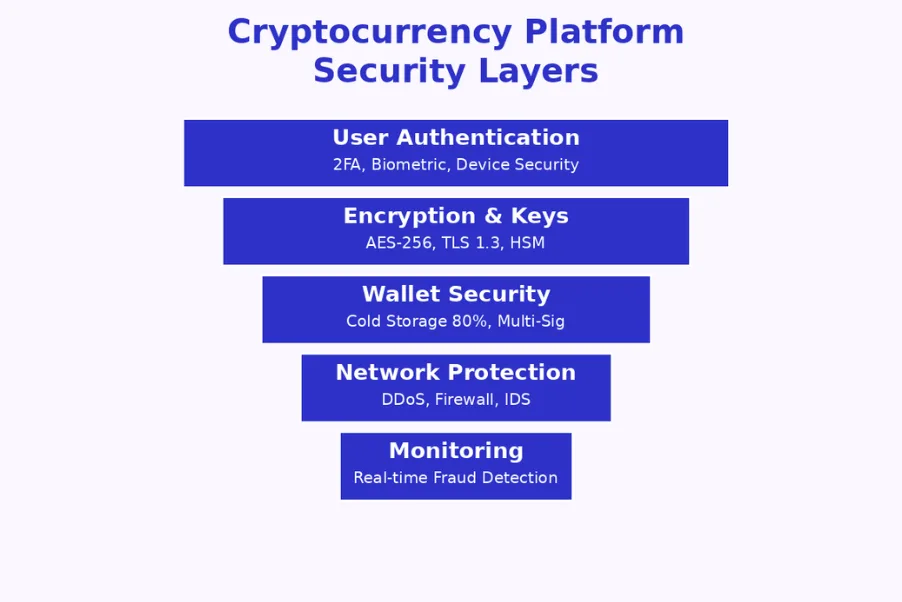
Security remains paramount in cryptocurrency platform operations as digital assets present attractive targets for malicious actors worldwide. Comprehensive security architectures integrate multiple protective layers addressing authentication vulnerabilities, network threats, storage risks, and social engineering attacks systematically. Platforms implementing industry-leading security practices build user trust, reduce liability exposure, maintain competitive advantages in markets demanding institutional-grade protection, and comply with regulatory requirements. These security features protect both platform infrastructure and individual user assets through proactive monitoring, defensive technologies, incident response capabilities, and continuous security improvements essential for operating across regulated jurisdictions while maintaining user confidence during market volatility periods.
Two-factor authentication (2FA) and device security
Two-factor authentication dramatically reduces unauthorized account access risks by requiring secondary verification beyond passwords adding critical security layers. Platforms should support multiple 2FA methods including authenticator apps generating time-based one-time passwords, SMS verification codes, email confirmations, hardware security keys, and biometric authentication options. Biometric authentication using fingerprint or facial recognition provides convenient yet secure access on mobile devices while hardware security keys offer maximum protection for high-value accounts. Device security features include trusted device whitelisting, requiring verification for new device logins, automatic logout on unrecognized devices, and geolocation tracking for suspicious access patterns. Platforms should implement anti-automation measures preventing brute force attacks, rate limiting on authentication attempts, IP-based restrictions, and CAPTCHA challenges for suspicious login patterns protecting accounts from automated attacks. Comprehensive activity logging tracks login locations, device information, browser fingerprints, and timestamps enabling users to identify unauthorized access attempts promptly and take immediate action to secure compromised accounts.
Encryption, key management, and private key safety
Advanced encryption protocols protect sensitive data throughout transmission and storage phases preventing unauthorized access and data breaches. Platforms must implement TLS/SSL encryption for all communications, AES-256 encryption for database storage, end-to-end encryption for sensitive operations, and encrypted backups for disaster recovery. Private key management represents the most critical security aspect, requiring hardware security modules for key generation and storage, multi-party computation protocols for distributed key management, threshold signatures for collaborative key control, and strict access controls limiting key exposure to authorized personnel only. Features of cryptocurrency should include hierarchical deterministic wallet structures enabling key derivation from master seeds, regular key rotation policies minimizing exposure windows, secure backup mechanisms protecting against data loss, and encrypted key storage preventing unauthorized access. Platforms must never store private keys in plain text, implement key sharding across multiple secure geographic locations, use secure enclaves for key operations, and maintain comprehensive audit logs tracking all key access events for security monitoring, forensic analysis, and compliance purposes ensuring maximum protection.
Cold wallet storage and hot wallet separation
Strategic allocation between cold and hot wallet storage optimizes security while maintaining operational liquidity requirements for daily operations. Cold wallets storing majority user assets remain completely offline, eliminating network-based attack vectors and providing maximum security for long-term holdings minimizing breach risks. These systems should utilize hardware wallets, air-gapped computers, secure vault storage with armed guards, and multi-signature authorization requirements for withdrawals preventing single points of failure. Hot wallets maintain connectivity for processing deposits, withdrawals, and trading operations, holding only minimal balances necessary for daily operational requirements while implementing additional security monitoring. Platforms should implement automated rebalancing mechanisms transferring excess hot wallet funds to cold storage during low-activity periods, risk-based thresholds triggering manual reviews, and emergency procedures for security incidents. Regular security audits, comprehensive penetration testing, third-party security assessments, and insurance coverage for both storage types provide additional protection layers while transparent disclosure of allocation ratios, security practices, and insurance details builds user confidence in platform security measures.
Anti-phishing, fraud detection, and risk monitoring
Proactive fraud prevention systems identify and neutralize threats before users suffer financial losses protecting platform reputation and user assets. Anti-phishing measures include email domain authentication, official communication verification codes, browser extension warnings for fake websites, SSL certificate validation, and comprehensive user education about common scam tactics and social engineering techniques. Machine learning algorithms analyze transaction patterns detecting anomalous behaviors like unusual withdrawal amounts, rapid fund movements through multiple accounts, transactions to known malicious addresses, velocity checks, and behavioral biometrics. Risk scoring systems evaluate account activities assigning risk levels triggering additional verification for high-risk transactions, manual reviews for suspicious patterns, and automated blocking for clear fraud attempts. Real-time monitoring dashboards alert security teams to suspicious activities enabling rapid response, investigation workflows, and preventive actions. Address whitelisting features allow users to pre-approve withdrawal destinations while withdrawal delays provide cooling-off periods for large transfers, email/SMS confirmation requirements, and user education prompts. Comprehensive fraud detection protecting users across USA, UK, UAE, and Canada requires continuous system updates adapting to evolving attack methodologies, threat intelligence sharing, and machine learning model retraining.
DDoS protection and platform-level security
Distributed denial-of-service protection ensures platform availability during coordinated attacks attempting to overwhelm infrastructure and disrupt services. Enterprise-grade DDoS mitigation services filter malicious traffic before reaching platform servers, utilizing global content delivery networks distributing load across multiple geographic regions, traffic scrubbing centers removing attack traffic, and anycast routing distributing requests optimally. Rate limiting mechanisms restrict request frequencies from individual IP addresses preventing resource exhaustion, connection limits preventing connection flooding, and progressive delays penalizing abusive clients. Challenge-response systems verify legitimate user traffic through JavaScript challenges, browser fingerprinting, CAPTCHA validation, and behavioral analysis distinguishing humans from bots. Platform-level security includes web application firewalls blocking common exploit attempts like SQL injection and cross-site scripting, intrusion detection systems monitoring for breach indicators and malicious patterns, security information and event management systems aggregating security logs, and regular vulnerability assessments identifying potential weaknesses before exploitation. Security operations centers provide continuous 24/7 monitoring with incident response protocols, escalation procedures, and communication plans, while backup infrastructure enables rapid failover during attacks maintaining service continuity. Comprehensive logging and forensic capabilities support post-incident analysis improving future defensive postures across platform ecosystems.
Trading and Transaction Features
Advanced trading capabilities distinguish professional-grade platforms from basic exchange services, attracting sophisticated traders, institutional participants, and high-frequency trading firms. Comprehensive trading features enable diverse investment strategies, risk management approaches, market participation methods, and algorithmic trading opportunities. These functionalities require sophisticated matching engines processing millions of orders daily, real-time data processing with microsecond latency, and intuitive interfaces balancing complexity with usability enabling both novice and professional traders. Platforms offering robust trading features capture larger market shares, generate higher transaction volumes, maintain deeper liquidity pools, and enjoy enhanced trader satisfaction and engagement across global cryptocurrency markets driving sustainable revenue growth.

Spot trading, margin trading, and derivatives support
Spot trading provides fundamental cryptocurrency exchange functionality enabling direct buying and selling at current market prices with immediate settlement and asset delivery. Margin trading amplifies potential returns through borrowed funds, requiring sophisticated risk management systems including real-time margin call mechanisms, automated forced liquidation protocols preventing negative balances, continuous position monitoring tracking exposure levels, and dynamic interest rate calculations based on utilization. Platforms must implement appropriate leverage limits protecting users from excessive risk, transparent collateral requirements clearly communicated, detailed profit-loss calculations displayed real-time, and comprehensive risk disclosures ensuring informed trading decisions. Derivatives support expands trading opportunities through futures contracts enabling price speculation, options providing hedging capabilities, perpetual swaps offering leveraged positions without expiry, and structured products creating complex trading strategies. These instruments require additional infrastructure including separate margin accounts preventing cross-collateralization, sophisticated settlement systems handling contract expiry, funding rate mechanisms for perpetual contracts balancing long-short positions, options pricing models calculating fair values, and advanced risk engines. Comprehensive derivatives platforms integrate detailed position analytics, comprehensive profit-loss calculators, portfolio Greeks displays showing risk exposure, and margin requirement projections helping traders manage complex exposures across multiple instruments, timeframes, and cryptocurrency markets simultaneously.
Order types (market, limit, stop-loss, OCO)
Diverse order types empower traders implementing sophisticated strategies and managing risk exposure effectively across volatile cryptocurrency markets. Market orders execute immediately at current best available prices prioritizing speed over price certainty, suitable for high-liquidity markets, urgent position entries, and situations where immediate execution outweighs price optimization. Limit orders specify maximum purchase or minimum sale prices, executing only when market conditions meet specified criteria providing price control at the cost of execution certainty, ideal for patient traders, range-bound strategies, and situations where price precision matters more than timing. Stop-loss orders automatically trigger sales when prices decline below predetermined thresholds, protecting against adverse price movements, limiting potential losses, and providing automated risk management without constant monitoring requirements. One-Cancels-Other orders combine multiple conditional orders where executing one automatically cancels others, useful for bracket trading strategies simultaneously setting profit targets and stop losses, capturing profits while limiting losses, and implementing advanced trading strategies. Advanced platforms should support trailing stops adjusting stop prices automatically as markets move favorably, iceberg orders hiding total order quantities to minimize market impact and prevent front-running, fill-or-kill orders requiring complete immediate execution or cancellation, immediate-or-cancel orders executing partial fills immediately, and time-in-force specifications controlling order validity periods including good-till-cancel, good-till-date, and session-only orders enhancing trading flexibility across different market conditions and trading styles.
Liquidity management and order book depth
Strong liquidity enables efficient price discovery, minimal slippage, confident trading execution, and attracts both retail and institutional participants to platforms. Order book depth reflecting buy and sell orders at various price levels indicates market liquidity, trading activity intensity, and market participant confidence. Platforms enhance liquidity through comprehensive market maker programs offering attractive fee rebates for providing continuous two-sided quotes, integration with external liquidity providers aggregating orders across multiple venues and exchanges, automated market making algorithms maintaining minimum spread requirements and order book density, and sophisticated order routing systems finding best execution across fragmented liquidity pools. Liquidity mining incentives reward users providing liquidity to specific trading pairs while cross-listing popular assets attracts diverse trading communities, institutional traders, and retail participants. Real-time order book visualization with depth charts, historical depth analysis tracking liquidity evolution, liquidity heatmaps identifying concentration zones, and market impact calculators help traders assess market conditions, plan large orders, and optimize execution strategies. Platforms should prominently display bid-ask spreads indicating execution costs, trading volumes measuring market activity, liquidity metrics quantifying depth, and market quality indicators enabling informed trading decisions across all supported cryptocurrency trading pairs enhancing user experience.
Transaction speed and confirmation handling
Transaction processing speed significantly impacts user experience and platform competitiveness, particularly during volatile market conditions when seconds matter. High-performance matching engines process thousands of orders per second with microsecond latency ensuring traders execute strategies at intended prices, capitalize on market opportunities, and compete effectively with algorithmic trading systems. Platforms must carefully balance speed with security through appropriate confirmation requirements varying across different cryptocurrencies, transaction values, user verification levels, and network conditions. Instant deposits using internal transfers between platform wallets enable immediate trading without blockchain confirmation delays while external blockchain deposits require multiple confirmations before crediting accounts preventing double-spend attacks and ensuring transaction finality. Clear communication about confirmation requirements for each cryptocurrency, estimated completion times based on current network conditions, real-time transaction status updates tracking progress, and detailed blockchain explorer links provide transparency managing user expectations effectively. Advanced features include intelligent zero-confirmation risk assessment for small transactions balancing convenience with security, priority processing for verified high-volume accounts, automated retry mechanisms for failed transactions preventing user frustration, transaction acceleration services for stuck transactions, and comprehensive status notifications keeping users informed throughout the transaction lifecycle optimizing user experience without compromising security standards or platform integrity.
Gas fee optimization and fee calculation
Blockchain transaction fees significantly impact profitability, particularly for frequent traders, small-value transactions, and DeFi operations across multiple chains. Intelligent fee estimation algorithms analyze real-time network congestion, recent block data, mempool status, and priority requirements recommending optimal fee levels balancing cost efficiency with confirmation speed meeting user needs. Platforms should display comprehensive fee estimates in both native cryptocurrency and fiat currencies providing complete transparency before transaction submission, breakdown of platform fees versus network fees clarifying cost structure, and historical fee data showing trends helping users time transactions optimally. Gas optimization features include sophisticated transaction batching combining multiple operations reducing per-transaction costs significantly, Layer-2 integration utilizing cheaper scaling solutions like Polygon and Arbitrum, scheduled withdrawals during low-congestion periods minimizing costs, and smart contract optimization reducing computational requirements. Comprehensive fee calculators help users understand total costs including platform trading fees, withdrawal fees, deposit fees, network fees, currency conversion charges, and hidden costs providing complete transparency. Platforms offering attractive fee discounts for native token holdings, volume-based fee tier structures rewarding active traders, maker-taker fee models incentivizing liquidity provision, and promotional periods provide competitive advantages while maintaining profitable sustainable operations across diverse market conditions and user segments.
Payment and Fiat Integration Features
Seamless fiat currency integration bridges traditional finance with cryptocurrency ecosystems, expanding accessibility for mainstream users unfamiliar with pure cryptocurrency operations and reducing entry barriers. Comprehensive payment infrastructure enables users to easily convert between fiat and digital assets through familiar payment methods matching traditional banking experiences. These integrations require complex partnerships with financial institutions, payment processors, banking networks, and card companies while maintaining strict regulatory compliance across jurisdictions. Platforms offering robust fiat on-ramps and off-ramps significantly reduce entry barriers, accelerate user onboarding, increase conversion rates, and expand addressable markets particularly in established markets like USA, UK, UAE, and Canada where users expect convenient payment options matching traditional financial services they use daily.
Fiat deposits and withdrawals
Efficient fiat deposit and withdrawal mechanisms directly impact user acquisition and retention rates determining platform success. Platforms must support multiple fiat currencies including USD, GBP, EUR, AED, CAD, JPY, and regional currencies accommodating users across primary global markets. Deposit methods should include domestic bank transfers, international wire transfers, credit card purchases enabling instant access, debit card payments, and mobile payment systems providing maximum flexibility for different user preferences and regional banking systems. Withdrawal options require secure bank account verification processes, comprehensive anti-money laundering checks preventing illicit activities, fraud prevention measures protecting platforms and users, and identity confirmation for large transactions. Processing times vary significantly by method with instant card deposits enabling immediate trading contrasting with multi-day bank transfers requiring patience, requiring clear communication about expected timelines, processing fees, and potential delays managing user expectations effectively. Platforms should implement tiered daily and monthly withdrawal limits appropriate for user verification levels balancing security with convenience, provide detailed transaction history with comprehensive status tracking, offer responsive customer support for failed or delayed transactions, and maintain transparent fee structures ensuring smooth fiat currency operations supporting user needs across different transaction sizes and urgency levels.
Payment gateway and card integration
Payment gateway partnerships enable instant cryptocurrency purchases using credit and debit cards, dramatically reducing onboarding friction and accelerating user acquisition. Integration with established payment processors like Stripe, PayPal, Square, and regional providers ensures broad card acceptance, sophisticated fraud protection, chargeback management capabilities, and PCI DSS compliance reducing platform operational burdens significantly. These gateways handle complex card verification processes, 3D Secure authentication preventing fraud, chargeback management protecting merchants, and comprehensive PCI compliance eliminating security certification requirements. Features of cryptocurrency platforms should include saved payment methods for returning users eliminating re-entry friction, one-click purchasing for quick transactions during volatile markets, automatic currency conversion at competitive exchange rates, and multiple currency support. Platforms must clearly communicate all fees including payment processor charges typically 2-4%, currency conversion spreads, platform commissions, and total costs before transaction completion. Geographic restrictions due to regulatory limitations, card type limitations imposed by issuers, purchase limits protecting against fraud, and processing delays require transparent disclosure managing user expectations while regulatory requirements varying across USA, UK, UAE, and Canada necessitate careful provider selection ensuring full compliance with local payment processing regulations and consumer protection laws.
Bank transfer and UPI support
Direct bank integration provides cost-effective deposit and withdrawal methods preferred by users conducting larger transactions avoiding percentage-based card fees. ACH transfers in USA enabling automated clearing house payments, SEPA transfers in Europe providing single euro payments area integration, Faster Payments in UK offering real-time transfers, and local banking rails in UAE and Canada enable efficient fiat movement without excessive fees maintaining profitability for users. Integration requires complex partnerships with banking institutions navigating strict requirements, compliance with regional banking regulations varying significantly across jurisdictions, and implementation of identity verification systems linking cryptocurrency accounts to verified bank accounts preventing money laundering. Platforms should support instant bank verification through services like Plaid, Yodlee, and TrueLayer reducing setup friction significantly. For markets with advanced payment infrastructure, UPI integration enables real-time bank transfers through mobile applications, QR code payments for retail integration, peer-to-peer transfers, and merchant payments. These systems require sophisticated QR code generation capabilities, real-time payment confirmation handling tracking transaction status, comprehensive reconciliation processes matching cryptocurrency credits to received fiat payments, and fraud detection preventing payment reversals. Low-fee bank transfers encourage larger deposits improving customer lifetime value while automated processing reduces operational overhead significantly compared to manual wire transfer handling requiring staff intervention minimizing costs and errors.
Stablecoin payments and settlement options
Stablecoin integration provides price-stable alternatives to volatile cryptocurrencies while maintaining blockchain benefits including fast settlement, low fees, and 24/7 availability. Supporting major stablecoins like USDT, USDC, BUSD, DAI, and regional alternatives enables users to park funds between trades without converting to fiat currencies avoiding unnecessary fees, maintain purchasing power during market volatility, and execute quick trades during opportunities. Stablecoin deposits and withdrawals avoid banking delays and restrictions while offering instant settlement between platforms and external wallets, cross-border transfers without correspondent banking fees, and peer-to-peer payments. Platforms should implement seamless stablecoin-to-fiat conversion features allowing users to easily switch between stable digital assets and traditional currencies, competitive exchange rates, and instant conversions. Multi-chain stablecoin support across Ethereum, Tron, Binance Smart Chain, Polygon, Avalanche, and other networks provides flexibility optimizing for transaction costs while clear communication about network selection, gas fees, and confirmation times prevents costly user errors. Integration with stablecoin payment rails enables innovative merchant services, efficient peer-to-peer transfers, cost-effective cross-border remittances, and payment streaming expanding platform utility beyond traditional exchange functions appealing to diverse user segments including freelancers, merchants, remittance senders, and DeFi users.
User Experience (UX) Features for Better Adoption
Superior user experience design differentiates successful platforms in competitive cryptocurrency markets where users demand intuitive interfaces matching conventional financial applications. Thoughtful UX implementation reduces learning curves for newcomers, provides powerful tools for experienced users, increases conversion rates, and improves retention. These features directly impact adoption rates, user satisfaction scores, platform reputation through word-of-mouth, and sustainable growth across diverse demographic segments globally.
Simple onboarding and easy navigation
Streamlined onboarding processes determine first impressions and conversion success rates for potential platform users. Progressive disclosure techniques introduce features gradually preventing information overload, guided tutorials demonstrate core functionalities step-by-step, and interactive walkthroughs highlight key features with tooltips. Onboarding should include sample transactions using test environments allowing risk-free learning, contextual help explaining cryptocurrency concepts inline, and achievement systems gamifying learning processes. Navigation structures must logically organize features with clear labeling using familiar terminology, consistent placement of common actions reducing cognitive load, and prominent search functionality enabling quick access. Platforms should implement breadcrumb trails showing user locations within interface hierarchies, favorites systems for frequently accessed features saving time, and customizable dashboards enabling personalized experiences matching workflow preferences. Clear visual hierarchies using strategic color, typography, spacing, and whitespace guide attention to important information while minimizing cognitive load. Accessibility features including keyboard navigation support, comprehensive screen reader compatibility, high-contrast modes for visual impairments, and internationalization ensure inclusivity across diverse user populations enhancing market reach significantly.
Mobile app support
Mobile applications extend platform accessibility enabling users to monitor markets continuously, execute trades instantly, and manage assets conveniently from anywhere globally. Native iOS and Android apps provide superior performance compared to mobile web interfaces with features like biometric authentication, push notifications for price alerts, offline functionality displaying cached data, and optimized battery usage. Mobile apps should maintain complete feature parity with web platforms ensuring consistent experiences while adapting interfaces to smaller screens through responsive design, gesture-based navigation utilizing swipes and taps, and simplified workflows. Essential mobile features include customizable price alerts notifying opportunities, portfolio widgets for home screens providing quick glances, quick trade execution interfaces minimizing steps, streamlined deposit-withdrawal flows, and mobile-optimized charts. Apps must optimize for varying network conditions with offline modes displaying cached data gracefully, queuing transactions for later submission when connectivity restores, and adaptive streaming reducing data usage. Regular updates addressing platform changes promptly, security patches protecting users, new feature rollouts maintaining competitiveness, and bug fixes improving stability maintain app quality. App store optimization through compelling descriptions, professional screenshots, positive user reviews, and regular updates increases visibility while maintaining separate apps for basic and pro trading interfaces serves different user segments effectively with appropriate complexity levels.
Multi-language and multi-region support
Comprehensive localization expands market reach by accommodating users in their preferred languages and regional cultural contexts. Platforms should support major languages including English, Spanish, French, German, Arabic, Chinese, Japanese, Korean, and Portuguese serving primary markets in USA, UK, UAE, Canada, Europe, Asia, and Latin America comprehensively. Localization extends beyond simple translation to include culturally appropriate imagery respecting local sensitivities, date-time formats matching regional standards, number formatting using local conventions, currency displays with proper symbols, and content relevance reflecting local market conditions. Regional compliance features adapt to local regulations including jurisdiction-specific verification requirements, reporting obligations varying by country, and restricted features based on local laws. Platforms must handle right-to-left languages properly like Arabic and Hebrew, provide region-specific payment methods matching local banking infrastructure, and display content relevant to local market conditions and trading pairs. Customer support in native languages through multilingual teams or professional translation services improves user satisfaction significantly. Automatic language detection based on user location with manual override options balances convenience with user control while maintaining separate content versions for different jurisdictions ensures full regulatory compliance across diverse markets.
Real-time price charts and portfolio tracking
Advanced charting tools empower users to analyze market trends comprehensively and make informed trading decisions based on technical analysis principles. Real-time price charts should support multiple timeframes from one-minute intervals to monthly views with seamless transitions between periods enabling multi-timeframe analysis. Integration of technical indicators including moving averages, RSI, MACD, Bollinger Bands, Fibonacci retracements, volume analysis, and custom indicators enables sophisticated market analysis. Drawing tools for trend lines, support-resistance levels, channels, patterns, and chart annotations help users visualize trading strategies and identify opportunities. Portfolio tracking features aggregate holdings across multiple wallets and exchanges displaying total values, percentage allocations, asset distributions, and comprehensive performance metrics. Automated profit-loss calculations accounting for fees, accurate cost basis tracking supporting tax reporting, historical performance charts showing growth over time, and benchmark comparisons provide comprehensive portfolio insights. Customizable alerts notify users of significant price movements, portfolio rebalancing triggers, achievement of profit targets, stop-loss breaches, and custom conditions. Export capabilities for tax reporting simplifying compliance, performance analysis enabling strategy optimization, and data backup ensuring security complete comprehensive portfolio management functionality essential for serious cryptocurrency investors and traders.
Compliance and Regulatory Features
Regulatory compliance represents non-negotiable requirements for cryptocurrency platforms operating in established markets worldwide. Comprehensive compliance frameworks protect platforms from significant legal liabilities, build essential trust with users and partners, satisfy regulatory requirements, and enable sustainable operations. These features require continuous monitoring of rapidly evolving regulations across jurisdictions and rapid implementation of new requirements. Platforms demonstrating strong compliance postures attract institutional investors, secure critical banking partnerships, and gain competitive advantages in regulated markets where non-compliant competitors face operational restrictions, hefty fines, or complete closure.
| Compliance Feature | Implementation Requirements | Geographic Relevance |
|---|---|---|
| AML Monitoring | Transaction pattern analysis, suspicious activity flagging, automated reporting systems, case management | USA, UK, UAE, Canada, EU |
| KYC Verification | Identity document collection, biometric verification, address proof validation, ongoing monitoring | Global requirement |
| Travel Rule | Sender-recipient information sharing for transactions above thresholds, secure data transmission | USA, UK, Canada, expanding globally |
| GDPR Compliance | Data protection measures, user consent management, right to deletion, data minimization | UK, EU markets |
| Tax Reporting | Transaction history exports, gain-loss calculations, regulatory filing support, 1099 forms | USA, UK, Canada |
| Sanctions Screening | OFAC list checking, PEP screening, adverse media monitoring, ongoing surveillance | USA, UK, UAE, Canada |
AML monitoring and suspicious activity alerts
Anti-money laundering systems identify potentially illicit activities through sophisticated pattern recognition and behavioral analysis algorithms. Platforms must implement comprehensive transaction monitoring analyzing transaction amounts, frequencies, destinations, counterparties, and user behaviors against established risk profiles and known typologies. Machine learning algorithms detect sophisticated anomalies like structuring attempts avoiding reporting thresholds, rapid fund movements through multiple accounts mimicking layering, transactions with high-risk jurisdictions, unusual trading patterns, and connections to known illicit addresses. Automated alert generation flags suspicious activities for experienced compliance team review with integrated case management systems tracking investigations from initiation through resolution documenting decisions. Integration with advanced blockchain analysis tools traces fund origins and ultimate destinations identifying connections to known illicit addresses, mixing services, darknet markets, ransomware operations, and sanctioned entities. Platforms require robust suspicious activity reporting capabilities filing SARs with financial intelligence units as strictly mandated by USA, UK, UAE, and Canadian regulations maintaining detailed records. Regular model updates incorporating emerging money laundering typologies, regulatory guidance updates, and threat intelligence ensure ongoing effectiveness against evolving criminal methodologies.
Transaction audit logs and reporting
Comprehensive audit trails document all platform activities enabling regulatory reporting, dispute resolution, forensic investigations, and compliance audits. Transaction logs should capture detailed timestamps, transaction amounts, involved currencies, participating parties, IP addresses, device fingerprints, geolocation data, and transaction statuses with tamper-proof immutable storage preventing unauthorized modifications. Platforms require sophisticated report generation capabilities producing formatted outputs for regulatory submissions, internal audits, external examinations, and user requests on demand. Features of cryptocurrency include automated daily, weekly, monthly, and quarterly reporting schedules, customizable report templates for different jurisdictions and regulators, secure encrypted report delivery to authorized parties, and compliance dashboards visualizing key metrics. Advanced systems maintain separate dedicated audit databases with strictly restricted access ensuring data integrity and preventing unauthorized tampering. Retention policies comply with stringent regulatory requirements typically mandating five to seven years of complete historical data availability with secure archival. Powerful search and filter capabilities enable rapid information retrieval during time-sensitive investigations while comprehensive access logs track who viewed sensitive information maintaining complete accountability chains protecting platforms during audits.
GDPR and data privacy compliance
Data protection regulations require cryptocurrency platforms to implement comprehensive privacy measures protecting user information from unauthorized access and misuse. GDPR compliance mandates obtaining explicit informed consent for data collection, providing complete transparency about data usage and sharing, and enabling full user rights including data access, correction, portability, and deletion. Platforms must implement strict data minimization collecting only necessary information, purpose limitation using data solely for clearly stated purposes, and storage limitation deleting data when no longer legally required. Privacy-by-design principles embed data protection into system architecture from initial design while comprehensive data processing agreements with third-party service providers ensure compliance throughout entire processing chains. Platforms require detailed data protection impact assessments for high-risk processing activities and designated qualified data protection officers overseeing compliance programs independently. Sophisticated cookie consent management systems, regular privacy policy updates reflecting practice changes, and breach notification procedures within strict 72-hour requirements complete robust GDPR frameworks applicable to UK and EU operations with similar comprehensive requirements emerging globally requiring proactive adaptation.
Travel Rule compliance for crypto transfers
Travel Rule requirements mandate sharing detailed originator and beneficiary information for cryptocurrency transactions exceeding specified thresholds varying by jurisdiction. Implementation requires sophisticated systems collecting comprehensive sender and recipient details including full names, physical addresses, account identifiers, and transaction purposes for qualifying transactions. Platforms must establish secure encrypted systems for transmitting this sensitive information between virtual asset service providers using standardized protocols ensuring interoperability. Integration with specialized Travel Rule solutions enables automated information exchange maintaining transaction speeds while meeting compliance obligations without significant delays. Platforms need robust screening capabilities checking recipients against comprehensive sanctions lists, PEP databases, adverse media, and watchlists before approving transfers preventing prohibited transactions. Geographic variations in threshold amounts ranging from $1000 to $3000, implementation timelines staggered across jurisdictions, and evolving technical standards require flexible adaptable systems accommodating jurisdiction-specific requirements across USA, UK, Canada, and other implementing regions. Clear user communication about information requirements, potential transfer delays, and compliance necessity manages expectations while maintaining full regulatory compliance protecting platforms from significant penalties.
Advanced Features for Modern Crypto Platforms
Innovative features differentiate modern platforms from traditional cryptocurrency exchanges by integrating emerging blockchain capabilities and DeFi protocols attracting sophisticated users. These advanced functionalities attract tech-savvy users seeking comprehensive cryptocurrency services beyond simple trading while positioning platforms competitively. Platforms incorporating cutting-edge features position themselves as complete blockchain ecosystems rather than limited exchange services. Early adoption of emerging technologies provides significant competitive advantages as these features transition from experimental innovations to mainstream adoption requirements across global cryptocurrency markets driving user engagement and platform differentiation.
Staking and passive income modules
Staking features enable users to earn attractive rewards by locking cryptocurrencies supporting proof-of-stake blockchain networks generating passive income streams. Platforms should support major stakeable assets including Ethereum, Cardano, Polkadot, Solana, Cosmos, and Avalanche with flexible staking periods from locked terms to liquid staking maintaining asset accessibility. Integration requires professional validator node operations or strategic partnerships with established staking service providers while transparent reward calculations display expected annual percentage yields accurately. Platforms must handle complex staking mechanics including validator delegation, automated reward distribution, unstaking periods with clear timelines, and slashing risks with appropriate warnings. Advanced features include automated reward compounding maximizing returns through reinvestment, detailed validator performance metrics helping users select reliable options, staking derivatives enabling trading of staked positions, and portfolio staking strategies. Comprehensive tax reporting for staking rewards and clear risk disclosures about potential slashing penalties complete professional staking implementations attracting long-term holders seeking passive income opportunities while maintaining full asset custody.
Crypto lending and borrowing
Lending protocols enable users to earn attractive interest on idle cryptocurrency holdings while borrowers access needed liquidity without selling appreciated assets. Platforms implementing lending features must establish appropriate collateralization ratios preventing undercollateralized positions, automated liquidation mechanisms protecting lender funds during market volatility, and dynamic interest rate models balancing supply-demand dynamics optimally. Support for multiple collateral types and diverse borrowable assets increases utility significantly while sophisticated risk management systems monitor position health continuously triggering timely margin calls before liquidations. Platforms can operate peer-to-peer systems matching individual lenders with borrowers or pool-based systems aggregating funds for efficient capital allocation and risk distribution. Features should include transparent loan-to-value ratio calculations, real-time interest accrual displays, flexible repayment options including partial payments, and automated liquidation warnings. Integration with established DeFi lending protocols like Aave, Compound, and Venus expands available opportunities while platform-native lending products offer competitive rates and simplified user experiences. Clear comprehensive risk disclosures about potential losses, liquidation penalties, smart contract risks, and market volatility ensure fully informed user participation in lending markets protecting both platform and users from disputes.
DeFi integration (swap, yield farming, liquidity pools)
Decentralized finance integration brings automated market making, yield optimization, and liquidity provision directly into centralized platform interfaces bridging CeFi and DeFi. Token swap functionality enables users to exchange cryptocurrencies through DEX aggregators like 1inch and ParaSwap finding optimal prices across multiple protocols automatically. Yield farming features connect users with high-APY opportunities across DeFi protocols with automated position management, reward compounding, and risk monitoring. Liquidity pool participation allows users to earn trading fees by providing paired assets to automated market makers with impermanent loss calculators. Platforms must implement secure wallet connectivity supporting MetaMask, WalletConnect, Coinbase Wallet, and other Web3 wallets while maintaining security during external protocol interactions through transaction simulation. Comprehensive risk assessment tools evaluate smart contract audit quality, total value locked indicating adoption, historical performance data, and exploit history helping users identify safer opportunities. Gas optimization through sophisticated transaction batching and Layer-2 integration reduces participation costs significantly. Educational resources explaining impermanent loss mechanics, smart contract risks, protocol governance, and yield farming strategies ensure users understand DeFi complexities before committing significant capital protecting users from costly mistakes while expanding platform utility beyond traditional services.
NFT marketplace integration
NFT marketplace features enable users to trade, collect, and showcase unique digital collectibles within cryptocurrency platforms creating additional engagement. Integration requires comprehensive support for NFT standards including ERC-721 and ERC-1155 across multiple blockchains with rich metadata display showing images, descriptions, properties, and provenance. Marketplace functionalities should include flexible listing capabilities with fixed prices or Dutch auction formats, competitive bidding mechanisms, instant purchase options, and bundle listings. Features like curated collection pages, verified creator profiles, rarity ranking systems, and authentication badges enhance discovery and establish authenticity. Platforms must implement automatic royalty payment systems ensuring creators receive percentages on all secondary sales perpetually while sophisticated fraud detection prevents counterfeit NFTs protecting buyers. Integration with popular established marketplaces like OpenSea, Rarible, and LooksRare through APIs expands available inventory while native marketplace capabilities capture transaction fees building revenue. Comprehensive wallet display showcasing owned NFTs with flexible grid and list views, powerful filtering by collections or specific traits, social sharing capabilities, and portfolio valuation complete comprehensive NFT experiences appealing to collectors, creators, and traders expanding platform utility beyond traditional cryptocurrency trading into digital collectibles markets.
Token listing and launchpad support
Launchpad features enable platforms to host initial token offerings providing early access to promising blockchain projects creating excitement and exclusive opportunities. Comprehensive launchpad systems include rigorous project vetting processes evaluating team credentials, tokenomics sustainability, technical implementations, and market viability, fair allocation mechanisms ensuring equitable distribution among participants, and stringent KYC requirements maintaining regulatory compliance protecting platforms. Features should support multiple flexible launch formats including initial DEX offerings, initial exchange offerings, private sales, and public sales with customizable vesting schedules and token unlock periods preventing market manipulation. Smart contract integration automates transparent token distribution while secure escrow mechanisms protect participant funds until predetermined launch conditions satisfy completely. Platforms benefit significantly from listing fees, increased trading volume, and enhanced reputations as trusted project incubators supporting blockchain innovation. Comprehensive token listing frameworks should include streamlined application processes, thorough due diligence procedures, ongoing monitoring ensuring listed projects maintain quality standards, and clear delisting criteria. Community governance features allowing engaged platform users to vote on new listings democratize selection processes building stronger community engagement and ownership while ensuring market demand for listed projects.
Admin Panel Features for Platform Control
Comprehensive administrative interfaces enable efficient platform operations, fraud prevention, and rapid response to emerging issues maintaining platform integrity. Well-designed admin panels consolidate critical functions into intuitive dashboards reducing operational complexity significantly. These systems require sophisticated role-based access controls ensuring team members access only necessary functions while comprehensive audit trails track all administrative actions maintaining complete accountability protecting platforms during regulatory audits.
User management and role-based access
Administrative user management systems provide comprehensive visibility into platform user base with powerful search, filter, and sorting capabilities across millions of accounts enabling efficient operations. Features should include detailed user views displaying registration information, verification status updates, complete trading history, transaction patterns, and important account flags. Administrative actions enable temporary account suspension, verification status override for exceptional cases, transaction limit adjustments, manual withdrawal approvals for unusual situations, and detailed notes tracking. Role-based access control systems define granular permission levels for different administrative functions ensuring support staff access necessary tools without excessive platform-wide administrative privileges preventing insider threats. Bulk operations facilitate efficient management of user cohorts enabling mass communications while detailed activity logs track all administrative actions maintaining complete accountability. User communication tools enable targeted messaging, announcement broadcasts, and individual notifications. Advanced platforms implement automated user segmentation identifying high-value customers, dormant accounts requiring re-engagement, or high-risk users enabling proactive engagement strategies.
Transaction monitoring dashboard
Real-time transaction monitoring dashboards provide critical operational visibility enabling rapid identification of platform issues, fraud attempts, or concerning system anomalies. Visualization displays should show key metrics including transaction volumes, success rates, average values, processing times with customizable time ranges enabling pattern identification. Alert systems notify administrators promptly of unusual patterns like unexpected transaction spikes, increased failure rates, suspicious withdrawal concentrations, or system performance degradation. Detailed transaction inspection capabilities allow drilling into specific transactions viewing complete details, blockchain confirmations, and processing stages. Filtering by transaction types, currencies, amounts, or user attributes enables targeted analysis supporting investigations. Performance metrics including throughput rates, latency measurements, and system load indicators support capacity planning. Integration with blockchain explorers provides external verification while comparison tools benchmark current metrics against historical averages identifying deviations requiring immediate investigation protecting platform integrity.
Fee management and commission settings
Flexible fee management systems enable platforms to optimize revenue while remaining competitive in dynamic markets requiring strategic pricing. Administrative interfaces should support comprehensive trading fee configuration with sophisticated maker-taker models, volume-based tier structures rewarding active traders, and promotional discount periods attracting users. Withdrawal and deposit fee settings require currency-specific configurations accounting for varying network costs and processing expenses maintaining profitability. Commission structures for referral programs, affiliate partnerships, and institutional clients need customizable percentage or fixed-amount options supporting diverse business models. Features should include fee schedule previews showing user impacts before implementation, A-B testing capabilities comparing different fee structures, and automated fee adjustments responding to competitive market conditions. Historical fee revenue analytics inform strategic pricing optimization decisions while transparency requirements may mandate public fee disclosure building trust. Special pricing for market makers, high-volume traders, or strategic partners requires discrete configuration capabilities maintaining competitive differentiation without complexity.
Token listing management
Token listing workflows manage cryptocurrency addition processes from initial applications through successful trading launch maintaining quality standards. Administrative systems should track listing applications with clear status indicators, secure due diligence documentation storage, and team collaboration features enabling efficient reviews. Evaluation criteria including project legitimacy, market demand, technical implementation quality, and regulatory compliance require structured assessment frameworks ensuring consistent decisions. Smart contract review processes verify token functionality, security audit requirements, and compliance with platform standards preventing problematic listings. Trading pair configuration involves setting supported fiat and cryptocurrency pairings, establishing initial price ranges, and coordinating market making arrangements ensuring liquidity. Launch coordination features schedule listing announcements, enable promotional campaigns, and coordinate market maker participation. Post-listing monitoring tracks trading volumes, liquidity metrics, and user feedback enabling informed delisting decisions for underperforming or problematic assets protecting platform reputation.
Support ticket and dispute handling
Integrated support ticket systems streamline customer service operations managing inquiries efficiently from submission through satisfactory resolution. Ticket management features should include intelligent automatic assignment based on categories, priority levels indicating urgency, and comprehensive status tracking throughout resolution processes. Knowledge base integration suggests relevant articles to support agents accelerating resolution while canned response templates accelerate common inquiry handling. Escalation workflows route complex issues to specialized teams with SLA monitoring ensuring timely responses meeting commitments. Dispute resolution systems handle transaction conflicts, verification appeals, and account access issues with investigation tools, evidence collection capabilities, and decision documentation maintaining records. Multi-channel support consolidating tickets from email, chat, phone, and social media into unified queues prevents duplicated efforts improving efficiency. Performance analytics track response times, resolution rates, and customer satisfaction scores informing team optimization and targeted training priorities improving service quality continuously.
Customer Support and Trust-Building Features
Exceptional customer support distinguishes professional platforms from competitors treating users as transactions rather than valued customers deserving respect. Comprehensive support infrastructure reduces user frustration significantly, improves problem resolution times dramatically, and builds lasting loyalty through consistently responsive assistance. These features prove particularly valuable during onboarding phases and market volatility when support volume spikes. Platforms investing in robust support systems enjoy higher retention rates, positive reviews, and strong reputations across competitive markets driving organic growth.
Live chat, ticketing, and helpdesk system
Multi-channel support systems provide users with convenient contact options matching their preferences and urgency levels optimally. Live chat interfaces enable real-time conversations for immediate assistance with intelligent chatbot pre-screening handling common questions before human escalation reducing costs. Chat features should include file sharing for screenshot submission, screen sharing for complex troubleshooting, and conversation histories enabling context continuity across sessions. Email ticketing systems manage non-urgent inquiries with automatic acknowledgment, reference number generation, and status tracking. Phone support provides personalized assistance for high-value clients or complex issues requiring verbal communication. Integration across channels ensures consistent information with unified customer views displaying all interaction history preventing repetition. Self-service options including FAQ searches, tutorial videos, and troubleshooting wizards reduce support volume while improving user independence. 24/7 availability across time zones serves global user bases effectively.
Knowledge base and FAQs
Comprehensive knowledge bases empower users to resolve issues independently reducing support workload while improving satisfaction through immediate answers available 24/7. Well-organized documentation should cover account management, trading mechanics, security practices, compliance requirements, and troubleshooting common issues comprehensively. Content organization requires logical categorization, intuitive navigation, and powerful search functionality with intelligent auto-suggestions. Articles should include step-by-step instructions, screenshot illustrations, video tutorials, and related article suggestions. Version control maintains documentation accuracy as platform features evolve while multi-language support serves diverse user populations. Analytics tracking search queries, article views, and helpfulness ratings identify content gaps requiring new documentation. Community-contributed content including user guides and strategy explanations supplement official documentation. Regular updates reflecting platform changes, regulatory requirements, and emerging user questions maintain knowledge base relevance and utility maximizing value.
Community channels and announcements
Active community engagement builds user loyalty while providing valuable feedback channels for continuous platform improvement based on user needs. Social media presence on Twitter, Telegram, Discord, and Reddit enables direct communication with user communities sharing updates, addressing concerns promptly, and gathering actionable feedback. Official announcement channels communicate platform updates, new feature launches, maintenance schedules, and security advisories through multiple formats ensuring broad reach. Community forums facilitate peer-to-peer support, trading strategy discussions, and feature requests reducing official support burden. Moderation teams maintain constructive environments preventing spam, scams, and misinformation while ambassador programs leverage enthusiastic users as community leaders. Regular AMAs with platform leadership demonstrate transparency and responsiveness building trust. Newsletter subscriptions keep users informed about market insights, platform announcements, and educational content maintaining engagement.
Transparent status page for downtime and updates
Public status pages provide transparency about platform operations building trust through honest communication during issues maintaining user confidence. Real-time status indicators should display operational status for critical systems including trading engines, deposit-withdrawal processing, mobile apps, and API services providing complete visibility. Incident timelines document issues from detection through resolution with regular updates maintaining user awareness reducing anxiety. Planned maintenance schedules communicate upcoming service interruptions allowing users to plan accordingly minimizing disruption. Historical uptime statistics demonstrate platform reliability while component-level monitoring shows detailed system health. Subscription options enable email or SMS notifications about incidents affecting users directly. Post-incident reports explain root causes, resolution steps, and preventive measures demonstrating accountability and continuous improvement commitment. Integration with monitoring systems automates status updates reducing manual communication burden. Transparent communication differentiates professional platforms from competitors hiding operational issues damaging user trust permanently.
Scalability and Infrastructure Features
Robust technical infrastructure ensures platforms maintain performance and availability as user bases grow and transaction volumes increase exponentially. Scalable architectures prevent bottlenecks during peak trading periods when market volatility drives surging activity testing systems. These foundational capabilities prove invisible to users during normal operations but become critical differentiators during stress tests when poorly architected platforms experience outages, slowdowns, or data loss. Forward-thinking infrastructure investments prevent costly migrations and complete rewrites as platforms mature from startups to enterprise-scale operations serving global markets efficiently.
High-performance backend architecture
Modern backend architectures leverage microservices patterns enabling independent scaling of different platform components based on specific demand patterns. Trading engines require ultra-low latency processing with in-memory databases, event-driven architectures, and optimized data structures minimizing order matching times to microseconds. Database systems must handle massive transaction volumes using sharding, replication, and caching strategies maintaining exceptional performance while ensuring strict data consistency across distributed systems. Asynchronous processing offloads time-intensive operations like blockchain confirmations, report generation, and email notifications preventing user-facing request blocking maintaining responsiveness. Message queue systems enable reliable communication between services with built-in retry mechanisms and dead letter handling ensuring no data loss. Containerization using Docker and orchestration with Kubernetes facilitates seamless deployment, dynamic scaling, and optimal resource utilization. Stateless application design enables horizontal scaling adding server capacity during peak periods maintaining performance. Features of cryptocurrency platforms require careful architecture balancing performance, reliability, and long-term maintainability across complex distributed systems operating at global scale.
Load balancing and auto-scaling
Intelligent load distribution prevents individual server overload ensuring even resource utilization across infrastructure maximizing efficiency. Load balancers route user requests to healthy servers using sophisticated algorithms considering current load, geographic proximity, and session affinity requirements. Health check mechanisms detect failing servers automatically removing them from rotation while auto-healing systems restart crashed services minimizing manual intervention reducing operational costs. Auto-scaling policies monitor resource metrics including CPU utilization, memory consumption, and request rates automatically provisioning additional capacity when thresholds exceed preventing service degradation. Predictive scaling analyzes historical patterns anticipating demand spikes during market events or specific time periods maintaining performance. Geographic distribution across multiple data centers provides redundancy while content delivery networks cache static assets reducing origin server load significantly. Database read replicas distribute query load while write scaling through sharding accommodates growing transaction volumes maintaining responsiveness. Effective scaling strategies maintain consistent user experiences during both normal operations and extraordinary demand periods protecting platform reputation and user satisfaction.
Multi-node blockchain infrastructure
Reliable blockchain connectivity requires running multiple redundant nodes for each supported network preventing single points of failure compromising operations. Full nodes maintain complete blockchain histories enabling transaction verification and block propagation while light nodes reduce resource requirements for less critical operations balancing cost with functionality. Node redundancy ensures continuous operation when individual nodes experience synchronization issues, network problems, or hardware failures preventing service disruptions. Platforms should implement intelligent failover mechanisms automatically switching between nodes maintaining service continuity transparently. Geographic distribution of nodes across different data centers and network providers prevents regional outages from disrupting operations maintaining global availability. Regular node maintenance including software updates, database optimization, and hardware refreshes maintains peak performance preventing gradual degradation. Monitoring systems track node synchronization status, peer connections, and blockchain heights alerting teams proactively to potential issues. Integration with blockchain-as-a-service providers supplements self-hosted infrastructure providing additional redundancy while reducing operational complexity for smaller platforms or newer blockchain networks lacking established infrastructure providers.
API support for third-party integrations
Comprehensive API offerings enable third-party applications, trading bots, portfolio trackers, and institutional systems to integrate with platforms programmatically expanding ecosystem reach. RESTful APIs provide standard endpoints for account management, market data retrieval, order placement, and transaction history with clear comprehensive documentation including endpoint descriptions, parameter requirements, response formats, and code examples. WebSocket APIs deliver real-time market data streams and order updates minimizing latency for algorithmic trading applications requiring split-second execution. Authentication mechanisms using API keys, OAuth tokens, and request signing ensure secure access while rate limiting prevents abuse protecting platform resources. API versioning maintains backward compatibility during platform evolution protecting existing integrations from breaking changes. Sandbox environments enable thorough testing without risking real funds while comprehensive client libraries in popular programming languages reduce integration complexity accelerating time-to-market. API status monitoring, performance metrics, and deprecation notices keep integration partners informed enabling proactive updates. Well-designed APIs expand platform ecosystems attracting engineers building complementary services enhancing overall value propositions creating network effects.
How to Choose the Right Cryptocurrency Platform Features
Selecting appropriate features requires carefully balancing ambition with available resources, market positioning with competitive differentiation, and immediate needs with future scalability requirements. Strategic feature planning prevents both under-building platforms lacking essential capabilities and over-engineering systems with unused functionality consuming unnecessary resources without proportional returns. Understanding target user demographics, competitive landscapes, and regulatory environments across USA, UK, UAE, and Canada informs intelligent prioritization ensuring limited budgets and timelines focus on highest-impact capabilities delivering maximum user value and sustainable business returns driving long-term platform success.
| Platform Type | Essential Features | Optional Advanced Features |
|---|---|---|
| Startup Exchange | Basic trading, wallet integration, KYC, 2FA, mobile app, fiat gateway | Margin trading, staking, advanced charts, derivatives |
| Enterprise Platform | All startup features plus API, derivatives, institutional accounts, custody | OTC desk, white-label solutions, prime brokerage |
| DeFi Platform | Non-custodial wallets, DEX integration, yield farming, liquidity pools | DAO governance, cross-chain bridges, NFT marketplace |
| Payment Platform | Merchant tools, stablecoin support, invoice generation, API | Recurring payments, multi-currency settlement, e-commerce plugins |
Features for startups vs enterprise platforms
Startup platforms require carefully selected foundational features enabling market entry without overwhelming complexity or unsustainable costs. Priority capabilities include reliable basic spot trading, secure wallet integration, essential KYC compliance meeting regulatory minimums, and user-friendly mobile applications providing convenient access. Startups should focus intensely on user experience excellence, responsive customer support building loyalty, and reliable operations establishing strong reputations before expanding feature sets avoiding premature scaling. Enterprise platforms serving institutional clients and high-volume traders need sophisticated advanced capabilities including comprehensive derivatives trading, robust API access for algorithmic strategies, diverse advanced order types, and dedicated account management with personalized service. Institutional features like OTC trading desks handling large orders, custody services meeting security standards, detailed reporting for compliance, and service level agreements provide professional infrastructure. Regulatory compliance becomes significantly more complex requiring enhanced AML systems, jurisdiction-specific reporting capabilities, and expert legal framework navigation. Enterprise platforms justify substantially higher operational costs through larger transaction volumes, premium service fees, and institutional relationships while startups optimize aggressively for lean operations and rapid iterative improvement based on user feedback.
Features for centralized vs decentralized platforms
Centralized platforms prioritize features enhancing convenience and regulatory compliance including custodial wallets simplifying management, comprehensive fiat payment integration, responsive customer support systems, and thorough KYC processes. These platforms offer faster transaction speeds, more intuitive interfaces reducing learning curves, and account recovery mechanisms for lost credentials appealing to mainstream users prioritizing ease over absolute control. Decentralized platforms emphasize features supporting user sovereignty and censorship resistance including non-custodial wallet integration maintaining user control, peer-to-peer trading protocols eliminating intermediaries, and smart contract functionality ensuring transparency. Privacy features protecting user identities, governance mechanisms enabling community control of platform direction, and transparent on-chain operations attract users valuing decentralization principles. Hybrid approaches strategically combining centralized convenience with decentralized security features serve users seeking balanced solutions optimizing both usability and security. Platform positioning determines feature priorities with centralized platforms competing primarily on service quality and decentralized platforms differentiating through trustlessness and transparency aligning with distinct user philosophies and specific needs.
Platform Feature Selection Criteria
Market Analysis
Research target demographics, competitive landscapes, and regulatory environments across USA, UK, UAE, and Canada to identify market gaps and positioning opportunities.
Budget Allocation
Prioritize features delivering maximum user value within budget constraints, balancing immediate launch requirements with scalable architecture supporting future expansion.
Compliance Verification
Ensure platform features meet regulatory requirements in target jurisdictions through legal consultation and compliance framework implementation before launch.
Cost vs feature prioritization checklist
Strategic feature prioritization requires carefully evaluating implementation costs against expected user value and competitive positioning benefits. Must-have features forming platform foundations include critical security essentials like 2FA and encryption, basic trading functionality, reliable wallet integration, and regulatory compliance tools enabling legal operations across jurisdictions. These foundational capabilities represent absolutely non-negotiable investments regardless of budget constraints requiring immediate attention. Should-have features significantly improving user experience and retention include polished mobile applications, multiple payment methods, advanced trading options, and comprehensive customer support systems. These features meaningfully differentiate platforms from minimal competitors justifying moderate additional investment improving competitive positioning. Nice-to-have features like DeFi integration, NFT marketplaces, and advanced analytics provide competitive advantages but can responsibly defer to future releases if budget-constrained enabling phased rollouts. Comprehensive evaluation of features of cryptocurrency requires assessing recurring operational costs including compliance overhead, customer support requirements, and infrastructure scaling needs beyond initial implementation expenses. Phased rollout strategies enable launching with carefully selected core features while planning systematic expansion based on actual user feedback and sustainable revenue growth patterns.
Critical Industry Standards for Platform Security
Standard 1: Implement multi-factor authentication as mandatory for all accounts with administrative privileges and optional for user accounts protecting sensitive operations.
Standard 2: Maintain minimum 80% of user funds in cold storage with multi-signature authorization for withdrawals exceeding established thresholds preventing unauthorized access.
Standard 3: Conduct quarterly third-party security audits covering infrastructure, smart contracts, and operational procedures with public result disclosure building trust.
Standard 4: Encrypt all sensitive data at rest using AES-256 encryption and in transit using TLS 1.3 or higher protocols ensuring complete protection.
Standard 5: Implement real-time transaction monitoring with automated fraud detection systems flagging suspicious patterns for immediate manual review and investigation.
Standard 6: Maintain comprehensive disaster recovery plans with regular testing ensuring maximum 24-hour recovery time objectives protecting business continuity.
Standard 7: Require withdrawal whitelist verification for new addresses with 24-hour cooling periods for first-time withdrawal destinations preventing unauthorized transfers.
Standard 8: Maintain bug bounty programs rewarding security researchers for responsible disclosure of vulnerabilities before potential exploitation protecting users.
Final Thoughts: Building a Feature-Rich Cryptocurrency Platform
Successfully launching cryptocurrency platforms requires thoughtful strategic feature selection balancing user needs, regulatory requirements, and business objectives harmoniously. Comprehensive planning examining security foundations, trading capabilities, compliance frameworks, and scalability infrastructure prevents costly redesigns while ensuring competitive positioning in dynamic markets across USA, UK, UAE, and Canada. The cryptocurrency industry continues evolving rapidly with new features, technologies, and user expectations emerging constantly requiring platforms to maintain flexible architectures supporting continuous innovation and adaptation to market changes ensuring long-term sustainability and growth.
Why feature planning impacts adoption and ROI?
Strategic feature planning directly correlates with user adoption rates and investment returns through multiple interconnected mechanisms. Well-designed features reduce user friction during onboarding accelerating conversion from casual visitors to active engaged traders while comprehensive functionality increases user engagement depth and transaction frequency driving revenue. Security features build essential trust reducing costly churn from security concerns while robust compliance capabilities enable profitable operations in lucrative regulated markets expanding addressable audiences. Poor feature selection leads to either inadequate platforms lacking essential capabilities failing to attract users or over-engineered systems consuming excessive resources without proportional returns wasting capital. Platforms prioritizing features matching target user needs achieve product-market fit faster, requiring substantially less marketing investment while generating stronger organic word-of-mouth growth. Advanced features like staking and DeFi integration create valuable additional revenue streams beyond traditional trading fees while comprehensive API capabilities enable ecosystem expansion through third-party integrations multiplying platform value. Thoughtful feature roadmaps strategically balance immediate market entry requirements with long-term scalability preventing accumulating technical debt that hampers future growth, innovation, and competitive responsiveness limiting long-term success potential.
Ready to Launch Your Cryptocurrency Platform?
Partner with experienced blockchain experts to build a secure, scalable cryptocurrency platform with all essential features tailored to your market needs.
Frequently Asked Questions
Q1.What are the essential features of a cryptocurrency platform?
A cryptocurrency platform needs strong security, multi-currency wallets, KYC onboarding, and smooth trading features. It should support real-time transactions, fiat payment gateways, fair fees, admin dashboards, compliance tools, scalability, customer support, mobile access, and third-party API integrations.
Q2.How do centralized and decentralized cryptocurrency platforms differ in features?
Centralized platforms manage user funds, provide faster trades, fiat gateways, customer support, and KYC compliance. Decentralized platforms use non-custodial wallets, peer-to-peer trading, liquidity pools, and smart contracts. CEXs focus on convenience; DEXs prioritize transparency, privacy, and user control.
Q3.What security features should a cryptocurrency platform have?
Key security features include 2FA, encryption, cold storage, hot wallet separation, DDoS protection, anti-phishing tools, fraud detection, withdrawal whitelisting, and multi-signature wallets. Regular audits, bug bounty programs, secure APIs, and monitoring systems help prevent hacks and protect user funds.
Q4.Why is multi-chain support important for cryptocurrency platforms?
Multi-chain support lets users trade and transfer assets across networks like Ethereum, Polygon, Solana, and BSC. It increases liquidity, expands token availability, enables cross-chain swaps, supports NFTs and staking, reduces reliance on one chain, and improves platform competitiveness globally.
Q5.What compliance features do cryptocurrency platforms need?
Crypto platforms need KYC verification, AML monitoring, audit trails, Travel Rule compliance, and secure data privacy controls like GDPR. They also require tax reporting tools, geo-blocking for restricted regions, automated regulatory reporting, and flexible compliance workflows to meet changing laws.
Q6.How do trading features impact cryptocurrency platform adoption?
Trading features drive adoption by serving both beginners and professionals. Spot trading, margin, and futures attract wider audiences. Order types, real-time charts, indicators, alerts, fast execution, low fees, and high liquidity improve engagement. Bots and APIs increase institutional interest.
Q7.What role does UX design play in cryptocurrency platform success?
UX design improves adoption by making crypto simple and trustworthy. Easy onboarding, clean dashboards, fast navigation, mobile responsiveness, and clear verification flows reduce friction. Features like alerts, portfolio views, education, and multi-language support boost retention and user satisfaction.
Explore Services
Related Services
Reviewed by

Aman Vaths
Founder of Nadcab Labs
Aman Vaths is the Founder & CTO of Nadcab Labs, a global digital engineering company delivering enterprise-grade solutions across AI, Web3, Blockchain, Big Data, Cloud, Cybersecurity, and Modern Application Development. With deep technical leadership and product innovation experience, Aman has positioned Nadcab Labs as one of the most advanced engineering companies driving the next era of intelligent, secure, and scalable software systems. Under his leadership, Nadcab Labs has built 2,000+ global projects across sectors including fintech, banking, healthcare, real estate, logistics, gaming, manufacturing, and next-generation DePIN networks. Aman’s strength lies in architecting high-performance systems, end-to-end platform engineering, and designing enterprise solutions that operate at global scale.