Ai Overview
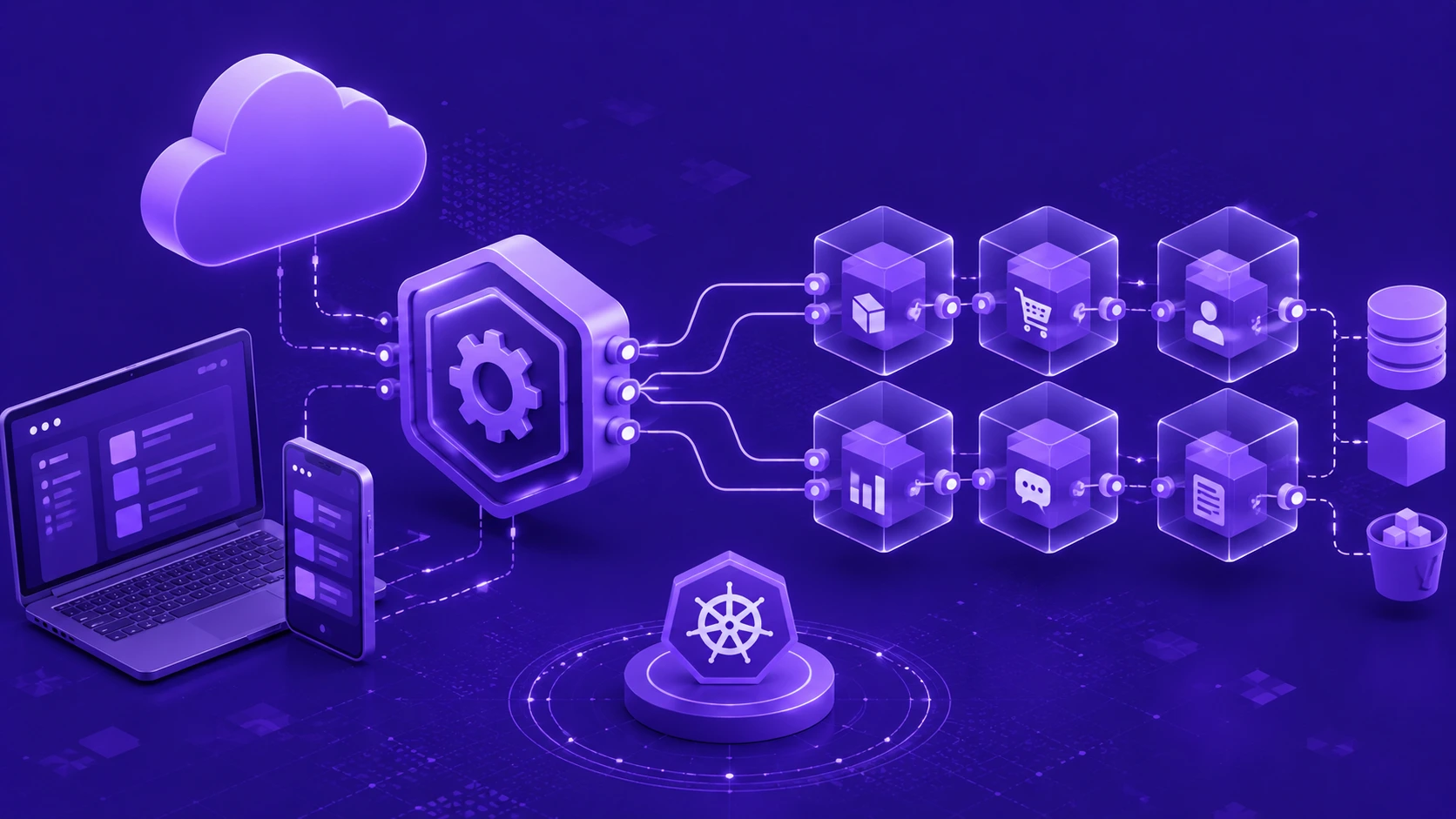
The shift from monolithic applications to distributed microservices compliance framework architecture has fundamentally changed the threat surface that compliance and security teams must manage. In a microservices compliance framework environment, you may have fifty, two hundred, or even a thousand independent services, each handling data, communicating over networks, and exposing APIs. Each one is a potential entry point for a threat actor and a potential point of regulatory failure.
Key Takeaways
- 01. A Microservices Compliance Framework reduces security exposure by enforcing per-service controls rather than perimeter-only protection, critical for platforms operating in India and the UAE.
- 02. Embedding microservices compliance checks directly into CI/CD pipelines transforms regulatory adherence from a periodic audit into a continuous, automated process.
- 03. ISO 27001 and SOC 2 are the most widely adopted compliance standards for cloud-native microservices architectures in regulated markets like BFSI and healthcare.
- 04. Microservices data security requires mutual TLS, secrets rotation, and per-service IAM roles to prevent lateral movement if a single service is compromised.
- 05. Cloud compliance for microservices in multi-cloud setups demands provider-agnostic policy tools like Open Policy Agent to maintain consistent governance across AWS, Azure, and GCP.
- 06. API gateway enforcement is among the most impactful microservices security best practices, centralising authentication, rate limiting, and threat detection at the service boundary.
- 07. PCI-DSS compliance for microservices requires tokenising payment data at service ingress points and maintaining immutable audit logs for every transaction event processed.
- 08. Microservices governance structures define clear service ownership, change approval workflows, and incident response accountability across distributed engineering teams.
- 09. Zero-trust architecture aligned with a formal Microservices Compliance Framework eliminates implicit service trust, significantly reducing the blast radius of any internal breach.
- 10. Future compliance trends including AI-driven anomaly detection and policy-as-code will make real-time microservices compliance verification standard practice by 2027.
Modern software platforms built on microservices architecture face a compliance landscape that is simultaneously more complex and more consequential than anything that came before. Over eight years of working with enterprises across India, Dubai, and global markets, our teams have observed a consistent pattern: organisations that build compliance into their service architecture from day one scale faster, audit cleaner, and recover from incidents far more efficiently than those that retrofit security controls onto existing systems.
This guide covers everything from foundational microservices compliance framework governance principles to advanced automation in DevSecOps pipelines, with specific reference to regulatory contexts in India and the UAE where our work has been most concentrated.
Why Microservices Compliance Matters for Modern Applications
The shift from monolithic applications to distributed microservices compliance framework architecture has fundamentally changed the threat surface that compliance and security teams must manage. In a monolith, a single boundary controls access. In a microservices compliance framework environment, you may have fifty, two hundred, or even a thousand independent services, each handling data, communicating over networks, and exposing APIs. Each one is a potential entry point for a threat actor and a potential point of regulatory failure.
In markets like Dubai, where the Dubai International Financial Centre (DIFC) enforces strict data protection regulations, and in India, where the Digital Personal Data Protection Act (DPDPA) is reshaping how companies handle citizen data, the stakes of non-compliance have never been higher. Financial penalties are significant, but the reputational damage in highly connected business communities like Mumbai’s fintech corridor or Dubai’s DIFC ecosystem is often more lasting.
68%
of cloud-native breaches originate from misconfigured inter-service permissions in distributed architectures
3.4x
faster compliance audit completion for teams with automated microservices compliance framework governance pipelines
82%
of enterprise teams in India and UAE now cite compliance as a primary driver for microservices compliance framework governance investment
A formal Microservices Compliance Framework is not a bureaucratic overhead. It is a structural foundation that allows engineering teams to move fast without breaking regulatory obligations. It defines what controls apply, where they apply, who is responsible, and how compliance is continuously verified.
What Is a Microservices Compliance Framework
A Microservices Compliance Framework is a documented, enforceable collection of policies, controls, standards, and processes that apply across the entire lifecycle of individual microservices compliance framework within a distributed system. It is not a single tool or product. It is an architectural discipline that spans identity management, data classification, network security, audit logging, secrets management, and regulatory mapping.
The framework typically operates across three layers that must be addressed simultaneously for compliance to be meaningful rather than superficial.
What Security Framework Should You Follow for Microservices Compliance

No single security framework covers every dimension of microservices compliance framework . The most robust implementations we have built for clients in Bangalore, Hyderabad, and Dubai combine multiple frameworks, mapped to each other so that controls are not duplicated and gaps are not left unaddressed.
The most commonly used frameworks in these markets include NIST SP 800-204 (specifically designed for microservices security), the CIS Kubernetes Benchmark, ISO 27001, SOC 2 Type II, and the OWASP API Security Top 10. For financial services clients in both countries, PCI-DSS is non-negotiable.
Security Framework Comparison for Microservices
| Framework | Primary Focus | Best Suited For | India/UAE Relevance |
|---|---|---|---|
| NIST SP 800-204 | Microservices-specific security | All industries | High |
| ISO 27001 | Information security management | Enterprise, BFSI, healthcare | Very High |
| SOC 2 Type II | Trust service criteria | SaaS, cloud-native platforms | High (UAE fintech) |
| PCI-DSS v4.0 | Payment data security | Fintech, e-commerce, banking | Mandatory |
| OWASP API Top 10 | API vulnerability prevention | API-first microservices | High |
Understanding Microservices Governance for Secure Applications
Microservices governance is the operational backbone of any effective Microservices Compliance Framework. Where compliance defines what must be true, governance defines who ensures it, through what processes, with what approval gates, and how failures are escalated and remediated.
In our experience working with product companies in Pune, Bangalore, and with scale-ups in Dubai’s D3 tech district, governance failures are the most common root cause of microservices compliance framework. Services get deployed without proper ownership registered, incident response processes do not account for distributed failure scenarios, and change management workflows allow configuration drift that silently violates compliance baselines.
Service Ownership Registry
Every service must have a designated team owner accountable for compliance posture and incident response.
Policy Versioning
Compliance policies must be version-controlled alongside code, with change history and approval audit trails.
Compliance Dashboards
Real-time visibility into compliance posture across all services, with automated alerting on drift detection.
Escalation Runbooks
Pre-defined response procedures for compliance violations, mapped to service ownership and regulatory notification timelines.
Microservices Security Best Practices Every Business Should Follow
Microservices compliance framework security best practices have evolved considerably over the past three years as organisations in both India and the UAE have encountered production-grade security incidents in distributed systems. The following practices are not theoretical guidelines but operational standards we enforce across all client engagements, regardless of industry or scale.
Implement Zero-Trust Between Every Service
Never assume that because a request originates from inside the cluster it is trustworthy. Every service-to-service call must be authenticated using mutual TLS or short-lived JWT tokens, with authorisation verified at the receiving service level. Service meshes like Istio enforce this transparently without requiring application code changes.
Centralise Secrets Management
Hardcoded credentials in container images or environment variables are one of the leading causes of microservices compliance framework security incidents. HashiCorp Vault or AWS Secrets Manager integrated with Kubernetes service accounts provides dynamic, short-lived credentials that are automatically rotated, leaving no static secrets to exfiltrate.
Enforce Least-Privilege IAM at Service Level
Every microservice should have exactly the cloud permissions it needs to perform its function, with no additional access. Wildcard IAM policies are a compliance violation waiting to happen. Use Kubernetes service account annotations with cloud IAM workload identity bindings to scope permissions precisely.
Scan Container Images in CI Before Deployment
Tools like Trivy, Snyk, or Grype integrated into your build pipeline catch known CVEs in base images and application dependencies before they reach any environment. Blocking builds on critical vulnerabilities is a core microservices security best practice that prevents known risks from reaching production.
Structured, Centralised Audit Logging
Every service must emit structured audit logs for security-relevant events: authentication attempts, authorisation decisions, data access, and configuration changes. These logs must flow to a centralised, tamper-evident log store that supports the retention periods required by applicable regulations in India and the UAE.
Microservices Data Security for Sensitive Business Information
Microservices data security is particularly challenging because data flows across service boundaries constantly, in formats that range from structured database queries to unstructured event stream payloads. A single user action may trigger dozens of inter-service data exchanges, each of which represents a potential point of data exposure if controls are not consistently applied.
Our approach begins with data classification. Before you can protect data correctly, every service must know what type of data it handles. The data taxonomy should map to regulatory classifications: personal data under India’s DPDPA, financial data under RBI guidelines, health data under ABDM frameworks, or data subject to DIFC data protection rules for UAE-based operations.
Core Microservices Data Security Controls
Encryption at Rest
AES-256 encryption for all persistent data stores, with per-service encryption keys managed through KMS
Encryption in Transit
TLS 1.3 mandatory for all service communications, including internal cluster traffic, no exceptions
Data Tokenisation
Sensitive fields like PAN, Aadhaar, Emirates ID references replaced with non-sensitive tokens at service ingress
Data Residency Controls
Ensuring regulated data stored in India or UAE regions as mandated, with cross-border transfer controls enforced
For healthcare and financial services clients operating across India and the UAE, data residency enforcement has become one of the most technically complex microservices compliance framework data security challenges. Services must understand where they are running geographically and apply appropriate controls, which is why our Microservices Compliance Framework includes region-aware policy enforcement baked into the service configuration layer.
Cloud Compliance for Microservices in Multi-Cloud Environments
Cloud compliance for microservices compliance framework becomes exponentially more complex when your architecture spans multiple cloud providers. Many of our enterprise clients in Dubai operate on a combination of AWS (Bahrain region), Microsoft Azure (UAE North), and sometimes GCP, either because of business continuity requirements, vendor preference across acquired entities, or to leverage specific services available only on particular clouds.
The core challenge is that each cloud provider uses different terminology, different native tooling, and different shared responsibility models. Achieving consistent cloud compliance for microservices compliance framework across all three requires an abstraction layer that translates your compliance policies into provider-specific controls automatically.
Multi-Cloud Compliance Tooling Comparison
| Tool | Function | Multi-Cloud | Open Source |
|---|---|---|---|
| Open Policy Agent | Policy-as-code enforcement | Yes | Yes |
| Terraform Sentinel | Infrastructure compliance gates | Yes | No (HCP) |
| Falco | Runtime security detection | Yes | Yes |
| Prisma Cloud | Cloud security posture management | Yes | No |
For Indian enterprises running on AWS Mumbai with disaster recovery on Azure Central India, our Microservices Compliance Framework uses OPA as the unified policy engine with provider-specific adapters that translate the same policy rule into the correct enforcement mechanism on each cloud. This approach ensures that cloud compliance for microservices is not a separate project for each provider but a single, consistent effort.
ISO 27001 Compliance for Secure Microservices Development
ISO 27001 remains the most widely recognised information security management standard globally, and its relevance to microservices compliance framework is substantial. While ISO 27001 was not written specifically for microservices architectures, its control families in Annex A map directly to distributed system security concerns when interpreted thoughtfully.
For clients pursuing ISO 27001 certification in India’s IT services sector, where the standard is effectively a prerequisite for enterprise contracts, we help map microservices-specific controls to Annex A requirements. Access control policies at the service level map to A.9. Cryptographic controls for inter-service communication and data at rest map to A.10. System acquisition, building, and maintenance controls in A.14 cover secure service design and the secure software supply chain.
Key ISO 27001 Annex A Controls Relevant to Microservices
A.9 – Access Control
Service identity, mTLS, JWT validation, least-privilege service accounts
A.10 – Cryptography
TLS enforcement, key management, encryption key rotation schedules
A.12 – Operations Security
Change management for service configs, vulnerability management, logging
A.14 – Secure Development
SAST/DAST in pipelines, dependency scanning, security code review gates
PCI-DSS Compliance for Payment and Financial Applications
PCI-DSS compliance for microservices-based payment platforms presents unique scope management challenges. In a monolith, the cardholder data environment (CDE) is a clearly bounded system. In a microservices architecture, any service that touches, transmits, or stores cardholder data is in scope, and with poor design, your entire platform can become the CDE.
For fintech clients in Mumbai’s payments ecosystem and payment gateway operators in Dubai, we use a scope minimisation strategy: tokenise cardholder data at the very first point of ingress, before it touches any business logic service. This means only the tokenisation service and its immediate network segment are technically in scope for the most demanding PCI-DSS requirements, dramatically reducing audit complexity and compliance cost.
PCI-DSS v4.0 introduced several new requirements that are specifically relevant to microservices compliance framework architectures, including requirements for authenticated internal API communications (Requirement 6.4) and targeted risk analysis for customised implementations (Requirement 12.3).[1]
SOC 2 Compliance for Cloud-Native Microservices Platforms
SOC 2 Type II compliance has become increasingly important for SaaS and cloud-native platform businesses operating in India and the UAE, particularly those serving enterprise or government customers who require evidence of sustained security controls over time rather than point-in-time audits.
The SOC 2 Trust Service Criteria map well to microservices compliance framework requirements. The Security criterion covers logical access controls, change management, and risk monitoring. The Availability criterion requires documented processes for service resilience and incident response. Processing Integrity and Confidentiality criteria directly address microservices data security requirements for accurate, protected data handling.
Security
Protected against unauthorised access
Availability
Available for operation and use
Integrity
Complete, accurate, timely processing
Confidentiality
Information designated confidential is protected
Privacy
Personal information collected and handled correctly
Common Compliance Challenges in Microservices Architecture
After eight years and hundreds of microservices compliance framework implementations across sectors ranging from BFSI in Mumbai to logistics platforms in Dubai, the compliance challenges we encounter most frequently are not exotic or theoretical. They are predictable patterns that emerge when compliance is treated as a post-deployment concern rather than an architectural discipline.
Service Sprawl Without Ownership
As service counts grow, ownership records become stale. Services deployed by teams that no longer exist continue running with outdated security configurations and no one notices until an audit or an incident forces the issue.
Inconsistent Logging Schemas
Different services emit logs in incompatible formats, making centralised audit trail reconstruction impossible. Regulators in India and the UAE increasingly require complete, queryable audit trails, and fragmented logs fail this requirement.
Third-Party Service Dependencies
Microservices frequently integrate with external APIs, messaging systems, and data providers that have their own compliance postures. Without a third-party risk management process, non-compliant integrations can undermine an otherwise strong internal compliance posture.
Configuration Drift in Long-Running Environments
Manual interventions, hotfixes, and undocumented configuration changes cause production environments to drift from their declared compliance baseline. Without continuous compliance scanning, drift accumulates silently for months before it is discovered.
Automating Microservices Compliance in DevSecOps Pipelines
The most impactful shift any engineering organisation can make in its compliance posture is the transition from periodic, manual compliance assessments to automated, continuous compliance verification embedded in the DevSecOps pipeline. This is not an aspirational future state. It is an achievable operational reality with the tooling available today.
Code Commit
SAST scan, dependency audit with OWASP Dependency-Check, secrets scan with GitLeaks or TruffleHog. Build fails immediately on critical findings.
Container Build
Trivy or Grype container image scan. Dockerfile lint with Hadolint to enforce base image standards. Non-root user enforcement check.
Infrastructure as Code
Checkov or tfsec scan of Terraform and Helm charts. OPA policy gate validates resource configurations against your Microservices Compliance Framework rules before any infrastructure change proceeds.
Staging Deployment
DAST scan with OWASP ZAP against running services. Penetration test automation for high-risk services. mTLS and network policy verification.
Production Runtime
Falco runtime anomaly detection. Continuous compliance drift scanning with kube-bench and cloud security posture management tools. Automated alerting and ticket creation on compliance violations.
API Security and Access Control in Microservices
APIs are the connective tissue of any microservices compliance framework architecture, and API security is therefore a central pillar of microservices compliance framework. The OWASP API Security Top 10 identifies the most prevalent API vulnerabilities in production systems, and our experience with clients across India and the UAE confirms that Broken Object Level Authorisation (BOLA) and Broken Authentication remain the most commonly exploited weaknesses in microservices-based platforms.
An API gateway is the most effective single control for centralising API security enforcement. Rather than implementing authentication, rate limiting, and threat detection in every individual service, the gateway intercepts all external traffic and applies consistent controls before forwarding to internal services. This simplifies the compliance surface and provides a single authoritative point for API audit logs.
Authentication
OAuth 2.0 and OpenID Connect for external consumers, short-lived JWTs for internal service calls, mTLS for service mesh communication
Authorisation
Attribute-based access control (ABAC) evaluated at service level, not just gateway level. OPA policy bundles pushed to sidecars for distributed authorisation
Rate Limiting
Per-consumer, per-endpoint rate limits enforced at gateway with distributed rate limit counters using Redis to handle horizontal scale correctly
Best Practices for Long-Term Microservices Compliance
Sustaining microservices compliance over the multi-year lifecycle of a production platform requires more than good initial architecture. It requires cultural practices, organisational habits, and tooling investments that make compliance a natural byproduct of normal engineering activity rather than an additional workload imposed by a separate team.
Compliance as Code
Store all compliance policies in version-controlled repositories alongside application code. Pull requests for policy changes go through the same review and approval process as feature code.
Quarterly Compliance Reviews
Schedule regular reviews of the microservices compliance framework against the current regulatory landscape in India and the UAE. Laws and standards change; your framework must be updated to reflect new requirements before deadlines, not after.
Chaos Engineering for Compliance
Intentionally inject compliance failures in controlled test environments to verify that detection tooling, alerting pipelines, and incident response processes work as expected before a real failure occurs.
Future Trends in Microservices Compliance and Security
The next generation of Microservices Compliance Framework design is already being shaped by several converging trends that technology leaders in India and the UAE should be actively tracking and planning for now, rather than reacting to later.
AI-Driven Anomaly Detection
Machine learning models trained on normal service communication patterns will identify compliance-relevant anomalies in real time, catching subtle violations that rule-based systems miss entirely. This will make microservices compliance monitoring far more proactive than reactive.
eBPF-Based Security Observability
Extended Berkeley Packet Filter technology enables deep kernel-level observability of service behaviour without modifying application code or adding sidecar proxies. This provides richer compliance audit data with lower overhead than current service mesh approaches.
Regulatory API Reporting
Regulators in both India and the UAE are moving toward machine-readable compliance reporting requirements. Future Microservices Compliance Frameworks will need to produce structured compliance evidence consumable directly by regulatory platforms, eliminating the manual report preparation that currently consumes significant compliance team time.
Software Supply Chain Compliance
SBOM (Software Bill of Materials) requirements are being codified into regulatory frameworks globally. Microservices compliance framework in 2026 and beyond will require complete, automated provenance tracking for every dependency across every service, with continuous verification that no compromised components have entered the supply chain.
Organisations that build their Microservices Compliance Framework with extensibility in mind today, using declarative policy-as-code approaches and open standards, will be far better positioned to adopt these emerging capabilities as they mature. The investment in getting the foundation right now is the most consequential compliance decision a technical leader can make.
Build a Compliant Microservices Architecture From Day One
Our team has delivered enterprise-grade Microservices Compliance Frameworks for clients across India and Dubai. Let’s build yours right.
People Also Ask
Q1.1. What is a Microservices Compliance Framework and why does it matter?
A Microservices Compliance Framework is a structured set of policies, controls, and technical standards that ensure each microservice compliance framework in a distributed system meets regulatory, security, and operational requirements. It matters because without it, individual services can become security blind spots that expose your entire platform to data breaches and regulatory penalties.
Q2.2. How do I implement compliance across hundreds of microservices at once?
Implementing compliance at scale requires a combination of automated policy enforcement, centralized identity management, and service mesh tools like Istio or Linkerd. You embed compliance checks directly into your CI/CD pipelines so every deployment is automatically validated against your defined standards before reaching production.
Q3.3. What is the difference between microservices governance and microservices compliance?
Microservices compliance framework governance defines the rules, ownership, and decision-making structure for how services are built and managed. Microservices compliance is the measurable verification that those rules are actually being followed, including regulatory requirements from bodies like GDPR, PCI-DSS, and ISO 27001.
Q4.4. Which security framework is best for microservices compliance in India and the UAE?
For businesses operating in India and the UAE, a layered approach works best. This typically combines ISO 27001 for information security management, SOC 2 for cloud-native trust principles, and local regulatory guidelines such as RBI norms in India or TDRA regulations in the UAE, all mapped onto a unified microservices compliance policy.
Q5.5. How does microservices data security differ from traditional application security?
Traditional application security protects a single monolithic boundary. Microservices compliance framework data security must protect data in transit between dozens or hundreds of services simultaneously, requiring mutual TLS, encrypted inter-service communication, zero-trust access controls, and per-service secrets management rather than a single shared credential store.
Q6.6. Is cloud compliance for microservices different across AWS, Azure, and GCP?
Yes, each cloud provider has different native compliance tooling, audit log formats, and shared responsibility boundaries. A strong cloud compliance for microservices compliance framework strategy uses provider-agnostic tools like Open Policy Agent (OPA) and Terraform policy-as-code to maintain consistent standards regardless of which cloud your services run on.
Q7.7. How do microservices security best practices apply to financial applications in Dubai?
Financial platforms in Dubai operating under CBUAE or DFSA oversight must ensure every microservice handling payment data meets PCI-DSS standards. Microservices compliance framework security best practices in this context include tokenizing card data at the service boundary, enforcing strict API rate limits, and maintaining immutable audit logs for every transaction event.
Q8.8. Can small and mid-sized companies in India afford microservices compliance tooling?
Absolutely. Many open-source tools such as Falco for runtime security, OPA for policy enforcement, and Vault for secrets management provide enterprise-grade microservices compliance capabilities at near-zero licensing cost. Indian SMEs can build a robust compliance posture with managed Kubernetes clusters from providers like AWS Mumbai or Azure Pune regions.
Q9.9. How do you automate microservices compliance in a DevSecOps pipeline?
Automation involves integrating static analysis tools, container image scanners like Trivy or Snyk, and infrastructure-as-code linters directly into your build pipeline. Each code commit triggers a compliance gate that blocks non-compliant builds from progressing, turning compliance from a quarterly audit into a continuous real-time process.
Q10.10. What are the most common microservices compliance failures seen in production environments?
The most frequent failures include misconfigured service-to-service authentication, hardcoded secrets in container images, missing audit trails on sensitive API endpoints, and services running with over-privileged IAM roles. These issues are largely preventable with a disciplined Microservices Compliance Framework applied consistently from the design phase onward.
Explore Services
Related Services
Reviewed by

Aman Vaths
Founder of Nadcab Labs
Aman Vaths is the Founder & CTO of Nadcab Labs, a global digital engineering company delivering enterprise-grade solutions across AI, Web3, Blockchain, Big Data, Cloud, Cybersecurity, and Modern Application Development. With deep technical leadership and product innovation experience, Aman has positioned Nadcab Labs as one of the most advanced engineering companies driving the next era of intelligent, secure, and scalable software systems. Under his leadership, Nadcab Labs has built 2,000+ global projects across sectors including fintech, banking, healthcare, real estate, logistics, gaming, manufacturing, and next-generation DePIN networks. Aman’s strength lies in architecting high-performance systems, end-to-end platform engineering, and designing enterprise solutions that operate at global scale.