Ai Overview
Real estate tokenization represents a transformative approach to property investment, and selecting the right real estate tokenization provider determines your project’s success. Understanding how to evaluate these providers protects your investment and positions your tokenized asset for optimal market performance. Market Insight: Full-service providers command 70% market share due to comprehensive offerings reducing client complexity. Setup fees typically range from $25,000 to $150,000 depending on complexity.
Key Takeaways
- A trusted real estate tokenization provider enables fractional ownership, unlocking global investor access for properties in USA, UK, UAE, and Canada.
- Regulatory compliance expertise is the most critical factor when selecting a real estate tokenization provider for enterprise-grade asset tokenization.
- Security audits and smart contract certifications from reputable firms protect investments when working with any real estate tokenization provider.
- Integration capabilities with KYC/AML systems and investor management platforms determine operational efficiency for your real estate tokenization provider.
- Blockchain infrastructure choices made by your real estate tokenization provider directly impact transaction costs, scalability, and secondary market liquidity.
- Enterprise clients should evaluate a real estate tokenization provider based on track record, technology stack, and long-term platform reliability.
- Cost structures vary significantly between real estate tokenization provider options, with models ranging from percentage-based to subscription pricing.
- The right real estate tokenization provider offers end-to-end support from legal structuring through token issuance to secondary market integration.
Introduction to Real Estate Tokenization for Enterprises and Property Owners
Real estate tokenization represents a transformative approach to property investment, and selecting the right real estate tokenization provider determines your project’s success. With over eight years of experience guiding enterprises through blockchain implementation across USA, UK, UAE, and Canadian markets, our agency has evaluated dozens of providers and witnessed both successful launches and costly failures. The tokenization market has matured significantly, with providers now offering comprehensive platforms that handle everything from smart contract creation to regulatory compliance and secondary market integration. Understanding how to evaluate these providers protects your investment and positions your tokenized asset for optimal market performance.
What Is Real Estate Tokenization and How Does It Work?
Real estate tokenization converts property ownership rights into digital tokens on a blockchain through specialized smart contracts. A real estate tokenization provider facilitates this process by creating the legal structure, deploying smart contracts, and managing the token issuance. Each token represents a fractional ownership stake, enabling investors to purchase portions of high-value properties. The blockchain maintains an immutable record of ownership, automates dividend distributions, and enables secondary market trading. This technology democratizes real estate investment while providing property owners access to global capital pools previously unavailable through traditional financing.
Key Benefits of Real Estate Tokenization for Property Owners
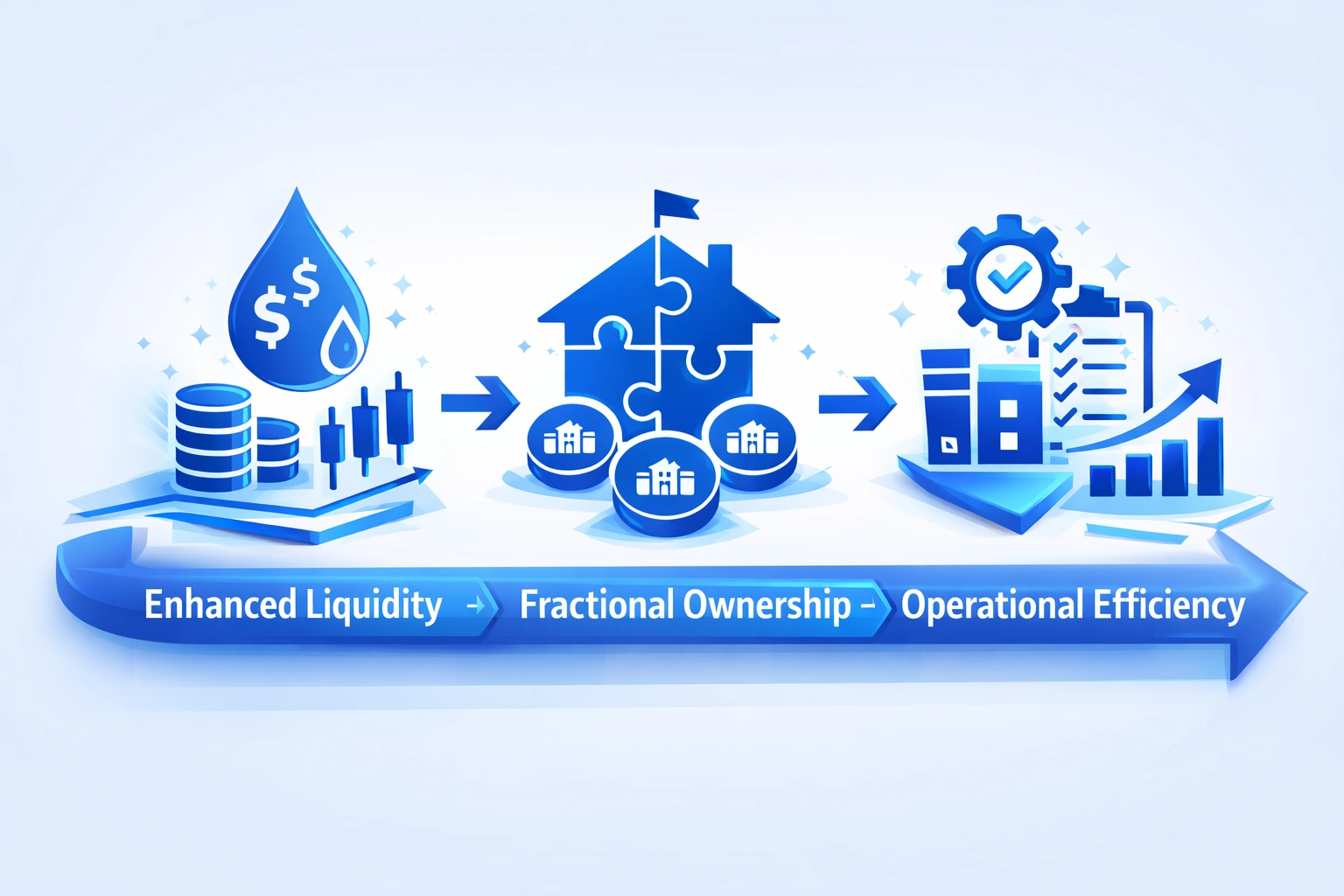
Enhanced Liquidity
- 24/7 trading capability
- Secondary market access
- Faster exit options
- Global investor reach
Fractional Ownership
- Lower investment minimums
- Broader investor pool
- Diversification options
- Democratic access
Operational Efficiency
- Automated distributions
- Reduced intermediaries
- Lower admin costs
- Transparent reporting
Enterprise Use Cases for Real Estate Tokenization Platforms
| Enterprise Type | Use Case | Key Benefit |
|---|---|---|
| REITs | Portfolio tokenization | Global investor access |
| Property Developers | Capital raising | Alternative financing |
| Asset Managers | Fund tokenization | Operational efficiency |
| Family Offices | Estate planning | Simplified transfers |
| Commercial Owners | Building fractionalization | Liquidity extraction |
Select the Right Real Estate Tokenization Provider
Our experts guide enterprises through real estate tokenization provider evaluation and selection. Get professional assistance choosing your tokenization partner.
Types of Real Estate Tokenization Providers in the Market
The market offers several types of real estate tokenization provider options. Full-service providers handle everything from legal structuring to token issuance and secondary market integration. Technology-focused providers offer white-label platforms for enterprises wanting custom branding. Compliance-first providers specialize in regulatory navigation across USA, UK, UAE, and Canada. Understanding these distinctions helps property owners select the real estate tokenization provider aligned with their specific needs and internal capabilities.
Market Insight: Full-service providers command 70% market share due to comprehensive offerings reducing client complexity.
Core Features to Look for in a Real Estate Tokenization Provider
| Feature Category | Must-Have Capabilities | Priority |
|---|---|---|
| Smart Contracts | Audited, upgradeable, compliant | Critical |
| Compliance Engine | KYC/AML, accreditation, restrictions | Critical |
| Investor Portal | Dashboard, docs, distributions | High |
| Reporting | Tax documents, analytics, audit trails | High |
| API Integration | RESTful APIs, webhooks, SDKs | Medium |
Blockchain Infrastructure and Technology Stack Evaluation
Evaluating blockchain infrastructure is essential when selecting a real estate tokenization provider. Consider whether they support Ethereum, Polygon, Avalanche, or private blockchains based on your requirements. Transaction costs, throughput, and environmental considerations vary significantly between chains. The technology stack should include secure custody solutions, robust APIs, and proven smart contract frameworks. Leading providers use battle-tested libraries and maintain regular security audits.
ERC-1400 Standard
Low-Cost Option
Fast Finality
Legal, Regulatory, and Compliance Capabilities of Tokenization Providers
Regulatory compliance capabilities distinguish professional real estate tokenization provider options from risky alternatives. Providers must demonstrate expertise in securities laws across target jurisdictions. USA offerings require SEC Regulation D, Regulation A+, or Regulation S compliance. UK requires FCA authorization considerations, while UAE follows VARA and ADGM frameworks. Canada has provincial securities requirements. The right real estate tokenization provider maintains legal partnerships and templates for compliant offering structures.
Real Estate Tokenization Implementation Lifecycle
Asset Due Diligence
Real estate tokenization provider conducts property valuation, legal title review, and compliance assessment.
Legal Structuring
Establish SPV, define token rights, and create compliant offering documents for target jurisdictions.
Smart Contract Creation
Build and deploy security token contracts with compliance rules, transfer restrictions, and dividend logic.
Security Audit
Third-party audit of smart contracts for vulnerabilities and compliance verification.
Platform Configuration
Configure investor portal, KYC flows, and distribution mechanisms on provider platform.
Token Issuance
Launch offering, onboard investors through KYC, and distribute tokens upon investment.
Secondary Market Setup
Integrate with compliant trading venues for secondary liquidity and price discovery.
Ongoing Management
Continuous compliance monitoring, dividend distributions, and investor communications.
Security Standards and Smart Contract Audit Requirements
Security standards separate trustworthy real estate tokenization provider options from risky alternatives. Demand smart contract audits from recognized firms like CertiK, Trail of Bits, or OpenZeppelin. SOC 2 Type II certification demonstrates operational security controls. Penetration testing should cover web applications and APIs. Multi-signature custody solutions protect token reserves. The best providers maintain bug bounty programs and publish audit reports publicly.[1]
Token Standards, Asset Fractionalization, and Liquidity Options
ERC-1400
- Security token standard
- Transfer restrictions
- Document management
- Partition support
ERC-3643
- Compliance-focused
- Identity management
- Claim verification
- Regulatory ready
Fractionalization
- Minimum investment
- Token denomination
- Voting rights
- Distribution logic
Integration with KYC, AML, and Investor Management Systems
A capable real estate tokenization provider offers seamless integration with KYC/AML verification services, accreditation verification for qualified investors, and comprehensive investor management systems. Look for providers integrating with established vendors like Jumio, Onfido, or Veriff for identity verification. Accreditation verification should support USA standards (Rule 506), UK sophisticated investor requirements, and UAE qualified investor definitions. Investor portals should provide document management, communication tools, and self-service capabilities.
Scalability, Performance, and Long-Term Platform Reliability
| Reliability Factor | Evaluation Criteria | Minimum Standard |
|---|---|---|
| Uptime SLA | Platform availability guarantee | 99.9% minimum |
| Track Record | Years in operation | 3+ years |
| Assets Under Management | Total tokenized value | $100M+ |
| Funding Status | Financial backing | Series A or profitable |
Provider Selection Criteria Framework
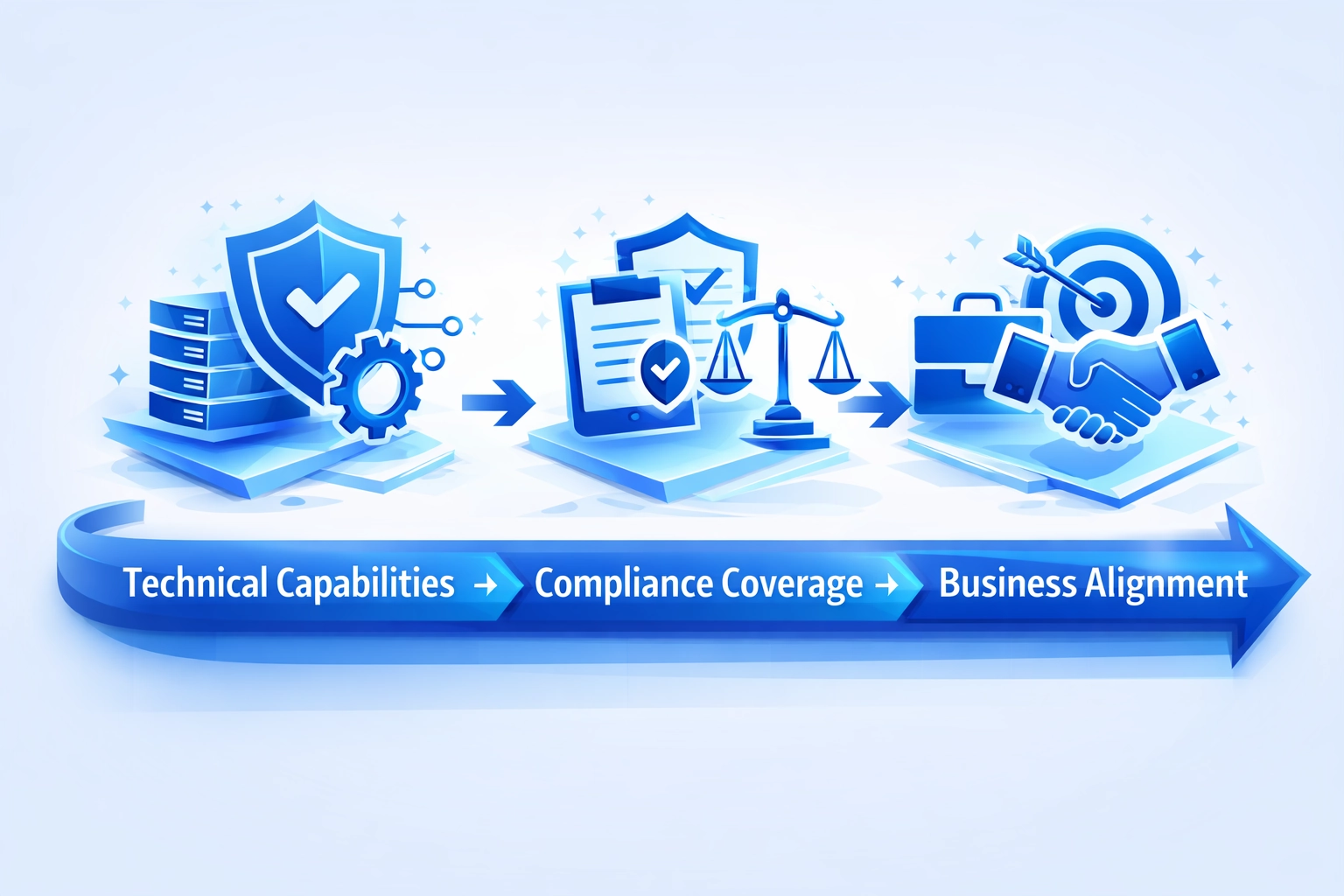
Technical Capabilities
- Blockchain expertise
- Security certifications
- API completeness
- Scalability proof
Compliance Coverage
- Jurisdiction support
- Legal partnerships
- Regulatory track record
- Audit capabilities
Business Alignment
- Pricing transparency
- Support quality
- Growth alignment
- Exit provisions
Cost Structure, Pricing Models, and ROI Considerations
Understanding cost structures helps compare real estate tokenization provider options objectively. Setup fees typically range from $25,000 to $150,000 depending on complexity. Ongoing platform fees average 0.5-2% of assets under management annually. Transaction fees for secondary trading range from 0.1-1% per trade. Some providers offer success-based pricing tied to capital raised. Calculate total cost of ownership over 5+ years and compare against traditional financing alternatives and the liquidity premium tokenization provides.
Industry Standards for Real Estate Tokenization Provider Selection
Standard 1: Require third-party smart contract audits from recognized security firms before any provider engagement.
Standard 2: Verify regulatory compliance track record in your target jurisdictions before signing agreements.
Standard 3: Demand SOC 2 Type II certification or equivalent operational security validation.
Standard 4: Review at least three client references with similar asset types and jurisdiction requirements.
Standard 5: Negotiate clear data ownership and platform migration terms in all provider contracts.
Standard 6: Ensure escrow arrangements for source code and documentation in case of provider failure.
How to Finalize the Best Real Estate Tokenization Provider for Your Business
Finalizing your real estate tokenization provider selection requires systematic evaluation across technical, legal, and business dimensions. Create a weighted scorecard covering compliance capabilities, technology stack, security certifications, pricing transparency, and support quality. Conduct reference calls with existing clients managing similar assets. Request pilot projects or sandbox environments to test platform capabilities firsthand. Negotiate service level agreements covering uptime, support response times, and performance guarantees.
With eight years of experience guiding enterprises through real estate tokenization provider selection across USA, UK, UAE, and Canadian markets, our agency has seen that thorough due diligence prevents costly mistakes. The right provider becomes a long-term partner in your tokenization journey, supporting growth as your portfolio expands and regulations evolve. Take time to evaluate options comprehensively rather than rushing into engagements that may require expensive corrections later.
Find Your Ideal Real Estate Tokenization Provider
Our team helps enterprises evaluate and select the right real estate tokenization provider for their specific requirements and target markets.
People Also Ask
Q1.1. What is a real estate tokenization provider and what services do they offer?
A real estate tokenization provider offers technology platforms and services to convert property ownership into blockchain-based digital tokens. These providers handle smart contract creation, regulatory compliance, investor management, and secondary market integration. They enable fractional ownership and global investment access for property owners.
Q2.2. How do I choose the best real estate tokenization provider for my property?
Select a real estate tokenization provider based on regulatory compliance expertise, blockchain technology stack, security audit certifications, and track record. Evaluate their experience in your target markets like USA, UK, UAE, or Canada. Consider integration capabilities, pricing transparency, and ongoing support services.
Q3.3. What are the costs associated with working with a real estate tokenization provider?
Real estate tokenization provider costs typically include platform fees ranging from 1-5% of asset value, smart contract deployment charges, legal and compliance fees, and ongoing maintenance costs. Some providers offer subscription models while others charge per-transaction fees based on token sales volume.
Q4.4. Is real estate tokenization legal and how do providers ensure compliance?
Real estate tokenization is legal in most jurisdictions when properly structured. A reputable real estate tokenization provider ensures compliance through securities law adherence, KYC/AML integration, and jurisdiction-specific regulations. They work with legal counsel to structure offerings as security tokens or real estate investment contracts.
Q5.5. How long does it take to tokenize a property with a provider?
The tokenization process with a real estate tokenization provider typically takes 8-16 weeks depending on complexity. This includes legal structuring, smart contract creation, compliance verification, platform integration, and investor onboarding setup. Complex multi-jurisdictional offerings may require additional time for regulatory approvals.
Q6.6. What blockchain platforms do real estate tokenization providers typically use?
Real estate tokenization providers commonly use Ethereum, Polygon, Avalanche, and Tezos blockchains. Ethereum remains popular for ERC-1400 security tokens, while Polygon offers lower transaction costs. The choice depends on scalability needs, regulatory requirements, and secondary market compatibility for your tokenized assets.
Q7.7. Can tokenized real estate be traded on secondary markets?
Yes, tokenized real estate can be traded on secondary markets through compliant exchanges and alternative trading systems. A qualified real estate tokenization provider integrates with regulated platforms like tZERO, Securitize Markets, or INX. Secondary liquidity depends on regulatory compliance and market demand for tokens.
Explore Services
Related Services
Reviewed by

Aman Vaths
Founder of Nadcab Labs
Aman Vaths is the Founder & CTO of Nadcab Labs, a global digital engineering company delivering enterprise-grade solutions across AI, Web3, Blockchain, Big Data, Cloud, Cybersecurity, and Modern Application Development. With deep technical leadership and product innovation experience, Aman has positioned Nadcab Labs as one of the most advanced engineering companies driving the next era of intelligent, secure, and scalable software systems. Under his leadership, Nadcab Labs has built 2,000+ global projects across sectors including fintech, banking, healthcare, real estate, logistics, gaming, manufacturing, and next-generation DePIN networks. Aman’s strength lies in architecting high-performance systems, end-to-end platform engineering, and designing enterprise solutions that operate at global scale.