Ai Overview
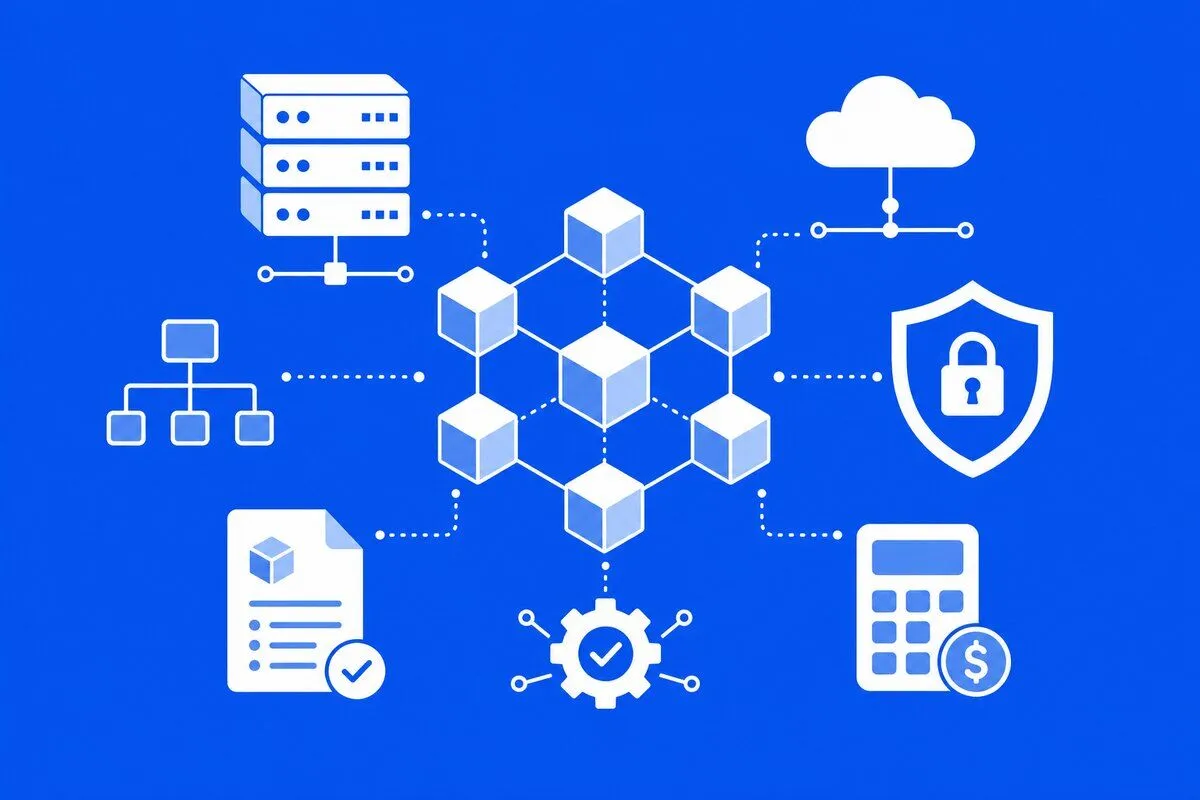
Understanding the Parent Block in Blockchain architecture represents one of the most consequential infrastructure decisions enterprises face when building distributed applications. The Parent Block in Blockchain decision affects every aspect of application behavior from security to cost structure. Organizations with strict change control requirements must budget for unplanned parent block driven updates that cannot be deferred.
Key Takeaways
- Parent Block in Blockchain fundamentally determines security, finality, and operational characteristics that applications inherit without ability to modify independently.
- Vendor lock-in risks increase substantially when enterprises deeply integrate with specific parent block architectures and their proprietary tooling ecosystems.
- Finality models vary dramatically across parent blocks, with probabilistic finality requiring multiple confirmations while deterministic finality provides immediate certainty.
- Cross-chain compatibility depends heavily on Parent Block in Blockchain selection, with some chains offering superior bridge infrastructure and interoperability standards.
- Transaction cost predictability varies by Parent Block in Blockchain, with fee volatility on some chains creating budget uncertainty for enterprise operations.
- Regulatory exposure correlates with parent block jurisdiction, affecting compliance requirements for enterprises operating across USA, UK, UAE, and Canada.
- Parent block governance models directly influence downstream protocol control, determining how enterprises participate in network upgrade decisions.
- Reorg risks from parent blocks create operational challenges requiring robust monitoring and contingency planning for mission-critical applications.
- Vendor exit costs escalate when applications tightly couple with Parent Block in Blockchain specific features, making migration increasingly expensive over time.
- Strategic risk assessment requires evaluating Parent Block in Blockchain roadmap alignment, ecosystem sustainability, and long-term viability before infrastructure commitment.
Parent Block in Blockchain Architecture as a Strategic Infrastructure Decision
Understanding the Parent Block in Blockchain architecture represents one of the most consequential infrastructure decisions enterprises face when building distributed applications. Blockchain Technology has evolved to offer numerous parent chain options, each with distinct characteristics that fundamentally shape what applications built upon them can achieve. The parent block serves as the foundational layer that child chains, Layer 2 solutions, and applications inherit properties from without ability to modify independently.
Our agency has spent over eight years guiding enterprises across the USA, UK, UAE, and Canada through parent block selection decisions. We have observed how organizations that underestimate parent block importance often face costly migrations, unexpected limitations, and strategic constraints that could have been avoided with thorough upfront analysis. The Parent Block in Blockchain decision affects every aspect of application behavior from security to cost structure.
This comprehensive guide examines how parent block architecture influences vendor selection, infrastructure planning, and long-term strategic positioning. Whether evaluating Ethereum, Cardano, Solana, or enterprise-focused alternatives, understanding parent block implications enables informed decisions that support sustainable growth and operational excellence.
Parent Block in Blockchain Finality Models and Their Impact on System Reliability
Finality determines when transactions become irreversible, directly impacting application design and user experience. The Parent Block in Blockchain finality model propagates to all dependent layers, making this characteristic critical for enterprise evaluation.
| Parent Block | Finality Type | Time to Finality | Enterprise Impact |
|---|---|---|---|
| Ethereum | Probabilistic/Economic | 12-15 minutes | Wait for confirmations |
| Cardano | Probabilistic | 10-20 minutes | Settlement delays |
| Solana | Optimistic | 400ms | Fast but reorg risk |
| Avalanche | Deterministic | 1-2 seconds | Immediate certainty |
| Cosmos | Instant | 6-7 seconds | Strong guarantees |
Cross-Chain Compatibility Risks Rooted in Parent Block in Blockchain Selection
Parent Block in Blockchain selection determines cross-chain interoperability options available to applications. Different parent blocks support varying bridge protocols, messaging standards, and asset transfer mechanisms. Enterprises requiring multi-chain presence must evaluate parent block compatibility with target ecosystems before committing infrastructure resources.[1]
EVM-compatible parent blocks offer advantages for cross-chain deployment, enabling code reuse across Ethereum, Polygon, Arbitrum, and similar networks. Non-EVM parent blocks like Solana or Cardano require separate implementations for each target chain, increasing maintenance burden and security audit requirements.
Bridge security vulnerabilities have resulted in billions of dollars in losses across the industry. Parent blocks with mature, battle-tested bridge infrastructure reduce cross-chain operational risks. Organizations operating across London, New York, and Dubai require reliable cross-chain functionality for global operations.
Parent Block in Blockchain Dependency and Its Effect on Upgrade Flexibility
Parent Block in Blockchain dependency constrains upgrade flexibility in ways that compound over time. When parent chains implement breaking changes, dependent applications must adapt regardless of their own priorities. This creates upgrade synchronization requirements that may conflict with enterprise release schedules and change management processes.
Layer 2 solutions inheriting from Ethereum experienced this during major upgrades like the Merge and Dencun, requiring coordinated responses to maintain functionality. Organizations with strict change control requirements must budget for unplanned parent block driven updates that cannot be deferred.
Evaluating parent block upgrade history reveals patterns of frequency, communication quality, and backward compatibility commitments. Parent blocks with stable, predictable upgrade cycles reduce operational uncertainty for enterprises planning multi-year infrastructure investments.
 Vendor Infrastructure Trade-Offs Driven by Parent Block in Blockchain Consensus
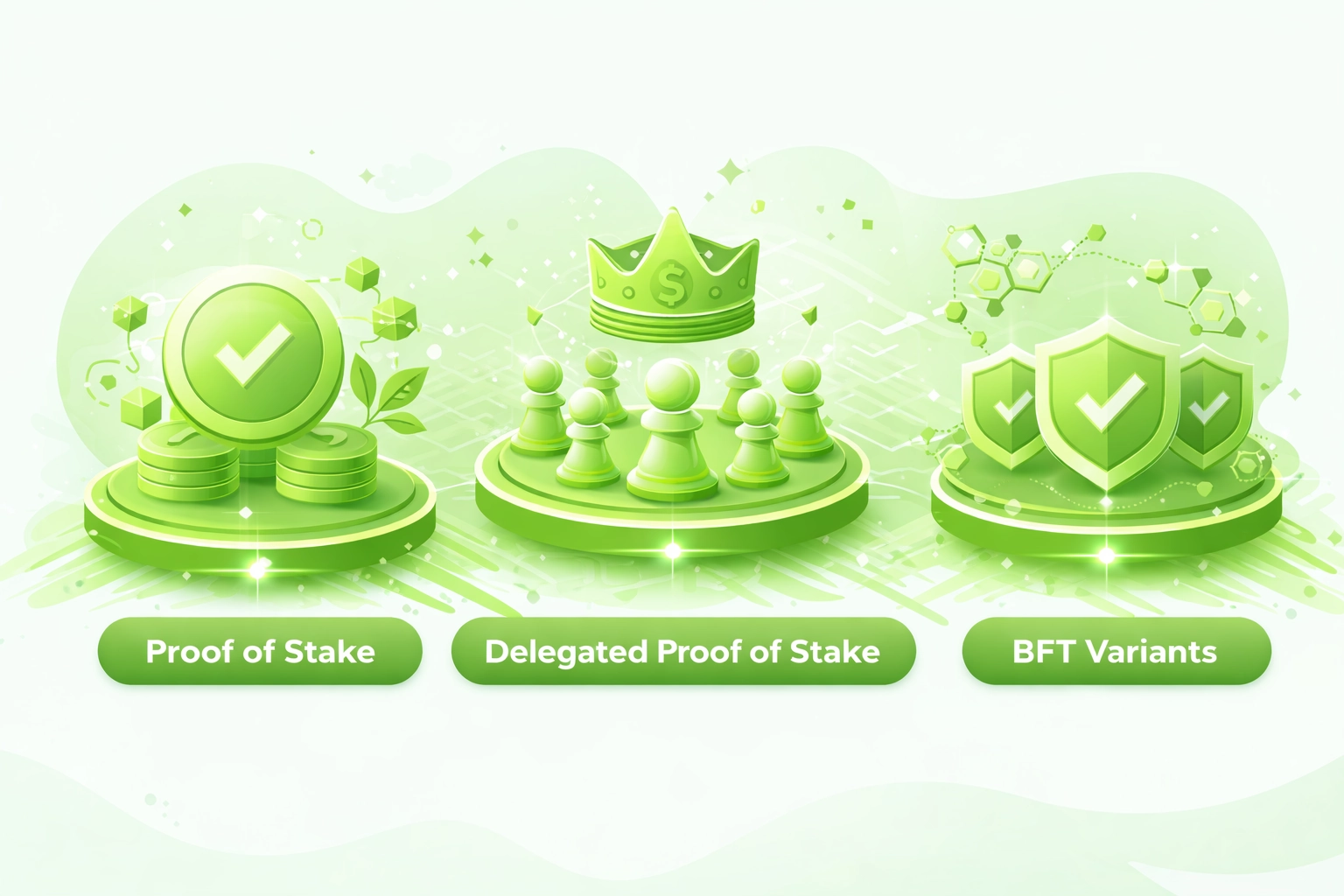
Parent Block in Blockchain consensus mechanisms create distinct vendor infrastructure requirements and trade-offs.
Proof of Stake
- Lower energy requirements
- Validator staking capital needed
- Slashing risk exposure
- Economic security model
Delegated Proof of Stake
- Higher throughput potential
- Validator set centralization
- Governance participation options
- Delegation complexity
BFT Variants
- Fast finality guarantees
- Limited validator scaling
- Strong consistency properties
- Network partition sensitivity
Security Assumptions Inherited from Parent Block Layers
Parent Block in Blockchain security properties cascade to all dependent applications without possibility for independent improvement. If the parent chain has a 51% attack vulnerability, all Layer 2 solutions and applications inherit that risk. Validator centralization concerns on parent blocks translate directly to child chain security exposure regardless of application-level precautions.
Enterprise security teams must evaluate parent block security assumptions with the same rigor applied to their own infrastructure. Historical security incidents, bug bounty programs, formal verification status, and audit history provide insight into parent block security maturity. Organizations in regulated industries across USA and UK face compliance implications from parent block security characteristics.
The Nakamoto coefficient measuring validator decentralization serves as one useful metric, but comprehensive security assessment requires examining economic security, cryptographic assumptions, and operational security practices of parent block maintainers.
Parent Block in Blockchain Governance Influence on Downstream Protocol Control
Parent Block in Blockchain governance determines how protocol changes are proposed, debated, and implemented. Enterprises building on parent blocks must understand their influence over these processes. Some parent chains offer formal governance mechanisms where token holders vote on proposals, while others rely on core developer judgment with informal community input.
Governance participation requires resources including governance tokens, technical expertise to evaluate proposals, and time to engage in decision-making processes. Large enterprises may acquire sufficient stake to influence governance outcomes, while smaller organizations must accept decisions made by others.
Understanding governance timelines helps enterprises plan for potential changes. Some parent blocks implement rapid governance cycles enabling quick adaptation, while others prioritize stability through longer deliberation periods. Organizations in Dubai and Toronto have different governance preferences based on their operational velocity requirements.
Cost Predictability and Fee Volatility from Parent Block Choices
Parent Block in Blockchain fee structures directly impact operational budgeting and user experience. Fee volatility creates planning challenges for enterprises requiring predictable cost structures.
| Parent Block | Average Fee | Fee Volatility | Predictability |
|---|---|---|---|
| Ethereum L1 | $5-50+ | Very High | Low |
| Polygon | $0.001-0.01 | Low | High |
| Solana | $0.00025 | Very Low | Very High |
| Cardano | $0.10-0.30 | Low | High |
| Avalanche | $0.01-0.50 | Medium | Medium |
Parent Block Reorg Risks and Their Operational Implications
Parent Block in Blockchain reorganization events can reverse transactions that applications believed were finalized. Reorg depth varies by parent chain consensus mechanism, with some chains experiencing deeper reorganizations than others. Applications must implement appropriate confirmation requirements based on parent block reorg characteristics to avoid accepting transactions that may later be reversed.
Financial applications require particularly careful reorg risk management. Exchange deposits, payment processing, and settlement systems must wait for sufficient confirmations before crediting funds. The confirmation period directly impacts user experience and capital efficiency, creating trade-offs between security and operational velocity.
Enterprises in the UK and Canada with strict financial compliance requirements often select parent blocks with lower reorg risk profiles. Monitoring infrastructure must detect reorg events and trigger appropriate responses including transaction reversal handling and user notification.
Data Availability Guarantees Inherited from Parent Block Layer
Parent Block in Blockchain data availability determines whether transaction data remains accessible for verification and historical analysis. Different parent chains implement varying data availability guarantees, from full node storage to pruned archives with data availability sampling. Applications requiring long-term data access must understand parent block data retention policies.
Layer 2 solutions post data to parent chains for security, making parent block data availability crucial for rollup security models. If parent chain data becomes unavailable, rollup state reconstruction becomes impossible, potentially freezing user funds. This critical dependency makes data availability evaluation essential for Layer 2 deployment decisions.
Emerging data availability layers like Celestia and EigenDA offer alternatives to posting data directly to expensive parent chains. Evaluating these options expands infrastructure flexibility while requiring assessment of additional trust assumptions.
Parent Block Roadmap Alignment and Vendor Long-Term Viability
Assessing Parent Block in Blockchain roadmap alignment ensures infrastructure investments support long-term objectives.
1. Assess Current State
Evaluate parent block current capabilities, limitations, and market position.
2. Review Published Roadmap
Analyze official roadmap documents and planned feature releases.
3. Evaluate Delivery Track Record
Compare historical roadmap commitments against actual delivery timelines.
4. Assess Funding Sustainability
Review treasury reserves, grant programs, and ongoing revenue streams.
5. Analyze Team Stability
Evaluate core team retention, contributor growth, and expertise depth.
6. Monitor Ecosystem Health
Track developer activity, TVL trends, and application deployment rates.
7. Identify Alignment Gaps
Document areas where parent block direction diverges from enterprise needs.
8. Plan Contingencies
Develop migration strategies if roadmap alignment deteriorates significantly.
Operational Complexity Added by Parent Block Abstractions
Parent Block in Blockchain abstractions introduce operational complexity that enterprises must manage effectively. Different parent chains require distinct tooling, monitoring approaches, and incident response procedures. Operations teams must develop expertise across parent block specific APIs, RPC endpoints, and debugging tools.
Multi-chain deployments multiply operational complexity as each parent block requires separate infrastructure management. Organizations in London and New York often maintain dedicated teams for each parent chain they support, significantly increasing staffing requirements and coordination overhead.
Managed service providers can reduce operational burden but introduce additional vendor dependencies. Evaluating the trade-off between in-house expertise investment and outsourced management requires understanding long-term strategic priorities and risk tolerance.
Vendor Exit Costs Tied to Parent Block Coupling
Parent Block in Blockchain coupling creates exit costs that escalate over deployment duration. Smart contracts deployed on specific parent chains cannot be simply copied to alternatives without rewriting for different virtual machines and state models. Historical transaction data may not be portable, requiring archival solutions for compliance requirements.
User migration presents additional challenges as wallet addresses, token holdings, and accumulated reputation must transition to new infrastructure. Network effects built on specific parent chains lose value when migrating, requiring re-establishment of liquidity and user base on target platforms.
Proactive architecture decisions can reduce exit costs by minimizing parent block specific dependencies. Abstraction layers, modular design patterns, and cross-chain compatible standards help preserve optionality for future infrastructure changes.
Infrastructure Scaling Limits Defined by Parent Block Mechanics
Parent Block in Blockchain throughput establishes upper bounds for dependent application scalability. Even with Layer 2 optimizations, applications remain constrained by parent chain settlement capacity during high-demand periods. Understanding these limits helps enterprises plan capacity requirements and set appropriate user expectations.
Block size and block time parameters determine transaction inclusion rates during congestion. Applications requiring consistent performance must evaluate parent block behavior under stress conditions, particularly during market volatility or viral adoption events that spike transaction volume.
Scaling roadmaps vary significantly across parent chains, with some prioritizing Layer 1 improvements while others focus on Layer 2 ecosystem growth. Enterprises should evaluate scaling approaches for alignment with their growth projections and performance requirements.
Strategic Risk Assessment When Selecting a Parent Blockchain
Parent Block in Blockchain selection requires comprehensive risk assessment across multiple dimensions.
Principle 1: Evaluate parent block security history including past incidents, response quality, and vulnerability disclosure practices.
Principle 2: Assess governance decentralization to understand concentration risks and influence dynamics affecting protocol direction.
Principle 3: Analyze economic sustainability including token economics, validator incentives, and long-term funding mechanisms.
Principle 4: Review regulatory positioning across target markets including USA, UK, UAE, and Canada compliance status.
Principle 5: Evaluate ecosystem maturity including developer tooling, audit firm familiarity, and support infrastructure.
Principle 6: Consider competitive positioning and market share trends indicating ecosystem momentum and developer attraction.
Principle 7: Document interoperability options ensuring cross-chain flexibility if parent block limitations emerge.
Principle 8: Plan exit strategies proactively even when selecting preferred parent blocks to maintain strategic flexibility.
Parent Block Selection Compliance Checklist
Security Assessment
- Audit history reviewed
- Incident response evaluated
- Validator decentralization assessed
Regulatory Compliance
- Jurisdiction status confirmed
- Token classification understood
- Compliance roadmap aligned
Technical Fit
- Performance requirements met
- Finality model appropriate
- Scalability path viable
Strategic Alignment
- Roadmap alignment verified
- Exit strategy documented
- Governance participation planned
Navigate Parent Block Selection With Expert Guidance
Our team helps enterprises across USA, UK, UAE, and Canada make informed parent blockchain infrastructure decisions with confidence.
Frequently Asked Questions
Q1.1. What is a parent block in blockchain and why does it matter?
A parent block in blockchain is the preceding block that a new block references through its cryptographic hash, creating the chain structure. This reference ensures data integrity and chronological ordering of transactions. The parent block contains the hash pointer that links blocks together, making the blockchain tamper-resistant. Understanding parent block architecture is essential for enterprises evaluating blockchain infrastructure because it directly impacts security, finality, and system reliability across distributed networks.
Q2.2. How does parent block selection affect vendor lock-in for enterprises?
Parent block selection significantly impacts vendor lock-in because applications built on specific parent chains inherit their technical constraints, governance models, and upgrade paths. Once an enterprise deploys on a particular parent blockchain, migrating to alternatives requires substantial engineering effort and cost. Organizations in USA, UK, UAE, and Canada must carefully evaluate parent block dependencies before committing to infrastructure decisions that may limit future flexibility and strategic options.
Q3.3. What security risks are inherited from parent block layers?
Security risks inherited from parent blocks include consensus vulnerabilities, reorg possibilities, and validator centralization concerns. If the parent chain experiences a 51% attack or significant reorganization, all dependent applications suffer consequences. Enterprises must assess the parent block’s security assumptions, validator distribution, and historical incident records. These inherited security properties cannot be improved by application-layer implementations, making parent block evaluation critical for risk management.
Q4.4. How do parent block finality models impact business operations?
Parent block finality models determine how quickly transactions become irreversible, directly affecting business operations and user experience. Probabilistic finality requires waiting for multiple confirmations, while deterministic finality provides immediate certainty. Financial services, supply chain, and real estate tokenization applications require specific finality guarantees. Enterprises must align parent block finality characteristics with their operational requirements to avoid settlement delays and reconciliation challenges.
Q5.5. What factors should enterprises consider when choosing a parent blockchain?
Enterprises should evaluate parent blockchain factors including finality speed, transaction costs, governance structure, regulatory compliance, scalability roadmap, and ecosystem maturity. Additionally, consider vendor ecosystem strength, cross-chain interoperability options, and long-term sustainability of the parent chain. Organizations should assess alignment between parent block characteristics and specific use case requirements while planning for potential migration scenarios if circumstances change.
Explore Services
Related Services
Reviewed by

Aman Vaths
Founder of Nadcab Labs
Aman Vaths is the Founder & CTO of Nadcab Labs, a global digital engineering company delivering enterprise-grade solutions across AI, Web3, Blockchain, Big Data, Cloud, Cybersecurity, and Modern Application Development. With deep technical leadership and product innovation experience, Aman has positioned Nadcab Labs as one of the most advanced engineering companies driving the next era of intelligent, secure, and scalable software systems. Under his leadership, Nadcab Labs has built 2,000+ global projects across sectors including fintech, banking, healthcare, real estate, logistics, gaming, manufacturing, and next-generation DePIN networks. Aman’s strength lies in architecting high-performance systems, end-to-end platform engineering, and designing enterprise solutions that operate at global scale.