Ai Overview
Blockchain as a Service represents a transformative approach to enterprise Blockchain Technology adoption, removing traditional barriers that prevented organizations from leveraging distributed ledger capabilities. Blockchain as a Service delivers significant cost advantages compared to custom implementations. Each provider differentiates through protocol support, pricing models, and ecosystem integrations.
Key Takeaways
- Blockchain as a Service eliminates infrastructure complexity, enabling businesses to deploy blockchain applications within days instead of months.
- BaaS reduces capital expenditure by 60-80% compared to building custom blockchain infrastructure from scratch for enterprise organizations.
- Major cloud providers including AWS, Microsoft Azure, and IBM offer enterprise-grade Blockchain as a Service platforms with compliance certifications.
- BaaS supports public, private, and hybrid blockchain configurations allowing businesses to choose optimal architecture for their requirements.
- Industries including finance, healthcare, supply chain, and real estate across USA, UK, UAE, and Canada actively adopt BaaS solutions.
- Security features in BaaS platforms include encryption, access controls, audit trails, and compliance with SOC 2 and ISO 27001 standards.
- BaaS platforms provide APIs and connectors enabling seamless integration with existing enterprise systems including ERP and CRM applications.
- Scalability features in Blockchain as a Service automatically adjust resources based on transaction volume and network growth requirements.
- Governance tools in BaaS enable organizations to manage network participants, permissions, and consensus mechanisms through intuitive dashboards.
- Choosing the right BaaS provider requires evaluating security certifications, supported protocols, pricing models, and technical support quality.
Understanding Blockchain as a Service (BaaS)
Blockchain as a Service represents a transformative approach to enterprise Blockchain Technology adoption, removing traditional barriers that prevented organizations from leveraging distributed ledger capabilities. BaaS operates similarly to Software as a Service models, where cloud providers manage infrastructure, maintenance, and updates while businesses focus on building applications that deliver value. This paradigm shift has accelerated blockchain adoption across industries worldwide.
Our agency has guided enterprises across the USA, UK, UAE, and Canada through Blockchain as a Service implementations for over eight years. We have witnessed firsthand how BaaS democratizes access to blockchain capabilities, enabling mid-sized companies to compete with larger organizations that previously held technology advantages. The barrier to entry has dropped dramatically while solution quality has improved.
Understanding Blockchain as a Service fundamentals is essential for executives evaluating digital transformation strategies. BaaS platforms abstract technical complexity, providing pre-configured environments where businesses deploy smart contracts, manage nodes, and operate blockchain networks without specialized infrastructure expertise. This accessibility has transformed blockchain from experimental technology into practical business tooling.
 Key Components of a Blockchain as a Service Platform
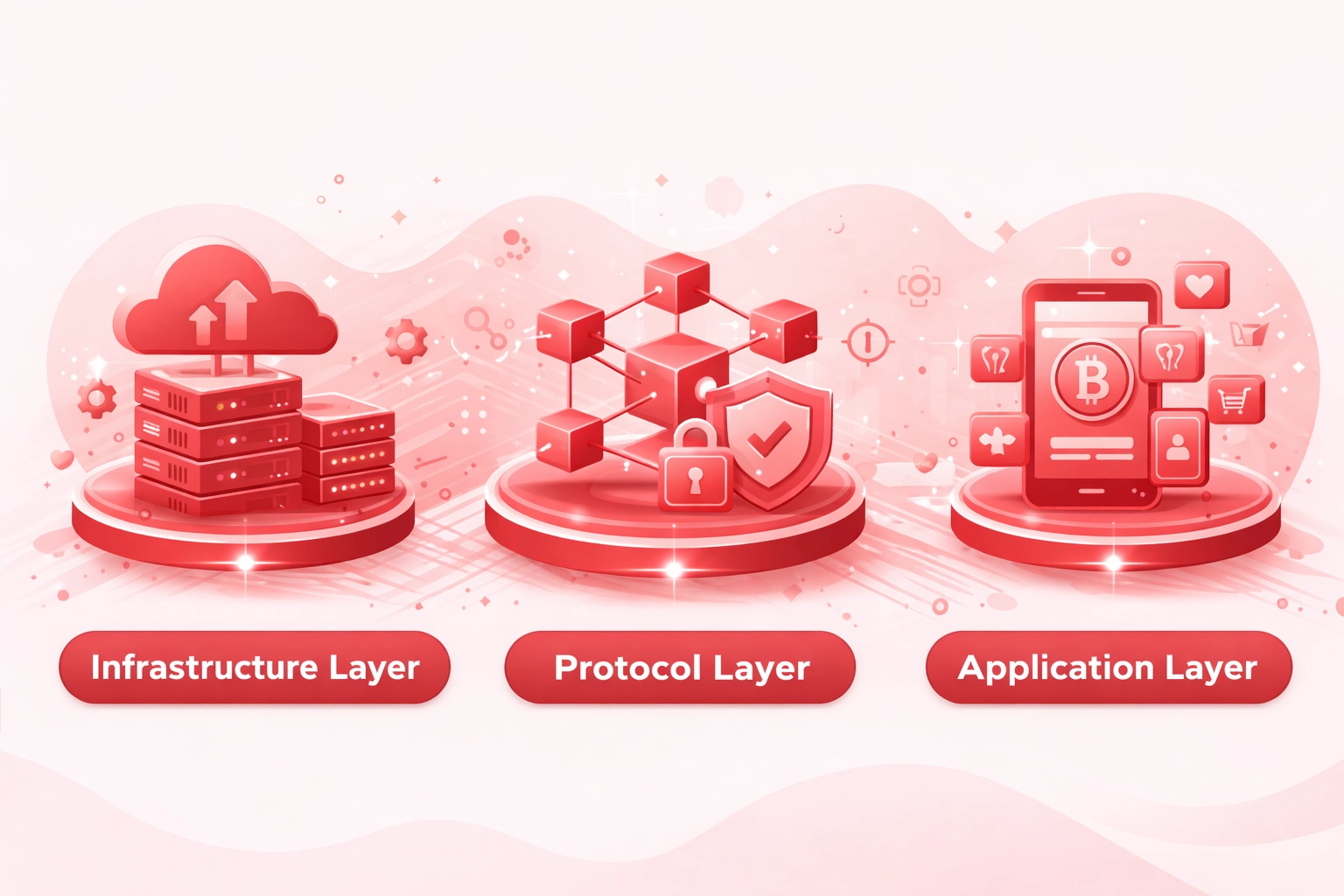
Understanding core BaaS components helps organizations evaluate platform capabilities effectively.
Infrastructure Layer
- Cloud-hosted compute resources
- Distributed storage systems
- Network connectivity management
- Automated scaling capabilities
Protocol Layer
- Consensus mechanism support
- Smart contract execution
- Transaction validation
- Block creation and propagation
Application Layer
- APIs and SDKs for integration
- Administrative dashboards
- Monitoring and analytics
- Identity and access management
Why Businesses Are Adopting Blockchain as a Service
Enterprise adoption of Blockchain as a Service has accelerated dramatically as organizations recognize the competitive advantages distributed ledger technology provides. Companies across financial services, supply chain, healthcare, and real estate sectors leverage BaaS to improve transparency, reduce fraud, and streamline operations. The shift from experimental pilots to production deployments signals blockchain’s maturation as enterprise infrastructure.
Business drivers for BaaS adoption include the need for trusted data sharing across organizational boundaries, regulatory compliance requirements, and customer demands for transparency. Financial institutions in Toronto and London use Blockchain as a Service for trade finance digitization, reducing settlement times from days to hours. Supply chain companies implement traceability solutions satisfying consumer demands for product authenticity verification.
The economic case for BaaS strengthens as platforms mature and pricing becomes more competitive. Organizations that previously dismissed blockchain due to implementation complexity now find accessible entry points through managed services. This accessibility democratizes blockchain benefits across company sizes and industry verticals.
Reducing Blockchain Infrastructure Complexity for Enterprises
Traditional blockchain implementations require expertise in cryptography, distributed systems, network administration, and protocol-specific configurations. Blockchain as a Service abstracts these technical requirements, presenting simplified interfaces that business teams can operate. This complexity reduction eliminates the need for specialized hiring while accelerating project timelines significantly.
BaaS platforms handle node provisioning, network configuration, consensus parameter tuning, and ongoing maintenance automatically. Organizations avoid managing complex peer discovery, data replication, and failover mechanisms. The provider’s expertise ensures optimal configurations based on accumulated experience across numerous deployments.
Our clients in Dubai have particularly valued this complexity reduction when exploring blockchain for government services. The ability to focus on citizen experience rather than infrastructure management accelerated their digital transformation initiatives substantially.
Security and Compliance Advantages of Blockchain as a Service
Blockchain as a Service platforms implement enterprise-grade security measures that individual organizations would struggle to achieve independently. Leading providers maintain compliance certifications essential for regulated industries.[1]
| Security Feature | Description | Compliance Impact |
|---|---|---|
| Data Encryption | AES-256 encryption at rest and in transit | GDPR, HIPAA |
| Access Controls | Role-based permissions with MFA | SOC 2, ISO 27001 |
| Audit Logging | Immutable activity records with timestamps | PCI DSS, SOX |
| Network Isolation | Virtual private cloud configurations | FedRAMP |
| Key Management | HSM-backed cryptographic key storage | FIPS 140-2 |
Scalability and Performance Benefits for Growing Businesses
Blockchain as a Service platforms provide elastic scalability that adjusts automatically to business demands. Unlike fixed infrastructure deployments, BaaS resources expand during peak usage and contract during quiet periods. This dynamic allocation optimizes costs while ensuring performance remains consistent regardless of transaction volumes.
Performance optimization in BaaS leverages cloud provider expertise in distributed systems management. Providers continuously tune consensus parameters, network configurations, and storage systems based on aggregate learnings across their customer base. Individual organizations benefit from optimizations discovered through massive operational experience.
Growing businesses in Canada and the UK have particularly valued BaaS scalability when expanding operations internationally. The ability to add network nodes in new regions without infrastructure investment enables rapid market expansion while maintaining performance for global user bases.
Integration of BaaS with Existing Enterprise Systems
Successful Blockchain as a Service implementations require seamless integration with existing enterprise applications including ERP, CRM, and legacy systems. BaaS platforms provide APIs, webhooks, and pre-built connectors that simplify data exchange between blockchain networks and traditional infrastructure. This integration capability determines practical utility for business operations.
Modern BaaS solutions support standard integration protocols including REST APIs, GraphQL endpoints, and event-driven architectures. Organizations connect blockchain events to existing workflow automation tools, enabling real-time responses to on-chain activities. This event-driven integration model supports complex business processes spanning multiple systems.
Enterprise clients frequently integrate BaaS with SAP, Oracle, and Salesforce platforms to create unified data flows. The blockchain layer provides immutability and audit capabilities while existing systems handle business logic and user interfaces. This hybrid approach maximizes value from both technology investments.
Public, Private, and Hybrid Blockchain Options in BaaS
Blockchain as a Service platforms support multiple network configurations to match organizational requirements.
Public Blockchain
Open participation with maximum decentralization. Ideal for applications requiring public verifiability and censorship resistance across global networks.
Private Blockchain
Controlled access with known participants. Suitable for enterprise consortiums requiring privacy, performance, and regulatory compliance.
Hybrid Blockchain
Combined public and private elements. Enables selective transparency with private transactions anchored to public networks for verification.
Use Cases of Blockchain as a Service Across Industries
Blockchain as a Service enables diverse applications across industries, with adoption patterns varying by sector requirements and regulatory environments in USA, UK, UAE, and Canada markets.
| Industry | Use Case | Business Impact |
|---|---|---|
| Financial Services | Cross-border payments, trade finance | 70% faster settlement |
| Supply Chain | Product traceability, provenance | 90% visibility improvement |
| Healthcare | Patient records, drug tracking | 60% admin cost reduction |
| Real Estate | Property tokenization, title records | 80% transaction time savings |
| Government | Identity management, voting systems | 95% fraud reduction |
Customization and Flexibility in BaaS Solutions
While Blockchain as a Service abstracts infrastructure complexity, leading platforms provide extensive customization options for organizations with specific requirements. Smart contract deployment remains fully flexible, enabling custom business logic implementation. Network configuration parameters including consensus mechanisms, block sizes, and transaction throughput can be tuned for optimal performance.
BaaS platforms support multiple blockchain protocols, allowing organizations to select technology best matching their use cases. Hyperledger Fabric suits permissioned enterprise networks requiring modular architecture. Ethereum provides smart contract flexibility with broad ecosystem support. Corda offers financial services-specific features for regulated environments.
The balance between standardization and customization varies across providers. Organizations should evaluate customization requirements carefully, ensuring selected platforms support necessary configurations without excessive complexity that undermines BaaS value propositions.
Blockchain Governance and Network Management via BaaS
Effective governance ensures blockchain networks operate according to participant agreements and evolve appropriately over time.
1. Participant Onboarding
Verify and approve new network members through identity verification and agreement acceptance processes.
2. Permission Assignment
Configure role-based access controls defining what actions each participant can perform on the network.
3. Consensus Configuration
Define validation rules and consensus parameters that govern how transactions are confirmed on the network.
4. Smart Contract Approval
Review and approve smart contracts before deployment ensuring code quality and security compliance.
5. Network Monitoring
Track network health, transaction volumes, and participant activity through administrative dashboards.
6. Upgrade Management
Coordinate protocol upgrades and smart contract updates across network participants with minimal disruption.
7. Dispute Resolution
Implement processes for resolving conflicts between participants according to governance agreements.
8. Compliance Reporting
Generate audit reports and compliance documentation required by regulatory authorities and internal governance.
Challenges and Limitations of Blockchain as a Service
Despite significant advantages, Blockchain as a Service presents challenges organizations must consider. Vendor lock-in concerns arise when platforms use proprietary features that complicate migration to alternative providers. Data sovereignty requirements in jurisdictions like the UAE and EU may conflict with cloud provider infrastructure locations.
Performance limitations affect certain use cases requiring extremely high throughput or low latency. While BaaS platforms continually improve, some applications may still require custom infrastructure optimized for specific workloads. Organizations should conduct thorough performance testing before committing to production deployments.
Cost predictability challenges emerge with usage-based pricing models where transaction volumes fluctuate significantly. Organizations may face unexpected bills during peak periods. Establishing clear cost monitoring and alerting mechanisms helps manage financial exposure effectively.
Comparing Blockchain as a Service vs In-House Blockchain
Understanding tradeoffs between BaaS and custom implementations helps organizations make informed technology decisions aligned with strategic objectives and resource availability.
| Factor | Blockchain as a Service | In-House Implementation |
|---|---|---|
| Initial Cost | Low (subscription-based) | High (infrastructure + personnel) |
| Time to Deploy | Days to weeks | Months to years |
| Customization | Moderate (within platform limits) | Complete (unlimited flexibility) |
| Maintenance | Provider managed | Internal team required |
| Control | Shared with provider | Complete ownership |
How Blockchain as a Service Supports Digital Transformation
Blockchain as a Service accelerates digital transformation initiatives by removing technology barriers that historically slowed blockchain adoption. Organizations can experiment with blockchain use cases without significant upfront investment, enabling rapid prototyping and validation before committing to large-scale implementations. This reduced risk profile encourages innovation.
BaaS enables organizations to modernize legacy processes incrementally rather than requiring wholesale system replacement. Blockchain components integrate with existing infrastructure through APIs, adding capabilities like immutability and transparency to established workflows. This evolutionary approach minimizes disruption while delivering measurable improvements.
Digital transformation success depends on organizational agility and willingness to experiment. Blockchain as a Service provides safe environments for learning and iteration, building internal capabilities that support broader transformation objectives. Enterprises across North America, Europe, and the Middle East leverage BaaS as foundational digital transformation infrastructure.
Choosing the Right Blockchain as a Service Provider
Selecting the optimal BaaS provider requires systematic evaluation across multiple dimensions.
Criterion 1: Evaluate security certifications including SOC 2, ISO 27001, and industry-specific compliance standards.
Criterion 2: Verify supported blockchain protocols match your technical requirements and ecosystem preferences.
Criterion 3: Compare pricing models including transaction fees, storage costs, and network resource charges.
Criterion 4: Assess geographic data center presence ensuring compliance with data residency requirements.
Criterion 5: Review integration capabilities including API quality, SDK availability, and existing system connectors.
Criterion 6: Evaluate technical support quality including response times, expertise levels, and escalation processes.
Criterion 7: Consider vendor financial stability and long-term viability for mission-critical applications.
Criterion 8: Request customer references from similar industries to validate real-world performance claims.
BaaS Implementation Compliance Checklist
Data Protection
- GDPR compliance verified
- Data residency requirements met
- Encryption standards confirmed
Security Standards
- SOC 2 Type II certification
- ISO 27001 compliance
- Penetration testing completed
Operational Readiness
- Disaster recovery plan tested
- SLA agreements documented
- Incident response procedures
Governance Framework
- Access control policies defined
- Audit logging enabled
- Change management process
Ready to Transform Your Business with Blockchain as a Service?
Our team helps enterprises across USA, UK, UAE, and Canada implement BaaS solutions that deliver measurable business value.
Frequently Asked Questions
Q1.1. What is Blockchain as a Service and how does it work?
Blockchain as a Service (BaaS) is a cloud-based solution that allows businesses to build, host, and operate blockchain applications without managing underlying infrastructure. BaaS providers handle network configuration, node management, and maintenance tasks while enterprises focus on application logic. Companies in USA, UK, UAE, and Canada leverage BaaS to reduce technical complexity and accelerate time-to-market for blockchain initiatives
Q2.2. What are the main benefits of using Blockchain as a Service?
Blockchain as a Service offers significant advantages including reduced infrastructure costs, faster deployment timelines, and access to enterprise-grade security. Organizations avoid substantial capital expenditure on hardware and specialized personnel. BaaS platforms provide pre-configured templates, automated updates, and scalable resources that adapt to business growth. These benefits make blockchain adoption accessible for mid-sized enterprises previously unable to afford custom implementations.
Q3.3. Which industries benefit most from Blockchain as a Service?
Financial services, supply chain management, healthcare, and real estate industries derive substantial value from Blockchain as a Service solutions. Banks use BaaS for cross-border payments and trade finance. Supply chain companies implement traceability solutions tracking products from origin to consumer. Healthcare organizations leverage BaaS for secure patient data sharing. Real estate firms adopt tokenization platforms for fractional property ownership and transparent transactions.
Q4.4. How much does Blockchain as a Service typically cost?
Blockchain as a Service pricing varies based on network size, transaction volume, and feature requirements. Entry-level BaaS solutions start around $500 monthly for basic configurations, while enterprise deployments can exceed $10,000 monthly. Most providers offer pay-as-you-go models eliminating upfront capital investment. Organizations should evaluate total cost of ownership including integration, customization, and ongoing operational expenses when comparing BaaS options.
Q5.5. Is Blockchain as a Service secure for enterprise applications?
Blockchain as a Service platforms implement enterprise-grade security measures including encryption, access controls, and compliance certifications. Leading providers maintain SOC 2, ISO 27001, and GDPR compliance standards. BaaS inherits blockchain’s inherent security properties like immutability and cryptographic verification while adding professional infrastructure management. Organizations should verify provider security certifications and conduct due diligence before selecting BaaS partners for sensitive applications.
Explore Services
Related Services
Reviewed by

Aman Vaths
Founder of Nadcab Labs
Aman Vaths is the Founder & CTO of Nadcab Labs, a global digital engineering company delivering enterprise-grade solutions across AI, Web3, Blockchain, Big Data, Cloud, Cybersecurity, and Modern Application Development. With deep technical leadership and product innovation experience, Aman has positioned Nadcab Labs as one of the most advanced engineering companies driving the next era of intelligent, secure, and scalable software systems. Under his leadership, Nadcab Labs has built 2,000+ global projects across sectors including fintech, banking, healthcare, real estate, logistics, gaming, manufacturing, and next-generation DePIN networks. Aman’s strength lies in architecting high-performance systems, end-to-end platform engineering, and designing enterprise solutions that operate at global scale.