Ai Overview
Liquidity bootstrapping represents a paradigm shift in how new tokens establish their initial market presence within Decentralized Exchange ecosystems. Liquidity bootstrapping solves this cold-start problem elegantly, allowing projects to launch with 80-90% lower capital requirements while achieving superior distribution outcomes. A project might start with 90% token weight and 10% collateral weight, gradually transitioning to 50/50 by event conclusion.
Key Takeaways
- Liquidity bootstrapping enables fair token launches by using dynamic pricing curves that prevent whale domination and early manipulation attempts.
- Protocols using liquidity bootstrapping can launch markets with minimal initial capital compared to traditional liquidity provision methods requiring substantial reserves.
- Weight-shifting mechanisms in bootstrapping pools gradually transfer value from project tokens to collateral assets over predetermined timeframes.
- Smart contract design for liquidity bootstrapping requires careful consideration of timing parameters, weight curves, and fee structures.
- Capital efficiency in bootstrapping models allows protocols to achieve significant market capitalization while risking only modest treasury allocations.
- Trader psychology significantly impacts bootstrapping outcomes, with FOMO and patience playing crucial roles in price discovery mechanisms.
- Successful liquidity bootstrapping campaigns establish lasting market infrastructure that supports ongoing trading activity post-launch across global markets.
- Risk management in bootstrapping includes understanding impermanent loss, slippage dynamics, and smart contract security vulnerabilities inherent to AMM systems.
- Measuring bootstrapping success involves analyzing metrics beyond price including distribution breadth, liquidity depth, and post-launch trading volumes.
- Future innovations in liquidity bootstrapping include cross-chain mechanisms, programmable curves, and integration with advanced DeFi primitives.
What Liquidity Bootstrapping Really Means in DeFi Markets
Liquidity bootstrapping represents a paradigm shift in how new tokens establish their initial market presence within Decentralized Exchange ecosystems. Unlike traditional approaches that require protocols to seed substantial capital into trading pairs, liquidity bootstrapping leverages algorithmic mechanisms to create markets organically. This innovation has transformed token launches across USA, UK, UAE, and Canada, enabling projects with limited treasuries to compete effectively.
The fundamental concept involves creating a specialized automated market maker pool where token weights shift dynamically over time. Projects deposit their native tokens alongside a smaller amount of collateral, typically stablecoins or ETH. As the bootstrapping period progresses, the pricing curve adjusts to facilitate natural price discovery while distributing tokens to participants who believe in the project’s long-term potential.
This mechanism democratizes access to token launches by eliminating the advantages typically enjoyed by well-connected investors and bots. Everyone observes the same declining price curve, making participation decisions based on personal conviction rather than privileged access. Our agency has guided numerous protocols through successful bootstrapping events, witnessing firsthand how this approach builds stronger communities from day one.
How Liquidity Bootstrapping Differs From Traditional Liquidity Mining
While both mechanisms aim to establish protocol liquidity, their approaches and outcomes differ substantially. Liquidity mining incentivizes ongoing provision through token rewards, whereas liquidity bootstrapping creates initial markets through price mechanism design. Understanding these distinctions helps protocols select appropriate strategies for their specific circumstances and objectives.
| Characteristic | Liquidity Bootstrapping | Traditional Mining |
|---|---|---|
| Duration | 24 hours to 7 days | Ongoing, months to years |
| Capital Required | Minimal (5-20% of target) | Substantial initial seeding |
| Token Emissions | One-time distribution | Continuous rewards dilution |
| Price Mechanism | Dynamic weight shifting | Standard AMM curves |
| Participant Loyalty | Conviction-based buyers | Yield-seeking mercenaries |
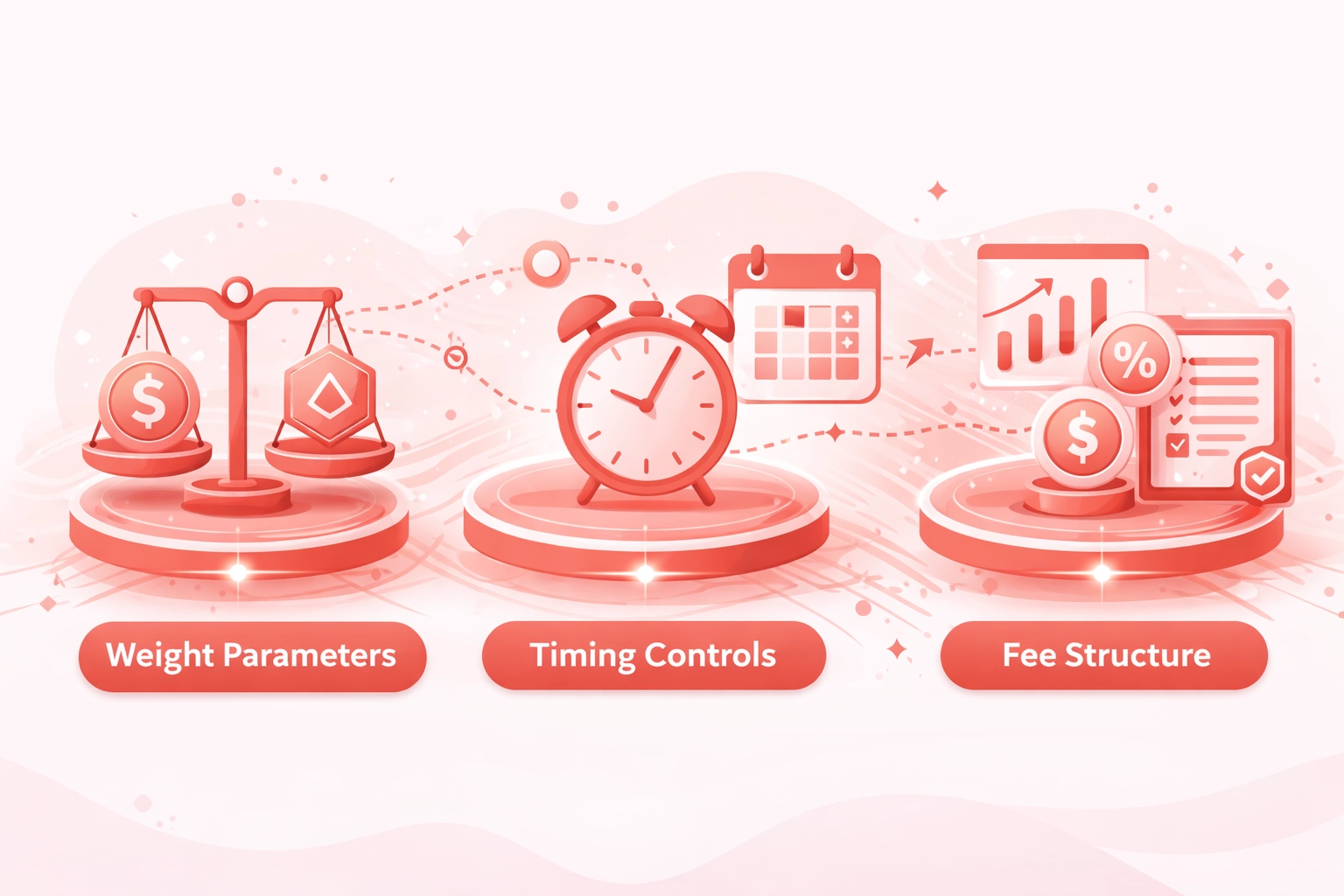 Key Components of a Liquidity Bootstrapping Mechanism
Every successful liquidity bootstrapping implementation requires careful orchestration of these essential elements.
Weight Parameters
- Starting weight ratio (typically 90:10)
- Ending weight ratio (typically 50:50)
- Weight change interval settings
- Linear vs exponential curves
Timing Controls
- Pool start timestamp
- Pool end timestamp
- Pause functionality options
- Extension mechanisms
Fee Structure
- Swap fee percentage (0.1-3%)
- Protocol fee allocation
- Dynamic fee adjustments
- Fee recipient addresses
The Role of Pricing Curves in Liquidity Bootstrapping Pools
Pricing curves form the mathematical backbone of liquidity bootstrapping pools, determining how token prices evolve throughout the event. Unlike constant product AMMs that maintain fixed relationships, bootstrapping pools employ time-weighted curves that create predetermined price trajectories. These curves balance the competing needs of protocol fundraising and participant fairness, ensuring both parties achieve acceptable outcomes.
The most common implementation uses weighted pools where asset ratios shift over time. A project might start with 90% token weight and 10% collateral weight, gradually transitioning to 50/50 by event conclusion. This weight shift creates natural downward price pressure, allowing the market to find equilibrium between protocol valuation expectations and buyer willingness to pay.
Advanced implementations offer customizable curve shapes including linear, exponential, and step functions. Projects targeting rapid distribution might use aggressive curves with steep initial declines. Those prioritizing price discovery may employ gentler slopes allowing more time for market assessment. Our experience across UK and Canadian markets suggests linear curves work best for most use cases.
Token Distribution Dynamics During Liquidity Bootstrapping
Token distribution patterns in liquidity bootstrapping events reveal fascinating behavioral economics at play. Early participants pay premium prices driven by fear of missing out on promising projects. As prices decline, a different buyer cohort emerges: value-conscious participants who waited for what they perceive as fair valuation. This natural segmentation creates diverse holder bases with varied entry points and expectations.
Distribution breadth depends heavily on pool parameters and marketing execution. Well-promoted events with appropriate duration attract thousands of unique participants, creating resilient communities resistant to whale manipulation. Poorly configured events may see concentration among few large buyers, undermining the mechanism’s core benefits and creating potential governance concerns.
Successful protocols in USA and UAE markets typically achieve distribution across 500 to 5,000 unique wallets during bootstrapping events. This breadth provides foundation for organic community growth, decentralized governance participation, and natural price discovery in subsequent secondary markets.
How Liquidity Bootstrapping Prevents Early-Stage Price Manipulation
Traditional token launches suffer from systematic manipulation by sophisticated actors who exploit information asymmetries and speed advantages. Flash bots monitor mempools for launch transactions, front-running human participants and capturing value through immediate resale. Liquidity bootstrapping fundamentally disrupts this dynamic by removing the advantage of being first.
When prices start high and decline predictably, buying early means paying premium prices with guaranteed subsequent depreciation. Rational actors wait for prices they consider fair, eliminating the race condition that enables manipulation. This mechanism shift transforms launches from speed competitions into value assessment exercises where conviction matters more than infrastructure.
Additional protections include swap limits preventing large single transactions, whitelist periods for verified participants, and gradual ramp-up mechanisms that phase in liquidity. These layered defenses create robust systems that deliver on the promise of fair, accessible token launches across global markets.[1]
Capital Efficiency in Liquidity Bootstrapping Models
Understanding how liquidity bootstrapping maximizes capital utilization compared to traditional approaches.
Efficiency Gain 1: Projects can launch with 80-90% less initial collateral than traditional AMM pools require for equivalent market depth.
Efficiency Gain 2: Weight mechanics allow protocols to set high initial valuations without committing proportional capital reserves.
Efficiency Gain 3: Collected collateral from buyers provides permanent liquidity foundation without ongoing protocol treasury allocation.
Efficiency Gain 4: Single event creates both distribution and liquidity simultaneously, eliminating need for separate incentive programs.
Liquidity Bootstrapping Pools and Their Smart Contract Design
Smart contract architecture for liquidity bootstrapping pools requires careful consideration of security, gas efficiency, and configurability. The contracts must handle dynamic weight calculations, enforce timing constraints, and protect against various attack vectors while remaining accessible enough for average users. Major protocols have standardized certain patterns that balance these competing requirements effectively.
| Contract Component | Function | Security Consideration |
|---|---|---|
| Weight Controller | Calculates current weights based on time | Timestamp manipulation prevention |
| Swap Router | Processes buy/sell transactions | Reentrancy guards, slippage checks |
| Access Control | Manages admin permissions | Multi-sig requirements, timelocks |
| Fee Collector | Accumulates and distributes fees | Withdrawal restrictions, auditing |
| Emergency Module | Enables pool pause/shutdown | Governance approval requirements |
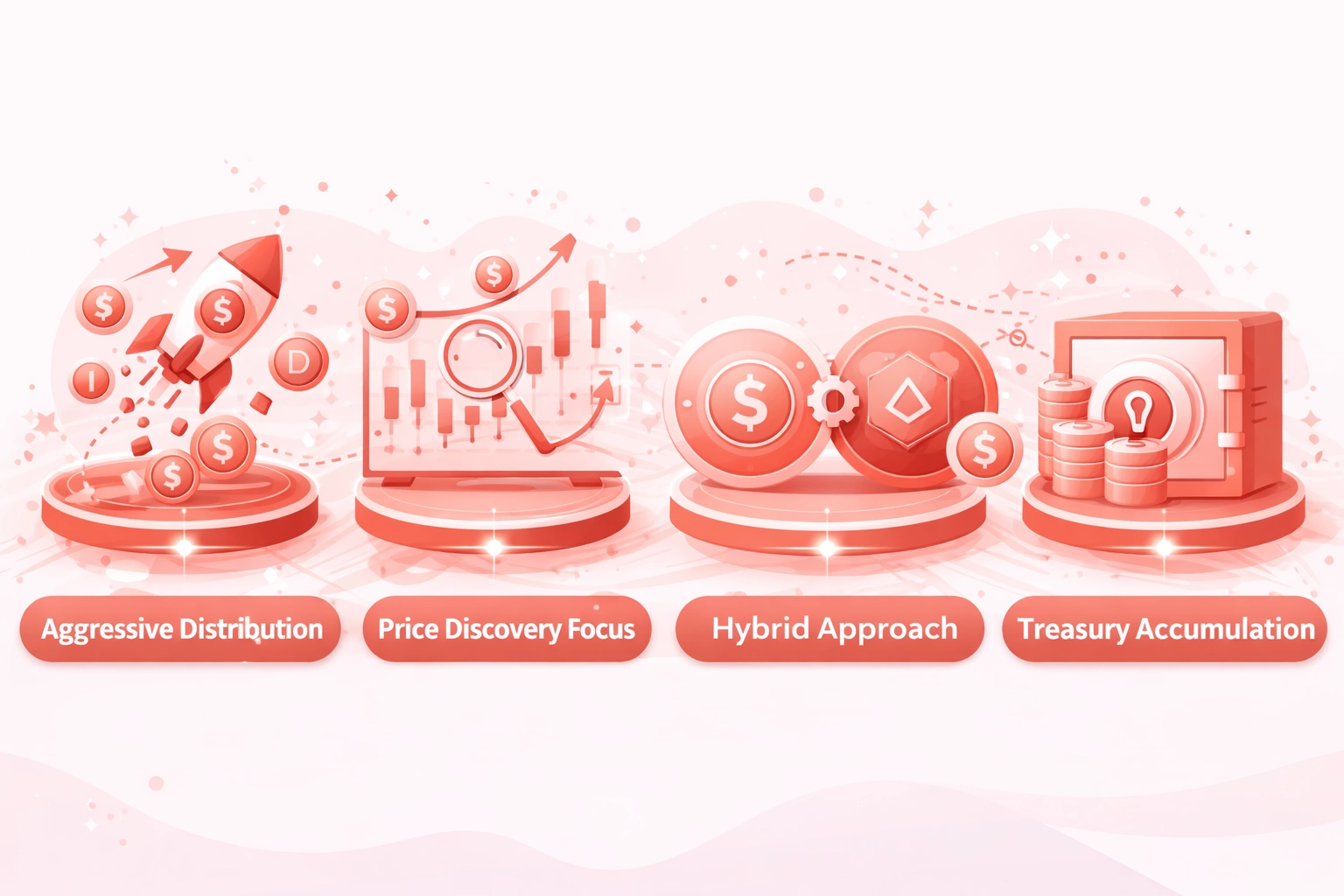 Common Liquidity Bootstrapping Strategies Used by DeFi Protocols
Selecting the right bootstrapping approach depends on project goals, community size, and market conditions.
Aggressive Distribution
Short duration (24-48 hours) with steep price curves. Maximizes urgency and participation breadth. Best for projects with strong existing communities.
Price Discovery Focus
Extended duration (5-7 days) with gradual curves. Allows thorough market assessment. Ideal for complex protocols requiring evaluation time.
Hybrid Approach
Moderate parameters with whitelist phases. Balances community rewards with open participation. Suitable for most mid-stage protocol launches.
Treasury Accumulation
Higher collateral targets with premium pricing. Prioritizes fundraising over distribution breadth. Appropriate for capital-intensive protocol builds.
Trader Behavior and Market Psychology in Bootstrapped Markets
Understanding participant psychology provides crucial insights for both protocols designing launches and traders evaluating participation decisions. Early buyers demonstrate high conviction and risk tolerance, accepting premium prices for priority access. Their behavior often signals project quality perception, though FOMO can distort rational assessment during highly anticipated launches.
Mid-event participants exhibit sophisticated value assessment, comparing current prices against perceived fair value and monitoring purchase activity for social proof signals. This cohort often represents the bulk of distribution, providing liquidity foundation for post-launch markets. Their entry timing reflects collective wisdom about appropriate valuation.
Late participants are typically value-focused buyers waiting for maximum discounts or skeptics who gained conviction through observing event progression. While paying lowest prices, they also accept risk of pool depletion before entry. Understanding these behavioral segments helps protocols optimize event parameters for desired outcomes.
Liquidity Bootstrapping vs Fair Launch Token Models
Both liquidity bootstrapping and fair launch models aim for equitable distribution, but their mechanisms and outcomes differ substantially. Fair launches typically involve zero pre-sale allocation with all tokens distributed through participation activities. Liquidity bootstrapping retains protocol control over pricing while achieving similar distribution breadth through economic incentives rather than strict equality rules.
| Factor | Liquidity Bootstrapping | Fair Launch |
|---|---|---|
| Treasury Funding | Generates protocol revenue | No direct fundraising |
| Price Discovery | Algorithmic declining curve | Pure market determination |
| Distribution Method | Economic incentive based | Activity or lottery based |
| Manipulation Risk | Low due to curve mechanics | Varies by implementation |
| Initial Liquidity | Built into mechanism | Requires separate provision |
Transitioning From Bootstrapped Liquidity to Open Markets
1. Pool Conclusion
Bootstrapping event ends at predetermined timestamp, finalizing weight ratios and collected collateral amounts.
2. Liquidity Migration
Protocol transfers collected assets to permanent trading pools on target DEX platforms.
3. LP Token Distribution
Liquidity provider tokens allocated to protocol treasury or distributed to governance participants.
4. Trading Activation
Open market trading begins on standard AMM pools with market-determined pricing mechanisms.
5. Price Stabilization
Market finds equilibrium as early buyers assess positions and new participants enter at open market rates.
6. Incentive Programs
Optional liquidity mining or staking rewards deployed to deepen liquidity beyond bootstrapped levels.
7. CEX Listings
Successful bootstrapping provides price references and liquidity proof for centralized exchange listing applications.
8. Mature Market
Established trading infrastructure supports ongoing price discovery, arbitrage, and ecosystem growth.
Measuring Success in Liquidity Bootstrapping Campaigns
Success metrics for liquidity bootstrapping extend beyond simple fundraising totals. Distribution breadth measures how many unique wallets acquired tokens, indicating community building effectiveness. Holder concentration ratios reveal whether whales dominated despite mechanism design. Price performance post-transition demonstrates whether bootstrapping established sustainable market valuations.
Trading volume metrics in weeks following launch indicate genuine market interest versus speculative flipping. Protocols that maintain consistent volumes demonstrate successful ecosystem engagement. Liquidity depth relative to market capitalization shows capital efficiency achievement. Our analysis across launches in USA, UK, UAE, and Canada reveals optimal ratios vary by sector.
Community metrics including Discord growth, governance participation, and social engagement correlate strongly with long-term success. Bootstrapping events that generate sustained community expansion outperform those producing only transactional participation regardless of capital raised.
Real-World Use Cases of Liquidity Bootstrapping in DeFi
Examining successful implementations provides practical insights for protocol teams and participants alike.
DeFi Protocol Launches
- Perpetual DEX governance tokens
- Lending protocol native assets
- Yield aggregator utility tokens
- Cross-chain bridge rewards
DAO Treasury Diversification
- Native token to stablecoin swaps
- Strategic asset acquisitions
- Runway extension mechanisms
- Partnership token exchanges
NFT and Gaming Projects
- In-game currency launches
- Metaverse land sale tokens
- Creator economy assets
- Gaming guild tokens
The Future of Sustainable Market Launches Using Liquidity Bootstrapping
Emerging innovations will reshape how protocols approach liquidity bootstrapping in coming years.
Trend 1: Cross-chain bootstrapping enabling simultaneous launches across Ethereum, Polygon, Arbitrum, and emerging L2 networks.
Trend 2: Programmable curves with dynamic adjustment based on real-time demand metrics and participation patterns.
Trend 3: KYC-integrated pools enabling compliant token launches meeting regulatory requirements in USA, UK, and UAE jurisdictions.
Trend 4: Vesting integration building lockup mechanisms directly into bootstrapping contracts for improved tokenomics.
Trend 5: NFT-gated participation creating exclusive launch access for holder communities and strategic partners.
Trend 6: Reputation-weighted allocation favoring participants with established on-chain credibility scores.
Trend 7: Insurance integration providing downside protection for participants in vetted protocol launches.
Trend 8: AI-optimized parameters using machine learning to configure ideal curve shapes based on project characteristics.
Liquidity Bootstrapping Governance Compliance Checklist
Smart Contract Security
- Professional audit completed
- Bug bounty program active
- Emergency pause capability
Tokenomics Transparency
- Supply schedule published
- Team allocation disclosed
- Vesting terms documented
Participant Protection
- Clear risk disclosures
- Slippage protection enabled
- Transaction limits active
Regulatory Awareness
- Jurisdiction restrictions set
- Legal opinion obtained
- Compliance monitoring active
Launch Your Token with Expert Liquidity Bootstrapping Strategy!
Partner with our team of DeFi specialists who have guided 50+ successful bootstrapping campaigns across USA, UK, UAE, and Canada markets.
Frequently Asked Questions
Q1.1. What is liquidity bootstrapping in DeFi?
Liquidity bootstrapping is a token launch mechanism that allows new DeFi protocols to create initial market liquidity without requiring large upfront capital. It uses dynamic pricing curves that start high and gradually decrease over time, enabling fair price discovery while distributing tokens broadly. This approach prevents whales from acquiring large positions early and creates sustainable trading markets for newly launched tokens across decentralized exchanges.
Q2.2. How does liquidity bootstrapping differ from traditional token sales?
Traditional token sales use fixed prices determined before launch, often favoring early investors and creating immediate selling pressure. Liquidity bootstrapping employs algorithmic pricing that adjusts based on demand and time, allowing markets to find natural equilibrium. This mechanism promotes fairer distribution, reduces front-running opportunities, and establishes organic liquidity that supports long-term trading activity rather than speculative pump-and-dump scenarios common in conventional launches.
Q3.3. What are the risks of participating in liquidity bootstrapping pools?
Participants face several risks including price volatility during the bootstrapping period, smart contract vulnerabilities, and potential for project failure. The declining price curve means early buyers may experience losses if they purchase at peak prices. Additionally, low liquidity during initial phases can cause significant slippage. Thorough research on project fundamentals, team credibility, and audit reports is essential before participating in any liquidity bootstrapping event.
Q4.4. Why do protocols choose liquidity bootstrapping over liquidity mining?
Liquidity bootstrapping provides immediate market creation without ongoing token emissions that dilute holder value. Unlike liquidity mining which requires continuous incentives to attract providers, bootstrapping establishes self-sustaining pools from day one. Protocols also benefit from controlled price discovery, broader token distribution, and reduced risk of mercenary capital that exits once rewards diminish. This approach creates healthier tokenomics and more committed community participation.
Q5.5. How long does a typical liquidity bootstrapping event last?
Liquidity bootstrapping events typically run between 24 hours to 7 days, depending on protocol objectives and target capital raise. Shorter durations create urgency but may limit participation from different time zones. Longer events allow more users to participate and enable better price discovery through market forces. Most successful launches in USA, UK, UAE, and Canada markets have found 48 to 72 hours optimal for balancing participation breadth with momentum maintenance.
Explore Services
Related Services
Reviewed by

Aman Vaths
Founder of Nadcab Labs
Aman Vaths is the Founder & CTO of Nadcab Labs, a global digital engineering company delivering enterprise-grade solutions across AI, Web3, Blockchain, Big Data, Cloud, Cybersecurity, and Modern Application Development. With deep technical leadership and product innovation experience, Aman has positioned Nadcab Labs as one of the most advanced engineering companies driving the next era of intelligent, secure, and scalable software systems. Under his leadership, Nadcab Labs has built 2,000+ global projects across sectors including fintech, banking, healthcare, real estate, logistics, gaming, manufacturing, and next-generation DePIN networks. Aman’s strength lies in architecting high-performance systems, end-to-end platform engineering, and designing enterprise solutions that operate at global scale.