Ai Overview
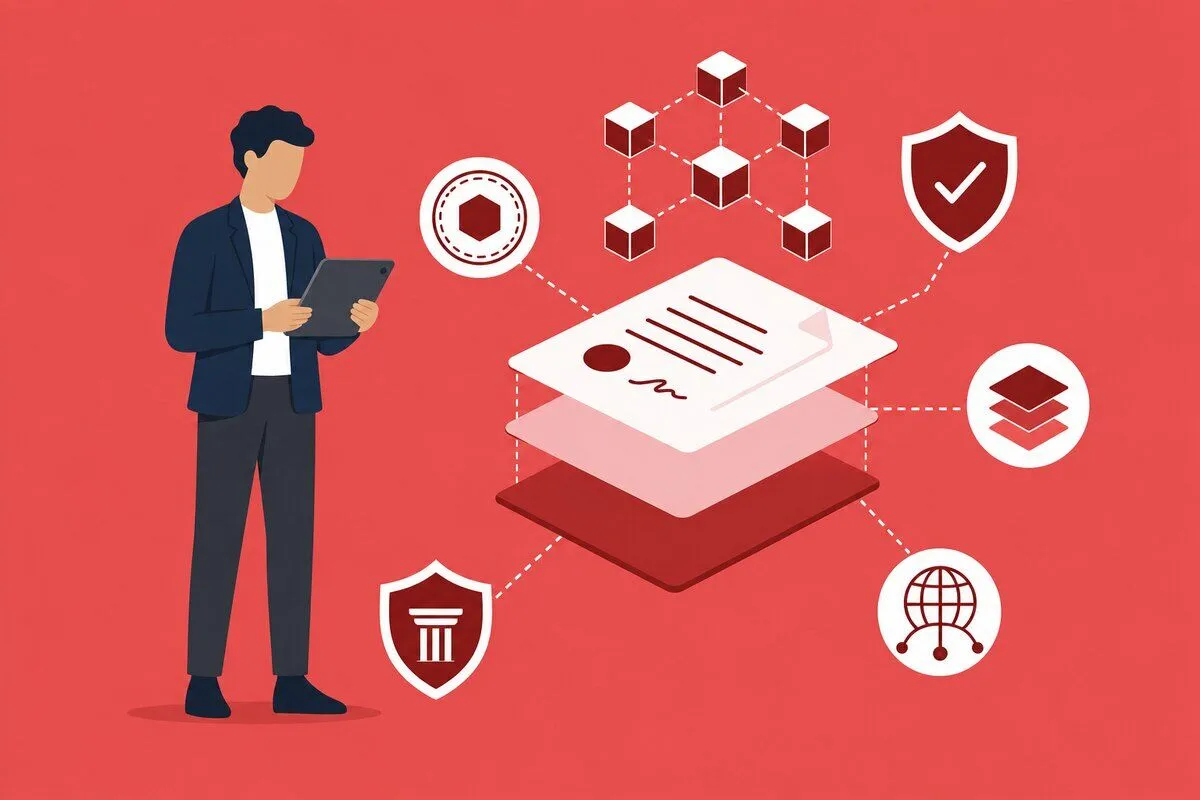
A smart contract in the context of stock markets is a piece of self-executing code deployed on a blockchain that automatically handles the mechanics of a trade when specific conditions are satisfied. Traditional stock market investment involves a surprisingly complex chain of intermediaries between the moment you press buy on your stock trading app and the moment you actually own those shares. The clearing house absorbs this risk but charges for doing so, adding cost to every equity trading transaction.
Key Takeaways
How smart contracts are changing stock trading, settlement, and investor access
-
01
Smart contracts can replace T+2 settlement with near-instant T+0 settlement.
-
02
Stock market investment costs can drop 40 to 70 percent using smart contracts.
-
03
The Australian Securities Exchange (ASX) proved blockchain settlement at scale.
-
04
Tokenisation of stocks enables fractional ownership and 24/7 trading.
-
05
Regulators like SEBI, SEC, and MAS are actively studying blockchain adoption.
-
06
Blockchain-based demat accounts could remove duplicate systems like NSDL and CDSL.
-
07
Early investors will benefit from next-gen trading platforms and tools.
What Are Smart Contracts in Stock Markets?
A smart contract in the context of stock markets is a piece of self-executing code deployed on a blockchain that automatically handles the mechanics of a trade when specific conditions are satisfied. When a buyer places an order at a price a seller accepts, the smart contract simultaneously transfers the shares from the seller and the money from the buyer, without anyone in the middle needing to manually verify and process that transfer.
Traditional stock market investment involves a surprisingly complex chain of intermediaries between the moment you press buy on your stock trading app and the moment you actually own those shares. Smart contracts collapse that entire chain into a single, automated, tamper-proof process that completes in seconds rather than days.
This is not science fiction. The technology is proven, tested, and already running in pilot form at some of the world’s largest exchanges. The question is not whether smart contracts will enter stock markets. It is how fast the regulatory and legacy system challenges can be resolved to allow full adoption at the scale that global equity markets operate.
How Traditional Stock Markets Work Today
Most people who invest in share market think they are buying shares directly. What is actually happening is far more complex. When you place a buy order through a stock broker India, that order goes to a stock exchange like NSE or BSE. The exchange matches it with a sell order. But the actual transfer of shares and money does not happen immediately. It goes through a central clearing corporation that checks both parties can deliver, then settles the transaction two business days later.
During those two days, the clearing house holds the risk. Your broker reports your trade to a depository like NSDL or CDSL which updates your demat account. Multiple systems reconcile with each other. Multiple fees accumulate at each step. The entire process was designed in the 1970s and 1980s and has been incrementally updated but never fundamentally replaced. For equity trading online at modern scale, this system is showing its age.
Traditional Trade Settlement: What Actually Happens
Order Placed via trading platform. Broker routes to exchange matching engine.
Trade Matched at exchange (NSE/BSE). Clearing house notified automatically.
Clearing House calculates net obligations. Risk holds applied for T+2 window.
T+2 Settlement: Money moves via RTGS/bank. Shares transferred in depository system.
Demat Updated (NSDL/CDSL). Multiple fee layers deducted. Investor now fully owns shares.
Problems with Traditional Trading Systems
For all its reliability, the traditional stock market settlement system has problems that compound at the scale of modern trading volumes. These are not minor inefficiencies. They represent real costs and real risks that affect every participant from the largest institution to the smallest retail investor using the best demat account available.
Counterparty Risk
During T+2, either party can default. The clearing house absorbs this risk but charges for doing so, adding cost to every equity trading transaction.
Capital Lock-Up
Trillions of dollars are locked in settlement pipelines daily. This is dead capital that earns nothing and creates systemic risk during market stress events.
High Intermediary Costs
Every layer between buyer and seller charges fees. Stock broker India charges, exchange fees, clearing fees, and depository fees all add up for every trade executed.
Reconciliation Errors
Multiple systems maintaining separate records creates reconciliation failures. Industry estimates suggest millions in annual costs just to reconcile mismatched trade records.
Limited Hours
Traditional stock markets operate 6 to 8 hours per day, five days a week. Global markets and investor demand for best long term stocks now extends far beyond these windows.
Fraud Vulnerability
Centralised databases are vulnerable to manipulation. Trading software India and globally has been compromised multiple times through system infiltration and insider manipulation.
How Smart Contracts Are Changing Stock Trading
Smart contracts are not just a faster version of what already exists. They fundamentally restructure who is involved in a trade and how value changes hands. When two parties trade shares using a smart contract, the contract itself becomes the trusted third party. It holds both the shares and the payment in escrow, verifies that both sides have delivered what they promised, and simultaneously releases both assets at the moment all conditions are met.
This is called Delivery-versus-Payment or DvP, and it is the gold standard for eliminating settlement risk. Currently DvP requires a clearing house to orchestrate. With smart contracts on blockchain, DvP can happen automatically for any size trade, between any two parties, anywhere in the world, in seconds. The implications for global stock market investment are enormous.
Instant Settlement
- T+2 replaced by T+0 or T+seconds
- Atomic swap of shares for cash
- No counterparty default window
- Capital immediately reusable
- Works across borders automatically
Automated Compliance
- KYC/AML checks built into contract
- Ownership limits auto-enforced
- Regulatory reporting automated
- Insider trading detection easier
- Audit trail permanent and immutable
Democratised Access
- Fractional shares via tokenisation
- 24/7 trading without market hours
- Global investors access any market
- Lower minimum investment amounts
- Direct peer-to-peer without broker
Benefits of Using Smart Contracts in Stock Markets
The benefits of smart contract adoption in stock markets span the entire ecosystem, from individual investors to large institutions. After eight years working on blockchain applications in financial markets, these are the benefits we see have the most material impact across all participant types.
Benefits by Market Participant Type
| Participant | Key Benefit | Financial Impact |
|---|---|---|
| Retail Investors | Lower fees, faster access to proceeds | 40-60% reduction in transaction costs |
| Institutional Investors | Capital efficiency from instant settlement | Billions freed from settlement queues |
| Stock Brokers India | Reduced reconciliation overhead | Lower operational costs, higher margin |
| Stock Exchanges | Automated compliance and reporting | Significant back-office cost reduction |
| Regulators | Real-time transparent surveillance | Better enforcement, lower oversight costs |
Faster Settlements with Blockchain
The US Federal Reserve estimates that $5 to $10 trillion in securities are outstanding in settlement at any given moment. That represents capital locked away, earning nothing, carrying risk. Blockchain-based smart contracts could release most of this by completing settlement in seconds rather than days.
India moved from T+3 to T+2 and recently started T+1 settlement pilots on BSE and NSE. Smart contracts would take this further to T+0, matching the speed that online trading platform users already expect from their order execution experience, but without the settlement lag that follows.
Reducing Middlemen in Stock Transactions
A typical buy stocks online India transaction passes through at least six entities before completion: your broker, the exchange, a clearing corporation, a depository participant, the counterparty broker, and the depository itself. Each entity charges fees and introduces processing time. Smart contracts can replace the clearing and settlement steps entirely.
Brokers in this new model focus on advisory, portfolio management services, research, and user experience rather than acting as pass-through payment processors. This is actually good for the best stock broker in India who adds real value, and disruptive for those whose business model depends purely on transaction flow.
Improving Transparency in Trading Systems
One of the most significant structural problems with current stock markets is opacity. Most investors, even sophisticated ones, cannot see the full chain of events between placing a trade and owning shares. Dark pools, algorithmic front-running, and payment for order flow are all practices that exist in the shadows of the current system. Blockchain changes this fundamentally because everything that happens on-chain is permanently visible and verifiable.
When a trade is executed on a blockchain-based stock market, the exact price, time, and parties involved are recorded immutably. Regulators can monitor in real time without waiting for end-of-day reports. Investors can verify their own trades without trusting a broker’s statement. Auditors can trace every transaction in the history of any share without requesting records from multiple parties who may have different versions.
Transparency Improvement by Trading Activity Type
Role of Blockchain in Modern Stock Exchanges and Security Benefits
Modern stock exchanges are already incorporating blockchain in specific parts of their operations. Singapore Exchange (SGX) uses blockchain for intraday repo transactions. London Stock Exchange Group has explored blockchain for settlement infrastructure. DTCC in the US processes derivatives data on blockchain. The ASX invested years into a full CHESS replacement using blockchain before the project was cancelled not due to technical failure but due to scope management challenges.
The security benefits of blockchain in stock markets are equally compelling. Traditional centralised clearing systems are single points of failure. A cyberattack on a major clearing house could cascade across the entire market. Distributed blockchain systems have no such single point of failure. Additionally, every transaction is cryptographically signed and immutable, making post-trade manipulation essentially impossible.
6 Security Principles for Blockchain Stock Trading
Principle 1: All trade records must be cryptographically signed by authorised parties before being accepted into the settlement blockchain, preventing unauthorised order injection.
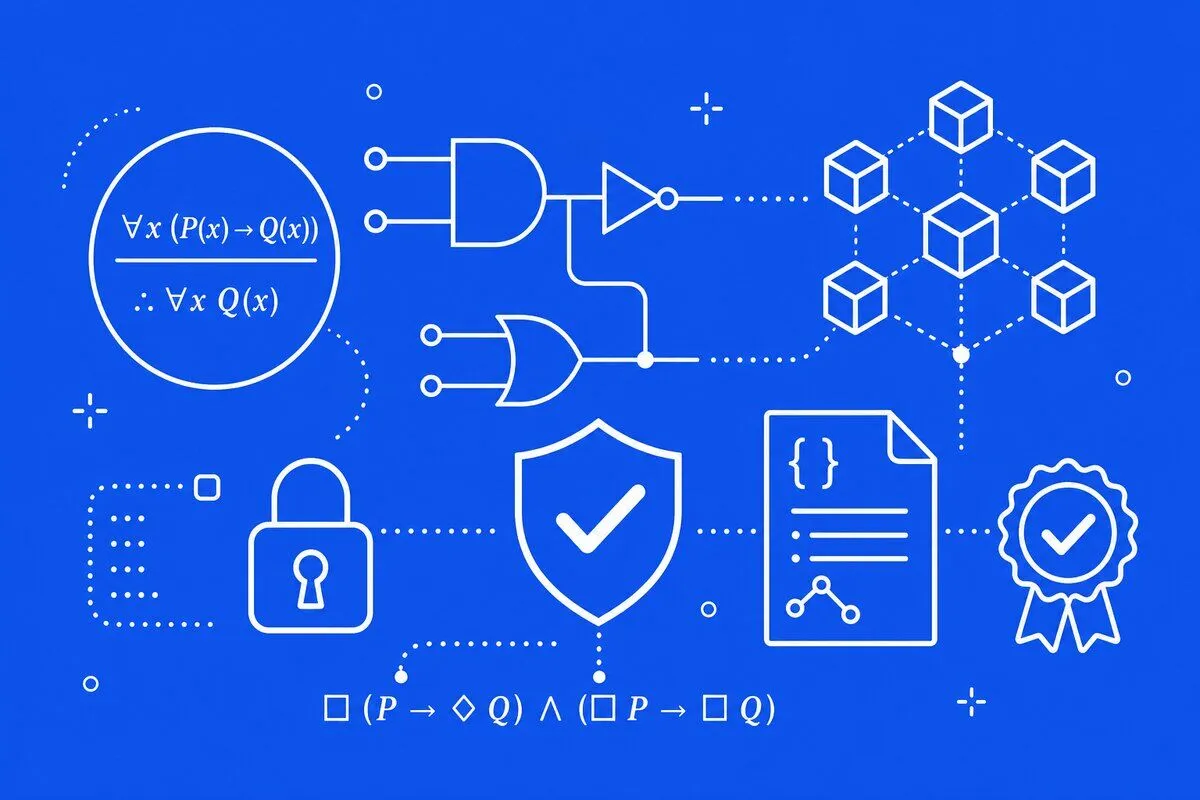
Principle 2: Smart contract code used for equity settlement must be formally verified and audited by independent security firms before being deployed in any production trading environment.
Principle 3: KYC and AML verification must be embedded directly into participant onboarding contracts to prevent anonymous wallets from accessing regulated stock market infrastructure.
Principle 4: Emergency pause mechanisms must be built into all settlement contracts to allow circuit breaker activation during extreme market volatility or detected attack patterns.
Principle 5: Multi-signature requirements from multiple independent nodes must validate any settlement above a defined threshold before funds or shares are released from escrow contracts.
Principle 6: All participant private keys for stock market smart contracts must be stored in hardware security modules with strict access controls and rotation policies, with no single employee holding full access.
Real Examples of Blockchain in Stock Markets
These are real projects where blockchain has already been applied to stock market infrastructure, proving the concept works at institutional scale.
The Australian Securities Exchange ran the world’s most ambitious blockchain settlement replacement programme, spending seven years attempting to replace its CHESS clearing system with a distributed ledger. While the project was ultimately cancelled in 2022 due to scope and management issues rather than technical failure, it produced an enormous amount of institutional learning about how blockchain settlement works at scale. The fundamental technology was proven. The project changed how every exchange in the world thinks about blockchain for settlement infrastructure.
Singapore Exchange partnered with Temasek and the Monetary Authority of Singapore to successfully pilot blockchain for intraday repo transactions. The pilot processed real transactions with real settlement, demonstrating that smart contract-based delivery-versus-payment works in a live regulated environment. The results showed significant operational improvements in settlement speed and reduced counterparty risk, validating the economic case for broader blockchain adoption in equity markets across the Southeast Asian region.
India moved aggressively to T+1 settlement, making it one of the world’s fastest stock market settlement systems. SEBI has publicly discussed the potential for blockchain-based settlement in longer-term roadmaps. Indian stock brokers and top trading apps in India are already preparing their infrastructure for further settlement compression. The progress from T+3 to T+1 in just a few years shows India’s capital markets are capable of rapid infrastructure transformation when regulatory will and industry cooperation align effectively.
Challenges in Adopting Smart Contracts
Smart contracts in stock markets face real challenges that explain why full adoption has taken longer than many predicted. These are not reasons to doubt the technology. They are practical obstacles that are being worked through by every major exchange and regulator engaging with blockchain seriously.
Key Adoption Challenges and Current Status
| Challenge | Severity | Current Progress |
|---|---|---|
| Regulatory approval timelines | High | SEBI, SEC and MAS actively studying. Pilot approvals happening. |
| Legacy system integration | High | Hybrid approaches bridging old and new systems in development. |
| Industry consensus requirement | Medium | Consortiums forming. Major brokers and custodians in discussions. |
| Smart contract security auditing | Medium | Mature audit industry exists. Financial-grade auditing standards developing. |
| Scalability at full market volume | Resolving | Layer 2 solutions and permissioned chains addressing throughput needs. |
Legal and Regulatory Issues in Digital Trading
Every stock market in the world operates under a legal framework that was designed for the pre-blockchain era. Securities laws define what a share is, how it changes hands, who can hold it, and what record-keeping is required. Smart contracts on blockchain can do all of these things, but the legal systems need to formally recognise the blockchain record as the authoritative source of truth for securities ownership.
Progress is happening. In India, SEBI has consulted on blockchain for securities. The UK has passed legislation recognising digital assets. Singapore actively promotes blockchain-based securities through the MAS. The US has seen Wyoming and other states pass blockchain-friendly securities laws. The direction is clear, even if the pace is cautious. For investors using investment platforms India and globally, understanding these developments helps you position for what is coming.
Regulatory Readiness Checklist for Blockchain Trading Platforms
KYC/AML Embedded
Identity verification built directly into participant onboarding smart contracts before any trading access is granted.
Reporting Automation
Real-time trade reporting to regulators built into settlement contracts, removing manual reporting burdens from participants.
Ownership Limits
Smart contracts enforcing regulatory ownership caps like FII limits or takeover trigger thresholds automatically without manual monitoring.
Audit Access
Permissioned read access for regulators to verify any transaction in the blockchain record without requiring broker cooperation.
Circuit Breakers
Automated trading halts triggered by on-chain conditions matching volatility thresholds set by exchange regulators in advance.
Dispute Resolution
Legal wrapper agreements defining jurisdiction and dispute resolution for any on-chain stock market transactions between parties.
How Investors Benefit from Smart Contracts
As an investor, whether you are doing intraday trading or building a long-term portfolio of best long term stocks, the shift to blockchain-based stock markets will affect you in concrete ways. Here is the model we use to explain these benefits to clients across different investor types.
Investor Benefits by Profile: 3-Model Selection
Retail Investors
- Lower fees per trade and best demat account costs
- Instant access to sale proceeds
- Fractional shares of any stock
- 24/7 trading across global markets
- Transparent trade verification on-chain
Active Traders
- Real-time margin management via contracts
- Faster intraday settlement and square-off
- Automated stop-loss through smart contracts
- Reduced counterparty risk on positions
- Lower transaction costs at volume
Institutional Investors
- Capital freed from T+2 pipeline
- Automated dividend distribution
- Corporate action processing automated
- Cross-border settlement without SWIFT
- Programmable portfolio rebalancing
Future of Stock Markets with Blockchain Technology
The next decade in stock markets will be defined by the gradual but inevitable migration of settlement infrastructure from legacy systems to blockchain-based smart contract platforms. The direction is not in doubt. The question is the pace and sequence of adoption across different markets and asset classes.
India is particularly interesting as a case study. SEBI has shown the capacity for rapid regulatory change, moving India from T+3 to T+1 faster than many expected. Indian stock market investment has grown dramatically as retail participation has increased through stock trading app platforms and best demat account accessibility. The next step, blockchain-based settlement with its associated cost reductions, is well aligned with India’s broader fintech agenda.
Pilots and Proofs
Multiple major exchanges running live blockchain settlement pilots with real transactions
Hybrid Systems
Parallel blockchain and legacy systems operating for specific asset classes and markets
Mainstream Adoption
Major markets including India operating blockchain settlement for primary equity asset classes
Full Integration
Global tokenised securities markets with cross-border instant settlement becoming standard practice
Frequently Asked Questions
Q1.How are smart contracts changing the way stock markets work?
Smart contracts are replacing many of the manual steps in stock market transactions by automating settlement, trade execution, and compliance checks. Instead of waiting two days for a trade to settle through multiple intermediaries, a smart contract can complete the entire process in seconds. This reduces counterparty risk, cuts transaction fees, and makes stock market investment more efficient. Major exchanges like ASX and Nasdaq have already run pilots proving this technology works at institutional scale.
Q2.What is T+2 settlement and how does blockchain fix it?
T+2 means a trade takes two business days to fully settle after execution. During this window, buyers and sellers carry counterparty risk. Money and shares are tied up in clearing houses waiting for confirmation. Blockchain-based smart contracts can replace T+2 with T+0 or near-instant settlement by automating the delivery-versus-payment process on-chain. This frees capital, reduces risk, and allows investors to reinvest proceeds immediately rather than waiting two days for funds to clear in their online trading platform accounts.
Q3.Can retail investors use blockchain-based trading today?
Some retail access is already available. Tokenised stock platforms like Republic and Backed allow retail investors to hold blockchain representations of shares. Several stock trading apps in India and globally are experimenting with blockchain-based record keeping for demat accounts. Full retail access to direct smart contract-based equity trading online is still a few years away from mainstream adoption, but the infrastructure is being built right now and will significantly change how ordinary investors buy stocks online India and internationally.
Q4.Is trading on a blockchain-based stock market safe?
Blockchain-based trading is designed to be highly secure due to cryptographic verification and immutable records. However, the safety depends heavily on the quality of the smart contracts being used. Poorly audited contracts have been exploited in DeFi. For stock markets, where regulations are strict and the best trading platform providers run thorough testing, the safety levels are significantly higher. The technology adds security through transparency and removes single points of failure that traditional centralised systems carry as inherent weaknesses.
Q5.How does tokenisation of stocks work?
Stock tokenisation converts a traditional share into a digital token on a blockchain. The token represents ownership of the underlying share and is backed by the actual stock held in custody. Token holders receive dividends, voting rights, and other shareholder benefits just like traditional shareholders. The advantage is that tokens can be traded 24/7 globally, fractionalised for smaller investors, and settled instantly without the two-day delay. This is one of the most practical early applications connecting stock market investment with blockchain infrastructure.
Q6.What role do stock brokers in India play in a blockchain trading future?
Stock brokers in India are adapting rather than disappearing. In a blockchain-enabled market, brokers shift from being transaction processors to providing value-added services like portfolio management services, stock advisory services, research, and investment platforms India. SEBI is actively studying blockchain adoption and Indian brokers are participating in those discussions. The intermediary function changes but the advisory and platform function remains valuable. The best stock broker in India will be ones who embrace these tools rather than resist them.
Q7.How will intraday trading change with smart contracts?
Intraday trading will become significantly faster and cheaper with smart contracts. Margin requirements could be managed in real time by on-chain collateral contracts rather than manual oversight by brokers. Settlement within the same session becomes possible instead of the current T+0 intraday system that still carries overnight risk. Top trading apps in India will likely integrate blockchain-based position tracking that reduces errors in square-off processes. Automated risk management contracts could also protect intraday traders more effectively than human-monitored systems currently do.
Q8.What are the main barriers stopping blockchain from entering stock markets faster?
Regulatory approval is the biggest barrier. Stock markets are heavily regulated, and any change to settlement infrastructure requires approval from bodies like SEBI in India, the SEC in the US, or ESMA in Europe. Legacy system integration is the second major barrier, as existing stock trading app platforms and clearing systems were not built for blockchain. Industry consensus is also needed since all participants must agree to move simultaneously. Despite these challenges, multiple pilot programmes are already showing positive results at major exchanges globally.
Explore Services
Related Services
Reviewed by

Aman Vaths
Founder of Nadcab Labs
Aman Vaths is the Founder & CTO of Nadcab Labs, a global digital engineering company delivering enterprise-grade solutions across AI, Web3, Blockchain, Big Data, Cloud, Cybersecurity, and Modern Application Development. With deep technical leadership and product innovation experience, Aman has positioned Nadcab Labs as one of the most advanced engineering companies driving the next era of intelligent, secure, and scalable software systems. Under his leadership, Nadcab Labs has built 2,000+ global projects across sectors including fintech, banking, healthcare, real estate, logistics, gaming, manufacturing, and next-generation DePIN networks. Aman’s strength lies in architecting high-performance systems, end-to-end platform engineering, and designing enterprise solutions that operate at global scale.