Ai Overview
Over the past eight years, our team has architected and deployed AI systems across industries ranging from fintech in Mumbai to logistics in Dubai. Getting these decisions right has an outsized impact on both model performance and operational cost. For organizations in India using cloud providers like AWS or Google Cloud, spot and preemptible instances can reduce training costs by 60-70% when properly managed with fault-tolerant training pipelines.
Key Takeaways
- 01. Generative AI infrastructure requires integrated compute, storage, and data pipeline layers to sustain reliable, production-grade AI workloads at enterprise scale.
- 02. Cloud AI solutions provide elastic scaling, making them the preferred starting point for organizations in India and UAE building their first AI deployment stack.
- 03. Scalable AI infrastructure must be architected with modularity in mind, allowing teams to swap components without disrupting live model serving pipelines.
- 04. A well-designed generative AI tech stack reduces time-to-production for new models by up to 60%, directly impacting competitive advantage in fast-moving markets.
- 05. Security must be embedded at every layer of generative AI infrastructure software, not added as an afterthought post-deployment or post-breach.
- 06. Data pipeline quality is the single most overlooked factor that determines whether a generative AI project succeeds or quietly fails in production environments.
- 07. Model monitoring and performance optimization are ongoing engineering responsibilities, not one-time tasks completed at the time of initial AI model deployment.
- 08. Dubai and Indian enterprises are investing significantly in scalable AI infrastructure, positioning both regions as emerging global hubs for generative AI platform engineering.
- 09. Future generative AI infrastructure trends include edge inference, energy-efficient chips, and sovereign cloud deployments tailored to national AI strategies across Asia and the Middle East.
- 10. Organizations that treat AI platform engineering as a core competency rather than a vendor dependency build measurably more resilient and cost-efficient AI operations over time.
Introduction to Generative AI Infrastructure
Over the past eight years, our team has architected and deployed AI systems across industries ranging from fintech in Mumbai to logistics in Dubai. One pattern has remained constant: the difference between an AI project that thrives and one that collapses under production load is almost always the quality of its underlying infrastructure. Generative AI has raised the stakes higher than any previous wave of machine learning, demanding infrastructure that is not just functional but deeply engineered for scale, speed, and reliability.
Generative AI infrastructure is not a single product or platform. It is an ecosystem of interconnected systems: compute clusters, data pipelines, model registries, serving layers, observability stacks, and security controls. Each component must be chosen, configured, and integrated with intent. Organizations across India and the UAE that are building generative AI capabilities at scale are learning that the infrastructure decisions made at the beginning of a project have compounding consequences for years afterward.
This guide covers the full landscape of generative AI infrastructure, from foundational components and compute requirements through deployment architecture, security, monitoring, and future trends. Whether you are a CTO evaluating cloud AI solutions for the first time or an engineering leader optimizing an existing AI deployment stack, this resource will give you the practical depth that only comes from years of hands-on platform engineering experience.
Core Components of AI Platform Engineering
AI platform engineering is the discipline of designing, building, and operating the systems that bring machine learning models from research into production. It sits at the intersection of software engineering, data engineering, and MLOps, and it is the backbone of any serious generative AI operation.
The core components of a modern generative AI tech stack can be grouped into five layers, each with distinct responsibilities and engineering challenges.
Data Layer
Ingestion, transformation, versioning, and quality management of training and inference data at scale.
Compute Layer
GPU and TPU clusters, job schedulers, distributed training frameworks, and resource orchestration tools.
Model Layer
Training pipelines, experiment tracking, model registries, evaluation harnesses, and fine-tuning workflows.
Serving Layer
Inference endpoints, load balancers, caching systems, API gateways, and real-time response optimization.
Each of these layers requires dedicated engineering attention. Organizations in Dubai that have invested in purpose-built AI platform teams consistently outperform those that attempt to bolt AI capabilities onto existing software infrastructure without proper re-architecting.
Infrastructure Requirements for Generative AI
Generative AI models, particularly large language models and multimodal systems, have infrastructure requirements that differ substantially from classical machine learning workloads. The scale of parameters, the volume of training data, and the latency demands of real-time inference all create engineering constraints that must be addressed upfront.
| Requirement Category | Small Scale | Mid Scale | Enterprise Scale |
|---|---|---|---|
| GPU / TPU Nodes | 4-8 A100s | 16-64 A100/H100s | 100+ H100s with clusters |
| Storage Throughput | 10 GB/s | 100 GB/s | 500 GB/s+ |
| Network Bandwidth | 10 Gbps | 100 Gbps | 400 Gbps InfiniBand |
| Training Data Volume | Up to 1 TB | 1-100 TB | Petabyte-scale |
| Inference Latency Target | <500ms | <100ms | <20ms (real-time) |
Indian enterprises deploying generative AI infrastructure software at mid-scale are finding that underestimating storage throughput is one of the most common and costly mistakes in early project planning phases.
Data Pipelines in AI Infrastructure
Data pipelines are the circulatory system of generative AI infrastructure. Every model is only as good as the data flowing into it, and poorly designed pipelines introduce subtle, compounding errors that are extremely difficult to diagnose once a model has been trained and deployed.
A production-grade data pipeline for generative AI typically covers four critical phases: ingestion, transformation, quality validation, and versioning. Each phase must be designed for both batch and streaming workloads, as generative AI systems often require continuous data updates even after initial training is complete.
Data Ingestion
Collecting raw data from structured databases, unstructured document stores, APIs, and real-time event streams. Tools like Apache Kafka, Airbyte, and cloud-native connectors form the backbone of this phase within scalable AI infrastructure.
Transformation and Enrichment
Converting raw data into model-ready formats through normalization, tokenization, deduplication, and enrichment. Distributed processing frameworks like Apache Spark handle this at the scale demanded by generative AI tech stack requirements.
Quality Validation
Automated data quality checks using schema validation, statistical profiling, and anomaly detection. Frameworks like Great Expectations enforce quality contracts that protect model integrity across every pipeline run in production.
Versioning and Lineage
Tracking dataset versions and maintaining full data lineage ensures reproducibility of training runs and supports audit requirements. This is especially critical for regulated industries operating generative AI infrastructure in UAE financial sectors.
Compute and Storage for AI Workloads
Compute and storage are the most capital-intensive elements of generative AI infrastructure. Getting these decisions right has an outsized impact on both model performance and operational cost. Organizations that rush these decisions without proper capacity planning routinely face bottlenecks that cannot be resolved without significant re-architecture.
On the compute side, GPU selection depends on the size of the models being trained and the latency requirements of inference workloads. NVIDIA H100 GPUs have become the standard for frontier model training, while A10G and L4 GPUs are cost-effective options for inference serving within a cloud AI solutions environment. For organizations in India using cloud providers like AWS or Google Cloud, spot and preemptible instances can reduce training costs by 60-70% when properly managed with fault-tolerant training pipelines.
Model Training Infrastructure Explained
Training infrastructure for generative AI is significantly more complex than inference infrastructure. It requires orchestrating distributed compute across multiple nodes, managing fault tolerance for long-running jobs, tracking thousands of experiments, and ensuring reproducibility of results across hardware configurations.
The most widely adopted training frameworks within a generative AI tech stack include PyTorch with FSDP (Fully Shared Data Parallel) for large model training, DeepSpeed for memory-efficient distributed training, and Megatron-LM for very large transformer models. These frameworks must be paired with robust job orchestration systems such as Kubernetes with the Kubeflow training operator, or purpose-built platforms like Ray Train.
Experiment tracking is a critical but often underinvested component. Teams that do not rigorously track hyperparameters, dataset versions, and model checkpoints find themselves unable to reproduce results or understand why one model generation outperforms another. Tools like MLflow, Weights and Biases, and Neptune provide the experiment management layer that serious generative AI infrastructure software requires. [1]
Deployment Architecture for Generative AI
Deploying generative AI models into production is an entirely different engineering challenge from training them. Production inference must handle concurrent requests, maintain consistent latency under load, support multiple model versions simultaneously, and integrate gracefully with existing application architecture.
A modern AI deployment stack for generative AI typically includes a model serving framework, an API gateway, a load balancer, a caching layer, and a request queuing system. Triton Inference Server and vLLM are two of the most battle-tested serving frameworks for large language models, offering features like continuous batching and quantization that substantially improve throughput per GPU.
Standard Generative AI Deployment Architecture
Scalability in Modern AI Platforms

Scalability is not a feature you add to generative AI infrastructure after the fact. It must be designed in from the earliest architectural decisions. Scalable AI infrastructure handles not just increases in request volume but also increases in model size, data volume, team size, and geographic distribution of users.
Three primary scalability patterns are used in production generative AI platforms: horizontal scaling of inference replicas behind a load balancer, vertical scaling of compute nodes for training workloads, and multi-region deployment for geographic latency reduction. Organizations in Dubai serving both regional and international users must plan for multi-region inference routing from day one.
Auto-scaling Groups
Kubernetes HPA and KEDA enable inference pods to scale up within seconds based on GPU utilization or queue depth metrics, maintaining SLAs under traffic spikes.
Model Quantization
INT4 and INT8 quantization reduces memory footprint of large language models by up to 75%, allowing more concurrent model instances on the same GPU hardware within scalable AI infrastructure.
Caching Strategies
KV-cache reuse and semantic similarity caching at the API layer can reduce GPU computation per request by 40-60% for workloads with high prompt repetition rates in production.
Security in AI Infrastructure Engineering
Security in generative AI infrastructure is a multi-dimensional challenge that spans data privacy, model integrity, API security, and regulatory compliance. Organizations operating in regulated markets such as UAE finance or Indian healthcare face particularly stringent requirements that must be baked into the generative AI infrastructure software design from the start.
The most critical security concerns in generative AI infrastructure include prompt injection attacks targeting the inference layer, training data exfiltration, model weight theft, and unauthorized access to model APIs. A zero-trust network architecture, combined with strict identity and access management, forms the foundation of a secure AI platform.
Encryption at Rest and Transit
AES-256 encryption for stored datasets and model weights; TLS 1.3 for all data in motion across the AI deployment stack.
Role-Based Access Control
Granular RBAC policies limiting access to model endpoints, training clusters, and sensitive datasets to verified principals only.
Audit Logging
Full audit trails for all model inference requests, training job executions, and dataset access events to meet UAE PDPA and India’s DPDP Act requirements.
Prompt Injection Defense
Input sanitization layers and output filtering at the API gateway to detect and block adversarial prompt manipulation targeting generative AI systems.
Monitoring and Performance Optimization
Monitoring generative AI infrastructure in production goes well beyond traditional application performance monitoring. It requires tracking model-specific metrics that have no equivalent in conventional software systems, including token throughput, hallucination rates, embedding drift, and prompt latency distributions across different request types.
A comprehensive observability stack for generative AI infrastructure software combines infrastructure metrics (GPU utilization, memory bandwidth, network I/O), model metrics (latency, throughput, error rates), and business metrics (cost per query, user satisfaction scores). Organizations across India and UAE that invest in this observability layer are able to catch performance regressions days before they would otherwise surface as user complaints.
Key Metrics Dashboard for Generative AI Infrastructure
Challenges in Building AI Infrastructure
Building generative AI infrastructure at scale surfaces challenges that are distinct from those encountered in conventional cloud software projects. Engineering teams in India and the UAE regularly encounter a core set of obstacles that, if not anticipated, can derail timelines and budgets significantly.
Supply constraints on high-end GPUs mean teams must plan infrastructure procurement 6-12 months in advance, or rely on cloud AI solutions with pre-reserved GPU capacity agreements.
Unoptimized training runs and idle inference replicas can cause cloud costs to spiral. Without FinOps practices integrated into the AI deployment stack, monthly bills routinely exceed budgets by 3-5x.
Engineers with deep experience in both ML systems and distributed infrastructure are extremely rare. Most teams must develop this expertise internally or partner with specialized generative AI infrastructure consultancies.
Ensuring that model training runs produce identical results across different hardware configurations is a hard problem involving careful management of random seeds, framework versions, and data ordering in pipelines.
Best Practices for AI Platform Engineering
After eight years of building and optimizing AI platforms for clients across India and the UAE, our team has distilled the most consistently valuable best practices for generative AI infrastructure engineering. These are not theoretical recommendations but field-validated principles that have produced measurable improvements in reliability, cost efficiency, and team velocity.
Infrastructure as Code
Define all generative AI infrastructure software configurations in version-controlled code using Terraform or Pulumi. This enables reproducible environments, audit trails, and rapid disaster recovery.
Canary Deployments
Roll out new model versions to a small percentage of production traffic first. Monitor key metrics for 24-48 hours before promoting to full production within your AI deployment stack.
Cost Tagging Discipline
Tag every cloud resource with project, team, and model identifiers. Without fine-grained cost attribution, optimizing cloud AI solutions spend is impossible at organizational scale.
Automated Regression Testing
Build automated evaluation suites that run against every model candidate before promotion. Catching quality regressions in CI pipelines is far cheaper than detecting them in production serving infrastructure.
Ready to Build Enterprise-Grade Generative AI Infrastructure?
Our team has 8+ years engineering scalable AI platforms for enterprises across India and UAE. Let us design your AI infrastructure right the first time.
Cloud vs On-Premise AI Infrastructure
One of the most consequential infrastructure decisions organizations face is whether to build their generative AI infrastructure on public cloud AI solutions, on-premise hardware, or a hybrid combination. There is no universally correct answer; the right choice depends on data sovereignty requirements, budget structure, team capabilities, and the nature of the AI workloads being run.
| Factor | Cloud AI Solutions | On-Premise | Hybrid |
|---|---|---|---|
| Upfront Cost | Low (OpEx model) | High (CapEx intensive) | Medium (balanced) |
| Scalability | Near-instant elastic | Limited by hardware | Burst to cloud |
| Data Sovereignty | Risk (vendor-dependent) | Full control | Configurable by use case |
| Time to Deploy | Days to weeks | Months (procurement) | Weeks to months |
| Best For | Startups, variable workloads | Regulated sectors, steady load | Enterprise at scale |
For most organizations in India and the UAE at the current stage of generative AI adoption, starting with cloud AI solutions and migrating latency-sensitive or data-sensitive workloads to on-premise hardware as requirements mature is the most cost-effective and risk-managed path.
Future Trends in Generative AI Infrastructure
The generative AI infrastructure landscape is evolving faster than any previous technology category. Several trends are already shaping how organizations in Dubai, Mumbai, and Bangalore will build and operate AI systems over the next three to five years.
Moving generative AI inference closer to the data source at the network edge. This dramatically reduces latency for real-time applications and reduces data transfer costs for organizations running distributed scalable AI infrastructure across multiple regions.
Purpose-built AI chips from companies like Google (TPU v5), AWS (Trainium2), and emerging players offer 3-10x better performance per watt compared to general-purpose GPUs for specific generative AI tech stack workloads, dramatically changing infrastructure economics.
UAE and India are both investing in national AI cloud infrastructure that keeps data and compute within national borders. This will reshape procurement decisions for public sector and regulated enterprise generative AI infrastructure projects over the next decade.
Serving text, image, audio, and video generation from a single unified AI deployment stack is becoming technically feasible. This will consolidate infrastructure costs and operational complexity for organizations running diverse generative AI product portfolios.
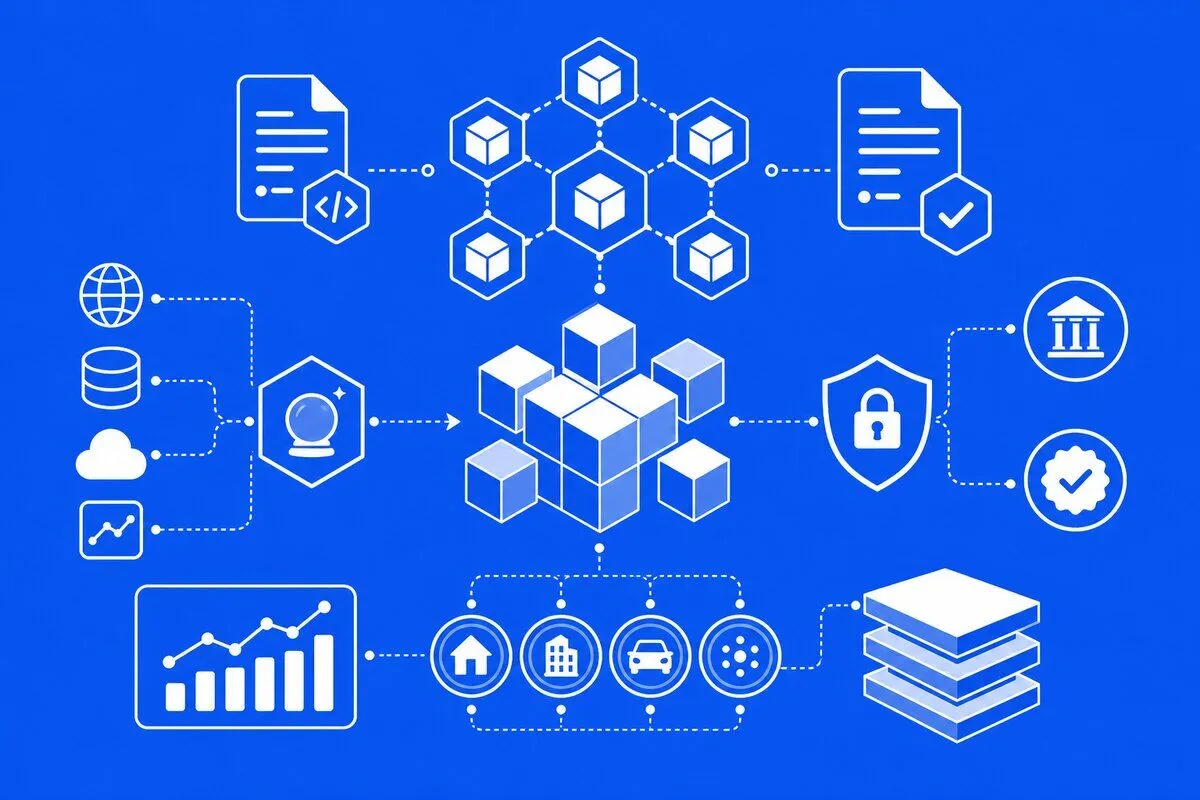
End-to-End AI Platform Architecture
An end-to-end generative AI platform architecture integrates every component discussed in this guide into a coherent, operable system. Understanding how each layer connects to the others is essential for engineers tasked with designing or evaluating generative AI infrastructure for their organizations.
The architecture begins at the data layer, flows through training and experimentation, and terminates at the inference and observability layer. Critically, feedback loops must exist between the production monitoring system and the data pipeline, enabling continuous model improvement based on real production signals rather than static benchmark datasets.
Organizations that architect this full platform with intentionality from the start consistently deliver AI products faster, at lower cost, and with greater reliability than those that stitch components together reactively. This is the core value proposition of investing in proper generative AI infrastructure engineering, and it is what separates leading AI-native organizations from those still treating AI as an experimental side project.
People Also Ask
Q1.1. What is generative AI infrastructure and why does it matter for businesses?
Generative AI infrastructure refers to the complete set of hardware, software, data pipelines, and cloud AI solutions that power large-scale AI model training and deployment. It matters because without a robust AI deployment stack, organizations in markets like India and UAE cannot reliably scale AI products.
Q2.2. How much does it cost to build scalable AI infrastructure for a mid-size company?
Costs vary widely based on whether you choose cloud AI solutions or on-premise setups. For mid-size companies in Dubai or Indian metros, a cloud-based generative AI tech stack can start from $50,000 annually, scaling into millions depending on compute intensity and model complexity.
Q3.3. What are the core components of a generative AI tech stack?
A generative AI tech stack typically includes data ingestion pipelines, compute clusters (GPUs or TPUs), model training frameworks like PyTorch or TensorFlow, vector databases, orchestration tools, and serving infrastructure. Each layer must be optimized for the AI workload it supports.
Q4.4. Is cloud AI infrastructure better than on-premise for generative AI workloads?
Cloud AI solutions offer faster provisioning, elastic scalability, and lower upfront costs, making them ideal for startups and enterprises in India and UAE exploring generative AI. On-premise suits organizations with strict data sovereignty rules or consistently high compute demands.
Q5.5. What security risks exist in generative AI infrastructure engineering?
Key risks include data poisoning during training, model inversion attacks, unauthorized API access, and insecure model endpoints. Organizations in regulated sectors across Dubai and India must integrate zero-trust principles directly into their scalable AI infrastructure from day one.
Q6.6. How do data pipelines affect the performance of generative AI models?
Data pipelines determine the quality, volume, and freshness of data entering AI models. Poorly designed pipelines introduce noise and latency, directly degrading model output quality. Efficient generative AI infrastructure software depends on clean, well-orchestrated data flow at every stage.
Q7.7. What compute resources are needed for training large generative AI models?
Training large models demands high-end GPU clusters (NVIDIA A100 or H100), high-bandwidth interconnects like NVLink, and fast distributed storage. For organizations in India scaling generative AI, cloud providers like AWS and Azure offer on-demand access to these resources within their AI deployment stack.
Q8.8. How do companies monitor generative AI infrastructure in production?
Monitoring involves tracking model latency, token throughput, GPU utilization, drift detection, and cost per inference. Best-in-class generative AI infrastructure software includes integrated observability tools like Prometheus, Grafana, and LLM-specific monitoring platforms such as Weights and Biases.
Q9.9. What are the biggest challenges in building generative AI infrastructure from scratch?
The top challenges include managing compute costs, ensuring low-latency inference at scale, integrating legacy data systems, handling model versioning, and maintaining regulatory compliance. Teams in UAE and India often underestimate the operational complexity of running scalable AI infrastructure long-term.
Q10.10. What future trends will shape generative AI infrastructure over the next five years?
Key trends include edge AI inference, multi-modal model serving, energy-efficient hardware, AI-native databases, and sovereign cloud deployments. Markets like Dubai are already investing heavily in national AI infrastructure, making these trends highly relevant for regional technology leaders.
Explore Services
Related Services
Reviewed by

Aman Vaths
Founder of Nadcab Labs
Aman Vaths is the Founder & CTO of Nadcab Labs, a global digital engineering company delivering enterprise-grade solutions across AI, Web3, Blockchain, Big Data, Cloud, Cybersecurity, and Modern Application Development. With deep technical leadership and product innovation experience, Aman has positioned Nadcab Labs as one of the most advanced engineering companies driving the next era of intelligent, secure, and scalable software systems. Under his leadership, Nadcab Labs has built 2,000+ global projects across sectors including fintech, banking, healthcare, real estate, logistics, gaming, manufacturing, and next-generation DePIN networks. Aman’s strength lies in architecting high-performance systems, end-to-end platform engineering, and designing enterprise solutions that operate at global scale.