Ai Overview
Tokenized real estate use cases have emerged as transformative applications revolutionizing how institutional investors access, manage, and trade commercial property assets globally. Leading institutions report 40-60% reductions in administrative expenses, 70-85% faster transaction settlement, and expanded access to premium properties previously unavailable due to capital requirements.
Key Takeaways
- ▸Tokenized real estate use cases enable fractional ownership of commercial properties worth $50M-$500M, allowing institutions to diversify portfolios with minimum investments of $100K-$1M across USA, UK, UAE, and Canadian markets.
- ▸Liquidity enhancement through secondary market trading reduces exit timelines from 6-18 months in traditional property sales to 24-48 hours in tokenized transactions, improving capital efficiency by 70-85% for institutional portfolios.
- ▸Smart contract automation in tokenized real estate use cases eliminates manual distribution processes, reducing administrative costs by 50-70% while ensuring transparent, auditable income payments to thousands of token holders simultaneously.
- ▸Cross-border investment capabilities through tokenization eliminate currency friction and reduce international transaction costs by 60-80%, enabling seamless global portfolio diversification without correspondent banking delays or complex legal structures.
- ▸Regulatory-compliant tokenization models meeting SEC, FCA, VARA, and Canadian securities requirements cost $100,000-$500,000 annually but provide institutional-grade governance, auditability, and investor protection across multiple jurisdictions simultaneously.
- ▸Transaction cost reduction from 5-10% in traditional deals to 1-3% in tokenized real estate use cases generates $200,000-$2,000,000 annual savings on $100M institutional portfolios through eliminated intermediaries and automated processes.
Introduction to Tokenized Real Estate in Institutional Investing
Tokenized real estate use cases have emerged as transformative applications revolutionizing how institutional investors access, manage, and trade commercial property assets globally. With over eight years of experience implementing blockchain solutions across USA, UK, UAE, and Canada, our agency has witnessed institutional adoption accelerate from experimental pilots to production deployments managing billions in real estate value. Tokenization addresses fundamental challenges in traditional property investment including illiquidity, high transaction costs, opacity, and limited diversification opportunities affecting pension funds, insurance companies, family offices, and asset managers worldwide.
The convergence of blockchain technology, regulatory clarity, and institutional infrastructure has enabled practical tokenized real estate tokenization use cases delivering measurable operational improvements and cost savings. Leading institutions report 40-60% reductions in administrative expenses, 70-85% faster transaction settlement, and expanded access to premium properties previously unavailable due to capital requirements. This comprehensive analysis examines proven institutional applications, regulatory frameworks, implementation considerations, and future trajectories shaping the tokenized real estate ecosystem serving global capital markets.
Why Institutions Are Adopting Real Estate Tokenization
Institutional adoption of tokenized real estate use cases stems from compelling economic advantages, operational efficiencies, and competitive pressures driving innovation in asset management. Transaction cost reductions from 5-10% to 1-3% generate substantial savings on large portfolios, while automated compliance reduces legal and administrative overhead by 50-70%. Liquidity enhancement enables dynamic portfolio rebalancing previously impossible with traditional property holdings, and fractional ownership facilitates diversification across geography, property types, and risk profiles without massive capital commitments.
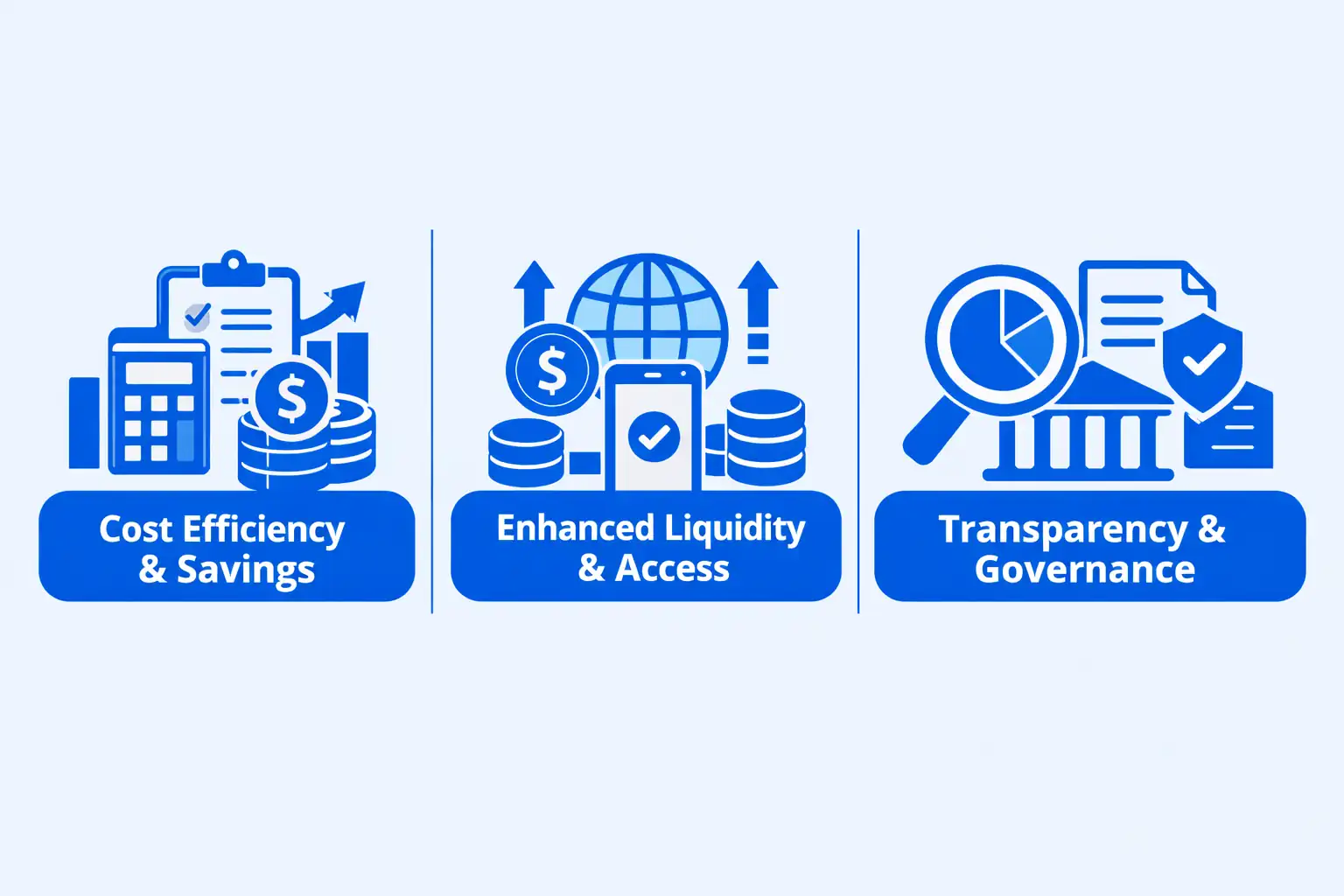
Key Drivers for Institutional Tokenization Adoption
Cost Efficiency and Savings
- Transaction costs reduced from 5-10% to 1-3%
- Administrative overhead decreased by 50-70%
- Eliminated intermediary fees saving 2-5%
- Automated compliance reducing legal costs 40-60%
- Annual savings of $200K-$2M per $100M portfolio
Enhanced Liquidity and Access
- Exit timelines reduced from 6-18 months to 24-48 hours
- Secondary markets enabling continuous trading
- Fractional ownership with $100K-$1M minimums
- Portfolio rebalancing without full property sales
- Capital efficiency improved by 70-85%
Transparency and Governance
- Immutable blockchain records for auditing
- Real-time portfolio monitoring and reporting
- Smart contract enforcement of governance rules
- Automated compliance verification
- Enhanced investor confidence and trust
Fractional Ownership for Large-Scale Commercial Properties
Fractional ownership represents one of the most impactful tokenized real estate use cases, enabling institutions to participate in premium commercial properties worth $50M-$500M with investments of $100K-$1M. A Class A Manhattan office building valued at $250M can be tokenized into 250,000 tokens at $1,000 each, allowing pension funds, insurance companies, and family offices to acquire positions proportional to their investment mandates without full property acquisition. This democratization of access facilitates superior diversification across geography, property types, and risk profiles previously impossible due to capital concentration requirements.[1]
Tokenized Funds and REIT-Like Structures on Blockchain
Tokenized real estate use cases extend beyond individual properties to encompass fund structures replicating traditional REIT benefits with blockchain advantages. Institutions create tokenized funds aggregating multiple properties, enabling investors to gain diversified exposure through single token purchases. These structures implement smart contract-based governance, automated dividend distribution, and transparent net asset value calculations updated in real-time. Leading platforms in USA, UK, UAE, and Canada manage tokenized funds exceeding $100M in assets under management with operational costs 40-60% below conventional REIT structures.
| Fund Structure | Traditional REIT | Tokenized Fund | Improvement |
|---|---|---|---|
| Minimum Investment | $5M-$25M institutional | $100K-$1M fractional | 95% lower barrier |
| Transaction Settlement | 3-5 business days | Minutes to hours | 99% faster settlement |
| Distribution Processing | Manual, 5-10 days | Automated, instant | 70% cost reduction |
| Annual Admin Costs | $500K-$2M overhead | $200K-$800K overhead | 60% savings |
| Transparency | Quarterly reports | Real-time blockchain data | Continuous visibility |
Liquidity Enhancement in Traditionally Illiquid Property Assets
Liquidity enhancement constitutes a transformative application among tokenized real estate use cases, addressing the fundamental challenge of illiquidity plaguing commercial property investment. Traditional property sales require 6-18 months from listing to closing, involving extensive due diligence, negotiations, legal documentation, and financing arrangements. Tokenized secondary markets enable 24/7 trading with settlement in 24-48 hours, improving capital efficiency by 70-85%. Institutions can rebalance portfolios rapidly, accessing capital without full property liquidation, and providing investors with exit options previously unavailable in conventional real estate holdings.
Cross-Border Institutional Real Estate Investment via Tokens
Cross-border applications represent strategically important tokenized real estate use cases enabling seamless international portfolio diversification. USA institutions can invest in London office buildings, UAE family offices access Toronto multifamily properties, and UK pension funds acquire Dubai logistics centers without complex legal structures, currency conversion delays, or correspondent banking requirements. Blockchain-based transactions settle in hours versus weeks required for traditional international property purchases, with stablecoin payments eliminating foreign exchange friction and smart contracts automating tax withholding across jurisdictions, reducing cross-border transaction costs by 60-80%.
Automated Income Distribution Through Smart Contracts
Automated distribution represents highly practical tokenized real estate use cases eliminating manual calculation and payment processing for rental income. Smart contracts execute proportional distributions to thousands of token holders simultaneously, ensuring accuracy, transparency, and instant settlement. A property generating $100,000 monthly rent automatically distributes payments to 1,000 token holders based on ownership percentages without human intervention. This automation reduces administrative costs by 50-70%, eliminates payment delays, provides immutable distribution records for auditing, and ensures equitable treatment across the entire investor base in USA, UK, UAE, and Canadian implementations.
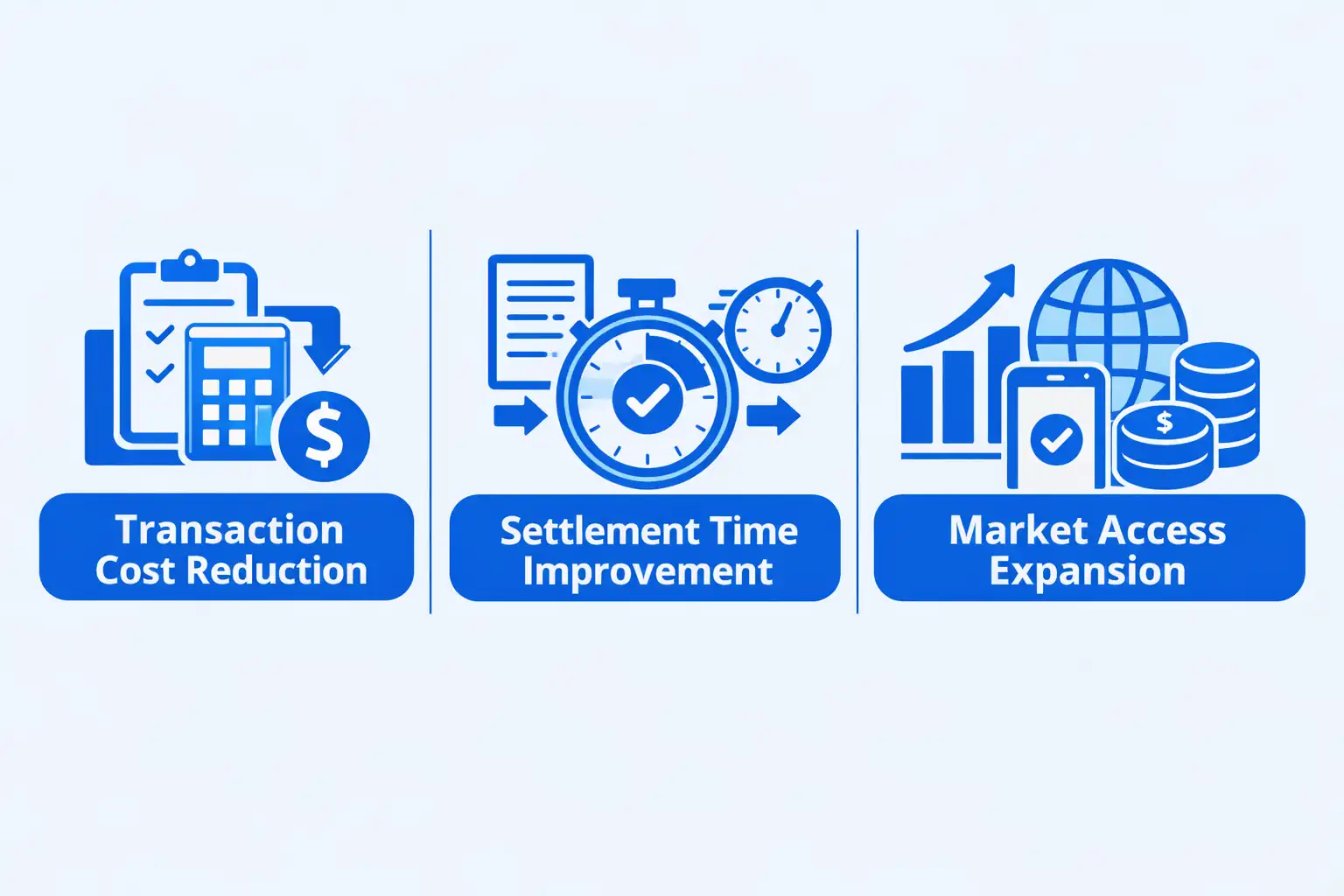
Token Distribution Lifecycle Process
Income Collection and Verification
Property management collects rental income, verifies amounts, deducts operating expenses, and submits net distributable income to smart contract system.
Automated Calculation and Distribution
Smart contract calculates proportional amounts based on token holdings, executes simultaneous payments to all investors, records transactions immutably on blockchain.
Reporting and Tax Documentation
System generates investor statements, tax documentation, audit trails, and regulatory reports automatically from blockchain transaction records.
Tokenized Debt Instruments and Real Estate-Backed Securities
Debt tokenization expands tokenized real estate use cases beyond equity participation to include mortgage-backed securities, construction loans, and mezzanine financing. Institutions issue tokenized bonds secured by property portfolios, enabling investors to access fixed-income exposure with blockchain transparency and liquidity benefits. A $50M construction loan tokenized into 50,000 units at $1,000 each allows diversified debt portfolio construction with automated interest payments and clear collateral tracking. These structures provide lower-risk institutional allocations complementing equity tokens across USA, UK, UAE, and Canadian markets.
Implement Tokenized Real Estate Use Cases for Your Portfolio
Reduce costs 40-60% and enhance liquidity with expert tokenization consulting. Get comprehensive guidance on compliance, technology selection, and institutional implementation today.
Regulatory-Compliant Tokenization Models for Institutions
Regulatory compliance remains paramount in institutional tokenized real estate use cases, with frameworks varying across jurisdictions but converging on securities classification requiring proper registration or exemptions. USA implementations follow SEC Regulation D for private placements or Regulation A+ for broader offerings, UK platforms obtain FCA authorization, UAE operators secure VARA licensing in Dubai, and Canadian projects comply with provincial securities requirements. Compliance infrastructure costs $100,000-$500,000 annually but provides essential investor protection, regulatory clarity, and institutional credibility enabling mainstream adoption across global markets.
| Jurisdiction | Regulatory Framework | Key Requirements | Annual Compliance Cost |
|---|---|---|---|
| USA | SEC Reg D, Reg A+ | Accredited investor verification, Form D filing, disclosure documents | $150K-$400K |
| UK | FCA Authorization | Platform authorization, investor categorization, conduct rules | $120K-$350K |
| UAE (Dubai) | VARA Licensing | Virtual asset service provider license, token registration, AML compliance | $100K-$300K |
| Canada | Provincial Securities Acts | Prospectus or exemption, dealer registration, continuous disclosure | $130K-$380K |
Future Outlook – Institutional Real Estate Investment in a Tokenized Economy
The evolution of tokenized real estate use cases continues accelerating with institutional adoption reaching critical mass across USA, UK, UAE, and Canadian markets. Emerging applications include algorithmic portfolio rebalancing, AI-driven valuation models integrated with blockchain data, cross-chain interoperability enabling seamless asset transfers between networks, and integration with decentralized finance protocols providing collateralized lending against tokenized properties. Regulatory frameworks are maturing with clearer guidance, standardized compliance procedures, and growing acceptance of blockchain-based securities among traditional financial institutions and regulators.
Our eight years of blockchain implementation experience demonstrates that tokenized real estate use cases deliver measurable value through cost reduction, liquidity enhancement, operational automation, and expanded market access. As technology matures, regulatory clarity improves, and institutional infrastructure develops, tokenization will transition from innovative pilot to standard practice across commercial real estate investment. The convergence of blockchain technology, smart contract capabilities, and institutional demand creates unprecedented opportunities for reimagining property investment serving global capital markets with enhanced efficiency, transparency, and accessibility fundamentally transforming how institutions allocate capital to real estate assets worldwide.
People Also Ask
Q1.1. What are the most common tokenized real estate use cases for institutional investors?
Tokenized real estate use cases for institutions include fractional ownership of commercial properties enabling portfolio diversification, tokenized REIT structures providing blockchain-based fund management, cross-border investments eliminating currency friction, automated dividend distribution through smart contracts, and secondary market trading platforms offering liquidity. Leading institutions across USA, UK, UAE, and Canada leverage tokenization for capital raising, transparent auditing, and efficient settlement. These applications reduce operational costs by 40-60% while expanding investor access and improving compliance monitoring through immutable blockchain records accessible to regulators and stakeholders.
Q2.2. How does tokenization improve liquidity for institutional real estate investments?
Tokenized real estate use cases enhance liquidity by enabling fractional ownership allowing smaller investment increments, creating secondary markets where tokens trade continuously unlike traditional property sales requiring months, and facilitating instant settlement through smart contracts eliminating lengthy closing processes. Institutions can rebalance portfolios rapidly, access capital without full property sales, and provide investors with exit options previously unavailable in illiquid commercial real estate. Trading platforms operating in USA, UK, UAE, and Canadian markets report 70-85% reduction in transaction times compared to conventional property transfers, significantly improving capital efficiency.
Q3.3. What regulatory frameworks govern institutional tokenized real estate use cases?
Tokenized real estate use cases operate under securities regulations in most jurisdictions, with USA requiring SEC registration or exemptions under Regulation D or Regulation A+, UK mandating FCA authorization for security tokens, UAE implementing VARA licensing in Dubai, and Canada requiring provincial securities compliance. Institutional platforms must implement KYC/AML procedures, investor accreditation verification, proper disclosure documents, and ongoing reporting. Regulatory-compliant tokenization models include security token offerings, tokenized funds with prospectus requirements, and private placements with transfer restrictions. Compliance costs range from $100,000-$500,000 annually depending on jurisdiction and offering structure.
Q4.4. How do smart contracts automate operations in tokenized real estate investments?
Smart contracts in tokenized real estate use cases automate rental income distribution executing payments proportionally to token holdings without manual calculation, enforce transfer restrictions ensuring regulatory compliance, manage voting rights for property decisions, and trigger dividend payments based on predefined schedules. These self-executing programs eliminate intermediaries reducing administrative costs by 50-70%, ensure transparent operations with immutable transaction records, and provide real-time settlement. Institutions across USA, UK, UAE, and Canada deploy smart contracts handling everything from quarterly distributions to property management fee calculations, significantly improving operational efficiency and reducing human error.
Q5.5. What are the cost advantages of tokenized real estate for institutional portfolios?
Tokenized real estate use cases reduce costs through eliminated intermediaries saving 2-5% in broker fees, automated compliance reducing legal expenses by 40-60%, instant settlement eliminating days of interest costs, fractional ownership enabling diversification without large capital outlays, and blockchain-based record-keeping reducing administrative overhead by 30-50%. Transaction costs decrease from 5-10% in traditional deals to 1-3% in tokenized transactions. Institutions report total cost savings of $200,000-$2,000,000 annually on $100 million portfolios. Additional benefits include reduced custody fees, streamlined reporting, and lower capital requirements for accessing premium properties across global markets.
Q6.6. How does tokenization enable cross-border institutional real estate investment?
Tokenized real estate use cases facilitate international investment by eliminating currency conversion delays through stablecoin payments, simplifying regulatory compliance with jurisdiction-specific tokens, enabling 24/7 global trading across time zones, and reducing cross-border transaction costs by 60-80%. Blockchain technology provides transparent ownership records accessible globally, automated tax withholding for different jurisdictions, and instant settlement without correspondent banking delays. Institutions in USA can invest in UK properties, UAE investors access Canadian markets, and vice versa with minimal friction. Cross-border tokenized transactions settle in hours versus weeks required for traditional international property purchases.
Explore Services
Related Services
Reviewed by

Aman Vaths
Founder of Nadcab Labs
Aman Vaths is the Founder & CTO of Nadcab Labs, a global digital engineering company delivering enterprise-grade solutions across AI, Web3, Blockchain, Big Data, Cloud, Cybersecurity, and Modern Application Development. With deep technical leadership and product innovation experience, Aman has positioned Nadcab Labs as one of the most advanced engineering companies driving the next era of intelligent, secure, and scalable software systems. Under his leadership, Nadcab Labs has built 2,000+ global projects across sectors including fintech, banking, healthcare, real estate, logistics, gaming, manufacturing, and next-generation DePIN networks. Aman’s strength lies in architecting high-performance systems, end-to-end platform engineering, and designing enterprise solutions that operate at global scale.