Ai Overview
The United States is the world’s largest market for Enterprise Resource Planning software. North America leads globally with a 34% to 36% share of total ERP market revenue. 82 billion and $34 billion in 2024 and 2025 depending on the research scope used, and it is projected to reach $49 billion by 2030. The average monthly ERP cost for large US enterprises is approximately $9,330, or $111,960 per year, reflecting the depth of functionality these platforms provide.
The United States is the world’s largest market for Enterprise Resource Planning software. The US ERP market generated between $27.82 billion and $34 billion in 2024 and 2025 depending on the research scope used, and it is projected to reach $49 billion by 2030. North America leads globally with a 34% to 36% share of total ERP market revenue.
The answer to which ERP software is used widely in the USA is not a single name. It depends on company size, industry, and what functions the business needs to manage. SAP, Oracle, Microsoft Dynamics 365, and Workday dominate the large enterprise segment. Oracle NetSuite, Epicor, Acumatica, and Sage lead among mid-market and small businesses. This guide explains which system is most used in each context, supported by verified statistics from 2025 and 2026.
Key Takeaways
- US Market Leadership: North America held 34% to 36% of global ERP market revenue in 2025. The US is the single largest national ERP market, generating $27.82 to $34 billion depending on measurement methodology.
- SAP Leads by Revenue Share: SAP SE holds 16.44% of global ERP sales, the highest market share of any vendor. It is the most deployed ERP at large US enterprises, with 9,066 US customers representing 47% of its global base.
- Oracle NetSuite Leads the Cloud SMB Segment: Oracle NetSuite serves over 40,000 customers globally and is the dominant cloud-only ERP for US SMBs and mid-market companies across 215 countries.
- Manufacturing Is the Top Industry: Manufacturing leads all US industries in ERP adoption, accounting for 33.66% of all implementations. 21% of ERP software users are manufacturing companies.
- Cloud Now Dominates New Deployments: 70.4% of ERP deployments are cloud-based in 2025. 78.6% of new ERP implementations choose cloud. SMBs represent the fastest-growing cloud ERP segment at 21.22% CAGR through 2030.
- Accounting Is the Top Requested Module: 89% of US ERP buyers cite accounting as the most important ERP feature. Inventory and distribution rank second at 67%, followed by CRM at 33%.
- Consultant-Led Implementations Succeed More: Organizations that hire a software consultant to implement ERP report an 85% success rate. Without a consultant, success rates are significantly lower.
- AI Is Now Standard in Leading US Platforms: SAP, Oracle, Microsoft Dynamics 365, and Workday have all embedded AI automation, predictive analytics, and AI copilots as standard features in their US-market ERP platforms in 2025 and 2026.
- Implementation Timelines Vary: SMBs typically implement ERP within 3 to 9 months. Large US enterprises can take up to 18 months. Over 50% of US companies prefer a phased implementation over a full cutover approach.
Which ERP Is Most Widely Used in the USA by Enterprise Size
ERP adoption in the US follows a clear pattern based on company size. Large enterprises with over 1,000 employees use different platforms than mid-market businesses or SMBs. Understanding this segmentation explains why no single ERP platform dominates the entire US market.
Large Enterprises: SAP, Oracle Fusion Cloud, Workday
For US companies with over 1,000 employees and complex multi-entity or multi-country operations, the three most widely deployed platforms are SAP S/4HANA, Oracle Fusion Cloud ERP, and Workday. SAP SE holds the highest global ERP market share at 16.44% of all ERP software sales. Its US customer base of 9,066 companies represents 47.12% of its total global deployments, confirming that large US enterprises are SAP’s primary market. The average monthly ERP cost for large US enterprises is approximately $9,330, or $111,960 per year, reflecting the depth of functionality these platforms provide.
Workday holds 7.89% of global ERP market share and is the dominant choice among US large enterprises that prioritize human capital management and financial management over manufacturing or supply chain capabilities. It is cloud-only with no on-premise option, which suits the large US service, technology, and healthcare sectors where data sovereignty requirements do not restrict cloud deployment.
Understanding exactly what Enterprise Resource Planning software integrates and delivers at an architectural level helps large organizations evaluate whether a platform’s functional scope matches their actual operational requirements before committing to an implementation.[1]
Mid-Market Businesses: Microsoft Dynamics 365, Oracle NetSuite, Infor
For US businesses with 100 to 1,000 employees, the most widely adopted platforms are Microsoft Dynamics 365 Business Central, Oracle NetSuite, and Infor CloudSuite. As of January 2026, Microsoft Dynamics 365 Business Central leads the global ERP market by number of active deployments across the mid-market segment. Its integration with Office 365, Teams, Power BI, and Azure makes it the default choice for US businesses already operating on Microsoft infrastructure, avoiding the need to introduce an entirely separate platform.
Oracle NetSuite serves over 40,000 customers globally across 215 countries and is the most widely evaluated cloud ERP alternative for US mid-market businesses that want a single cloud system covering accounting, inventory, order management, CRM, and project management without the complexity of a full SAP or Oracle Fusion Cloud implementation.
Small Businesses: QuickBooks Enterprise, Sage, Acumatica, Odoo
Among US small businesses with fewer than 100 employees, the most widely used business management software options are QuickBooks Enterprise (for accounting-focused businesses), Sage 50 or Sage 100 (for product-based SMBs), and Acumatica or Odoo for businesses that have outgrown basic accounting software and need inventory, CRM, and HR in an integrated system. SMBs represent the fastest-growing cloud ERP segment in the US at 21.22% CAGR through 2030. Account payable is the most common ERP process adopted by small businesses at 77%, followed by accounts receivable at 73%.[2]
Which ERP Software Is Most Used by Industry in the USA
Industry vertical is as important as company size when determining which ERP platform is most appropriate. The industries that use ERP most heavily in the US are manufacturing, IT and professional services, healthcare, retail, and distribution.
Manufacturing: SAP, Epicor, Infor, Oracle
Manufacturing is the largest ERP vertical in the US, accounting for 33.66% of all ERP implementations. 21% of all ERP software users are manufacturing companies. The manufacturing segment is projected to grow at a 9.6% CAGR through 2035, the highest growth rate of any ERP vertical. For large US manufacturers, SAP S/4HANA and Oracle Fusion Cloud ERP provide the deepest functional coverage including BOM, MRP, production scheduling, quality management, and supply chain visibility.
For mid-market US manufacturers, Epicor Kinetic 2025 is one of the most widely deployed purpose-built manufacturing ERP solutions. Epicor released Kinetic 2025 in March 2025 with advanced IoT integration for real-time equipment monitoring and predictive maintenance. Infor CloudSuite Industrial is also widely used in automotive supply chain, food and beverage, and defense manufacturing in the US, where its pre-configured industry templates reduce customization requirements significantly.[3]
IT and Professional Services: Workday, NetSuite, Microsoft Dynamics 365
Information technology companies represent 14.85% of ERP users in the US. Professional and financial services represent 13.86%. For these industries, the most widely used platforms are Workday (for HCM and financial management), Oracle NetSuite (for project accounting, resource allocation, and revenue recognition), and Microsoft Dynamics 365 (for businesses in the Microsoft ecosystem). Professional services firms account for 28% of NetSuite’s customer base globally, reflecting its strong project management and time-tracking capabilities. For IT service providers that need focused service delivery tools without full ERP complexity, dedicated PSA software for MSPs covers ticketing, project tracking, and billing.
Healthcare: Workday, Oracle, Infor
Healthcare accounts for approximately 4.95% of total ERP usage in the US but is among the most compliance-intensive sectors. HIPAA, FDA regulations, and patient data security requirements make platform selection particularly consequential. Workday is widely used in US healthcare for HR and financial management. Oracle Fusion Cloud ERP covers complex multi-entity hospital systems. Infor CloudSuite Healthcare, developed from the Lawson Software acquisition, is a specialized option widely deployed in US healthcare networks.[4]
Retail and Distribution: NetSuite, SAP, Microsoft Dynamics 365
The retail and distribution sector is the fastest-growing application segment in the US ERP market. Retail accounts for 3.96% of US ERP users and distribution or wholesale for 9.90%. For US retailers and distributors, Oracle NetSuite is the most widely evaluated cloud ERP due to its multi-location inventory, order management, and e-commerce integration through SuiteCommerce. SAP S/4HANA covers retail at the enterprise level with sophisticated supply chain and demand planning modules. Microsoft Dynamics 365 is widely used in US distribution businesses that want deep integration with Microsoft’s productivity tools.
ERP Usage by Industry in the USA
| Industry | Share of US ERP Usage | Most Used ERP Platforms |
|---|---|---|
| Manufacturing | 33.66% | SAP, Epicor, Infor, Oracle |
| Information Technology | 14.85% | Workday, NetSuite, Microsoft Dynamics 365 |
| Professional and Financial Services | 13.86% | Workday, NetSuite, SAP |
| Distribution and Wholesale | 9.90% | NetSuite, Epicor, Microsoft Dynamics 365 |
| Public Sector and Nonprofit | 6.93% | Oracle, Microsoft Dynamics 365, SAP |
| Healthcare | 4.95% | Workday, Oracle, Infor CloudSuite |
| Retail | 3.96% | NetSuite, SAP, Microsoft Dynamics 365 |
| Construction and Mining | 1.98% each | Acumatica, Sage, Microsoft Dynamics 365 |
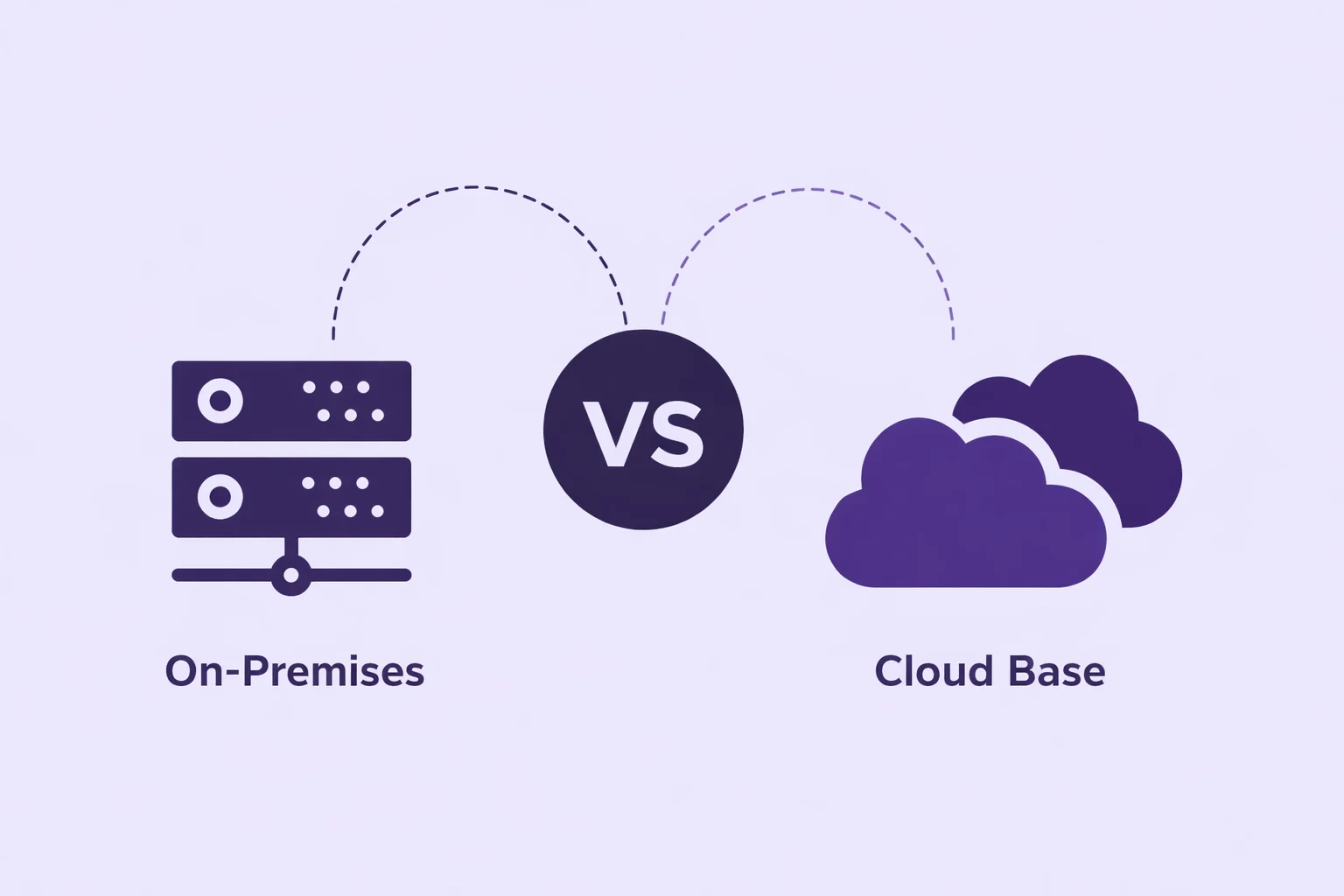
Cloud vs. On-Premise: Which ERP Deployment Do US Businesses Use?
The shift toward cloud ERP in the US is significant and well documented. As of 2025, 70.4% of all ERP deployments are cloud-based and 78.6% of new ERP implementations choose cloud. Cloud ERP grows at 14.5% CAGR while on-premise ERP grows at just 2% CAGR. The main reason for this shift is lower total cost of ownership. Cloud ERP eliminates hardware purchases, reduces IT staffing requirements, and provides automatic updates without planned downtime.
Among US SMBs, 55% choose cloud-based ERP, citing convenience (29%) and adaptability (27%) as the primary reasons. In the retail sector, more than 55% of US companies opt for hybrid ERP deployments that combine on-premise and cloud components. On-premise ERP remains most relevant in US defense, classified government work, and healthcare environments where data sovereignty, ITAR compliance, or HIPAA restrictions prevent moving all data to shared cloud infrastructure.[5]
What Features Do US Businesses Look For in ERP Software
The specific ERP features US businesses prioritize directly determine which platform is selected. Survey data from Oracle NetSuite covering thousands of US ERP buyers provides clear rankings of the most requested modules.
Accounting: The Top Priority for 89% of US ERP Buyers
Accounting is the most requested ERP feature across all US business sizes and industries. General ledger, accounts payable, accounts receivable, fixed assets, tax management, and financial reporting are the starting point for almost every US ERP evaluation. GAAP compliance and SOX audit trail requirements for public companies add additional specification requirements that not all platforms meet equally.
Inventory and Distribution: Required by 67% of ERP Buyers
Inventory and distribution management is the second most requested ERP feature in the US. Multi-location stock tracking, automatic reorder triggers, goods receipt management, and delivery scheduling are required in any industry that handles physical products. The platforms most commonly selected for inventory-heavy operations in the US are Oracle NetSuite, Epicor, Acumatica, and Microsoft Dynamics 365 Supply Chain Management.
CRM Integration: Required by 33% of ERP Buyers
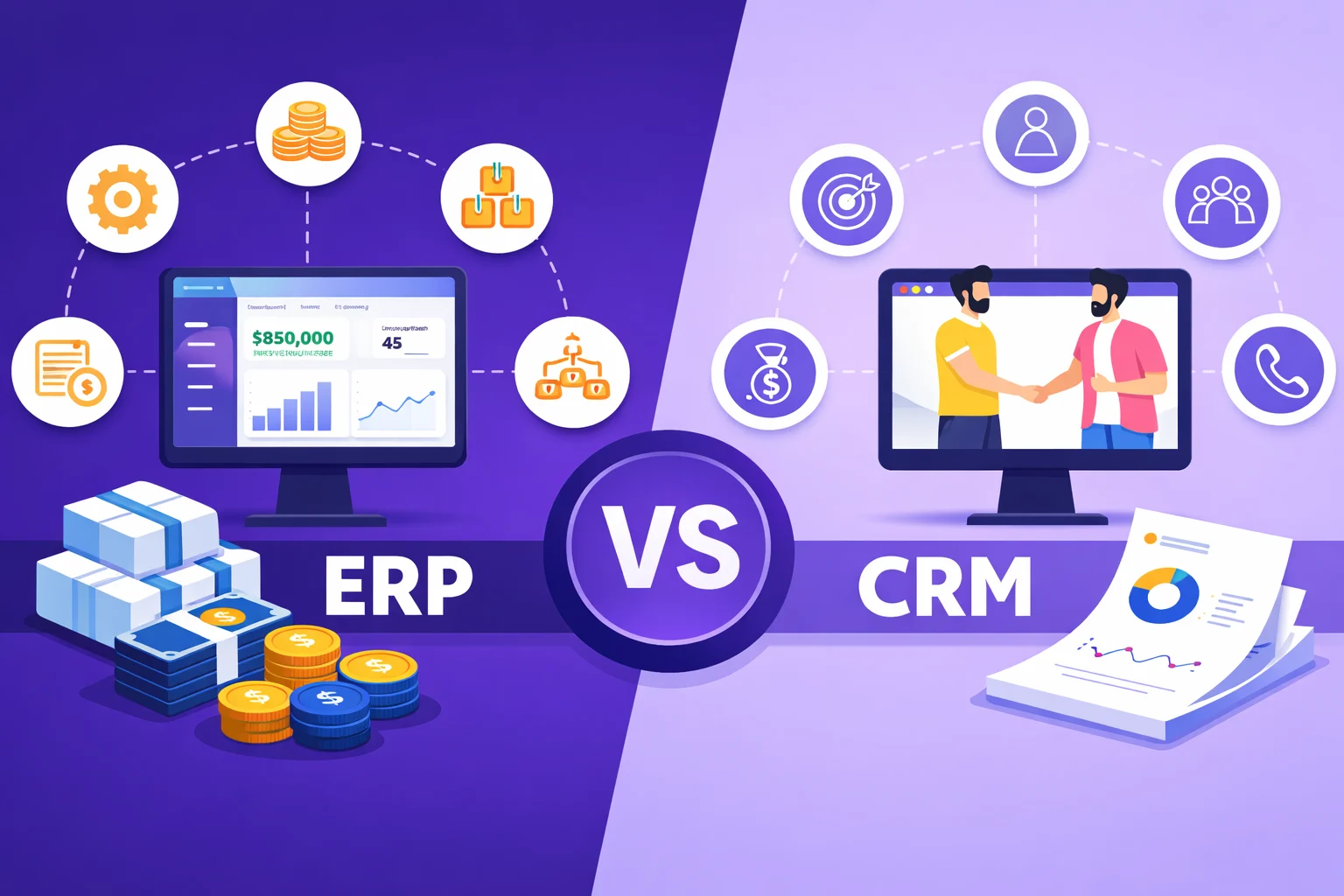
One-third of US ERP buyers require integrated or directly connected CRM functionality. Most large ERP platforms either include a built-in CRM module or provide native integration with Salesforce, the dominant standalone CRM in the US market. Microsoft Dynamics 365 uniquely combines ERP and CRM in a single platform, which is a key reason it is widely selected by US businesses that want to manage finance, operations, and customer relationships without a separate CRM subscription.
For businesses evaluating the types of ERP software available — including cloud, on-premise, hybrid, industry-specific, and open-source models — understanding which deployment structure fits the operational context and compliance requirements is the first decision that narrows down viable platform options.[6]
What US Businesses Should Know Before Choosing an ERP System
Selecting the right ERP for a US business involves more than comparing feature lists. There are practical considerations that affect implementation outcomes, total cost, and how long the system stays relevant.
Primary Drivers Behind US ERP Adoption
The three most common reasons US businesses adopt ERP are: replacing outdated legacy systems, consolidating multiple disconnected applications into a single platform, and upgrading to modern technology to meet regulatory requirements or support business growth. Around 85% of US organizations report they urgently need a new ERP system, which reflects how many businesses are still running on technology that cannot meet current compliance or reporting demands.
Implementation Success Factors
Implementation success rates in the US follow a clear pattern. Organizations that hire a dedicated software consultant achieve an 85% success rate. Among companies that completed an ERP implementation, 77% identified strong institutional leadership support as the most critical success factor. Over 50% of US companies prefer a phased implementation that rolls out core modules first and adds advanced features in later stages, rather than attempting a full cutover at launch. Around 83% of companies that performed an ROI analysis before implementation met their ROI expectations.[7]
When a Custom ERP Makes Sense
Some US businesses have workflows, compliance structures, or integration requirements that no standard ERP platform covers without extensive modification. In these cases, building a custom ERP system from the ground up is more cost-effective than paying for years of customization on top of a platform that was not designed for the specific use case. An ERP Software Development Company that specializes in custom builds can design a system around the actual workflows rather than adapting the business to fit the constraints of a purchased platform.
Need a Custom ERP Built for Your Business?
Nadcab Labs designs and develops custom ERP software tailored to your industry, compliance requirements, and workflow specifics — covering finance, inventory, HR, manufacturing, procurement, and reporting modules built for how your business operates.
Frequently Asked Questions
Q1.Which ERP software dominates the US market?
SAP SE holds the highest ERP market share globally at 16.44%, with 9,066 US customers representing 47% of its global base. It dominates the large enterprise segment. Oracle NetSuite leads in cloud ERP for SMBs and mid-market companies. Microsoft Dynamics 365 Business Central leads by number of active deployments in the mid-market. Workday dominates HCM-focused large enterprise deployments in services and healthcare.
Q2.What ERP do large US companies use?
Large US companies with over 1,000 employees most commonly use SAP S/4HANA, Oracle Fusion Cloud ERP, and Workday. SAP is the most deployed at enterprises in manufacturing, retail, and energy. Oracle Fusion covers complex multi-entity financial operations. Workday leads in HR and financial management for US companies in professional services, technology, and healthcare that do not require manufacturing modules.
Q3.What is the most popular cloud ERP in the USA?
Oracle NetSuite is the most widely evaluated and deployed cloud-only ERP in the US for SMBs and mid-market businesses. It serves over 40,000 customers globally across 215 countries. Microsoft Dynamics 365 Business Central leads cloud deployments in the mid-market by total number of active installations. For large enterprises, SAP S/4HANA Cloud and Oracle Fusion Cloud ERP are the dominant cloud ERP options.
Q4.Which industry uses ERP most in the USA?
Manufacturing is the largest ERP-using industry in the US, accounting for 33.66% of all implementations. Information technology accounts for 14.85%, professional and financial services for 13.86%, and distribution or wholesale for 9.90%. Manufacturing ERP adoption is projected to grow at 9.6% CAGR through 2035, the highest growth rate of any industry vertical in the US ERP market.
Q5.How much does ERP cost for US businesses?
The average monthly ERP cost for large US enterprises is approximately $9,330, or $111,960 annually. The average spend per US employee on ERP is $159.94 per year. Total ERP implementation project costs vary widely: Oracle NetSuite SMB implementations range from $75,000 to $500,000. SAP S/4HANA enterprise implementations frequently exceed $1 million. Businesses should calculate total cost over five years, not just annual subscription fees.
Q6.What percentage of US businesses use cloud ERP?
As of 2025, 70.4% of all ERP deployments in the US are cloud-based, and 78.6% of new ERP implementations choose cloud. Among US SMBs specifically, 55% have selected cloud-based ERP systems. Small and mid-size businesses represent the fastest-growing cloud ERP segment in the US at 21.22% CAGR through 2030, reflecting accelerating adoption among businesses that previously could not justify ERP costs.
Explore Services
Related Services
Reviewed by

Aman Vaths
Founder of Nadcab Labs
Aman Vaths is the Founder & CTO of Nadcab Labs, a global digital engineering company delivering enterprise-grade solutions across AI, Web3, Blockchain, Big Data, Cloud, Cybersecurity, and Modern Application Development. With deep technical leadership and product innovation experience, Aman has positioned Nadcab Labs as one of the most advanced engineering companies driving the next era of intelligent, secure, and scalable software systems. Under his leadership, Nadcab Labs has built 2,000+ global projects across sectors including fintech, banking, healthcare, real estate, logistics, gaming, manufacturing, and next-generation DePIN networks. Aman’s strength lies in architecting high-performance systems, end-to-end platform engineering, and designing enterprise solutions that operate at global scale.