Ai Overview
A Perpetual Futures Contract is a type of derivative agreement that allows traders to speculate on the price of an asset without any expiration date. It is sometimes referred to as a Perpetual Futures (Perp) Contract or a Perpetual Swap Contract. For example, if a trader wants to open a $10,000 position in Ethereum Perpetual Futures, they may only need to deposit $1,000 if the leverage is 10x. This makes them a reliable revenue source for platforms involved in Crypto Derivatives Trading.
Key Takeaways
- A Perpetual Futures Contract is a derivative instrument that allows traders to speculate on price movements without any expiration date.
- A Perpetual Futures (Perp) Contract, also known as a Perpetual Swap Contract, stays aligned with the spot market through a funding rate mechanism instead of traditional settlement.
- Crypto Perpetual Futures dominate modern Crypto Derivatives Trading, often generating higher volume than spot markets on a Crypto Futures Exchange.
- Perpetual Futures Trading allows traders to go long or short, making it possible to profit in both rising and falling markets.
- Popular products like Bitcoin Perpetual Futures and Ethereum Perpetual Futures attract high liquidity and global participation.
- Perp Trading uses leverage through a margin system, which increases potential returns but also significantly raises risk.
- Liquidation occurs when margin levels fall below maintenance requirements, making risk management essential in leveraged trading.
- A strong Crypto Futures Exchange requires a matching engine, margin management system, funding rate mechanism, and automated liquidation system to support perpetual contracts efficiently.
- While a Perpetual Futures Contract offers flexibility and capital efficiency, traders must carefully manage leverage, funding costs, and market volatility.
- Understanding the structure of Crypto Perpetual Futures is crucial for both traders and businesses looking to participate in or build within the crypto derivatives ecosystem.
The rapid growth of crypto derivatives trading has changed the structure of modern digital asset markets. Instead of only buying and holding cryptocurrencies in the spot market, traders now actively participate in leveraged products like Crypto Perpetual Futures. These instruments allow traders to speculate on price movements without actually owning the underlying asset. As market participation has increased, derivatives volume has often surpassed spot trading volume on many platforms.
A major reason behind this growth is the flexibility offered by Perpetual Futures Trading. Unlike traditional futures contracts, perpetual contracts do not expire, making them highly attractive for short-term and long-term traders alike. This structure has made Perp Trading one of the most dominant trading methods in today’s digital asset ecosystem.
Many large Crypto Futures Exchange platforms prefer offering perpetual contracts because they generate consistent trading activity. Since positions do not expire, traders can keep them open for as long as they want, which increases liquidity and overall market engagement. This continuous activity benefits both traders and exchanges, creating a more active trading environment compared to traditional futures markets.
Another reason for the rise of Crypto Perpetual Futures is their popularity among traders dealing in major assets like Bitcoin Perpetual Futures and Ethereum Perpetual Futures. These products allow traders to go long or short easily, use leverage, and react quickly to market volatility. As a result, perpetual contracts have become a core offering on almost every leading Crypto Futures Exchange.
In modern crypto markets, Perp Trading plays a central role in price discovery and liquidity creation. It allows institutional and retail traders to hedge risks, speculate on trends, and manage exposure efficiently. The expansion of Crypto Derivatives Trading has therefore made perpetual contracts an essential component of the global crypto trading infrastructure.
What Is a Perpetual Futures Contract?
A Perpetual Futures Contract is a type of derivative agreement that allows traders to speculate on the price of an asset without any expiration date. It is sometimes referred to as a Perpetual Futures (Perp) Contract or a Perpetual Swap Contract. Unlike traditional futures, these contracts can be held indefinitely as long as the trader maintains sufficient margin.
In simple terms, a Perpetual Futures Contract tracks the price of an underlying asset such as Bitcoin or Ethereum. Traders can open long positions if they expect the price to rise, or short positions if they expect it to fall. Because there is no expiry, traders do not need to roll over positions like they would in standard futures markets.
The structure of a Perpetual Futures (Perp) Contract makes it highly efficient for active traders. Instead of worrying about settlement dates, they can focus purely on market direction and risk management. This feature has made Perpetual Futures Trading extremely popular in the cryptocurrency ecosystem.
Another important difference is that a Perpetual Swap Contract uses a funding rate mechanism to keep its price aligned with the spot market. This mechanism ensures that the contract price does not drift too far from the actual asset value. It is one of the core elements that supports the functioning of Crypto Perpetual Futures across exchanges.
The reason a Perpetual Futures Contract has no expiration date is to provide flexibility and continuous exposure. Traditional futures settle at a specific time, but perpetual contracts are designed to operate continuously. This makes them ideal for volatile markets like cryptocurrencies, where price movements happen 24/7.
Today, products such as Bitcoin Perpetual Futures and Ethereum Perpetual Futures dominate derivatives markets. These contracts are widely traded through Perpetual Futures Trading platforms and are considered the backbone of Crypto Derivatives Trading activity worldwide.
Perpetual Futures vs Cash Settled Futures
Understanding the difference between a Perpetual Futures Contract and traditional cash settled futures is essential for traders. While both are derivative instruments, their structure and operation are different.
The most obvious difference is expiry. Traditional cash-settled futures have a fixed expiration date. When that date arrives, the contract is settled in cash based on the final settlement price. In contrast, a Perpetual Futures (Perp) Contract does not expire. Traders can hold their positions as long as they meet margin requirements. This lack of expiry is what makes Perpetual Futures Trading more flexible.
Another key difference lies in the settlement structure. In cash settled futures, positions are automatically settled at expiry, and profits or losses are realized at that time. However, a Perpetual Swap Contract uses a funding rate mechanism instead of a final settlement date. This mechanism allows Crypto Perpetual Futures to stay closely aligned with the spot price without needing expiration.
Pricing mechanisms also vary. Cash settled futures may trade at a premium or discount depending on market expectations about future prices. On the other hand, Perp Trading relies on a funding rate to maintain price balance between the contract and the underlying asset. This is especially important on a Crypto Futures Exchange, where markets operate continuously.
Liquidity is another important distinction. In many cases, Crypto Perpetual Futures markets show higher trading volumes than traditional cash settled futures. Products like Bitcoin Perpetual Futures and Ethereum Perpetual Futures often experience significant daily turnover because traders prefer the flexibility and leverage options offered through Perpetual Futures Trading.
| Feature | Cash Settled Futures | Perpetual Futures Contract |
|---|---|---|
| Expiry Date | Fixed expiration | No expiration |
| Settlement | Cash settlement at expiry | Continuous via funding mechanism |
| Price Alignment | Based on future expectation | Funding rate keeps price aligned |
| Popularity in Crypto | Limited | Dominates Crypto Derivatives Trading |
Overall, while cash settled futures are widely used in traditional financial markets, the Perpetual Futures Contract has become the preferred instrument in the cryptocurrency space. Its flexibility, continuous structure, and strong integration within every major Crypto Futures Exchange make it the foundation of modern Crypto Derivatives Trading and active Perp Trading strategies.
How Perpetual Futures Work in a Crypto Futures Exchange
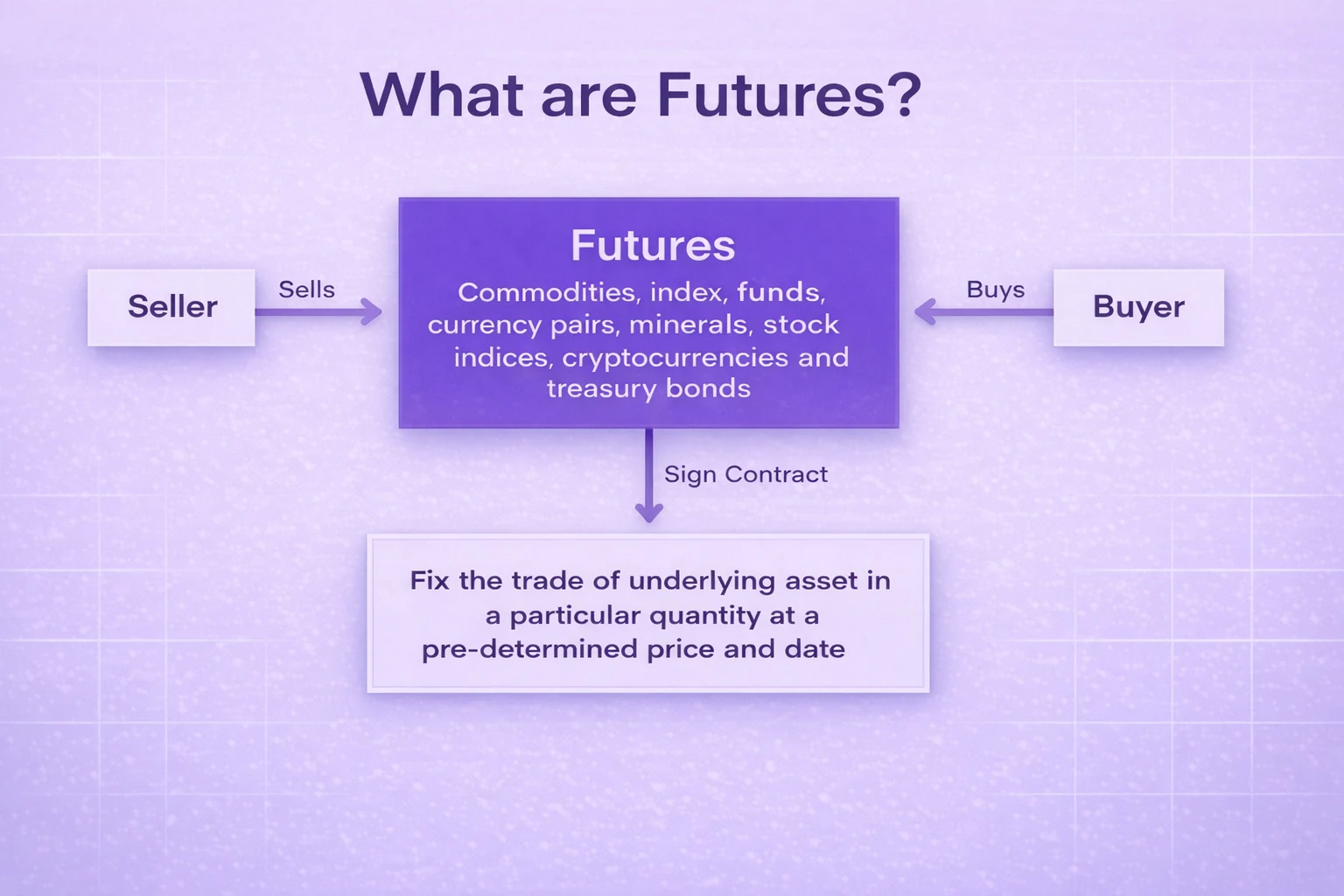
A Perpetual Futures Contract operates through a structured system inside a Crypto Futures Exchange. When traders participate in Perpetual Futures Trading, they are not directly buying or selling the actual cryptocurrency. Instead, they are trading contracts that track the price of assets like Bitcoin Perpetual Futures or Ethereum Perpetual Futures.
Behind the scenes, the exchange uses advanced infrastructure to ensure that all trades are executed smoothly, margin requirements are maintained, and risk is managed properly. This system makes Perp Trading efficient, fast, and suitable for high-volume Crypto Derivatives Trading. Every Perpetual Futures (Perp) Contract relies on core components such as the matching engine, margin system, and liquidation mechanism to function effectively.
Role of the Order Matching Engine
The order matching engine is the core technology that powers trading inside a Crypto Futures Exchange. It matches buy and sell orders in real time. Whenever a trader places a long or short position in a Perpetual Futures Contract, that order enters the exchange’s order book.
If another trader places an opposite order at the same price, the matching engine executes the trade instantly. For example, if one trader wants to buy Bitcoin Perpetual Futures and another wants to sell at the same price, the engine connects both orders and completes the transaction.
This system ensures liquidity and price efficiency in Perpetual Futures Trading. Since crypto markets operate 24/7, the matching engine must process thousands of transactions per second. A strong matching engine is essential for smooth Perp Trading, especially during high market volatility.
Without this automated execution system, Crypto Derivatives Trading would be slow and inefficient. The matching engine ensures fairness, speed, and transparency for every Perpetual Swap Contract traded on the platform.
Margin Trading Crypto System
The margin system is what allows leveraged trading in a Perpetual Futures (Perp) Contract. In simple terms, margin trading crypto means traders can open larger positions by depositing only a fraction of the total contract value.
For example, if a trader wants to open a $10,000 position in Ethereum Perpetual Futures, they may only need to deposit $1,000 if the leverage is 10x. This allows traders to amplify potential profits. However, it also increases potential losses.
This margin trading crypto structure is one of the main reasons Crypto Perpetual Futures are so popular. Traders can control larger positions with less capital, making Perpetual Futures Trading more capital-efficient compared to spot trading.
Inside a Crypto Futures Exchange, the margin system continuously monitors each trader’s position. If the market moves against the trader, the system checks whether sufficient margin is available to keep the position open. This real-time monitoring is critical in Perp Trading, where price movements can be rapid.
The use of leverage in Crypto Derivatives Trading increases market activity and liquidity. However, it also introduces higher risk, which is why proper margin management is essential for every Perpetual Swap Contract.
Initial Margin and Maintenance Margin Explained
In every Perpetual Futures Contract, two important margin concepts exist: initial margin and maintenance margin.
The initial margin is the minimum amount a trader must deposit to open a position. It acts as a security deposit for entering a trade in Bitcoin Perpetual Futures, Ethereum Perpetual Futures, or any other contract on a Crypto Futures Exchange. The amount required depends on the leverage chosen. Higher leverage means lower initial margin but higher risk.
The maintenance margin is the minimum balance a trader must maintain to keep the position open. If the account balance falls below this level due to market losses, the exchange takes action to protect the system.
The liquidation trigger occurs when the trader’s margin balance drops below the maintenance margin requirement. At this point, the Crypto Futures Exchange automatically closes the position to prevent further losses. This process is known as liquidation and is a key risk control mechanism in Perpetual Futures Trading.
Liquidation protects both the trader and the exchange from negative balances. In highly volatile markets, especially during aggressive Perp Trading, prices can move quickly. The maintenance margin system ensures stability within the broader Crypto Derivatives Trading ecosystem.
Overall, the combination of the matching engine, margin trading crypto system, and liquidation mechanism allows a Perpetual Futures (Perp) Contract to function smoothly. These systems work together to create a secure and efficient trading environment for Crypto Perpetual Futures across global exchanges.
Understanding the Crypto Funding Rate Mechanism
In crypto derivatives trading, especially in perpetual futures, the funding rate plays a critical role in keeping the market balanced. Unlike traditional futures contracts that have an expiry date, perpetual futures contracts can be held indefinitely. Because of this, exchanges use a funding rate mechanism to ensure the contract price stays closely aligned with the spot market price.
The funding rate is not a fee paid to the exchange. Instead, it is a payment exchanged directly between traders holding long and short positions. This mechanism helps maintain price stability and prevents large gaps between the futures price and the actual market value of the asset.
What Is the Crypto Funding Rate?
The crypto funding rate is a periodic payment exchanged between long and short traders in perpetual futures contracts. It is usually calculated every 8 hours (depending on the exchange) and is based on the price difference between the perpetual futures contract and the spot market price.
Why Funding Rate Exists
Since perpetual futures do not expire, there needs to be a system that keeps their price close to the spot market. Without the funding rate mechanism, perpetual contracts could trade significantly above or below the real market value of the cryptocurrency.
The funding rate acts as a balancing tool. It incentivizes traders to take positions that push the contract price back toward the spot price. If too many traders are long, the funding rate adjusts to encourage more short positions, and vice versa.
Price Alignment with Spot Market
The primary goal of the funding rate is price alignment. When the perpetual futures price moves too far away from the spot price, the funding rate increases or decreases accordingly.
For example:
- If the perpetual price is higher than the spot price, the funding rate becomes positive.
- If the perpetual price is lower than the spot price, the funding rate becomes negative.
This continuous adjustment mechanism helps maintain a stable and efficient trading environment.
How Funding Payments Work Between Longs and Shorts
Funding payments are exchanged directly between traders:
- When the funding rate is positive, long traders pay short traders.
- When the funding rate is negative, short traders pay long traders.
These payments occur at scheduled intervals and are calculated based on the trader’s position size and the funding rate percentage.
For example, if a trader holds a large leveraged long position and the funding rate is positive, they will periodically pay a small percentage of their position value to traders holding short positions. This encourages traders to reconsider crowded positions and helps balance market sentiment.
Contango vs Backwardation in Perpetual Futures
Market conditions in perpetual futures often reflect either contango or backwardation.
When Funding Rate Is Positive (Contango)
A positive funding rate typically indicates that the perpetual futures price is trading above the spot price. This condition is known as contango.
In this situation:
- Market sentiment is generally bullish.
- More traders are holding long positions.
- Longs pay shorts to maintain balance.
This discourages excessively long positions and pushes the futures price closer to the spot price.
When Funding Rate Is Negative (Backwardation)
A negative funding rate usually means the perpetual futures price is trading below the spot price. This condition is called backwardation.
In this case:
- Market sentiment is generally bearish.
- More traders are holding short positions.
- Shorts pay longs to restore balance.
This mechanism reduces aggressive shorting and supports price convergence with the spot market.
Key Features of Crypto Perpetual Futures
Crypto Perpetual Futures have become one of the most widely traded instruments in the digital asset market because of their unique structure and flexibility. A Perpetual Futures Contract does not have an expiration date, which means traders can hold positions for as long as they want, provided they maintain sufficient margin. This feature makes Perpetual Futures Trading more flexible compared to traditional futures markets.
Another important feature of a Perpetual Futures (Perp) Contract is the funding rate mechanism. Instead of expiring, the contract price is kept close to the spot price through periodic payments between long and short traders. This structure allows a Perpetual Swap Contract to stay aligned with the real market value of assets like Bitcoin Perpetual Futures and Ethereum Perpetual Futures.
Leverage is also a defining characteristic. In Perp Trading, traders can control larger positions using margin. This increases potential returns, but also raises risk. The integration of margin systems within a Crypto Futures Exchange makes high-volume Crypto Derivatives Trading possible.
High liquidity is another major feature. On most exchanges, Crypto Perpetual Futures often record higher trading volumes than spot markets. Continuous trading, no expiry, and leverage options combine to make Perpetual Futures Trading a core component of modern digital asset markets.
Benefits of Perp Trading in Crypto Exchanges
One of the biggest benefits of Perp Trading is flexibility. Since a Perpetual Futures Contract does not expire, traders do not need to worry about contract rollover. This allows them to focus entirely on market direction and strategy.
Another major advantage is capital efficiency. Through margin systems, traders can participate in Crypto Perpetual Futures with smaller upfront capital. This makes Perpetual Futures Trading attractive to both retail and professional traders who want exposure to assets like Bitcoin Perpetual Futures and Ethereum Perpetual Futures without fully purchasing them.
Crypto Derivatives Trading through perpetual contracts also allows traders to go long or short easily. This means profits can be made in both rising and falling markets. A Crypto Futures Exchange provides the infrastructure for these positions to be opened instantly, creating more dynamic market participation.
Liquidity is another key benefit. Because Perpetual Swap Contract markets operate continuously, they often have deep order books and tight spreads. High liquidity ensures faster execution and better price stability during volatile conditions.
Overall, the structure of a Perpetual Futures (Perp) Contract provides flexibility, leverage, and continuous exposure, making it one of the most powerful tools in the crypto trading ecosystem.
Risks in Margin Trading Crypto and Perpetual Futures
While Crypto Perpetual Futures offer many advantages, they also carry significant risks. The most common risk in Perpetual Futures Trading is over-leverage. When traders use high leverage in a Perpetual Futures Contract, even small price movements can result in large losses.
Liquidation risk is another major concern. In Perp Trading, if the market moves against a position and the trader’s balance falls below the maintenance margin level, the Crypto Futures Exchange automatically closes the position. This liquidation process can happen quickly in volatile markets, especially when trading Bitcoin Perpetual Futures or Ethereum Perpetual Futures.
Funding rate costs can also impact profitability. Since a Perpetual Swap Contract relies on periodic funding payments to maintain price alignment, traders may need to pay funding fees depending on market conditions. Over time, these costs can reduce overall returns in Crypto Derivatives Trading.
Market volatility is another important risk factor. Cryptocurrency prices can change rapidly, and this volatility directly affects Crypto Perpetual Futures positions. Without proper risk management, traders can face significant losses in a short period.
Because of these risks, responsible use of leverage and proper understanding of margin systems are essential when participating in Perpetual Futures Trading.
Why Crypto Futures Exchanges Prefer Perpetual Contracts?
A Crypto Futures Exchange prefers offering a Perpetual Futures Contract because it generates continuous trading activity. Since a Perpetual Futures (Perp) Contract does not expire, traders keep positions open longer, leading to sustained volume and liquidity.
Higher trading volume means increased fee generation for the exchange. Crypto Perpetual Futures markets often produce more consistent activity than traditional futures markets. This makes them a reliable revenue source for platforms involved in Crypto Derivatives Trading.
Perpetual contracts also attract a wide range of traders. Professional traders actively participate in Perp Trading strategies, including hedging and arbitrage. Retail traders are drawn to products like Bitcoin Perpetual Futures and Ethereum Perpetual Futures because of leverage and ease of access.
Additionally, the funding mechanism in a Perpetual Swap Contract helps maintain market balance without requiring complex settlement processes. This simplifies long-term contract management for the exchange while supporting efficient Perpetual Futures Trading.
For these reasons, most modern Crypto Futures Exchange platforms prioritize perpetual contracts as their primary derivatives product. The flexibility, liquidity, and continuous structure of Crypto Perpetual Futures make them central to the growth of today’s global crypto trading ecosystem.
How to Build a Crypto Futures Exchange with Perpetual Futures?
Building a Crypto Futures Exchange that supports a Perpetual Futures Contract requires strong technical infrastructure and a well-planned trading system. Since Crypto Perpetual Futures involve leverage, funding rates, and real-time risk monitoring, the platform must be secure, scalable, and fast.
The first step is developing a high-performance order matching engine. This engine must process thousands of transactions per second to support active Perpetual Futures Trading. Because Perp Trading operates 24/7, the system must handle heavy traffic without delays, especially during high volatility in products like Bitcoin Perpetual Futures and Ethereum Perpetual Futures.
Next comes the margin and risk management system. A Perpetual Futures (Perp) Contract relies on margin requirements, liquidation rules, and real-time balance monitoring. The exchange must integrate an automated liquidation engine to manage risk efficiently. This ensures stability within the broader Crypto Derivatives Trading environment.
Another important component is the funding rate mechanism. Since a Perpetual Swap Contract has no expiry, the funding system keeps prices aligned with the spot market. A properly designed funding algorithm helps maintain balance between long and short positions while supporting healthy Crypto Perpetual Futures markets.
Liquidity integration is also essential. A successful Crypto Futures Exchange must provide deep liquidity to reduce slippage and ensure smooth execution. This is particularly important for high-demand markets like Bitcoin Perpetual Futures and Ethereum Perpetual Futures, where traders expect instant order execution.
Security and compliance cannot be ignored. Since Perpetual Futures Trading involves leverage and high-value transactions, the platform must include strong encryption, wallet security, monitoring systems, and regulatory compliance features. A secure environment builds trust and encourages long-term participation in Perp Trading.
Overall, launching a platform for Crypto Derivatives Trading with perpetual contracts requires advanced technology, strong risk controls, and a user-friendly interface to support continuous and efficient trading activity.
Pros and Cons of Perpetual Futures Contract Trading
Trading a Perpetual Futures Contract offers several advantages, but it also carries risks that traders must understand before entering the market.
One major advantage of Crypto Perpetual Futures is the absence of expiration dates. Unlike traditional futures, a Perpetual Futures (Perp) Contract allows traders to hold positions indefinitely. This flexibility makes Perpetual Futures Trading suitable for both short-term speculation and long-term strategies.
Leverage is another benefit. Through Perp Trading, traders can control larger positions with smaller capital. This increases potential returns and makes participation in Bitcoin Perpetual Futures and Ethereum Perpetual Futures more accessible. High liquidity on a Crypto Futures Exchange also ensures efficient order execution and tight spreads.
However, leverage is also one of the biggest disadvantages. While profits can be amplified, losses can grow quickly. In Crypto Derivatives Trading, small market movements can trigger liquidation if proper risk management is not maintained.
Funding rate payments are another consideration. Since a Perpetual Swap Contract uses a funding mechanism instead of expiry settlement, traders may need to pay periodic fees depending on market conditions. Over time, these payments can affect overall profitability in Perpetual Futures Trading.
Market volatility also adds risk. Assets traded through Crypto Perpetual Futures, especially major pairs like Bitcoin Perpetual Futures, can experience sharp price swings. Without disciplined strategy and margin control, traders may face significant losses.
In summary, while a Perpetual Futures Contract provides flexibility, liquidity, and leverage, it requires careful planning and strong risk management to trade successfully.
Build Your Secure Crypto Exchange Today
Partner with us to create a reliable, compliant, and high-performance crypto exchange. Get expert development, robust security, and seamless user experience from start to launch.
Final Thoughts
The Perpetual Futures Contract has become a cornerstone of modern Crypto Derivatives Trading. Its no-expiry structure, funding mechanism, and leverage options have made Crypto Perpetual Futures the preferred instrument on almost every major Crypto Exchange.
Products such as Bitcoin Perpetual Futures and Ethereum Perpetual Futures dominate trading volumes because they allow continuous exposure to price movements. Through structured Perpetual Futures Trading, participants can hedge risk, speculate on trends, and improve capital efficiency.
At the same time, Perp Trading carries real risks due to leverage and volatility. Understanding margin requirements, liquidation rules, and funding costs is essential before trading any Perpetual Futures (Perp) Contract.
As the digital asset industry continues to evolve, the Perpetual Swap Contract model is likely to remain central to the growth of global crypto markets. Whether building a Crypto Futures Exchange or participating as a trader, understanding how Crypto Perpetual Futures function is key to navigating today’s fast-moving derivatives landscape.
Frequently Asked Questions
Q1.What is a Perpetual Futures Contract in crypto?
A Perpetual Futures Contract is a type of derivative that allows traders to speculate on the price of a cryptocurrency without owning the asset and without any expiration date. Unlike traditional futures, a Perpetual Futures (Perp) Contract can be held indefinitely as long as margin requirements are maintained. These contracts are widely used in Crypto Derivatives Trading on major exchanges.
Q2.How does Perp Trading work on a Crypto Futures Exchange?
Perp Trading works by allowing traders to open long or short positions on assets like Bitcoin Perpetual Futures or Ethereum Perpetual Futures using leverage. Orders are matched through the exchange’s matching engine, and positions are managed through a margin system. A funding rate mechanism keeps the contract price aligned with the spot market on a Crypto Futures Exchange.
Q3.What is the difference between a Perpetual Swap Contract and traditional futures?
A Perpetual Swap Contract does not have an expiry date, while traditional futures contracts settle at a fixed time. Instead of expiring, a Perpetual Futures Contract uses a funding rate system to maintain price alignment. This makes Perpetual Futures Trading more flexible compared to traditional cash-settled futures.
Q4.What are Bitcoin Perpetual Futures and Ethereum Perpetual Futures?
Bitcoin Perpetual Futures and Ethereum Perpetual Futures are perpetual contracts that track the price of Bitcoin and Ethereum. They are among the most actively traded instruments in Crypto Perpetual Futures markets due to their high liquidity and strong global demand. These contracts are central to modern Crypto Derivatives Trading platforms.
Q5.What are the risks involved in Perpetual Futures Trading?
The main risks in Perpetual Futures Trading include high leverage exposure, liquidation risk, and funding rate costs. Because Crypto Perpetual Futures allow traders to use margin, small price movements can result in large gains or losses. Proper risk management is essential when trading a Perpetual Futures (Perp) Contract.
Q6.Why do Crypto Futures Exchanges prefer offering Perpetual Futures Contracts?
A Crypto Futures Exchange prefers offering Crypto Perpetual Futures because they generate continuous trading volume and liquidity. Since a Perpetual Futures Contract does not expire, traders remain active for longer periods. This increases participation in Crypto Derivatives Trading and supports higher overall market activity.
Explore Services
Related Services
Reviewed by

Aman Vaths
Founder of Nadcab Labs
Aman Vaths is the Founder & CTO of Nadcab Labs, a global digital engineering company delivering enterprise-grade solutions across AI, Web3, Blockchain, Big Data, Cloud, Cybersecurity, and Modern Application Development. With deep technical leadership and product innovation experience, Aman has positioned Nadcab Labs as one of the most advanced engineering companies driving the next era of intelligent, secure, and scalable software systems. Under his leadership, Nadcab Labs has built 2,000+ global projects across sectors including fintech, banking, healthcare, real estate, logistics, gaming, manufacturing, and next-generation DePIN networks. Aman’s strength lies in architecting high-performance systems, end-to-end platform engineering, and designing enterprise solutions that operate at global scale.