Ai Overview
Blockchain is no longer just for cryptocurrency. Counterfeit goods cost the global economy $467 billion every year. The blockchain in retail market is projected to reach $11. E-commerce fraud is on track to hit $107 billion by 2029.
Blockchain is no longer just for cryptocurrency. In 2026, it will become the core trust layer for global e-commerce. The blockchain in retail market is projected to reach $11.18 billion by 2026, growing at an 84.6% CAGR. E-commerce fraud is on track to hit $107 billion by 2029. Counterfeit goods cost the global economy $467 billion every year. Blockchain solves all three of these problems at once, without replacing the platforms your business already uses. This guide explains what blockchain in e-commerce actually is, how it works in plain language, and exactly why your business should care right now.
Think about the last time you bought something online. You trusted the seller’s description. You trusted the payment gateway with your card details. You trusted the shipping company to deliver the right item. And if something went wrong, you trusted the returns process would be fair. That is a lot of trust to place in systems you cannot see.
Key Takeaways
- The blockchain in retail market is expected to reach 11.18 billion dollars by 2026, growing at a CAGR of 84.6 percent, making it the fastest growing segment in the global blockchain market.
- E-commerce fraud is projected to reach 107 billion dollars by 2029, while blockchain helps reduce fraud through secure and immutable transaction records.
- Counterfeit goods cause a loss of 467 billion dollars annually, and blockchain addresses this by enabling product verification through unique on chain identities and QR codes.
- Smart contracts remove the need for intermediaries in payments, refunds, and escrow by automatically executing transactions when predefined conditions are met.
- Blockchain payments using stablecoins enable cross border transactions within seconds, compared to traditional systems that take three to seven days and involve higher costs.
- Leading brands such as LVMH, Walmart, and Singapore Airlines are already using blockchain for authentication, supply chain tracking, and loyalty programs, showing its practical adoption.
Blockchain changes that. It does not ask you to trust — it gives you proof. Every transaction, every shipment update, every product authenticity record is written to a shared digital ledger that nobody can change and everyone can verify.
That is why businesses across fashion, food, electronics, luxury goods, and financial services are now building blockchain into their e-commerce operations. Not as an experiment. As infrastructure.
What Is Blockchain in E-Commerce?
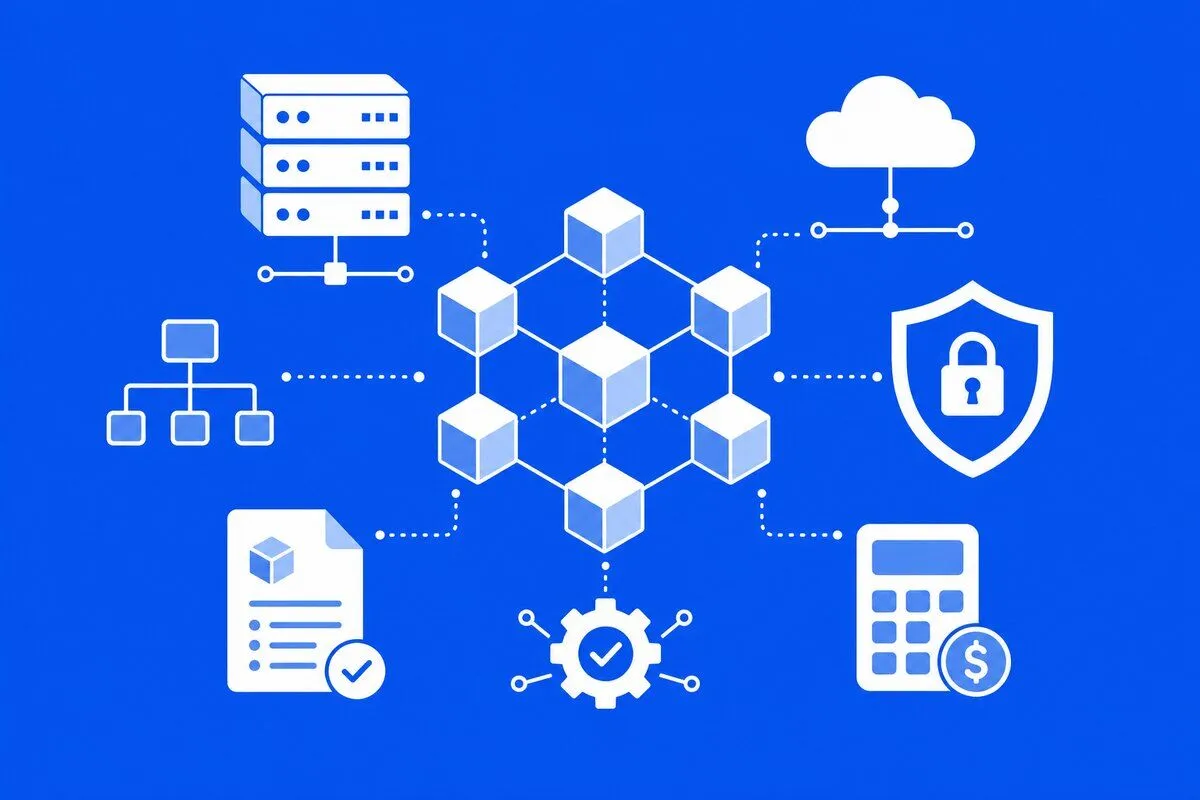
Blockchain is a digital ledger that records information in blocks. Each block links to the one before it. Once a record is added, nobody can change or delete it. The ledger is shared across many computers at once. This means there is no single point of failure and no single party in control.
In e-commerce, this technology records transactions, tracks products through the supply chain, automates payments using smart contracts, verifies product authenticity, and protects customer data — all without relying on a central authority like a bank or platform operator.
In simple words: blockchain makes online commerce more transparent, more secure, and far harder to cheat.
The global blockchain technology market is growing from $47.96 billion in 2026 to $577.36 billion by 2034 at a CAGR of 36.5%. Within that market, retail and e-commerce is the fastest-growing segment. That growth is not driven by hype. It is driven by businesses solving real problems.
Why Does E-Commerce Need Blockchain Right Now?
The e-commerce industry faces three problems that traditional technology cannot fix on its own.
The first is fraud. E-commerce fraud is projected to grow from $44.3 billion in 2024 to $107 billion by 2029. Chargebacks, fake reviews, payment fraud, and account takeovers cost merchants and consumers enormous amounts every year.
The second is counterfeiting. Global trade in counterfeit goods is estimated at $467 billion. In luxury goods, fashion, electronics, and pharmaceuticals, fake products flood online marketplaces and cause serious harm to both consumers and genuine brands.
The third is trust in cross-border payments. When a buyer in one country purchases from a seller in another, the payment passes through multiple banks, currency conversions, and processing systems. This takes days and costs significant fees. Stablecoin payments on blockchain networks settle in seconds, at a fraction of the cost.
Blockchain can help enterprises minimize cost implications by up to 90% in areas where middlemen currently take a large cut of transaction value.
Also Read: What Is Blockchain Technology and How Does It Work?
How Does Blockchain Work in E-Commerce? A Simple Example
Here is a simple example of blockchain at work in an online fashion store.
A customer orders a luxury handbag. The moment the order is placed, a smart contract is created on the blockchain. This contract holds the payment automatically — not in the seller’s account, but in a secure, code-controlled escrow on the blockchain.
The manufacturer scans the product and records its serial number on the blockchain. This creates a permanent authenticity record. The logistics company scans it at each checkpoint — warehouse, customs, local delivery hub. Every scan is recorded on the same shared ledger. The customer can check the product’s full journey on their phone before opening the package.
When the delivery is confirmed, the smart contract releases the payment to the seller automatically. No invoice. No waiting. No bank delay. If the product is not delivered, the payment returns to the buyer automatically — no dispute team required.
This is not a future concept. It is how forward-thinking e-commerce businesses are building today.
| Traditional E-Commerce | Blockchain E-Commerce |
|---|---|
| Payment held by a gateway for 3 to 7 days | Payment in smart contract, released instantly on delivery |
| No way to verify if a product is genuine | Every product has a unique on-chain authenticity record |
| Supply chain is opaque — buyer cannot see origin | Every step of the supply chain is recorded and visible |
| Cross-border payments take days with high fees | Stablecoin payments settle in seconds globally at low cost |
| Fraud disputes are manual and slow | Smart contracts enforce rules automatically — no manual review |
| Customer data in a central server that can be hacked | Customer identity verified on-chain without central data storage |
| Loyalty points controlled by the platform and can be changed | Loyalty tokens owned by the customer, tradeable and permanent |
What Are the Main Benefits of Blockchain in E-Commerce?
1. Secure and Faster Payments
Credit card payments are slow and expensive. The card network, the acquiring bank, the issuing bank, and the payment processor all take a cut. Settlement can take days.
Blockchain payments using stablecoins — digital currencies pegged to the US dollar — settle in seconds and cost fractions of a cent. PayPal, Stripe, and Moneygram are all building or using cryptocurrency infrastructure to handle some parts of their operations. Opera Mini Pay, which uses blockchain payment rails behind the scenes, has over 10 million users making 3 million payments a month across more than 60 countries.
For e-commerce businesses operating across borders, this is transformational. A seller in Vietnam can receive payment from a buyer in Germany in seconds, at the same cost as a domestic transfer. Faster and more transparent payment systems can also support customer-friendly policies such as a price match guarantee, helping businesses stay competitive while improving buyer confidence in international transactions.
2. Product Authenticity and Anti-Counterfeiting
Fake products destroy brands and harm consumers. In fashion, pharmaceuticals, electronics, and luxury goods, counterfeits are a billion-dollar problem.
Blockchain solves this with on-chain product records. Each item gets a unique digital identity — stored permanently on the blockchain — that links to its manufacturing history, certifications, and ownership chain. A customer can scan a QR code and see the full product journey in seconds. If that journey does not exist on the blockchain, the product is likely fake.
Brands like LVMH, Prada, and Cartier have already built blockchain-based authentication systems for this reason. For any e-commerce business selling in high-trust categories, this kind of provenance record is rapidly becoming a customer expectation.
3. Transparent Supply Chain Management
In traditional e-commerce, supply chains are opaque. A buyer has no idea where the product actually came from, how it was made, or whether it is genuinely what the listing claims. This matters especially in food, healthcare products, and electronics.
Blockchain creates a shared record of every step in a product’s journey — from raw material to finished item to warehouse to doorstep. Every participant in the supply chain records their step on the same ledger. Nobody can alter a record that has already been written.
Walmart already uses this for food supply chain tracking. IBM’s Food Trust blockchain allows retailers to trace a food item from farm to shelf in seconds — a process that previously took days.
4. Smart Contracts — Automated Trust
A smart contract is a self-executing piece of code stored on a blockchain. It runs automatically when specific conditions are met — without any human approving each step.
In e-commerce, smart contracts handle payments, refunds, escrow, seller verification, and logistics milestones automatically. A smart contract holds the buyer’s payment in escrow, releases it when delivery is confirmed, and issues a refund automatically if the item is not received within a set time window — all without a customer service team.
This reduces operational costs significantly. It also removes the possibility of human error and dramatically cuts fraud risk on both sides of a transaction.
5. Fraud Prevention and Chargeback Reduction
Chargeback fraud costs e-commerce merchants billions every year. A buyer makes a purchase, receives the product, and then disputes the transaction with their bank — claiming it was unauthorised. The merchant loses both the product and the payment.
Blockchain makes this much harder. Every transaction is recorded permanently and cannot be altered. Smart contracts release funds only when conditions are met and verified on-chain. The immutable record provides clear evidence of what happened, when, and between whom — making fraudulent chargebacks easy to dispute and hard to sustain.
6. Loyalty Programs That Actually Work
Traditional loyalty points are controlled by the company that issued them. They can be devalued, expired, or discontinued at any time. Customers have no real ownership.
Blockchain-based loyalty tokens change this completely. When a customer earns points, they receive tokens stored in their own digital wallet — tokens they own, can transfer, and can potentially exchange across partner platforms. This drives genuine engagement because customers know their rewards cannot be taken away.
Real-World Use Cases of Blockchain in E-Commerce in 2026
| Use Case | How Blockchain Helps | Real Example |
|---|---|---|
| Supply chain transparency | Records every step of a product’s journey on-chain | Walmart Food Trust tracks produce from farm to shelf |
| Product authentication | Unique on-chain identity for each product — scannable by buyer | LVMH Aura blockchain for luxury goods authentication |
| Cross-border payments | Stablecoin settlement in seconds across any country | Stripe and PayPal using blockchain payment rails |
| Smart contract escrow | Payment released only when delivery confirmed on-chain | Used by decentralised marketplaces and P2P sellers |
| Loyalty token programmes | Customer-owned reward tokens in digital wallets | Singapore Airlines KrisPay blockchain loyalty programme |
| Returns and refunds | Smart contracts automate refunds when conditions are met | Used in high-volume fashion retail returns management |
| Seller verification | Decentralised identity records verify sellers without central control | Marketplace platforms reducing fake seller accounts |
| Pharmaceutical tracking | Traces medicines from manufacturer to patient | MediLedger network used by major pharmaceutical companies |
Which Types of E-Commerce Businesses Benefit the Most?
Not every e-commerce business needs blockchain on day one. But there are clear categories where the benefits are immediate and significant.
- Businesses selling luxury goods, fashion, or branded electronics benefit most from product authentication. If your brand is being faked, blockchain is your most effective defence.
- Businesses operating cross-border gain enormously from stablecoin payments, supply chain visibility, and reduced settlement times.
- Businesses with complex supply chains in food, pharmaceuticals, or raw materials gain the most from traceability and compliance records.
- Businesses on marketplaces where fake reviews and fraudulent sellers are a problem benefit from decentralised identity verification and smart contract escrow.
- Brands already investing in Amazon advertising management will find that blockchain-backed authenticity records complement their ad performance by building buyer confidence at the point of purchase.
What Does It Cost to Build Blockchain Into an E-Commerce Business?
This depends on what you are building. There are three main approaches businesses take in 2026.
- Integrating a blockchain payment layer — accepting stablecoins or crypto alongside traditional payment methods. This is the fastest and most affordable option. It can be done in weeks.
- Adding blockchain-based product authentication or supply chain tracking. This requires smart contract development and integration with your existing product management systems. It typically takes two to four months.
- Building a fully blockchain-native e-commerce platform — a decentralised marketplace or fully on-chain commerce infrastructure. This is the most comprehensive option and requires experienced blockchain development expertise.
The right approach depends on your business size, industry, and the specific problem you are trying to solve. Most businesses start with one focused use case — usually payments or authentication — and expand from there.
What Are the Challenges of Blockchain in E-Commerce?
Blockchain is a powerful technology, but it comes with real challenges every business should understand before building.
- Scalability: Public blockchains can process only a limited number of transactions per second. Layer 2 solutions address this by processing transactions off-chain and settling them in batches.
- Integration: Most e-commerce businesses already run on platforms like Shopify, WooCommerce, or Magento. Connecting blockchain infrastructure to these existing systems requires careful technical planning.
- User experience: Customers should not need to understand blockchain to use it. The best implementations are invisible to the end user. Building blockchain e-commerce that feels as simple as clicking ‘buy’ requires significant UX investment.
- Regulatory compliance: Different jurisdictions treat blockchain payments, tokens, and digital assets differently. Businesses operating across multiple markets need legal guidance to ensure compliance in every region they serve.
The Bottom Line
Blockchain is not coming to e-commerce. It is already here. Between 2025 and 2026, blockchain in e-commerce is evolving from experimentation to infrastructure-level adoption, focused on fraud reduction, cross-border efficiency, and operational trust.
The businesses that understand this shift now — and start building the right infrastructure for it — will be the ones that capture the institutional trust, cross-border markets, and loyal customers that the next phase of digital commerce will demand.
Whether you are looking to add stablecoin payments, build product authentication for a luxury brand, create a transparent supply chain, or develop a full blockchain-native marketplace, the technology and the regulatory frameworks are ready. The question is whether your business is.
Explore Services
Related Services
Reviewed by

Aman Vaths
Founder of Nadcab Labs
Aman Vaths is the Founder & CTO of Nadcab Labs, a global digital engineering company delivering enterprise-grade solutions across AI, Web3, Blockchain, Big Data, Cloud, Cybersecurity, and Modern Application Development. With deep technical leadership and product innovation experience, Aman has positioned Nadcab Labs as one of the most advanced engineering companies driving the next era of intelligent, secure, and scalable software systems. Under his leadership, Nadcab Labs has built 2,000+ global projects across sectors including fintech, banking, healthcare, real estate, logistics, gaming, manufacturing, and next-generation DePIN networks. Aman’s strength lies in architecting high-performance systems, end-to-end platform engineering, and designing enterprise solutions that operate at global scale.