Ai Overview
The explosive growth of decentralized applications has created unprecedented opportunities for innovation while simultaneously opening doors for sophisticated fraud schemes that devastate unsuspecting investors. Conversely, scam projects often exhibit concentrated token ownership where 50% or more sits in a handful of wallets, no vesting periods for insider holdings, and immediate selling pressure from team wallets post-launch.
Key Takeaways
- dApp rug pulls caused over $2.8 billion in investor losses during 2023 alone, making them one of the most prevalent threats in decentralized finance.
- Exit scams in dApps typically involve creators draining liquidity pools, minting unlimited tokens, or exploiting hidden backdoor functions in smart contracts.
- Anonymous teams with no verifiable identities represent the highest risk factor when evaluating potential rug pulls in decentralized applications.
- dApp scam warning signs include unrealistic APY promises exceeding 1000%, locked selling mechanisms, and concentrated token ownership in few wallets.
- Users in the USA, UK, UAE, and Canada face increasing exposure as fraudulent projects specifically target these high-liquidity markets.
- Verifying smart contract audits from reputable firms and checking liquidity lock status are essential steps to identify risky dApps before investing.
- Blockchain analysis tools like TokenSniffer, RugDoc, and DEXTools help users spot red flags and avoid dApp exit scams effectively.
- Never grant unlimited token approvals to unverified contracts, as this permission can enable complete wallet drainage during rug pull executions.
- Community engagement quality, transparent communication channels, and consistent roadmap delivery indicate legitimate projects versus potential scams.
- Implementing multi-signature wallet requirements and time-locked withdrawals significantly reduces vulnerability to coordinated rug pull attacks.
Introduction
The explosive growth of decentralized applications has created unprecedented opportunities for innovation while simultaneously opening doors for sophisticated fraud schemes that devastate unsuspecting investors. dApp rug pulls have emerged as one of the most damaging threats in the blockchain ecosystem, with billions of dollars vanishing as malicious actors exploit the pseudonymous nature of cryptocurrency transactions. With over eight years of experience helping enterprises and individual investors navigate blockchain risks across the USA, UK, UAE, and Canada, our team has witnessed firsthand how these scams evolve and how to spot rug pulls in dApps before committing funds.
This comprehensive guide dissects the anatomy of exit scams in dApps, provides actionable frameworks for identifying fraudulent projects, and equips you with tools and best practices to protect your digital assets. Whether you are a seasoned DeFi participant or new to blockchain investing, understanding these warning signs could save you from catastrophic financial losses in an increasingly predatory landscape.
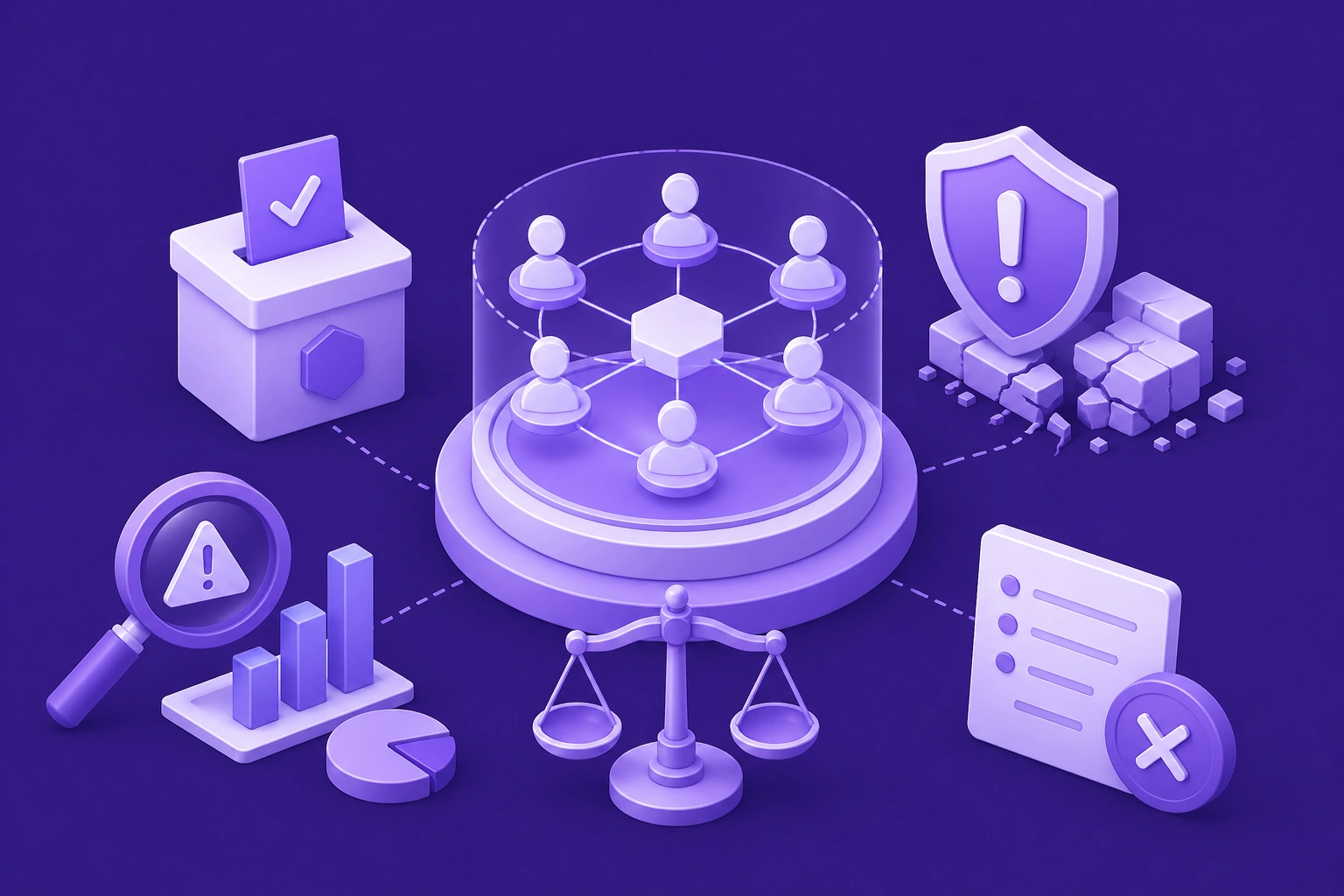
Centralized vs Decentralized Control: How It Impacts Scam Risk
Centralized Control Risks
- Single admin can modify contract logic
- Unilateral fund withdrawal capability
- No community governance oversight
- Hidden ownership through proxies
Decentralized Protections
- Multi-signature requirements enforced
- Time-locked administrative actions
- DAO governance for major changes
- Transparent on-chain voting records
Verification Steps
- Check contract owner permissions
- Verify multi-sig implementation
- Review governance token distribution
- Analyze admin function restrictions
The degree of centralization in a dApp directly correlates with rug pull vulnerability. Projects maintaining single-wallet administrative control present significantly higher risk profiles than those implementing distributed governance mechanisms. Investors across the USA, UK, and Canada should prioritize platforms demonstrating genuine decentralization through verifiable on-chain governance structures.
Red Flags in dApp Token Launches You Must Watch
Learning how to spot rug pulls in dApps begins with recognizing warning signs during token launch phases. Legitimate projects typically feature gradual token distribution, reasonable vesting schedules for team allocations, and transparent use of raised funds. Conversely, scam projects often exhibit concentrated token ownership where 50% or more sits in a handful of wallets, no vesting periods for insider holdings, and immediate selling pressure from team wallets post-launch.
Critical dApp scam warning signs during launches include promises of guaranteed returns exceeding realistic market performance, pressure tactics emphasizing limited time availability, and absence of clear utility beyond speculative trading. Projects offering annual percentage yields above 500% without sustainable revenue models almost certainly rely on new investor capital to pay existing holders, the classic hallmark of Ponzi structures.
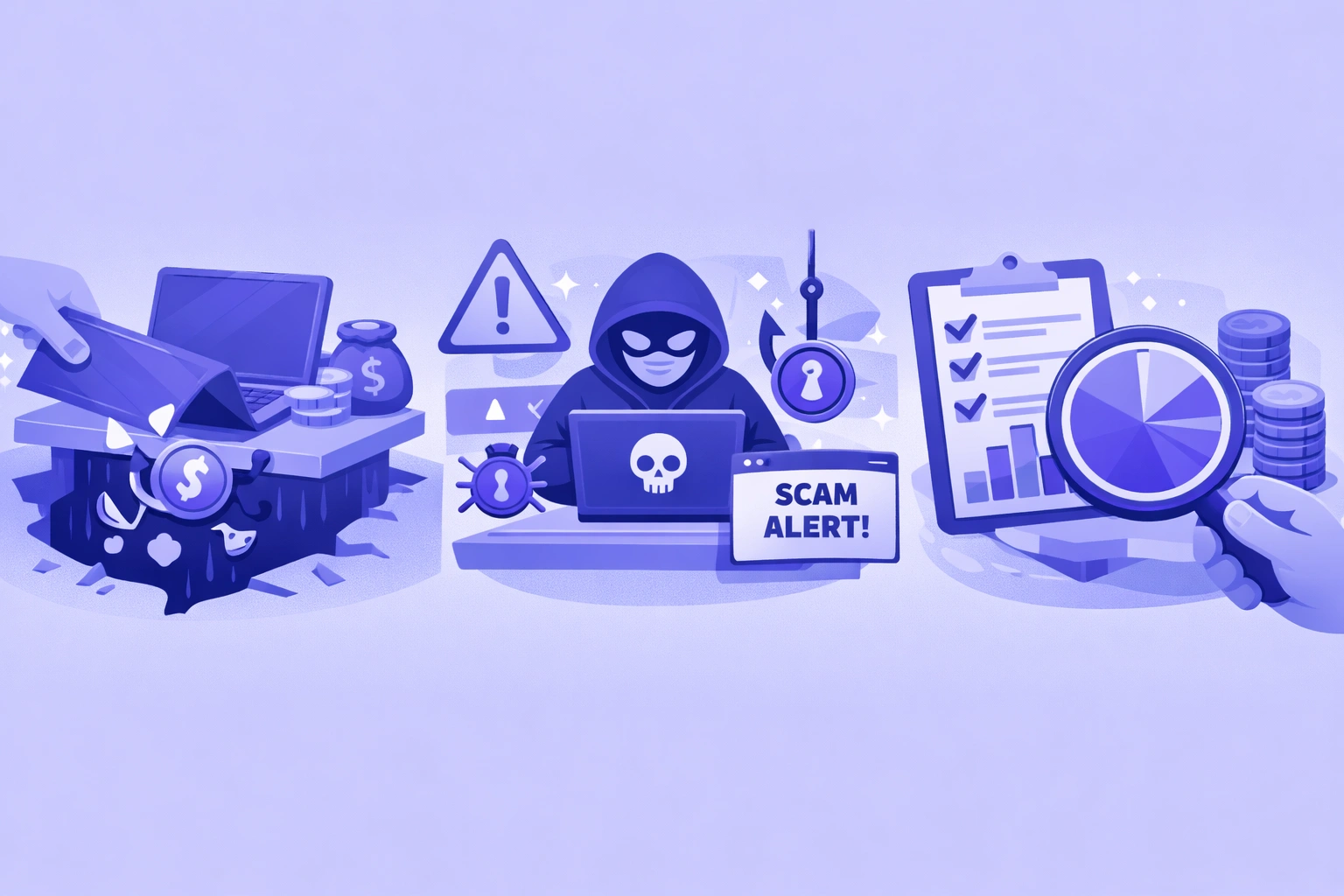
Token distribution transparency serves as another crucial indicator. Legitimate projects publish comprehensive tokenomics documents detailing allocation percentages, vesting timelines, and wallet addresses for verification. Projects refusing to provide this information or showing inconsistencies between documented and actual on-chain distributions should trigger immediate concern for investors seeking to identify risky dApps.
Liquidity manipulation represents the most common vector for dApp rug pulls execution. Fraudulent projects typically provide initial liquidity without locking LP tokens, enabling instant withdrawal once sufficient trading volume accumulates. Legitimate projects utilize time-locked liquidity through services like Unicrypt or Team Finance, with lock periods typically extending 6 to 24 months minimum. Always verify liquidity lock status through blockchain explorers before committing significant capital.
Fake or Misleading Audit Reports: How to Spot Them
Warning 1: Audits from unknown firms with no verifiable portfolio or industry reputation should be treated with extreme skepticism.
Warning 2: PDF-only reports without on-chain verification links or auditor signatures often indicate fabricated documentation.
Warning 3: Audits showing zero findings or no recommendations suggest cursory review rather than comprehensive assessment.
Warning 4: Contract addresses in audit reports not matching deployed contracts indicate post-audit code modifications.
Warning 5: Auditors claiming institutional partnerships without verifiable confirmation represent significant credibility concerns.
Warning 6: Always cross-reference audit claims directly with reputable firms like CertiK, OpenZeppelin, or Trail of Bits websites.
Scammers increasingly fabricate or misrepresent audit reports to create false legitimacy perceptions. Sophisticated operations may reference real auditing firms while presenting fabricated documents, or selectively quote findings while omitting critical vulnerabilities. Always verify audit authenticity directly through the auditing firm’s official website or published registry of completed assessments before trusting any claimed certification.
Community Signals and Social Proof: How to Validate a dApp
Authentic community engagement provides valuable signals distinguishing legitimate projects from potential rug pulls in decentralized applications. Healthy communities feature organic discussion diversity, constructive criticism tolerance, and transparent team responses to concerns. Conversely, scam projects typically exhibit aggressive moderation deleting skeptical comments, bot-dominated engagement patterns, and coordinated shilling campaigns across multiple platforms.
Social media verification involves examining follower authenticity through engagement rate analysis. Projects with 100,000 followers but minimal genuine interaction indicate purchased audiences. Telegram and Discord servers revealing primarily announcement channels with restricted discussion capabilities suggest teams avoiding accountability through community isolation tactics common among fraudulent operations.
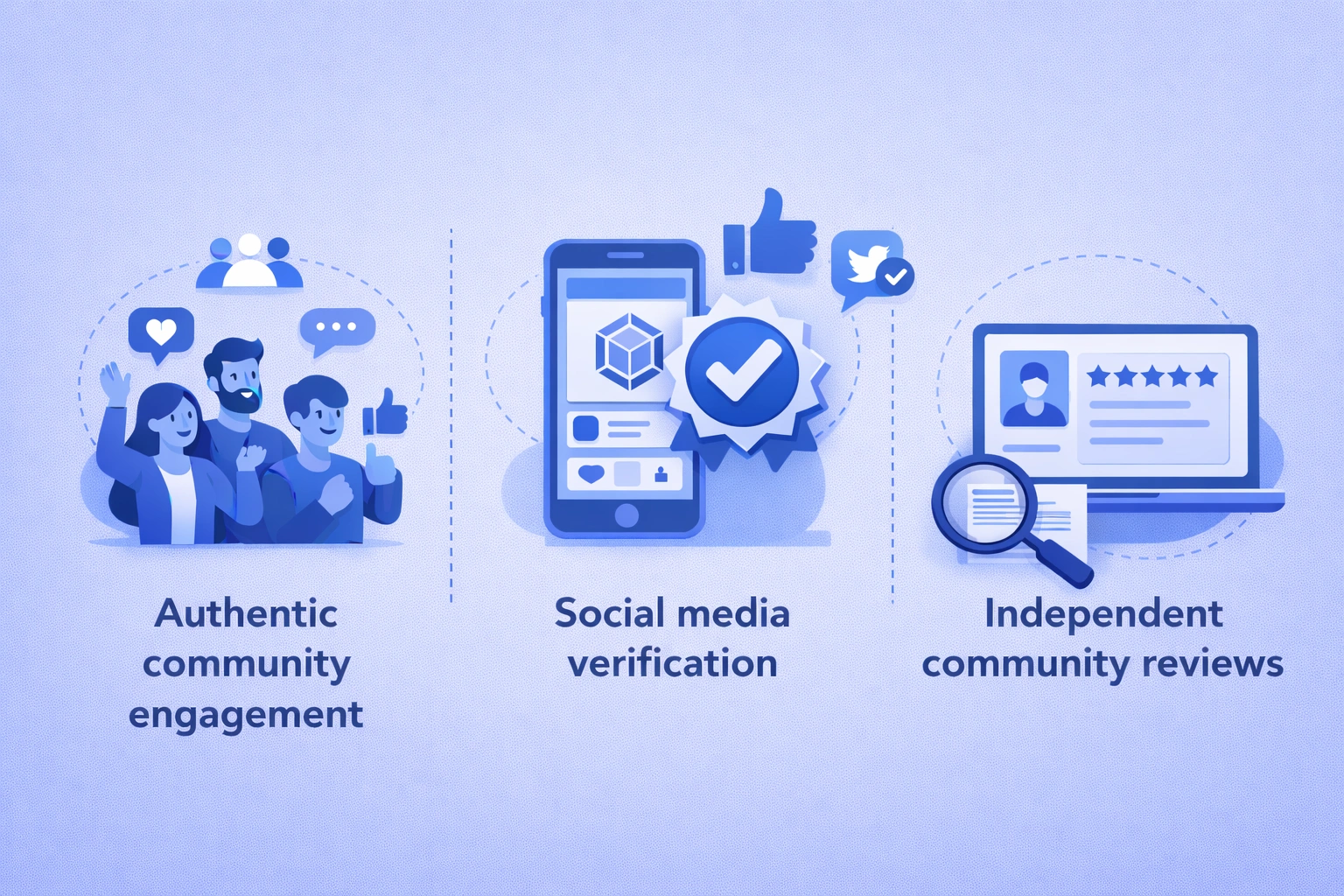
Independent community reviews on platforms like Reddit, specialized crypto forums, and Twitter discussions from established accounts provide unfiltered perspectives beyond project-controlled channels. Cross-referencing sentiment across multiple independent sources helps identify manufactured enthusiasm versus genuine community support before committing capital to any decentralized application.
Tools and Platforms to Check dApp Legitimacy
| Tool Name | Primary Function | Supported Chains | Key Features |
|---|---|---|---|
| TokenSniffer | Contract analysis and scam detection | ETH, BSC, Polygon | Honeypot detection, ownership analysis |
| RugDoc | DeFi project risk assessment | Multi-chain | Community reviews, risk ratings |
| DEXTools | Trading analytics and token info | ETH, BSC, Arbitrum | Holder distribution, liquidity tracking |
| Etherscan/BscScan | Blockchain explorer and verification | ETH, BSC | Contract source code, transaction history |
| Bubblemaps | Wallet clustering visualization | ETH, BSC, Polygon | Connected wallet detection, supply analysis |
| De.Fi Scanner | Approval and permission auditing | Multi-chain | Revoke permissions, risk scoring |
Steps to Protect Yourself Before Using a New dApp
Step 1: Verify Contract Source Code
Check if contract code is verified and published on blockchain explorers. Unverified contracts present significantly higher risk profiles.
Step 2: Analyze Token Distribution
Review holder distribution ensuring no single wallet controls majority supply. Concentrated ownership enables price manipulation.
Step 3: Confirm Liquidity Lock Status
Verify liquidity is locked through reputable services with sufficient duration. Unlocked liquidity enables instant rug pulls.
Step 4: Research Team and Audit History
Validate team credentials and confirm audit reports directly with auditing firms. Cross-reference all claims independently.
Best Practices for Interacting Safely with dApps
Practice 1: Use dedicated wallets with limited funds for experimental dApp interactions to contain potential losses.
Practice 2: Never approve unlimited token spending permissions regardless of project legitimacy claims or convenience arguments.
Practice 3: Regularly audit and revoke unnecessary permissions using tools like Revoke.cash or De.Fi scanner services.
Practice 4: Verify contract addresses through multiple official sources before interacting to prevent phishing redirects.
Practice 5: Wait 48 to 72 hours after launch before investing to observe initial behavior and community response patterns.
Practice 6: Implement hardware wallet requirements for significant holdings to prevent unauthorized transaction signing through malware.
Practice 7: Document all interactions and maintain transaction records for potential law enforcement reporting if scams occur.
Practice 8: Share warnings about suspicious projects within trusted communities to protect others from identified threats.
Protect Your Investments From dApp Scams Today
Our expert team provides comprehensive dApp risk assessment, smart contract analysis, and fraud detection services to safeguard your digital assets.
Frequently Asked Questions
Q1.What are dApp rug pulls and how do they work?
dApp rug pulls occur when creators of decentralized applications abandon projects after accumulating investor funds. Perpetrators typically deploy smart contracts with hidden backdoors enabling fund extraction, build hype through aggressive marketing, and then simultaneously drain liquidity pools while disappearing. These scams exploit blockchain pseudonymity, making fund recovery virtually impossible. Understanding warning signs helps investors identify and avoid dApp exit scams before committing capital.
Q2.How can I identify risky dApps before investing?
To identify risky dApps, analyze smart contract code for hidden administrative functions, verify liquidity lock status through blockchain explorers, examine token distribution for concentrated ownership, and research team credentials independently. Use tools like TokenSniffer and RugDoc for automated scam detection. Projects with anonymous teams, unrealistic return promises, and unverified audits present significantly elevated rug pull risks requiring careful evaluation.
Q3.What are common dApp scam warning signs investors should recognize?
Common dApp scam warning signs include promises of guaranteed returns exceeding 500% APY, anonymous team members with unverifiable credentials, unlocked liquidity pools, concentrated token ownership in few wallets, aggressive marketing with purchased influencer endorsements, and fake or unverifiable audit reports. Projects restricting selling while enabling buying through honeypot mechanisms indicate immediate danger requiring investors to avoid interaction entirely.
Q4.How do exit scams in dApps differ from traditional investment fraud?
Exit scams in dApps leverage blockchain technology’s pseudonymous nature, making perpetrator identification and fund recovery significantly more challenging than traditional fraud. Smart contract automation enables instant, simultaneous drainage of liquidity pools across global time zones. Cross-border cryptocurrency transfers through mixing services further complicate law enforcement efforts. These technical advantages attract sophisticated criminal operations specifically targeting high-liquidity markets.
Q5.What tools help detect potential rug pulls in decentralized applications?
Essential tools for detecting rug pulls in decentralized applications include TokenSniffer for honeypot detection, DEXTools for liquidity analysis, RugDoc for community risk ratings, Bubblemaps for wallet clustering visualization, and blockchain explorers like Etherscan for contract verification. Combining multiple tools provides comprehensive risk assessment before any interaction with unfamiliar projects.
Q6.Can I recover funds lost to dApp rug pulls?
Fund recovery from dApp rug pulls is extremely difficult due to blockchain transaction irreversibility and international jurisdiction challenges. Some cases result in successful prosecution when perpetrators are identified, but most victims never recover losses. Prevention through thorough due diligence before investing remains far more effective than attempting post-scam recovery. Documenting all transactions supports potential law enforcement reporting.
Q7.Why do rug pulls target markets like the USA, UK, UAE, and Canada specifically?
Rug pulls specifically target USA, UK, UAE, and Canada markets due to high cryptocurrency adoption rates, significant disposable income levels, and substantial liquidity pools. These regions contain concentrated populations of crypto-curious investors seeking high returns. Sophisticated scammers craft marketing specifically appealing to these demographics while exploiting regulatory gaps across international boundaries that complicate enforcement actions.
Explore Services
Related Services
Reviewed by

Aman Vaths
Founder of Nadcab Labs
Aman Vaths is the Founder & CTO of Nadcab Labs, a global digital engineering company delivering enterprise-grade solutions across AI, Web3, Blockchain, Big Data, Cloud, Cybersecurity, and Modern Application Development. With deep technical leadership and product innovation experience, Aman has positioned Nadcab Labs as one of the most advanced engineering companies driving the next era of intelligent, secure, and scalable software systems. Under his leadership, Nadcab Labs has built 2,000+ global projects across sectors including fintech, banking, healthcare, real estate, logistics, gaming, manufacturing, and next-generation DePIN networks. Aman’s strength lies in architecting high-performance systems, end-to-end platform engineering, and designing enterprise solutions that operate at global scale.