Ai Overview
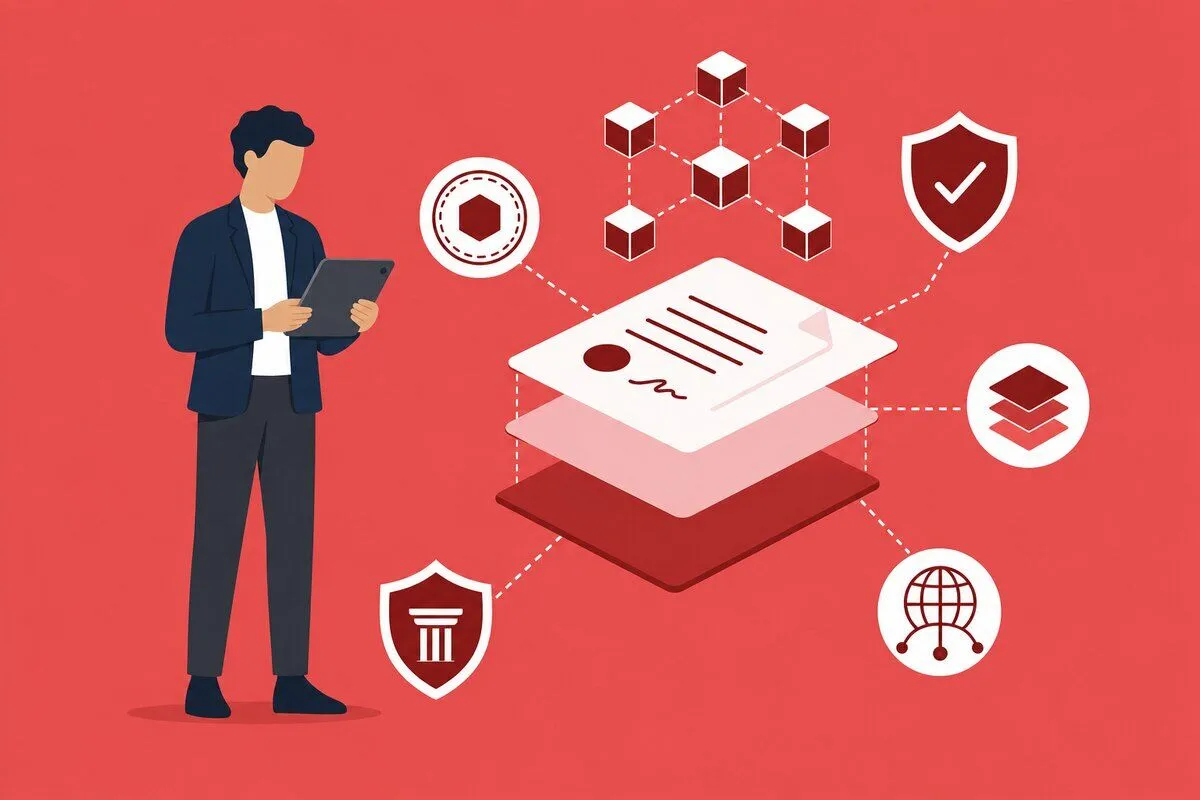
But Bitcoin smart contracts have been around in a limited form since Bitcoin launched in 2009. At its core, a smart contract is just a piece of code that runs automatically when certain conditions are met. Just code running on a decentralized network with over 15,000 active nodes worldwide. According to Coingeek Insights, Bitcoin holds over 40% of the entire crypto market cap, yet it was largely left out of the decentralized finance revolution.
Key Takeaways
- Bitcoin smart contracts use Layer 2 solutions and upgrades like Taproot to bring programmable logic to the world’s most trusted blockchain network.
- Platforms like RSK, Stacks, and Lightning Network are the leading engines powering Bitcoin blockchain development for DeFi use cases in 2026.
- Bitcoin DeFi offers the unique advantage of combining decentralized finance functionality with Bitcoin’s 15-year security track record and institutional-grade trust.
- Enterprise Bitcoin blockchain solutions are attracting financial institutions for use in trade settlement, escrow automation, and collateralized lending products.
- Bitcoin DeFi platform pricing and architecture differ from Ethereum, requiring specialized blockchain consulting services to plan scalable and compliant systems correctly.
- The Taproot upgrade made Bitcoin smart contracts more private, efficient, and capable, opening up multi-signature and time-lock contract patterns at lower cost.
- Choosing to build a Bitcoin smart contract application requires careful evaluation of scripting language support, Layer 2 compatibility, and long-term governance structure.
- The best Bitcoin smart contract companies combine deep protocol knowledge with compliance expertise to deliver secure and production-ready enterprise blockchain solutions.
What Are Smart Contracts on Bitcoin?
When most people think of smart contracts, they think of Ethereum. But Bitcoin smart contracts have been around in a limited form since Bitcoin launched in 2009. At its core, a smart contract is just a piece of code that runs automatically when certain conditions are met. On Bitcoin, this was always possible through a scripting language called Bitcoin Script, but it was intentionally kept simple.
A Bitcoin smart contract is a set of rules encoded in a transaction that both parties must meet before any funds move. Think of it like a digital escrow. If Party A sends the agreed amount and Party B provides the required proof, the contract releases the funds. No bank, no lawyer, no middleman. Just code running on a decentralized network with over 15,000 active nodes worldwide.
As Bitcoin blockchain development evolved, so did the tools available. Today, with Layer 2 platforms and protocol upgrades, Bitcoin supports complex contract logic that goes far beyond simple payments. Our team has spent 8+ years helping clients build BTC smart contract solutions ranging from escrow systems to full DeFi protocols anchored to Bitcoin’s base chain.
How Bitcoin Traditionally Works Without Smart Contracts
Bitcoin was designed as peer-to-peer electronic cash. Its original purpose was to let two people send value to each other without a central authority. This is powerful, but it does not include the kind of programmable logic needed to build complex financial applications.
UTXO Model
Bitcoin tracks balances through unspent transaction outputs, not account balances like Ethereum.
Limited Script
Bitcoin Script is not Turing-complete by design, which limits loops and complex logic but also limits attack vectors.
PoW Security
Proof of Work consensus has secured Bitcoin for over 15 years with no successful 51% attack on the mainchain.
Multi-Sig Support
Bitcoin natively supports multi-signature transactions, a simple but powerful form of contract requiring multiple parties to sign.
Why Bitcoin Is Entering the DeFi Space
For years, DeFi lived almost entirely on Ethereum. But that is changing fast. According to Coingeek Insights, Bitcoin holds over 40% of the entire crypto market cap, yet it was largely left out of the decentralized finance revolution. Investors and builders started asking: why should the most valuable, most trusted digital asset sit on the sidelines?
Three forces are pushing Bitcoin into DeFi in 2026. First, institutional demand. Large funds want to earn yield on their BTC without converting it to another asset. Second, new technology. Taproot, RSK, Stacks, and other tools make it possible to build real DeFi on Bitcoin. Third, trust. Users who are skeptical of newer chains feel safer with Bitcoin’s established security model.
This is not just theory. Bitcoin DeFi total value locked (TVL) surpassed $4 billion in early 2026, showing that real capital is flowing into BTC-based decentralized finance. For enterprises and investors, this is a signal that Bitcoin blockchain development is entering a new and important phase.
Introduction to DeFi on Bitcoin
Bitcoin DeFi, also called BTCFi, refers to decentralized financial services and applications built on or anchored to the Bitcoin network. This includes lending, borrowing, earning yield, swapping assets, and creating synthetic products, all using BTC as the underlying collateral or settlement layer.
Unlike Ethereum DeFi where everything runs on one chain, Bitcoin DeFi operates in layers. The base layer handles settlement and final security. Layer 2 networks handle speed, logic, and application complexity. This layered approach reflects a design philosophy: keep the base chain simple and secure, and build complexity on top.
Core Pillars of Bitcoin DeFi
Lending Protocols
Lock BTC as collateral and borrow stablecoins without selling your Bitcoin position
Yield Products
Earn passive returns on BTC through liquidity provision and protocol staking rewards
Decentralized Exchanges
Swap BTC and Bitcoin-anchored tokens without trusting a centralized exchange or custodian
Synthetic Assets
Create tokenized representations of real-world assets collateralized by Bitcoin holdings
Technologies Enabling Bitcoin Smart Contracts
Several key technologies have made Bitcoin smart contract development possible and practical in 2026. Understanding these is essential before you build a blockchain app or hire smart contract developers for a Bitcoin project.
Taproot Upgrade (2021)
The Taproot soft fork was Bitcoin’s biggest upgrade in years. It introduced Schnorr signatures and MAST (Merklized Abstract Syntax Trees), allowing complex smart contract spending conditions to be revealed only when executed. This makes Bitcoin smart contracts more private, smaller in size, and cheaper to use.
Bitcoin Script Opcodes
Bitcoin Script includes opcodes for time-locks (CHECKLOCKTIMEVERIFY), hash-locks (OP_HASH256), and multi-signature requirements. These primitives form the building blocks of HTLCs (Hashed Time-Lock Contracts) used in atomic swaps and the Lightning Network.
RSK (Rootstock)
RSK is a sidechain anchored to Bitcoin that is fully EVM-compatible. Developers can write Solidity contracts and deploy them on RSK, with settlement secured by Bitcoin’s mining power. This is one of the most accessible paths for Ethereum developers to enter Bitcoin DeFi platform building.
Stacks Blockchain
Stacks uses Proof of Transfer (PoX) to settle on Bitcoin. Its Clarity language is designed specifically for safe smart contracts with predictable behavior. Stacks-based projects like Arkadiko Finance offer BTC-collateralized stablecoin loans as real examples of Bitcoin blockchain development in action.
Discreet Log Contracts (DLCs)
DLCs are a native Bitcoin contract type that allow conditional payments based on real-world events verified by oracles. They enable options, futures, and prediction market contracts directly on Bitcoin without needing a separate smart contract chain. This is a powerful and underappreciated technology for BTC smart contract solutions.
Role of Layer 2 Solutions in Bitcoin DeFi
Layer 2 networks are the engine room of Bitcoin DeFi. They handle transaction speed, smart contract complexity, and user experience, while anchoring security and final settlement to Bitcoin’s base layer. Without Layer 2, Bitcoin would be too slow and expensive for most DeFi interactions.
Top Layer 2 Solutions for Bitcoin DeFi (2026)
| Layer 2 Platform | Smart Contract Language | Main Use Case | Settlement | Status |
|---|---|---|---|---|
| Lightning Network | Bitcoin Script / HTLCs | Micro-payments, Streaming Money | Bitcoin Mainchain | Production |
| RSK (Rootstock) | Solidity (EVM-compatible) | DeFi, Lending, DEX | Bitcoin Merge-Mining | Production |
| Stacks | Clarity Language | DeFi, NFTs, DAOs | Bitcoin via PoX | Production |
| Liquid Network | Elements Script | Asset Issuance, Exchanges | Bitcoin Peg | Production |
| BitVM | Bitcoin Script (extended) | Trustless computation on BTC | Bitcoin Mainchain | Active Research |
| Ark Protocol | Bitcoin Script | Scalable UTXO management | Bitcoin Mainchain | Early Stage |
Benefits of Using Bitcoin in Smart Contracts
Why Choose Bitcoin for Smart Contract Applications
Unmatched Security Track Record
- 15+ years with zero successful mainchain attacks
- Over $1 trillion in market cap secures the network
- Proof-of-Work is the most battle-tested consensus model
Institutional Trust
- ETF approvals from BlackRock and Fidelity validate BTC
- Regulated custodians manage BTC for major banks
- BTC is recognized as a legal asset in many jurisdictions
Decentralization
- Over 15,000 full nodes globally for true decentralization
- No single entity controls the protocol or upgrades
- Longest history of censorship resistance of any blockchain
How BTC Is Used in DeFi Applications
There are several practical ways Bitcoin is being used in decentralized finance today. These are not experimental concepts. They are live products with real users and real capital.
Security Advantages of Bitcoin-Based Contracts
Security is the most compelling reason to choose a secure Bitcoin smart contract platform. While other chains have suffered billions in losses from smart contract exploits, Bitcoin’s approach to security has been fundamentally different and more conservative.
Industry Standards for Bitcoin Smart Contract Security
Standard 1: Always use time-locked contracts with verifiable unlock conditions to prevent unauthorized fund access before agreed conditions are met.
Standard 2: Use multi-signature schemes requiring M-of-N approvals for any contract managing enterprise-level or institutional BTC funds.
Standard 3: Mandate third-party security audits before deploying any contract that holds, transfers, or conditionally releases user Bitcoin funds.
Standard 4: For Layer 2 DeFi contracts on RSK or Stacks, apply Ethereum-equivalent audit standards including reentrancy, overflow, and oracle attack testing.
Standard 5: Document all oracle data sources used in DLC or price-feed contracts and implement multi-oracle consensus to avoid single-source manipulation.
Standard 6: Implement insurance fund mechanisms and emergency pause features in high-TVL Bitcoin DeFi contracts to protect user funds during unexpected events.
Challenges of Smart Contracts on Bitcoin
Honesty is a core part of quality blockchain consulting services. Bitcoin smart contracts come with real limitations that every project team must plan around carefully.
Limited Base Layer Programmability
Bitcoin Script is not Turing-complete. This means loops, dynamic logic, and complex state machines must be handled on Layer 2, adding architectural overhead to every project.
Slower Upgrade Cycles
Bitcoin prioritizes safety over speed in protocol upgrades. New features require broad community consensus and take years to implement, which limits rapid innovation at the base layer.
Developer Tooling Gaps
Compared to Ethereum, Bitcoin smart contract tooling is still maturing. Debugging tools, frameworks, and test environments are less developed, which increases build time for teams.
Bridge and Peg Risks
Moving BTC to Layer 2 sidechains often requires a peg mechanism. These bridges can be points of vulnerability, as seen in multiple high-profile cross-chain exploits across the industry.
Comparison with Ethereum Smart Contracts
When deciding which chain to build on, a clear comparison between Bitcoin and Ethereum smart contracts helps teams make the right choice. Our blockchain consulting services team runs this exact analysis for every new client project.
| Feature | Bitcoin Smart Contracts | Ethereum Smart Contracts |
|---|---|---|
| Security Model | Proof-of-Work, 15+ years proven | Proof-of-Stake, since 2022 |
| Base Layer Language | Bitcoin Script (limited opcodes) | EVM Bytecode (Turing-complete) |
| Smart Contract Language | Clarity (Stacks), Solidity (RSK) | Solidity, Vyper, Yul |
| DeFi Ecosystem TVL | ~$4B+ (2026) | ~$50B+ (2026) |
| Transaction Speed | ~10 min base, seconds on L2 | ~12 seconds base, faster on L2 |
| Institutional Trust | Very High (ETF, custody, legal) | High (growing institutional use) |
| Developer Community | Smaller, specialized | Very Large, extensive tooling |
| Bridge Risk | Higher (relies on sidechains) | Lower (native DeFi ecosystem) |
| Oracle Support | DLCs, Chainlink on RSK/Stacks | Chainlink, Band, UMA native |
| Best For | Security-first, BTC-denominated DeFi | Complex DeFi, high-volume apps |
Popular Platforms Supporting Bitcoin DeFi
Sovryn (RSK)
A full-featured DeFi platform on RSK offering margin trading, lending, and a decentralized exchange for BTC and synthetic assets. It is one of the best Bitcoin smart contract company examples in action.
Arkadiko (Stacks)
A Stacks-based protocol for minting USDA, a BTC-backed stablecoin. Users lock BTC and receive stablecoins, which can be used across the Stacks DeFi ecosystem.
Lightning Labs (LN)
The core team behind the Lightning Network and LND implementation. They are also building Taproot Assets, a protocol to issue stablecoins and tokenized assets on Lightning.
DLC.Link
A platform that brings DLC-based smart contracts to multi-chain DeFi. DLC.Link allows BTC to be used as non-custodial collateral on Ethereum-based protocols, linking Bitcoin security with Ethereum DeFi liquidity.
Use Cases of Bitcoin in Lending and Staking
Bitcoin lending and staking have emerged as two of the most practical and high-value use cases of BTC in DeFi. Institutions, crypto funds, and retail investors are all participating in these markets with growing enthusiasm.
Bitcoin Lending and Staking: Platform Comparison 2026
| Platform | Type | Collateral | Est. APY | Chain | Custody Model |
|---|---|---|---|---|---|
| Sovryn | Lending / DEX | BTC, rBTC | 4-12% | RSK | Non-custodial |
| Arkadiko | CDP / Stablecoin | BTC (via xBTC) | 6-15% | Stacks | Non-custodial |
| Babylon Protocol | BTC Staking | Native BTC | 3-8% | Bitcoin Mainchain | Non-custodial |
| Nexo | Centralized Lending | BTC | 5-10% | Off-chain | Custodial |
| DLC.Link | Cross-chain DeFi | Native BTC | Variable | Multi-chain | Non-custodial (DLC) |
Babylon Protocol deserves special mention. It allows native BTC to be staked directly on the Bitcoin mainchain to provide security to other Proof-of-Stake blockchains. This is a groundbreaking use case that earns yield on BTC without bridging or wrapping, keeping the BTC fully on-chain and non-custodial at all times.
Future of Bitcoin in the DeFi Ecosystem
The future of Bitcoin in DeFi is one of the most exciting topics in all of blockchain technology. Several developments are already underway that will further expand what is possible on and around Bitcoin’s network.
Bitcoin DeFi Roadmap: What Is Coming Next
BitVM 2.0
A new computing paradigm that enables Turing-complete verification on Bitcoin without consensus changes. Could allow two-way pegs and complex contracts anchored directly on Bitcoin mainchain.
OP_CAT Activation
A potential Bitcoin soft fork that would re-enable OP_CAT, an opcode that allows script concatenation. This would unlock covenant-based contracts and significant new DeFi primitives on the base layer.
Taproot Assets on Lightning
Lightning Labs is building the infrastructure to route stablecoins and tokenized assets over the Lightning Network, enabling instant, low-fee cross-border payments in any currency settled in BTC.
Institutional BTCFi
Regulated custodians are building compliant DeFi rails for institutions to earn yield on BTC in audit-ready environments. This could bring trillions of dormant BTC into active DeFi markets.
Compliance and Governance Checklist for Bitcoin DeFi Projects
Before you build a DeFi platform on Bitcoin, your team must complete a compliance and governance review. Here is the checklist our blockchain consulting services team runs for every enterprise engagement.
| Area | Requirement | Priority | Notes |
|---|---|---|---|
| KYC / AML | User identity verification for fiat on/off ramps | Critical | Required in most jurisdictions |
| Smart Contract Audit | Third-party security audit before mainnet launch | Critical | Use reputable firms like Trail of Bits |
| Oracle Risk Management | Multi-source price feeds with fallback mechanisms | High | Chainlink or custom DLC oracles |
| Custody Classification | Determine custodial vs non-custodial legal status | Critical | Affects licensing requirements |
| Emergency Controls | Pause mechanisms and bug bounty program | High | Governance multisig recommended |
| Insurance Coverage | Smart contract cover via Nexus Mutual or similar | Medium | Provides user trust and fund protection |
| Data Privacy | GDPR / CCPA compliance for user data handling | High | Critical for EU and California users |
| Tax Reporting | Transaction records for user tax obligations | Medium | Provide downloadable transaction history |
What This Means for Crypto Investors
For crypto investors, the rise of Bitcoin smart contracts and Bitcoin DeFi is one of the most important structural shifts in the market. Bitcoin is no longer just a passive store of value. It is becoming a productive asset that can generate yield, collateralize loans, and power a growing ecosystem of financial applications.
This changes the investment thesis for BTC holders. Instead of simply buying and holding, investors can now put their BTC to work. They can lend it, provide liquidity, stake it on protocols like Babylon, or collateralize it for stablecoins. All of this is possible while maintaining non-custodial control in many cases.
How to Choose the Right Bitcoin Smart Contract Platform: 3 Key Steps
Define Your Use Case
Are you building a payment app, a lending protocol, or an enterprise escrow system? Each use case maps to a different Layer 2 and language. Payments point to Lightning. DeFi logic points to RSK or Stacks. Native BTC contracts point to DLCs or BitVM.
Evaluate Security and Compliance Needs
Enterprise Bitcoin blockchain solutions must meet different standards than retail apps. Identify whether you need custodial or non-custodial architecture, which jurisdictions you serve, and what audit standards apply to your contract type and user base.
Work With Specialized Experts
Bitcoin smart contract development is specialized. The best Bitcoin smart contract company for your project will have hands-on experience with your chosen Layer 2, a track record of audited deployments, and a team that can guide you from architecture through to production launch.
See How We Built Enterprise BTC Smart Contract Solutions
Our team has delivered Bitcoin DeFi projects for trading desks, fintech startups, and institutional clients across 12 countries. Review our case studies to see real architecture, timelines, and outcomes.
Final Thoughts: Building With Bitcoin Smart Contracts in 2026
Bitcoin smart contracts are no longer a niche experiment. They are a real, growing, and increasingly mature part of the DeFi landscape. With Layer 2 platforms like RSK and Stacks, native tools like DLCs and Taproot, and emerging technology like BitVM, the range of what you can build on Bitcoin is expanding every month.
For enterprises, the case is compelling. Bitcoin blockchain development offers the highest-trust foundation in crypto combined with the programmability needed for financial applications. For investors, it means BTC is becoming a productive asset, not just a passive one. And for builders, it means a growing opportunity to create the next wave of Bitcoin DeFi platforms.
Our agency has 8+ years of experience in Bitcoin blockchain development and enterprise blockchain solutions. Whether you want to order custom Bitcoin smart contract solutions, build a DeFi platform, create a blockchain app, or simply explore what is possible, we are ready to guide you.
At Nadcab Labs, we help businesses understand how Bitcoin is entering DeFi in 2026. Traditional financial systems often rely on intermediaries and slow processes, but with smart contract development services, Bitcoin is becoming more flexible and efficient. These smart contracts enable automated transactions, lending, and other DeFi activities on the Bitcoin network. We build and test secure solutions to ensure smooth performance, helping businesses and investors benefit from faster transactions, improved security, and new financial opportunities.
Bitcoin Smart Contracts - Frequently Asked Questions
Q1.What are Bitcoin smart contracts and how are they different from Ethereum smart contracts?
Bitcoin smart contracts are self-running agreements written into the Bitcoin blockchain using scripting tools and Layer 2 networks. Unlike Ethereum, which was built from the start for smart contract logic, Bitcoin uses simpler scripting. Today, platforms like RSK and Stacks bring Turing-complete smart contracts to Bitcoin. This gives developers the security of Bitcoin with the programmability of modern blockchain platforms.
Q2.Can Bitcoin really support DeFi applications in 2026?
Yes. In 2026, Bitcoin DeFi is no longer just a concept. With upgrades like Taproot, and Layer 2 networks such as Lightning Network, RSK, and Stacks, Bitcoin now supports lending, staking, swapping, and even NFT-like assets. These tools allow BTC to be used across DeFi protocols while keeping security grounded in the world’s most trusted blockchain network.
Q3.What is the Lightning Network and how does it relate to Bitcoin smart contracts?
The Lightning Network is a Layer 2 protocol built on top of Bitcoin. It enables fast and low-cost payments by creating off-chain payment channels between users. These channels use smart contract logic to lock and release funds, making them a real-world use case for Bitcoin smart contracts. It is widely used for micro-payments and streaming money in Bitcoin DeFi applications today.
Q4.Is Bitcoin smart contract development suitable for enterprises?
Absolutely. Enterprise Bitcoin blockchain solutions are gaining traction because Bitcoin offers unmatched security, a massive market cap, and broad institutional trust. Companies in finance, real estate, and supply chain are already testing BTC smart contract solutions for settlement, escrow, and trade finance. With proper blockchain consulting services, enterprises can build compliant and scalable applications on Bitcoin’s infrastructure.
Q5.What programming languages are used in Bitcoin smart contract development?
Bitcoin uses a stack-based scripting language called Bitcoin Script for native contracts. For more complex logic on Layer 2 platforms, Clarity (used on Stacks) and Solidity (used on RSK, which is EVM-compatible) are popular choices. Developers who want to build a DeFi platform on Bitcoin usually choose platforms based on their programming background and project needs.
Q6.How secure are Bitcoin-based smart contracts compared to other chains?
Bitcoin’s base layer is the most battle-tested blockchain in the world with over 15 years of security history. Smart contracts built on or anchored to Bitcoin inherit this security. While Ethereum has more contract flexibility, it also has a larger attack surface. A secure Bitcoin smart contract platform benefits from Bitcoin’s proof-of-work consensus, making it highly resistant to attacks and double-spend issues.
Q7.What are the main challenges of building smart contracts on Bitcoin?
Bitcoin was not originally built for complex programmability. Its scripting language is intentionally limited to reduce attack surface. This means advanced DeFi features need Layer 2 workarounds, which add complexity. Scalability, developer tooling, and cross-chain interoperability remain open challenges. Choosing the right blockchain consulting services and platform matters a great deal for project success.
Q8.How do I hire smart contract developers for a Bitcoin DeFi project?
To hire smart contract developers for Bitcoin, look for teams experienced in Bitcoin Script, Clarity, or Solidity on EVM-compatible sidechains like RSK. They should understand Layer 2 protocols, DeFi mechanics, and security auditing. Our agency has a dedicated team of Bitcoin blockchain experts ready to help you build DeFi platforms, custom contracts, and enterprise blockchain solutions from the ground up.
Explore Services
Related Services
Reviewed by

Aman Vaths
Founder of Nadcab Labs
Aman Vaths is the Founder & CTO of Nadcab Labs, a global digital engineering company delivering enterprise-grade solutions across AI, Web3, Blockchain, Big Data, Cloud, Cybersecurity, and Modern Application Development. With deep technical leadership and product innovation experience, Aman has positioned Nadcab Labs as one of the most advanced engineering companies driving the next era of intelligent, secure, and scalable software systems. Under his leadership, Nadcab Labs has built 2,000+ global projects across sectors including fintech, banking, healthcare, real estate, logistics, gaming, manufacturing, and next-generation DePIN networks. Aman’s strength lies in architecting high-performance systems, end-to-end platform engineering, and designing enterprise solutions that operate at global scale.