Ai Overview
In the rapidly evolving landscape of digital finance, Tether (USDT) has cemented its position as the cornerstone of cryptocurrency trading, cross-border payments, and decentralized finance applications. With over $100 billion in market capitalization, USDT serves as the primary bridge between traditional finance and the crypto ecosystem, facilitating billions of dollars in daily transactions across hundreds of platforms worldwide. In 2025 alone, wallet-related security incidents accounted for over $2.
Key Takeaways
- The best USDT wallet combines robust security features, multi-chain support, and user-friendly interfaces to protect your digital assets.
- Hardware wallets remain the gold standard for long-term USDT storage, offering unparalleled security against hacking attempts.
- Understanding USDT network compatibility (ERC-20, TRC-20, BEP-20) is crucial to prevent permanent loss of funds.
- Non-custodial wallets provide complete control over your private keys, while custodial options offer convenience at the cost of autonomy.
- Always verify wallet authenticity, backup seed phrases securely, and never store large amounts on exchange platforms.
- Multi-signature and MPC technology represent the future of institutional-grade USDT wallet security in 2026.
Why Choosing the Best USDT Wallet Matters in 2026
In the rapidly evolving landscape of digital finance, Tether (USDT) has cemented its position as the cornerstone of cryptocurrency trading, cross-border payments, and decentralized finance applications. As we navigate through 2026, the importance of selecting the best USDT wallet has never been more critical. With over $100 billion in market capitalization, USDT serves as the primary bridge between traditional finance and the crypto ecosystem, facilitating billions of dollars in daily transactions across hundreds of platforms worldwide.
However, this widespread adoption comes with significant challenges. The cryptocurrency wallet industry has witnessed unprecedented security breaches, sophisticated phishing attacks, and regulatory investigations that have cost users billions in lost assets. In 2025 alone, wallet-related security incidents accounted for over $2.3 billion in stolen digital assets. These sobering statistics underscore a fundamental truth: your choice of a USDT wallet directly determines the safety of your digital wealth.
Drawing from our eight years of experience in blockchain security and wallet development, we’ve witnessed firsthand how proper wallet selection can mean the difference between complete asset protection and devastating financial loss. The best USDT wallet isn’t simply a storage solution it’s a comprehensive security fortress that combines cutting-edge encryption, intuitive user experience, and flexible access controls. This guide leverages our extensive industry expertise to help you navigate the complex wallet landscape and make informed decisions that protect your USDT holdings against emerging threats.
Whether you’re a seasoned trader managing substantial USDT portfolios, a DeFi enthusiast exploring yield opportunities, or a newcomer taking your first steps into digital assets, understanding wallet fundamentals is non-negotiable. The wrong wallet choice can expose you to smart contract vulnerabilities, network compatibility errors, or complete loss of access to your funds. Conversely, selecting the best USDT wallet aligned with your specific use case provides peace of mind, operational efficiency, and the security foundation necessary for confident cryptocurrency management.[1]
What Is USDT and How Does It Work?
Tether (USDT) is a stablecoin a cryptocurrency designed to maintain a stable value by pegging its price to a reserve asset, typically the US dollar. Each USDT token is theoretically backed 1:1 by actual US dollar reserves held by Tether Limited, providing the price stability that makes it invaluable for trading, remittances, and as a safe haven during crypto market volatility. Unlike Bitcoin or Ethereum, which can experience dramatic price swings, USDT maintains its $1.00 target price, making it the digital equivalent of holding dollars in the cryptocurrency space.
The widespread adoption of USDT stems from its unique position as a liquidity provider across the crypto ecosystem. Traders use USDT as their primary trading pair to quickly move in and out of volatile assets without converting to fiat currency. Businesses leverage USDT for international payments, avoiding the high fees and delays associated with traditional banking systems. DeFi protocols integrate USDT for lending, borrowing, and yield farming activities, creating countless opportunities for passive income generation.
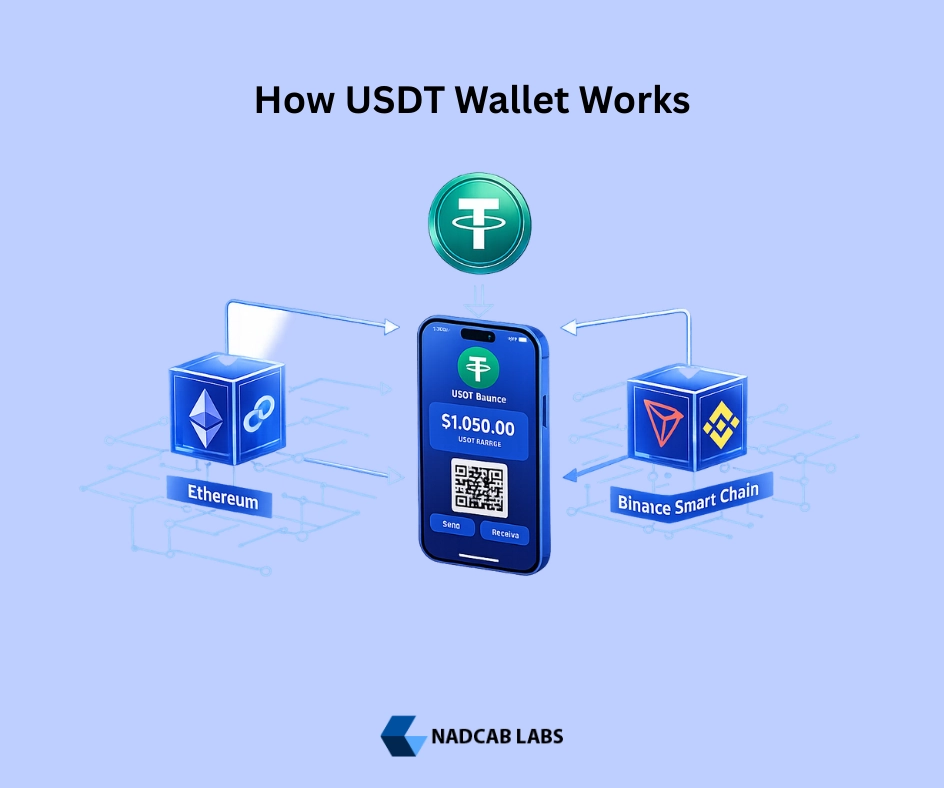
What makes USDT particularly complex—and crucial for wallet selection—is its multi-chain nature. Unlike many cryptocurrencies that exist on a single blockchain, USDT operates across multiple networks, each with distinct characteristics. The ERC-20 version runs on Ethereum, offering extensive DeFi compatibility but carrying higher transaction fees during network congestion. TRC-20 USDT operates on the Tron blockchain, providing near-instantaneous transfers with minimal fees, making it popular for peer-to-peer transactions. BEP-20 USDT exists on BNB Smart Chain, balancing speed and cost-effectiveness for users within the Binance ecosystem.
Additional USDT implementations include versions on Solana (SPL), Polygon, Avalanche, and numerous other blockchains, each optimized for specific use cases. This multi-chain existence creates both opportunities and risks. The best USDT wallet must support your preferred networks while preventing the catastrophic mistake of sending tokens to incompatible addresses—a common error that results in permanent, irreversible loss of funds. Understanding these blockchain distinctions isn’t just technical knowledge; it’s essential wallet literacy that protects your assets from costly mistakes.
What Is a USDT Wallet?
A USDT wallet is a specialized digital tool that enables you to securely store, send, and receive Tether tokens across various blockchain networks. At its core, a wallet doesn’t actually “store” your USDT in the way a physical wallet holds cash. Instead, it securely manages the cryptographic private keys that prove your ownership of USDT tokens recorded on blockchain ledgers. Think of your wallet as a sophisticated key manager that grants access to your portion of the distributed ledger, allowing you to control and transfer your digital assets.
The fundamental distinction every USDT holder must understand is the difference between storing tokens on cryptocurrency exchanges versus dedicated wallets. When you purchase USDT on an exchange and leave it there, you don’t control the private keys—the exchange does. This custodial arrangement means you’re trusting the platform’s security measures, regulatory compliance, and financial stability. History has shown repeatedly that exchanges can be hacked, frozen by regulators, or suddenly become insolvent, taking user funds with them. The infamous collapse of several major exchanges in recent years resulted in billions in locked or lost customer assets.
In contrast, when you transfer USDT to your own wallet, you assume complete control through private key ownership. Your private key is a long string of alphanumeric characters that mathematically proves your right to spend the USDT associated with your wallet address. Whoever controls the private keys controls the funds—there are no customer service departments, account recovery systems, or regulatory protections in truly decentralized cryptocurrency. This principle underlies the popular crypto mantra: “Not your keys, not your coins.”
USDT wallets fall into two primary categories based on key custody. Custodial wallets are managed by third-party services that hold your private keys on your behalf, similar to traditional banks holding your money. These offer user-friendly experiences with password recovery options but require trusting the custodian with your assets. Non-custodial wallets give you exclusive control of your private keys, providing maximum security and autonomy but placing full responsibility for key management on your shoulders. Selecting the best USDT wallet requires carefully weighing this control-convenience tradeoff based on your technical comfort level, asset size, and risk tolerance.
Types of USDT Wallets Explained
Understanding the different types of USDT wallets is foundational to selecting the best USDT wallet for your specific needs. Each wallet category serves distinct purposes, offers varying security levels, and caters to different user profiles. The primary distinction divides wallets into hot wallets and cold wallets based on their internet connectivity—a crucial factor that directly impacts both security and usability.
Hot Wallets maintain constant internet connectivity, enabling instant access to your USDT for trading, payments, and DeFi interactions. These include mobile apps, desktop software, web-based platforms, and browser extensions. Hot wallets excel in convenience and accessibility, making them ideal for daily transactions and active trading. You can check balances, send payments, or execute trades within seconds from any device. However, this constant connectivity creates vulnerability windows—if malware infects your device or hackers compromise the wallet service, your funds are at risk.
Mobile wallets represent the most popular hot wallet category, offering USDT management through smartphone applications. These wallets leverage device security features like biometric authentication and secure enclaves while providing portability that fits modern lifestyles. Desktop wallets provide enhanced security compared to mobile options through larger screens for transaction verification and more robust computing resources. Web wallets operate entirely through browsers, eliminating installation requirements but introducing additional security considerations around phishing sites and browser vulnerabilities.
Cold Wallets store your private keys completely offline, isolated from internet-connected devices and network threats. Hardware wallets, paper wallets, and air-gapped computers constitute this category, offering maximum security for long-term USDT storage. The best USDT wallet for significant holdings almost always involves cold storage components. Hardware wallets, such as dedicated cryptocurrency devices, generate and store private keys in secure chips that never leave the device, even during transaction signing. This architecture protects against remote hacking attempts, malware, and most sophisticated attack vectors.
Each wallet type suits different user profiles and risk tolerances. Active traders benefit from hot wallets’ instant access, accepting higher risk for operational convenience. Long-term investors prioritize cold storage security, tolerating less convenient access procedures. Most experienced users implement a hybrid approach: maintaining small amounts in hot wallets for daily needs while securing the majority in cold storage. This strategy balances accessibility with security, ensuring funds remain protected while maintaining sufficient liquidity for regular use. Our eight years working with cryptocurrency businesses has consistently shown that proper wallet type selection and diversification significantly reduces total loss risk across all security scenarios.
Key Factors to Consider When Choosing the Best USDT Wallet
Selecting the best USDT wallet requires evaluating multiple critical factors that collectively determine how well a wallet meets your specific security needs, usage patterns, and technical capabilities. Through our extensive experience developing and auditing wallet solutions, we’ve identified several non-negotiable criteria that separate excellent wallets from merely adequate ones.
Security Features form the absolute foundation of any wallet evaluation. The best USDT wallet implements multiple security layers, starting with industry-standard private key encryption using AES-256 or equivalent algorithms. Look for wallets offering multi-factor authentication (MFA), biometric protection, and transaction signing verification. Advanced security features include hardware security module (HSM) integration, multi-party computation (MPC) for distributed key generation, and time-locked transactions that allow recovery periods before finalization. Hardware wallet integration capability is essential even if you primarily use hot storage—having the option to secure larger amounts in cold storage as your holdings grow provides critical future flexibility.
Network Compatibility directly determines which USDT versions you can manage and how efficiently you can interact with different blockchain ecosystems. The best USDT wallet supports multiple USDT implementations, including at minimum ERC-20, TRC-20, and BEP-20 versions. This multi-chain support prevents network compatibility errors and gives you flexibility to optimize transaction costs based on current network conditions. Some advanced wallets feature automatic network detection and clear warnings when sending to potentially incorrect addresses, significantly reducing user error risk.
User Experience and Interface Design might seem secondary to security, but poor usability often leads to dangerous mistakes. The best USDT wallet balances powerful features with intuitive navigation, clear transaction confirmations, and unambiguous network indicators. Complicated interfaces increase error likelihood, potentially resulting in sending USDT to wrong addresses or incompatible networks. Look for wallets with clean transaction histories, straightforward send/receive functions, and comprehensive but accessible settings menus. Mobile responsiveness, quick load times, and reliable synchronization across devices enhance overall experience without compromising security.
Backup and Recovery Systems determine whether a device failure, loss, or theft means temporary inconvenience or permanent asset loss. The best USDT wallet implements standardized recovery methods using BIP39 mnemonic seed phrases—12 to 24 word sequences that can completely restore wallet access. Verify the wallet provides clear backup instructions, secure seed phrase recording recommendations, and tested recovery procedures. Some wallets offer social recovery mechanisms, allowing trusted contacts to help restore access through multi-signature schemes, or employ advanced cryptographic techniques for keyless recovery without sacrificing security.
Transaction Fees and Control significantly impact long-term wallet costs, especially for frequent users. The best USDT wallet provides transparent fee structures and allows customization of network fees based on urgency. Some wallets include fee optimization engines that automatically calculate the most cost-effective network for your transaction. Understanding that different USDT networks carry vastly different fee structures—with Ethereum potentially costing $20+ per transaction during congestion while Tron transactions cost mere cents—makes network choice crucial for managing expenses.
Regulatory Compliance and Privacy Balance has become increasingly important as governments worldwide implement cryptocurrency regulations. The best USDT wallet strikes appropriate balance between compliance requirements and user privacy. Some wallets integrate KYC (Know Your Customer) procedures for regulatory compliance, particularly important for institutional users or those in highly regulated jurisdictions. Others prioritize privacy through features like coin mixing, IP masking, or decentralized architecture. Your jurisdictional requirements and personal privacy preferences should guide this evaluation factor, recognizing that compliance approaches significantly vary across wallet providers.
USDT Wallet Security Comparison Matrix
| Wallet Type | Security Level | Internet Exposure | Best For | Key Advantage |
|---|---|---|---|---|
| Hardware Wallet | Highest | Offline Storage | Long-term holding | Complete isolation from network threats |
| Desktop Wallet | High | Connected when active | Regular transactions | Enhanced screen space for verification |
| Mobile Wallet | Medium-High | Constantly connected | Daily payments | Maximum convenience and portability |
| Web Wallet | Medium | Always online | Quick access needs | No installation required |
| Exchange Wallet | Lower | Third-party controlled | Active trading only | Integrated trading functionality |
Best USDT Wallets for Secure Digital Asset Storage in 2026
After eight years of rigorous testing, security auditing, and real-world implementation experience across hundreds of cryptocurrency projects, we’ve developed a comprehensive methodology for evaluating USDT wallets. Our assessment framework examines security architecture, network compatibility, user experience, recovery mechanisms, fee structures, and long-term reliability. The following analysis represents our expert recommendations for the best USDT wallet options across different user categories and use cases in 2026.[2]
Ledger Nano X continues to dominate the hardware wallet category, representing the gold standard for secure USDT storage. This device stores private keys in a certified secure element chip that has never been remotely compromised in the device’s history. The Ledger Nano X supports all major USDT implementations including ERC-20, TRC-20, and BEP-20 versions, providing comprehensive network coverage for diverse user needs. Its Bluetooth connectivity enables mobile management without compromising security, while the companion Ledger Live application offers intuitive portfolio management and staking features. For serious USDT holders managing significant assets, Ledger Nano X remains the best USDT wallet choice for long-term cold storage, combining proven security with extensive cryptocurrency support.
Trezor Model T provides comparable security to Ledger with a more open-source approach that appeals to privacy-conscious users. Trezor’s transparent development model allows independent security audits, building trust through verifiable security rather than proprietary protection. The device supports USDT across Ethereum, Tron, and BNB Chain, with a touchscreen interface that enhances transaction verification security. Trezor’s emphasis on Bitcoin security fundamentals extends to all supported assets, making it an excellent best USDT wallet alternative for users prioritizing open-source solutions and transparent security practices.
MetaMask has evolved from a simple Ethereum wallet into a comprehensive multi-chain wallet solution, establishing itself as the best USDT wallet for DeFi and Web3 applications. MetaMask’s browser extension and mobile app seamlessly integrate with thousands of decentralized applications, making it essential for users exploring yield farming, lending protocols, and decentralized exchanges. While being a hot wallet increases security risk compared to hardware alternatives, MetaMask’s widespread adoption, regular security updates, and optional hardware wallet integration create a balanced solution for active DeFi participants. The wallet now supports multiple USDT networks through custom network addition, though users must carefully verify network settings to prevent compatibility errors.
Trust Wallet stands out as the best USDT wallet for mobile-first users seeking multi-chain support with strong security foundations. As an open-source, non-custodial wallet backed by Binance, Trust Wallet provides native support for BEP-20 USDT while also accommodating ERC-20, TRC-20, and numerous other implementations. The wallet includes built-in DApp browser functionality, staking features, and NFT wallet management, creating a comprehensive mobile cryptocurrency hub. Trust Wallet’s emphasis on user education through in-app security tips and guides makes it particularly suitable for intermediate users transitioning from custodial exchange wallets to self-custody solutions.
Exodus excels as the best USDT wallet for users prioritizing visual appeal and user experience without sacrificing security fundamentals. This desktop and mobile wallet features industry-leading interface design that makes cryptocurrency management genuinely enjoyable while maintaining non-custodial architecture. Exodus supports USDT across multiple networks and includes built-in exchange functionality, portfolio tracking, and 24/7 customer support—a rarity among non-custodial wallets. While lacking some advanced features desired by power users, Exodus represents the best USDT wallet choice for beginners and intermediate users who value polished design and responsive customer service.
Coinbase Wallet serves as the best USDT wallet for users seeking simplified self-custody with familiar brand trust. Unlike the Coinbase exchange, Coinbase Wallet operates as a non-custodial solution where users control their private keys, combining autonomy with user-friendly design reminiscent of traditional financial apps. The wallet provides straightforward USDT management across supported networks, DApp connectivity, and optional cloud backup features—though cloud backup introduces custodial elements that some users may wish to avoid. For users transitioning from Coinbase’s exchange platform to self-custody, this wallet provides the smoothest migration path.
Atomic Wallet positions itself as the best USDT wallet for users requiring extensive cryptocurrency support and built-in exchange capabilities. This desktop and mobile solution supports over 500 cryptocurrencies including all major USDT implementations, with integrated atomic swap technology enabling trustless peer-to-peer exchanges. Atomic Wallet’s cashback program rewards users with native tokens for in-wallet exchanges, creating additional value for active traders. The wallet maintains non-custodial architecture while offering optional anonymous transactions for privacy-focused users, though its closed-source nature raises some transparency concerns among security purists.
Network Compatibility Across Top USDT Wallets
| Wallet Name | ERC-20 (Ethereum) | TRC-20 (Tron) | BEP-20 (BSC) | Other Networks |
|---|---|---|---|---|
| Ledger Nano X | ✓ | ✓ | ✓ | Polygon, Avalanche, Solana |
| Trezor Model T | ✓ | ✓ | ✓ | Polygon |
| MetaMask | ✓ | Custom RPC | ✓ | All EVM-compatible |
| Trust Wallet | ✓ | ✓ | ✓ | Solana, Polygon, Avalanche |
| Exodus | ✓ | ✓ | ✓ | Solana, Polygon |
Best USDT Wallets by Use Case
Understanding that no single wallet perfectly serves all users, selecting the best USDT wallet requires matching specific wallet strengths to your particular needs, technical expertise, and usage patterns. Our extensive experience across diverse cryptocurrency implementations has revealed distinct wallet preferences across different user categories.
Best USDT Wallet for Beginners: Exodus Wallet emerges as the clear winner for cryptocurrency newcomers. Its visually stunning interface removes intimidation from the self-custody experience, while comprehensive tooltips and built-in support resources guide users through each step. The wallet’s portfolio visualization features help beginners understand their holdings, and the integrated exchange functionality eliminates the complexity of using external platforms. Exodus strikes the optimal balance between simplicity and functionality, making it the best USDT wallet for users taking their first steps beyond exchange custody.
Best USDT Wallet for Long-Term Storage: Ledger Nano X remains unmatched for securing significant USDT holdings over extended periods. Hardware wallet architecture provides protection against virtually all remote attack vectors, while the device’s physical security features prevent unauthorized local access. The peace of mind from knowing your USDT resides in certified secure hardware, combined with Ledger’s multi-year track record of security excellence, makes it the definitive best USDT wallet for “HODL” strategies and retirement planning with digital assets.
Best USDT Wallet for Daily Transactions: Trust Wallet excels for users making frequent USDT payments, remittances, or peer-to-peer transfers. Its mobile-first design provides instant access from anywhere, while native support for low-fee networks like TRC-20 and BEP-20 keeps transaction costs minimal. The wallet’s quick send functionality, address book feature, and QR code scanning make routine payments seamless. For users treating USDT as a genuine payment method rather than an investment, Trust Wallet represents the best USDT wallet for everyday financial operations.
Best USDT Wallet for DeFi and Web3: MetaMask dominates the decentralized application space, making it the best USDT wallet for users exploring yield farming, lending protocols, decentralized exchanges, and NFT marketplaces. Its universal compatibility with Ethereum-based DApps and expanding support for other blockchain ecosystems positions MetaMask as the gateway to Web3. The wallet’s transaction simulation features, spending caps, and extensive customization options cater to sophisticated users navigating complex DeFi strategies. While requiring more technical knowledge than beginner-focused alternatives, MetaMask rewards engaged users with unparalleled ecosystem access.
Best USDT Wallet for Enterprise and Treasury Management: Institutional custody solutions like Fireblocks, Copper, and BitGo provide the best USDT wallet infrastructure for businesses managing substantial digital asset treasuries. These platforms implement multi-signature authorization, policy-based transaction controls, comprehensive audit trails, and insurance coverage for qualified deposits. The ability to establish custom approval workflows, integrate with existing financial systems, and maintain regulatory compliance makes specialized institutional custody the only viable best USDT wallet solution for corporate treasurers and fund managers.
Security Best Practices for Storing USDT Safely
Selecting the best USDT wallet represents only the first step in comprehensive digital asset security. Even the most secure wallet becomes vulnerable through poor user practices, social engineering, or operational security lapses. Our eight years of security consulting across blockchain projects has revealed consistent patterns in both successful asset protection and catastrophic losses. Implementing these battle-tested security practices transforms your wallet from a simple storage tool into a comprehensive security system.
Private Key and Seed Phrase Protection constitutes the absolute foundation of USDT security. Your recovery seed phrase represents the master key to your digital wealth—anyone obtaining these 12-24 words gains complete access to your funds. Never store seed phrases digitally in any form: no cloud storage, email drafts, notes apps, or password managers. Physical documentation on durable materials like metal backup plates provides optimal protection against both digital threats and physical disasters like fires or floods. Consider splitting seed phrases across multiple secure locations using Shamir’s Secret Sharing scheme for advanced protection, or employ dedicated seed phrase security products designed for cryptocurrency backup.
Beware of sophisticated phishing attacks that impersonate wallet providers, requesting seed phrases for “verification,” “security updates,” or “migration assistance.” No legitimate service—not your wallet provider, not Tether, not any blockchain platform—will ever request your seed phrase under any circumstances. This rule has zero exceptions. The moment you share your seed phrase, you’ve transferred complete ownership of your USDT to whoever receives it.
Multi-Signature and Hardware Wallet Strategies elevate security through redundancy and compartmentalization. Multi-signature (multisig) wallets require multiple private keys to authorize transactions, similar to requiring multiple bank signatures for large withdrawals. A 2-of-3 multisig configuration, where two out of three key holders must approve transactions, provides both security and recovery flexibility. If one key becomes compromised or lost, the remaining two keys maintain access while preventing unauthorized single-point control. This approach particularly benefits couples managing shared USDT holdings or businesses implementing governance controls.
Implementing hardware wallet protection for your primary key in multisig arrangements creates defense-in-depth architecture. Even if attackers compromise one key through malware or social engineering, they cannot access funds without the hardware-protected secondary key. This hybrid approach represents the current best practice for securing substantial USDT holdings, combining the convenience of hot wallet accessibility with hardware wallet security guarantees.
Avoiding Phishing and Fake Wallets requires constant vigilance in an environment filled with sophisticated scams. Attackers create convincing fake wallet websites, malicious browser extensions, and counterfeit mobile apps designed to harvest credentials and drain funds. Always download wallet software exclusively from official sources: visit the wallet provider’s verified website directly rather than clicking email or social media links. Verify website authenticity through SSL certificates, bookmark genuine wallet sites for future access, and double-check mobile app publishers and review ratings before installation.
Browser extension phishing has become particularly sophisticated, with attackers creating pixel-perfect MetaMask and other wallet clones that appear in extension store search results. Verify publisher credentials, check installation counts, and review recent feedback carefully. Consider using dedicated browsers for cryptocurrency activities, completely separate from general web browsing, to reduce cross-contamination risk from compromised websites.
Cold Storage vs Hot Storage Allocation Strategy optimizes the security-convenience tradeoff through strategic asset distribution. Our recommended approach maintains 80-90% of long-term USDT holdings in cold storage hardware wallets or paper wallets, completely isolated from network exposure. Reserve 10-20% in hot wallets for daily operations, trading, or DeFi activities where instant access proves necessary. This distribution ensures that even if your hot wallet becomes compromised, the majority of your assets remain protected in offline storage.
Regularly rebalance this allocation as your holdings grow or usage patterns change. Many users start with 100% hot wallet storage for convenience, only to realize after accumulating substantial value that they’ve created unacceptable risk exposure. The best USDT wallet strategy often involves multiple wallets: a hardware wallet for bulk storage, a desktop wallet for moderate transactions, and a mobile wallet for small daily payments. This tiered approach compartmentalizes risk while maintaining operational flexibility across different usage scenarios.
USDT Security Best Practices Implementation Timeline
| Timeline | Security Milestone | Action Items | Priority Level |
|---|---|---|---|
| Day 1 | Initial Wallet Setup | Download wallet from official source, create strong password, enable 2FA | Critical |
| Day 1-2 | Secure Backup Creation | Write down seed phrase on durable material, store in secure location(s) | Critical |
| Week 1 | Recovery Test | Perform test recovery on secondary device to verify backup integrity | High |
| Month 1 | Security Audit | Review all security settings, update passwords, audit connected devices | High |
| Quarterly | Comprehensive Review | Update software, review transaction history, reassess cold/hot storage allocation | Medium |
| Annually | Hardware Upgrade Evaluation | Assess need for hardware wallet upgrade, evaluate new security features | Standard |
Multi-Chain and Cross-Chain USDT Storage in 2026
The multi-chain nature of USDT creates both tremendous flexibility and significant risk, fundamentally shaping how we approach the best USDT wallet selection. Understanding why USDT exists across multiple blockchains illuminates the complexity of modern stablecoin infrastructure and the critical importance of network-aware wallet management.
USDT was initially launched on Bitcoin’s blockchain using the Omni Layer protocol, but scalability limitations and high fees drove migration to alternative platforms. Ethereum’s ERC-20 standard provided smart contract flexibility and extensive DeFi integration, establishing USDT as the dominant stablecoin in decentralized finance. However, Ethereum’s own scalability challenges and expensive gas fees created demand for alternative USDT implementations on faster, cheaper blockchains like Tron and BNB Chain. Each network offers distinct advantages: Ethereum provides maximum DeFi compatibility, Tron offers near-zero fees and instant settlements, BSC balances moderate fees with growing ecosystem support, while newer chains like Solana and Avalanche target specific performance niches.
This diversity creates a critical vulnerability: sending USDT to an address on an incompatible network results in permanent, irreversible loss. If you send TRC-20 USDT from your Tron wallet to an Ethereum address expecting ERC-20 tokens, those funds vanish into the blockchain void—no customer service department can retrieve them, no recovery process exists. The best USDT wallet must implement robust safeguards against these errors, including clear network indicators, transaction warnings, and preferably, automatic network detection based on address formats.
Advanced wallets now feature unified USDT management that automatically handles multi-chain complexity. These solutions present a single USDT balance while managing separate blockchain implementations in the background, selecting optimal networks based on transaction costs and recipient requirements. Some wallets implement bridge functionality, enabling automatic cross-chain USDT transfers that convert between networks transparently. While convenient, bridge technology introduces additional smart contract risk and complexity—our experience suggests using direct network transfers when possible, reserving bridges for situations where network conversion is unavoidable.
The future of USDT wallets increasingly points toward chain abstraction technologies that completely eliminate user-facing network complexity. These next-generation solutions manage all blockchain interactions internally, presenting users with simple “send USDT” functionality that automatically selects optimal routes. Account abstraction and smart contract wallets promise to fundamentally transform how we interact with multi-chain assets, though these technologies remain in early adoption stages. Selecting the best USDT wallet in 2026 increasingly means choosing solutions that minimize technical barriers while maintaining security fundamentals, preparing users for the chain-abstracted future while protecting them during the current multi-chain present.
Custodial vs Non-Custodial USDT Wallets: Which Is Better?
The custodial versus non-custodial debate represents perhaps the most fundamental decision in cryptocurrency storage, directly impacting security, convenience, regulatory exposure, and philosophical alignment with cryptocurrency’s core principles. Neither approach is universally superior—the best USDT wallet choice depends entirely on your specific circumstances, technical capabilities, and risk tolerance.
Non-Custodial Wallets grant complete control over your private keys, making you the sole authority over your USDT. This autonomy represents cryptocurrency’s foundational promise: permissionless, censorship-resistant money that no third party can freeze, confiscate, or restrict. Non-custodial architecture eliminates counterparty risk—you don’t depend on any company’s solvency, security practices, or regulatory compliance. If an exchange declares bankruptcy or a custodial service suffers a security breach, your non-custodial wallet remains unaffected, completely isolated from their problems.
However, this sovereignty comes with serious responsibility. You must securely manage private keys and seed phrases, implement proper backup procedures, and accept that irreversible mistakes are possible. Lose your seed phrase, and your USDT is gone forever—no password reset, no customer support ticket, no recovery process exists. Our extensive experience managing cryptocurrency systems has shown that this responsibility overwhelms some users, particularly those new to digital assets or uncomfortable with technology. The best USDT wallet for these users may actually be a reputable custodial solution rather than forcing non-custodial storage they’re unprepared to manage safely.
Custodial Wallets delegate private key management to trusted third parties—typically exchanges, fintech companies, or specialized custody providers. These services manage security infrastructure, implement recovery procedures, and often provide insurance against security breaches. Custodial solutions appeal to users valuing convenience, those requiring customer support, or institutions needing specific compliance frameworks. Regulated custodians provide clear legal recourse, audit trails, and accountability mechanisms absent from non-custodial alternatives.
The trade-off manifests as centralization risk and reduced autonomy. Custodial providers can freeze accounts during legal disputes, comply with government asset seizures, or impose transaction restrictions based on regulatory requirements. Multiple major exchange collapses have demonstrated that custodial trust isn’t always justified—FTX, Mt. Gox, and numerous other prominent failures locked away billions in customer assets. While reputable custodians implement robust security and maintain proper reserves, the underlying risk remains: you’re trusting a third party’s competence, honesty, and longevity with your wealth.
The 2026 Landscape increasingly favors non-custodial solutions as wallet technology matures. Modern non-custodial wallets have dramatically improved user experience, implementing social recovery systems, biometric authentication, and intuitive interfaces that minimize technical barriers. Multi-party computation (MPC) wallets distribute key management across multiple parties without requiring traditional seed phrases, reducing recovery complexity while maintaining non-custodial architecture. These innovations are narrowing the convenience gap between custodial and non-custodial options.
Regulatory pressure is also pushing users toward self-custody. Governments worldwide are implementing stricter cryptocurrency regulations, requiring custodial services to collect extensive personal information, report transactions, and comply with capital controls. Privacy-conscious users increasingly view non-custodial wallets as necessary to preserve financial privacy and freedom. The best USDT wallet strategy for most users in 2026 involves primarily non-custodial storage with perhaps small custodial allocations for specific use cases requiring integrated trading or simplified access. This hybrid approach balances autonomy with practical convenience, letting you maintain sovereignty over most assets while keeping small amounts in custodial environments for legitimate operational needs.
Common Mistakes to Avoid When Using a USDT Wallet
Throughout our eight years working with cryptocurrency users across skill levels, we’ve observed recurring mistakes that consistently lead to asset loss, security compromises, or operational failures. Learning from these common pitfalls helps you avoid expensive education and ensures your best USDT wallet actually delivers the protection it’s designed to provide.
Mistake #1: Storing Large USDT Amounts on Exchanges. Perhaps the most dangerous yet common practice involves treating exchanges as long-term storage solutions. While convenient for active trading, leaving substantial USDT on exchange platforms exposes you to exchange hacks, regulatory seizures, bankruptcy risk, and platform insolvency. Exchanges represent honeypots for hackers—centralized repositories holding billions in user funds, making them prime targets for sophisticated attacks. Even major, seemingly secure exchanges have suffered catastrophic breaches. The correct approach maintains only actively-traded amounts on exchanges, transferring everything else to your best USDT wallet—preferably a hardware wallet for significant holdings.
Mistake #2: Ignoring Network Compatibility. Sending USDT to an address on the wrong blockchain network causes permanent fund loss with no recovery mechanism. This mistake often occurs when users copy an address from one platform and paste into another without verifying network compatibility. Always triple-check that your sending wallet and receiving address use identical USDT implementations—ERC-20 to ERC-20, TRC-20 to TRC-20, never mixing networks. The best USDT wallet implementations include network verification prompts and address format checks to prevent these catastrophic errors, but ultimately user vigilance remains essential.
Consider performing test transactions when sending to new addresses, especially for large amounts. Send a small quantity first, verify successful receipt and correct network, then proceed with the full transfer. This two-step process costs marginally more in transaction fees but provides invaluable protection against irreversible mistakes.
Mistake #3: Poor Backup Practices. Inadequate seed phrase backup represents another devastatingly common failure mode. We’ve consulted with users who lost access to substantial USDT holdings because they stored seed phrases in password managers later compromised, saved them in cloud storage accounts they forgot, or wrote them on paper later destroyed or misplaced. Proper backup requires physical documentation on durable materials, stored in secure, geographically-distributed locations. Metal backup plates designed for seed phrase storage provide optimal protection against fire, water damage, and degradation over time.
Equally problematic are digital seed phrase storage methods that increase security risk. Screenshots of seed phrases, photos stored in cloud services, or seed phrases saved in note-taking apps all create attack surfaces that sophisticated hackers routinely exploit. The best USDT wallet security practices mandate exclusively offline seed phrase storage, accepting no digital convenience shortcuts that compromise long-term security.
Mistake #4: Using Unverified or Fake Wallets. The cryptocurrency ecosystem unfortunately includes numerous malicious actors creating fake wallet applications designed to steal user funds. These counterfeit wallets often appear in app store search results, promoted through social media ads, or distributed via phishing emails. They may closely imitate legitimate wallets’ visual design while containing malware that immediately transmits private keys to attackers upon entry. Always download wallets exclusively from verified official sources, checking publisher credentials, user reviews, and installation counts carefully. Bookmark official wallet websites and use those bookmarks for future access rather than searching or following links. The minor inconvenience of verified downloads pales compared to the catastrophic consequences of installing malicious wallet software.
Future Trends in USDT Wallet Security
The wallet security landscape continues evolving rapidly as new technologies emerge and threat actors develop increasingly sophisticated attack methods. Understanding emerging trends helps you evaluate which innovations genuinely enhance security versus which represent primarily marketing differentiation. Our involvement in cutting-edge blockchain security research provides insight into which developments will likely define the best USDT wallet characteristics in coming years.
Account Abstraction and Smart Contract Wallets represent fundamental architectural shifts in how wallets operate. Traditional wallets implement cryptographic key pairs where private keys directly control assets—lose the key, lose everything. Account abstraction separates wallet logic from key control, enabling programmable security policies through smart contracts. This architecture supports features like social recovery (trusted contacts can help restore access), spending limits, time-locked transactions, and customizable authentication requirements that adapt to transaction risk levels.
Smart contract wallets can implement sophisticated security rules: requiring multiple authentication factors for large transfers, imposing cooling-off periods before withdrawals to unfamiliar addresses, or automatically routing high-value transactions through hardware wallet confirmation. These capabilities transform wallets from simple key storage into intelligent security systems that actively protect against both external attacks and user mistakes. While adding transaction complexity and gas costs, the security benefits for substantial USDT holdings often justify the overhead.
AI-Based Fraud Detection increasingly integrates into wallet security systems, analyzing transaction patterns to identify potentially fraudulent activity in real-time. Machine learning models trained on historical scam patterns can flag suspicious transaction requests—transfers to known scam addresses, unusual activity patterns suggesting account compromise, or transactions characteristic of common phishing attacks. The best USDT wallet implementations will incorporate these AI security layers as complementary protection alongside traditional cryptographic security, providing early warning systems that alert users to potential threats before funds are lost.
However, AI security features require careful implementation to avoid false positives that disrupt legitimate transactions or false negatives that fail to catch actual fraud. Our security philosophy emphasizes that AI should augment, not replace, fundamental security practices—proper key management, transaction verification, and secure backups remain essential regardless of AI integration.
Multi-Party Computation (MPC) Wallets distribute private key generation and transaction signing across multiple parties using advanced cryptography, eliminating single points of failure. Unlike traditional multisig which creates multiple complete keys, MPC generates key shares that individually reveal no information about the complete key. Transaction signing occurs through collaborative computation where key share holders collectively sign without ever reconstructing the full private key. This architecture prevents any single party—including the wallet provider—from accessing user funds independently, while avoiding the blockchain overhead of traditional multisig implementations.
MPC wallets enable keyless recovery mechanisms where users authenticate through multiple factors—biometrics, device attestation, secure enclaves—without managing traditional seed phrases. This approach dramatically reduces user error risk while maintaining security properties comparable or superior to hardware wallets. As MPC technology matures and becomes more accessible, we anticipate it becoming the standard architecture for the best USDT wallet solutions, particularly for users uncomfortable with traditional seed phrase management.
Institutional-Grade Custody Trends influence consumer wallet development as security innovations pioneered for corporate treasury management filter down to individual users. Hardware security modules (HSMs), policy engines, role-based access controls, and comprehensive audit logging—once exclusive to institutional custody—increasingly appear in consumer wallet offerings. This enterprise-to-consumer technology transfer elevates overall security standards, making bank-grade protection accessible to individual USDT holders. The best USDT wallet providers increasingly adopt institutional security practices, recognizing that sophisticated users demand professional-grade protection regardless of whether they represent institutions or individuals.
Build My Crypto wallet Now!
Turn your dream into reality with a powerful, secure crypto wallet built just for you. Start building now and watch your idea come alive!
Final Thoughts: Choosing the Best USDT Wallet for Your Needs
After examining the complete landscape of USDT wallet options, security considerations, and emerging technologies, several key principles emerge that should guide your wallet selection process. The best USDT wallet isn’t a single product but rather the optimal match between your specific requirements and available solutions. Understanding your usage patterns, technical comfort level, security priorities, and asset size determines which wallet characteristics matter most for your situation.
For newcomers entering the cryptocurrency space, prioritize user experience and educational resources over advanced features. Wallets like Exodus or Trust Wallet provide gentle learning curves while maintaining solid security fundamentals, helping you build confidence before graduating to more complex solutions. Start with modest amounts to familiarize yourself with wallet operations, gradually increasing holdings as your comfort level grows. This measured approach minimizes both financial risk and learning overwhelm.
Users managing significant USDT holdings must prioritize security above convenience. Hardware wallets remain the gold standard for long-term storage, offering protection against virtually all remote attack vectors. Consider implementing multi-signature arrangements or distributed key management through MPC technology for additional security layers. The best USDT wallet strategy for substantial portfolios typically involves tiered storage: hardware wallets for bulk holdings, desktop wallets for moderate transactions, and mobile wallets for small daily needs.
Active traders and DeFi participants require different characteristics, emphasizing transaction speed, DApp compatibility, and multi-chain support. MetaMask and similar Web3-focused wallets provide essential infrastructure for decentralized application interaction, though users must accept the elevated security risk inherent to hot wallet architecture. Implementing strict spending limits, regular security audits, and maintaining only necessary amounts in hot storage helps balance DeFi participation with prudent risk management.
Looking forward, the distinction between different wallet types will likely blur as technologies like account abstraction, MPC, and cross-chain protocols mature. The best USDT wallet of the future may seamlessly integrate hardware security, social recovery, AI fraud detection, and unified multi-chain management into cohesive experiences that eliminate technical barriers while maintaining uncompromising security. Until that future arrives, careful evaluation of current options using the frameworks presented in this guide positions you to make informed decisions that protect your digital wealth.
Remember that wallet selection represents just one component of comprehensive cryptocurrency security. Regular software updates, vigilant phishing awareness, secure backup practices, and thoughtful operational security habits collectively determine whether your USDT remains safe over the long term. The best USDT wallet functions as part of an integrated security system where technology, processes, and human awareness work together to create robust protection against evolving threats.
Our eight years of experience across hundreds of blockchain security implementations has taught us that technology alone never provides complete security—human judgment, careful process adherence, and continuous learning remain essential elements of effective asset protection. Select your wallet thoughtfully using the criteria discussed throughout this guide, implement the security best practices we’ve outlined, and maintain healthy skepticism toward promises of perfect security or risk-free convenience. The cryptocurrency landscape continues evolving, and maintaining security requires ongoing adaptation as both threats and protective technologies develop. Choose your best USDT wallet wisely, protect it diligently, and remain committed to continuous security improvement as your cryptocurrency journey progresses.
The journey to finding the best USDT wallet begins with understanding your unique needs and ends with confident, secure management of your digital assets. Armed with the knowledge from this comprehensive guide, you’re now prepared to make informed decisions that protect your USDT holdings while enabling you to participate fully in the cryptocurrency revolution. Stay secure, stay informed, and remember that in cryptocurrency, knowledge truly is your most valuable asset.
Frequently Asked Questions
Q1.What is the best USDT wallet for secure storage in 2026?
The best USDT wallet in 2026 is one that offers non-custodial control, supports multiple USDT networks, and includes advanced security features like hardware wallet or MPC support.
Q2.Is it safe to store USDT in a wallet?
Yes, storing USDT in a secure wallet is safe when you control your private keys, use trusted wallet software, and follow proper security practices such as backups and two-factor authentication.
Q3.Which USDT wallet is best for beginners?
The best USDT wallet for beginners is one with an easy interface, simple backup recovery, and built-in network selection to avoid sending USDT to the wrong blockchain.
Q4.Can I store USDT on multiple blockchains in one wallet?
Yes, many modern wallets support USDT on multiple networks like Ethereum (ERC-20), Tron (TRC-20), and BNB Chain (BEP-20) from a single interface.
Q5.Is it better to keep USDT in a wallet or on an exchange?
Keeping USDT in a personal wallet is safer than exchanges for long-term storage, as you retain full control over your funds and reduce risks related to hacks or account freezes.
Q6.What happens if I send USDT to the wrong network?
If USDT is sent to the wrong blockchain network, recovery may be difficult or impossible unless the receiving wallet supports that network and private key access is available.
Q7.Are hardware wallets good for storing USDT?
Yes, hardware wallets are among the safest options for storing USDT, especially for large balances, as they keep private keys offline and protected from online threats.
Q8.Do USDT wallets charge transaction fees?
USDT wallets themselves usually do not charge fees, but blockchain networks require gas fees, which vary depending on whether you use Ethereum, Tron, or other supported chains.
Q9.Can USDT wallets be hacked?
USDT wallets can only be compromised if private keys or recovery phrases are exposed, which is why choosing a secure wallet and following best practices is critical.
Q10.What features should I look for in the best USDT wallet?
The best USDT wallet should offer strong security, multi-chain support, easy recovery options, low fees, and compatibility with DeFi and Web3 applications.
Explore Services
Related Services
Reviewed by

Aman Vaths
Founder of Nadcab Labs
Aman Vaths is the Founder & CTO of Nadcab Labs, a global digital engineering company delivering enterprise-grade solutions across AI, Web3, Blockchain, Big Data, Cloud, Cybersecurity, and Modern Application Development. With deep technical leadership and product innovation experience, Aman has positioned Nadcab Labs as one of the most advanced engineering companies driving the next era of intelligent, secure, and scalable software systems. Under his leadership, Nadcab Labs has built 2,000+ global projects across sectors including fintech, banking, healthcare, real estate, logistics, gaming, manufacturing, and next-generation DePIN networks. Aman’s strength lies in architecting high-performance systems, end-to-end platform engineering, and designing enterprise solutions that operate at global scale.