Ai Overview
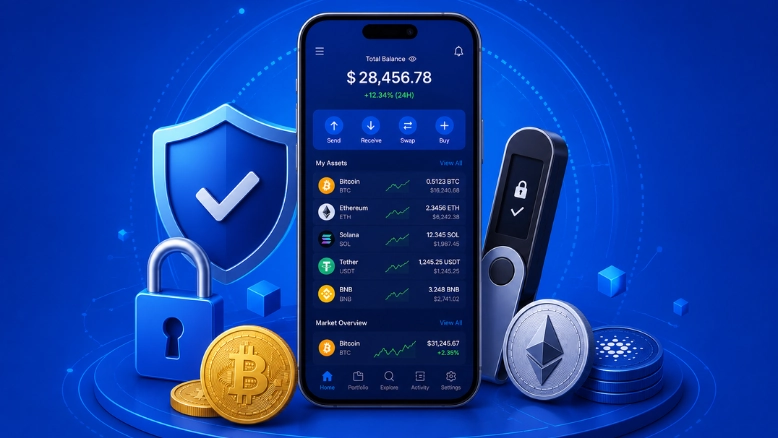
A hardware wallet is a purpose-built physical electronic device that stores cryptocurrency private keys within a dedicated secure element chip that is architecturally isolated from all external software environments. The device communicates with connected software through standardized protocols that allow transaction data to flow in and signed transaction outputs to flow out, while private keys remain permanently confined within the hardware enclosure.
Cryptocurrency security has never been more consequential. As digital asset values reach new highs and adoption expands across mainstream retail, institutional, and enterprise user segments in the USA, UK, UAE, and Canada, the attacks targeting crypto wallets have grown proportionally in sophistication, frequency, and financial impact. Malware designed specifically to intercept transaction signing operations, phishing campaigns that replicate legitimate wallet interfaces with near-perfect fidelity, and supply chain attacks that compromise wallet software before it reaches users represent a threat landscape that software-only security measures increasingly struggle to contain. The fundamental vulnerability shared by all software wallet architectures is that private keys and signing operations exist within internet-connected environments where sufficiently sophisticated malware can observe or intercept them.
Hardware Wallet Integration addresses this fundamental vulnerability by moving the most security-critical wallet operations — private key storage and transaction signing into physically isolated hardware devices whose secure elements are architecturally inaccessible to software attacks of any kind. When a wallet application is integrated with a hardware device, private keys never enter internet-connected memory, malware cannot intercept signing operations, and every transaction requires explicit physical confirmation from the user on the hardware device’s own trusted display. This combination of architectural guarantees represents the highest achievable security standard in consumer and enterprise cryptocurrency wallet development today.
This comprehensive guide covers the complete landscape of hardware wallet integration for cryptocurrency wallet development, from the fundamental security improvements it delivers through technical implementation architecture, key features, benefits, challenges, best practices, and the emerging trends that will shape how hardware wallet integration evolves as the Web3 ecosystem matures. Explore comprehensive wallet development services at Nadcab Labs.
What is a Hardware Wallet?
A hardware wallet is a purpose-built physical electronic device that stores cryptocurrency private keys within a dedicated secure element chip that is architecturally isolated from all external software environments. Unlike software wallets that store keys in device memory accessible to the operating system, a hardware wallet’s secure element generates, stores, and uses private keys for signing operations without ever exposing key material outside the device’s hardware boundary. The device communicates with connected software through standardized protocols that allow transaction data to flow in and signed transaction outputs to flow out, while private keys remain permanently confined within the hardware enclosure.
Ledger and Trezor represent the two most widely adopted hardware wallet device families used in hardware wallet integration today. Ledger devices use a proprietary secure element chip certified to Common Criteria EAL5+ security standards, the same certification level used in banking smart cards and biometric passports. Trezor devices use a general-purpose microcontroller with open-source firmware, prioritizing code auditability over hardware certification. Both approaches deliver security guarantees that far exceed any software-only wallet architecture when correctly integrated into a cryptocurrency wallet development platform.
Hot Wallets (Software)
- ✓ Internet connected, convenient for daily use
- ✓ Keys stored in device memory or encrypted storage
- ⚠ Vulnerable to malware and remote attacks
- ⚠ Signing operations accessible to host OS
Hardware Wallets (Cold)
- ✓ Offline key storage in secure element hardware
- ✓ Keys never exposed to any software environment
- ✓ Physical confirmation required for all transactions
- ✓ Immune to remote software-based attacks
What is Hardware Wallet Integration?
Hardware wallet integration bridges software wallet interfaces with physical security hardware to deliver a unified user experience backed by institutional-grade key management.
Hardware wallet integration in cryptocurrency wallet development refers to the technical process of building connectivity between a software wallet application and one or more hardware wallet device families so that private key operations are delegated to the hardware device while the software application handles portfolio management, transaction construction, blockchain interaction, and user interface responsibilities. The integration creates a security architecture where the software and hardware components each perform the functions they are best suited for: software handles flexibility, connectivity, and user experience while hardware handles the irreversible security of key custody and transaction authorization.
Connection Architecture
Software wallets connect to hardware devices through USB for desktop applications, Bluetooth for mobile applications on supported Ledger Nano X devices, and WebUSB for browser-based wallet interfaces. The communication channel transmits transaction data to the hardware device and receives signed transaction outputs, never transferring private keys in either direction.
signing Delegation
When a transaction requires signing, the software wallet constructs the unsigned transaction object and sends it to the hardware device through the established connection. The hardware device processes the transaction independently, displays key details on its own trusted screen, and waits for physical button confirmation before signing with the secure element key and returning only the completed signature.
Role in Development
In cryptocurrency wallet development, hardware wallet integration adds a security tier that transforms a standard software wallet into a platform capable of serving institutional users, high-net-worth individuals, and regulated financial applications that require demonstrably cold key storage as a non-negotiable security requirement.
How Hardware Wallet Integration Improves Crypto Security
Five distinct security improvements that hardware wallet integration delivers over software-only wallet architectures.
Hardware wallet integration does not simply improve crypto security incrementally. It addresses the structural security limitations of software wallets at an architectural level by moving the most sensitive operations out of software environments entirely. Each of the following five security improvements represents a category of attack that software wallets cannot fully defend against but hardware-integrated wallets make essentially impossible, creating a fundamentally different and superior security posture for users who require the highest available protection for their digital assets across all markets.
A. Offline Private Key Storage
The most fundamental security improvement hardware wallet integration delivers is the complete removal of private keys from internet-connected environments. Software wallets, regardless of their encryption quality, store private keys on devices that are connected to networks where malware can operate. Hardware wallet integration moves key generation and storage into the device’s secure element, a physically isolated chip that has no direct or indirect network connection and cannot be queried by any software process on the connected host device. From the moment a hardware wallet is configured, its private keys exist exclusively within the device’s hardware boundary and never enter any software memory space, eliminating the entire class of remote key extraction attacks that have been responsible for the majority of significant cryptocurrency theft incidents.
B. Protection Against Malware and Hacks
Even when the computer or mobile device connected to a hardware wallet is fully compromised by sophisticated malware, the hardware wallet integration architecture prevents fund theft because signing operations occur within hardware that malware cannot access. Transaction data flows to the hardware device for signing, and only the completed signature returns to the software application. A keylogger, clipboard monitor, memory scanner, or screen capture malware installed on the host device cannot intercept the private key because it is never present in the host device’s memory during any point in the signing process. This protection is structural rather than defensive, meaning it holds regardless of how advanced the malware is or how thoroughly the host device is compromised.
C. Enhanced User Authentication
Hardware wallets add a physical possession factor to authentication that software wallets cannot replicate. Access to hardware wallet functions requires knowledge of the device PIN combined with physical possession of the specific hardware device. Some hardware devices support additional biometric verification. This multi-factor authentication model means that credential theft through phishing, password database breaches, or social engineering attacks cannot alone enable unauthorized wallet access. An attacker who obtains a user’s wallet password or seed phrase backup still cannot authorize transactions without physical possession of the hardware device and its PIN, providing a meaningful additional security layer that has prevented countless real-world theft attempts.
D. Secure Transaction Approval
Every transaction signed by a hardware-integrated wallet requires explicit physical confirmation on the hardware device’s own trusted display, which shows the recipient address and transaction amount independently of what the connected software application displays. This physical confirmation requirement closes the attack vector where malware silently modifies transaction details in the software wallet’s memory between the moment the user reviews the transaction and the moment it is signed. A user confirming a transaction on their hardware device screen can trust that they are authorizing exactly what is displayed because the hardware device receives, parses, and displays transaction data independently without relying on the host device’s compromised software environment for the information it shows the user.
E. Reduced Risk of Phishing Attacks
Phishing attacks against software wallets succeed by tricking users into entering their seed phrases or credentials into fake wallet interfaces that steal the submitted data. Hardware wallet integration dramatically reduces phishing effectiveness because even a successful phishing attack that captures a user’s software wallet credentials cannot authorize fund transfers without the physical hardware device. A user who enters their email and password into a phishing site has exposed those credentials, but their hardware-protected funds remain secure because the hardware device itself must be physically present and confirm each transaction. This protection makes hardware-integrated wallets substantially more resilient against the social engineering and phishing campaigns that represent the highest-volume attack category against crypto wallet users in the USA, UK, UAE, and Canada.
Key Features of Hardware Wallet Integration
A production-quality hardware wallet integration is not a simple device connection. It is a comprehensive feature set that covers multi-device support, secure communication, backup and recovery architecture, and seamless compatibility with both mobile and web wallet platforms. The following feature priorities reflect the requirements our team has consistently identified across hardware wallet integration engagements for cryptocurrency wallet development clients in the USA, UK, UAE, and Canada. Each feature must be implemented with the same security rigor applied to the core key management and signing delegation functions.
Feature Implementation Priority for Enterprise Hardware Wallet Integration
Benefits for Cryptocurrency Wallet Development Platforms
Hardware wallet integration delivers business value that extends significantly beyond the direct security improvements to encompass user acquisition, platform credibility, and regulatory positioning.
For cryptocurrency wallet development companies and platforms building wallet infrastructure for clients in the USA, UK, UAE, and Canada, hardware wallet integration is not merely a security feature. It is a strategic business capability that determines which user segments the platform can credibly serve. Institutional investors, high-net-worth individuals, and enterprise treasury teams routinely evaluate hardware wallet support as a prerequisite for wallet platform selection, making its absence an immediate disqualifier for the highest-value user categories. Platforms that implement hardware wallet integration effectively position themselves to compete for premium user segments while simultaneously strengthening their regulatory standing and security audit credentials.
Builds User Trust
Users who trust a platform with significant digital asset holdings want verifiable evidence that security is architecturally guaranteed rather than dependent on software quality alone. Hardware wallet support provides that evidence through the independently verifiable security guarantees of certified hardware secure elements.
Improves Platform Credibility
Hardware wallet integration signals to the broader market that a development platform takes security seriously at an architectural level, not just at a policy level. This credibility translates directly into press coverage, analyst recognition, and word-of-mouth referrals among security-conscious user communities.
Attracts High-Value Users
Institutional funds, corporate treasury teams, and high-net-worth individuals who represent a disproportionate share of total digital asset value under management require hardware wallet support as a non-negotiable selection criterion. Platforms that support hardware devices serve this high-value segment while platforms that do not are structurally excluded from it.
Compliance Alignment
Regulatory expectations around cold storage and hardware security module usage for digital asset custodians are evolving toward explicit requirements in multiple jurisdictions. Platforms that implement hardware wallet integration today are positioned ahead of regulatory requirements that may become mandatory for licensed digital asset service providers in the USA, UK, UAE, and Canada.
Challenges in Hardware Wallet Integration Development
Hardware wallet integration introduces specific technical and user experience challenges that cryptocurrency wallet development teams must anticipate and plan for before development begins. These challenges are qualitatively different from standard mobile or web wallet development and require specialist expertise in hardware communication protocols, device security architecture, and the user experience design principles that make physical confirmation workflows feel intuitive rather than burdensome. Understanding these challenges in advance enables teams to allocate appropriate engineering resources and set realistic timelines for production-quality hardware wallet integration delivery.
| Challenge | Severity | Recommended Mitigation |
|---|---|---|
| Technical Protocol Complexity | High | Use official manufacturer SDKs (Ledger Connect Kit, Trezor Connect) rather than implementing communication protocols from scratch to leverage pre-tested, audited integration code |
| Device and Firmware Compatibility | High | Establish a comprehensive device and firmware version testing matrix, implement version detection logic, and create a proactive firmware update monitoring process that detects breaking changes before users are affected |
| User Experience Friction | Medium | Design clear in-app guidance for hardware device connection and confirmation steps, provide progress indicators during signing workflows, and conduct usability testing with hardware wallet novice users before launch |
| Connection Reliability | Medium | Implement robust reconnection logic, clear user-facing error messages for common connection failures, and graceful transaction state management that prevents funds from being locked in partially signed states on disconnection |
| Implementation and Maintenance Cost | Medium | Budget explicitly for ongoing SDK version updates, firmware compatibility testing, and integration regression testing as part of the product maintenance lifecycle rather than treating it as a one-time implementation cost |
| Cross-Platform Consistency | Medium | Implement and test hardware wallet integration separately for each platform (Android, iOS, web) as connection mechanisms and API availability differ significantly between platforms and device types |
Best Practices for Hardware Wallet Integration
Production hardware wallet integration requires adherence to established best practices that have been developed through real-world implementation experience across hundreds of wallet applications supporting Ledger and Trezor devices. The following eight practices represent the standard our team applies across every hardware wallet integration engagement to ensure the resulting implementation is secure, reliable, maintainable, and delivers the user experience quality that users expect from a premium wallet security feature in 2026.
01
Use Official Manufacturer SDKs Exclusively
Always implement hardware wallet integration using Ledger’s official Connect Kit and Trezor’s official Connect SDK rather than community-built alternatives or custom protocol implementations. Official SDKs incorporate security fixes, firmware compatibility updates, and tested communication logic that would require enormous ongoing investment to replicate independently.
02
Enable Multi-Layer Authentication Throughout
Combine hardware device PIN verification with software application authentication factors including biometrics and two-factor authentication to create defense in depth against physical device theft. Never treat hardware device possession alone as sufficient authentication for accessing wallet viewing capabilities in the software application.
03
Conduct Regular Independent Security Audits
Commission independent security audits of all hardware wallet integration code on a regular schedule and whenever significant firmware updates from Ledger or Trezor change integration behavior. Audit scope must include communication protocol implementation, error handling paths, and transaction state management under adverse conditions including connection failures during signing operations.
04
Validate All Transaction Data Independently
Implement server-side transaction data validation that independently verifies transaction amounts, recipient addresses, and fee levels before presenting transactions to hardware devices for signing. This defense-in-depth approach catches both user errors and malware-modified transaction data before the hardware device receives it for confirmation.
05
Design Explicit User Education Into the Onboarding Flow
The security benefits of hardware wallet integration are fully realized only when users understand how to use their hardware devices correctly. Build explicit educational content about verifying transaction details on the hardware device screen, protecting PIN codes, and safely storing seed phrase backups into the wallet onboarding flow for all hardware wallet users.
06
Monitor Hardware Manufacturer Security Advisories
Subscribe to security advisory channels from both Ledger and Trezor and establish a defined process for evaluating and responding to disclosed vulnerabilities within defined timeframes. Hardware wallet security issues require rapid response because they affect user assets directly and manufacturers often provide mitigation guidance that integrating wallets must promptly communicate to their users.
07
Test Across Complete Device and Firmware Matrix
Maintain a testing inventory of all supported device models across multiple firmware versions and run the complete integration test suite against every supported configuration before releasing integration updates. A failure in one firmware version combination can silently break the integration for a significant portion of users without any error manifesting in the majority of test configurations.
08
Implement Transparent Communication About Security Incidents
Establish and publish a clear security incident communication policy before launch. Users entrusting hardware-secured assets to your platform deserve timely, transparent disclosure of any security issues that affect the hardware wallet integration, along with clear guidance on protective actions they should take and the timeline for remediation.
Future of Hardware Wallet Integration
The future of hardware wallet integration is being shaped by the rapid growth of decentralized finance, the expanding Web3 application ecosystem, and increasing regulatory pressure for demonstrable cold storage security in digital asset platforms. Hardware wallet manufacturers are investing significantly in next-generation device capabilities that will expand what hardware-integrated wallets can securely support, moving beyond basic transaction signing toward smart contract interaction approval, DeFi protocol authorization, and identity verification use cases that will make hardware wallet integration relevant to an even broader range of cryptocurrency wallet development applications across the USA, UK, UAE, and Canada in the years ahead.
DeFi Protocol Approval
Hardware wallet integration expanding to support rich DeFi transaction approval workflows where users can review complete smart contract interaction details on trusted hardware screens before confirming complex multi-step DeFi operations.
Growing Cold Storage Adoption
Mainstream institutional adoption of hardware security modules and cold storage requirements is driving demand for hardware wallet integration across a much broader range of cryptocurrency wallet development platforms than served this market two years ago.
Web3 Identity Integration
Hardware wallets evolving into comprehensive Web3 identity devices that enable hardware-backed signing for website authentication, document signing, and credential issuance beyond purely financial transaction authorization use cases.
Cross-Chain Hardware Support
Expanding hardware wallet support for emerging Layer 2 networks, cross-chain bridge transactions, and new consensus mechanisms that enable hardware-secured participation in the full multi-chain ecosystem without compromising security guarantees.
Conclusion: Hardware Wallet Integration as the Security Gold Standard
Hardware wallet integration represents the most significant security improvement available to cryptocurrency wallet development platforms today. By moving private key storage and transaction signing from software environments into physically isolated secure element hardware, this integration eliminates entire categories of attacks that have been responsible for the most significant cryptocurrency theft incidents in the history of digital assets. The structural security guarantees it provides are not achievable through any amount of additional software security investment alone, making hardware wallet integration uniquely valuable in a security landscape where sufficiently motivated adversaries can compromise any software environment given enough time and resources.
For businesses building cryptocurrency wallet infrastructure in the USA, UK, UAE, Canada, and global markets, the case for hardware wallet integration is simultaneously a security argument, a business strategy argument, and an increasingly regulatory argument. The security improvements are compelling on their own, but the business value of attracting institutional users who demand hardware security and the regulatory positioning benefits of demonstrating cold storage capability make hardware wallet integration an investment that pays returns across multiple dimensions of platform value.
The implementation challenges of hardware wallet integration — protocol complexity, device compatibility management, UX design for physical confirmation workflows — are real but manageable with the right expertise, proper planning, and adherence to the best practices described in this guide. Teams that invest in getting hardware wallet integration right from the start build wallet platforms that serve the most security-demanding user segments, withstand the most sophisticated attack campaigns, and position themselves ahead of the regulatory requirements that are converging toward making hardware-grade key management an expectation rather than a differentiator for serious cryptocurrency wallet development platforms in 2026 and beyond.
Final Recommendation
Every cryptocurrency wallet development platform that targets users managing significant digital asset value should treat hardware wallet integration as a required capability rather than an optional premium feature. The users who most need this security capability are precisely the users whose asset values make them the highest-priority targets for sophisticated attacks. Building hardware wallet integration early, using official manufacturer SDKs, maintaining rigorous testing coverage, and educating users on secure hardware device usage are the four commitments that together deliver the full security benefit that hardware wallet integration is designed to provide.
Frequently Asked Questions
Q1.What is hardware wallet integration?
Hardware wallet integration refers to connecting a physical crypto wallet device with a software or mobile wallet to enhance security during transactions and asset storage.
Q2.How does hardware wallet integration improve crypto security?
It improves security by storing private keys offline, ensuring they are never exposed to the internet, which reduces the risk of hacking and cyber attacks.
Q3.Why is hardware wallet integration important in cryptocurrency wallet development?
It adds an extra layer of protection, builds user trust, and ensures secure transaction signing, making it essential for modern cryptocurrency wallet development.
Q4.Are hardware wallets safer than software wallets?
Yes, hardware wallets are generally safer because they keep private keys offline, unlike software wallets that are connected to the internet and more vulnerable to attacks.
Q5.Can hardware wallet integration prevent hacking?
While no system is 100% hack-proof, hardware wallet integration significantly reduces the chances of hacking by isolating private keys from online threats.
Q6.Which hardware wallets support integration?
Popular hardware wallets like Ledger and Trezor support integration with many cryptocurrency wallet applications and platforms.
Q7.How does a hardware wallet sign transactions securely?
Transactions are signed داخل the hardware device itself, and only the signed transaction is sent to the network, keeping private keys safety.
Q8.Is hardware wallet integration suitable for businesses?
Yes, it is highly suitable for businesses as it ensures secure asset management, protects user funds, and enhances platform credibility.
Q9.What are the challenges of hardware wallet integration?
Challenges include technical complexity, device compatibility issues, and ensuring a smooth user experience during integration.
Q10.Can hardware wallets support multiple cryptocurrencies?
Yes, most modern hardware wallets support multiple cryptocurrencies, allowing users to manage various digital assets in one secure device.
Explore Services
Related Services
Reviewed by

Aman Vaths
Founder of Nadcab Labs
Aman Vaths is the Founder & CTO of Nadcab Labs, a global digital engineering company delivering enterprise-grade solutions across AI, Web3, Blockchain, Big Data, Cloud, Cybersecurity, and Modern Application Development. With deep technical leadership and product innovation experience, Aman has positioned Nadcab Labs as one of the most advanced engineering companies driving the next era of intelligent, secure, and scalable software systems. Under his leadership, Nadcab Labs has built 2,000+ global projects across sectors including fintech, banking, healthcare, real estate, logistics, gaming, manufacturing, and next-generation DePIN networks. Aman’s strength lies in architecting high-performance systems, end-to-end platform engineering, and designing enterprise solutions that operate at global scale.