Ai Overview
Managing this complexity through separate single-currency wallets creates friction, security risks from managing multiple seed phrases, and a fragmented portfolio view that makes informed financial decisions unnecessarily difficult. Every additional blockchain adds development cost, maintenance burden, and security surface area.
Multi-Currency Crypto Wallet Development: How to Integrate Multiple Coins in a Wallet App
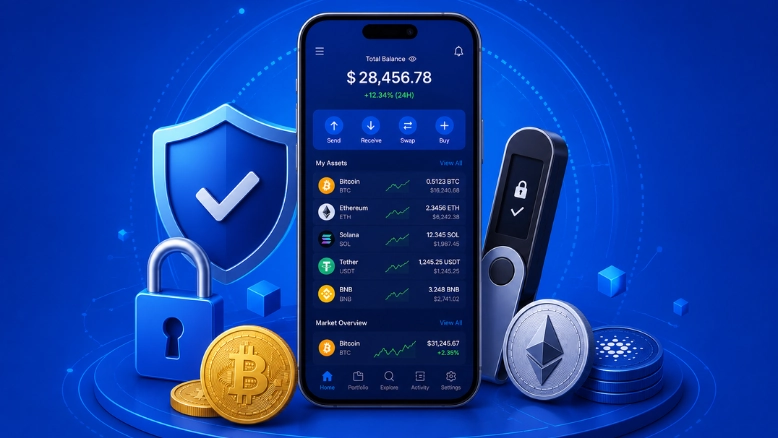
The modern cryptocurrency landscape comprises thousands of assets across hundreds of blockchain networks, and users who participate meaningfully in this ecosystem routinely hold positions across Bitcoin, Ethereum, multiple EVM-compatible chains, Solana, stablecoins, and an expanding universe of Layer 2 tokens. Managing this complexity through separate single-currency wallets creates friction, security risks from managing multiple seed phrases, and a fragmented portfolio view that makes informed financial decisions unnecessarily difficult. Multi-currency crypto wallet addresses this fundamental usability challenge by unifying all digital asset management into a single, coherent application experience backed by institutional-grade security architecture.
The demand for multi-currency wallets has grown consistently across all major markets including the USA, UK, UAE, and Canada as crypto adoption has expanded from early adopters into mainstream retail and institutional user segments. Users entering the space today expect a wallet that handles everything they own, not a collection of separate tools for each blockchain they interact with. This expectation creates both an opportunity and a technical challenge for developers: multi-currency wallet development is significantly more complex than single-chain wallet development because it requires deep expertise in multiple blockchain protocols, each with its own transaction model, signing mechanism, address format, and network-specific edge cases.
This comprehensive guide covers the complete technical and strategic landscape of multi-currency crypto wallet including architecture decisions, supported currency selection, integration methodology, security requirements, technology stack recommendations, and the emerging trends that will define the next generation of multi-currency wallet applications. Start your wallet development journey at nadcab Labs.
What is a Multi-Currency Crypto Wallet?
A multi-currency crypto wallet is a digital asset management application that supports storing, sending, receiving, and tracking multiple cryptocurrencies across different blockchain networks within a single unified interface. Unlike single-currency wallets that are purpose-built for one blockchain such as a Bitcoin-only wallet, a multi-currency wallet integrates the full stack of address generation, transaction signing, and blockchain interaction logic for every supported network, presenting them to the user through a coherent portfolio dashboard that aggregates all holdings regardless of which chain they reside on.
The key architectural innovation that makes multi-currency wallets practical is the HD wallet standard defined by BIP-32, BIP-39, and BIP-44. A single master seed phrase generates a unique hierarchical tree of private keys, with separate derivation paths for each supported blockchain. This means a user can hold Bitcoin on the Bitcoin network, ETH on Ethereum, BNB on BNB Smart Chain, SOL on Solana, and USDT across multiple chains, all recoverable from a single twelve or twenty-four word seed phrase. This dramatically reduces the key management burden that would make supporting twenty separate chains practically unworkable for most users.[1]
Layer 1 Chains
Bitcoin, Ethereum, Solana, Avalanche, BNB Chain — foundational blockchains that any serious multi-currency wallet must support natively.
Layer 2 Networks
Arbitrum, Optimism, Polygon, Base, zkSync — scaling solutions carrying significant transaction volume that competitive wallets must integrate.
Stablecoins
USDT, USDC, DAI across multiple chains — the most actively transacted assets in DeFi and cross-border payment use cases globally.
Tokens and NFTs
ERC-20, BEP-20, SPL tokens, and ERC-721 NFTs that represent the vast majority of digital assets users actually hold and transact with daily.
Why Multi-Currency Support is Important in Crypto Wallet Apps
User behavior data consistently shows that multi-currency support is the single most requested feature by crypto wallet users and the primary driver of wallet switching decisions.
The practical case for multi-currency wallet development is compelling from both user experience and business perspectives. Users managing digital assets across multiple chains without a unified wallet spend significant time switching between applications, risk making errors because each wallet has different UX patterns, and struggle to maintain an accurate picture of their total portfolio value. This friction actively discourages deeper participation in the crypto ecosystem and represents a retention problem for single-chain wallets that multi-currency alternatives directly solve. For wallet developers and businesses, multi-currency support translates directly into higher daily active usage, stronger retention metrics, and expanded monetization opportunities across a broader feature set.
Convenience
Users managing Bitcoin, Ethereum, Solana, and stablecoin positions access all holdings through a single application, eliminating the context-switching cost and error risk of managing multiple wallet applications simultaneously.
Portfolio Management
Unified portfolio dashboard showing total value, asset allocation, and performance across all holdings gives users the complete financial picture they need to make informed rebalancing and investment decisions.
Wider Adoption
New users entering the crypto space are more likely to adopt and retain a wallet that handles everything they might ever need rather than committing to a single-chain tool that limits their future participation in the broader ecosystem.
DeFi Access
Multi-chain wallets unlock access to the full DeFi ecosystem by enabling users to interact with protocols on any supported chain, dramatically expanding the financial services accessible from a single mobile application.
Key Features of a Multi-Currency Crypto Wallet
The essential capabilities that define a competitive multi-currency wallet in 2026.
Building a multi-currency wallet that users trust and actively choose over competitors requires a carefully considered feature set that addresses both security requirements and usability expectations simultaneously. Every feature in a multi-currency wallet is more complex than its equivalent in a single-chain wallet because it must work reliably across all supported blockchains with their different transaction models, fee mechanisms, and confirmation requirements. The following features represent the non-negotiable foundation of any multi-currency wallet that expects to compete seriously across markets in the USA, UK, UAE, and Canada in 2026.
Multi-Blockchain Support
The ability to support different blockchain networks simultaneously is the defining capability of a multi-currency wallet. This requires integrating blockchain-specific SDKs, maintaining separate node connections or third-party API integrations for each chain, and implementing chain-specific transaction serialization and signing logic. In 2026, a wallet must support at minimum Bitcoin, Ethereum, BNB Smart Chain, Polygon, Solana, Arbitrum, and TRON to be considered competitive. Each additional chain increases development complexity but also expands the addressable user base and total assets under management within the wallet application.
Secure Private Key Management
Private key security is the single most critical function in any crypto wallet, and its importance multiplies in multi-currency wallets where a single security failure can expose assets across every integrated blockchain. Hardware-backed key storage using Android Keystore or iOS Secure Enclave ensures that private keys are generated and stored within tamper-resistant hardware elements that prevent software-based extraction. AES-256 encryption protects all key material at rest, and biometric authentication gates access to key operations. For enterprise deployments, MPC key management distributes key shards across multiple parties to eliminate single points of cryptographic failure.
Real-Time Price Tracking
Displaying live cryptocurrency prices aggregated across all held assets is the portfolio management feature that drives daily active usage more than almost any other capability. Users open their wallet to check their portfolio value, not just to execute transactions. Real-time price feeds from reliable market data providers including CoinGecko and CoinMarketCap APIs, combined with historical performance charts and fiat currency conversion for the user’s home currency, transform the wallet from a transaction tool into a financial monitoring platform that users return to multiple times daily.
Multi-Currency Transactions
Sending and receiving different cryptocurrencies through a single unified transaction interface requires chain-specific transaction building, fee estimation, and signing logic that works reliably across all supported networks. The transaction UX must clearly communicate which chain is being used, what fees will be charged, expected confirmation times, and provide strong address validation to prevent sending assets to incompatible chain addresses. Cross-chain swap functionality that enables users to exchange assets between different blockchains directly within the wallet is a significant differentiator that removes the need for external exchange accounts.
Cross-Platform Compatibility
A competitive multi-currency wallet in 2026 must deliver a consistent experience across Android, iOS, web browser extension, and desktop applications so users can manage their assets from whichever device is most convenient. Cross-platform development using React Native or Flutter for mobile combined with web extension support enables teams to share core wallet engine code across platforms while delivering native UX for each environment. Secure cross-device synchronization ensures users see the same portfolio state regardless of which platform they access the wallet from.
Step-by-Step Process to Integrate Multiple Coins in a Crypto Wallet App
A proven seven-step methodology for successfully integrating multiple cryptocurrency networks into a single unified wallet application.
Step 1: Choose the Supported Cryptocurrencies
Define the precise list of blockchains, native currencies, and tokens your wallet will support based on target user analysis, market demand data, and commercial priorities. Every additional blockchain adds development cost, maintenance burden, and security surface area. Prioritize chains by user base size, transaction volume, and strategic fit with your target user segments. For most multi-currency wallets targeting users in the USA, UK, UAE, and Canada, starting with Bitcoin, Ethereum, BNB Smart Chain, Polygon, Solana, and major stablecoins provides the right coverage for the majority of user portfolios.
Step 2: Select Blockchain Networks and Architecture
Design the HD wallet architecture using BIP-32 for hierarchical key derivation, BIP-39 for mnemonic phrase generation, and BIP-44 for multi-account multi-chain derivation path standardization. Define the derivation paths for each supported blockchain following established community standards. Architecture decisions at this stage determine whether users can recover all chain assets from a single seed and whether the wallet will be interoperable with hardware wallets and other software wallets users may already own. Document all derivation paths and address format specifications before beginning implementation.
Step 3: Implement Wallet Address Generation
Implement address generation for each supported blockchain using the correct cryptographic standards. Bitcoin requires P2PKH, P2SH, P2WPKH, and P2TR address formats for different use cases. Ethereum and EVM chains share address format but require chain ID handling for transaction signing to prevent replay attacks. Solana uses Ed25519 keypairs with base58 encoded addresses. Each chain’s address generation must be extensively unit tested against known test vectors to ensure cryptographic correctness before any production use.
Step 4: Integrate Blockchain APIs and Node Connections
Connect to each blockchain network through reliable node provider APIs or self-hosted nodes for transaction broadcasting, balance queries, and transaction history retrieval. Services including Infura and Alchemy provide reliable Ethereum and EVM chain connectivity. QuickNode supports multiple chains including Solana. Bitcoin requires either a self-hosted Bitcoin Core node or a provider like Blockstream Esplora. Implement fallback node providers for each chain to ensure continued operation when primary providers experience downtime. All node connections must use authenticated HTTPS with certificate pinning.
Step 5: Enable Multi-Currency Transaction Management
Build transaction creation, signing, and broadcasting functionality for each supported blockchain using chain-appropriate SDKs. Web3j handles Ethereum and EVM transactions. BitcoinJ manages Bitcoin UTXO model transaction construction. Each chain’s transaction flow must handle fee estimation using current network conditions, transaction status tracking through confirmation, and graceful error handling for failed or stuck transactions. Implement unified transaction history storage that aggregates transactions from all chains into a searchable, filterable timeline view for users.
Step 6: Add Real-Time Market Data and Portfolio Tracking
Integrate reliable cryptocurrency price data APIs to enable real-time portfolio valuation across all held assets. CoinGecko and CoinMarketCap provide comprehensive coverage of all major and minor cryptocurrencies with configurable refresh intervals. Implement price caching with appropriate TTLs to balance data freshness with API rate limit management. Portfolio calculations must correctly handle multi-chain token balances, include unrealized gain and loss calculations based on cost basis tracking, and support fiat currency display in the user’s local currency for USA, UK, UAE, and Canada markets.
Step 7: Implement Security Protocols and Compliance
Implement the complete security stack including hardware-backed key storage, AES-256 encryption, biometric authentication, multi-factor authentication, certificate pinning, root and jailbreak detection, and runtime application self-protection. Integrate KYC verification, AML transaction monitoring, and tax reporting capabilities required for each target market. Conduct an independent third-party security audit covering all integrated blockchain signing implementations before launch. Establish a security incident response process and vulnerability disclosure policy before accepting user funds in production.
Technology Stack for Multi-Currency Crypto Wallet Development
The technology stack for multi-currency crypto wallet must support multiple blockchain integrations, secure key management, real-time data processing, and cross-platform delivery simultaneously. The right stack balances developer ecosystem maturity, performance requirements, and the security capabilities that enterprise-grade wallet applications demand. The following table presents the recommended technology choices for each layer of a production multi-currency wallet architecture, reflecting the choices made by leading wallet teams across the industry in 2026.
| Stack Layer | Recommended Technologies | Role in Wallet |
|---|---|---|
| Mobile Development | Kotlin (Android), Swift (iOS), React Native or Flutter (cross-platform) | Native mobile UI, device security API integration, performance-critical cryptographic operations |
| Blockchain SDKs | Web3j (EVM chains), BitcoinJ (Bitcoin), Solana Kotlin SDK, Trust Wallet Core | Blockchain-specific transaction building, address generation, and signing for each supported network |
| Node Providers | Infura, Alchemy, QuickNode, Blockstream Esplora | Reliable blockchain data access, transaction broadcasting, and balance queries across all supported chains |
| Backend Services | Node.js or Go (APIs), PostgreSQL (relational data), Redis (caching) | Transaction history storage, portfolio data processing, push notification services, compliance data management |
| Market Data APIs | CoinGecko API, CoinMarketCap API, Chainlink price feeds | Real-time cryptocurrency price data, historical charts, market cap rankings, and fiat currency conversion rates |
| Security Frameworks | Android Keystore, iOS Secure Enclave, SQLCipher, TLS 1.3 | Hardware-backed key storage, encrypted database, secure communications, and runtime application protection |
Challenges in Multi-Currency Crypto Wallet Development
Multi-currency wallet development presents a specific category of technical and operational challenges that teams only encounter when attempting to build seriously across multiple blockchain protocols simultaneously. These challenges are qualitatively different from single-chain wallet development difficulties and require specialized expertise, thoughtful architecture decisions, and significant ongoing investment to manage well. Understanding them in advance allows development teams to plan mitigation strategies before they become costly blockers that delay launch timelines, compromise security postures, or create technical debt that becomes increasingly expensive to address post-launch.
| Challenge | Impact | Mitigation Approach |
|---|---|---|
| Managing Multiple Blockchain Protocols | Critical | Abstract common wallet operations into a chain-agnostic interface layer; implement chain-specific adapters that fulfill the interface for each network independently |
| Transaction Speed and Scalability | High | Intelligent sync scheduling, response caching, progressive loading for portfolio data, and WebSocket connections for real-time balance updates to minimize perceived latency |
| Security Vulnerability Surface | Critical | Independent security audit covering all chain signing implementations, automated cryptographic test vectors, bug bounty program, and ongoing security monitoring post-launch |
| Network Compatibility Issues | Medium | Proactive protocol upgrade monitoring, automated integration tests against each chain’s testnet, fallback node providers, and rapid deployment pipeline for urgent compatibility fixes |
| Key Management Across Chains | Critical | Hardware-backed key storage, BIP-44 compliant derivation, extensive testing of derivation paths against known test vectors, and independent cryptographic audit of all key management code |
| Regulatory Compliance Across Markets | Ongoing | Modular compliance architecture, legal counsel in each target market, regulatory monitoring program, and rapid update deployment capability for jurisdiction-specific requirement changes |
Benefits of Multi-Currency Crypto Wallet Apps
The business and user experience benefits of multi-currency wallet applications are well-documented by the adoption data of leading wallets. Applications like MetaMask, Trust Wallet, and Phantom have demonstrated that multi-currency and multi-chain support drives dramatically higher retention, revenue, and user growth than single-chain alternatives competing in the same markets. For developers and businesses building wallet infrastructure across the USA, UK, UAE, and Canada, the investment required for multi-currency support pays compounding dividends across every metric that determines wallet product success.
Simplified Asset Management
One wallet, one seed phrase, one interface for everything a user owns across all supported blockchains. This simplicity reduces cognitive load, minimizes error risk, and makes crypto management accessible to less technically sophisticated users who might otherwise avoid multi-chain participation.
Enhanced User Experience
Unified portfolio views, consistent transaction UX across chains, and seamless cross-chain operations create a significantly better user experience than managing separate single-chain wallets, driving higher daily active usage and organic referral rates among satisfied users.
Flexibility for Traders
Active traders managing positions across multiple chains benefit enormously from consolidated portfolio management, in-app cross-chain swaps, and real-time price tracking that eliminates the workflow friction of multi-wallet management during time-sensitive market operations.
Ecosystem Growth Support
Multi-currency wallets grow their supported asset count alongside the broader crypto ecosystem, ensuring the application remains relevant and valuable to users as new blockchains emerge and existing chains evolve in ways that shift where user attention and assets flow.
Authoritative Standards for Multi-Currency Wallet Development
Building a compliant and interoperable multi-currency wallet requires adherence to established standards that govern cryptographic key management, blockchain protocol interaction, and mobile application security. These standards have been developed by the Bitcoin and Ethereum communities, international security standards bodies, and mobile platform security teams to create a shared foundation that enables wallet interoperability, user asset portability, and independently verifiable security practices. Our team applies these eight standards as baseline requirements across all multi-currency wallet development engagements.
01
BIP-32: Hierarchical Deterministic Wallets
Defines the key derivation scheme for HD wallets that enables generation of unlimited child keys from a single master seed. BIP-32 correct implementation is the foundational requirement for any multi-currency wallet that allows single seed phrase recovery of all chain addresses without storing each key independently.
02
BIP-39: Mnemonic Code for Generating Deterministic Keys
Defines the standard for generating human-readable mnemonic phrases from cryptographic entropy for wallet seed representation. BIP-39 compliance ensures that wallets can be recovered from standard twelve or twenty-four word phrases using any compatible wallet application, not only the original software.
03
BIP-44: Multi-Account Hierarchy for Deterministic Wallets
Extends BIP-32 with standardized derivation path structure for multi-currency and multi-account wallets, defining coin-type indices for each blockchain. BIP-44 compliance ensures derivation path interoperability between different wallet implementations for the same blockchain networks.
04
EIP-155: Simple Replay Attack Protection
Ethereum Improvement Proposal defining chain ID inclusion in transaction signing to prevent transactions signed for one EVM chain from being replayed on a different chain. Essential for any wallet supporting multiple EVM-compatible networks to prevent cross-chain transaction replay attacks that could drain user funds.
05
OWASP Mobile Application Security Verification Standard (MASVS)
Defines minimum security requirements for mobile applications with MASVS-L2 being required for any wallet handling user funds. The companion Mobile Security Testing Guide provides specific test cases for verifying compliance with each MASVS requirement across Android and iOS platforms.
06
WalletConnect v2 Protocol Standard
The current standard for secure communication between wallets and decentralized applications across all major blockchain networks. Multi-currency wallets implementing WalletConnect v2 correctly unlock access to the entire Web3 application ecosystem for their users without requiring unsafe deep link schemes or insecure connection methods.
07
FATF Recommendations on Virtual Asset Service Providers
Financial Action Task Force guidelines defining AML and KYC obligations for virtual asset service providers including wallet applications operating in regulated markets. Wallets operating as custodians or facilitating transfers above threshold values must implement Travel Rule data sharing and transaction monitoring capabilities.
08
ERC Token Standards (ERC-20, ERC-721, ERC-1155)
Ethereum token interface standards that define how fungible tokens, NFTs, and multi-token contracts expose their functionality. Correct implementation of these standards in wallet token management code ensures compatibility with the vast majority of digital assets users hold on Ethereum and EVM-compatible chains.
Businesses looking for secure and scalable wallet infrastructure can explore our Multi-currency wallet development services.
Future Trends in Multi-Currency Crypto Wallet Development
The future of multi-currency wallet development is being shaped by the convergence of AI, cross-chain interoperability infrastructure, DeFi protocol maturity, and evolving user expectations for seamless multi-asset experiences. The wallets that will dominate user adoption in 2027 and 2028 are making architecture decisions today that either position them to leverage these emerging capabilities or leave them playing catch-up. Our team has identified five trends that will most significantly reshape multi-currency wallet development strategy over the next two to three years based on current technology roadmaps and user behavior patterns across markets in the USA, UK, UAE, and Canada.
AI Portfolio Management
Machine learning models analyzing portfolio composition, market conditions, and user goals to provide personalized rebalancing recommendations and automated yield optimization across DeFi protocols.
DeFi Protocol Integration
Native DeFi access enabling lending, borrowing, yield farming, and liquidity provision directly from the wallet across all supported chains without requiring separate dApp browser navigation.
Cross-Chain Interoperability
Native cross-chain bridge protocols enabling direct asset transfers between any supported blockchains without DEX intermediaries, making multi-chain portfolio management dramatically more fluid.
NFT Management
Comprehensive NFT portfolio management including cross-chain NFT display, marketplace integration, and NFT-based authentication use cases increasingly integrated into multi-currency wallet dashboards.
Embedded Wallet SDKs
Multi-currency wallet functionality packaged as embeddable SDKs that any application can integrate, enabling seamless crypto operations within gaming, e-commerce, and social platforms without redirecting users to standalone wallet apps.
Conclusion: Building the Future of Digital Asset Management
Multi-currency crypto wallet represents one of the most technically demanding and commercially rewarding software engineering disciplines in the blockchain space. The complexity of integrating multiple blockchain protocols, managing cryptographic keys across chains, maintaining real-time synchronization at scale, and satisfying evolving regulatory requirements across multiple jurisdictions simultaneously requires deep expertise, rigorous security practices, and a genuine long-term commitment to quality that distinguishes the best wallets from the rest of the competitive field.
The key principles for developers approaching multi-currency wallet development are clear from the evidence of what the most successful wallets have done: start with a rock-solid cryptographic foundation built around BIP standards, design security architecture before writing application logic, integrate compliance infrastructure from the start rather than retrofitting it later, and prioritize supported chain quality over quantity in early development stages. A wallet that handles five chains with exceptional reliability, security, and UX will outperform a wallet supporting twenty chains with inconsistent behavior and security gaps every time.
For businesses building multi-currency wallets for users in the USA, UK, UAE, Canada, and beyond, the investment required to get multi-currency wallet development right is significant but the competitive, financial, and strategic returns are equally significant. Users who trust your wallet with assets across multiple chains are deeply loyal customers whose lifetime value and referral behavior far exceed users of basic single-chain wallets. The multi-currency wallet applications built with the quality and commitment described in this guide will be the ones users choose, recommend, and keep using as the crypto ecosystem continues its expansion into every corner of global financial life.
Key Consideration for Developers
The most important single decision in multi-currency crypto wallet is not which blockchains to support first, which technology stack to use, or which features to prioritize in the initial release. It is the decision to treat cryptographic correctness and security as the absolute first priority before any other development objective is considered. Every chain you add, every feature you build, and every user you acquire must be built on a security foundation that you would stake your reputation and your users’ assets on. Build that foundation first, and everything else follows.
Frequently Asked Questions
Q1.What is multi-currency crypto wallet development?
Multi-currency crypto wallet refers to the process of building a cryptocurrency wallet that can store, send, and receive multiple digital assets within a single application. Instead of creating separate wallets for each blockchain, developers integrate support for various cryptocurrencies such as Bitcoin, Ethereum, and Tether into one platform. This allows users to manage different digital assets conveniently while improving the overall user experience.
Q2.How does a multi-currency crypto wallet work?
A multi-currency crypto wallet works by connecting to multiple blockchain networks and generating unique wallet addresses for each supported cryptocurrency. The wallet uses blockchain APIs or nodes to verify transactions, track balances, and process transfers. By integrating multiple blockchain protocols, the wallet can manage various digital currencies while maintaining secure communication with each network.
Q3.What are the benefits of a multi-currency crypto wallet?
A multi-currency crypto wallet allows users to manage several cryptocurrencies in one place, eliminating the need for multiple wallet apps. It improves convenience, simplifies portfolio management, and supports seamless transactions across different blockchain networks. This type of wallet is particularly useful for traders, investors, and businesses dealing with multiple digital assets.
Q4.Which cryptocurrencies can be integrated into a multi-currency wallet?
A multi-currency wallet can support a wide range of cryptocurrencies depending on the blockchain integrations. Popular examples include Bitcoin, Ethereum, Binance Coin, Solana, and stablecoins like USD Coin. Developers choose cryptocurrencies based on market demand, blockchain compatibility, and the target audience of the wallet app.
Q5.What technologies are used in multi-currency crypto wallet development?
Multi-currency crypto wallets are typically built using blockchain APIs, smart contract frameworks, and backend technologies that support secure transactions. Developers often integrate blockchain nodes, wallet SDKs, encryption protocols, and databases to manage user accounts and transaction histories. Security technologies such as multi-signature authentication and secure key storage are also essential.
Q6.How do developers integrate multiple coins in a crypto wallet?
Developers integrate multiple coins by connecting the wallet application to different blockchain networks and implementing support for each cryptocurrency protocol. This involves creating wallet addresses, integrating transaction APIs, and enabling blockchain synchronization. The wallet interface then displays balances and transaction data for each supported cryptocurrency.
Q7.Is a multi-currency crypto wallet secure?
A well-developed multi-currency crypto wallet can be highly secure when it includes strong security features such as private key encryption, two-factor authentication, and multi-signature verification. Security practices such as cold storage integration and regular security audits also help protect digital assets from hacking attempts or unauthorized access.
Q8.What are the challenges in multi-currency crypto wallet development?
One of the main challenges in multi-currency wallet development is managing compatibility with multiple blockchain networks. Each blockchain has its own protocols, transaction formats, and security requirements. Developers must also ensure scalability, maintain high transaction speed, and implement strong security measures to protect user funds.
Q9.What features should a multi-currency crypto wallet include?
A modern multi-currency crypto wallet should include features such as multi-blockchain support, real-time transaction tracking, secure private key management, and user-friendly interfaces. Additional features like portfolio tracking, price alerts, and decentralized finance (DeFi) integration can enhance the functionality and user experience of the wallet.
Q10.Why are multi-currency wallets important for cryptocurrency adoption?
Multi-currency wallets simplify the process of managing digital assets, making cryptocurrency more accessible to users. By allowing people to store and transact multiple cryptocurrencies in a single application, these wallets reduce complexity and encourage wider adoption of blockchain technology across different industries.
Explore Services
Related Services
Reviewed by

Aman Vaths
Founder of Nadcab Labs
Aman Vaths is the Founder & CTO of Nadcab Labs, a global digital engineering company delivering enterprise-grade solutions across AI, Web3, Blockchain, Big Data, Cloud, Cybersecurity, and Modern Application Development. With deep technical leadership and product innovation experience, Aman has positioned Nadcab Labs as one of the most advanced engineering companies driving the next era of intelligent, secure, and scalable software systems. Under his leadership, Nadcab Labs has built 2,000+ global projects across sectors including fintech, banking, healthcare, real estate, logistics, gaming, manufacturing, and next-generation DePIN networks. Aman’s strength lies in architecting high-performance systems, end-to-end platform engineering, and designing enterprise solutions that operate at global scale.