Ai Overview
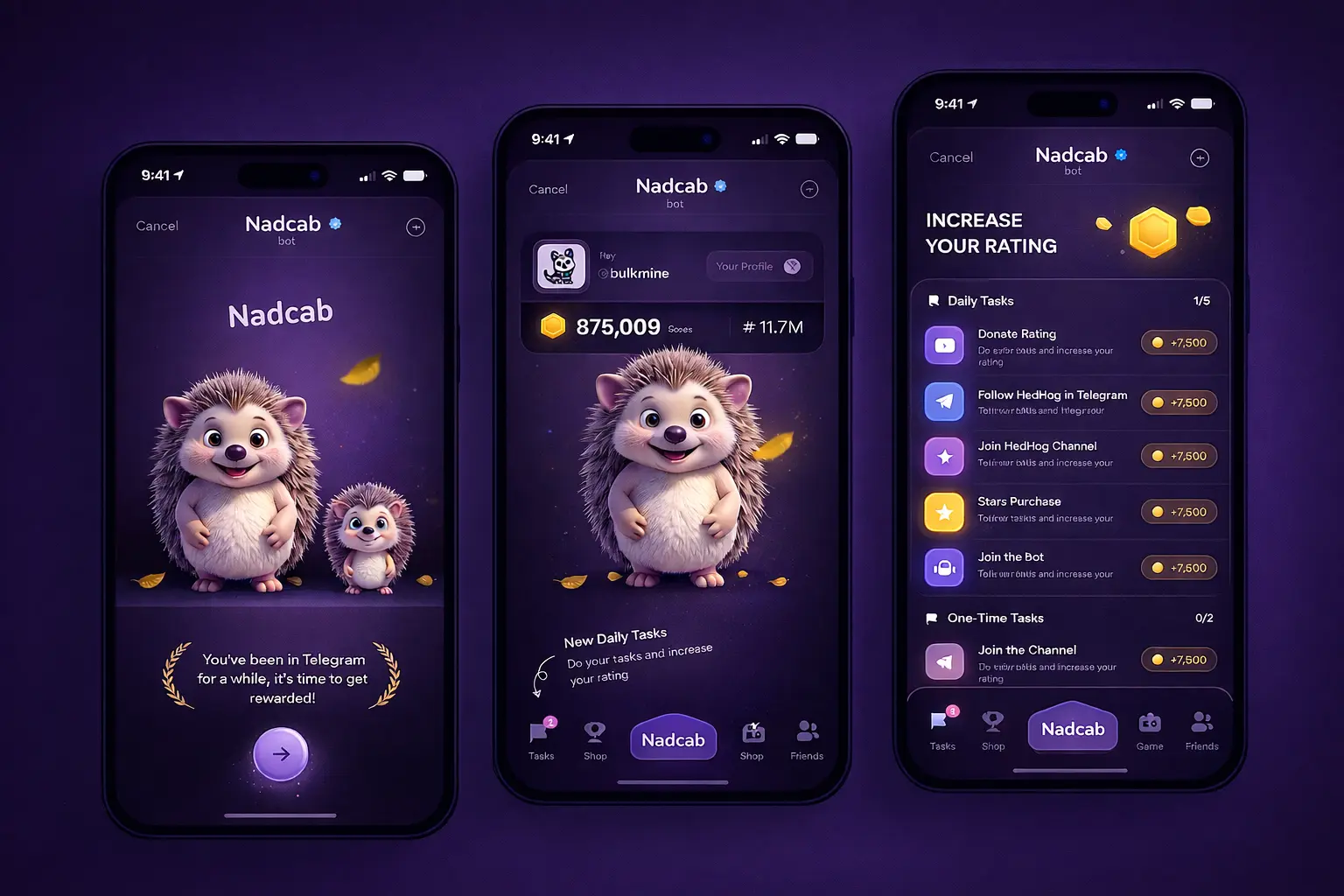
Mini Apps are embedded product surfaces: They live inside Telegram conversations, not outside the platform. Zero-install access defines adoption: No app store, downloads, or onboarding flows reduce friction to near zero. Context drives interaction: Mini Apps open from chats, buttons, or links where user intent already exists. Short-session behavior is the norm: Users open frequently, stay briefly, exit abruptly, and re-enter often.
Key Takeaways: Telegram Mini Apps
- Mini Apps are embedded product surfaces: They live inside Telegram conversations, not outside the platform.
- Zero-install access defines adoption: No app store, downloads, or onboarding flows reduce friction to near zero.
- Context drives interaction: Mini Apps open from chats, buttons, or links where user intent already exists.
- Short-session behavior is the norm: Users open frequently, stay briefly, exit abruptly, and re-enter often.
- “Mini” refers to access, not capability: Complex actions like payments, games, and dashboards are common.
- Trust is inherited from Telegram: Users initially treat Mini Apps as part of the platform itself.
- Bots and Mini Apps play different roles: Bots trigger and explain; Mini Apps execute and visualize.
- They are not replacements for full platforms: Mini Apps intercept moments of intent, not long-form usage.
- External systems remain essential: Data, logic, and persistence always live outside Telegram.
While Mini Apps feel simple on the surface, their real complexity appears when they are taken beyond experimentation and into real-world usage. This is where Telegram Mini Apps architecture, scalability, and operational risk determine whether a Mini App survives production or quietly fails.
Telegram Mini Apps are interactive applications that operate directly inside Telegram. They are not extensions of chat commands, nor are they external websites disguised as messages. Conceptually, Mini Apps represent a shift in how digital products are accessed: instead of asking users to leave a platform, the product comes to where users already are.
In real usage, Mini Apps behave like embedded interaction layers. They open instantly inside Telegram, inherit part of the user’s context, and allow repeated engagement without installation, login screens, or URL navigation. This simplicity is what makes them powerful—but also what causes confusion about their actual nature.
Telegram Mini Apps are best understood not as a technology choice, but as a product placement model: functionality embedded inside conversations.
Conceptual takeaways
-
Embedded Experience: Mini Apps exist inside Telegram, not alongside it.
-
Zero-Install Access: No app store, no download, no setup friction.
-
Contextual Launch: Apps open from chats, buttons, or shared links.
-
Interaction-Focused: Designed for doing, not just reading.
-
Product Surface: Mini Apps are surfaces for products, not products by themselves.
Telegram Mini Apps: Clear Definition in Practice
In practical terms, a Telegram Mini App is a web-based interface that Telegram allows to be rendered inside its own client. The user never feels like they are “leaving Telegram,” even though the app itself is external. This distinction matters because user behavior inside Telegram is very different from behavior on websites or mobile apps.
In real deployments, Mini Apps are treated as short-session products. Users open them frequently, stay for short periods, close them abruptly, and return later through different entry points. This behavior pattern shapes how Mini Apps are designed, communicated, and perceived.
The word “Mini” does not imply reduced capability. Many Mini Apps handle complex flows such as payments, games, dashboards, or multi-step actions. The “mini” aspect refers to how the app is accessed, not what it can do.
Definition boundaries
-
Web-Based: Built using web technologies, not native code.
-
Telegram-Controlled Entry: Launched only through Telegram surfaces.
-
External Ownership: Logic and data live outside Telegram.
-
Repeat-Oriented: Designed for frequent re-entry, not long sessions.
-
Context-Aware: Aware of Telegram user context, but not dependent on it.
Core Idea Behind Telegram Mini Apps
The fundamental idea behind Telegram Mini Apps is removing distance between intention and action. Traditional apps introduce distance: search, install, sign up, verify, then act. Mini Apps collapse these steps by embedding functionality directly inside a messaging environment.
In real-world usage, this leads to a noticeable shift in user expectations. Users expect Mini Apps to open instantly, remember nothing on the device, and “just work” every time they tap a button. This expectation is part of the Mini App identity and defines how they are judged.
Mini Apps are not meant to replace full platforms. They are meant to intercept moments of intent—inside chats, announcements, or conversations—and convert them into interaction.
Underlying philosophy
-
Intent Proximity: The app appears exactly where intent is created.
-
Reduced Cognitive Load: No navigation or setup required.
-
Conversational Entry: Actions start from messages, not menus.
-
Fast Feedback: Users expect immediate visual response.
-
Low Commitment: Users engage without long-term commitment.
Where Telegram Mini Apps Exist Inside Telegram
Telegram Mini Apps are not accessed randomly. They are always launched from Telegram-controlled surfaces, which shapes discovery and usage. This embedded nature makes Mini Apps feel native even though they are external.
In practice, most users do not consciously differentiate between Telegram and the Mini App—they see it as “something that opened inside Telegram.” This perception increases trust but also raises expectations around reliability and consistency.
Mini Apps typically open from:
-
A button inside a bot message
-
A menu attached to a bot or chat
-
A deep link shared in a group or channel
-
A pinned message in a community
This launch model makes Mini Apps highly shareable and repeatable.
Launch context characteristics
-
Chat-Centric: Entry is tied to conversations.
-
Shareable: Links can be forwarded easily.
-
Re-Entrant: Users reopen apps from multiple locations.
-
Non-Linear: Entry does not follow a single funnel.
-
Platform-Scoped: Access always happens inside Telegram.
What Makes Telegram Mini Apps Distinct
Telegram Mini Apps feel different from other digital products because of how users encounter them. They are not destinations; they are interruptions in a conversation that turn into interactions.
This distinction changes how users evaluate them. A Mini App is judged less like a website and more like a feature of Telegram itself. Small delays, confusing screens, or friction feel more intrusive inside a chat than on a website.
This proximity to the platform creates both opportunity and pressure.
Distinctive traits
-
Immediate Context: App opens without navigation.
-
High Trust Inheritance: Users trust Telegram, so they trust the Mini App initially.
-
Short Attention Window: Users expect quick completion.
-
High Revisit Rate: Frequent, lightweight usage patterns.
-
Lower Tolerance for Friction: Small issues feel amplified.
What Telegram Mini Apps Are Not
Many misconceptions arise because Mini Apps look simple on the surface. Clarifying what they are not prevents misaligned expectations.
Telegram Mini Apps are not lightweight demos or temporary tools. They are also not managed or protected by Telegram beyond basic platform boundaries.
They are not:
-
Mobile apps distributed through app stores
-
Websites fully controlled by browser standards
-
Bots enhanced with buttons
-
Telegram-hosted or Telegram-maintained services
Understanding these limits helps frame Mini Apps correctly within a product ecosystem.
Misconception corrections
-
Not Native Apps: No access to full device capabilities.
-
Not Telegram-Owned: Telegram does not store data or logic.
-
Not Stateless: Backend systems must handle continuity.
-
Not One-Off Tools: Designed for repeated engagement.
-
Not Crypto-Only: Many Mini Apps are non-blockchain.
Telegram Mini Apps vs Telegram Bots (Conceptual Difference)
Telegram bots and Mini Apps often appear together, but they solve different problems. Bots are conversational automation tools. Mini Apps are interactive interfaces.
In practice, bots guide and trigger; Mini Apps execute and visualize. Confusion happens when bots are expected to handle complex UI or when Mini Apps are expected to behave like chat commands.
Clear conceptual separation leads to better product design.
Conceptual separation
-
Bots: Messages, commands, notifications.
-
Mini Apps: Screens, forms, interactions.
-
Bots Trigger: Mini Apps respond.
-
Bots Explain: Mini Apps execute.
-
Bots Return: Mini Apps complete flows.
Telegram Mini Apps vs Web Applications
Telegram Mini Apps and web applications may look similar technically, but conceptually they differ in user behavior. Web apps are visited intentionally; Mini Apps are encountered contextually.
This difference affects how users engage, how often they return, and how tolerant they are of friction.
Conceptual differences
-
Discovery: Web apps are searched; Mini Apps are shared.
-
Entry: Web apps start with intent; Mini Apps create intent.
-
Navigation: Web apps rely on menus; Mini Apps rely on context.
-
Commitment: Web apps demand focus; Mini Apps demand moments.
-
Retention: Web apps build habits; Mini Apps exploit proximity.
Why Telegram Introduced Mini Apps
Telegram introduced Mini Apps to extend messaging into interaction without bloating the core platform. Instead of building everything natively, Telegram allows external developers to extend functionality while keeping users inside the ecosystem.
This approach mirrors platform evolution patterns seen in other ecosystems but with fewer restrictions and more flexibility.
Platform motivations
-
Ecosystem Expansion: Enable third-party innovation.
-
User Retention: Keep users inside Telegram longer.
-
Feature Velocity: Avoid core platform bloat.
-
Economic Activity: Support commerce and services.
-
Global Reach: Enable products without app store barriers.
Typical Uses of Telegram Mini Apps
Conceptually, Mini Apps are used wherever immediacy and repetition matter more than depth and immersion.
They are commonly used for:
-
Interactive tools and dashboards
-
Games and engagement mechanics
-
Checkout and confirmation interfaces
-
Membership and access control
-
Lightweight internal utilities
The defining factor is not complexity, but contextual usefulness.
Use-case patterns
-
Frequent Access: Opened many times, briefly.
-
Low Setup: No onboarding rituals.
-
Context-Driven: Triggered by messages.
-
Action-Oriented: Built around doing, not browsing.
-
Shareable: Easily forwarded between users.
Key Conceptual Limitations
Telegram Mini Apps operate within boundaries that define how they should be used. These boundaries are not flaws; they are design constraints.
Understanding them early prevents misuse.
Conceptual limits
-
Platform-Controlled Environment: Telegram controls execution context.
-
Client Variability: Behavior differs across Telegram apps.
-
External Dependency: Mini Apps rely on external systems.
-
No Guaranteed Persistence: Sessions can reset anytime.
-
Context Sensitivity: UI is shaped by Telegram layout.
Where Telegram Mini Apps Fit Strategically
Telegram Mini Apps fit best as interaction layers, not standalone ecosystems. They complement websites, mobile apps, and backend platforms by providing fast, contextual access.
They are particularly effective when:
-
Users already communicate on Telegram
-
Actions are frequent and lightweight
-
Distribution is social or community-driven
-
Engagement happens in short bursts
Understanding this role ensures Mini Apps are used for what they are best at.
Strategic placement
-
Entry Points: First touch for new users.
-
Engagement Layers: Frequent interaction surface.
-
Support Tools: Quick-access utilities.
-
Community Interfaces: Participation and coordination.
-
Extension Surface: Not a replacement for core systems.
If your goal is not just to understand Mini Apps but to build them for real users, working with an experienced Telegram Mini Apps development company becomes critical.
FAQ : What is Telegram Mini Apps
Q1.What exactly is a Telegram Mini App?
A Telegram Mini App is an interactive web-based application that runs inside Telegram and opens directly from chats, bots, or links without installation.
Q2.Do Telegram Mini Apps require users to install anything?
No. Telegram Mini Apps open instantly inside Telegram clients and do not require downloading apps from app stores or visiting external websites.
Q3.Are Telegram Mini Apps the same as Telegram bots?
No. Bots are message-based automation tools, while Mini Apps provide visual, interactive interfaces designed for user interaction beyond chat commands.
Q4.Are Telegram Mini Apps hosted or managed by Telegram?
No. Telegram only provides the execution environment and APIs. All application logic, data, and infrastructure are managed externally by the app owner.
Q5.Can Telegram Mini Apps be used without blockchain or crypto?
Yes. Many Telegram Mini Apps are non-crypto products such as tools, dashboards, games, and community utilities that do not involve blockchain at all.
Q6.Where do Telegram Mini Apps open inside Telegram?
Telegram Mini Apps open inside Telegram’s interface through bot buttons, menus, deep links, or messages, without redirecting users to external browsers.
Q7.Are Telegram Mini Apps limited in functionality?
No. “Mini” refers to placement, not capability. Telegram Mini Apps can support complex interactions, workflows, and features depending on how they are built.
Q8.Do Telegram Mini Apps work on all Telegram devices?
Yes. Telegram Mini Apps are accessible across Telegram mobile apps, desktop clients, and web versions, though behavior may vary slightly by client.
Q9.Are Telegram Mini Apps suitable for enterprise use?
Conceptually, yes. Telegram Mini Apps can be used for internal tools, dashboards, and engagement layers when embedded access and fast interaction are needed.
Q10.How are Telegram Mini Apps different from normal websites?
Telegram Mini Apps run inside Telegram and are accessed through conversations rather than URLs, making them faster to access and easier to re-enter.
Explore Services
Related Services
Reviewed by

Aman Vaths
Founder of Nadcab Labs
Aman Vaths is the Founder & CTO of Nadcab Labs, a global digital engineering company delivering enterprise-grade solutions across AI, Web3, Blockchain, Big Data, Cloud, Cybersecurity, and Modern Application Development. With deep technical leadership and product innovation experience, Aman has positioned Nadcab Labs as one of the most advanced engineering companies driving the next era of intelligent, secure, and scalable software systems. Under his leadership, Nadcab Labs has built 2,000+ global projects across sectors including fintech, banking, healthcare, real estate, logistics, gaming, manufacturing, and next-generation DePIN networks. Aman’s strength lies in architecting high-performance systems, end-to-end platform engineering, and designing enterprise solutions that operate at global scale.