Ai Overview
Oracles in dApps bridge the gap between isolated blockchain networks and external real-world data sources essential for smart contract functionality. Chainlink Oracle dominates the market with over $75 billion in total value secured across 1,900+ projects globally. Pyth Network Oracle delivers ultra-low latency price feeds with updates every 400 milliseconds for high-frequency trading applications.
In the rapidly evolving world of Web3 and decentralized applications, one component stands as the critical bridge between blockchain networks and the real world: oracles. Without oracles in dApps, smart contracts would exist in complete isolation, unable to access crucial external information like market prices, weather data, or sports results. As an agency with over eight years of experience building blockchain solutions for clients across the USA, UK, UAE, and Canada, we have witnessed firsthand how oracle networks in blockchain have transformed from experimental technology into mission-critical infrastructure powering billions of dollars in value.
This comprehensive guide explores everything you need to know about blockchain oracles, from understanding the fundamental oracle problem to comparing leading solutions like Chainlink Oracle and Pyth Network Oracle. Whether you are building your first DeFi protocol or scaling an enterprise Web3 application, understanding how blockchain oracles work is essential for creating robust, reliable, and secure smart contract systems. We will dive deep into off-chain data integration, examine decentralized oracle networks explained in practical terms, and provide actionable guidance for selecting the right Web3 oracle solutions for your specific needs.
What Are Oracles in Blockchain and Why dApps Need Them?
The Bridge Function
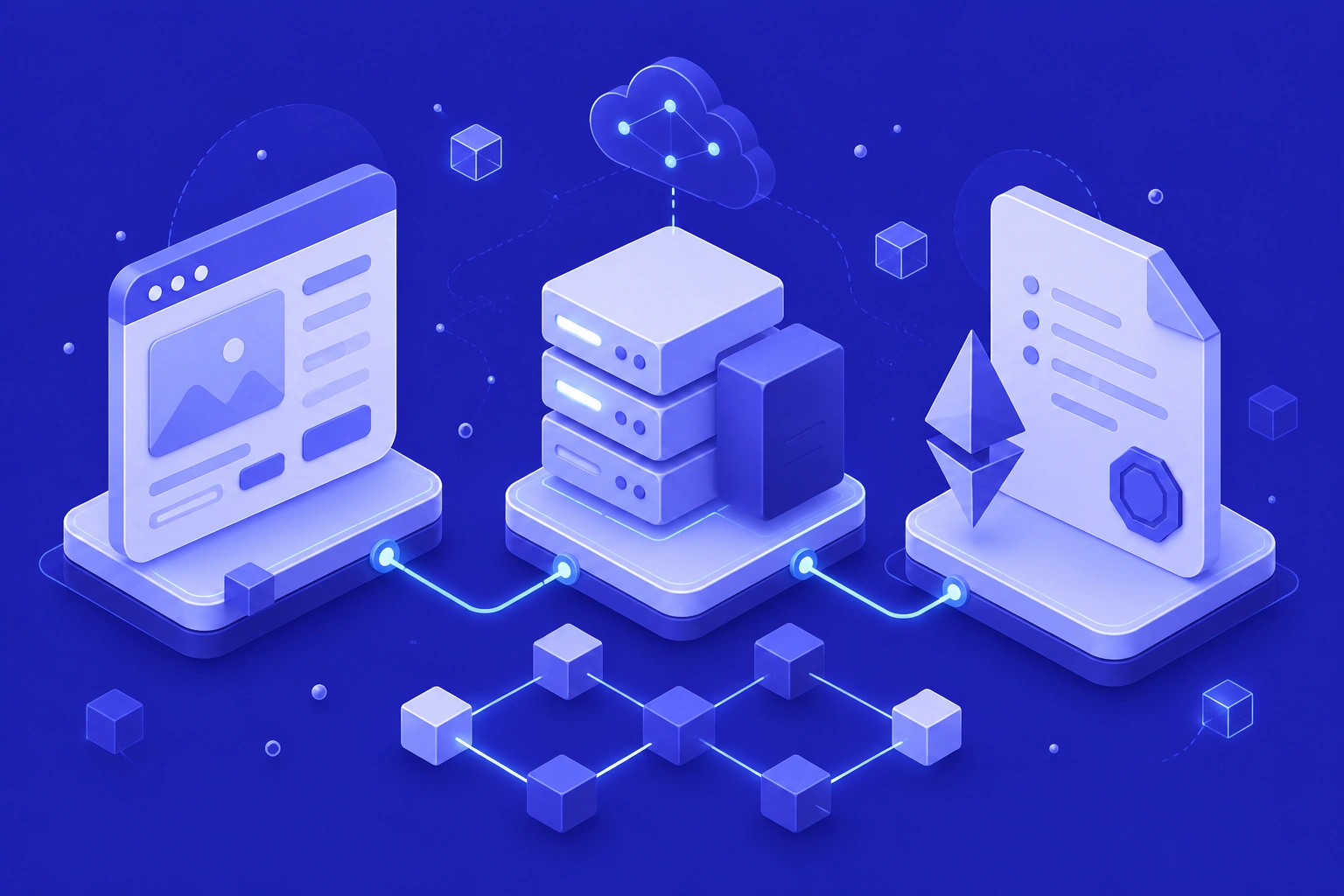
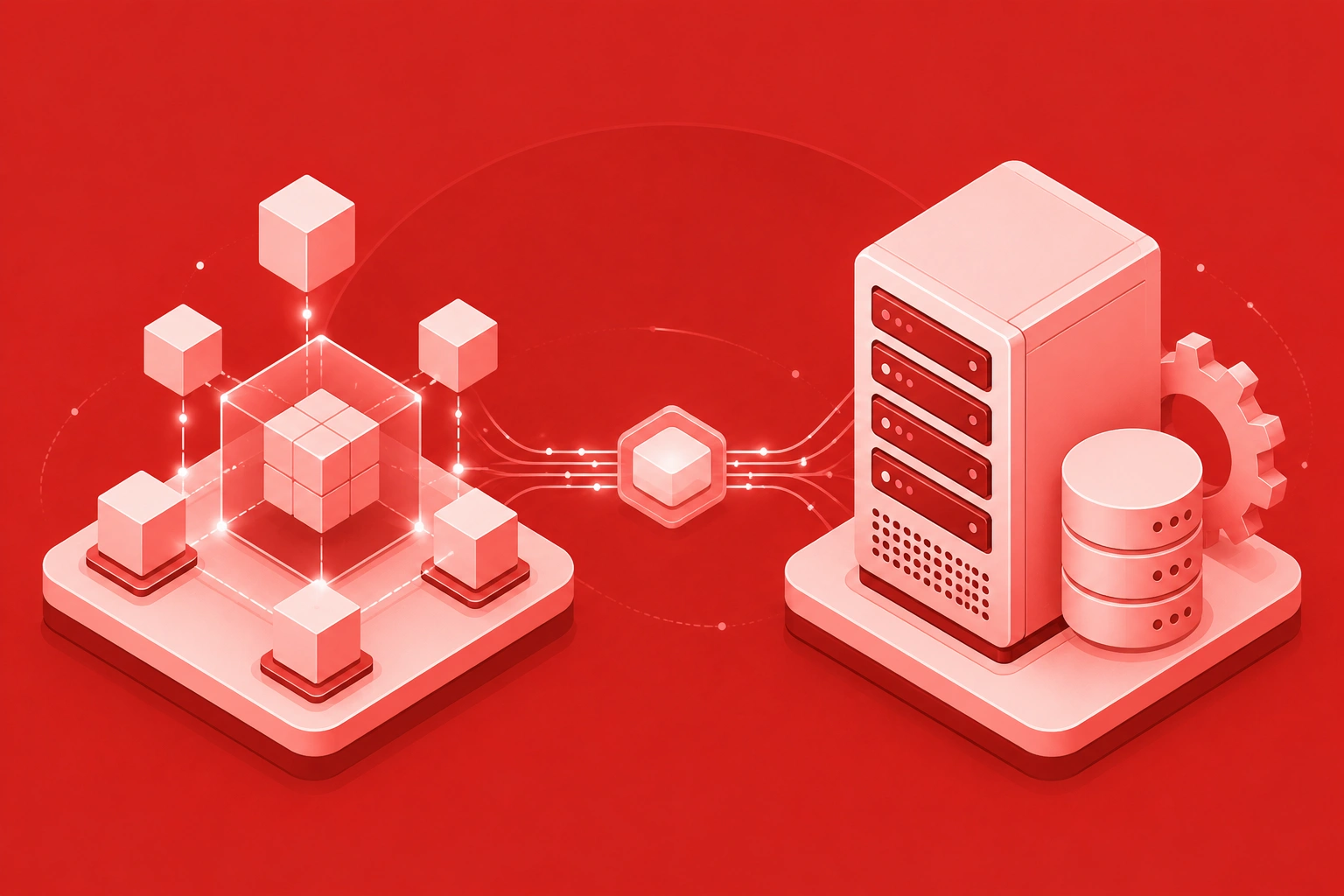
Oracles act as middleware connecting isolated blockchain environments with external data sources, APIs, and real-world information systems.
Data Verification
Before delivering data on-chain, oracles validate information through multiple sources ensuring accuracy and preventing manipulation attacks.
Smart Contract Enabler
Without oracles, smart contracts cannot execute logic based on external conditions, limiting their utility to purely on-chain operations.
Think of oracles in dApps like the sensory organs of a blockchain network. Just as humans need eyes to see and ears to hear what happens in the world around them, smart contracts need oracles to perceive and respond to external events. A lending protocol needs to know current asset prices to determine collateral ratios. An insurance smart contract needs weather data to process crop damage claims. A prediction market needs sports scores to settle bets. All these use cases require trustless data sources that maintain the security guarantees blockchain technology provides.[1]
The role of oracles in smart contracts extends beyond simple data delivery. Modern oracle networks provide computed outputs, random number generation, and even cross-chain communication capabilities. This blockchain middleware layer has become so essential that the total value secured by oracle networks now exceeds hundreds of billions of dollars globally. For Web3 dApp teams building solutions for markets in the USA, UK, UAE, and Canada, selecting and implementing the right oracle infrastructure represents one of the most critical architectural decisions in the entire project lifecycle.
The Oracle Problem: Why Blockchains Can’t Access External Data
The oracle problem in blockchain represents one of the most fundamental challenges in decentralized system design. Blockchains achieve their remarkable security properties through strict determinism, meaning every node must reach the exact same result when processing transactions. This requirement creates an inherent incompatibility with external data sources, which can return different values at different times or to different requesters.
Critical Risk: If a smart contract directly queried an external API, different blockchain nodes might receive different responses, breaking consensus and potentially causing chain splits or invalid state transitions.
The challenge becomes even more complex when considering trust. Blockchains eliminate the need for trusted intermediaries through decentralization, but a centralized oracle reintroduces exactly the kind of single point of failure that blockchain technology was designed to remove. A compromised oracle could feed false price data to a lending protocol, triggering improper liquidations and stealing millions in user funds. This vulnerability has been exploited numerous times in DeFi history, making oracle security and decentralization paramount concerns for any serious project.
Solving the oracle problem requires sophisticated approaches combining cryptographic verification, economic incentives, reputation systems, and decentralized consensus among oracle nodes. The goal is creating trustless data sources that maintain security guarantees comparable to the underlying blockchain itself. This is precisely what decentralized oracle networks like Chainlink and Pyth have been designed to achieve, though each takes distinctly different approaches to the challenge.
How Oracles Work in dApps: Step-by-Step Data Flow?
Data Request Initiated
A smart contract emits an event or calls an oracle contract requesting specific external data like asset prices or weather information.
Oracle Nodes Detect Request
Multiple independent oracle nodes monitoring the blockchain detect the data request and begin gathering information from designated sources.
External Data Sourcing
Each oracle node independently queries external APIs, databases, or data providers to retrieve the requested real-world information.
Data Aggregation & Consensus
Responses from multiple nodes are aggregated using algorithms that filter outliers and reach consensus on the accurate value.
On-Chain Data Delivery
The verified, aggregated data is submitted to the blockchain through a transaction, updating the oracle contract’s stored values.
Smart Contract Execution
The requesting smart contract reads the oracle data and executes its programmed logic based on the verified external information.
Understanding how blockchain oracles work at this granular level helps architects design more resilient systems. Each step introduces potential failure points and attack vectors that must be carefully considered. Data feeds in blockchain applications require constant monitoring, redundancy planning, and fallback mechanisms to handle situations where oracles experience delays or temporary unavailability.
Types of Blockchain Oracles: Centralized vs Decentralized
Understanding the different types of blockchain oracles helps teams select the appropriate solution for their specific requirements. The primary distinction lies between centralized and decentralized architectures, each offering distinct tradeoffs between simplicity, cost, security, and reliability. Additionally, oracles can be categorized by their data direction, computation capabilities, and consensus mechanisms.
| Oracle Type | Architecture | Security Level | Best Use Cases |
|---|---|---|---|
| Centralized Oracle | Single data source | Low | Testing, low-value applications |
| Decentralized Oracle | Multi-node consensus | High | DeFi, production applications |
| Inbound Oracle | External to blockchain | Medium | Price feeds, weather data |
| Outbound Oracle | Blockchain to external | Medium | IoT triggers, notifications |
| Compute Oracle | Off-chain computation | High | Complex calculations, VRF |
| Cross-Chain Oracle | Multi-chain bridges | High | Interoperability, bridges |
On-Chain Data Sources
- Data already stored on blockchain
- Previous transaction records
- Smart contract state variables
- Block timestamps and numbers
- Token balances and transfers
- No oracle required for access
Off-Chain Data Sources
- External API responses
- Real-world price feeds
- Weather and sports data
- IoT sensor readings
- Traditional database queries
- Requires oracle integration
The distinction between on-chain and off-chain data sources in oracle networks significantly impacts application architecture. On-chain data offers immediate availability and inherent trustlessness since it already exists within the blockchain’s verified state. However, the vast majority of useful real-world data resides off-chain, necessitating robust oracle infrastructure for secure off-chain data integration. Understanding this dichotomy helps architects design systems that minimize oracle dependencies where possible while properly securing unavoidable external data requirements.
Key Components of a Decentralized Oracle Network
Node Operators
- Independent entities running oracle software
- Stake tokens as security collateral
- Earn rewards for accurate reporting
- Face slashing for malicious behavior
Data Aggregators
- Combine multiple node responses
- Filter outliers and anomalies
- Calculate median or weighted averages
- Produce single trusted output
Oracle Contracts
- Store verified data on-chain
- Handle request routing
- Manage payment and incentives
- Provide data access interfaces
How Chainlink Oracles Power Smart Contracts?
Chainlink Oracle has established itself as the dominant force in the blockchain oracle space, securing over $75 billion in total value across more than 1,900 projects. As the most widely adopted Web3 oracle solution, Chainlink provides essential infrastructure for major DeFi protocols including Aave, Compound, and Synthetix. The network’s success stems from its robust decentralization, extensive data coverage, and battle-tested security track record.
The Chainlink network operates through a decentralized system of independent node operators who stake LINK tokens as collateral. These operators source data from premium APIs and aggregate their responses to produce reliable price feeds. Chainlink’s reputation system tracks node performance over time, enabling smart contracts to select the most reliable operators for their specific needs. This combination of economic incentives and reputation creates powerful alignment between oracle operators and data consumers.
Understanding Pyth Network and Its Real-Time Price Feeds
Pyth Network Oracle represents a fundamentally different approach to blockchain oracles, designed specifically for high-frequency financial data. Unlike traditional oracle networks that aggregate data from third-party sources, Pyth obtains price feeds directly from first-party data providers including major exchanges, trading firms, and market makers. This direct sourcing model enables Pyth to deliver price updates with latency as low as 400 milliseconds, making it ideal for applications requiring real-time data for smart contracts.
The network’s unique “pull” oracle model differs from Chainlink’s “push” approach. Rather than continuously updating on-chain prices regardless of demand, Pyth publishes price updates to an off-chain system called Pythnet. When a smart contract needs current price data, it requests the latest update, which is then verified and delivered on-chain. This architecture dramatically reduces costs while maintaining data freshness, as users only pay for updates they actually consume.
How Pyth Differs from Chainlink in Data Delivery and Latency?
The comparison between Chainlink vs Pyth Network reveals distinct philosophies in oracle design. Chainlink prioritizes broad data coverage, established security, and universal compatibility. Pyth focuses on financial market data with emphasis on speed and cost efficiency. Both networks serve critical roles in the ecosystem, and many sophisticated protocols use both depending on specific requirements.
| Feature | Chainlink | Pyth Network |
|---|---|---|
| Data Model | Push (continuous updates) | Pull (on-demand updates) |
| Update Latency | ~1 minute heartbeat | ~400 milliseconds |
| Data Sources | Third-party aggregators | First-party publishers |
| Data Coverage | Broad (prices, weather, sports) | Financial focus (crypto, equities) |
| Cost Structure | Subscription/sponsored | Per-update fee |
| Best For | Lending, general DeFi | Derivatives, perpetuals |
| Security Model | Multi-node consensus | Publisher aggregation |
Other Leading Oracle Networks to Know About
Band Protocol
Cosmos-based oracle solution offering cross-chain data delivery with customizable oracle scripts for flexible data sourcing.
API3
First-party oracle network where API providers directly operate nodes, eliminating third-party intermediaries.
DIA
Open-source oracle platform providing transparent, verifiable data feeds with customizable sourcing methodologies.
Tellor
Permissionless oracle network using proof-of-work miners to secure data submissions with dispute resolution.
UMA
Optimistic oracle design using economic guarantees rather than on-chain computation for cost-efficient data verification.
Supra Oracles
Next-generation oracle focusing on cross-chain interoperability with built-in randomness and automation features.
Security Risks in Oracle Systems and How They Are Mitigated
Oracle security and decentralization represent critical concerns for any Web3 application handling significant value. Understanding potential attack vectors helps teams implement appropriate safeguards and select oracle solutions with proven security track records. The most sophisticated protocols employ multiple layers of protection combining technical, economic, and procedural measures.
Flash Loan Attacks
Attackers manipulate spot prices through large flash loan trades, then exploit oracles reading manipulated prices.
Mitigation: TWAP oracles, manipulation-resistant designs
Data Source Compromise
Attackers compromise underlying data sources that oracle nodes rely upon, feeding false information upstream.
Mitigation: Multiple source aggregation, outlier detection
Node Collusion
Malicious node operators coordinate to submit false data, attempting to overcome decentralization safeguards.
Mitigation: Staking requirements, slashing penalties
Stale Data Exploitation
Attackers exploit outdated oracle data during periods of high volatility when prices move faster than updates.
Mitigation: Freshness checks, circuit breakers
Real-World Use Cases of Oracles in DeFi, NFTs, and Web3 Apps
Oracle use cases in dApps span virtually every category of Web3 application. From DeFi price oracles powering billion-dollar lending protocols to gaming applications requiring verifiable randomness, oracles enable the smart contract functionality that users interact with daily. Understanding these practical applications helps teams identify where oracle integration adds value to their specific projects.
DeFi Lending
Price feeds determine collateral ratios, liquidation thresholds, and interest rate calculations.
Derivatives Trading
Real-time price feeds enable perpetuals, options, and synthetic asset trading platforms.
Dynamic NFTs
External data triggers NFT metadata changes based on real-world events or conditions.
Insurance
Weather data and event verification enable parametric insurance with automatic payouts.
Gaming & VRF
Verifiable random functions power fair loot drops, battle outcomes, and lottery mechanics.
Cross-Chain
Oracle networks verify state across different blockchains enabling secure bridges and interoperability.
Enterprise teams across the USA, UK, UAE, and Canada are increasingly exploring oracle integration for traditional business applications. Supply chain verification, trade finance, and regulatory compliance represent emerging use cases where blockchain oracles connect legacy systems with on-chain smart contract logic. These cross-industry applications demonstrate the expanding relevance of oracle technology beyond native crypto use cases.
How to Choose the Right Oracle Network for Your dApp?
Step 1: Define Data Requirements
- Identify specific data types needed
- Determine update frequency requirements
- Assess latency sensitivity
- Map required blockchain support
- Consider future scaling needs
Step 2: Evaluate Security Posture
- Review decentralization metrics
- Examine node operator diversity
- Check historical security record
- Assess economic security guarantees
- Verify audit completion status
Step 3: Analyze Cost Structure
- Compare subscription vs per-call pricing
- Calculate expected usage costs
- Factor in gas costs for updates
- Consider sponsorship availability
- Plan for traffic growth scenarios
Oracle Integration Compliance Checklist
| Requirement | Priority | Implementation Notes |
|---|---|---|
| Data Freshness Validation | Critical | Implement timestamp checks rejecting stale data |
| Fallback Oracle Configuration | Critical | Configure secondary oracle for redundancy |
| Circuit Breaker Implementation | High | Pause operations on extreme price deviations |
| Price Deviation Limits | High | Reject updates exceeding reasonable thresholds |
| Monitoring Dashboard | Medium | Track oracle health and response times |
| Incident Response Plan | Medium | Document procedures for oracle failures |
Future of Oracles in dApp Creation and Web3 Ecosystems
Trend 1: Zero-knowledge proofs will enable oracles to verify data authenticity without revealing underlying sources.
Trend 2: Cross-chain oracle solutions will become standard infrastructure for multi-chain dApp architectures.
Trend 3: AI and machine learning integration will enhance oracle data quality and anomaly detection capabilities.
Trend 4: Compute oracles will enable complex off-chain calculations while maintaining on-chain verifiability.
Trend 5: Decentralized identity oracles will verify real-world credentials for privacy-preserving KYC.
Trend 6: Institutional adoption will drive demand for enterprise-grade oracle SLAs and compliance features.
Trend 7: Modular oracle architectures will allow customizable security and performance tradeoffs.
Trend 8: Real-world asset tokenization will require specialized oracles for property, commodities, and securities data.
The evolution of oracle technology continues accelerating as Web3 ecosystems mature. Cross-chain oracle solutions now represent one of the fastest-growing segments, enabling seamless data sharing between previously isolated blockchain networks. For enterprises in the USA, UK, UAE, and Canada exploring blockchain adoption, oracle infrastructure provides the critical link between on-chain smart contracts and existing business systems, data sources, and workflows.
Final Thoughts
Oracles in dApps represent the essential infrastructure that transforms smart contracts from isolated code into powerful applications capable of responding to real-world conditions. Throughout this guide, we have explored how blockchain oracles work, compared leading solutions like Chainlink Oracle and Pyth Network Oracle, and examined practical considerations for selecting and implementing oracle infrastructure in production applications.
The oracle landscape continues evolving rapidly, with new solutions addressing specialized use cases and emerging requirements. Whether you are building DeFi protocols requiring price feed oracles, gaming applications needing verifiable randomness, or enterprise solutions connecting legacy systems with blockchain networks, understanding oracle technology is fundamental to Web3 success. The decentralized oracle networks explained in this guide provide the foundation for nearly every valuable blockchain application in operation today.
As our agency has observed across eight years of blockchain projects for clients in the USA, UK, UAE, and Canada, oracle selection and implementation often determines whether applications achieve production-grade reliability. The principles, best practices, and considerations outlined in this guide will help your team make informed decisions and build secure oracle infrastructure that supports your long-term growth objectives in the Web3 ecosystem.
Ready to Integrate Secure Oracle Solutions Into Your dApp?
Partner with our experienced blockchain team to implement reliable oracle infrastructure that powers your Web3 application with real-world data.
Frequently Asked Questions
Q1.What are oracles in decentralized applications and why are they important?
Oracles in dApps serve as essential bridges that connect blockchain networks with external real-world data sources. Smart contracts operate in isolated environments and cannot directly access information like stock prices, weather conditions, or sports scores. Oracles solve this limitation by fetching, verifying, and delivering off-chain data to on-chain smart contracts. Without oracles, decentralized applications would be limited to using only data that already exists on the blockchain, severely restricting their practical utility.
Q2.How do blockchain oracles actually work to deliver data to smart contracts?
Blockchain oracles work through a multi-step process involving data sourcing, validation, and transmission. First, oracle nodes gather information from external APIs, databases, or real-world sensors. This data then undergoes verification through consensus mechanisms where multiple independent nodes confirm accuracy. Once validated, the oracle formats the data appropriately and submits it to the blockchain through a transaction. Smart contracts can then read and act upon this trusted information for executing conditional logic.
Q3.What is the difference between Chainlink and Pyth Network oracles?
Chainlink and Pyth Network differ primarily in their architecture and data delivery methods. Chainlink uses a decentralized network of independent node operators who aggregate data from multiple sources, prioritizing security and reliability. Pyth Network focuses on ultra-low latency by sourcing data directly from first-party providers like exchanges and trading firms. While Chainlink excels in broad data coverage and established security, Pyth specializes in high-frequency financial data with sub-second update times.
Q4.What is the oracle problem in blockchain technology?
The oracle problem refers to the fundamental challenge of bringing external data onto blockchains in a trustless manner. Blockchains achieve security through decentralization, but if a single oracle controls data input, it creates a centralized point of failure. A compromised or malicious oracle could feed incorrect data, causing smart contracts to execute improperly. Solving this requires decentralized oracle networks where multiple independent sources verify data accuracy before blockchain delivery.
Q5.Are blockchain oracles secure and how do they prevent manipulation?
Modern blockchain oracles employ multiple security mechanisms to prevent manipulation and ensure data integrity. Decentralized oracle networks aggregate data from numerous independent nodes, making it extremely difficult for bad actors to influence results. Economic incentives through staking mechanisms penalize dishonest behavior while rewarding accurate reporting. Additional security layers include reputation systems, cryptographic proofs, and data source diversification that collectively create robust protection against attacks.
Q6.Which oracle network should I choose for my DeFi application?
Choosing the right oracle network depends on your specific application requirements including data type, update frequency, and security needs. For most DeFi applications requiring reliable price feeds with established security, Chainlink remains the industry standard. If your application needs ultra-fast price updates for derivatives or perpetuals trading, Pyth Network offers superior latency. Consider factors like supported blockchains, data coverage, cost structure, and community support when making your decision.
Q7.What are the most common use cases for oracles in Web3 applications?
Oracles power numerous Web3 use cases across different sectors. In DeFi, they provide price feeds for lending protocols, decentralized exchanges, and synthetic assets. Insurance dApps use oracles to verify real-world events triggering claim payouts. Gaming applications rely on oracles for random number generation and real-world sports data integration. Supply chain solutions utilize oracles to connect IoT sensor data with blockchain records, enabling transparent tracking and automated quality verification.
Explore Services
Related Services
Reviewed by

Aman Vaths
Founder of Nadcab Labs
Aman Vaths is the Founder & CTO of Nadcab Labs, a global digital engineering company delivering enterprise-grade solutions across AI, Web3, Blockchain, Big Data, Cloud, Cybersecurity, and Modern Application Development. With deep technical leadership and product innovation experience, Aman has positioned Nadcab Labs as one of the most advanced engineering companies driving the next era of intelligent, secure, and scalable software systems. Under his leadership, Nadcab Labs has built 2,000+ global projects across sectors including fintech, banking, healthcare, real estate, logistics, gaming, manufacturing, and next-generation DePIN networks. Aman’s strength lies in architecting high-performance systems, end-to-end platform engineering, and designing enterprise solutions that operate at global scale.