Ai Overview
Diagnostic errors cause 40,000 to 80,000 deaths annually in the United States, highlighting the critical importance of clear, error-preventing design in healthcare applications. 97%, demonstrating massive investment in digital health engagement. By 2024, 99% of hospitals enabled patients to electronically view their health information, 96% offered download capabilities, and 92% provided secure messaging with providers, showing widespread adoption of patient engagement technologies.
Key Takeaways: UI UX Design in Healthcare
- Diagnostic errors cause 40,000 to 80,000 deaths annually in the United States, highlighting the critical importance of clear, error-preventing design in healthcare applications.[1]
- The global patient engagement solutions market reached USD 27.63 billion in 2024 and is projected to reach USD 86.67 billion by 2030, growing at a CAGR of 20.97%, demonstrating massive investment in digital health engagement.[2]
- By 2024, 99% of hospitals enabled patients to electronically view their health information, 96% offered download capabilities, and 92% provided secure messaging with providers, showing widespread adoption of patient engagement technologies.[3]
- 30% of patients abandon telehealth platforms due to poor usability, emphasizing that poor UX design directly impacts healthcare access and patient outcomes.[4]
- Telehealth usage rose from 5% pre-pandemic to a peak of 70% during the pandemic, stabilizing at 25% in 2022, indicating that telemedicine is now a permanent fixture requiring excellent UX design.[5]
- 1 in 4 adults in the United States lives with a disability, making accessibility a baseline requirement rather than an enhancement for healthcare applications.[6]
- The AI-driven engagement segment held 30.54% of the patient engagement solutions market in 2024, showing AI’s growing role in personalizing healthcare experiences.[7]
- One healthcare provider recorded a 20% increase in prescribed medication usage after implementing AI-generated recommendations, demonstrating the effectiveness of AI-powered UX in improving treatment adherence.[8]
- 82% of patients preferred hybrid care models combining face-to-face and telemedicine, while 83% of doctors and providers supported hybrid care in a 2025 survey, indicating the need for versatile UX design.[9]
- The mHealth apps market was valued at USD 37.5 billion in 2024 and is projected to reach USD 86.37 billion by 2030, growing at 14.8% CAGR, driven by 5.8 billion mobile subscribers globally.[10]
The Critical Intersection of Design and Patient Safety
The healthcare sector is experiencing a digital revolution. With the global digital healthcare market projected to grow from USD 275 billion by 2028 at a compound annual growth rate of 9.16% from 2024 to 2028, the pressure to deliver exceptional user experiences has never been higher. This transformation brings both opportunities and complex challenges that require thoughtful design approaches.
While technology promises to improve patient outcomes and streamline clinical workflows, poorly designed healthcare systems can have devastating consequences. According to a 2021 report by the National Academies of Science, Engineering, and Medicine, diagnostic errors alone can lead to 40,000 to 80,000 deaths annually in the United States. This statistic underscores why UI UX in healthcare must be treated as more than just an aesthetic consideration, whether implementing traditional applications or advanced blockchain services for secure health data management. It directly impacts patient safety and clinical effectiveness.
The healthcare industry faces unique constraints that set it apart from other sectors. Designers must balance complex regulatory requirements, diverse user needs, and high-stakes decision-making environments where every interface element can affect patient well-being. This blog explores the critical challenges facing modern healthcare applications and provides insights into creating user experiences that truly serve both patients and healthcare providers.
Understanding the Healthcare UX Design Landscape
Healthcare UX design differs fundamentally from consumer applications because interface failures can directly impact patient safety and clinical outcomes. Every button, label, and workflow decision carries weight that extends beyond user satisfaction into the realm of life and health.
The Rising Importance of Patient Engagement Solutions
Patient engagement solutions have become a cornerstone of modern healthcare delivery. The global patient engagement solutions market reached USD 27.63 billion in 2024 and is projected to reach USD 86.67 billion by 2030, growing at a compound annual growth rate of 20.97% from 2025 to 2030. This explosive growth reflects the healthcare industry’s recognition that engaged patients achieve better health outcomes.
In the United States specifically, the patient engagement solutions market was valued at USD 7.59 billion in 2024 and is expected to grow at a CAGR of 19.77% from 2025 to 2030. This growth is driven by increasing prevalence of chronic diseases, the shift toward value-based care, advancements in healthcare technology, and the growing demand for personalized healthcare experiences.
The adoption of patient engagement capabilities has accelerated significantly. By 2024, most hospitals had adopted foundational capabilities that enable patients to electronically view (99%), download (96%), and transmit (84%) their health information from their online medical record. Additionally, 92% of hospitals enabled secure messaging with providers, and 95% allowed patients to view their clinical notes
The Mobile Health Revolution
Mobile health applications represent another critical area of growth. The global mHealth apps market size was USD 37.5 billion in 2024 and is projected to reach USD 86.37 billion by 2030, growing at a CAGR of 14.8%. This growth is facilitated by widespread smartphone penetration, with 5.8 billion unique mobile subscribers representing 71% penetration globally in 2024.
The patient-centric healthcare app market tells a similar story, valued at USD 14.84 billion in 2024 and predicted to reach USD 72.87 billion by 2034 at a 17.21% CAGR. This market is rising because patients are increasingly demanding accessible, data-driven tools that empower them to manage their own health journey in real time.
According to a 2023 study, patients are more likely to choose a healthcare provider offering a smooth digital experience. Intuitive interfaces for booking appointments, medication reminders, vaccination reminders, and medical data access empower patients to be more active on the healthcare front.
Critical Challenges in Healthcare UI/UX Design
Healthcare UX faces unique and complex challenges that distinguish it from design work in other industries. These challenges require specialized knowledge, careful planning, and deep empathy for users who are often vulnerable, stressed, or in pain.
Challenge 1: Navigating Regulatory Compliance and Data Privacy
Healthcare applications must comply with stringent regulations that govern patient data security and privacy. In the United States, the Health Insurance Portability and Accountability Act (HIPAA) sets strict standards for protecting patient health information. Similarly, the European Union’s General Data Protection Regulation (GDPR) imposes rigorous requirements on how personal data is collected, stored, and used.
For UX designers working on ui/ux design services for healthcare products, these regulations create a delicate balancing act. Security features must be robust without creating friction that frustrates users. For example, multi-factor authentication enhances security but can frustrate elderly patients or those with disabilities if not implemented thoughtfully. Designers must find ways to make security feel protective rather than obstructive.
The challenge extends beyond compliance checkboxes. Designers must build trust through transparent data practices, clear consent processes, and frictionless, secure logins. Every privacy decision must be communicated clearly to users who may lack technical knowledge but have legitimate concerns about their sensitive health information.
You may also like:
HIPAA Cloud Security for Healthcare: Protecting Data with Compliant Cloud Infrastructure
Challenge 2: Designing for Extreme Accessibility and Inclusivity
Healthcare products have the highest percentage of users with disabilities compared to other industries. In the United States alone, 1 in 4 adults lives with a disability, making accessible design a baseline requirement rather than an enhancement. Globally, 16% of the world’s population has a significant disability, and 10% are aged 65 and above.
Designing for this diverse user base requires careful attention to multiple dimensions. Visual design must account for users with low vision or color blindness through high-contrast fonts and readable text. Navigation must work with assistive technologies like screen readers and support voice commands for users with motor impairments. Cognitive accessibility requires clear language, intuitive spatial layouts, and task-focused flows that reduce mental burden.
The Web Content Accessibility Guidelines (WCAG) 2.2 provide essential standards for making web content accessible to people with disabilities. While WCAG 2.2 AA is not yet mandatory everywhere, it has become a de facto standard for healthcare tech startups and healthcare companies. Healthcare products must follow these guidelines to ensure text is readable, images have alternatives, and users can navigate and interact without barriers.
Language barriers add another layer of complexity. Healthcare applications serving diverse populations must provide multilingual support and culturally sensitive design. This goes beyond simple translation to include understanding how different cultures perceive healthcare, privacy, and technology.
Challenge 3: Managing Cognitive Load in High-Stakes Environments
Healthcare professionals work in time-sensitive, high-pressure environments where every second counts. Emergency room physicians, nurses, and first responders need to access critical patient information instantly while managing multiple patients simultaneously. In these contexts, cognitive load is immense, and time is ticking.
Designers working on ux design in healthcare must think through every tiny detail, button, and visual cue to ensure users can access necessary health data or patient information in seconds. This requires clear visual hierarchy, concise data presentation, and an emphasized display of critical information. Interfaces must use a clear visual language, intuitive spatial layouts, task-focused flows, and universally recognizable icons to ensure at-a-glance comprehension in time-sensitive scenarios.
Reducing friction is paramount. Users should complete tasks with a minimum number of clicks, swipes, and mental calculations. Features like modals, accordions, and deep menus should be reserved for less emotionally charged applications. Healthcare interfaces must also design for error, building in room for mistakes and easy ways to recover from them.
The consequences of poor design in this area are severe. It takes about five stakeholders to execute a single medication order in many healthcare systems. Each handoff and interface interaction represents an opportunity for error. Streamlined workflows and clear information architecture can literally save lives by reducing delays and misunderstandings.
Challenge 4: Balancing Multiple Stakeholder Needs
Healthcare systems involve multiple stakeholders, including patients, doctors, nurses, administrative staff, and caregivers, each with distinct needs and priorities. This complexity presents a significant challenge for UX designers who must create interfaces that cater to diverse user groups.
A patient portal must be accessible and straightforward for patients of all ages and technical literacy levels, while simultaneously providing in-depth features to satisfy healthcare providers’ needs for detailed data and analytics. Patients expect ease of use, intuitive navigation, and accessibility features. They need an app that allows them to book appointments, consult with doctors, and access medical records without hassle.
Healthcare providers require efficient tools to manage patient interactions, retrieve medical histories, and conduct consultations without navigating complex systems. They need interfaces that give them easy access to patient data and clinical decision support tools, enabling them to quickly identify potential issues and make informed treatment decisions.
Administrative staff need robust scheduling systems and integration with Electronic Health Records to streamline workflow. Addressing these diverse needs requires extensive user research, testing with representative users from each group, and an iterative design that balances competing priorities without compromising any group’s essential requirements.
Challenge 5: Overcoming Legacy System Integration
Legacy technology continues to dominate healthcare, creating significant UX challenges. Electronic Health Records and third-party platforms are often fragmented, inconsistent, and outdated. These systems were built over decades with different technologies, standards, and design philosophies, making integration difficult.
Healthcare applications must integrate with these legacy systems to provide doctors with accurate patient data in real time. Interoperability ensures that healthcare providers can access and update patient records without switching between multiple systems. Cross-platform compatibility enables smooth data exchange between hospitals, clinics, and pharmacies.
The UX challenge lies in creating modern, intuitive interfaces that sit atop these complex legacy systems. Designers offering ui ux design services for healthcare applications must find ways to hide system complexity from users while ensuring data flows correctly between systems. Well-integrated systems reduce administrative workload and minimize errors, improving overall efficiency in patient care.
Challenge 6: Addressing Emotional Sensitivity and Patient Vulnerability
Healthcare customers are often in vulnerable situations, dealing with illness, pain, anxiety, or fear. Digital solutions must be designed with empathy and emotional intelligence. This means using uplifting messaging, providing easy access to mental health support features, and adopting a human-like tone that creates user confidence.
When designing mental health applications, it is crucial to create a calming and intuitive user experience that accommodates individuals in vulnerable emotional states. Personalization and accessibility should be considered, ensuring the app caters to diverse needs while offering a supportive and non-overwhelming experience.
Patient-centered designs that ease stress and demonstrate empathy help foster trust and comfort. Healthcare platforms are increasing patient satisfaction because they reduce friction in processes like appointment booking and provide clear, compassionate communication throughout the patient journey.
Challenge 7: Preventing Medical Errors Through Design
Poorly designed healthcare systems can lead to medical errors with devastating consequences. Medical errors cause over 9.5% of all deaths yearly in the United States. Diagnostic errors alone account for 40,000 to 80,000 deaths annually in the US, according to the 2021 report by the National Academies of Science, Engineering, and Medicine.
Intuitive design minimizes errors in data entry and interpretation, which is critical in healthcare. Imagine a digital test kit that reads results in float numbers, where a poor design structure of the decimal point could cause the user to read the results incorrectly. By improving clarity and usability, UX design helps reduce mistakes that can affect patient care.
One of the key principles of ux design for healthcare is to promote clear information and reduce opportunities for error. This includes using consistent terminology, providing clear visual feedback for actions, implementing confirmation steps for critical decisions, and designing error messages that guide users toward correction rather than simply stating what went wrong.
Key Components of Effective Healthcare UX Design
Creating exceptional healthcare user experiences requires attention to several fundamental components that work together to serve both patients and healthcare providers.
| UX Component | Primary Function | Patient Benefits | Provider Benefits | Implementation Priority |
|---|---|---|---|---|
| User-Centered Design | Research-driven interface creation | Intuitive navigation; reduced confusion | Better workflow alignment; reduced training time | High |
| Appointment Scheduling | Streamlined booking system | Easy appointment management; multiple reminder channels | Reduced no-shows; optimized calendar management | High |
| Data Visualization | Clear presentation of health metrics | Easy understanding of health status; actionable insights | Quick interpretation of patient data; informed decisions | High |
| Telemedicine Integration | Remote consultation platform | Access to care from home; reduced travel burden | Expanded patient reach; flexible consultation options | Medium to High |
| AI-Powered Features | Automated assistance and personalization | 24/7 support; personalized health recommendations | Reduced administrative burden; improved adherence tracking | Medium |
| Mobile Optimization | Cross-device functionality | Access health info anywhere; appointment management on-the-go | Real-time updates; flexible patient communication | High |
| Accessibility Features | Inclusive design for all abilities | Usable by people with disabilities; multilingual support | Broader patient base; compliance with regulations | High |
| Security and Privacy | Data protection and compliance | Peace of mind about health data; transparent controls | HIPAA/GDPR compliance; reduced liability | Critical |
User-Centered Design Philosophy
User-centered design is fundamental in healthcare UX. Designing with the end user in mind, whether patients or healthcare professionals, ensures interfaces meet their needs. This approach involves extensive user research and testing to identify pain points and create intuitive interfaces for different users.
Understanding the needs of patients and healthcare providers is the central theme of creating an outstanding user experience. This reduces friction and supports better health outcomes by making digital tools more accessible and easier to navigate. User research methods include contextual analyses through observations and interviews in users’ natural environments, usability testing to identify usability issues, and development of personas and scenarios to support targeted design.
Simplified Appointment Scheduling Systems
Appointment scheduling should be hassle-free and efficient for both patients and healthcare providers. Effective UX in this category involves easy-to-navigate calendars, efficient display of time slots, and easy appointment confirmation and management.
An effective appointment scheduling system provides a clear visualization of provider availability across different locations and time slots to minimize scheduling conflicts. Ensuring flexibility to reschedule or cancel appointments easily is crucial. The focus should be on offering flexibility in showing information that would be critical consideration factors for a person picking an appointment, such as preferred language, gender of the doctor, proximity to the hospital, or acceptance of insurance.
First-time users should be guided through an intuitive setup process, reducing the likelihood of drop-offs. Ensuring that appointment confirmations and reminders are sent via multiple channels, including email, SMS, and push notifications, improves engagement and reduces no-show rates.
Clear Data Visualization and Patient Records
Patient records contain a minefield of medical data. A good UX approach prioritizes clear organization, easy access to information, and secure storage. Information architecture and visual hierarchy play crucial roles in making complex medical data comprehensible.
Healthcare professionals often need to interpret complex datasets quickly and accurately. UX designers must create interfaces that not only present data clearly but also allow users to explore deeper insights without feeling overwhelmed. Tools like customizable dashboards enable patients and providers to track specific health metrics such as blood pressure, glucose levels, or medication schedules.
Designing a patient record system requires prioritizing completeness and organization for easy navigation of a patient’s history while keeping in mind the varied physical and mental capabilities of patients. It should offer intuitive documentation tools like templates and dictation for efficient note-taking while ensuring strong audit trails and access controls for security.
Telemedicine Platform Design
Telemedicine has advanced significantly, especially after the COVID-19 pandemic increased telehealth usage. According to the American Medical Association, the number of patients using telehealth in 2022 rose to 25%, exceeding the 5% who accessed it before the pandemic. At its peak, telehealth usage even spiked to 70%.
A survey conducted by the National Organization of State Offices of Rural Health in early 2025 found that 82% of patients preferred hybrid care models combining face-to-face and telemedicine, and 83% of doctors and providers supported hybrid care. Today’s telemedicine platforms offer video conferencing, real-time data from wearable devices, and secure messaging for consultations.
However, 30% of patients abandon telehealth platforms due to poor usability. An optimal telemedicine experience ensures clear video conferencing interfaces, user-friendly tools for sharing medical data, and an experience for both doctors and patients that compensates for the lack of physical examination. Successful telemedicine platforms prioritize high-quality audio and video conferencing for clear communication, easy patient access with minimal technical requirements, and integration with Electronic Health Records for smooth data exchange.
Remote care platforms must balance feature richness with simplicity to serve both tech-savvy users and those less familiar with digital tools. This requires clean interfaces with intuitive navigation, simplified processes, and clear instructions that guide users through consultations without overwhelming them.
AI-Powered Personalization and Chatbots
Artificial Intelligence is increasingly used in healthcare UX, especially through chatbots and personalization features. These tools enhance patient interactions by providing quick, reliable communication, streamlining processes, and reducing the burden on staff.
AI-powered platforms in healthcare are revolutionizing the user experience by analyzing large amounts of data in real time, allowing healthcare professionals to improve diagnostic accuracy and streamline treatments. AI chatbot services help enhance patient support and establish efficient communication. According to a study conducted by researchers at the University of Maryland School of Medicine, ChatGPT’s AI chatbot exhibits an accuracy rate of approximately 88% when responding to patient queries.
One healthcare provider recorded a 20% increase in the use of prescribed medications after implementing AI-generated recommendations. AI and data analytics provide customized suggestions and reminders, increasing adherence to treatments. Medical apps now provide customizable dashboards that empower users to track specific health metrics, delivering actionable insights to every patient.
The AI-driven engagement segment held the largest revenue share of 30.54% in the patient engagement solutions market in 2024 and is anticipated to expand at the fastest CAGR due to its ability to personalize care and enhance patient-provider interactions. AI tools such as chatbots, predictive analytics, and virtual assistants improve patient communication, automate scheduling, and provide tailored health advice.
Recommended Reading:
Current Trends Shaping Healthcare UX Design in 2025-2026
The healthcare UX landscape continues to evolve with emerging technologies and changing patient expectations. Understanding these trends helps designers create forward-thinking solutions.
Remote Patient Monitoring and Wearables
The Internet of Medical Things (IoMT) technology is advancing rapidly, with the number of IoT devices projected to nearly double, reaching 25.44 billion by 2030. This growth is closely tied to the healthcare industry, where connected medical devices play a crucial role in monitoring patient health, transmitting data, and enabling remote care.
The Remote Patient Monitoring segment is anticipated to register the fastest CAGR of 21.46% during the forecast period due to increasing demand for personalized, continuous care outside traditional healthcare settings. RPM leverages wearable devices and mobile health apps to track vital signs and chronic conditions in real-time, enhancing patient outcomes and reducing hospital visits.
In January 2025, Smart Meter, an RPM technology supplier, experienced a 300% sales increase since 2022, expanded its commercial customer base fourfold, and now serves over 350,000 patients. The company opened a new 25,000 square foot facility in Tampa. This growth demonstrates the increasing adoption of remote monitoring solutions.
In 2026, UX design will be critical in making wearables not only functional but also appealing and easy to use. Healthcare brands can also use ThemeTon to create visually consistent, user-friendly digital interfaces that improve the overall patient experience across web and mobile platforms. These devices need to be integrated into users’ daily lives, providing health insights in real time without being intrusive. Wearables have advanced beyond smartwatches to include microfluidic patches that enable real-time analysis of bodily biomarkers through a compact adhesive patch.
Voice User Interfaces in Healthcare
Voice user interface (VUI) in healthcare is transforming how patients interact with healthcare services. It has the power to allow patients to use voice commands to access healthcare services, receive personalized health coaching, and monitor their health from the comfort of their own homes. It is also hands-free and hygienic, eliminating the need to touch devices or screens.
VUI technology is particularly valuable for patients with motor impairments or visual disabilities. It enables more natural interactions with healthcare applications and can reduce the cognitive load associated with navigating complex interfaces. Voice-activated features are becoming standard in patient portals and mobile health applications.
Web and Cloud-Based Solutions Domination
Web and cloud-based solutions held the largest revenue share of 72.27% in the patient engagement solutions market in 2024 and are anticipated to expand at the fastest CAGR during the forecast period. This dominance is driven by increasing demand for accessible, affordable platforms.
Cloud platforms enable healthcare providers to offer real-time, secure access to patient data and communication tools across various devices, enhancing engagement and convenience. The increased chronic disease prevalence is driving demand for personalized medicines, and web-based solutions enhance patient engagement according to patient history data analytics and adherence.
In January 2025, Huma collaborated with Pfizer Inc. for the introduction of the Huma Cloud Platform for Hemophilia in the United States. According to the partnership, Huma’s FDA Class 2 510k cleared Remote Patient Monitoring solution was integrated to provide personalized, data-driven support that enhances patient engagement, adherence to therapy, and communication with healthcare providers.
Age-Inclusive and Senior-Friendly Design
As the global population ages, the need for user-centered design in healthcare has never been more critical. Many elderly individuals face challenges in navigating complex healthcare systems, often due to physical limitations or cognitive decline. By prioritizing UX in the development of healthcare products for this demographic, designers should create intuitive interfaces with larger text, simplified navigation, and clear instructions that cater to the unique needs of older users.
Women’s health and behavioral health are shown to have the highest digital engagement scores among specialties, with a median Patient Digital Engagement Index (PDEI) score of approximately 20 to 24. This suggests that certain demographics are more actively engaged with digital health tools, highlighting the need for an inclusive design that serves all user groups equally.
Healthcare UX Challenges Comparison Table
| Challenge Category | Impact on Patients | Impact on Providers | Design Solutions |
|---|---|---|---|
| Regulatory Compliance | Potential friction in authentication processes; concerns about data privacy | Complex documentation requirements; risk of penalties | Transparent data practices; frictionless, secure logins; clear consent processes |
| Accessibility Requirements | Difficulty using apps for users with disabilities; language barriers | Need to accommodate diverse patient populations | WCAG 2.2 compliance; high-contrast design; screen reader support; multilingual interfaces |
| Cognitive Load Management | Confusion with complex interfaces; medication errors | Information overload; increased time on administrative tasks | Clear visual hierarchy; task-focused flows; minimal clicks required; intuitive layouts |
| Multiple Stakeholder Needs | Limited features or overly complex interfaces | Systems that do not match clinical workflows | Extensive user research; role-based dashboards; customizable interfaces |
| Legacy System Integration | Disconnected experiences across platforms; data access delays | Manual data entry between systems; workflow interruptions | Modern interfaces over legacy systems; API integration; unified data presentation |
| Emotional Sensitivity | Increased anxiety from impersonal interactions | Difficulty building patient trust remotely | Empathetic messaging; calming design; accessible support resources |
| Medical Error Prevention | Risk of misreading information; incorrect self-diagnosis | Data entry errors; misinterpretation of results | Consistent terminology; clear visual feedback; confirmation steps for critical actions |
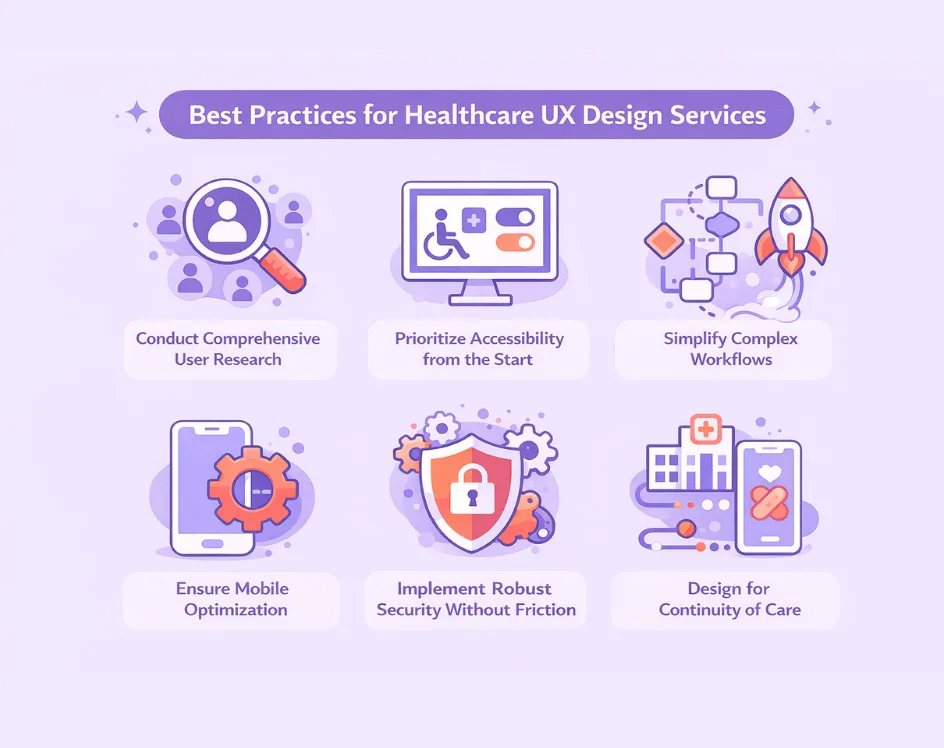
Best Practices for Healthcare UX Design Services
Implementing effective healthcare UX design requires following established best practices that have been proven to improve patient outcomes and clinical efficiency.
Conduct Comprehensive User Research
Effective healthcare UX begins with a deep understanding of users. This involves conducting contextual analyses through observations and interviews in users’ natural environments to identify real-life usage scenarios and potential barriers. Usability testing enables the identification of usability issues and helps improve user-friendliness. Development of personas and scenarios supports targeted design of healthcare applications.
User research in healthcare is particularly challenging due to the difficulty of recruiting busy healthcare professionals and vulnerable patient populations. However, this research is essential for creating truly user-centered designs. Even with tight deadlines, designers should conduct efficient, targeted usability testing using quick and focused feedback loops.
Prioritize Accessibility from the Start
Accessibility should never be an afterthought in healthcare design. From the initial conception, designers must consider users with varying abilities, including visual, auditory, motor, and cognitive impairments. Large tap targets and clear layouts help avoid tiny buttons or crammed options. High-contrast fonts and readable text ensure visibility under all lighting conditions and for low-vision users.
Screen reader support and voice commands allow visually impaired users to navigate and complete tasks hands-free. Regular testing with diverse users, including older adults and those with disabilities, provides valuable feedback. Inclusive UX goes beyond ticking WCAG boxes to designing with empathy and understanding real-life limitations.
Simplify Complex Workflows
Healthcare workflows are inherently complex, involving multiple steps, stakeholders, and decision points. UX designers must find ways to simplify these workflows without losing critical functionality. This involves mapping out entire user journeys, identifying pain points and bottlenecks, and redesigning processes to reduce unnecessary steps.
Auto-save features and AI-powered predictive text reduce repetitive data entry, minimizing errors and increasing efficiency. Task-oriented dashboards feature role-based views that prioritize critical actions. For example, a doctor’s dashboard should highlight pending lab results, medication updates, and urgent alerts rather than generic information.
Ensure Mobile Optimization
With a growing number of users accessing healthcare services via smartphones, mobile optimization is essential for healthcare applications. A responsive design ensures that applications function across different devices and screen sizes. Mobile-first thinking is now standard for appointment scheduling, reminders, and chronic health tracking.
Progressive Web Apps and native mobile applications offer different advantages. PWAs provide browser-based accessibility while native apps offer enhanced performance and offline capabilities. The choice depends on specific use cases and user needs, but both must deliver excellent mobile experiences.
Implement Robust Security Without Friction
Security is paramount in healthcare, but it should not create unnecessary barriers. Designers must implement security measures that protect patient data while maintaining usability. This includes using biometric authentication where available, implementing intelligent session management that balances security with convenience, and providing clear explanations of security features to build trust.
Transparent data management practices, including clear consent processes and easy-to-understand privacy policies, help patients feel confident about sharing their health information. The goal is to make security feel like a protective feature rather than an obstacle.
Design for Continuity of Care
Healthcare is not a series of isolated interactions but a continuous journey. UX design should support this continuity by ensuring information flows smoothly between different touchpoints and healthcare providers. Integration with Electronic Health Records, seamless data exchange between systems, and unified patient histories across departments all contribute to better care coordination.
Patients should be able to see their complete health story in one place, including past appointments, test results, prescriptions, and provider notes. This comprehensive view empowers patients to be active participants in their care and helps providers make more informed decisions.
The Future of Healthcare UX Design
Looking ahead, several emerging trends will shape the future of healthcare UX design. The healthcare sector is expected to reach USD 504 billion by 2026, according to World Economic Forum research. This growth will be driven by innovations in AI, wearable technology, telemedicine, and personalized medicine.
The key challenge will be integrating advanced technology while maintaining essential human interaction in patient care. Healthcare will continue to need humans, as AI cannot replace empathy. Doctors are skilled at building trust and guiding and supporting patients through therapy. Patients do not just need data; they need reassurance and human connection.
Digital therapeutics are emerging as a new category of healthcare products. These are evidence-based therapeutic interventions driven by software programs to prevent, manage, or treat medical disorders. UX design will play a critical role in making these digital therapeutics effective and engaging.
The shift from patient centricity to patient design is underway. This treats patients as team members, as people who take responsibility for their health. This shift is enabled and facilitated by wearables and health sensors that provide real-time feedback and actionable insights.
Final Thoughts
UI/UX Challenges in Healthcare are significant, but they also represent opportunities to make meaningful impacts on people’s lives. Effective healthcare UX design can improve patient outcomes, reduce medical errors, enhance clinical efficiency, and lower healthcare costs. It requires a unique combination of empathy, technical expertise, regulatory knowledge, and commitment to accessibility.
For organizations seeking ui ux design services for healthcare applications, success requires partnering with designers who understand the complexities of healthcare environments. These designers must be well-versed in regulatory requirements, accessibility standards, and the unique needs of healthcare stakeholders.
The healthcare industry is undergoing a massive transformation, and user experience design plays a pivotal role in shaping this future. From telemedicine platforms to wearable devices, from patient portals to clinical decision support systems, every healthcare touchpoint benefits from thoughtful, user-centered design.
As we move forward, the most successful healthcare applications will be those that balance technological innovation with human-centered design principles. They will make complex medical information accessible, support both patients and providers in their respective roles, and ultimately contribute to better health outcomes for everyone.
Frequently Asked Questions
Q1.What makes healthcare UX design different from other industries?
Healthcare UX design differs fundamentally because interface failures can directly impact patient safety and clinical outcomes. Unlike consumer apps, where poor design might cause frustration, healthcare applications deal with life-and-death situations. Designers must navigate strict regulatory requirements like HIPAA and GDPR, accommodate users with disabilities at higher rates than other industries, and create interfaces that work in high-stress, time-sensitive medical environments. Additionally, healthcare applications must serve multiple stakeholders with conflicting needs, including patients, doctors, nurses, and administrative staff.
Q2.Why is accessibility so important in healthcare applications?
Healthcare products have the highest percentage of users with disabilities compared to other industries. In the United States, 1 in 4 adults lives with a disability, and globally, 16% of the population has a significant disability. Healthcare applications must be usable by people with visual, auditory, motor, and cognitive impairments. Poor accessibility can prevent vulnerable populations from accessing critical health services, managing chronic conditions, or communicating with their healthcare providers. Following WCAG 2.2 guidelines ensures that healthcare applications serve all users regardless of their abilities.
Q3.How does poor UX design contribute to medical errors?
Poorly designed healthcare systems can lead to devastating medical errors. Medical errors cause over 9.5% of all deaths yearly in the United States, with diagnostic errors alone accounting for 40,000 to 80,000 deaths annually. Poor UX can cause errors through confusing data presentation, unclear labeling, difficult-to-read decimal points in test results, complex navigation that delays critical care, and interfaces that increase cognitive load on already stressed healthcare professionals. Clear visual hierarchy, consistent terminology, and error prevention design can significantly reduce these risks.
Q4.What is the current state of patient engagement technology adoption?
Patient engagement technology has seen remarkable adoption rates. By 2024, 99% of hospitals enabled patients to electronically view their health information, 96% offered download capabilities, 92% provided secure messaging with providers, and 95% allowed patients to view clinical notes. The global patient engagement solutions market reached USD 27.63 billion in 2024 and is projected to reach USD 86.67 billion by 2030, growing at 20.97% CAGR. This widespread adoption reflects the healthcare industry’s recognition that engaged patients achieve better health outcomes.
Q5.How has telemedicine usage evolved and what are the UX implications?
Telehealth usage dramatically increased during the COVID-19 pandemic, rising from 5% of patients pre-pandemic to a peak of 70% during the pandemic, stabilizing at 25% in 2022. A 2025 survey found that 82% of patients preferred hybrid care models combining face-to-face and telemedicine, while 83% of doctors supported this approach. However, 30% of patients abandon telehealth platforms due to poor usability. This means telemedicine UX must prioritize clear video interfaces, minimal technical requirements, easy-to-use data sharing tools, and integration with Electronic Health Records to prevent patient abandonment.
Q6.What role does AI play in modern healthcare UX design?
AI is transforming healthcare UX through personalization and automation. The AI-driven engagement segment held 30.54% of the patient engagement solutions market in 2024 and is growing at the fastest rate. AI chatbots achieve approximately 88% accuracy in responding to patient queries, according to University of Maryland research. One healthcare provider recorded a 20% increase in prescribed medication usage after implementing AI-generated recommendations. AI powers features like chatbots for 24/7 patient support, predictive analytics for personalized care, customizable dashboards tracking health metrics, and automated scheduling and reminders that improve treatment adherence.
Q7.How do regulatory requirements like HIPAA and GDPR impact healthcare UX design?
HIPAA in the United States and GDPR in the European Union impose strict requirements on healthcare applications regarding data security and privacy. These regulations create a balancing act for UX designers who must implement robust security without creating excessive friction. Multi-factor authentication, encryption, and access controls are necessary but can frustrate users if poorly designed. Successful healthcare UX requires transparent data practices, clear consent processes, frictionless secure logins, and plain-language explanations of privacy features. Designers must make security feel protective rather than obstructive while maintaining full regulatory compliance.
Q8.What are the biggest challenges in designing for multiple healthcare stakeholders?
Healthcare systems serve patients, doctors, nurses, administrative staff, and caregivers, each with distinct needs. Patients need simple, accessible interfaces for booking appointments and viewing records. Healthcare providers require efficient tools for managing patient interactions and accessing clinical decision support. Administrative staff need robust scheduling and EHR integration. Designing for all these groups requires extensive user research with representative users from each group, role-based dashboards that prioritize relevant information, customizable interfaces that adapt to different workflows, and iterative testing to ensure no group’s essential requirements are compromised.
Q9.How does mobile optimization impact healthcare application success?
Mobile optimization is critical as 5.8 billion people globally use mobile devices (71% penetration). The mHealth apps market was valued at USD 37.5 billion in 2024 and is projected to reach USD 86.37 billion by 2030. Patients increasingly expect to manage appointments, view test results, communicate with providers, and track health metrics from their smartphones. Poor mobile experiences lead to application abandonment and reduced patient engagement. Successful mobile healthcare UX requires responsive design across device sizes, mobile-first thinking for core features, offline capabilities for essential functions, and touch-optimized interfaces with appropriately sized buttons for users with varying motor abilities.
Q10.What is the future outlook for healthcare UX design?
The healthcare sector is expected to reach USD 504 billion by 2026. Future trends include the Internet of Medical Things with 25.44 billion IoT devices projected by 2030, Remote Patient Monitoring growing at 21.46% CAGR (the fastest-growing segment), AI-powered personalization becoming standard, voice user interfaces for hands-free interaction, and digital therapeutics as evidence-based software treatments. The key challenge will be integrating advanced technology while maintaining human interaction and empathy. Healthcare will continue to need the human element because AI cannot replace the trust, guidance, and reassurance that patients need from their healthcare providers.
Reviewed by

Aman Vaths
Founder of Nadcab Labs
Aman Vaths is the Founder & CTO of Nadcab Labs, a global digital engineering company delivering enterprise-grade solutions across AI, Web3, Blockchain, Big Data, Cloud, Cybersecurity, and Modern Application Development. With deep technical leadership and product innovation experience, Aman has positioned Nadcab Labs as one of the most advanced engineering companies driving the next era of intelligent, secure, and scalable software systems. Under his leadership, Nadcab Labs has built 2,000+ global projects across sectors including fintech, banking, healthcare, real estate, logistics, gaming, manufacturing, and next-generation DePIN networks. Aman’s strength lies in architecting high-performance systems, end-to-end platform engineering, and designing enterprise solutions that operate at global scale.