Ai Overview
Omnichain DeFi is decentralized finance that operates natively across multiple blockchains simultaneously. Traditional bridges charge 2-5% fees plus gas costs. Omnichain transactions cost significantly less because they’re direct and don’t require intermediate steps. A trader wants to swap 100,000 dollars of ETH for USDC.
Key Takeaways
- Omnichain DeFi unifies liquidity across multiple blockchains into a single ecosystem, eliminating fragmentation and bridge complexity
- Current cross-chain solutions like bridges create isolated liquidity pools, costing users 2-5% in fees and significant time delays
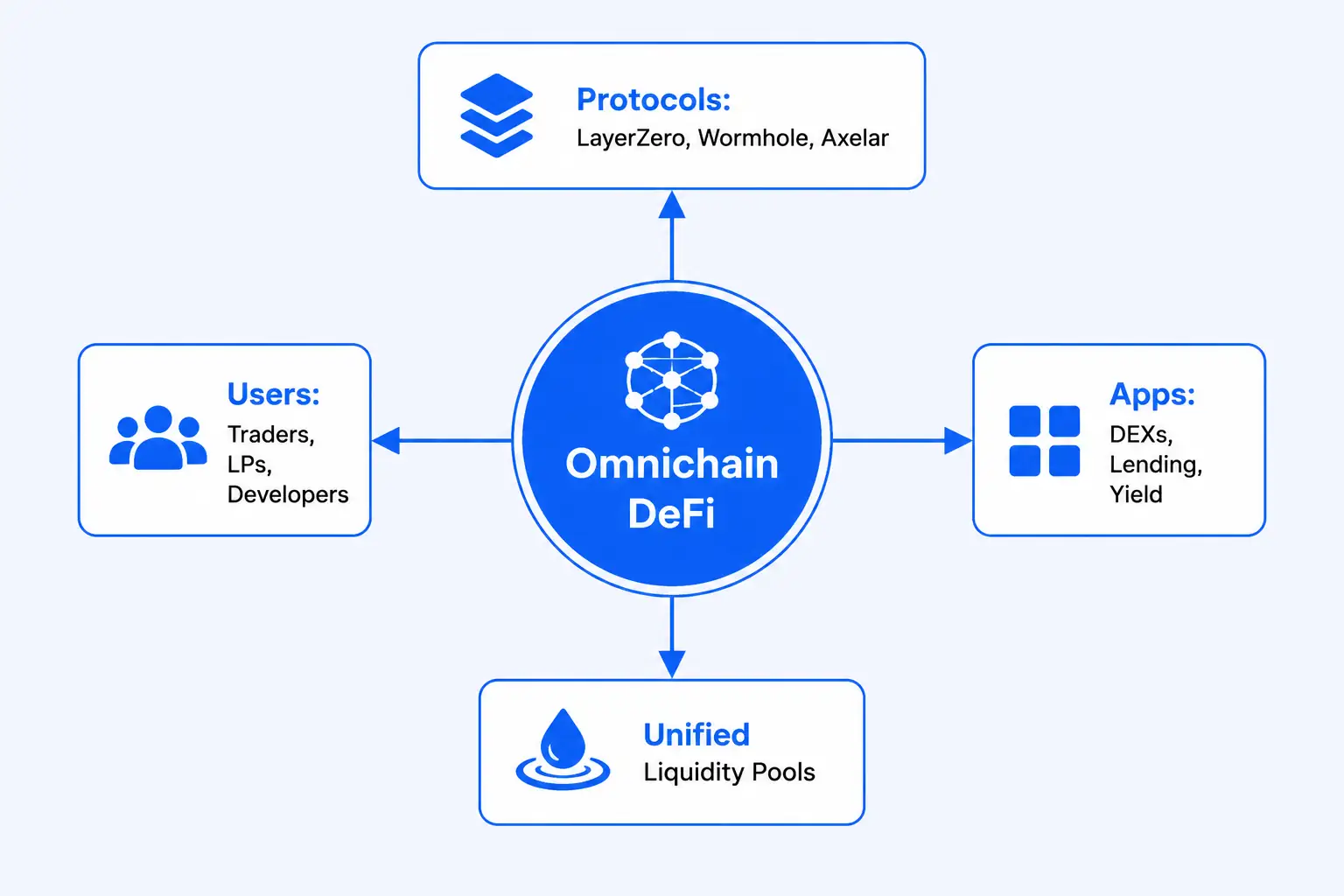
- LayerZero, Wormhole, and Axelar are leading omnichain protocols enabling seamless cross-chain communication and liquidity provisioning
- Omnichain DeFi provides better liquidity efficiency, lower slippage, and faster transaction speeds compared to traditional bridged systems
- Users can access DeFi services from any supported blockchain with a single wallet and unified user interface
- Developers benefit from omnichain infrastructure by building applications that reach liquidity and users across multiple chains simultaneously
- Security risks include smart contract vulnerabilities, validator attacks, and asynchronous execution challenges requiring robust protocols
- Omnichain DeFi is projected to capture 40-60% of DeFi trading volume by 2026 as adoption and infrastructure maturity increase
- Liquidity providers earn higher yields by participating in unified pools that serve multiple blockchains simultaneously
- Standards and protocols continue evolving to make omnichain DeFi more efficient, secure, and accessible to mainstream users
Imagine holding cryptocurrency on Ethereum but needing liquidity on Polygon. Currently, you must use a bridge, wait for confirmations, pay multiple fees, and navigate complex interfaces. This fragmentation is one of blockchain’s biggest unsolved problems. Omnichain DeFi solves this by creating truly unified liquidity pools that work seamlessly across multiple blockchains. Instead of managing separate wallets and bridges for each chain, users access one integrated platform with instant cross-chain transactions. This article explores how omnichain DeFi is revolutionizing blockchain interoperability and why it represents the future of decentralized finance.
What Is Omnichain DeFi and Why It Matters?
Omnichain DeFi is decentralized finance that operates natively across multiple blockchains simultaneously. Think of it like switching between bank branches without transferring your money. With traditional banking, moving money between branches requires transfers and processing time. Omnichain DeFi eliminates this friction by making liquidity available everywhere at once.
Let’s compare this to how you probably manage cryptocurrency today. You might have Ethereum for staking, Polygon for trading, Solana for quick transactions, and Arbitrum for other DeFi strategies. This requires managing multiple wallets, learning different interfaces, tracking gas costs on each chain, and using bridges to move assets between chains. Omnichain DeFi changes everything by creating one unified experience.
The core innovation of omnichain DeFi is something called cross-chain messaging. This technology allows smart contracts on different blockchains to communicate with each other in real-time. Instead of sending tokens across a bridge and hoping they arrive, omnichain systems execute transactions directly, with the blockchain itself ensuring accuracy and security.
Here’s what omnichain DeFi actually enables:
- Unified liquidity pools accessed from any blockchain
- Single wallet managing assets across multiple chains
- Atomic cross-chain swaps without intermediate steps
- Reduced fees and execution delays
- Better price discovery and lower slippage
- Seamless yield farming across ecosystems
Why Cross-Chain Liquidity Is Currently a Major Problem?
To understand omnichain DeFi’s value, you need to understand the massive problem it solves. Today’s multi-chain blockchain ecosystem is deeply fragmented. Each blockchain has its own community, users, and liquidity. This fragmentation creates serious inefficiencies.
The Liquidity Fragmentation Issue:
Imagine a popular trading pair like ETH/USDC. On Ethereum, this pair might have 100 million dollars in liquidity. On Polygon, the same pair has only 10 million. On Solana, maybe 5 million. Without omnichain DeFi, these are completely separate liquidity pools. A trader on Polygon can’t access Ethereum’s deeper liquidity. This creates price differences between chains, enabling arbitrage but frustrating regular users.
Bridge Fees and Delays:
Using a bridge typically costs 2-5% in fees and takes 10-30 minutes for confirmation. For a trader moving 100,000 dollars, that’s 2,000 to 5,000 dollars in costs plus waiting time. During that waiting period, market conditions change. A profitable trade might become unprofitable. This makes many cross-chain transactions impractical for regular users.
User Experience Complexity:
Managing multiple blockchains requires expertise most users don’t have. Which bridge should I use? What’s the safest route? How do I compare gas costs? These questions overwhelm beginners. Many simply avoid cross-chain activity, missing opportunities and limiting their investment options.
Developer Fragmentation:
Building DeFi applications forces developers to choose which chain to focus on. Build on Ethereum and access its large user base but pay high gas costs. Build on Solana and enjoy speed but reach a smaller community. With omnichain DeFi, developers build once and reach all supported blockchains instantly.
Omnichain vs Cross-Chain vs Multi-Chain: Understanding the Differences
These terms sound similar but they mean very different things in blockchain technology. Understanding the distinctions is crucial for grasping why omnichain DeFi is revolutionary.
| Aspect | Multi-Chain | Cross-Chain | Omnichain |
|---|---|---|---|
| Definition | Application deployed separately on multiple blockchains | Separate blockchains connected via bridges for asset transfer | Unified application with native cross-chain functionality |
| User Experience | Choose a chain, use app on that chain only | Manual bridging required between chains | Seamless experience across all chains |
| Liquidity Integration | Separate liquidity pools per chain | Fragmented liquidity via bridges | Unified liquidity across chains |
| Transaction Fees | Chain-specific gas costs only | Gas plus bridge fees (2-5%) | Single transaction fee |
| Execution Speed | Instant on single chain | 10-30 minutes via bridge | 3-30 seconds cross-chain |
| Developer Effort | Deploy to each chain separately | Add bridge integration manually | Build once, deploy omnichain |
| Price Discovery | Different prices per chain | Arbitrage opportunities between chains | Single unified price |
| Example Today | Uniswap on Ethereum, Polygon, and Solana separately | Bridging ETH from Ethereum to Polygon via Stargate | LayerZero OmniSwap across all chains at once |
Here’s a practical example: You want to swap 10 ETH for USDC. With multi-chain, you use Uniswap on one specific chain. With cross-chain, you bridge ETH from Ethereum to Polygon, then swap on Polygon. With omnichain, you initiate one swap and it executes across the best available liquidity on any connected chain automatically.
How Omnichain DeFi Works: Step-by-Step Process
Understanding the technical mechanics helps you grasp why omnichain DeFi is such a breakthrough. Let’s walk through exactly what happens when you execute an omnichain transaction.
The Omnichain Transaction Process
Step 1 User Initiation: You submit a transaction through an omnichain DeFi interface on your preferred blockchain. You don’t need to worry about which chain has best liquidity.
Step 2 Cross-Chain Messaging: The omnichain protocol (like LayerZero or Wormhole) sends a message to the blockchain with the best liquidity for your specific trade. This messaging happens through decentralized infrastructure.
Step 3 Smart Contract Execution: The receiving blockchain’s smart contract executes your transaction using available liquidity. The omnichain system ensures atomic execution meaning the transaction either fully succeeds or fully fails.
Step 4 Verification and Settlement: Multiple validators and oracles verify the transaction execution. Only after sufficient confirmation does the system acknowledge completion across all chains.
Step 5 Asset Delivery: Your received assets are delivered to your wallet on your source chain. From the user perspective, you initiated a transaction and assets appeared. The cross-chain complexity is completely hidden.
Step 6 Liquidity Rebalancing: Protocols continuously rebalance liquidity across chains to maintain efficiency. If one chain’s liquidity depletes, the system incentivizes liquidity providers to top it up.
Omnichain Transaction Flow
User Initiates
Transaction
Cross Chain
Messaging
Smart Contract
Execution
Verification and
Settlement
Asset Delivery
to User
Liquidity
Rebalancing
Key Benefits of Omnichain DeFi
Unified Liquidity Pools
Instead of managing fragmented liquidity across chains, omnichain DeFi creates single liquidity pools that serve all connected blockchains. This dramatically improves capital efficiency. Liquidity providers earn better returns. Traders enjoy lower slippage and better prices.
Lower Costs
Traditional bridges charge 2-5% fees plus gas costs. Omnichain transactions cost significantly less because they’re direct and don’t require intermediate steps. For large trades, savings can reach thousands of dollars. For smaller trades, the cost difference makes more transactions economically viable.
Faster Execution
Omnichain transactions complete in seconds rather than minutes. This speed is critical for time-sensitive trades and arbitrage opportunities. Market conditions change constantly. Users can capitalize on opportunities without worrying that prices will shift before execution completes.
Superior User Experience
Users interact with a single interface and a single wallet. They don’t worry about which chain has liquidity or how to bridge assets. The system handles complexity behind the scenes. This simplicity makes DeFi accessible to mainstream users who currently avoid the space due to complexity.
Better Price Discovery
With unified liquidity, prices converge across chains naturally. Arbitrage opportunities diminish as the market finds equilibrium. Traders get more accurate market prices instead of paying premiums for accessing liquidity on specific chains.
Developer Advantages
Developers building on omnichain infrastructure access liquidity and users across all supported chains simultaneously. This dramatically increases the addressable market. Building cross-chain applications becomes as simple as building single-chain applications.
Enhanced Liquidity Provider Yields
Liquidity providers in omnichain pools serve users across multiple chains from a single position. This increased utility generates higher trading volume and yields. Providing liquidity becomes more attractive and capital efficient than ever before.
Real-World Use Cases of Omnichain DeFi
Omnichain DeFi isn’t theoretical. Real users and developers are already benefiting from these systems in practical ways.
DeFi Traders
A trader wants to swap 100,000 dollars of ETH for USDC. Instead of researching which blockchain has best liquidity, comparing fees, and executing the trade manually, omnichain DeFi does this automatically. The trader gets best execution across all available liquidity pools instantly, saving thousands in fees and minutes of time.
Liquidity Providers
Yield farmers deposit liquidity into an omnichain pool. Their capital works across Ethereum, Polygon, Arbitrum, and Optimism simultaneously. The same 100,000 dollars generates trading fees from all four chains. This dramatically improves capital efficiency compared to deploying 25,000 dollars on each chain separately.
Developers Building DeFi Apps
A startup builds a new yield farming protocol. Instead of deploying on one chain and slowly expanding, omnichain infrastructure lets them launch across five chains simultaneously. They instantly access liquidity and users everywhere. This competitive advantage is massive in DeFi where first-mover benefits are critical.
Institutions and Funds
Institutional investors managing large DeFi positions use omnichain platforms to execute massive trades with minimal slippage. The unified liquidity and lower fees make institutional-scale DeFi investing practical. This institutional adoption drives mainstream acceptance.
Arbitrage Specialists
Professional arbitrage traders exploit price differences between chains. With omnichain DeFi improving price convergence, traditional arbitrage becomes harder but more efficient. Sophisticated traders use omnichain infrastructure to execute complex multi-chain strategies instantly.
Leading Omnichain Protocols Reshaping DeFi
Several projects are pioneering omnichain DeFi infrastructure. Understanding these protocols helps you see how the ecosystem is developing.
LayerZero
LayerZero is the most comprehensive omnichain protocol. It uses a unique architecture combining on-chain smart contracts with decentralized oracles and relayers. This design enables true omnichain functionality without requiring wrapped tokens or intermediate bridges. Learn more about LayerZero architecture.
Key strength: Flexible security model letting developers choose their own risk profile
Wormhole
Wormhole is a cross-chain messaging platform created by Jump Crypto. It connects Ethereum, Solana, Polygon, Avalanche, and other chains. Wormhole uses guardian signatures to validate cross-chain messages. The protocol is battle-tested and powers significant DeFi volume. Explore Wormhole’s infrastructure.
Key strength: Supports diverse blockchains including non-EVM chains like Solana
Axelar
Axelar uses proof-of-stake validators to secure cross-chain transactions. Its architecture emphasizes security and decentralization. Axelar works with major chains and focuses on making cross-chain development as simple as single-chain development. Discover Axelar’s approach to omnichain.
Key strength: Developer-friendly SDK making cross-chain applications easy to build
Stargate Finance
Built on LayerZero, Stargate Finance is the first omnichain native asset bridge and DEX. Users can swap tokens across chains with deep liquidity. Unlike traditional bridges that mint wrapped tokens, Stargate keeps native liquidity pools synchronized across chains.
Key strength: Solves the slippage problem that plagued earlier cross-chain solutions
Challenges and Risks in Omnichain DeFi
While omnichain DeFi is revolutionary, it faces real challenges. Understanding risks helps you use these systems responsibly.
Smart Contract Vulnerabilities
Cross-chain protocols involve complex smart contracts. A single vulnerability can cause catastrophic losses. Some early protocols suffered major hacks. Users must only use well-audited, battle-tested protocols. Never put significant funds into unproven systems.
Oracle and Validator Attacks
Omnichain protocols depend on external oracles and validators to verify cross-chain messages. If these actors are compromised, the entire system fails. Security depends on the strength of validator networks and incentive structures. Different protocols handle this differently.
Regulatory Uncertainty
Regulators worldwide are still defining rules for cross-chain protocols and DeFi. Changes in regulation could impact project viability. Projects operating across multiple jurisdictions face complex compliance challenges. Regulatory changes could restrict functionality or require modifications.
Liquidity Fragmentation
Even with omnichain solutions, liquidity can become fragmented across pools. If users adopt competing omnichain standards, liquidity splits between them. The ecosystem could end up similarly fragmented as today unless one standard dominates.
Asynchronous Execution Issues
Cross-chain transactions don’t settle instantly on all chains simultaneously. This asynchrony creates edge cases. A transaction could succeed on one chain but fail on another. Sophisticated algorithms manage this, but edge cases remain possible, especially during network congestion.
Omnichain DeFi Ecosystem Value Chain
The Future of Omnichain DeFi: 2026 and Beyond
Omnichain DeFi is still emerging but evolving rapidly. Several defi trends will shape its future development.
Standardization and Interoperability
The ecosystem is moving toward open standards that allow different omnichain protocols to interoperate. Instead of LayerZero, Wormhole, and Axelar competing exclusively, they’ll increasingly work together. This composability will unlock new use cases and liquidity arrangements.
Mainstream Adoption
As security improves and user experience simplifies, mainstream users will adopt omnichain DeFi. Currently only crypto experts use these systems. By 2026, regular investors should find omnichain trading as intuitive as traditional finance apps.
Institutional Integration
Institutions managing significant capital need sophisticated cross-chain capabilities. Omnichain infrastructure will attract institutional investors seeking efficient global liquidity. This capital influx will improve liquidity and reduce volatility, making DeFi more stable.
Layer 2 and Sidechain Expansion
Ethereum Layer 2 solutions like Optimism, Arbitrum, and Polygon are proliferating. Omnichain protocols will expand to include all major Layer 2 chains. This will create a true multi-layer ecosystem where users seamlessly move between mainnet and Layer 2 solutions.
AI-Driven Optimization
Machine learning will optimize omnichain routing. Systems will predict which chains have best liquidity, routes transactions accordingly, and dynamically rebalance pools. This automation will improve efficiency without requiring user intervention.
Enterprise DeFi Solutions
Companies like Nadcab Labs will build custom omnichain DeFi platforms for enterprises and institutions. These solutions will combine public omnichain infrastructure with private customization, security, and compliance features. Enterprise-grade DeFi will become a major market segment.
Ready to Build Omnichain DeFi Solutions?
Are you struggling with fragmented liquidity across blockchains? Need to build cross-chain applications but don’t know where to start? Want to compete in the omnichain DeFi revolution but lack the technical expertise?
Nadcab Labs specializes in designing and developing cutting-edge omnichain DeFi platforms and cross-chain solutions. We understand the technical complexities and help you navigate the rapidly evolving landscape.
Omnichain DeFi Is the Future
Omnichain DeFi represents a fundamental shift in how blockchain technology enables finance. Rather than accepting fragmented liquidity and complex bridges, omnichain protocols create truly seamless cross-chain ecosystems. The benefits are clear: lower costs, faster execution, better prices, and superior user experience.
Today, omnichain DeFi still feels novel. Most users haven’t heard the term. But this is changing rapidly. As protocols mature, applications proliferate, and adoption accelerates, omnichain DeFi will become the default way users interact with cryptocurrency and decentralized finance.
The projects building this infrastructure today are pioneering the financial system of tomorrow. LayerZero, Wormhole, Axelar, and others are solving fundamental problems that traditional finance takes for granted. Cross-border transfers, instant settlement, and unified liquidity are becoming reality in blockchain.
For businesses, investors, and developers, the time to understand and engage with omnichain DeFi is now. The space moves quickly. Early adopters will capture significant advantages. Those who wait risk falling behind as the ecosystem matures and opportunities consolidate.
Whether you’re a trader seeking better execution, a developer building the next generation of DeFi apps, or an institution exploring blockchain finance, omnichain DeFi opens unprecedented possibilities. Explore these solutions today and position yourself for the future of seamless, efficient, decentralized finance across all blockchains.
Frequently Asked Questions
Q1.What is the main difference between omnichain and cross-chain DeFi?
Omnichain DeFi operates as a unified ecosystem with native cross-chain functionality, while cross-chain DeFi requires manual bridging between separate systems. Omnichain users experience seamless liquidity across chains with single transactions. Cross-chain users must bridge assets, wait for confirmations, and manage complex transfers. Omnichain is significantly more efficient and user friendly.
Q2.How secure is omnichain DeFi compared to traditional bridges?
Omnichain protocols use multiple security layers including smart contract audits, validator networks, and oracle verification. Leading protocols like LayerZero have been battle-tested with billions in volume. However, all blockchain systems carry inherent risks. Users should start with proven protocols and gradually increase exposure as comfort increases. Never deploy capital you can’t afford to lose in emerging protocols.
Q3.Which omnichain protocol should I use as a beginner?
LayerZero and Wormhole are the most established protocols with significant security track records and user adoption. Start with applications built on these protocols rather than using raw protocol interfaces. Platforms like Stargate Finance provide user-friendly omnichain trading. As you gain experience, explore other protocols and more advanced features.
Q4.What are the fees for omnichain transactions compared to bridges?
Omnichain transaction fees vary by protocol and network congestion but typically range from 0.1 percent to 0.5 percent. Traditional bridges charge 2 percent to 5 percent plus base gas fees. Omnichain DeFi saves significant costs, especially for large trades. Fee savings often exceed hundreds or thousands of dollars on institutional transactions.
Q5.How fast are omnichain transactions executed?
Omnichain transactions typically complete in 3 to 30 seconds depending on the protocol and network conditions. This is dramatically faster than bridges which require 10 to 30 minutes for settlement. The speed difference is critical for time-sensitive trades and arbitrage opportunities. Faster execution enables new use cases impossible with traditional bridges.
Q6.Can I use omnichain DeFi with a regular crypto wallet?
Yes, standard wallets like MetaMask work with omnichain platforms. You connect your wallet to an omnichain application interface, and the application handles cross-chain routing and execution behind the scenes. No special wallet or technical knowledge required. This simplicity makes omnichain DeFi accessible to mainstream users who already use crypto wallets.
Q7.What's the difference between liquidity providers and regular users in omnichain DeFi?
Regular users trade or swap tokens, paying small fees for liquidity access. Liquidity providers deposit capital into pools and earn a portion of trading fees in return. Omnichain LPs earn fees from all supported chains from a single pool position, increasing returns significantly. LPs accept impermanent loss risk but benefit from increased trading volume and cross-chain utilization.
Explore Services
Related Services
Reviewed by

Aman Vaths
Founder of Nadcab Labs
Aman Vaths is the Founder & CTO of Nadcab Labs, a global digital engineering company delivering enterprise-grade solutions across AI, Web3, Blockchain, Big Data, Cloud, Cybersecurity, and Modern Application Development. With deep technical leadership and product innovation experience, Aman has positioned Nadcab Labs as one of the most advanced engineering companies driving the next era of intelligent, secure, and scalable software systems. Under his leadership, Nadcab Labs has built 2,000+ global projects across sectors including fintech, banking, healthcare, real estate, logistics, gaming, manufacturing, and next-generation DePIN networks. Aman’s strength lies in architecting high-performance systems, end-to-end platform engineering, and designing enterprise solutions that operate at global scale.