Ai Overview
Crypto wallet hacks are primarily caused by private key exposure, smart contract vulnerabilities, and weak operational security rather than flaws in blockchain technology itself. Gox, where approximately 850,000 Bitcoin were lost, effectively decimating user balances and leading to bankruptcy. More recent instances such as the KuCoin attack in 2020 saw hackers breach hot wallet private keys, siphoning off at least $275 million in cryptocurrency.
Key Takeaways – Crypto Wallet Hacks
- Crypto wallet hacks are primarily caused by private key exposure, smart contract vulnerabilities, and weak operational security rather than flaws in blockchain technology itself.
- Some of the biggest crypto wallet hacks in history, including Mt. Gox, Bitfinex, KuCoin, WazirX, and Bybit, resulted in irreversible losses worth billions of dollars.
- Hot wallets are more frequently targeted due to constant internet connectivity, though cold wallets can also be compromised through human error and insecure transfer processes.
- Smart contract–based wallets introduce additional risks, as coding flaws may allow attackers to bypass multisignature and authorization mechanisms.
- Crypto wallet hacks often trigger short-term market volatility, reduced investor confidence, and increased regulatory scrutiny across the crypto industry.
- Most funds stolen in crypto wallet hacks cannot be recovered because blockchain transactions are immutable and irreversible.
- Using hardware wallets, multisignature setups, and conducting regular security audits significantly reduces hack risks.
- Phishing attacks and social engineering remain among the most effective techniques used in crypto wallet hacks, especially against individual users.
- Continuous monitoring, permission reviews, and real-time transaction alerts are essential to minimizing damage during a wallet breach.
- Learning from past crypto wallet hacks is critical for building a more secure, resilient, and trustworthy digital asset ecosystem.
The world of cryptocurrency has grown dramatically since Bitcoin’s inception in 2009, bringing millions of investors, developers, and innovators into a decentralized financial future. However, this rapid growth has also attracted cybercriminals who exploit weaknesses in digital security systems. Cryptocurrency wallet hacks have become notorious events in the blockchain space, often resulting in astronomical financial losses and shaken confidence among users and institutions alike. In this comprehensive blog, we dive deep into the most significant crypto wallet hacks, examine the underlying causes, explore the far-reaching impacts, and distill critical lessons every investor and developer should know to protect digital assets moving forward.
Understanding Crypto Wallets and Why They Matter
A crypto wallet is a digital tool that stores private keys, secret codes that allow users to access and manage their cryptocurrencies on a blockchain. Cryptocurrency wallets come in various forms, such as software wallets (mobile or desktop), hardware wallets (physical devices kept offline) and custodial wallets managed by exchanges. The common thread across all wallets is the reliance on cryptographic security to protect assets. Because these wallets act as vaults for digital wealth, they are prime targets for crypto wallet hacks, often exposing weaknesses that can be exploited at a devastating scale.
The concept of wallet security might seem straightforward, keep the key safe and funds are safe but as the history of hacks has shown, the devil lies in implementation. From smart contract vulnerabilities to compromised private keys, every attack tells a story of one broken assumption or ignored safeguard. Today’s leading crypto platforms are in a continuous battle to outsmart attackers in an environment where even the most secure wallets can, under certain conditions, be breached.
Historic Crypto Wallet Hacks, A Timeline of Catastrophic Losses
Over the past decade, crypto wallet hacks have evolved in nature and scale. Early hacks were mostly confined to centralized exchanges, while more recent incidents have also targeted decentralized finance (DeFi) protocols and smart contracts. One of the earliest major incidents occurred in 2014 with Mt. Gox, where approximately 850,000 Bitcoin were lost, effectively decimating user balances and leading to bankruptcy. Although this event happened before the modern boom of DeFi, it underscored a fundamental truth: weaknesses in wallet infrastructure can threaten entire ecosystems.
Fast forward to the mid-2010s and early 2020s, and the frequency and impact of wallet hacks only intensified. The Bitfinex hack in 2016 exploited internal system weaknesses and resulted in losses valued at millions of dollars, forcing the exchange to reduce user balances by over 30 percent to manage the aftermath. More recent instances such as the KuCoin attack in 2020 saw hackers breach hot wallet private keys, siphoning off at least $275 million in cryptocurrency. These events highlighted that even custodial wallets with robust security protocols can be compromised via weak operational practices.
Notable Crypto Wallet Hacks at a Glance
To better understand how crypto wallet hacks have evolved over time, it is useful to look at some of the most impactful incidents together. The following table highlights major wallet-related breaches, the primary cause behind each attack, and the broader lesson learned from them. These real-world examples clearly show recurring patterns in wallet vulnerabilities and emphasize why strong security practices are essential across the crypto ecosystem.
| Year | Platform / Wallet | Estimated Loss | Primary Cause | Key Lesson Learned |
|---|---|---|---|---|
| 2014 | Mt. Gox | $460 million | Poor private key management and internal security failures | Centralized wallets without strict controls pose extreme risks |
| 2016 | Bitfinex | $72 million | Compromised multisig wallet architecture | Multisig alone is not enough without secure implementation |
| 2020 | KuCoin | $275 million | Hot wallet private keys leaked | Hot wallets require constant monitoring and limited exposure |
| 2023 | Atomic Wallet | $100+ million | Phishing and possible supply-chain attack | User-side security is as critical as platform security |
| 2024 | WazirX | $235 million | Smart contract vulnerability in multisig wallet | Smart contract audits are essential for wallet safety |
| 2025 | Bybit | $1.5 billion | Exploited cold-to-warm wallet transfer process | Even cold wallets need strong operational security[1] |
This comparison makes it clear that crypto wallet hacks are rarely caused by a single mistake. Instead, they usually occur due to a combination of technical flaws, human error, and inadequate security processes. Whether the wallet is custodial or non-custodial wallets, hot or cold, attackers consistently look for the weakest point in the system.
The 2024-2025 Crypto Security Crisis, Wallet Hacks on a New Scale
The years 2024 and 2025 have seen some of the most dramatic crypto wallet hacks in history, with losses totaling billions of dollars. One of the most shocking examples was the Bybit exchange breach in early 2025, where hackers drained approximately $1.5 billion worth of Ethereum from a wallet during routine transfers between cold and warm storage. Although cold wallets are typically offline and thought to be extremely secure, attackers manipulated security controls and executed unauthorized transactions, showing that even the most guarded wallets can be undermined.
In July 2024, the Indian exchange WazirX suffered its own catastrophic wallet hack, losing around $235 million when attackers exploited a smart contract vulnerability. What made this breach especially concerning was that it occurred despite the use of a multisignature (multisig) wallet system widely regarded as a secure method for managing large funds. By manipulating transaction logic at the smart contract level, attackers bypassed multisig safeguards, taking advantage of a weak link in how wallet rules were enforced.
These massive events are not isolated. Smaller yet still impactful hacks continued across multiple platforms, including exchange hot wallets like BtcTurk ($48 million), DMM Bitcoin ($304 million), and Atomic Wallet’s user-focused breach where private keys were compromised through phishing or supply-chain attacks. Collectively, these incidents highlight that wallet security must be scrutinized at multiple layers from user behavior to protocol design.
Common Causes Behind Crypto Wallet Hacks
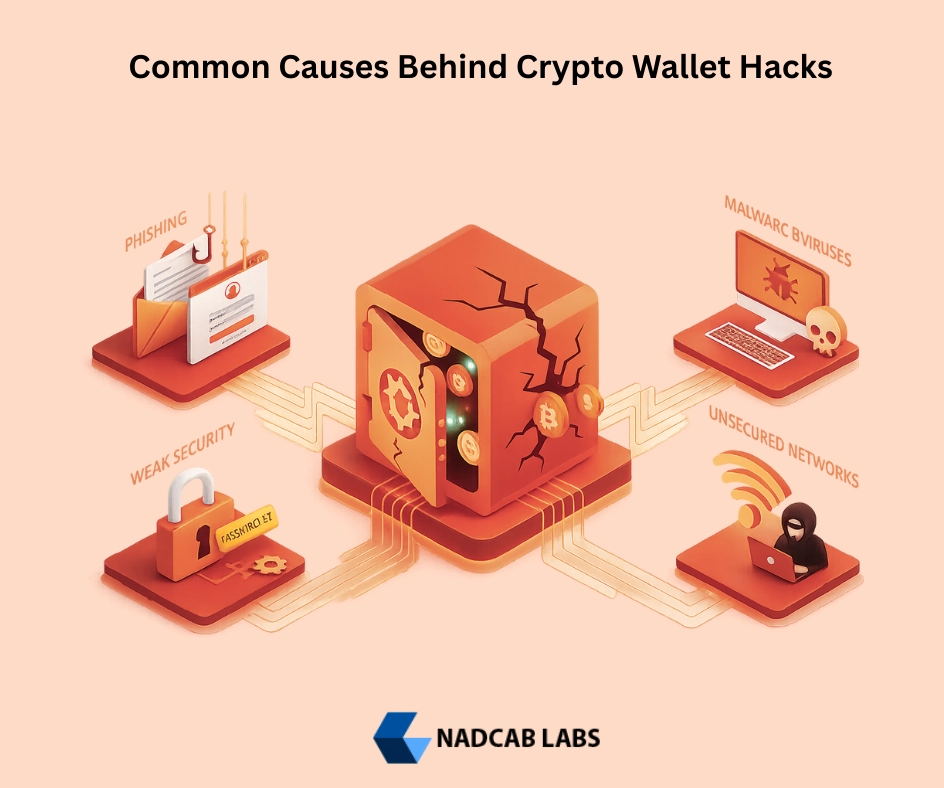
To prevent future breaches, it’s vital to understand the common underlying causes that have repeatedly led to crypto wallet hacks. While each incident has its unique aspects, several recurring patterns emerge when studying these attacks.
One of the most exploited weaknesses remains poor private key management. Wallets whether hot, cold, or multisig rely on the secrecy and safe handling of private keys. When an attacker gains access to these keys, they effectively control any funds associated with them. In the KuCoin incident, hackers obtained private keys stored on a compromised server and used them to authorize unauthorized transfers, demonstrating how server security and endpoint protection are critical.
Another common vulnerability is flawed smart contract logic. DeFi and some exchange wallets use smart contracts to govern wallet behavior. Unfortunately, if these contracts contain coding errors or poor access control logic, attackers can trigger unexpected behavior and drain funds. The WazirX hack exploited this exact flaw, bypassing multisig requirements by exploiting how the smart contract processed approvals.
Phishing, malware, and social engineering attacks also remain formidable threats. In the case of Atomic Wallet, attackers distributed malicious software or updates that prompted users to enter their seed phrases catastrophic for self-custody wallets where users hold sole control of private keys. Once such credentials are exposed, there’s typically no recourse to recover stolen funds.
Finally, third-party vulnerabilities and supply chain threats have been observed. In some hacks, attackers targeted wallet providers, API keys or vendor systems, gaining indirect access to the wallet infrastructure. These incidents show that wallet security isn’t just about code, it’s about the entire ecosystem of tools and services that interact with user funds.
Impact of Crypto Wallet Hacks on Investors and Markets
The impact of significant crypto wallet hacks extends far beyond the immediate financial losses to victims. Each hack ripples through the broader ecosystem, affecting investor confidence, market behavior, and even regulation.
First and most directly, wallets compromised in these attacks often result in irreversible loss of funds. Unlike traditional bank systems, blockchain transactions are immutable; once funds are transferred out of a wallet under hacker control, they are nearly impossible to recover without cooperation from attackers or breakthroughs in tracking and law enforcement. The Bybit and WazirX incidents left millions of users and institutional holders facing uncertainty, with promises of compensation but few guarantees.
Beyond individual losses, large-scale wallet hacks tend to shake market confidence. Major hacks often correspond with temporary price declines in affected tokens or broader markets. For example, after news of the $1.5 billion Bybit hack broke, the price of Ethereum briefly dipped due to investor concerns about systemic risk. These events confirm that even though blockchain markets have matured over the past decade, they are still sensitive to perceptions of security.
Regulatory impacts also follow major breaches. Governments and financial regulators frequently respond to high-profile hacks with increased scrutiny and proposals for tighter oversight. While some argue this could benefit the industry by raising security standards, others contend that heavy regulation may stifle innovation and decentralization, presenting a complex policy challenge that continues to evolve.
Lessons Learned From Major Crypto Wallet Hacks
The growing catalogue of crypto wallet hacks offers powerful lessons for investors, developers, and security professionals. These lessons are rooted in broad themes of resilience, vigilance, and adaptive security thinking.
One crucial lesson is that no wallet is invulnerable. Cold wallets, multisig systems, and offline storage models reduce risk but do not eliminate it entirely. The Bybit cold wallet breach and similar incidents demonstrate that security must be holistic encompassing human processes, smart contract logic, and environmental controls rather than relying on any single protective mechanism.
Investors must also take personal responsibility for crypto security. This means using hardware wallets, enabling strong authentication, being wary of phishing scams, and regularly auditing wallets and approvals. Given that most blockchain transactions are irreversible, a simple mistake can result in permanent loss, as seen in many phishing-related wallet breaches.
Developers and platform operators must prioritize code audits, security testing, and defense-in-depth strategies. Regular smart contract audits by reputable firms and ongoing bug bounty programs can mitigate risks before they are
exploited. Many successful DeFi projects and exchanges now make security a foundational part of their development lifecycle rather than an afterthought.
Proactive Strategies to Protect Crypto Wallets
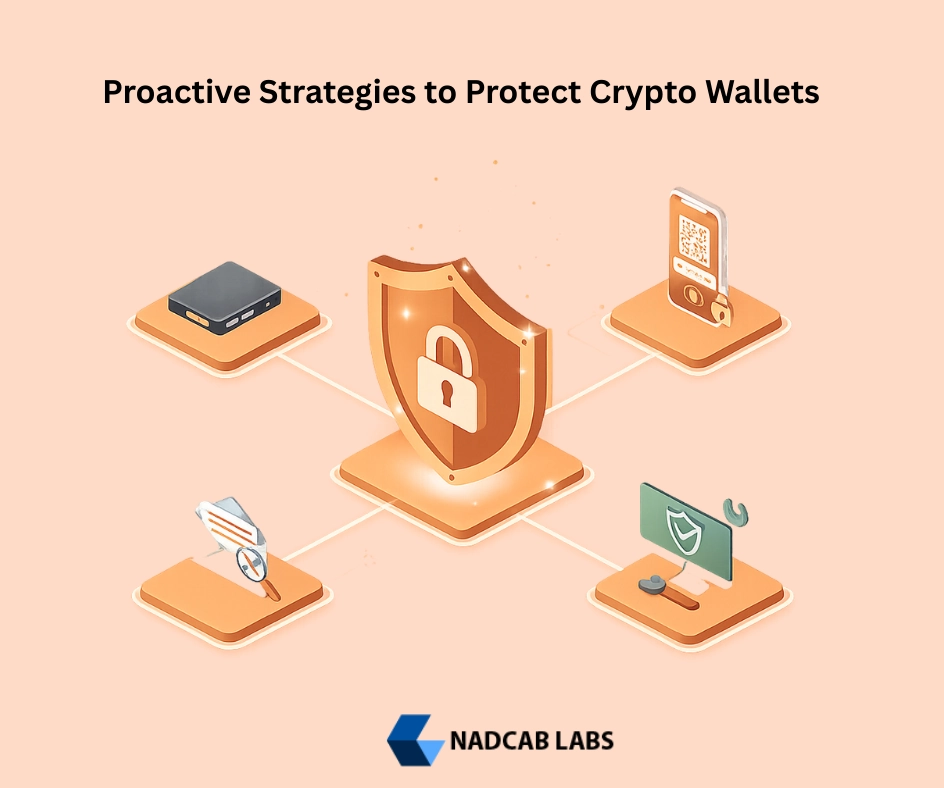
To safeguard digital assets against future crypto wallet hacks, here are proactive strategies that every participant in the blockchain space should adopt. First, individuals and institutions should make secure wallet setup a priority by leveraging hardware wallets and cold storage for large holdings. Hardware wallets significantly reduce online attack vectors by isolating private keys from internet-connected devices.
Implementing multisig wallet setups adds another layer of protection by requiring multiple authorizations for transactions. This structure helps reduce the risk of a single compromised key leading to total loss. However, as seen in the WazirX attack, multisig must be paired with secure smart contract logic and careful verification before approvals are granted.[2]
Regularly reviewing granted approvals and smart contract interactions can prevent unauthorized assets from being moved without consent. Modern tools allow users to revoke permission for contracts that are no longer needed, minimizing the window of opportunity for attackers to misuse existing approvals.
Vigilance against phishing, social engineering, and malware is also essential. Crypto holders should never share private keys or seed phrases, avoid clicking suspicious links, and ensure software is downloaded from verified sources. These basic security habits can prevent a large proportion of wallet hacks attributed to deliberate deception or careless behavior.
Finally, platforms and developers should invest in continuous monitoring and response frameworks that can detect unusual activity and automatically trigger alerts or freezes when necessary. Faster identification of anomalous transfers can significantly reduce the scale of losses, giving teams a chance to intervene before assets are fully drained.
Build My Crypto wallet Now!
Turn your dream into reality with a powerful, secure crypto wallet built just for you. Start building now and watch your idea come alive!
The Future of Wallet Security and Emerging Trends
Looking ahead, the landscape of crypto wallet hacks and security is evolving. New technologies such as artificial intelligence (AI)-driven fraud detection and predictive risk analytics are being integrated into wallet management systems. These innovations help identify suspicious patterns before they escalate, offering a promising new layer of defense as cyber threats become more sophisticated.
Blockchain consistency protocols and formal verification methods are also being developed to ensure that smart contracts behave as intended. By mathematically proving that contract logic cannot be manipulated in unintended ways, developers can reduce the risk posed by hidden vulnerabilities. This technical rigor, while demanding, represents a forward path toward stronger systemic safety.
Education, too, will play a crucial role. As the crypto ecosystem attracts an ever-broader audience, from institutional investors to everyday users, widespread security literacy will reduce the number of successful social engineering attacks and foster a community better equipped to protect its assets.
Strengthening the Crypto Ecosystem Against Future Hacks
The history and ongoing evolution of crypto wallet hacks reveal both the vulnerabilities and resilience of the blockchain world. While hackers have succeeded in executing some of the largest financial breaches in history, the responses from the community from enhanced security protocols to transparent disclosures demonstrate a collective commitment to improvement.
For investors and developers, the lessons from these hacks are clear: prioritize security, adopt rigorous safeguards, stay informed about emerging threats, and never underestimate the importance of protective measures. By understanding the causes, impacts, and lessons of past wallet hacks, the crypto ecosystem can become stronger, more secure, and more trustworthy for years to come. With vigilance and innovation, the promise of decentralized finance can be realized without repeating the painful mistakes of the past.
Frequently Asked Questions
Q1.What are crypto wallet hacks and how do they happen?
Crypto wallet hacks occur when attackers gain unauthorized access to a digital wallet and steal cryptocurrencies stored inside it. These hacks usually happen due to leaked private keys, phishing attacks, malware infections, weak passwords or vulnerabilities in smart contracts and wallet infrastructure.
Q2.Are crypto wallet hacks common in 2025?
Yes, crypto wallet hacks remain common in 2025 as the crypto ecosystem continues to grow. While security technology has improved, hackers have also become more sophisticated, targeting both centralized exchanges and individual non-custodial wallets through advanced attack methods.
Q3.Which type of wallet is most vulnerable to crypto wallet hacks?
Hot wallets connected to the internet are generally more vulnerable to crypto wallet hacks compared to cold wallets. However, even cold wallets can be compromised through operational mistakes, phishing, or during fund transfers if security protocols are weak.
Q4.Can hacked crypto wallets recover stolen funds?
In most cases, funds stolen through crypto wallet hacks cannot be recovered because blockchain transactions are irreversible. Some exchanges may reimburse users, but for non-custodial wallets, recovery is extremely rare unless law enforcement intervenes early.
Q5.What is the biggest crypto wallet hack in history?
The largest crypto wallet hack in history occurred in 2025 when attackers stole approximately $1.5 billion worth of cryptocurrency from a Bybit wallet, making it the most financially damaging crypto wallet breach ever recorded.
Q6.How can users protect themselves from crypto wallet hacks?
Users can reduce the risk of crypto wallet hacks by using hardware wallets, enabling two-factor authentication, avoiding suspicious links, keeping seed phrases offline and regularly reviewing wallet permissions and transaction approvals.
Q7.Are decentralized wallets safe from crypto wallet hacks?
Decentralized wallets offer greater user control, but they are not completely safe from crypto wallet hacks. Smart contract bugs, phishing scams, and user errors can still lead to asset loss if proper security measures are not followed.
Q8.Why do smart contracts play a role in crypto wallet hacks?
Smart contracts can contribute to crypto wallet hacks when they contain coding flaws or poor access controls. Hackers exploit these weaknesses to bypass wallet security rules and drain funds without needing private key access.
Q9.Do crypto wallet hacks affect cryptocurrency prices?
Yes, major crypto wallet hacks often impact cryptocurrency prices by reducing investor confidence. Large-scale hacks can trigger short-term market volatility and increase regulatory scrutiny across the crypto industry.
Q10.Will crypto wallet hacks decrease in the future?
Crypto wallet hacks may decrease over time as security standards improve, but they are unlikely to disappear completely. As long as digital assets hold value, attackers will continue seeking new ways to exploit technical and human vulnerabilities.
Explore Services
Related Services
Reviewed by

Aman Vaths
Founder of Nadcab Labs
Aman Vaths is the Founder & CTO of Nadcab Labs, a global digital engineering company delivering enterprise-grade solutions across AI, Web3, Blockchain, Big Data, Cloud, Cybersecurity, and Modern Application Development. With deep technical leadership and product innovation experience, Aman has positioned Nadcab Labs as one of the most advanced engineering companies driving the next era of intelligent, secure, and scalable software systems. Under his leadership, Nadcab Labs has built 2,000+ global projects across sectors including fintech, banking, healthcare, real estate, logistics, gaming, manufacturing, and next-generation DePIN networks. Aman’s strength lies in architecting high-performance systems, end-to-end platform engineering, and designing enterprise solutions that operate at global scale.