Ai Overview
DApp monetization refers to the strategies and mechanisms through which decentralized applications generate revenue for their creators, stakeholders, and community participants. 3%) can generate millions in annual revenue when paired with high trading volumes. For DApp operators, the revenue opportunity lies in taking a percentage of staking rewards as a protocol fee, which can range from 5% to 15% depending on the competitive landscape. 5% to 10%) create ongoing passive revenue every time an asset changes hands.
Key Takeaways
- ✓DApp monetization in 2026 depends on combining multiple revenue streams like fees, tokens, and staking for sustainable income.
- ✓Transaction fees remain the most reliable DApp revenue model, providing predictable income for DeFi and marketplace platforms.
- ✓Token-based monetization requires carefully designed tokenomics to avoid inflation, maintain utility, and build long-term community trust.
- ✓NFT integrations and digital asset sales create unique monetization opportunities for gaming, art, and metaverse DApps globally.
- ✓DAO-based governance models let communities control treasury spending, creating transparent and democratic revenue distribution systems.
- ✓Cross-chain interoperability unlocks broader user bases and higher transaction volumes by connecting multiple blockchain ecosystems seamlessly.
- ✓Subscription models adapted for Web3 offer recurring blockchain DApp income while maintaining decentralized ownership principles effectively.
- ✓Security audits and regulatory compliance in the USA, UK, UAE, and Canada are non-negotiable for protecting DApp revenue streams.
- ✓Avoiding common mistakes like ignoring UX, speculative tokenomics, and skipping audits is critical for profitable DApp ideas.
- ✓AI-powered personalization, zero-knowledge proofs, and intent-based architectures will shape DApp monetization trends beyond 2026.
What Is DApp Monetization and Why It Matters in 2026?
DApp monetization refers to the strategies and mechanisms through which decentralized applications generate revenue for their creators, stakeholders, and community participants. Unlike traditional software that depends on centralized billing systems, DApps leverage blockchain-native tools such as smart contracts, token economies, and on-chain fee structures to produce income. In 2026, understanding how to monetize your DApp is no longer optional. It is a foundational requirement for any serious Web3 project.
The global blockchain market has entered a maturity phase where speculation alone cannot sustain projects. Businesses in the USA, UK, UAE, and Canada are demanding clear, auditable DApp revenue models before investing capital. According to industry reports, over 60% of blockchain startups that failed in previous years lacked a coherent monetization plan. This underscores why decentralized app monetization must be baked into the product from day one rather than treated as an afterthought.
What makes 2026 unique is the convergence of regulatory clarity, improved user experience tooling, and institutional interest. Enterprises now view DApps not as experimental curiosities but as strategic business enablers. Whether you are building a DeFi protocol, an NFT marketplace, or a decentralized social platform, choosing the right DApp business model determines whether your project thrives or joins the growing list of abandoned smart contracts. The opportunity to earn money from decentralized apps has never been greater, but neither has the competition.
How DApps Make Money: Understanding Revenue Models?
Understanding how DApps make money requires a shift from traditional SaaS thinking. Decentralized applications operate on open, permissionless networks where users often expect transparency and community ownership. Revenue models for Web3 applications must therefore balance profitability with decentralization principles. The most successful DApp monetization strategies in 2026 combine multiple income streams to reduce dependency on any single source.
The primary categories of DApp revenue models include transaction fees, token sales and staking, subscription access, NFT and digital asset sales, advertising partnerships, DAO treasury management, and data monetization. Each model carries distinct advantages depending on the DApp’s target audience, blockchain platform, and regulatory environment. For instance, a DeFi lending platform in the USA might prioritize transaction fees and yield mechanisms, while a gaming DApp targeting UK and UAE markets might focus on NFT sales and in-app purchases.
The key to sustainable blockchain app revenue lies in understanding user behavior. Projects that force monetization on users without delivering clear value see rapid churn. Conversely, platforms that align incentives through well-designed token economics create positive feedback loops where users actively participate because they benefit financially. This is the fundamental principle behind every profitable DApp idea in the current market cycle.
Direct Revenue
Transaction fees, premium features, and in-app purchases generate immediate income from active users.
Token Economics
Native token sales, staking rewards, and governance participation create long-term ecosystem value.
Community-Driven
DAO treasuries, crowdfunding, donations, and referral programs harness collective community power.
Transaction Fees as a Core DApp Monetization Strategy
Transaction fees represent the most straightforward and widely adopted method to monetize your DApp. Every time a user executes a swap, transfer, or interaction within your platform, a small percentage or flat fee is collected by the protocol. This model mirrors traditional payment processing but operates entirely on-chain, providing full transparency and auditability. For DeFi protocols, decentralized exchanges, and marketplace DApps, transaction fees are the backbone of blockchain app revenue.
The beauty of transaction fee models lies in their scalability. As user adoption grows, revenue increases proportionally without requiring additional infrastructure costs. Platforms like Uniswap and PancakeSwap have demonstrated that even modest fee percentages (0.01% to 0.3%) can generate millions in annual revenue when paired with high trading volumes. For businesses in Canada and the UAE exploring Web3 monetization strategies, fee-based models offer predictable, measurable income streams.
However, setting competitive rates is crucial. Users in 2026 have numerous alternatives, and excessive fees will drive them to competing platforms. The best approach involves tiered fee structures where high-volume users enjoy reduced rates, loyalty discounts reward long-term participants, and Layer 2 integrations minimize gas costs. Optimizing smart contract efficiency to reduce computational overhead also directly impacts profitability by lowering the operational cost per transaction.
Token-Based Monetization and Token Economics Explained
Token-based monetization is one of the most powerful yet complex DApp monetization strategies available. By creating a native utility or governance token, you establish an internal economy where users purchase, earn, stake, and trade tokens to interact with your platform. This model aligns user incentives with platform success because token holders benefit directly as the ecosystem grows. Well-designed token economics can transform a DApp from a simple tool into a thriving digital economy.
There are three primary approaches to token-based DApp revenue models. First, utility tokens grant access to specific features or services within the DApp. Second, governance tokens give holders voting rights on protocol decisions, treasury allocations, and upgrade proposals. Third, hybrid models combine both functions, creating layered engagement where users have both economic and political stakes in the platform. Projects across the USA and UK are increasingly adopting hybrid tokenomics to maximize decentralized app monetization potential.
The critical factor is supply management. Tokens with unlimited inflation lose value over time, eroding user trust. Successful projects implement mechanisms like token burns (permanently removing tokens from circulation), vesting schedules for team allocations, and emission reduction curves. A fixed or predictable token supply, combined with genuine utility, creates scarcity dynamics that support long-term price appreciation and sustainable DApp business model viability.
Staking, Rewards, and Yield-Based Revenue Models
Staking and yield-based models represent a unique category of DApp monetization where users actively participate in securing the network or providing liquidity in exchange for rewards. For platform operators, this creates a self-sustaining economic loop: users lock their assets, which deepens liquidity and strengthens the protocol, while earning passive returns. This mechanism is central to how many DeFi platforms earn money from decentralized apps.
In 2026, staking has evolved beyond simple proof-of-stake validation. Liquid staking derivatives allow users to stake their tokens while still maintaining liquidity through representative tokens (like stETH or similar instruments). This innovation has significantly increased participation rates across platforms in the USA, UK, and Canada. For DApp operators, the revenue opportunity lies in taking a percentage of staking rewards as a protocol fee, which can range from 5% to 15% depending on the competitive landscape.
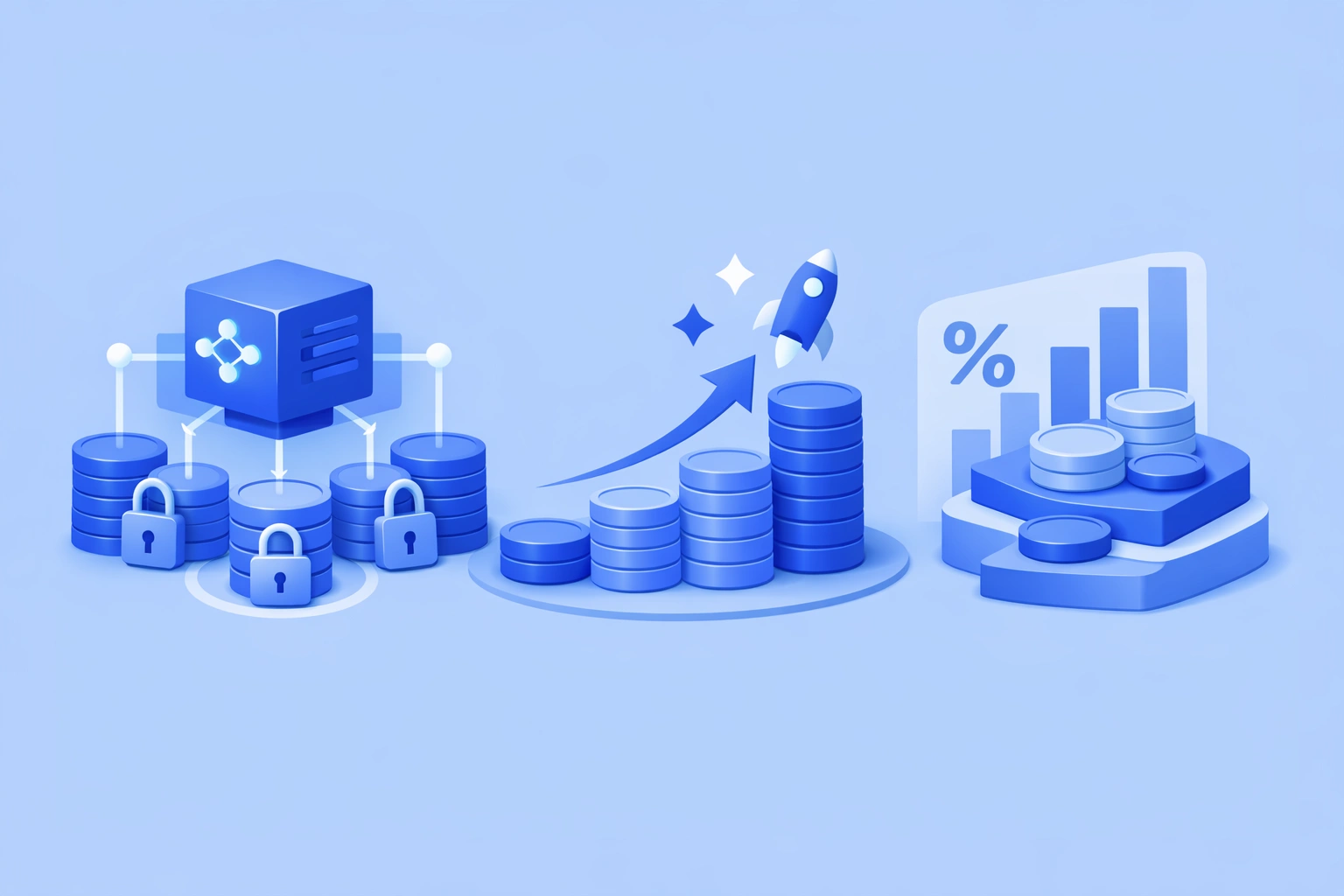
Yield farming and liquidity mining programs also serve as powerful user acquisition tools. By offering attractive APY rates during launch phases, DApps can rapidly bootstrap liquidity pools and user bases. The key to sustainable Web3 monetization strategies through yield programs is gradually transitioning from incentivized participation to organic usage. Projects that maintain unrealistically high yields indefinitely risk catastrophic token inflation and user exodus when rewards become unsustainable.
Subscription Models for Decentralized Applications
Subscription-based revenue is rapidly gaining traction as a DApp monetization strategy in 2026. While subscriptions are a staple of Web2 business models, adapting them for decentralized environments requires creative implementation. Instead of traditional recurring credit card charges, Web3 subscriptions often use token-gated access, time-locked NFT passes, or smart contract-based recurring payments that execute automatically when conditions are met.
This model works exceptionally well for DApps that provide ongoing value such as analytics dashboards, portfolio management tools, premium research content, and advanced trading features. Businesses in the USA and Canada have found success offering tiered subscription plans where free users access basic features while premium subscribers unlock advanced analytics, faster execution, and exclusive market insights. The recurring nature of subscriptions provides predictable blockchain DApp income, which is valuable for financial planning and investor confidence.
Token-gated subscriptions add an additional layer where holding a certain amount of the platform’s native token grants automatic access to premium tiers. This approach is particularly effective because it simultaneously drives token demand, reduces circulating supply (as tokens are held rather than sold), and creates a loyal user base with financial alignment to the platform’s success. For Web3 monetization strategies, subscriptions represent a reliable bridge between traditional SaaS economics and decentralized principles.
NFT Monetization: Selling Digital Assets in Your DApp
NFT monetization has matured significantly since the speculative craze of earlier years. In 2026, non-fungible tokens serve as practical utility instruments within DApp ecosystems rather than purely speculative collectibles. Gaming DApps use NFTs to represent in-game assets like characters, weapons, and virtual land. Social platforms use them for profile badges and access passes. DeFi protocols tokenize lending positions and liquidity stakes as tradeable NFTs. This evolution has created robust DApp monetization examples across multiple sectors.
The revenue opportunities from NFT integration are multi-layered. Primary sales generate immediate income when users purchase newly minted assets. Secondary market royalties (typically 2.5% to 10%) create ongoing passive revenue every time an asset changes hands. Marketplace listing fees add another income stream for platforms that host NFT trading. For DApp creators targeting the UAE and UK markets, where luxury digital collectibles and gaming economies are particularly popular, NFT-based revenue models offer compelling returns.
Successful NFT monetization requires genuine scarcity and utility. Simply attaching an NFT to a feature does not create value. The asset must provide tangible benefits, whether that is enhanced gameplay, exclusive content access, governance privileges, or interoperability across multiple platforms. DApps that treat NFTs as integral components of their user experience rather than bolt-on revenue grabs see significantly higher engagement and sustained secondary market activity.
Real-World Example: Axie Infinity’s NFT Economy
Axie Infinity pioneered the play-to-earn model by allowing players to breed, battle, and trade NFT creatures. At its peak, the platform generated over $1.3 billion in NFT trading volume. While its token economy faced challenges, the core monetization principle of creating tradeable in-game assets remains a blueprint for gaming DApps worldwide.
In-App Purchases and Premium Features in DApps
In-app purchases (IAPs) represent one of the most accessible ways to earn from a DApp, particularly for consumer-facing applications. This model allows users to access core functionality for free while paying for enhanced features, cosmetic upgrades, premium tools, or accelerated experiences. The freemium approach has proven successful across traditional mobile apps, and its adaptation for decentralized applications follows similar psychological principles while leveraging blockchain payment rails.
For gaming DApps, IAPs might include character skins, power-ups, exclusive levels, or virtual real estate upgrades. Analytics platforms can offer advanced charting tools, API access, or real-time alert systems as premium features. Social DApps might charge for profile customization, content promotion, or enhanced messaging capabilities. The critical design principle is ensuring that free users have a complete, valuable experience while premium offerings provide genuine enhancements worth paying for.
Implementing IAPs on blockchain offers unique advantages. Payments settle instantly, there are no chargebacks, and smart contracts can automate delivery of purchased items without intermediary involvement. Additionally, purchased digital items can be tokenized as NFTs, giving users true ownership and the ability to resell them. This creates a secondary market that further drives engagement. Businesses in Canada and the USA are finding that transparent, blockchain-verified IAP systems build higher user trust compared to opaque traditional app store billing.
Advertising and Sponsored Integrations in Web3 Apps
Advertising in the Web3 space requires a fundamentally different approach than traditional digital advertising. Privacy-conscious blockchain users are wary of invasive tracking, making conventional ad-tech methods inappropriate. Instead, decentralized advertising networks like Brave’s Basic Attention Token (BAT) model have pioneered opt-in advertising where users choose to view ads and receive token rewards for their attention. This creates a win-win scenario for DApp monetization.
Sponsored integrations offer a more organic revenue stream for DApps. Rather than displaying banner ads, platforms can integrate partner protocols, featured tokens, or co-branded experiences directly into the user interface. A DeFi aggregator might feature a new lending protocol in exchange for referral fees. A gaming DApp might incorporate branded virtual items from partner companies. These integrations feel native to the user experience and command premium pricing from sponsors.
For DApp operators targeting audiences in the UK and UAE, where digital advertising regulations are stringent, transparent sponsorship disclosures and user consent mechanisms are essential. The Web3 advertising ecosystem is still maturing, but early adopters who build privacy-respecting, value-aligned advertising models are positioning themselves for significant blockchain app revenue as the market scales. The key principle is ensuring that advertising enhances rather than degrades the user experience.
DApp Monetization Model Comparison
| Monetization Model | Revenue Type | Best For | Risk Level |
|---|---|---|---|
| Transaction Fees | Recurring | DeFi, Exchanges, Marketplaces | Low |
| Token Sales | One-time + Ongoing | Any DApp with ecosystem token | Medium-High |
| Staking/Yield Fees | Recurring | DeFi, Staking Platforms | Medium |
| Subscriptions | Recurring | Analytics, Tools, SaaS DApps | Low |
| NFT Sales + Royalties | One-time + Passive | Gaming, Art, Metaverse | Medium |
| In-App Purchases | One-time | Gaming, Social, Consumer DApps | Low |
| Advertising/Sponsorships | Recurring | High-Traffic DApps | Low-Medium |
| DAO Treasury Management | Ongoing | Community-Governed Protocols | Medium |
DAO-Based Monetization and Community-Driven Revenue
Decentralized Autonomous Organizations (DAOs) have introduced an entirely new paradigm for DApp monetization. Instead of a centralized entity capturing all revenue, DAO structures distribute income across community members who hold governance tokens. This model creates unprecedented alignment between platform success and user benefits, making it one of the most compelling Web3 monetization strategies for community-focused projects.
DAO treasuries accumulate funds through protocol fees, token sales, partnership deals, and investment returns. Token holders vote on how these funds are allocated, whether for further product work, marketing initiatives, grants to ecosystem builders, or direct distributions to stakeholders. This transparency in financial management builds deep trust with users and investors. Projects in the USA and UK have seen that DAO governance significantly increases user retention because participants feel genuine ownership over the platform’s direction.
For DApp creators, the DAO model does not eliminate personal revenue. Founding teams typically retain a significant token allocation (usually 15-25%) with vesting schedules, ensuring their interests align with long-term protocol health. Additionally, service agreements between the DAO and the founding team can provide ongoing compensation for operational work. This structure allows builders to monetize your DApp while maintaining the decentralized ethos that attracts Web3-native users across global markets including the UAE and Canada.
Data Monetization Opportunities in Decentralized Platforms
Data monetization in the decentralized space operates fundamentally differently from Web2 data harvesting. Rather than collecting and selling personal user data without consent, blockchain-based data monetization focuses on aggregated, anonymized, on-chain analytics that provide valuable market intelligence. DApps can monetize your DApp data streams by offering premium analytics dashboards, API access to on-chain data, and market research reports derived from protocol activity.
The transparency of blockchain data creates unique opportunities. Every transaction, swap, and interaction is publicly recorded, making it possible to generate insights about market trends, user behavior patterns, and liquidity flows without compromising individual privacy. DApps that aggregate and visualize this data can charge institutional clients, hedge funds, and research firms for premium access. Platforms like Dune Analytics and Nansen have built significant businesses on this model, demonstrating that data services represent a viable decentralized app monetization channel.
For DApp operators, implementing data monetization requires careful consideration of user consent and privacy regulations, particularly in jurisdictions like the UK (GDPR) and Canada (PIPEDA). The emerging standard is user-controlled data sharing where individuals opt in and receive compensation (typically in tokens) for allowing their usage data to be included in aggregated datasets. This consent-based model respects decentralization principles while creating a sustainable revenue stream that grows with platform adoption.
Cross-Chain Monetization and Interoperability Benefits
Cross-chain interoperability has become a significant driver of DApp revenue in 2026. By deploying across multiple blockchain networks, DApps can access broader user bases, capture more transaction volume, and reduce dependency on any single chain’s ecosystem health. Protocols that operate on Ethereum, Solana, Avalanche, and emerging L2 networks simultaneously enjoy compounding network effects that directly translate to higher blockchain app revenue.
The monetization opportunities from cross-chain operations include bridge fees (charges for transferring assets between chains), multi-chain liquidity aggregation premiums, and arbitrage facilitation. DApps that act as interoperability layers, connecting fragmented liquidity pools across different networks, can command significant fees for this service. For businesses in the UAE and USA building cross-chain DApps, the ability to serve users regardless of their preferred blockchain creates a substantial competitive advantage.
However, cross-chain operations introduce complexity in security, user experience, and smart contract management. Each additional chain requires separate audits, monitoring infrastructure, and operational overhead. The best DApp monetization strategies for cross-chain platforms involve starting with two or three high-volume chains, proving the revenue model, and then expanding systematically. This measured approach ensures that the costs of multi-chain deployment are justified by actual revenue gains rather than speculative reach.
Monetization Model Selection Criteria
Assess Your User Base
Analyze your target audience’s willingness to pay, preferred payment methods, and blockchain familiarity. Users in mature markets like the USA and UK respond differently than emerging Web3 markets.
Match Model to Product Type
DeFi protocols suit transaction fees and yield models. Gaming DApps thrive with NFTs and IAPs. SaaS tools benefit from subscriptions. Select models that align with your product’s natural usage patterns.
Plan for Regulatory Compliance
Ensure your chosen model complies with regulations in your target markets. Token sales may require securities registration. Advertising must meet FTC and ASA guidelines. Plan legal frameworks early.
Security, Compliance, and Trust Factors in DApp Revenue
No DApp monetization strategy can succeed without a foundation of security, regulatory compliance, and user trust. In 2026, the blockchain industry has learned hard lessons from high-profile hacks, rug pulls, and regulatory crackdowns. Users in the USA, UK, UAE, and Canada now demand audited smart contracts, transparent team identities, and clear regulatory compliance before committing significant funds to any platform.
Security audits from reputable firms like CertiK, Trail of Bits, or OpenZeppelin have become a baseline requirement rather than a luxury. Multi-signature wallets for treasury management, bug bounty programs for vulnerability discovery, and real-time monitoring systems for anomaly detection are considered standard practice. DApps that cut corners on security to save costs invariably face greater losses when exploits occur, as both user funds and platform reputation are destroyed simultaneously.
Regulatory compliance varies significantly by jurisdiction. The USA’s SEC and CFTC have increasingly clear frameworks for token classifications. The UK’s FCA requires registration for crypto asset businesses. The UAE’s VARA (Virtual Assets Regulatory Authority) has established one of the world’s most comprehensive crypto regulatory frameworks. Canada’s CSA provides guidance on when tokens constitute securities. Understanding and proactively complying with these frameworks is essential for any DApp business model that aims to operate legally and build lasting trust with institutional and retail users.
DApp Compliance and Governance Checklist
| Compliance Area | Requirement | Priority |
|---|---|---|
| Smart Contract Audit | Third-party security audit before mainnet launch | 🔴 Critical |
| KYC/AML Integration | User verification for regulated markets (USA, UK, UAE) | 🔴 Critical |
| Token Classification | Legal opinion on whether tokens are securities or utilities | 🔴 Critical |
| Data Privacy (GDPR/PIPEDA) | User consent frameworks and data handling policies | 🟡 High |
| Multi-Sig Treasury | Minimum 3-of-5 multi-signature wallet for funds management | 🟡 High |
| Bug Bounty Program | Ongoing vulnerability reporting with structured rewards | 🟡 High |
| Insurance Coverage | DeFi insurance for smart contract risk coverage | 🟢 Recommended |
| Transparent Reporting | Regular on-chain treasury reports and governance updates | 🟢 Recommended |
Real-World Examples of Successful DApp Monetization
Examining successful DApp monetization examples provides actionable insights for builders at any stage. Uniswap remains the gold standard for transaction fee-based monetization, generating hundreds of millions in cumulative fees through its decentralized exchange protocol. Its 0.3% swap fee (split between liquidity providers and the protocol) demonstrates that even minimal fees at scale produce substantial revenue. This model has been replicated across dozens of DeFi protocols globally.
Aave showcases how lending protocols can monetize your DApp through interest rate spreads. The platform charges borrowers a variable interest rate and distributes a portion to lenders while retaining a spread for the protocol treasury. Operating in regulated markets across the USA and UK, Aave has also demonstrated that institutional-grade compliance and decentralized monetization are not mutually exclusive. Their GHO stablecoin further diversifies revenue through seigniorage mechanisms.
On the gaming front, platforms like Illuvium and Gods Unchained demonstrate profitable DApp ideas in the gaming sector. These projects combine NFT sales, marketplace fees, and token-based economies to create diversified income. The Brave Browser, with its BAT token, has proven that privacy-respecting advertising can generate meaningful Web3 revenue. Collectively, these examples confirm that sustainable blockchain app revenue requires genuine utility, community alignment, and diversified income streams rather than reliance on any single monetization channel.
Common DApp Monetization Mistakes to Avoid
After eight years of advising blockchain projects across the USA, UK, UAE, and Canada, our team has identified recurring monetization mistakes that derail otherwise promising DApps. The most common error is launching without a clearly defined revenue model. Too many founders assume that building a great product will naturally lead to revenue. In decentralized ecosystems, monetization pathways must be architected into the smart contract layer from the beginning.
Overcomplicating token economics is another frequent pitfall. Projects that create multiple token types, convoluted staking mechanisms, and Byzantine governance structures confuse users and fragment liquidity. The best DApp monetization strategies in 2026 favor simplicity. A single utility token with clear use cases, transparent supply mechanics, and straightforward staking rewards outperforms complex multi-token architectures in both user adoption and revenue generation.
Neglecting user experience in favor of technical sophistication is equally damaging. If users cannot easily navigate your DApp, understand the fee structure, or complete transactions without friction, no monetization model will save the project. Other critical mistakes include ignoring security audits (which leads to exploit vulnerability), failing to plan for regulatory changes, and focusing exclusively on short-term token price rather than building genuine utility. Each of these errors directly reduces the potential to earn from a DApp over the long term.
Real-World Example: The Terra/Luna Collapse
The Terra ecosystem’s collapse in 2022 remains a cautionary tale about unsustainable yield models. The Anchor Protocol offered 20% APY on UST stablecoin deposits, attracting billions in TVL. When the underlying economics could not sustain these returns, the entire ecosystem collapsed, wiping out over $40 billion in value. This example underscores why sustainable, utility-backed DApp revenue models are essential.
Future Trends in DApp Monetization Beyond 2026
Looking beyond 2026, several emerging trends will reshape how DApps generate revenue. Artificial intelligence integration is creating new DApp monetization opportunities where AI-powered analytics, automated trading strategies, and personalized user experiences command premium pricing. DApps that leverage on-chain AI agents to optimize yield farming, predict market movements, or automate portfolio management are positioned to capture significant value in this convergence.
Zero-knowledge proof technology is enabling privacy-preserving monetization models. Users can prove eligibility for premium services, verify credentials, or participate in gated experiences without revealing personal data. This technology is particularly relevant in regulated markets like the UK and USA, where privacy requirements and monetization ambitions often conflict. ZK-based subscription verification, for example, allows platforms to gate premium features while maintaining user anonymity.
Intent-based architectures represent another frontier. Rather than requiring users to manually execute transactions, intent-based DApps allow users to express desired outcomes (like “swap Token A for the best available rate across all chains”), and the protocol handles execution. These platforms can monetize through solver fees, priority execution premiums, and MEV-sharing mechanisms. Combined with account abstraction (which hides blockchain complexity from end users), these innovations will make DApp monetization strategies increasingly seamless and accessible to mainstream audiences across the USA, UK, UAE, and Canada.
Final Thoughts
The opportunity to monetize your DApp in 2026 is substantial, but success demands strategic planning, diversified revenue streams, and unwavering commitment to security and compliance. As our team has observed across hundreds of projects in the USA, UK, UAE, and Canada, the DApps that generate lasting blockchain app revenue are those that prioritize genuine user value over short-term speculation. Whether you choose transaction fees, token economics, NFT integrations, subscriptions, or DAO-based models, the fundamental requirement remains the same: build something people genuinely need and willingly pay for.
The landscape of DApp monetization strategies continues to evolve rapidly. AI integration, cross-chain interoperability, zero-knowledge privacy technology, and intent-based architectures are creating entirely new revenue categories that did not exist just two years ago. Staying informed about these trends while maintaining a solid foundation in proven revenue models gives your project the best chance of long-term success. The best DApp monetization strategies in 2026 combine proven fundamentals with forward-looking innovation.
Whether you are launching a new DeFi protocol, building a gaming platform, or creating the next social DApp, the strategies outlined in this guide provide a comprehensive roadmap for generating sustainable income. Remember that how to monetize a decentralized application is not a one-time decision but an ongoing process of optimization, community feedback, and market adaptation. Start with one or two core revenue models, validate them with real users, and expand from there. The Web3 economy rewards builders who are both ambitious and pragmatic.
Ready to Build a Profitable DApp?
Our blockchain experts have helped 200+ projects monetize their DApps successfully. Let us design a revenue strategy tailored to your product and market.
Frequently Asked Questions
Q1.What does it mean to monetize your DApp?
To monetize your DApp means to implement revenue-generating mechanisms within your decentralized application so it produces consistent income. This can involve transaction fees, token sales, staking rewards, subscriptions, or NFT sales. Unlike traditional apps that rely on centralized payment gateways, DApp monetization strategies leverage blockchain-native tools like smart contracts and tokenomics. Businesses in the USA, UK, UAE, and Canada are increasingly exploring these models to build sustainable Web3 ventures with long-term profitability and community trust.
Q2.How do DApps make money in 2026?
DApps make money through multiple revenue models including transaction fees, token-based economies, staking yields, premium feature access, and NFT marketplace integrations. In 2026, the most profitable DApp ideas combine several of these approaches into hybrid models. Revenue models for Web3 applications have matured significantly, with cross-chain interoperability and DAO governance enabling new income streams. Projects across the USA and UAE are leading adoption by integrating compliant, scalable monetization into their blockchain app revenue frameworks.
Q3.What are the best DApp monetization strategies in 2026?
The best DApp monetization strategies in 2026 include transaction fee models, token launches with solid utility, staking and yield programs, subscription tiers, NFT asset sales, and advertising integrations. Successful decentralized app monetization requires understanding your user base and selecting models that align with your product. Combining freemium access with premium upgrades and community-driven DAO treasuries creates diversified income. Businesses in the UK and Canada are adopting these Web3 monetization strategies to compete globally.
Q4.Can you earn passive income from a DApp?
Yes, earning passive income from a DApp is achievable through staking mechanisms, liquidity provision, yield farming, and automated smart contract royalties. Token holders can earn rewards by participating in network validation or governance. NFT creators receive ongoing royalties from secondary sales. These blockchain DApp income models allow founders and users alike to generate recurring revenue without active involvement. Markets in the UAE and USA have seen growing interest in yield-based DApp revenue models.
Q5.What is token-based monetization for DApps?
Token-based monetization involves creating a native utility or governance token that powers your DApp ecosystem. Users purchase, earn, or stake tokens to access features, vote on proposals, or receive rewards. This DApp business model aligns user incentives with platform growth, creating network effects. Tokenomics design is critical because poorly structured token supplies can lead to inflation or loss of trust. Projects in Canada and the UK are increasingly leveraging token economics as a core Web3 monetization strategy.
Q6.How much does it cost to build and monetize a DApp?
Building and monetizing a DApp varies widely based on complexity, blockchain choice, and features. Simple DApps may cost between $20,000 and $50,000, while advanced platforms with DeFi integrations or NFT marketplaces can exceed $200,000. Costs include smart contract audits, UI design, and ongoing maintenance. Choosing the right DApp monetization model early reduces wasted resources. Businesses in the USA and UAE typically invest more in security audits and regulatory compliance to protect their blockchain app revenue streams.
Q7.What mistakes should you avoid when monetizing a DApp?
Common mistakes include launching without a clear revenue model, overcomplicating tokenomics, ignoring regulatory compliance, and neglecting user experience. Many founders focus solely on token price speculation instead of building genuine utility. Poor security practices can destroy user trust and revenue overnight. Skipping community engagement and failing to test across multiple chains also limits growth. Successful DApp monetization strategies prioritize transparency, simplicity, and user-centric design across markets in the USA, UK, UAE, and Canada.
Explore Services
Related Services
Reviewed by

Aman Vaths
Founder of Nadcab Labs
Aman Vaths is the Founder & CTO of Nadcab Labs, a global digital engineering company delivering enterprise-grade solutions across AI, Web3, Blockchain, Big Data, Cloud, Cybersecurity, and Modern Application Development. With deep technical leadership and product innovation experience, Aman has positioned Nadcab Labs as one of the most advanced engineering companies driving the next era of intelligent, secure, and scalable software systems. Under his leadership, Nadcab Labs has built 2,000+ global projects across sectors including fintech, banking, healthcare, real estate, logistics, gaming, manufacturing, and next-generation DePIN networks. Aman’s strength lies in architecting high-performance systems, end-to-end platform engineering, and designing enterprise solutions that operate at global scale.