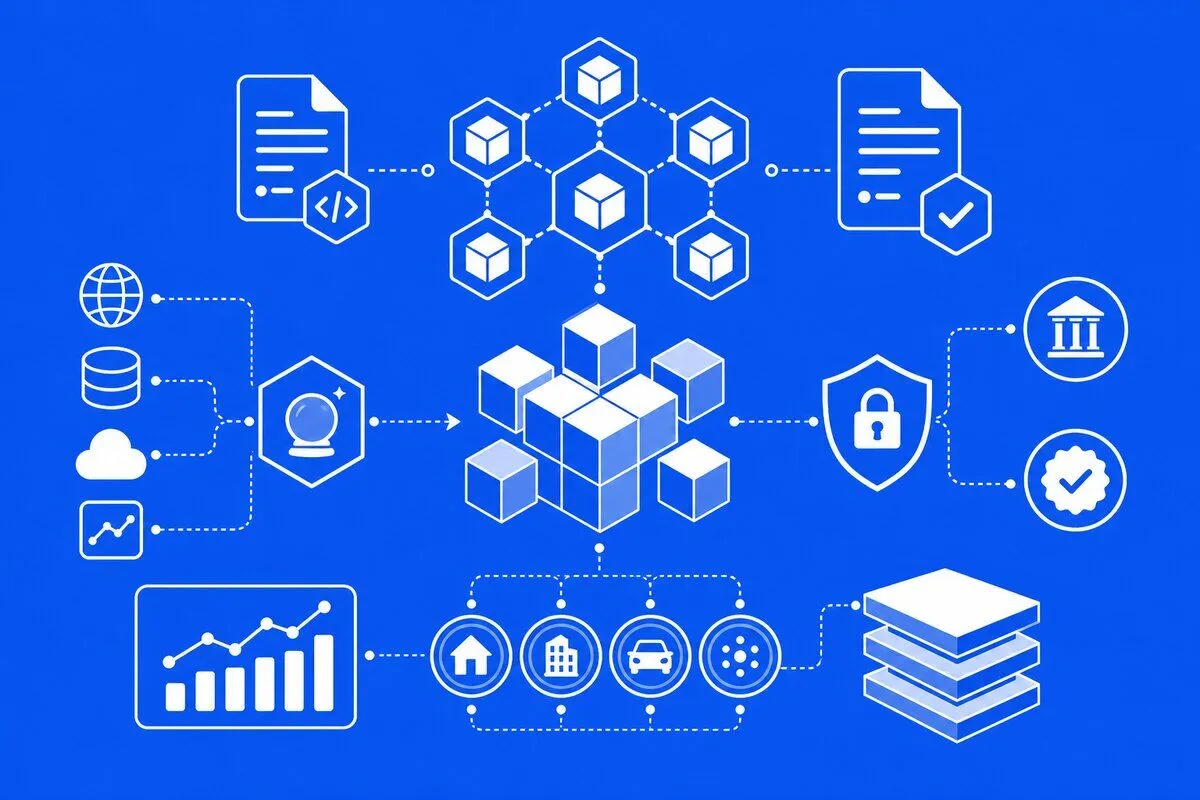
Ai Overview
A multichain wallet lets users store, send, receive, and manage assets across multiple blockchains from one interface. One seed phrase can secure many chains because wallets use HD standards (BIP-39/BIP-32/BIP-44) to derive chain-specific keys. Address formats differ (BTC vs EVM vs Solana), so validation + chain detection are critical to prevent wrong-chain losses. Over 31% of wallet users now participate in DeFi directly through their multichain wallets.
Key Takeaways: Multichain Wallet
- A multichain wallet lets users store, send, receive, and manage assets across multiple blockchains from one interface.
- One seed phrase can secure many chains because wallets use HD standards (BIP-39/BIP-32/BIP-44) to derive chain-specific keys.
- Address formats differ (BTC vs EVM vs Solana), so validation + chain detection are critical to prevent wrong-chain losses.
- Token support isn’t automatic—wallets index assets using standards like ERC-20/BEP-20/SPL/TRC-20 and verified token lists.
- Transaction signing is chain-specific (UTXO vs account-based vs instruction-based), including fee logic (gas vs Bytes vs compute units).
- RPCs + indexers power the experience—nodes fetch live state, while indexers improve speed for history, NFTs, and portfolio views.
- Multichain ≠ cross-chain—supporting many chains is different from bridging assets between chains (which adds extra risk).
- Security expands with chain coverage—best practices include secure enclave/HSM, hardware wallet support, phishing protection, and simulation.
- UX makes or breaks adoption—good wallets reduce network confusion, show fees clearly, and block invalid addresses by default.
- Future direction includes account abstraction, chain abstraction, gasless flows, and AI-driven security + portfolio assistance.
A multichain wallet is a single cryptocurrency wallet application that enables users to store, manage, and transact digital assets across multiple blockchain networks simultaneously. Unlike traditional single-chain wallets that only support one blockchain ecosystem, a multichain wallet consolidates Bitcoin, Ethereum, Solana, BNB Chain, and dozens of other networks into one unified interface.
With the global crypto wallet market projected to reach $100.77 billion by 2033 at a CAGR of 26.3%, and over 65% of cryptocurrency users now relying on mobile-based solutions, understanding how multichain wallets work has become essential for anyone participating in the Web3 ecosystem.
Managing cryptocurrency assets in today’s fragmented blockchain landscape presents a significant challenge. With over 1,000 different blockchains operating independently and each ecosystem using its own consensus mechanisms, token standards, and address formats, users often find themselves juggling multiple wallet applications just to manage their digital portfolio.
This is precisely where a multichain wallet transforms the user experience. Rather than maintaining separate wallets for Bitcoin, Ethereum, Solana, and other networks, it provides a single, secure interface to interact with all of them. Having worked in blockchain development and wallet infrastructure for over eight years, we have witnessed firsthand how this technology has evolved from rudimentary multi-currency storage solutions to sophisticated platforms that form the backbone of decentralized finance.
Throughout this comprehensive guide, we will explore the technical architecture that enables a Cryptocurrency wallet to support multiple cryptocurrencies, examine the security considerations that developers must address, and provide actionable insights for businesses looking to build their own multichain wallet solutions.
What Is a Multichain Wallet? (Basics)
In simple terms, a multichain wallet is a digital tool that allows you to store, send, receive, and manage cryptocurrencies from multiple blockchain networks using a single application. Think of it as a universal remote control for your digital assets, where instead of switching between different devices, you have one interface that works with everything.
The fundamental difference between a multichain wallet and a single-chain wallet lies in their scope of support. A single-chain wallet, such as a Bitcoin-only wallet, exclusively handles Bitcoin transactions and cannot interact with Ethereum smart contracts or Solana programs. A Crypto wallet, however, integrates the necessary protocols and derivation paths to generate valid addresses and sign transactions across numerous blockchain networks.[1]
| Feature | Single-Chain Wallet | Multichain Wallet |
|---|---|---|
| Blockchain Support | One network only | Multiple networks (20-80+) |
| Seed Phrase Management | Single derivation path | Multiple derivation paths from one seed |
| Address Formats | One format | Multiple formats per chain |
| Token Standards | Native tokens only | ERC-20, BEP-20, SPL, TRC-20, etc. |
| Portfolio View | Single chain assets | Unified cross-chain view |
| DApp Connectivity | Limited to one ecosystem | Cross-ecosystem connectivity |
A modern multichain wallet typically supports major cryptocurrencies including Bitcoin (BTC), Ethereum (ETH), Solana (SOL), BNB Chain assets, Polygon (MATIC), Avalanche (AVAX), Arbitrum, Optimism, and many others. Some advanced solutions like ZelCore support over 80 blockchains and thousands of tokens, while MetaMask has recently expanded beyond EVM-compatible chains to include Solana and Bitcoin through their multichain accounts feature.
Real-world usage scenarios it include a trader who needs to manage DeFi positions across Ethereum and Solana, an NFT collector storing digital art on multiple blockchains, or a business accepting payments in various cryptocurrencies. The multichain wallet eliminates the friction of switching between applications and provides a consolidated view of all holdings.
Why Multiple Cryptocurrencies Exist Across Different Blockchains
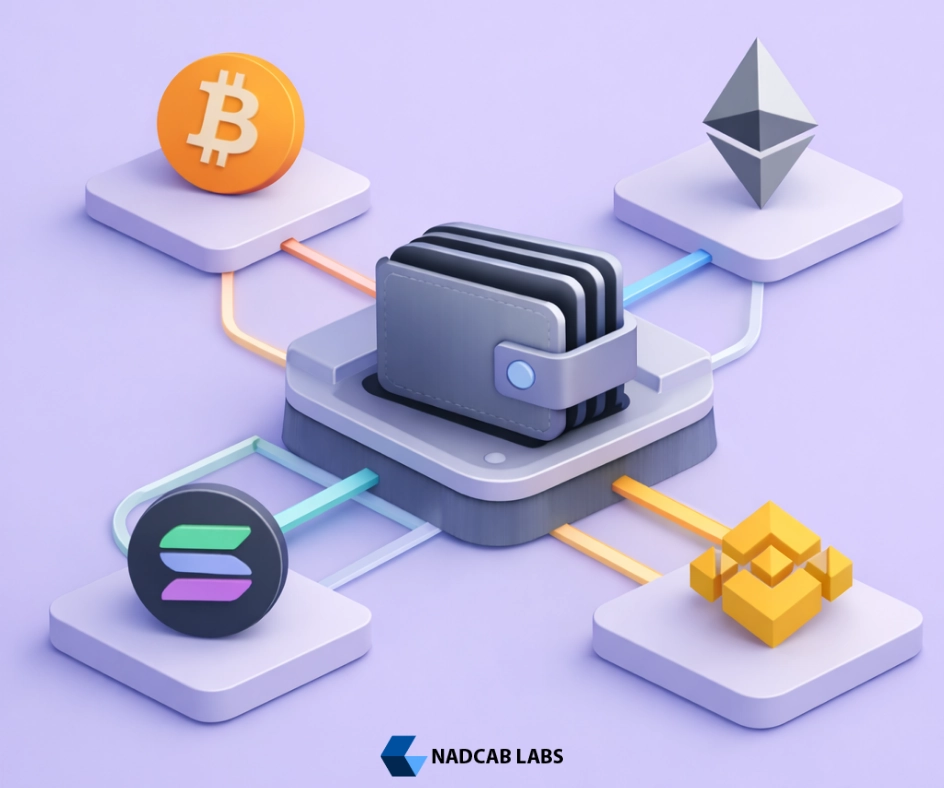
The proliferation of blockchain networks stems from the fundamental reality that no single blockchain can optimize for all use cases simultaneously. Bitcoin pioneered decentralized digital currency with its Proof-of-Work consensus mechanism, prioritizing security and decentralization above transaction speed. Ethereum introduced smart contract functionality, enabling programmable money but initially struggled with scalability. Solana optimized for high throughput with its unique Proof-of-History mechanism, while BNB Chain balanced speed with lower costs through a more centralized validator structure.[2]
Each blockchain ecosystem has developed its own token standards to govern how digital assets behave within their networks. These standards ensure compatibility between tokens and the applications built on each platform, but they create fragmentation that requires specialized handling .
| Token Standard | Blockchain | Key Characteristics | Common Use Cases |
|---|---|---|---|
| ERC-20 | Ethereum | Most established, highest liquidity, proven security | DeFi protocols, governance tokens, stablecoins |
| BEP-20 | BNB Smart Chain | Fast transactions, low fees, EVM-compatible | Gaming tokens, payment applications |
| TRC-20 | TRON | Ultra-low fees, high speed | Micropayments, stablecoin transfers |
| SPL | Solana | Sub-second finality, minimal fees | High-frequency DeFi, NFT marketplaces |
| NEP-141 | NEAR Protocol | Developer-friendly, sharded architecture | Scalable applications, enterprise solutions |
This ecosystem diversity is precisely why users need a multichain wallet. Without one, a user holding USDC would need separate applications depending on whether their tokens exist as ERC-20 on Ethereum, BEP-20 on BNB Chain, SPL on Solana, or TRC-20 on TRON. It abstracts this complexity, automatically detecting which network each asset belongs to and handling the appropriate protocols behind the scenes.
Core Components of a Multichain Wallet (Foundation Layer)
Understanding the foundational architecture of a multichain wallet requires examining four critical components that work together to enable cross-chain functionality. These elements form the technical backbone that separates a robust it from simpler cryptocurrency storage solutions.
Private Keys and Seed Phrases
At the heart of every multichain wallet lies cryptographic key management. Private keys are 256-bit numbers that prove ownership of blockchain addresses and authorize transactions. Rather than storing individual private keys for each network, modern multichain wallets utilize a seed phrase, typically 12 to 24 words generated according to the BIP-39 standard. This seed phrase serves as the master key from which all network-specific private keys are derived.
The seed phrase converts into a 512-bit binary seed through a key derivation function. This seed then generates a hierarchical tree of keys following the BIP-32 standard for hierarchical deterministic wallet architecture. This architecture means users only need to securely backup one seed phrase to protect assets across all supported blockchains within their multichain wallet.
Address Generation for Different Blockchains
Each blockchain network uses different address formats and generation algorithms. Bitcoin addresses might start with “1”, “3”, or “bc1” depending on the address type. Ethereum and EVM-compatible chains use 40-character hexadecimal addresses starting with “0x”. Solana addresses are base58-encoded public keys approximately 44 characters long.
A multichain wallet implements the derivation paths specified by BIP-44, which defines a standard hierarchy: m / purpose’ / coin_type’ / account’ / change / address_index. The coin_type field differentiates between networks, with Bitcoin using 0, Ethereum using 60, and Solana using 501. This standardization allows the same seed phrase to generate valid addresses for any supported blockchain.
Blockchain Nodes and RPC Endpoints
A multichain wallet cannot function in isolation. It must communicate with each blockchain network to query balances, retrieve transaction history, and broadcast signed transactions. This communication occurs through Remote Procedure Call endpoints that connect to blockchain nodes.
Most multichain wallet providers maintain connections to either their own full nodes or utilize third-party RPC providers for each supported network. The wallet sends JSON-RPC requests to these endpoints to fetch current state data and submit transactions. Managing reliable RPC connections across dozens of networks represents a significant infrastructure challenge for any multichain wallet implementation.
Wallet Interfaces and Chain Detection Logic
The user-facing layer of a multichain wallet must intelligently detect which network a user intends to interact with and present relevant information accordingly. This involves parsing incoming connection requests from decentralized applications, identifying the target network, and switching contexts seamlessly. Advanced multichain wallets implement auto-detection algorithms that recognize network parameters and suggest the appropriate chain based on the connected application or recipient address format.
How a Multichain Wallet Supports Multiple Cryptocurrencies (Core Section)
This section addresses the primary question driving this guide. The ability of a multichain wallet to manage assets across diverse blockchain ecosystems depends on several interconnected technical mechanisms working in harmony.
Unified Key Management Across Blockchains
The revolutionary aspect of modern multichain wallet architecture lies in hierarchical deterministic key derivation. When you create a multichain wallet, the application generates a single mnemonic seed phrase that serves as the cryptographic root for all subsequent operations. From this single seed, the wallet can derive an essentially unlimited number of private keys and corresponding public addresses for any supported blockchain.
The BIP-44 specification standardizes this derivation process with a structured path format. For example, the first Bitcoin address derives from path m/44’/0’/0’/0/0, while the first Ethereum address uses m/44’/60’/0’/0/0. The multichain wallet maintains a registry of coin type constants, allowing it to generate valid keys for each network from the same master seed.
HD Wallet Key Derivation Lifecycle
This unified approach means that recovering a multichain crypto wallet requires only the original seed phrase. When imported into any BIP-39/BIP-44 compatible multichain wallet, the application regenerates identical keys for all networks, restoring complete access to the user’s multi-chain portfolio. This recovery process works across different multichain wallet applications that follow the same standards.
Blockchain-Specific Address Handling
Different blockchains implement fundamentally different address schemes, and a multichain wallet must correctly handle each format. Bitcoin utilizes multiple address types including legacy P2PKH addresses starting with “1”, script addresses starting with “3”, and native SegWit bech32 addresses starting with “bc1”. Ethereum and all EVM-compatible chains use 20-byte hexadecimal addresses with a “0x” prefix. Solana employs base58-encoded 32-byte public keys.
The multichain wallet implements address validation logic for each supported network to prevent cross-chain transaction errors. When a user initiates a transfer, the wallet parses the destination address format and verifies it matches the selected network. Sending Bitcoin to an Ethereum address, or vice versa, would result in permanent loss of funds, so this validation layer serves as a critical safety mechanism.
Advanced multichain wallet implementations also handle checksum validation where applicable. Ethereum addresses, for instance, can include mixed-case checksums that help detect transcription errors. The wallet verifies these checksums before broadcasting transactions, adding another layer of protection against user error.
Token Standard Recognition and Asset Indexing
Beyond native currencies, a multichain wallet must detect and display tokens created using various standards. On Ethereum, this means the multichain wallet queries ERC-20 smart contracts to retrieve token balances. The wallet calls the balance Of function on token contracts, passing the user’s address to determine holdings. Similar mechanisms exist for ERC-721 and ERC-1155 NFT standards.
Each blockchain has equivalent token standards requiring specific interaction patterns. BEP-20 tokens on BNB Chain follow ERC-20 conventions but use different contract addresses. SPL tokens on Solana require interacting with Solana’s Token Program, which implements a fundamentally different account model than Ethereum’s contract-based approach.
Most multichain wallets maintain curated token lists containing verified contract addresses for popular tokens on each network. Users can also manually add custom tokens by providing the contract address. The wallet then queries the contract’s metadata functions to retrieve the token name, symbol, and decimal precision for proper display.
Multi-Network Transaction Signing
Transaction structures vary significantly between blockchains, requiring a multichain wallet to implement network-specific serialization and signing logic. Bitcoin transactions use an input/output model where previous unspent transaction outputs are consumed and new outputs created. Ethereum transactions specify a recipient, value, and optional data field for smart contract interactions. Solana transactions contain instructions that reference program accounts.
Fee calculation represents another area requiring chain-specific handling. Bitcoin fees are calculated based on transaction size in virtual bytes. Ethereum uses a gas model where users specify gas price and gas limit, with EIP-1559 adding base fees and priority fees. Solana charges fixed fees per signature plus compute unit costs for complex operations.
The multichain wallet abstracts these differences, presenting users with intuitive fee options while internally constructing properly formatted transactions for each network. After the user confirms, the wallet signs the transaction using the appropriate private key derived for that network and broadcasts it to the corresponding blockchain via RPC endpoints.
Role of Nodes, APIs, and Indexers in Multichain Wallets
It cannot operate without robust backend infrastructure connecting it to each supported blockchain. This infrastructure layer determines the wallet’s reliability, speed, and the accuracy of displayed information.
Full nodes maintain complete copies of blockchain data and validate all transactions according to consensus rules. Running full nodes for every supported chain would require enormous storage and bandwidth resources. For a multichain wallet supporting 50 or more networks, this becomes impractical. Most wallet providers instead connect to third-party RPC infrastructure providers such as Infura, Alchemy, QuickNode, or Chainstack, who operate large-scale node infrastructure as a service.
Indexers serve a complementary role by organizing blockchain data for efficient querying. While raw node APIs can retrieve current state, historical queries like transaction history require specialized indexing services. A multichain wallet typically integrates with indexing providers such as The Graph, Covalent, or Moralis to fetch comprehensive asset and activity data across chains.
| Infrastructure Type | Function | Tradeoffs |
|---|---|---|
| Self-hosted Full Nodes | Maximum decentralization and data sovereignty | High cost, complex maintenance across chains |
| Third-party RPC Providers | Reliable, scalable access to multiple networks | Centralization risk, provider dependencies |
| Indexing Services | Fast historical queries and data aggregation | Additional API dependencies, potential latency |
Performance and scalability considerations become critical as a multichain wallet adds network support. Each additional blockchain requires dedicated RPC connections and potentially different indexing integrations. Wallet providers must balance coverage breadth against infrastructure costs and complexity. The most successful multichain wallet implementations architect their backend services for horizontal scalability, allowing new chains to be added without degrading performance for existing networks.
Cross-Chain Compatibility vs Cross-Chain Transfers
A common misconception conflates multi-chain wallet support with cross-chain transfer capability. These represent distinct functionalities, and understanding the difference is crucial for users and developers alike.
Key Distinction: A multichain wallet supports multiple blockchains independently. Cross-chain transfers move assets between blockchains, requiring external bridge protocols.
Supporting multiple blockchains means the multichain wallet can generate addresses, sign transactions, and display balances for each network separately. Your ETH on Ethereum and SOL on Solana exist in parallel but remain isolated within their respective ecosystems. The wallet does not inherently enable moving value between these chains.
Cross-chain transfers require bridge protocols, specialized infrastructure that locks assets on one chain and mints equivalent representations on another. These bridges introduce additional complexity and security considerations beyond what a basic multichain wallet provides. Some advanced wallets integrate bridge functionality, but this represents an added feature rather than core multichain support.
Security risks in cross-chain transfers deserve particular attention. Bridge protocols have suffered some of the largest exploits in cryptocurrency history, with over $2.5 billion stolen from bridges between 2021 and 2024. The Ronin bridge lost $625 million when attackers compromised validator private keys. The Wormhole bridge suffered a $325 million exploit due to a smart contract vulnerability. These incidents highlight why cross-chain functionality requires careful security evaluation.
When a multichain wallet includes built-in bridging, it typically integrates with established bridge protocols like Wormhole, LayerZero, or Synapse rather than implementing custom solutions. Users should understand that bridge transactions introduce counterparty and smart contract risks beyond the wallet itself. The safest approach involves using well-audited bridges with proven track records and limiting exposure to any single bridge protocol.
Security Architecture
Security considerations for a multi-chain wallet extend beyond traditional single-chain implementations. With assets potentially spread across numerous networks, the attack surface expands proportionally, demanding sophisticated protective measures. Every multichain wallet must implement comprehensive security strategies to protect users across all supported blockchains.
Private Key Isolation
Well-designed multichain wallets maintain logical separation between chain-specific keys. Even though all keys derive from a single seed, the derivation paths ensure that compromising one network’s key does not automatically expose others. Some implementations store keys in separate encrypted containers per chain.
Secure Enclave Integration
Mobile and desktop multichain wallets increasingly leverage hardware security modules built into modern devices. iOS Secure Enclave and Android StrongBox provide tamper-resistant environments for key storage, preventing extraction even if the device is compromised. Biometric authentication gates access to these protected keys.
Hardware Wallet Integration
Leading multichain wallets support hardware wallet connectivity through Ledger and Trezor devices. These hardware wallets store private keys offline and sign transactions internally, never exposing sensitive material to potentially compromised host computers. The Ledger Nano X supports over 5,500 cryptocurrencies through this integration model.
Chain-Level Permissions
Advanced multichain wallets implement granular permission controls allowing users to limit which decentralized applications can access specific chains. This reduces blast radius if a malicious application attempts unauthorized transactions, containing potential damage to explicitly approved networks.
Protection against phishing and malicious smart contracts represents an ongoing challenge. Modern multichain wallets implement domain verification to warn users when connecting to suspicious sites. Transaction simulation previews the effects of smart contract interactions before signing, helping users identify potentially harmful operations. Community-maintained blocklists flag known scam contracts and phishing domains.
Multi-Party Computation wallets represent an emerging security paradigm where private keys are split across multiple parties, requiring threshold participation to sign transactions. This approach eliminates single points of failure and enables social recovery mechanisms. Providers like ZenGo, Fireblocks, and Portal implement MPC technology for their multichain wallet solutions, offering enterprise-grade security without seed phrase management.
UX Challenges in Supporting Multiple Cryptocurrencies
Creating an intuitive user experience for a multichain wallet presents unique design challenges. Users must navigate between networks, understand chain-specific nuances, and avoid costly errors, all within an interface simple enough for mainstream adoption. The success of any multichain wallet depends heavily on how well it solves these UX challenges.
Network switching versus auto-detection represents a fundamental UX decision. Some wallets require users to manually select their active network before each operation, providing explicit control but adding friction. Others implement automatic chain detection based on connected applications or recipient address formats, reducing steps but potentially causing confusion. The most successful Cryptocurrency wallet designs offer both modes, defaulting to intelligent auto-detection while allowing manual override.
Preventing user errors in multi-network environments requires thoughtful safeguards. Clear visual indicators must distinguish between networks to prevent accidental transactions on the wrong chain. Confirmation dialogs should highlight the target network prominently. Address validation must reject incompatible formats before transactions can be submitted. These protective measures occasionally frustrate experienced users but prove essential for mainstream adoption.
Gas fee presentation creates another UX challenge. Different networks use different native tokens for fees and employ varying fee calculation models. A multichain wallet must translate these differences into consistent, understandable fee estimates. Users should know approximately how much they will pay in both native token terms and fiat equivalent, regardless of which blockchain they are using.
Balancing simplicity with advanced controls determines whether a multichain wallet appeals to beginners, power users, or both. Progressive disclosure patterns help by presenting basic functionality upfront while making advanced options accessible through menus or settings. The ideal multichain wallet allows a new user to receive their first cryptocurrency within minutes while providing the depth of control that experienced traders demand.
Multichain Wallet vs Cross-Chain Wallet
While often used interchangeably, multichain wallets and cross-chain wallets serve distinct purposes with different technical architectures. Understanding these differences helps users select the right mult-ichain wallet or cross-chain solution for their specific needs.
| Aspect | Multichain Wallet | Cross-Chain Wallet |
|---|---|---|
| Primary Function | Manage assets on multiple independent chains | Transfer assets between chains natively |
| Technical Complexity | Key derivation and multi-RPC connections | Bridge protocol integration, message passing |
| Security Model | Independent per-chain security | Dependent on bridge security |
| Asset Movement | Requires external bridges | Built-in transfer capability |
| Use Cases | Portfolio management, DApp connectivity | Liquidity provision, arbitrage, unified DeFi |
| Examples | MetaMask, Exodus, Trust Wallet | THORChain, Symbiosis Finance |
A pure multi-chain wallet excels at consolidating portfolio views and providing unified access to decentralized applications across ecosystems. Users benefit from managing all assets through one multichain wallet interface without the additional risks introduced by bridge protocols. This approach suits long-term holders and users primarily interacting with applications on specific chains. For many users, a straightforward multichain wallet provides everything they need.
Cross-chain wallets target users who frequently move assets between networks, whether for yield optimization, arbitrage opportunities, or accessing specific applications. The integrated bridging simplifies transfers but requires trusting the underlying bridge infrastructure. Many modern solutions blur these categories, offering multichain wallet functionality as a base with optional cross-chain features for users who need them.
Use Cases of Multichain Wallets in Web3
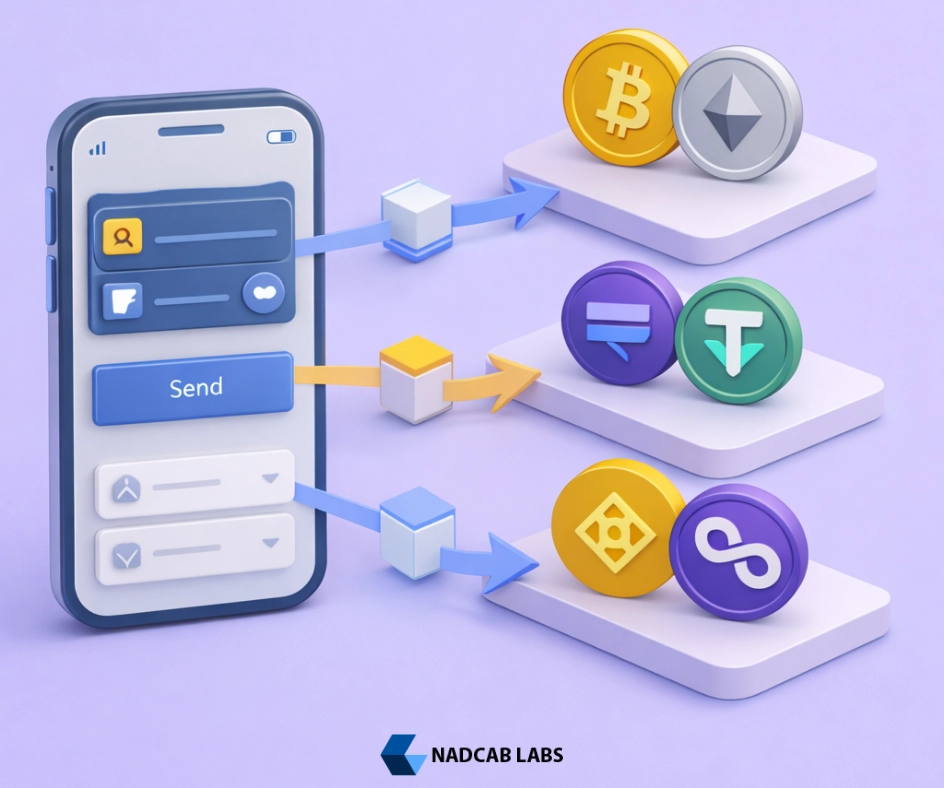
The practical applications of multichain wallet technology span virtually every sector of the Web3 ecosystem. From individual traders to enterprise treasury operations, a modern multichain wallet enables previously fragmented workflows to be consolidated into unified experiences. Each use case demonstrates why multichain wallet adoption continues accelerating across the cryptocurrency industry.
DeFi Asset Management
Traders managing positions across Ethereum DeFi, Solana protocols, and BSC farms can view consolidated holdings, track yields, and execute transactions without switching applications. Over 31% of wallet users now participate in DeFi directly through their multichain wallets.
NFT Storage Across Chains
Digital art collectors with NFTs on Ethereum, Solana, Polygon, and other chains benefit from unified gallery views. The multichain wallet displays all collectibles regardless of origin chain, simplifying portfolio management for serious collectors.
DAO Governance Participation
Active DAO participants often hold governance tokens across multiple protocols and chains. A multichain wallet enables voting on proposals, delegating voting power, and tracking governance activity across all DAOs from a single interface.
Blockchain Gaming
Gamers with in-game assets across multiple blockchain games on different networks manage inventories seamlessly. Play-to-earn rewards, gaming NFTs, and in-game currencies all display in one place within the multichain wallet.
Enterprise Treasury
Businesses holding cryptocurrency reserves across multiple chains require consolidated reporting and multi-signature authorization. Enterprise-grade multichain wallets provide audit trails, role-based access controls, and compliance features that institutional operations demand.
Cross-Border Payments
International businesses and individuals use multichain wallets for remittances, choosing optimal networks based on fees and speed. Stablecoin transfers on low-cost chains provide significant savings over traditional wire transfers.
Future of Multichain Wallet Technology
The multichain wallet landscape continues to evolve rapidly, driven by technological advances that promise to simplify user experiences while enhancing capabilities. Understanding these emerging trends helps businesses and developers anticipate how multichain wallet technology will transform over the coming years. Several key innovations will shape the next generation of multichain wallet solutions.
Account Abstraction and Smart Wallets: ERC-4337, deployed on Ethereum mainnet in March 2023, enables smart contract wallets with programmable logic. This standard allows multichain wallets to implement custom authentication schemes beyond traditional private key signatures. Users can configure social recovery mechanisms, spending limits, multi-signature requirements, and automated recurring payments, all within their wallet smart contract. The Pectra upgrade in May 2025 introduced EIP-7702, further advancing account abstraction capabilities by allowing externally owned accounts to delegate to smart contracts.
Chain Abstraction and Gasless Transactions: The next frontier involves abstracting chain complexity entirely from users. Emerging protocols aim to enable transactions where users never need to know which chain their assets reside on or worry about acquiring native tokens for gas fees. Paymaster contracts can sponsor transaction fees, while intent-based architectures match user desires with optimal execution paths across chains automatically.
Modular Blockchain Ecosystems: The rise of modular blockchains separating execution, consensus, and data availability creates new requirements for multichain wallets. Rollups on Ethereum, alternative data availability layers, and interoperability-focused chains require wallets to understand and navigate increasingly complex architectural landscapes while presenting simplified interfaces to users.
AI-Powered Asset Management: Integration of artificial intelligence within multichain wallets enables intelligent portfolio suggestions, risk assessment, and automated strategies. AI can analyze market conditions across chains, identify optimal yield opportunities, and alert users to potential security threats. These capabilities transform multichain wallets from passive storage solutions into active financial management tools.
Build My Crypto wallet Now!
Turn your dream into reality with a powerful, secure crypto wallet built just for you. Start building now and watch your idea come alive!
How Businesses Can Build a Multichain Wallet
Organizations looking to develop their own multichain wallet must navigate strategic, technical, and regulatory considerations. Drawing from our extensive experience building wallet infrastructure, we outline the critical factors for successful multichain wallet implementation. A well-architected multichain wallet requires careful planning across multiple dimensions.
Choosing Supported Blockchains Strategically: Rather than attempting to support every blockchain simultaneously, successful multichain wallet projects prioritize networks based on target user needs and market demand. Starting with major ecosystems like Bitcoin, Ethereum, and one or two high-growth alternatives provides broad coverage while managing development complexity. Additional chains can be added incrementally based on user feedback and market trends.
Backend Architecture Considerations: Designing for scalability from the outset prevents costly refactoring later. Microservice architectures isolate chain-specific logic, allowing teams to add or update network support without affecting other components. API abstraction layers standardize interactions across different RPC protocols. Caching strategies reduce load on external node providers while maintaining data freshness.
Essential Backend Components for a Multichain Wallet
Key Management Service
Secure derivation and storage
RPC Gateway Layer
Unified multi-chain communication
Transaction Builder
Chain-specific serialization
Balance Indexer
Cross-chain asset aggregation
Fee Estimator
Network-appropriate calculations
Security Monitor
Threat detection and alerts
Compliance and Regulatory Factors: Cryptocurrency regulations vary significantly by jurisdiction and continue to evolve. The European Union’s MiCA framework received final approval in April 2025, establishing comprehensive rules for crypto asset service providers. Multichain wallet developers must implement Know Your Customer procedures where required, maintain transaction records for reporting, and adapt to emerging regulatory requirements across operating regions.
Scalability and Long-term Maintenance: Building a multichain wallet is not a one-time project but an ongoing commitment. Blockchain protocols undergo upgrades that may require wallet updates. New token standards emerge regularly. Security vulnerabilities discovered in dependencies demand prompt patching. Organizations must plan for dedicated development resources to maintain and evolve their multichain wallet throughout its operational lifetime.
Final Thoughts
A multichain wallet achieves its remarkable capability to support multiple cryptocurrencies through the elegant combination of hierarchical deterministic key derivation, network-specific address generation, token standard recognition, and chain-appropriate transaction signing. From a single seed phrase, the multichain wallet generates valid credentials for dozens of blockchain networks, abstracting the underlying complexity into a unified user experience.
The benefits for users of a multichain wallet are clear: consolidated portfolio management, reduced operational friction, and simplified backup procedures. For businesses, offering multichain wallet functionality positions them at the intersection of user demand and technological capability, serving a market projected to exceed $100 billion by 2033.
Choosing or building a multichain wallet requires careful evaluation of security architecture, supported networks, user experience design, and long-term maintainability. The most successful multichain wallet solutions balance comprehensive chain coverage against interface simplicity, providing powerful functionality that remains accessible to users regardless of their technical sophistication.
Ready to Build Your Multichain Wallet Solution?
With over 8 years of blockchain development expertise, our team specializes in creating secure, scalable multichain wallet infrastructure. From architecture design to deployment, we deliver solutions that meet enterprise-grade standards.
Contact us to discuss your multichain wallet requirements and discover how we can help you navigate the multichain future.
Why Choose a Multichain Wallet in 2026?
The multichain wallet has become indispensable for modern cryptocurrency users. As the Web3 ecosystem continues expanding across dozens of blockchain networks, having a reliable multichain wallet ensures you can participate in opportunities across every major chain. Whether you are exploring DeFi protocols, collecting NFTs, or simply managing a diversified crypto portfolio, your multichain wallet serves as the central hub for all blockchain interactions. The best multichain wallet solutions combine robust security with intuitive design, making complex multi-network operations accessible to everyone. Industry analysts project that multichain wallet adoption will accelerate significantly through 2026 and beyond, driven by continued blockchain proliferation and the growing sophistication of decentralized applications.
WRITTEN BY
Blockchain Development Team
8+ years of experience building cryptocurrency wallet infrastructure, DeFi protocols, and enterprise blockchain solutions. Our expertise spans Cryptocurrency wallet development, smart contract auditing, and Web3 application architecture.
Frequently Asked Questions
Q1.What is a multichain wallet?
A multi-chain wallet is a crypto wallet that allows users to store, send, receive, and manage cryptocurrencies across multiple blockchain networks using a single application.
Q2.How does a multichain wallet work?
A multi-chain wallet works by generating blockchain-specific private keys and addresses from one seed phrase and connecting to different blockchain networks through RPC nodes and APIs.
Q3.Is a multichain wallet safe to use?
Yes, It is safe if it uses strong encryption, secure key storage, address validation, and supports hardware wallets or secure enclaves for private key protection.
Q4.What is the difference between a multichain wallet and a cross-chain wallet?
It manages assets on multiple blockchains separately, while a cross-chain wallet enables transferring assets between blockchains using bridge protocols.
Q5.Can a multichain wallet store Bitcoin and Ethereum together?
Yes, It can store Bitcoin, Ethereum, and many other cryptocurrencies together by generating separate addresses for each blockchain from the same seed phrase.
Q6.Does a multichain wallet support tokens like ERC-20 and BEP-20?
Yes, most multi-chain wallets support multiple token standards such as ERC-20, BEP-20, SPL, and TRC-20, allowing users to manage tokens across different networks.
Q7.Can I recover all assets with one seed phrase in a multichain wallet?
Yes, It use hierarchical deterministic (HD) standards, so restoring the seed phrase recovers all blockchain addresses and assets linked to that wallet.
Q8.Do multichain wallets allow cross-chain transfers?
Not by default. It support multiple blockchains, but cross-chain transfers require additional bridge services, which may be integrated as optional features.
Q9.What blockchains are commonly supported by multichain wallets?
Most multi-chain wallets support Bitcoin, Ethereum, BNB Chain, Solana, Polygon, Avalanche, Arbitrum, Optimism, and other popular blockchain networks.
Q10.Who should use a multichain wallet?
It is ideal for DeFi users, NFT collectors, traders, businesses, and anyone holding assets across multiple blockchain ecosystems.
Explore Services
Related Services
Reviewed by

Aman Vaths
Founder of Nadcab Labs
Aman Vaths is the Founder & CTO of Nadcab Labs, a global digital engineering company delivering enterprise-grade solutions across AI, Web3, Blockchain, Big Data, Cloud, Cybersecurity, and Modern Application Development. With deep technical leadership and product innovation experience, Aman has positioned Nadcab Labs as one of the most advanced engineering companies driving the next era of intelligent, secure, and scalable software systems. Under his leadership, Nadcab Labs has built 2,000+ global projects across sectors including fintech, banking, healthcare, real estate, logistics, gaming, manufacturing, and next-generation DePIN networks. Aman’s strength lies in architecting high-performance systems, end-to-end platform engineering, and designing enterprise solutions that operate at global scale.