Ai Overview
The cryptocurrency industry has matured significantly over the past decade, and with that maturation comes an increasingly complex regulatory environment that wallet providers cannot afford to ignore. The compliance checklist for cryptocurrency wallet providers has become essential documentation for any organization seeking to operate legitimately in major markets including the USA, UK, UAE, and Canada.
Key Takeaways
- Cryptocurrency wallet providers must implement comprehensive KYC and AML programs that meet FATF guidelines and local regulatory requirements across all operating jurisdictions.
- The compliance checklist for cryptocurrency wallet providers includes licensing, security protocols, transaction monitoring, data privacy, and regular audit obligations for 2026 operations.
- Custodial wallet providers face stricter regulatory oversight than non-custodial services, requiring money transmitter licenses and capital reserve requirements in most jurisdictions.
- FATF Travel Rule compliance mandates originator and beneficiary data sharing for cross-border transactions, requiring wallet providers to implement interoperability solutions.
- Data privacy regulations including GDPR, CCPA, and UAE PDPL require wallet providers to implement robust user consent mechanisms and secure data storage practices.
- Security standards demand multi-party computation, hardware security modules, regular penetration testing, and SOC 2 Type II certification for enterprise wallet operations.
- Transaction monitoring systems must include real-time blockchain analytics, sanctions screening, and suspicious activity reporting capabilities to maintain regulatory standing.
- Non-compliance penalties in 2026 include substantial financial fines, license revocation, criminal prosecution, and permanent operational bans across major markets.
- Proactive compliance strategies including regular internal audits and regulatory engagement help wallet providers build trust and achieve sustainable business growth.
- The USA, UK, UAE, and Canada have established distinct regulatory frameworks requiring wallet providers to maintain jurisdiction-specific compliance programs.
1. Introduction to Cryptocurrency Wallet Compliance
The cryptocurrency industry has matured significantly over the past decade, and with that maturation comes an increasingly complex regulatory environment that wallet providers cannot afford to ignore. As an agency with over eight years of experience helping blockchain businesses navigate compliance landscapes, we have witnessed firsthand how regulatory frameworks have evolved from virtually non-existent to comprehensive oversight systems that touch every aspect of wallet operations. The compliance checklist for cryptocurrency wallet providers has become essential documentation for any organization seeking to operate legitimately in major markets including the USA, UK, UAE, and Canada.
Understanding why compliance matters begins with recognizing the fundamental role that cryptocurrency wallets play in the digital asset ecosystem. These platforms serve as the primary interface between users and blockchain networks, facilitating storage, transfers, and increasingly complex smart contract interactions. This critical positioning makes wallet providers natural focal points for regulatory oversight, as authorities seek to prevent illicit financial activities while protecting consumer interests.
Why Compliance Matters in the Crypto Wallet Ecosystem
Compliance is not merely a legal obligation but a strategic business imperative that determines long-term viability in the cryptocurrency sector. Wallet providers operating without proper compliance frameworks face existential risks including regulatory enforcement actions, banking relationship terminations, and reputational damage that can permanently undermine customer trust. Our experience working with wallet providers across multiple jurisdictions has consistently demonstrated that organizations prioritizing compliance achieve better market positioning, attract institutional partnerships, and maintain sustainable growth trajectories.
Overview of the Compliance Checklist for Cryptocurrency Wallet Providers
A comprehensive compliance checklist for cryptocurrency wallet providers encompasses multiple interconnected domains including legal registration, KYC implementation, AML monitoring, data privacy protection, security standards, and ongoing reporting obligations, often implemented with the help of specialized blockchain development solutions designed for regulated crypto platforms. Each domain requires specific policies, procedures, technical implementations, and documentation that collectively demonstrate regulatory adherence. This guide provides detailed examination of each compliance area, offering practical frameworks that wallet providers can implement regardless of their current operational maturity.
Risks of Non-Compliance in 2026
The regulatory environment in 2026 presents significantly elevated risks for non-compliant wallet providers. Enforcement agencies in the USA, UK, UAE, and Canada have substantially increased their cryptocurrency oversight capabilities, including specialized investigation units and enhanced cross-border cooperation mechanisms. Financial penalties have escalated into tens of millions of dollars for serious violations, while criminal prosecutions of company executives have become increasingly common. Beyond direct regulatory consequences, non-compliant providers face banking deplatforming, payment processor rejections, and exclusion from legitimate business ecosystems.
3. Licensing and Legal Registration Requirements
Business Registration and Operational Licenses
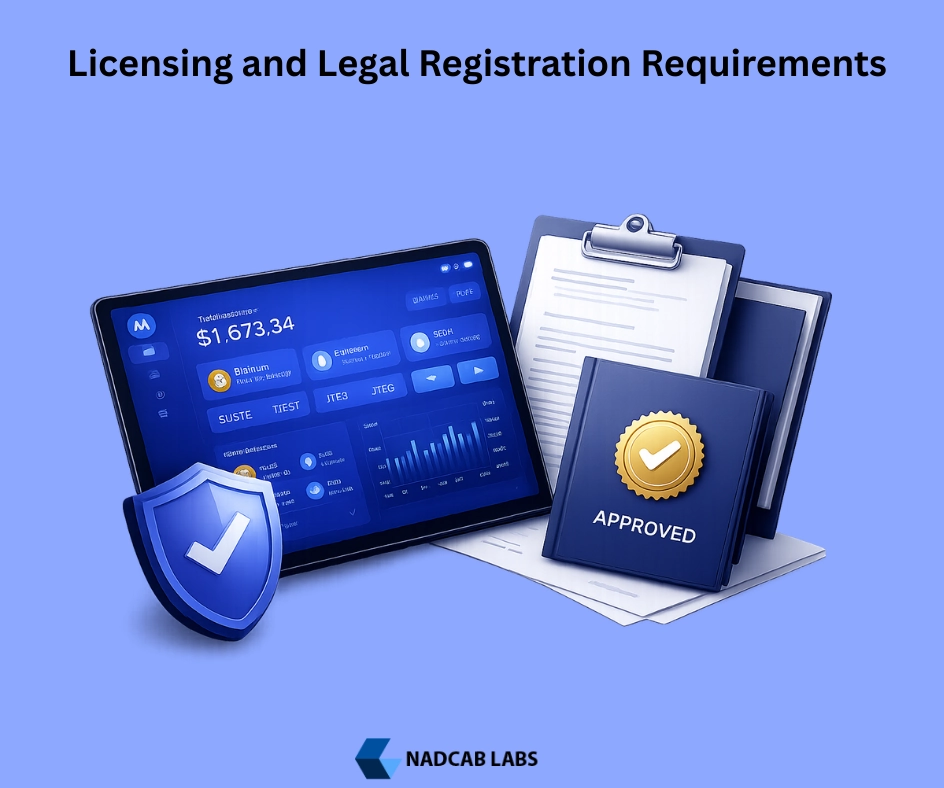
Establishing proper legal foundations represents the first step in any compliance checklist for cryptocurrency wallet providers. This begins with basic business registration in your chosen jurisdiction, followed by obtaining specific licenses required for cryptocurrency operations. The licensing landscape varies significantly by location, with some jurisdictions offering streamlined processes while others require extensive documentation, capital deposits, and prolonged review periods.
In the United States, wallet providers typically require Money Services Business registration with FinCEN at the federal level, plus state-by-state money transmitter licenses that can number over forty depending on service scope. The UAE has established the Virtual Assets Regulatory Authority in Dubai, offering a comprehensive licensing framework specifically designed for crypto businesses. Canada requires registration with FINTRAC as a Money Services Business, while the UK mandates FCA registration under the Money Laundering Regulations.
Licensing Requirements by Jurisdiction
| Jurisdiction | Primary Regulator | License Type | Timeline |
|---|---|---|---|
| USA | FinCEN + State Regulators | MSB + State MTLs | 6-24 months |
| United Kingdom | FCA | Crypto Asset Registration | 3-12 months |
| UAE (Dubai) | VARA | VASP License | 2-6 months |
| Canada | FINTRAC | MSB Registration | 1-3 months |
Legal Documentation Needed for Crypto Wallet Providers
License applications typically require comprehensive documentation including business plans, organizational charts, financial projections, compliance policies and procedures, technology architecture descriptions, and background checks on key personnel. Applicants must demonstrate adequate capital resources, appropriate insurance coverage, and robust internal controls. Our experience guiding clients through licensing processes across multiple jurisdictions has shown that thorough preparation significantly accelerates approval timelines and reduces regulatory friction.
4. KYC Requirements in the Compliance Checklist for Cryptocurrency Wallet Providers
Know Your Customer procedures form the cornerstone of any effective compliance checklist for cryptocurrency wallet providers, establishing user identities and enabling risk-appropriate service delivery.
User Identity Verification Standards
- Government-issued photo ID verification
- Biometric facial recognition matching
- Document authenticity validation
- Liveness detection for fraud prevention
- Database cross-referencing checks
KYC Onboarding Workflows
- Tiered verification based on transaction limits
- Automated document processing systems
- Manual review escalation procedures
- User-friendly submission interfaces
- Clear rejection and appeal processes
Risk-Based KYC Implementation
- Customer risk scoring algorithms
- Enhanced due diligence for high-risk users
- PEP and sanctions list screening
- Ongoing monitoring and periodic reviews
- Source of funds verification protocols
Implementing effective KYC requires balancing regulatory compliance with user experience considerations. Wallet providers must collect sufficient information to satisfy regulatory requirements without creating friction that drives users toward non-compliant competitors. Modern KYC solutions leverage artificial intelligence and machine learning to streamline verification processes while maintaining accuracy standards. The compliance checklist for cryptocurrency wallet providers should specify KYC requirements for each customer tier, along with escalation procedures for complex cases requiring manual review.
6. Data Privacy and User Information Protection
GDPR, DPDP Act (India), and Global Privacy Laws
Data privacy compliance adds another essential dimension to the compliance checklist for cryptocurrency wallet providers. The European Union’s General Data Protection Regulation establishes comprehensive requirements for processing personal data of EU residents, including consent requirements, data minimization principles, and individual rights to access, rectification, and erasure. Similar frameworks exist across jurisdictions, including the California Consumer Privacy Act in the USA, the Personal Data Protection Law in the UAE, and Canada’s Personal Information Protection and Electronic Documents Act.
Wallet providers face unique challenges balancing privacy requirements with AML obligations that mandate data collection and retention. Our guidance to clients emphasizes clear privacy policies that transparently communicate data practices, robust consent mechanisms that provide genuine user choice where legally permissible, and secure data handling throughout the information lifecycle.
Secure Data Storage and Encryption Standards
User data requires enterprise-grade protection including encryption at rest and in transit, access controls limiting data availability to authorized personnel, and audit trails documenting all data access and modifications. Wallet providers should implement AES-256 encryption standards, maintain separate encryption keys for different data categories, and employ key management practices that prevent single points of compromise.
User Consent and Data Retention Policies
Data retention policies must balance privacy principles favoring minimal retention with regulatory requirements mandating record preservation. Most jurisdictions require retention of customer identification and transaction records for five to seven years following relationship termination. Wallet providers must implement systematic data lifecycle management, including secure destruction procedures when retention periods expire. Clear policies communicated to users during onboarding establish appropriate expectations and demonstrate regulatory compliance.
8. Transaction Monitoring and Risk Management
Real-Time Blockchain Monitoring Tools
Effective transaction monitoring requires integration with blockchain analytics platforms capable of real-time analysis across multiple networks. These tools trace transaction flows, identify wallet clusters associated with known illicit activities, and provide risk scores that inform compliance decisions. Leading solutions include Chainalysis, Elliptic, and TRM Labs, each offering distinct capabilities that wallet providers should evaluate against their specific risk profiles and compliance requirements.
The compliance checklist for cryptocurrency wallet providers should specify monitoring parameters including transaction velocity limits, geographic restrictions, and risk score thresholds triggering enhanced review. Automated systems should flag transactions involving addresses associated with sanctioned entities, darknet markets, ransomware campaigns, and other high-risk categories requiring immediate attention.
Fraud Detection and Wallet Risk Scoring
Beyond AML monitoring, wallet providers must implement fraud detection systems protecting users from account takeover, phishing attacks, and social engineering schemes. Behavioral analytics establish baseline patterns for individual users, enabling detection of anomalous activities that may indicate compromise. Multi-factor authentication, session management controls, and withdrawal delay mechanisms provide additional protection layers.
Blacklist and Sanctions Screening
Sanctions compliance requires real-time screening against OFAC, UN, EU, and other sanctions lists, including cryptocurrency addresses designated by authorities. Wallet providers must implement procedures for handling matches, which typically include transaction blocking, account freezing, and regulatory notification. False positive management processes ensure legitimate users are not unnecessarily impacted while maintaining compliance integrity.
9. Smart Contract and Infrastructure Compliance
Secure Smart Contract Operations
Wallet providers interacting with smart contracts must implement rigorous security review processes before integrating new protocols. This includes formal verification where practical, multiple independent code audits, and ongoing monitoring for newly discovered vulnerabilities. Contract upgradability mechanisms require careful governance to prevent unauthorized modifications while enabling necessary security patches.
Code Audits and Vulnerability Management
Regular security audits from reputable firms should cover all wallet infrastructure including front-end applications, APIs, backend systems, and integrated smart contracts. Vulnerability disclosure programs encourage responsible reporting of security issues, while bug bounty programs provide economic incentives for security researchers. Documented remediation processes ensure identified vulnerabilities receive appropriate priority and resolution.
Infrastructure and Disaster Recovery
Business continuity planning ensures wallet services remain available during infrastructure failures, cyberattacks, or natural disasters. This includes geographically distributed systems, automated failover mechanisms, regular backup testing, and documented recovery procedures. Service level agreements should specify uptime commitments, while incident communication plans ensure users receive timely updates during service disruptions.
10. Ongoing Compliance, Audits, and Reporting Lifecycle
Maintaining compliance is an ongoing process requiring continuous attention rather than one-time implementation. The following lifecycle illustrates the continuous nature of compliance obligations for cryptocurrency wallet providers.
1. Policy Review
Quarterly assessment of compliance policies against current regulations and emerging requirements across operating jurisdictions.
2. Risk Assessment
Annual enterprise-wide risk assessment identifying compliance gaps and prioritizing remediation efforts based on impact and likelihood.
3. Internal Audits
Regular internal compliance audits testing control effectiveness and identifying procedural deficiencies requiring correction.
4. External Audits
Annual third-party audits providing independent verification of compliance programs and security controls for regulatory submissions.
5. Staff Training
Ongoing compliance training programs ensuring all personnel understand their obligations and can identify compliance issues.
6. Regulatory Reporting
Timely submission of required regulatory reports including SARs, CTRs, and periodic compliance certifications to relevant authorities.
7. System Updates
Continuous monitoring system enhancements incorporating new typologies, updated sanctions lists, and improved detection algorithms.
8. Documentation
Maintaining comprehensive records demonstrating compliance activities, decisions, and remediation efforts for regulatory examination.
11. Common Compliance Mistakes Crypto Wallet Providers Must Avoid
Ignoring Jurisdiction-Specific Laws
Many providers assume a single compliance framework covers all markets. In reality, the USA, UK, UAE, and Canada each have distinct requirements demanding tailored approaches. Operating without jurisdiction-specific compliance exposes providers to enforcement actions in each non-compliant market, potentially resulting in coordinated regulatory responses that threaten entire operations.
Weak KYC/AML Implementation
Compliance checklist items for cryptocurrency wallet providers frequently reveal inadequate KYC procedures that fail to verify identities properly or AML systems generating excessive false positives that overwhelm compliance teams. Underfunded compliance functions cannot effectively process alerts, leading to missed suspicious activities and regulatory criticism during examinations.
Poor Documentation and Audit Trails
Even providers with effective compliance programs often fail to maintain adequate documentation demonstrating their efforts. Regulatory examinations require evidence of compliance activities, decision rationales, and remediation tracking. Insufficient documentation transforms otherwise compliant operations into apparent violations, undermining relationships with regulators and potentially triggering enforcement actions.
Authoritative Industry Standards for Wallet Provider Compliance
Standard 1: Implement risk-based customer due diligence calibrated to transaction volumes and user risk profiles per FATF guidance.
Standard 2: Maintain segregated user assets with proof of reserves and regular independent attestation for custodial operations.
Standard 3: Deploy multi-party computation or hardware security modules for all private key operations exceeding defined thresholds.
Standard 4: Conduct quarterly penetration testing with immediate remediation of critical and high-severity findings before production release.
Standard 5: Screen all transactions against consolidated sanctions lists with real-time updates and documented handling procedures.
Standard 6: Maintain comprehensive audit logs for all user activities, administrative actions, and system events for minimum five years.
Standard 7: Establish documented incident response procedures with defined escalation paths and regulatory notification timelines.
Standard 8: Provide transparent fee disclosures and clear terms of service meeting consumer protection requirements in all operating markets.
12. Final Compliance Checklist for Cryptocurrency Wallet Providers (Summary Table)
The following comprehensive table summarizes the essential compliance checklist for cryptocurrency wallet providers operating in major markets including the USA, UK, UAE, and Canada.
| Category | Requirements | Priority | Frequency |
|---|---|---|---|
| Legal | Business registration, licenses, legal entity structure, terms of service | Critical | Annual Review |
| KYC/AML | Identity verification, customer due diligence, enhanced monitoring, SAR filing | Critical | Continuous |
| Security | Key management, MPC/HSM, penetration testing, SOC 2 certification | Critical | Quarterly |
| Privacy | GDPR compliance, consent management, data encryption, retention policies | High | Annual Review |
| Monitoring | Blockchain analytics, sanctions screening, fraud detection, risk scoring | Critical | Real-time |
| Reporting | Regulatory filings, internal audits, external audits, compliance certifications | High | Per Schedule |
Compliance Framework Selection Criteria
Selecting the right compliance framework depends on your wallet provider’s operational model, target markets, and growth strategy. Consider these three primary approaches when building your compliance checklist for cryptocurrency wallet providers.
Centralized Compliance Model
Best for: Single-jurisdiction operations or providers with headquarters-centric governance structures.
- Unified policy framework
- Centralized compliance team
- Standardized procedures globally
- Lower operational complexity
Federated Compliance Model
Best for: Multi-jurisdiction operations with significant local regulatory variation requiring regional expertise.
- Regional compliance officers
- Jurisdiction-specific policies
- Local regulatory relationships
- Flexible market adaptation
Hybrid Compliance Model
Best for: Growing providers balancing global standards with local requirements across USA, UK, UAE, and Canada.
- Core global standards
- Regional customization layers
- Coordinated reporting
- Scalable architecture
13. Conclusion: Staying Compliant in the Evolving Crypto Landscape
Future of Crypto Wallet Regulations
The regulatory trajectory for cryptocurrency wallet providers points toward increasing harmonization of global standards while maintaining jurisdiction-specific requirements that reflect local policy priorities. FATF continues refining its guidance, with emphasis on closing gaps in non-custodial wallet oversight and strengthening Travel Rule implementation. The USA, UK, UAE, and Canada are each advancing comprehensive regulatory frameworks that will likely introduce additional compliance obligations over the coming years.
Technology-driven solutions including account abstraction, programmable compliance, and automated reporting are emerging to address compliance challenges while preserving user experience. Wallet providers investing in flexible compliance architectures today will be better positioned to adapt as requirements evolve. The compliance checklist for cryptocurrency wallet providers will continue expanding, making early adoption of robust frameworks increasingly advantageous.
How Proactive Compliance Builds Trust and Scalability
Throughout our eight years working with blockchain businesses, we have consistently observed that proactive compliance approaches deliver tangible business benefits extending far beyond regulatory obligation fulfillment. Compliant wallet providers attract institutional partnerships, maintain stable banking relationships, and build customer trust that supports sustainable growth. The investment in comprehensive compliance programs yields returns through enhanced market access, reduced operational disruptions, and competitive differentiation in increasingly crowded markets.
The compliance checklist for cryptocurrency wallet providers presented in this guide represents foundational requirements that every serious wallet provider must address. However, compliance is not a destination but an ongoing journey requiring continuous attention, adaptation, and investment. By embracing compliance as a strategic priority rather than a regulatory burden, wallet providers position themselves for long-term success in the maturing cryptocurrency ecosystem. The organizations that thrive in 2026 and beyond will be those that recognized early the fundamental importance of building compliant operations from the ground up.
Compliance Requirements Comparison by Market
| Requirement | USA | UK | UAE (Dubai) | Canada |
|---|---|---|---|---|
| Registration Required | Federal + State | FCA Registration | VARA License | FINTRAC MSB |
| KYC Threshold | $3,000 | £1,000 | AED 3,500 | CAD 1,000 |
| Travel Rule | Yes ($3,000+) | Yes (£1,000+) | Yes (All) | Yes (CAD 1,000+) |
| SAR Filing | FinCEN | NCA | FIU | FINTRAC |
| Data Privacy Law | CCPA/State Laws | UK GDPR | PDPL | PIPEDA |
| Record Retention | 5 Years | 5 Years | 5 Years | 5 Years |
Frequently Asked Questions
Q1.What is a compliance checklist for cryptocurrency wallet providers?
A compliance checklist for cryptocurrency wallet providers outlines legal, regulatory, security, and KYC/AML requirements needed to operate lawfully.
Q2.Do cryptocurrency wallet providers need a license?
Yes, custodial cryptocurrency wallet providers usually require licensing or registration depending on jurisdiction and regulatory classification.
Q3.Are non-custodial wallets subject to compliance requirements?
Non-custodial wallets have fewer obligations but must still follow data protection, cybersecurity, and local technology laws.
Q4.Which authorities regulate cryptocurrency wallet providers?
Regulation may come from financial regulators, virtual asset authorities, or securities bodies depending on the country of operation.
Q5.Is KYC mandatory for all crypto wallets?
KYC is mandatory for custodial wallets that manage user funds, while non-custodial wallets may be exempt in some regions.
Q6.What legal documents are required to register a crypto wallet business?
Typically required documents include company incorporation papers, compliance policies, AML programs, and risk management frameworks.
Q7.How does licensing impact a crypto wallet’s credibility?
Proper licensing improves trust, platform credibility, exchange partnerships, and long-term regulatory sustainability.
Q8.Can a cryptocurrency wallet operate globally with one license?
No, most wallet providers must comply separately with regulations in each jurisdiction they operate in.
Q9.What happens if a crypto wallet provider operates without compliance?
Non-compliance can result in penalties, service bans, account freezes, and loss of user trust.
Q10.How often should wallet providers update their compliance checklist?
A compliance checklist for cryptocurrency wallet providers should be reviewed regularly to align with evolving regulations.
Explore Services
Related Services
Reviewed by

Aman Vaths
Founder of Nadcab Labs
Aman Vaths is the Founder & CTO of Nadcab Labs, a global digital engineering company delivering enterprise-grade solutions across AI, Web3, Blockchain, Big Data, Cloud, Cybersecurity, and Modern Application Development. With deep technical leadership and product innovation experience, Aman has positioned Nadcab Labs as one of the most advanced engineering companies driving the next era of intelligent, secure, and scalable software systems. Under his leadership, Nadcab Labs has built 2,000+ global projects across sectors including fintech, banking, healthcare, real estate, logistics, gaming, manufacturing, and next-generation DePIN networks. Aman’s strength lies in architecting high-performance systems, end-to-end platform engineering, and designing enterprise solutions that operate at global scale.