Ai Overview
Contrary to popular belief, cryptocurrency wallet regulation don’t actually store digital coins or tokens. Licensing requirements typically include substantial capital reserves (often $100,000 to several million dollars depending on jurisdiction), comprehensive compliance programs, regular audits, and detailed reporting to regulatory authorities. The Travel Rule applies to transactions of $3,000 or more, requiring wallet providers to collect and transmit originator and beneficiary information.
Key Takeaways
- Cryptocurrency Wallet Regulation is rapidly evolving globally, with jurisdictions implementing strict compliance frameworks for custodial wallet providers while debating non-custodial wallet oversight.
- Custodial wallets face licensing requirements, AML/KYC obligations, and reporting mandates similar to traditional financial institutions across most major markets.
- The regulatory treatment differs significantly between wallet types custodial wallets are heavily regulated while non-custodial (self-hosted) wallets remain in legal grey areas in many jurisdictions.
- Major regulatory frameworks include FinCEN and SEC oversight in the US, MiCA in the EU, FCA registration in the UK, and MAS licensing in Singapore.
- Wallet providers must balance privacy preservation with compliance requirements, implementing sophisticated KYC layers and transaction monitoring systems.
- Future trends point toward increased regulation of non-custodial wallets, global harmonization efforts, and AI-driven compliance technologies by 2025-2030.
The cryptocurrency industry has experienced unprecedented growth, with Blockchain wallets serving as the primary gateway for millions of users worldwide to access blockchain-based financial services. As this ecosystem expands across retail trading, decentralized finance (DeFi), non-fungible tokens (NFTs), and enterprise solutions, Cryptocurrency Wallet Regulation has emerged as a critical focal point for governments and financial authorities globally. Following high-profile exchange collapses, security breaches, and increasing concerns about money laundering and terrorist financing, regulators are intensifying their scrutiny of wallet providers. Understanding Cryptocurrency Wallet Regulation is no longer optional for businesses and developers—it’s essential for survival and growth in this rapidly maturing industry. This comprehensive guide explores the complex regulatory landscape governing crypto wallets, providing actionable insights drawn from over eight years of expertise in blockchain compliance and wallet infrastructure development.
Understanding Cryptocurrency Wallets, Foundation for Regulatory Compliance
What Is a Cryptocurrency Wallet?
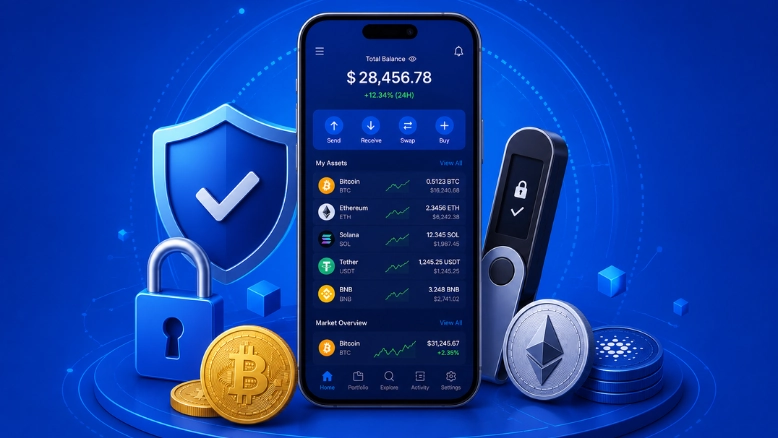
Contrary to popular belief, cryptocurrency wallet regulation don’t actually store digital coins or tokens. Instead, they securely manage the private keys that grant users access to their blockchain-based assets. Think of a wallet as a sophisticated keychain rather than a physical wallet it holds the cryptographic credentials needed to authorize transactions on distributed ledgers. When a user initiates a blockchain transaction, their wallet uses the private key to create a digital signature, proving ownership and authorizing the transfer of assets recorded on the immutable blockchain.
The fundamental role of wallets in blockchain transactions makes them critical control points from a regulatory perspective. Because wallets facilitate the movement of value across borders, often anonymously and instantaneously, they’ve become central to Cryptocurrency Wallet Regulation frameworks worldwide. Regulatory authorities recognize that effective oversight of wallet providers can significantly impact their ability to combat financial crimes while protecting consumers in the digital asset space.[1]
Types of Cryptocurrency Wallets and Their Regulatory Implications
The cryptocurrency ecosystem features diverse wallet architectures, each presenting unique regulatory challenges. Understanding these distinctions is fundamental to grasping how Cryptocurrency Wallet Regulation applies differently across wallet categories:
Custodial Wallets are managed by third-party service providers who control users’ private keys. Examples include exchange-integrated wallets like Coinbase Wallet or Binance Wallet. These providers maintain custody of user assets, similar to how traditional banks hold customer deposits. From a regulatory standpoint, custodial wallet providers typically fall under stringent financial services regulations, including licensing requirements, capital adequacy standards, and comprehensive AML/KYC compliance obligations.
Non-Custodial Wallets give users complete control over their private keys, with the wallet provider offering only software interfaces. Popular examples include MetaMask, Trust Wallet, and hardware wallets like Ledger or Trezor. The regulatory treatment of non-custodial wallets varies significantly by jurisdiction, as authorities grapple with whether software providers should bear compliance responsibilities when they never hold user funds.
Hot Wallets maintain constant internet connectivity, enabling convenient access but increasing security risks. Cold Wallets store private keys offline, providing enhanced security for long-term asset storage. This technical distinction influences regulatory expectations around security standards and custody practices.
Smart Contract Wallets and Multi-Party Computation (MPC) Wallets represent emerging technologies that challenge traditional regulatory frameworks. Smart contract wallets execute programmable logic on-chain, while MPC wallets distribute key management across multiple parties. These innovations raise novel questions about legal responsibility and compliance implementation that regulators worldwide are still addressing.
Cryptocurrency Wallet Types: Regulatory Comparison
| Wallet Type | Key Control | Regulatory Status | Compliance Burden | Examples |
|---|---|---|---|---|
| Custodial | Provider holds keys | Heavily regulated | High – Full AML/KYC | Coinbase, Binance |
| Non-Custodial | User controls keys | Variable by jurisdiction | Low to Medium | MetaMask, Trust Wallet |
| Hardware (Cold) | User controls keys | Generally unregulated | Minimal | Ledger, Trezor |
| Smart Contract | Smart contract logic | Emerging regulation | Uncertain | Argent, Gnosis Safe |
| MPC Wallet | Distributed control | Evolving frameworks | Medium to High | Fireblocks, Qredo |
What Is Cryptocurrency Wallet Regulation?
Cryptocurrency Wallet Regulation encompasses the legal frameworks, compliance requirements, and supervisory mechanisms that govern entities providing wallet services to users. The scope of regulation extends beyond mere software development to include wallet service providers who facilitate cryptocurrency storage, transfer, and management. Regulatory authorities draw critical distinctions between companies offering wallet software as a product versus those operating as wallet service providers who maintain custody or control over user funds.
Governments focus intensely on wallets because they function as financial gateways the primary entry and exit points for value flowing between traditional finance and blockchain ecosystems. When users convert fiat currency to cryptocurrency or vice versa, wallets typically serve as the intermediary. This positioning makes wallet providers strategically important for regulatory enforcement, particularly regarding anti-money laundering efforts and consumer protection mandates.
The key risks that drive Cryptocurrency Wallet Regulation include money laundering, terrorist financing, fraud, consumer fund loss, market manipulation, and sanctions evasion. By establishing clear compliance obligations for wallet providers, regulators aim to bring the crypto industry’s risk profile closer to traditional financial services while preserving innovation potential. Our experience implementing compliance programs across multiple jurisdictions demonstrates that well-designed regulations can actually strengthen the industry by building public trust and institutional confidence.
Core Regulatory Principles Governing Crypto Wallets
Across diverse jurisdictions, certain fundamental principles consistently emerge in Cryptocurrency Wallet Regulation frameworks. Understanding these core requirements is essential for wallet providers seeking to operate legally in multiple markets:
Anti-Money Laundering (AML) Requirements: Wallet providers must implement comprehensive programs to detect and prevent money laundering activities. This includes establishing internal policies, conducting risk assessments, implementing transaction monitoring systems, and filing suspicious activity reports (SARs) with relevant financial intelligence units. AML obligations typically scale with transaction volumes and risk profiles, with higher-risk operations facing more intensive scrutiny.
Know Your Customer (KYC) Obligations: Most jurisdictions require custodial wallet providers to verify user identities before providing services. KYC processes typically involve collecting government-issued identification, proof of address, and sometimes source of funds documentation. Enhanced due diligence may be required for high-value users or those from high-risk jurisdictions. Our compliance teams have developed streamlined KYC workflows that balance regulatory requirements with user experience considerations.
Counter-Terrorist Financing (CTF): Wallet providers must screen users and transactions against sanctions lists and implement measures to prevent their services from being used to fund terrorism. This involves integrating with databases like OFAC’s SDN list, the EU sanctions list, and UN consolidated lists, along with ongoing monitoring of user activities.
Travel Rule and Transaction Traceability: Many jurisdictions now enforce the “Travel Rule” for cryptocurrency transactions, requiring wallet providers to share originator and beneficiary information for transactions exceeding certain thresholds (typically $1,000/€1,000). Implementation poses significant technical challenges, particularly for transactions between custodial and non-custodial wallets. Industry solutions like the Travel Rule Universal Solution Technology (TRUST) are emerging to address these challenges.
Data Protection and Consumer Rights: Cryptocurrency Wallet Regulation increasingly incorporates data privacy requirements aligned with frameworks like GDPR in Europe or CCPA in California. Wallet providers must implement appropriate data security measures, provide transparency about data usage, and respect user rights to access, correct, or delete personal information.
Custody, Liability, and Asset Segregation Rules: Custodial wallet providers typically must segregate customer assets from company assets, maintain adequate insurance or capital reserves, and clearly define liability in cases of theft, loss, or system failures. These requirements mirror traditional financial custody regulations and represent significant operational and capital commitments.
Custodial vs Non-Custodial Wallet Regulation: The Critical Distinction
Regulatory Treatment of Custodial Wallets
Custodial wallet providers face regulatory treatment comparable to traditional financial institutions because they maintain control over user funds. When a company holds users’ private keys, it assumes fiduciary responsibilities that trigger comprehensive regulatory obligations. In most major jurisdictions, custodial wallet operators must obtain licenses as money services businesses, virtual asset service providers, or similar designations.
Licensing requirements typically include substantial capital reserves (often $100,000 to several million dollars depending on jurisdiction), comprehensive compliance programs, regular audits, and detailed reporting to regulatory authorities. Exchange-integrated wallets from platforms like Coinbase, Kraken, or Gemini operate under these stringent frameworks, implementing sophisticated compliance infrastructure including transaction monitoring systems, sanctions screening tools, and dedicated compliance teams.
Our advisory work with custodial wallet providers reveals that compliance costs can consume 15-30% of operational budgets for established platforms, with even higher percentages for startups building initial infrastructure. However, this investment in compliance infrastructure increasingly serves as a competitive advantage, enabling partnerships with institutional clients and traditional financial services firms that demand regulatory certainty.
Regulatory Position on Non-Custodial Wallets
Non-custodial wallets occupy a complex regulatory space. Because software-only wallet providers never control user funds, many jurisdictions historically exempted them from licensing requirements applicable to custodial services. This distinction recognizes that companies merely providing tools for users to manage their own private keys differ fundamentally from those holding custody.
However, regulatory attitudes toward non-custodial wallets are rapidly evolving. Authorities increasingly express concern that unhosted or self-hosted wallets enable illicit activities by allowing users to transact anonymously without KYC verification. Recent regulatory proposals in the EU, US, and other jurisdictions suggest movement toward imposing compliance obligations even on non-custodial wallet software providers, particularly around transaction reporting and user verification for interactions with regulated entities.
The Financial Action Task Force (FATF), the global standard-setter for AML/CFT measures, has explicitly stated that while self-hosted wallet users themselves may not be subject to obligations, regulated entities (like exchanges) interacting with self-hosted wallets must conduct enhanced due diligence. This creates an indirect regulatory effect on non-custodial wallet usage, even without direct regulation of the wallet software itself.
Custodial vs Non-Custodial Wallets: Regulatory Comparison
| Aspect | Custodial Wallets | Non-Custodial Wallets |
|---|---|---|
| Key Control | Provider holds and manages private keys | User exclusively controls private keys |
| Licensing Requirement | Required in most jurisdictions (MSB, VASP, etc.) | Generally not required (evolving) |
| KYC/AML Obligations | Mandatory comprehensive KYC/AML programs | Typically not required for software providers |
| Custody Responsibility | Provider liable for asset security and loss | User bears full responsibility for asset security |
| Capital Requirements | Substantial reserves required ($100K – $5M+) | Typically none |
| Reporting Obligations | Regular regulatory reports, SAR filing required | Minimal to none |
| Travel Rule Compliance | Must implement for transactions ≥$1,000 | Not applicable to software providers |
| Regulatory Trend | Established and tightening globally | Increasing regulatory pressure emerging |
Cryptocurrency Wallet Regulation by Region: A Global Framework
United States: Complex Multi-Layered Oversight
The United States implements Cryptocurrency Wallet Regulation through a complex framework involving federal agencies and state-level authorities. The Financial Crimes Enforcement Network (FinCEN), a bureau of the U.S. Treasury, classifies most custodial wallet providers as Money Services Businesses (MSBs) subject to registration and compliance with the Bank Secrecy Act (BSA).[2]
Under FinCEN guidance, wallet providers who accept and transmit convertible virtual currencies must register as MSBs, implement comprehensive AML programs, verify customer identities, maintain transaction records, and file suspicious activity reports. The Travel Rule applies to transactions of $3,000 or more, requiring wallet providers to collect and transmit originator and beneficiary information.
Additionally, many wallet providers must obtain state-level money transmitter licenses, a process involving separate applications in each operating state, with requirements varying significantly across jurisdictions. States like New York impose particularly stringent requirements through frameworks like the BitLicense, which demands extensive compliance infrastructure, cybersecurity measures, and capital reserves.
The Securities and Exchange Commission (SEC) also impacts wallet regulation when wallets handle assets the SEC deems securities. Recent enforcement actions suggest the SEC views certain tokens as securities, potentially subjecting wallet providers dealing with these assets to additional registration and compliance requirements. Based on our regulatory advisory experience, navigating the U.S. framework requires sophisticated legal counsel and substantial compliance investment, often exceeding $500,000 annually for mid-sized operations.
European Union: MiCA and Harmonized Standards
The European Union’s Markets in Crypto-Assets (MiCA) regulation, entering into force in 2024, establishes comprehensive Cryptocurrency Wallet Regulation across all member states. MiCA introduces the concept of “crypto-asset service providers” (CASPs), explicitly including custody and administration of crypto-assets on behalf of clients essentially custodial wallet services.
Under MiCA, wallet providers must obtain authorization from competent national authorities, meet minimum capital requirements, implement governance arrangements, safeguard client assets through segregation, and establish complaint-handling procedures. The regulation distinguishes clearly between providing custody services (regulated) and merely developing wallet software without custody (generally unregulated).
The EU’s Sixth Anti-Money Laundering Directive (AMLD6) and Transfer of Funds Regulation (TFR) further impact wallet providers by extending AML obligations and implementing the Travel Rule at the €1,000 threshold. These directives require wallet providers to conduct customer due diligence, monitor transactions, and share transaction information with other service providers.
MiCA represents a significant step toward regulatory harmonization, eliminating the previous patchwork of national approaches across EU member states. Our compliance teams have found that MiCA’s clear framework, while demanding, provides greater regulatory certainty compared to navigating 27 different national regimes.
United Kingdom: FCA Registration and Risk-Based Approach
The United Kingdom requires cryptocurrency wallet regulation providers to register with the Financial Conduct Authority (FCA) and comply with the Money Laundering, Terrorist Financing and Transfer of Funds Regulations 2017. The FCA applies a risk-based approach to Cryptocurrency Wallet Regulation, with compliance obligations scaling according to assessed risks.
Registration requires demonstrating fit and proper status of management, implementing appropriate AML systems and controls, and conducting ongoing monitoring of business relationships and transactions. The FCA has proven willing to refuse registration to applicants with inadequate compliance frameworks, rejecting a significant percentage of applications during initial registration periods.
Following Brexit, the UK is developing its own crypto regulatory framework distinct from EU MiCA rules, though many principles align. The FCA emphasizes consumer protection alongside AML/CTF objectives, requiring clear disclosures about risks and implementing marketing restrictions for high-risk crypto products.
Asia-Pacific: Diverse Approaches from Strict to Progressive
Singapore: The Monetary Authority of Singapore (MAS) licenses wallet providers under the Payment Services Act as Digital Payment Token (DPT) service providers. License holders must meet stringent requirements including capital adequacy (minimum SGD 250,000), technology risk management, AML/CFT compliance, and consumer protection measures. Singapore’s framework is considered progressive yet comprehensive, balancing innovation with investor protection.
Japan: Japan implements some of the world’s strictest cryptocurrency regulations following the 2014 Mt. Gox collapse. Wallet providers must register as Virtual Currency Exchange Service Providers, meeting extensive capital requirements, security standards, and operational requirements. Annual audits and regular reporting to the Financial Services Agency are mandatory.
South Korea: Similar to Japan, South Korea requires wallet providers to register with the Financial Services Commission, implement real-name account systems, and comply with comprehensive AML regulations. The framework emphasizes consumer protection and market transparency.
India: India’s regulatory stance on Cryptocurrency Wallet Regulation development has evolved significantly. While earlier attitudes were restrictive, recent developments suggest movement toward regulated acceptance. The proposed crypto bill would establish a licensing regime for service providers, though final details remain under development. Currently, wallet providers must comply with Prevention of Money Laundering Act requirements and RBI directives.
Middle East: Crypto-Friendly with Compliance Emphasis
The United Arab Emirates has emerged as a crypto-friendly jurisdiction while maintaining robust regulatory standards. Dubai’s Virtual Assets Regulatory Authority (VARA) and Abu Dhabi Global Market (ADGM) both offer clear licensing frameworks for wallet providers. Requirements include minimum capital, operational standards, AML/CFT compliance, and cybersecurity measures. The region’s approach attracts international wallet providers seeking clear regulatory pathways while accessing growing Middle Eastern markets.
Global Cryptocurrency Wallet Regulation: Regional Comparison
| Region | Regulatory Body | Key Framework | Travel Rule Threshold | Regulatory Approach |
|---|---|---|---|---|
| United States | FinCEN, SEC, State Regulators | BSA, MSB Registration, State Licenses | $3,000 | Complex, Multi-layered |
| European Union | National Authorities under MiCA | MiCA, AMLD6, TFR | €1,000 | Harmonized, Comprehensive |
| United Kingdom | FCA | MLR 2017, FCA Registration | £1,000 | Risk-based, Consumer Focused |
| Singapore | MAS | Payment Services Act | SGD 1,500 | Progressive, Innovation-Friendly |
| Japan | FSA | Payment Services Act, FIEA | ¥100,000 | Strict, Security Focused |
| UAE | VARA, ADGM | VARA Regulations, ADGM Framework | AED 3,500 | Crypto-Friendly, Compliance-Driven |
Build Your Crypto Wallet with Confidence!
Turn your vision into reality with a powerful, secure crypto wallet built just for you. Navigate complex regulations with expert guidance and launch with confidence!
Licensing and Compliance Requirements for Wallet Providers
Determining when a wallet business needs licensing is the first critical question for any cryptocurrency venture. The answer depends primarily on whether the business exercises control over user funds. If a company holds, transfers, or exchanges virtual assets on behalf of users, it almost certainly requires licensing as a virtual asset service provider, money services business, or equivalent designation in its operating jurisdiction.
Common regulatory licenses required globally for custodial wallet providers include Money Services Business (MSB) registration in the United States, Virtual Asset Service Provider (VASP) licenses under various national frameworks, Digital Payment Token service licenses in Singapore, and crypto-asset service provider authorization under EU MiCA. Each license category comes with specific requirements, application procedures, and ongoing obligations.
Capital requirements vary substantially by jurisdiction but typically range from $100,000 to $5 million or more for custodial operations. These capital reserves serve as consumer protection measures, ensuring providers can meet obligations even if operational issues arise. Regulators increasingly require segregated client asset accounts, keeping customer funds separate from operational capital.
Ongoing compliance obligations extend far beyond initial licensing. Wallet providers must conduct regular third-party audits (often annually or biannually), submit periodic reports to regulatory authorities detailing transaction volumes and risk assessments, maintain comprehensive transaction records for specified periods (typically 5-7 years), implement continuous employee training programs on AML/CFT compliance, and undergo periodic regulatory examinations.
Through our work implementing compliance programs, we’ve observed that successful wallet providers build compliance into their core architecture from inception rather than retrofitting it later. This “compliance-first” approach, while requiring greater initial investment, significantly reduces long-term costs and regulatory risks.
Privacy vs Compliance: The Regulatory Conflict in Cryptocurrency Wallet Regulation
One of the most contentious aspects of Cryptocurrency Wallet Regulation involves the fundamental tension between user privacy and regulatory compliance requirements. Cryptocurrency’s original ethos emphasized financial privacy and freedom from surveillance, principles that directly conflict with government demands for transaction transparency and identity verification.
Regulators express legitimate concerns about anonymous wallets potentially facilitating money laundering, sanctions evasion, and terrorist financing. These concerns intensified following revelations about cryptocurrency’s role in ransomware payments, dark web marketplaces, and sanctions circumvention. Governments argue that reasonable privacy protections can coexist with measures preventing serious financial crimes.
However, privacy advocates warn that excessive Cryptocurrency Wallet Regulation threatens individual financial sovereignty and enables government overreach. Surveillance risks become particularly acute in authoritarian regimes where financial transaction monitoring could be weaponized against political dissidents or minority populations. Even in democratic societies, comprehensive financial surveillance raises civil liberties concerns.
Emerging privacy-preserving compliance models offer potential middle-ground solutions. Technologies like zero-knowledge proofs could enable wallet providers to demonstrate compliance without revealing sensitive transaction details. Decentralized identity systems might allow users to prove their credentials to regulators without centralized databases vulnerable to breaches or misuse. Selective disclosure protocols could share only necessary information with authorities while protecting broader privacy.
Our technical teams are actively developing compliance solutions that minimize privacy intrusions while satisfying regulatory requirements. This represents one of the industry’s most important challenges—finding technological and policy approaches that protect both public safety and individual rights.
Advanced Compliance Challenges in Cryptocurrency Wallet Regulation
Cross-Border Jurisdiction Conflicts: Cryptocurrency’s borderless nature creates immediate jurisdictional complexities for Cryptocurrency Wallet Regulation. A wallet provider based in Estonia serving customers globally might face conflicting requirements from EU MiCA, U.S. FinCEN, Singapore MAS, and dozens of other authorities. When regulations conflict—for example, regarding data residency requirements or permissible asset types—wallet providers face impossible compliance dilemmas. Our regulatory strategy work increasingly involves sophisticated jurisdiction selection and legal structuring to navigate these conflicts.
Regulating Decentralized Wallet Software: Perhaps the most profound challenge in Cryptocurrency Wallet Regulation involves truly decentralized wallet protocols with no controlling entity. If wallet software is developed by a decentralized autonomous organization (DAO), published as open-source code, and operated without any central intermediary, who bears regulatory responsibility? Traditional regulatory frameworks assume identifiable entities subject to government authority, assumptions that break down with decentralized technologies.
Smart Contract Wallets and Legal Responsibility: Smart contract wallets execute programmed logic autonomously on blockchains, raising novel questions about accountability. If a smart contract wallet’s code contains a bug leading to user fund loss, or if it automatically executes transactions violating sanctions, who is responsible—the original developers, the users, the blockchain validators, or no one? Current legal frameworks provide limited guidance on these emerging scenarios.
Open-Source Code and Enforcement Limits: Once wallet software is released as open-source code, it becomes essentially impossible to control its distribution or use. Regulators can target companies operating wallet services, but they cannot prevent individuals from downloading and using open-source wallet code. This fundamental limitation challenges traditional regulatory enforcement models and forces authorities to focus on regulated chokepoints rather than attempting comprehensive code control.
These advanced challenges demand creative regulatory solutions balancing innovation with legitimate public interests. Based on our eight years navigating these issues, we anticipate continued regulatory evolution as authorities develop more sophisticated approaches to decentralized technologies.
Impact of Regulations on Wallet Development Companies
Cryptocurrency Wallet Regulation profoundly shapes how development companies architect and build wallet solutions. Regulatory requirements influence fundamental design decisions, from choosing custodial versus non-custodial architectures to implementing specific security features and compliance integrations.
Compliance-First Wallet Design: Leading wallet providers now adopt compliance-first design principles, building regulatory requirements into core architecture from the start. This includes modular KYC systems that can adapt to different jurisdictional requirements, transaction monitoring engines that flag suspicious patterns in real-time, and flexible reporting systems that generate regulatory filings automatically. While increasing development complexity, compliance-first design reduces long-term costs by avoiding expensive retrofitting.
KYC Layers and Risk Engines: Modern regulated wallets implement sophisticated multi-tiered KYC systems. Basic tier users might complete simplified verification for limited transaction amounts, while higher tiers require enhanced due diligence for institutional-grade access. Risk engines continuously score transactions based on factors like transaction size, counterparty risk, geographic considerations, and historical patterns, automatically escalating suspicious activities for compliance review.
Cost of Compliance: Regulatory compliance imposes substantial costs on wallet providers, with impacts varying dramatically by company size. Enterprise wallet providers typically invest $1-5 million annually in compliance infrastructure, including personnel, systems, and external audits. Mid-sized providers might spend $500,000-$1 million, while startups face minimum costs of $200,000-$500,000 even for basic compliance. These barriers to entry consolidate the market, favoring established players with capital to invest in comprehensive compliance programs.
However, compliance investment also creates competitive advantages. Regulated wallet providers can partner with traditional financial institutions, serve institutional clients demanding regulatory certainty, and operate in major markets that exclude unregulated competitors. Our experience demonstrates that viewing compliance as a strategic investment rather than mere cost burden positions wallet companies for long-term success.
Future of Cryptocurrency Wallet Regulation: 2025-2030 Outlook
The landscape of Cryptocurrency Wallet Regulation will continue evolving rapidly through the remainder of this decade. Based on current regulatory trajectories and our extensive industry engagement, several key trends appear likely to shape the future regulatory environment:
Global Regulatory Harmonization: International coordination on Cryptocurrency Wallet Regulation is accelerating through bodies like FATF, the Financial Stability Board, and the International Organization of Securities Commissions. We anticipate increasing alignment on core principles like Travel Rule implementation, AML/KYC standards, and custody requirements. While perfect harmonization remains unlikely given diverse national interests, greater consistency will reduce compliance complexity for international wallet providers.
Increased Focus on Non-Custodial Wallets: Regulatory attention toward non-custodial wallets will intensify significantly. Authorities increasingly view the current regulatory gap around self-hosted wallets as enabling illicit activity. Expect proposals requiring non-custodial wallet software providers to implement transaction monitoring, collect user information for interactions with regulated entities, or face restrictions on interoperability with licensed services. While implementation challenges remain substantial, political momentum toward extending oversight to non-custodial wallets appears strong.
AI-Driven Compliance and Analytics: Artificial intelligence and machine learning will transform Cryptocurrency Wallet Regulation compliance. Advanced AI systems will analyze blockchain transactions in real-time, identifying suspicious patterns with unprecedented accuracy. Regulators will leverage on-chain analytics tools to monitor compliance without requiring constant reporting from wallet providers. Smart compliance systems will automate KYC verification, risk scoring, and regulatory reporting, reducing costs while improving effectiveness.
Account Abstraction and Regulatory Adaptation: The emergence of account abstraction and programmable wallet architectures will force regulatory evolution. As wallets become more complex—incorporating features like social recovery, spending limits, automated transactions, and multi-signature requirements—regulators must determine how to apply traditional frameworks to these innovative structures. Expect regulatory guidance specifically addressing smart contract wallets, programmable accounts, and novel custody arrangements.
Preparation Requirements for Wallet Builders: Companies building cryptocurrency wallet regulation must prepare now for this evolving landscape. Key preparation steps include: implementing modular compliance architectures that can adapt to changing requirements, establishing relationships with regulators and participating in industry standards development, investing in advanced compliance technologies including AI-powered monitoring, developing expertise across multiple jurisdictions rather than single markets, and building privacy-preserving compliance capabilities to balance competing demands.
Cryptocurrency Wallet Regulation: Timeline Forecast 2025-2030
| Timeframe | Expected Regulatory Developments | Impact on Wallet Providers |
|---|---|---|
| 2025 | MiCA full implementation in EU; US comprehensive crypto bill likely; Travel Rule enforcement expansion | Increased compliance costs; market consolidation; clearer regulatory certainty in major markets |
| 2026-2027 | Non-custodial wallet regulations proposed; AI compliance tools mandated; cross-border coordination frameworks established | Software-only providers face new obligations; automation reduces compliance burden; international operations simplified |
| 2028-2029 | Smart contract wallet regulations finalized; privacy-preserving compliance standards adopted; decentralized identity integration | Programmable wallets face specific requirements; privacy technologies become compliance-enabling; user control increases within regulated framework |
| 2030 | Global harmonization achieved for core standards; AI-powered regulatory supervision normalized; real-time compliance monitoring standard | Compliance becomes largely automated; international operations streamlined; differentiation based on features rather than regulatory arbitrage |
Best Practices for Building a Regulation-Ready Crypto Wallet
Drawing from over eight years of experience guiding wallet providers through regulatory challenges, we’ve identified critical best practices for building regulation-ready cryptocurrency wallets:
Strategic Model Selection: The choice between custodial and non-custodial architecture represents your most consequential regulatory decision. Custodial models face immediate heavy regulation but enable monetization through custody fees and institutional partnerships. Non-custodial models currently avoid most regulatory burdens but face uncertain future requirements and limited revenue models. Hybrid approaches offering both options provide flexibility but double compliance complexity. Carefully evaluate your target market, revenue strategy, regulatory risk tolerance, and technical capabilities before committing to an architecture.
Modular Compliance Architecture: Build compliance capabilities as modular, interchangeable components rather than hardcoded features. This enables rapid adaptation as Cryptocurrency Wallet Regulation evolves across different jurisdictions. A well-designed modular system includes pluggable KYC providers that can swap based on jurisdiction requirements, configurable transaction monitoring rules that adjust to local risk profiles, flexible reporting engines generating required filings for multiple regulators, and adaptable user interface flows that present appropriate compliance steps based on user location and transaction type.
Proactive Legal and Regulatory Engagement: Engage qualified legal counsel specializing in cryptocurrency regulation before launching operations. Comprehensive legal planning should include jurisdiction selection based on regulatory friendliness, operational needs, and target markets; pre-launch licensing assessment identifying all required authorizations; compliance program design meeting or exceeding regulatory expectations; and ongoing regulatory monitoring tracking changes across operating jurisdictions. Consider establishing an advisory board including former regulators who can provide insider perspectives on enforcement priorities and compliance best practices.
Security, Audits, and Transparency: Regulatory compliance extends beyond legal requirements to operational excellence. Implement enterprise-grade security including multi-signature transaction authorization, hardware security modules for key management, comprehensive insurance coverage for custodied assets, regular penetration testing and security audits, and incident response procedures. Commission annual third-party audits of both technical security and compliance programs. Maintain transparency with users about security practices, regulatory compliance, asset custody arrangements, and risk disclosures. Our experience shows that proactive transparency builds trust and often satisfies regulators concerned about consumer protection.
Compliance Culture and Training: Technology alone cannot achieve regulatory compliance—human elements matter enormously. Develop a strong compliance culture starting from leadership and permeating throughout the organization. Implement mandatory regular training programs for all staff on AML/CFT requirements, data protection obligations, and security best practices. Establish clear escalation procedures when compliance concerns arise. Empower compliance teams with sufficient resources, authority, and access to senior management. Companies that view compliance as integral to their mission rather than bureaucratic burden demonstrate superior regulatory outcomes.
Navigating the Evolving Cryptocurrency Wallet Regulation Landscape
The global trajectory of Cryptocurrency Wallet Regulation points unmistakably toward increased oversight, greater standardization, and expanded compliance obligations. While specific implementations vary across jurisdictions, fundamental principles are converging: custodial wallet providers face comprehensive financial services regulation including licensing, capital requirements, and AML/KYC obligations; non-custodial wallet providers are experiencing mounting regulatory pressure even if current requirements remain limited; and cross-border harmonization efforts are gradually reducing jurisdictional fragmentation.
For wallet providers and developers, this regulatory evolution presents both challenges and opportunities. The compliance burden demands significant investment in legal expertise, technical infrastructure, and operational procedures. Smaller providers may struggle to bear these costs, potentially consolidating the market toward well-capitalized enterprises. Regulatory uncertainty complicates long-term planning and investment decisions.
However, proactive compliance creates substantial competitive advantages in the maturing cryptocurrency industry. Regulated wallet providers access partnerships with traditional financial institutions, serve institutional clients requiring regulatory certainty, operate in major markets that exclude unregulated competitors, and build consumer trust through transparent, secure operations. As the industry matures beyond speculative trading toward genuine financial infrastructure, regulatory compliance will increasingly differentiate successful platforms from marginal players.
Our eight years of experience implementing Cryptocurrency Wallet Regulation compliance programs demonstrates that companies embracing regulatory requirements as strategic opportunities rather than obstacles position themselves for long-term success. The future belongs to wallet providers who can balance innovation with responsibility, privacy with accountability, and global reach with local compliance. By understanding regulatory frameworks, implementing robust compliance architectures, and maintaining flexibility for evolving requirements, cryptocurrency wallet providers can navigate this complex landscape and thrive in the regulated digital asset economy.
The path forward requires vigilance, adaptation, and expertise. Whether you’re launching a new wallet service or expanding an existing platform, comprehensive understanding of Cryptocurrency Wallet Regulation across your target markets is essential. Invest in qualified legal counsel, build compliance into your core architecture, engage proactively with regulators, and maintain the flexibility to evolve as frameworks mature. The regulatory landscape will continue changing, but the fundamental importance of compliance excellence will only increase.
Frequently Asked Questions
Q1.What is Cryptocurrency Wallet Regulation?
Cryptocurrency Wallet Regulation refers to the legal rules and compliance requirements governing wallet providers that store, manage, or facilitate cryptocurrency transactions. These regulations focus on AML, KYC, consumer protection, and financial crime prevention.
Q2.Are cryptocurrency wallets regulated worldwide?
Cryptocurrency wallet regulations are not regulated uniformly worldwide. Custodial wallets are regulated in most major jurisdictions, while non-custodial wallets often fall into legal grey areas, though regulatory scrutiny is increasing globally.
Q3.What is the difference between custodial and non-custodial wallet regulation?
Custodial wallets are heavily regulated because providers control user funds and private keys. Non-custodial wallets usually face limited regulation since users retain full control, but future regulations may expand oversight.
Q4.Do crypto wallet providers need AML and KYC compliance?
Yes, custodial wallet providers are required to implement AML and KYC compliance in most jurisdictions. Non-custodial wallet software providers typically do not require KYC, but regulated entities interacting with them must apply enhanced due diligence.
Q5.Is a crypto wallet considered a financial institution?
Custodial crypto wallets are often classified as financial institutions or virtual asset service providers (VASPs), subjecting them to licensing, reporting, and compliance requirements similar to banks or payment companies.
Q6.What licenses are required to operate a cryptocurrency wallet?
Required licenses vary by jurisdiction but may include Money Services Business (MSB) registration in the US, CASP authorization under EU MiCA, FCA registration in the UK, or MAS licensing in Singapore for custodial wallet services.
Q7.Are non-custodial wallets legal?
Yes, non-custodial wallets are legal in most countries. However, their regulatory status is evolving as governments explore ways to regulate self-hosted wallets without undermining user privacy and decentralization.
Q8.How does the Travel Rule impact cryptocurrency wallets?
The Travel Rule requires custodial wallet providers to share sender and receiver information for transactions above specific thresholds. This rule significantly affects wallet compliance systems and cross-platform transaction processing.
Q9.Can cryptocurrency wallet developers be held legally liable?
Custodial wallet providers can be held liable for security breaches or compliance failures. Non-custodial wallet developers generally face limited liability, though this may change with future regulations around software accountability.
Q10.What is the future of Cryptocurrency Wallet Regulation?
The future of Cryptocurrency Wallet Regulation points toward stricter oversight, increased Cryptocurrency Walletww regulation of non-custodial wallets, global harmonization, and the adoption of AI-driven compliance and blockchain analytics between 2025 and 2030.
Explore Services
Related Services
Reviewed by

Aman Vaths
Founder of Nadcab Labs
Aman Vaths is the Founder & CTO of Nadcab Labs, a global digital engineering company delivering enterprise-grade solutions across AI, Web3, Blockchain, Big Data, Cloud, Cybersecurity, and Modern Application Development. With deep technical leadership and product innovation experience, Aman has positioned Nadcab Labs as one of the most advanced engineering companies driving the next era of intelligent, secure, and scalable software systems. Under his leadership, Nadcab Labs has built 2,000+ global projects across sectors including fintech, banking, healthcare, real estate, logistics, gaming, manufacturing, and next-generation DePIN networks. Aman’s strength lies in architecting high-performance systems, end-to-end platform engineering, and designing enterprise solutions that operate at global scale.