Ai Overview
Gold has served as a store of value, medium of exchange, and symbol of financial security across every major civilization in recorded history. This physical barrier kept the full benefits of gold investment out of reach for the majority of the world’s population. The gold itself must meet the platform’s defined purity standard, typically LBMA-approved good delivery bars or certified investment-grade coins.
Key Takeaways
- What is gold tokenization refers to converting physical gold held in audited vaults into blockchain-based digital tokens that represent legally enforceable ownership of specific gold quantities.
- Each gold token is backed one-to-one by physical gold stored in licensed, insured, independently audited vaults ensuring that digital ownership is always matched by real metal reserves.
- Gold tokenization enables fractional ownership, allowing investors in India, UAE, and Singapore to buy exposure to gold starting from under one dollar with instant 24/7 settlement on blockchain.
- Smart contracts govern all token issuance, transfer, income distribution, and redemption processes, removing intermediaries and reducing the cost and time associated with traditional gold investment.
- Tokenized gold is more liquid than physical gold and more direct than gold ETFs, combining real asset backing with the speed, accessibility, and transparency of blockchain technology.
- Dubai’s DMCC, Singapore’s MAS framework, and India’s GIFT City IFSCA environment are the three most active regulatory ecosystems supporting gold tokenization in the Asia and Middle East region.
- Key platforms including Paxos Gold, Tether Gold, and Perth Mint Gold Token have collectively tokenized billions of dollars worth of physical gold with independently verified vault reserves.
- Challenges in gold tokenization include regulatory fragmentation across jurisdictions, vault custodian due diligence requirements, and the need for trusted price oracle infrastructure for accurate real-time valuation.
- The global market for tokenized gold is projected to surpass USD 30 billion by 2028 as institutional adoption accelerates and retail platforms in India and UAE scale their user bases significantly.
- Gold tokenization use cases extend beyond individual investment to include cross-border trade settlement, gold-backed lending collateral, central bank reserve digitalization, and institutional portfolio diversification.
Gold has been humanity’s most trusted store of value for thousands of years. Yet for most of that history, accessing gold as an investment meant physically buying, storing, and insuring it, a process full of friction, cost, and risk. Gold Tokenization changes this entirely. By representing physical gold as digital tokens on a blockchain, what is gold tokenization becomes a question with a genuinely exciting answer: it is the process that makes one of the world’s oldest assets accessible, liquid, and divisible for any investor anywhere in the world. With over eight years of experience in asset tokenization across India, UAE, and Singapore, our team has guided clients through gold tokenization projects at every scale, and this guide brings together everything you need to know.
Introduction to Gold Tokenization
Gold has served as a store of value, medium of exchange, and symbol of financial security across every major civilization in recorded history. It has survived wars, currency collapses, and economic crises with its fundamental value intact. For centuries, however, gold’s greatest strength was also its greatest limitation: it is physical. Owning gold meant storing gold, insuring gold, verifying gold, and eventually selling gold through dealers who extracted significant margins from every transaction. This physical barrier kept the full benefits of gold investment out of reach for the majority of the world’s population.
What is gold tokenization is therefore not simply a technical question. It is a question about access and fairness in financial markets. Gold tokenization is the mechanism by which the full economic benefits of gold ownership are made available to anyone with a digital wallet and internet access, without the physical, logistical, and financial barriers that have historically restricted gold investment to the wealthy and the institutional. In India, where gold has deep cultural significance but physical storage presents persistent security challenges, gold tokenization is particularly relevant. In Dubai and Singapore, where gold trading is already a major financial activity, tokenization adds a layer of digital efficiency to an established market.
What is gold tokenization in the simplest possible terms? It is the process of taking physical gold that is stored in a secure, audited vault and creating digital tokens on a blockchain that represent ownership of that gold. Each token corresponds to a specific, defined quantity of gold. If a platform creates tokens where one token equals one gram of gold, then a person who holds ten tokens owns ten grams of physical gold sitting in a vault on their behalf. They can buy those tokens, sell them, transfer them, or in many cases redeem them for physical gold delivery, all through digital processes that require no physical interaction with the metal itself.
The simplicity of this concept belies the sophistication of its implementation. Behind every legitimate gold tokenization project is a carefully constructed legal and technical architecture: a custodian who holds the physical gold under regulated conditions, an auditor who verifies the vault’s contents, a smart contract system that governs token issuance and management, a price oracle that keeps the token’s on-chain value aligned with the real-time gold market price, and a compliance framework that ensures only eligible investors can hold the tokens in each jurisdiction. What is gold tokenization at its core is the elegant combination of ancient value and modern technology, and when done correctly, it is among the most robust forms of asset-backed digital investment available.
Meaning of Gold Tokenization Explained Clearly
The meaning of gold tokenization goes beyond its technical definition. It represents a fundamental shift in how gold functions as a financial asset in the modern economy. Traditionally, gold occupied a position in the financial system that was physically separate from digital financial infrastructure. You could trade gold futures on commodity exchanges, but the physical metal itself remained outside the digital economy. Gold tokenization bridges this divide, bringing physical gold into the same digital financial infrastructure that houses equities, bonds, and digital assets. This integration has profound implications for how gold is used, traded, and held.
When we talk about the meaning of gold tokenization, we are also talking about ownership democratization. Before tokenization, meaningful gold investment required either buying physical gold in quantities that most retail investors found prohibitive, or accessing gold through financial products like ETFs that introduced fund manager intermediaries and associated costs. Gold tokenization removes both barriers. It enables ownership of fractional amounts starting at sub-gram levels, and it removes the fund manager entirely, connecting the investor directly to physical gold through a smart contract. For the millions of small investors in India who view gold as their primary savings vehicle, and for the growing community of digital asset investors in Singapore and UAE who want physical asset backing for their portfolios, what is gold tokenization represents a genuinely new investment paradigm.
How Gold Tokenization Works Step by Step
Understanding what is gold tokenization at a process level requires walking through each stage of the lifecycle from physical gold to digital token. The process begins with the sourcing and deposit of physical gold into an approved custodial vault. The gold must meet defined purity standards, typically 99.5 percent or 99.99 percent fine gold depending on the platform’s specifications. The vault operator provides documentation confirming receipt and authenticating the gold’s purity and weight. An independent auditor verifies these details and issues a confirmation that becomes part of the permanent documentation trail for the tokenization.
Gold Tokenization Process Timeline
Step 1: Physical Gold Sourcing and Vault Deposit
Certified fine gold deposited into licensed, insured vault under approved custodian with weight and purity documentation issued
Step 2: Independent Audit and Verification
Third-party auditor verifies physical gold holdings and issues confirmation report linking metal to token supply
Step 3: Smart Contract Deployment and Token Minting
Audited smart contracts deployed on blockchain, tokens minted in exact correspondence with verified gold weight in vault
Step 4: Investor Onboarding and Token Sale
KYC-verified investors purchase tokens through the platform, with ownership recorded immutably on blockchain
Step 5: Trading, Redemption and Ongoing Audit
Tokens traded on secondary markets, physical redemption available above minimum thresholds, regular vault audits published
With the smart contracts deployed and tokens minted, investors can purchase them through the platform interface after completing the required identity verification and eligibility checks. Each purchase is recorded on the blockchain as an ownership transfer, creating a permanent and transparent record of who holds what quantity of gold at any given time. The price oracle system continuously updates the token’s value based on the live gold spot price from authorised market data providers, ensuring that the token price accurately reflects the real-world value of the gold it represents.
Role of Blockchain in Gold Tokenization

Blockchain is not merely the technical infrastructure of gold tokenization. It is the trust mechanism that makes the entire model work. Before blockchain, digital representations of gold ownership depended on centralized databases maintained by companies or institutions. These databases could be altered, corrupted, or manipulated. If the company maintaining the database failed or acted fraudulently, investor ownership records could be compromised or destroyed. Blockchain eliminates this single point of failure by distributing the ownership record across thousands of independent nodes that each maintain an identical copy of the ledger. No single entity can alter a record without the consensus of the network, making the ownership data functionally immutable.[1]
The smart contract layer of the blockchain adds a second dimension of trust: the rules governing token behavior are encoded in publicly visible, independently audited code that executes automatically without human intervention. The platform operator cannot decide to withhold your token transfer, delay your redemption, or alter your ownership balance unilaterally because the smart contract does not permit it. This code-based enforcement of contract terms is fundamentally different from the contractual trust that underlies traditional financial products, where enforcement ultimately depends on legal systems that are slow, expensive, and unevenly accessible across jurisdictions like India and UAE.
The conversion of physical gold into digital tokens is the foundational act of gold tokenization and it requires rigorous attention to the quality of every link in the chain that connects the physical metal to the digital asset. The gold itself must meet the platform’s defined purity standard, typically LBMA-approved good delivery bars or certified investment-grade coins. It must be deposited into a vault that holds the appropriate regulatory authorizations for precious metal custody in its jurisdiction. In Singapore, this means MAS-regulated custodians. In Dubai, DMCC-approved vault operators are the standard. In Switzerland, the leading global gold custody centre, major banks and specialist vault operators serve this function for international tokenization projects targeting Indian and Asian investors.
The documentation that accompanies the physical gold into the vault is the paper trail that legitimizes the entire token structure. This includes the assay certificate confirming purity, the transport and insurance documentation, the vault receipt confirming physical deposit, and the custodian’s acknowledgment of holding the gold on behalf of the tokenization entity. Each of these documents is referenced in the token’s offering documentation and in the audit reports that responsible platforms publish to allow investors to verify the physical backing of their digital holdings. Converting physical gold into digital tokens is therefore not just a technical process. It is a documentation and custody process that the technical layer serves to represent and enforce.
Understanding Asset-Backed Digital Tokens
Asset-backed digital tokens are a specific category of blockchain-based digital assets where each token’s value is directly tied to and supported by a real-world asset held in custody. Gold tokenization produces the purest form of asset-backed token: one where the backing asset has independently verifiable market value, is stored in a physically separable and auditable location, and has a centuries-long track record as a reliable store of value. This stands in contrast to utility tokens, governance tokens, and unbacked stablecoins, which derive their value from demand, utility, or algorithmic mechanisms rather than from physical asset custody.
For investors evaluating what is gold tokenization as an investment category, the asset-backed nature of the token is its most important risk-management characteristic. A gold token’s value cannot drop to zero as long as the physical gold backing it remains in the vault, because the gold itself retains intrinsic market value independent of the token platform’s financial health or reputation. This floor value is absent from most digital asset categories and is one of the primary reasons that gold tokenization is attracting significant institutional interest from portfolio managers in India, Singapore, and UAE who want digital asset exposure without the unlimited downside risk that characterizes non-backed digital assets.
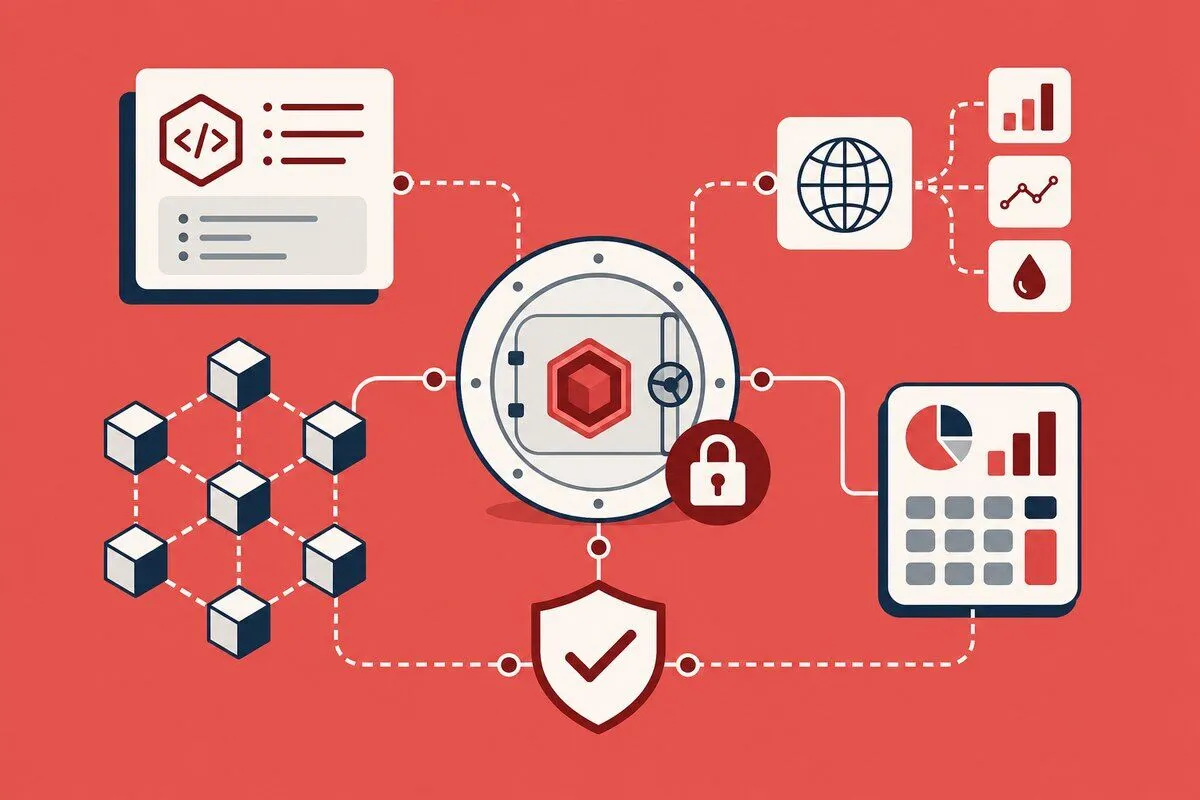
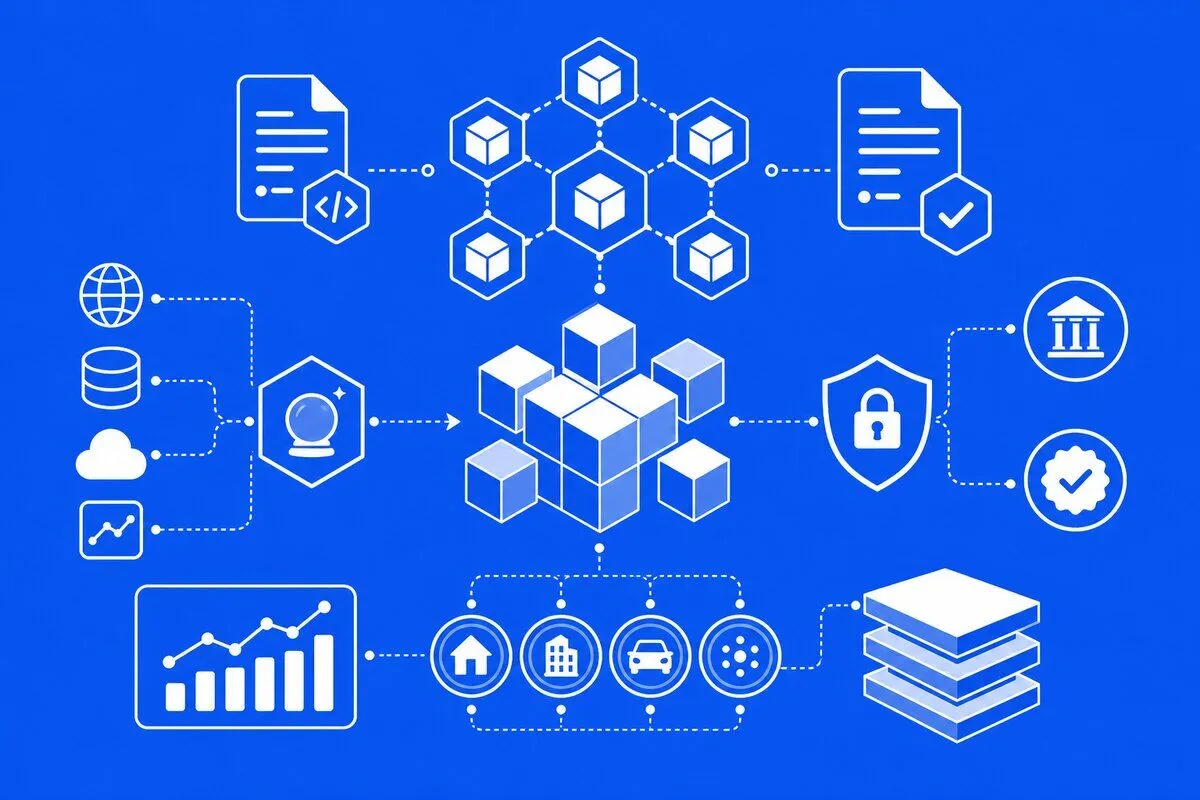
A complete gold tokenization platform is a multi-layer system where each component performs a specific and critical function. Understanding what is gold tokenization as a platform architecture requires examining how these components work together. The vault custodian is the physical foundation: a regulated entity that holds and safeguards the gold. The smart contract layer is the technical foundation: the code that governs token creation, transfer, and redemption. The compliance module handles investor identity verification and eligibility checking. The oracle infrastructure provides real-time gold price data to the smart contract for accurate valuation. The investor interface provides the user-facing dashboard through which investors purchase, hold, and manage their token positions.
Vault Custodian
Regulated precious metal vault operator holding physical gold under licensed, insured conditions with independent audit access
Smart Contracts
Audited blockchain code governing token issuance, transfer restrictions, redemption logic, and supply management
Price Oracle
Real-time gold spot price feeds from authorised data sources keeping on-chain token valuation accurate and tamper-resistant
KYC and Compliance
Identity verification and investor eligibility checks ensuring only qualifying investors hold tokens in each jurisdiction
Token Issuance and Ownership Structure
Token issuance in gold tokenization is a tightly controlled process designed to maintain a strict one-to-one correspondence between tokens in circulation and physical gold in the vault. When new gold is deposited into the custodial vault and verified by the auditor, the smart contract receives the authorisation to mint new tokens in the corresponding quantity. When tokens are redeemed for physical gold, the smart contract burns the redeemed tokens permanently, removing them from circulation. This mint-and-burn mechanism ensures that the total token supply always exactly matches the total physical gold held, preventing any dilution of the token’s backing.
The ownership structure that results from this process is straightforward. Each token holder owns a specific quantity of gold, recorded on the blockchain as an immutable entry in the smart contract’s ownership ledger. This ownership is not a claim against the platform or an exposure to a fund’s performance. It is a direct ownership interest in identified physical gold held in a named vault under a specific custodian. The documentation trail that connects a specific investor’s token holding to a specific quantity of gold in a specific vault is the legal substance that gives the digital token its value. Well-constructed gold tokenization platforms make this documentation trail publicly accessible so that any token holder or independent researcher can verify the backing of every token in circulation.
How Fractional Ownership Makes Gold Accessible
Fractional ownership is among the most transformative features of gold tokenization, and for many investors it is the most immediately practical benefit. Traditional gold investment has always had a minimum unit problem. You cannot buy a quarter of a gold bar from a dealer, and even gold coins represent a minimum investment that many retail investors find significant. Gold ETF units are priced more accessibly but still represent a whole unit that cannot be further divided. Gold tokenization, by contrast, allows a token to represent any quantity of gold that the platform designs it to represent, down to fractions of a gram. Some platforms allow investments equivalent to a few cents worth of gold, making the asset accessible to investors who had never previously been able to accumulate gold savings at all.
For India’s 600 million smartphone users, many of whom already practice gold savings as a cultural tradition but face physical storage constraints, fractional tokenized gold offers a digital alternative that preserves the cultural significance of gold accumulation while removing its physical complications. For first-time investors in UAE and Singapore who are building diversified portfolios, the ability to allocate even a small percentage of their portfolio to physical gold-backed tokens without meeting large minimum investment thresholds makes gold tokenization a genuinely accessible entry point into the precious metals market.
Real-Time Tracking and Transparency in Tokenized Gold
Transparency is one of the most frequently cited advantages of gold tokenization, and it is an area where the blockchain-based model genuinely surpasses traditional gold investment products. When you hold a gold ETF, you receive quarterly or annual reports about the fund’s holdings, mediated by fund managers and auditors whose work you must ultimately trust without the ability to verify independently. Gold tokenization on a public blockchain creates a different standard: the total token supply is visible on the blockchain explorer at any time, the vault audit reports are published on-chain or linked from the smart contract, and the price oracle’s real-time gold price feed is also publicly accessible. Any investor, regulator, or independent researcher can verify at any moment that the token supply matches the audited gold holdings.
This transparency level has specific value for investors in jurisdictions where financial sector trust has historically been lower than in mature Western markets. For Indian investors who have experienced fraud in unregulated gold schemes, the ability to independently verify their gold backing on a public blockchain is not merely a technical feature. It is the trust mechanism that makes gold tokenization a credible alternative to both physical gold and traditional financial gold products.
Security in gold tokenization operates on two distinct levels: the physical security of the gold in the vault and the digital security of the tokens on the blockchain. Physical vault security includes armed guards, biometric access controls, continuous surveillance systems, and comprehensive insurance coverage against theft, fire, and natural disasters. Leading vault operators in Singapore, Switzerland, and Dubai operate to security standards that exceed the requirements of their regulatory licences, because the reputational cost of a security breach is existential for their business. The gold held in these vaults is typically insured through Lloyd’s of London syndicates or equivalent premium insurers, providing financial protection against even catastrophic physical loss events.
Digital security in gold tokenization platforms centres on smart contract security and private key custody. Smart contract audits by recognized blockchain security firms are the primary defence against code vulnerabilities that could allow malicious actors to drain the platform’s token supply or disrupt redemption mechanisms. Multi-signature authorisation requirements for critical functions add an additional layer of protection. For investors’ private keys, leading platforms offer institutional-grade custodial wallet solutions managed by regulated digital asset custodians, ensuring that individual investors do not bear the full responsibility of protecting their private key without professional support.
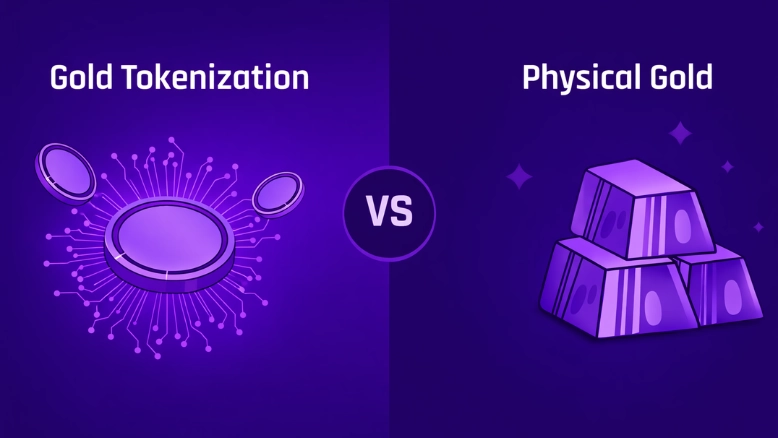
What Is Gold Tokenization vs Traditional Gold Investment
| Feature | Tokenized Gold | Physical Gold | Gold ETF |
|---|---|---|---|
| Minimum Investment | Under USD 1 | 1 gram minimum | 1 unit minimum |
| Trading Hours | 24/7 | Dealer hours only | Exchange hours only |
| Physical Backing | 1-to-1 verified | Direct ownership | Varies by fund |
| Storage Cost | Included in fee | Separate cost | Within fund expense |
| Transparency | On-chain real-time | Physical possession | Periodic reports |
| Physical Redemption | Available above minimum | Already physical | Not usually available |
Benefits of Gold Tokenization for Investors
The investor benefits of gold tokenization are substantial and cumulative. Liquidity is the first and most immediate benefit: tokenized gold can be bought and sold around the clock on digital exchanges without the bid-ask spread friction of physical gold dealers and without the market-hours restriction of ETF trading. For an investor in India who wants to respond to a market event at 3am, or an investor in Singapore who wants to sell gold exposure on a Sunday, this 24/7 liquidity is a genuine practical advantage over every other form of gold investment. The settlement of tokenized gold trades is also dramatically faster than traditional gold markets, where physical delivery settlement can take two to three business days.
Portfolio management is another significant benefit. Token holders can view their gold exposure in the same digital interface as their other investments, receive real-time valuation updates, and manage their position sizes with the same granularity as stock portfolios. The ability to use tokenized gold as collateral for loans on DeFi platforms adds a further dimension of financial utility: investors can borrow stablecoins or other assets against their gold token holdings without selling them, accessing liquidity while maintaining their long-term gold position. This collateral utility is not available for physical gold in any practically accessible form for retail investors in India or UAE.
Advantages for Businesses and Asset Owners
For businesses and institutional gold owners, what is gold tokenization offers a set of advantages that are distinct from the investor perspective. Gold mining companies with significant physical gold holdings can tokenize a portion of their reserves to raise capital without selling the metal, maintaining gold price exposure while accessing immediate liquidity. Jewellery manufacturers in India, who collectively hold enormous quantities of gold inventory, can tokenize their inventory to use as working capital security or to create investment products for their customer base. Central banks and sovereign wealth funds exploring digital asset strategies can use gold tokenization as a bridge between their traditional reserve management practices and the digital financial infrastructure that is becoming increasingly important in global finance.
For financial institutions in Dubai and Singapore that manage wealth for high-net-worth clients in India and across Asia, tokenized gold provides a product innovation that combines the familiar and trusted asset class of gold with the operational efficiency and accessibility of digital asset management. The ability to offer clients fractional, instantly tradeable, physically backed gold exposure through a digital platform is a significant product differentiator in markets where gold allocation remains a significant component of affluent investor portfolios.
Common Use Cases of Gold Tokenization
The practical use cases of gold tokenization span a wider range of financial activities than most people initially appreciate. Individual investor savings is the most obvious: tokenized gold allows anyone to accumulate gold in small, regular amounts through a digital platform, creating a digital version of the gold savings habit that is deeply embedded in Indian culture. Cross-border payments represent another significant use case: gold-backed tokens can be transferred across borders instantly and at near-zero cost, making them an effective settlement mechanism for international trade between parties in India, UAE, and Singapore who want the price stability of gold without the physical logistics.
Individual Savings
Fractional gold accumulation for retail investors using regular small purchases through digital wallets
Trade Settlement
Cross-border payment and settlement using gold tokens for India-UAE-Singapore trade transactions
DeFi Collateral
Pledging gold tokens as collateral on DeFi lending platforms to access stablecoin or fiat loans
Corporate Treasury
Corporate treasury diversification into gold-backed digital assets for inflation protection and yield
Gold Tokenization in Global Investment Markets
The global gold tokenization market has moved from early experimentation to institutional adoption at a pace that has surprised even optimistic observers. Paxos Gold and Tether Gold, the two largest gold tokenization platforms globally, have collectively built token supplies representing billions of dollars worth of physical gold, with user bases spanning North America, Europe, and Asia. The Dubai Multi Commodities Centre has been among the most proactive institutional bodies in supporting gold tokenization infrastructure in the Middle East, recognizing the strategic alignment between Dubai’s existing position as a global gold trading hub and the new digital asset financial ecosystem. Singapore’s position as Asia’s premier wealth management centre has made it a natural home for tokenized gold products targeting high-net-worth Asian investors, including the large Indian diaspora that manages significant wealth through Singapore-based family offices and investment platforms.
In India, the regulatory picture for gold tokenization is evolving rapidly. SEBI and RBI are both engaged in the question of how digital gold products should be regulated, and the expectation among industry participants is that a clearer framework will emerge within the next two years. India’s enormous cultural and financial relationship with gold, combined with the country’s rapid digital financial infrastructure expansion, makes it one of the most significant potential markets for gold tokenization globally. When a clear regulatory pathway emerges, the adoption curve in India is expected to be steep.
Challenges and Considerations in Gold Tokenization
Despite its considerable advantages, what is gold tokenization also presents a set of challenges that investors and platform operators must understand and address seriously. Regulatory fragmentation is the most persistent challenge at the market level. What constitutes a legally compliant gold token offering varies significantly between India, UAE, Singapore, and Western jurisdictions, and platforms seeking to serve investors across multiple countries must navigate a patchwork of different legal requirements for token classification, investor eligibility, and reporting. This complexity adds cost and legal risk to any cross-border gold tokenization project and remains a significant barrier to the kind of global liquidity that would make tokenized gold truly comparable to major traded markets like the LBMA.
Custodian due diligence is a critical investor-level challenge. Not all gold tokenization platforms use vault custodians of equivalent quality, regulatory standing, or insurance coverage. Investors who do not conduct proper due diligence on the custodian behind their tokens may find that their digital gold is backed by less rigorously secured physical metal than they assumed. Smart contract risks, while mitigated by audits, cannot be entirely eliminated, and platform failure risk remains a consideration for any investor putting significant capital into a single tokenization platform. These challenges do not negate the value of gold tokenization, but they make the selection of platform and custodian among the most important decisions in any gold tokenization investment.
Future Trends in Gold Tokenization and Digital Assets
The future of gold tokenization is being shaped by several converging trends that our team tracks closely across the India, UAE, and Singapore markets we serve. The first is regulatory harmonization: international regulatory bodies and major financial jurisdictions are moving toward more consistent frameworks for tokenized commodity assets, which will progressively reduce the compliance complexity that currently limits cross-border gold token liquidity. The second is institutional adoption: major banks, asset managers, and sovereign wealth funds that have been observing the gold tokenization market from a distance are beginning to participate directly, either by investing in existing platforms or by building proprietary tokenized gold products for their institutional client base.
Central bank digital currency integration with tokenized commodities is another forward-looking development that has moved from theoretical discussion to active exploration by several central banks. The possibility of gold-backed CBDC designs or of tokenized gold playing a role in a multipolar reserve asset system is now being discussed in policy circles in ways that would have seemed speculative three years ago. For gold tokenization platforms and their investors, this trajectory toward mainstream institutional and governmental engagement represents the most significant long-term validation of the model’s fundamental soundness.
Gold Tokenization Market Readiness by Region (2026)
Why Gold Tokenization Is Gaining Popularity
The popularity of gold tokenization is rising for reasons that are both structural and circumstantial. At the structural level, the combination of declining trust in traditional financial intermediaries, the maturation of blockchain infrastructure to a point of genuine reliability, and the growing appetite among a new generation of investors for assets that combine physical backing with digital accessibility has created ideal conditions for gold tokenization adoption. The circumstantial driver is the macroeconomic environment: a period of elevated inflation, geopolitical uncertainty, and currency volatility that has revived interest in gold as a portfolio anchor, while the simultaneous maturation of digital asset markets has made investors more comfortable with blockchain-based ownership structures than they were five years ago.
In India specifically, what is gold tokenization answers a question that millions of gold-oriented savers have been waiting for: how can I participate in gold markets digitally, with the transparency and security of blockchain, without the physical complications of owning gold and without the fund manager intermediary of an ETF? The answer that gold tokenization provides is comprehensive and increasingly accessible. And as platforms in India’s GIFT City, Dubai’s DMCC ecosystem, and Singapore’s regulated digital asset marketplace continue to improve their products and reduce onboarding friction, the adoption curve for gold tokenization across these three markets is positioned to rise significantly through the remainder of this decade.
Leading Gold Tokenization Platforms: Key Facts
| Platform | Token Name | Gold Per Token | Blockchain | Vault Location |
|---|---|---|---|---|
| Paxos | PAXG | 1 troy ounce | Ethereum | Brinks New York |
| Tether | XAUT | 1 troy ounce | Ethereum, Tron | Switzerland |
| Perth Mint | PMGT | 1 fine troy ounce | Ethereum | Perth, Australia |
| DMCC (Dubai) | Dubai Gold | Variable gram units | Multiple | Dubai, UAE |
Frequently Asked Questions
Q1.1. What is gold tokenization in simple terms?
Gold tokenization is the process of converting physical gold into digital tokens on a blockchain, where each token represents a specific quantity of real gold held in a secure vault. Investors can buy, sell, and hold these tokens without physically owning or storing the gold themselves.
Q2.2. Is tokenized gold the same as owning real gold?
Tokenized gold is backed by real physical gold stored in audited vaults, so your token represents genuine ownership of a specific gold quantity. However, unlike holding physical gold directly, your ownership is recorded on a blockchain rather than in your hands, and redemption depends on the platform’s terms and conditions.
Q3.3. How is gold tokenization different from gold ETFs?
Gold ETFs are traded on stock exchanges and managed by fund companies. Tokenized gold operates on a blockchain, giving you direct ownership of a specific gold amount recorded on-chain. Tokenized gold offers 24/7 trading, fractional ownership at much smaller minimums, and no fund manager fees eating into your returns.
Q4.4. Is gold tokenization legal in India?
Gold tokenization is legal in India when conducted through properly regulated platforms. SEBI and RBI guidelines apply to digital gold products, and platforms operating within GIFT City’s IFSCA framework can offer tokenized gold to international investors. Domestic platforms must comply with applicable securities and commodity regulations.
Q5.5. What is the minimum investment for tokenized gold?
One of the most significant advantages of gold tokenization is the dramatically reduced minimum investment. Traditional gold purchases require buying at least one gram. Tokenized gold platforms allow investments equivalent to a fraction of a gram, with some platforms in UAE and Singapore enabling purchases from as low as one dollar worth of gold.
Q6.6. How is the gold stored and audited in tokenized gold platforms?
Physical gold backing tokenized assets is stored in licensed, insured vaults operated by professional custodians in regulated jurisdictions including Switzerland, Singapore, and UAE. Independent third-party auditors verify vault holdings regularly, and audit reports are published to confirm that token supply matches physical gold reserves at all times.
Q7.7. Can I redeem my gold tokens for physical gold?
Most gold tokenization platforms offer physical redemption, though minimum quantities typically apply. A token holder accumulating sufficient tokens representing one troy ounce or more can typically request physical delivery. The platform arranges vault withdrawal and shipping, with associated handling and delivery costs deducted from the redeemed amount.
Q8.8. What happens to my tokenized gold if the platform shuts down?
Well-structured gold tokenization platforms hold physical gold in bankruptcy-remote custodial arrangements separate from the platform’s own assets. If the platform shuts down, the gold remains in the vault and is the property of token holders, not the platform. Token holders can claim their gold through the appointed custodian or liquidation administrator.
Q9.9. What blockchain networks are used for gold tokenization?
Gold tokenization platforms operate across multiple blockchain networks. Ethereum is the most common for institutional offerings due to its security and regulatory recognition. Polygon is used for lower-cost retail platforms. XRP Ledger is gaining traction for cross-border gold token settlement, particularly in India and UAE where transaction speed matters.
Q10.10. How does gold tokenization benefit Indian investors specifically?
Indian investors traditionally hold gold as a cultural and financial asset but face challenges around storage, purity verification, and liquidity. Gold tokenization solves all three: tokens are backed by certified pure gold in professional vaults, instantly tradeable 24/7, and accessible from a mobile phone without the physical security risk that comes with holding gold at home.
Explore Services
Related Services
Reviewed by

Aman Vaths
Founder of Nadcab Labs
Aman Vaths is the Founder & CTO of Nadcab Labs, a global digital engineering company delivering enterprise-grade solutions across AI, Web3, Blockchain, Big Data, Cloud, Cybersecurity, and Modern Application Development. With deep technical leadership and product innovation experience, Aman has positioned Nadcab Labs as one of the most advanced engineering companies driving the next era of intelligent, secure, and scalable software systems. Under his leadership, Nadcab Labs has built 2,000+ global projects across sectors including fintech, banking, healthcare, real estate, logistics, gaming, manufacturing, and next-generation DePIN networks. Aman’s strength lies in architecting high-performance systems, end-to-end platform engineering, and designing enterprise solutions that operate at global scale.