Ai Overview
GIFT stands for Gujarat International Finance Tec-City. Stock exchanges, commodity exchanges, alternative investment funds, banking units, and insurance companies are all operating within its ecosystem. This meant that while India was generating economic activity, the financial value and tax revenue from managing that activity was being captured elsewhere. Beyond the revenue argument, GIFT City also serves India’s ambition to be taken seriously as a global financial power.
Key Takeaways
- ✓GIFT City stands for Gujarat International Finance Tec-City, India’s first operational smart city and International Financial Services Centre approved by the central government.
- ✓Located in Gandhinagar, Gujarat, GIFT City sits between Ahmedabad and Gandhinagar on the western bank of the Sabarmati river with planned infrastructure for 300,000 daily commuters.
- ✓The IFSCA serves as GIFT City’s unified financial regulator, overseeing banking, insurance, capital markets, and fintech under a single authority modelled after global best practices from Singapore and UAE.
- ✓GIFT City offers zero capital gains tax, no stamp duty on financial transactions, and access to foreign currency operations, making it highly competitive with Dubai’s DIFC and Singapore’s MAS framework.
- ✓The city hosts two distinct zones: a Special Economic Zone for financial services companies and a Domestic Tariff Area for supporting industries and residential infrastructure.
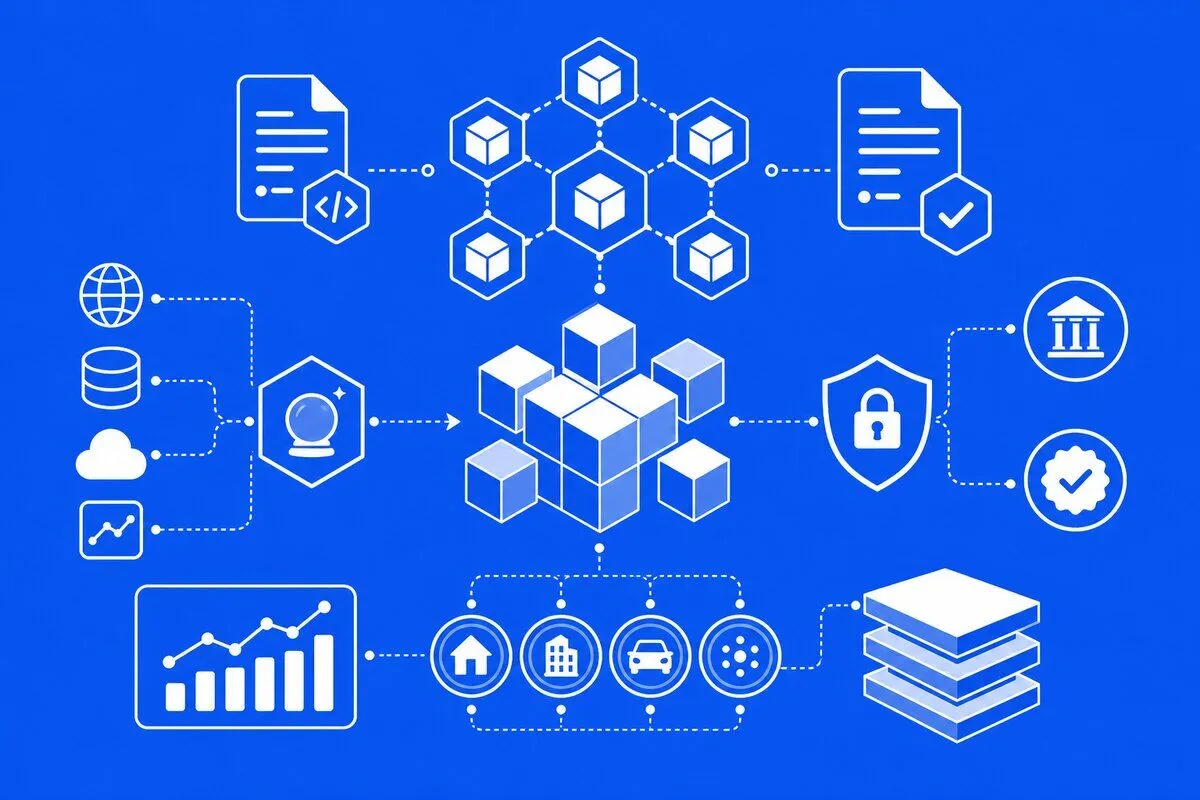
- ✓Blockchain and real estate tokenization are active growth sectors within GIFT City, with the IFSCA having issued regulatory sandbox frameworks for tokenized asset platforms since 2023.
- ✓Over 600 entities including global banks, insurance companies, and fintech firms have established operations in GIFT City as of 2025, with numbers growing consistently year on year.
- ✓GIFT City connects Indian investors to global markets through regulated channels allowing USD, EUR, GBP, and other foreign currency-denominated investments from within India legally.
- ✓India has one operational GIFT City in Gujarat, with its success influencing future planned financial districts in other states including Maharashtra and Tamil Nadu.
- ✓Smart contracts, distributed ledger infrastructure, and digital asset regulations in GIFT City position it as India’s primary gateway for blockchain-based financial innovation through 2030.
India has long aimed to position itself as a global financial powerhouse. GIFT City is the most concrete expression of that ambition. As an agency with over eight years of experience advising clients across India, UAE, and Singapore on financial infrastructure and digital asset strategies, we have watched GIFT City transform from a bold blueprint into a functioning international financial hub. Today, GIFT City is not just a location on a map. It is a regulatory and economic ecosystem purpose-built to bring global capital flows into India while offering businesses and investors the kind of environment they associate with established centres like Dubai or Singapore. Whether you are a fintech startup, a global fund manager, or someone exploring Real Estate Tokenization opportunities in India, understanding GIFT City is essential to understanding where Indian finance is heading in the next decade.
What Is GIFT City and What Does GIFT Full Form
GIFT stands for Gujarat International Finance Tec-City. Every word in that name carries weight. Gujarat anchors it geographically and politically as a state-backed initiative. International signals the intent to operate beyond India’s domestic financial boundaries. Finance identifies its core purpose. And Tec reflects the technology-first philosophy embedded in every aspect of its planning. GIFT City is not simply a financial district. It is India’s first and only International Financial Services Centre, a designation that places it in the same category as the Dubai International Financial Centre and Singapore’s financial district, though with its own uniquely Indian character and regulatory architecture. The project was conceived to bring offshore financial activity back onshore under Indian jurisdiction, capturing billions of dollars in transactions that were previously routed through Singapore or UAE due to India’s regulatory constraints.
The city is governed by the International Financial Services Centres Authority, or IFSCA, a unified regulator established under a dedicated act of Parliament in 2020. This single-window regulatory approach means businesses operating within GIFT City interact with one authority instead of navigating the multiple layers of RBI, SEBI, IRDAI, and PFRDA that govern domestic financial activity in India. This design was inspired directly by how Singapore’s MAS operates and how Dubai’s DFSA functions within the DIFC. The result is a dramatically faster, cleaner regulatory experience for financial institutions, fund managers, and fintech companies that choose to set up within GIFT City’s boundaries.
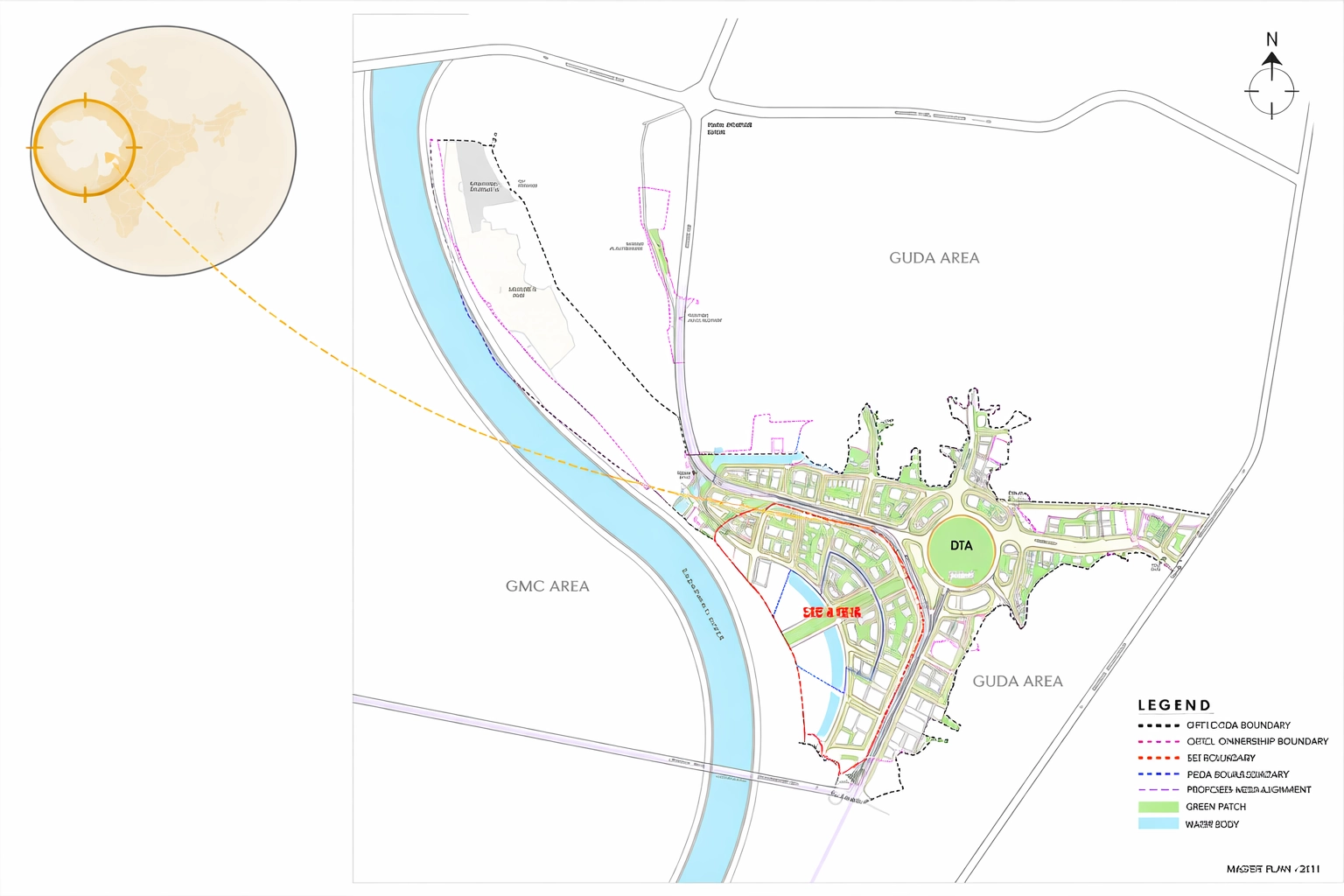
GIFT City is located on the western bank of the Sabarmati river in the state of Gujarat, strategically positioned between Ahmedabad, India’s largest commercial city in the state, and Gandhinagar, the state capital. This location was not accidental. Ahmedabad has historically been one of India’s most important centres for trade, textile, and financial entrepreneurship. Gandhinagar gives GIFT City direct proximity to state government decision-making. And the Sabarmati riverfront provides the kind of scenic, livable setting that modern financial hubs need to attract global talent. The site spans approximately 886 acres in its current operational phase, with a master plan that envisions eventual build-out across a much larger footprint. Road, metro, and highway connectivity link GIFT City directly to Ahmedabad International Airport, which itself has been upgraded in anticipation of growing international traffic generated by businesses relocating to the region. From our conversations with clients in Dubai and Singapore who have evaluated GIFT City as a base, location is one of the first questions they ask, and the answer consistently impresses them.
Why Is It Called GIFT City The Story Behind the Name
The name GIFT City was crafted with deliberate intention. Gujarat International Finance Tec-City tells a story in five words: a state with a vision, a financial purpose with global ambition, and a commitment to technology as the foundation. The concept was originally championed during Narendra Modi’s tenure as Chief Minister of Gujarat, before he became Prime Minister. The idea was to create an Indian answer to the offshore financial centres that were siphoning business activity away from India, particularly to Singapore, Mauritius, and Dubai. Indian companies raising global capital, foreign funds investing in Indian assets, and international insurance and banking services were all routing through these centres because India’s domestic regulatory environment was too complex and too restrictive. GIFT City was the proposed solution: bring those businesses back to Indian soil by creating a zone that matches international standards in regulation, infrastructure, and taxation. The “Tec” in GIFT is particularly meaningful. It signals that this was never just a financial hub in the traditional sense. The city was planned with fibre optic networks, district cooling systems, underground utility corridors, and smart city management platforms from day one. The name encapsulates everything: geography, purpose, technology, and international aspiration.
How Many GIFT Cities Are There in India and Where Are They
There is currently one fully operational GIFT City in India, located in Gujarat. However, the concept has inspired discussions about similar financial districts in other Indian states. Maharashtra has explored the possibility of a comparable IFSC-style zone near Mumbai, which remains India’s undisputed financial capital. Tamil Nadu has also discussed creating a fintech-focused special zone near Chennai that could eventually receive IFSC status. But these remain in various stages of planning and policy discussion. GIFT City in Gujarat remains the only location in India that carries the official International Financial Services Centre designation and operates under the IFSCA regulatory umbrella. What makes GIFT City unique is not just that it exists, but that it has already reached a functional critical mass. Over 600 entities have registered operations there. Transactions worth hundreds of billions of dollars are processed annually. Stock exchanges, commodity exchanges, alternative investment funds, banking units, and insurance companies are all operating within its ecosystem. No proposed alternative site in India comes close to replicating this scale or regulatory foundation in the near term.
GIFT City vs Global Financial Hubs: Key Comparisons
| Feature | GIFT City (India) | DIFC (Dubai) | Singapore IFSC |
|---|---|---|---|
| Regulator | IFSCA (unified) | DFSA | MAS |
| Capital Gains Tax | Zero (IFSC) | Zero | Zero |
| Foreign Currency Ops | USD, EUR, GBP | Yes | Yes |
| Blockchain Sandbox | Active (2023) | Active | Active |
| RE Tokenization | Emerging | Phase 2 Live | Pilot Active |
Why Is the Indian Government Focusing So Much on GIFT City
The Indian government’s intense focus on GIFT City is rooted in a very specific economic problem. For decades, Indian businesses and global investors seeking exposure to Indian assets were forced to operate through intermediary jurisdictions. Mauritius, Singapore, and UAE became the default routing points because they offered tax treaties, regulatory clarity, and operational freedom that India’s domestic environment could not match. This meant that while India was generating economic activity, the financial value and tax revenue from managing that activity was being captured elsewhere. GIFT City is the government’s most ambitious attempt to reverse this pattern. By creating a jurisdiction within India that matches international standards, the government is trying to capture fund management, insurance, banking, and capital market activity that previously had no reason to be based in India. Every rupee of business that shifts to GIFT City from Singapore or Dubai is a rupee that stays within Indian regulatory and fiscal reach. Beyond the revenue argument, GIFT City also serves India’s ambition to be taken seriously as a global financial power. Having a functioning IFSC with international-grade infrastructure, technology, and regulation signals to the world that India can compete on its own terms.
No other city in India operates under the same regulatory, infrastructural, and fiscal framework as GIFT City. The differences begin at the regulatory level. Every other city in India, whether Mumbai, Bangalore, or Hyderabad, operates under the full weight of India’s domestic financial regulatory system. GIFT City operates in a separate jurisdiction governed by the IFSCA, which has the power to create rules that may differ substantially from what applies in the rest of India. This includes allowing foreign currency transactions that would be impossible elsewhere, permitting fund structures that are unavailable domestically, and offering dispute resolution mechanisms based on international arbitration standards rather than India’s domestic court system. The infrastructure differences are equally significant. GIFT City was designed and built as a unified planned city, not assembled piecemeal over decades as most Indian cities have been. Underground utility corridors mean no open wiring or periodic road cutting for repairs. A district cooling system serves buildings at scale rather than individual air conditioning units. High-speed fibre optic connectivity was installed as foundational infrastructure, not retrofitted later.
Unified Regulator
Single IFSCA authority replaces multiple domestic regulators
Zero Capital Gains
Tax-neutral environment on par with Dubai and Singapore
FX Operations
USD, EUR, GBP permitted within IFSC boundary
Blockchain Sandbox
Active IFSCA framework for tokenized asset platforms
GIFT City as India’s First Smart City and International Financial Services Centre
The dual identity of GIFT City as both a smart city and an International Financial Services Centre is what makes it genuinely unique in the Indian context. India’s Smart Cities Mission launched by the central government has produced many projects, but most have involved retrofitting technology into existing urban areas. GIFT City is the only city in India that was designed as a smart city from the ground up, with technology infrastructure embedded in its physical foundation rather than added as an afterthought. The smart city elements include a centralized monitoring system for utilities, an underground waste management system, smart street lighting, and integrated traffic management. But the IFSC designation adds an entirely different layer: a complete financial ecosystem with international-standard regulation, world-class commercial real estate, and connectivity to global capital markets. The combination means GIFT City can offer businesses not just a tech-enabled workplace but a fully functioning regulatory environment that matches what they would find in Singapore’s Central Business District or Dubai’s DIFC precinct. For financial institutions, this duality is enormously attractive. They need regulatory clarity to operate confidently, and they need infrastructure quality to attract and retain talent. GIFT City offers both, which is why its tenant growth has been consistent even through periods of broader economic uncertainty.
What Are the Different Zones Inside GIFT City and How Do They Work
GIFT City is physically and legally divided into two primary zones, each with distinct rules, purposes, and opportunities. The first is the Special Economic Zone, or SEZ, which is home to the IFSC. This is where the international financial action happens. Banking units, insurance companies, stock exchanges, fund management entities, and fintech companies operate here. Transactions within the SEZ are treated as if they occur outside India for certain regulatory and tax purposes, which is what enables foreign currency operations, zero stamp duty, and tax incentives. The second zone is the Domestic Tariff Area, or DTA, which operates under standard Indian laws and regulations. The DTA houses supporting services: hospitality, retail, residential buildings, schools, hospitals, and ancillary businesses that make GIFT City a complete live-work-play environment rather than just an office district. The interplay between these two zones is carefully managed. Understanding this zone structure is essential for any business or investor considering GIFT City, because the zone in which you operate determines your regulatory relationship, tax treatment, and operational permissions.
GIFT City: Key Milestones
2007 — Concept Initiated
Gujarat government under CM Modi proposes international financial city
2015 — First Operations Begin
India INX and NSE IFSC exchanges launch; banking units begin operations
2020 — IFSCA Established
Unified regulatory authority created by Parliament, replacing multi-regulator model
2023 — Blockchain Sandbox Launched
IFSCA opens regulatory sandbox for tokenized assets and digital finance
2025–2026 — Scale and Expansion
600+ entities, tokenization platforms, and global bank presence firmly established
How GIFT City Is Connected to Global Financial Markets
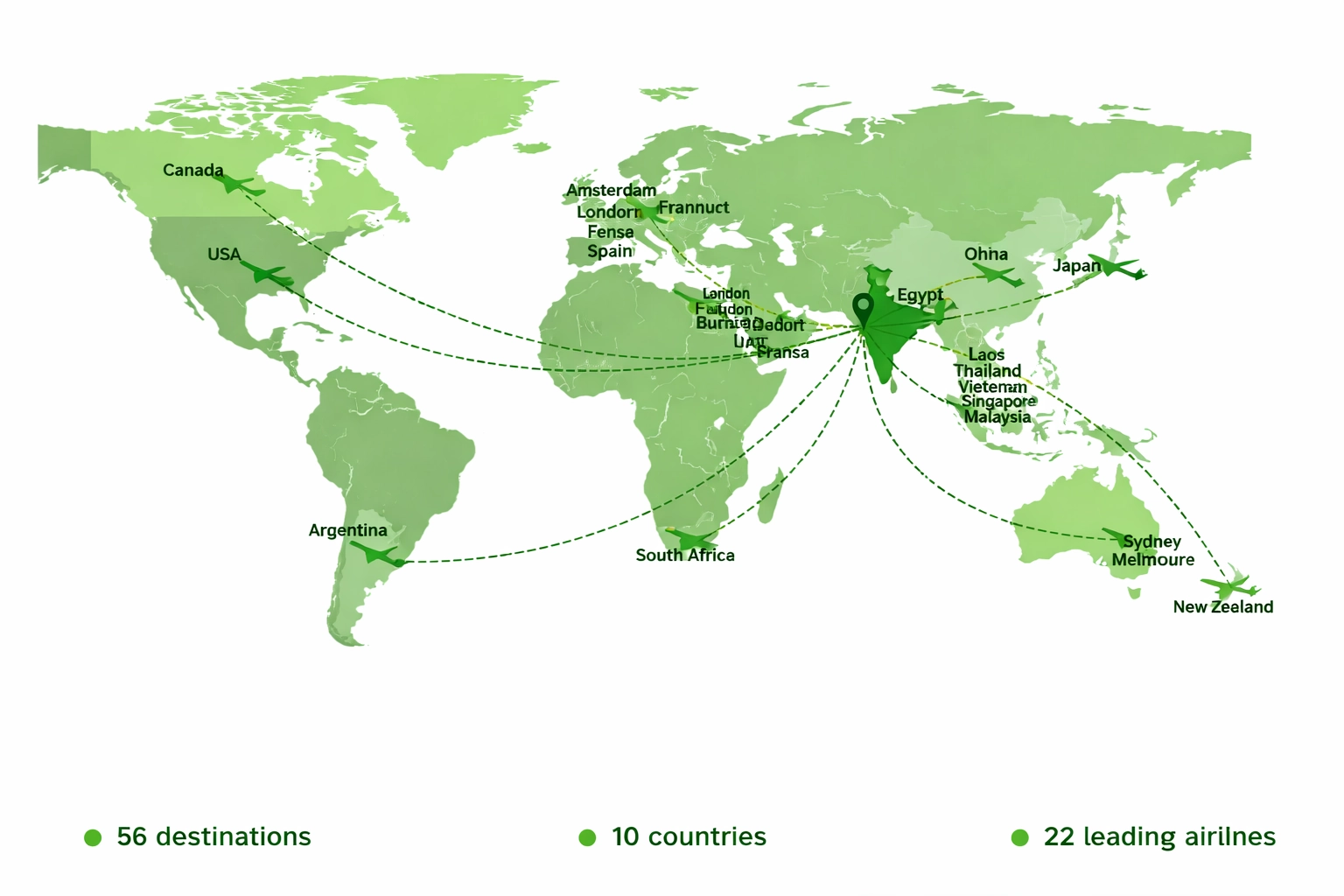
GIFT City’s connection to global financial markets is both regulatory and operational. On the regulatory side, the IFSCA has signed memoranda of understanding with regulators in multiple countries, including the Financial Conduct Authority in the UK, the Securities and Exchange Commission in the US, and regulators in UAE and Singapore. These agreements enable information sharing, cross-border supervision, and in some cases, mutual recognition of certain financial frameworks. For businesses, this means their GIFT City operations can be integrated into their global compliance and reporting structures without being treated as an isolated outlier. On the operational side, GIFT City hosts two international stock exchanges: India INX, operated by BSE, and NSE IFSC. These exchanges allow trading in international products including foreign currency-denominated bonds, equity derivatives, commodity contracts, and increasingly, digital asset instruments. They provide direct access to price discovery mechanisms that are aligned with global market hours and practices. For Indian investors, GIFT City provides the only legally structured and domestically regulated way to invest in foreign assets using funds held in India, a significant capability that was simply unavailable before its establishment.
What Is the Role of GIFT City in Real Estate Tokenization
Real estate tokenization in India has found its most structured regulatory home within GIFT City. The IFSCA’s regulatory sandbox framework, which opened for digital asset applications in 2023, has allowed platforms focused on tokenized real estate to test and scale their models under supervised conditions. This is critical because tokenization of property, the process of representing real estate assets as digital tokens on a blockchain, raises questions about legal ownership, investor rights, cross-border transfers, and secondary market liquidity that existing Indian laws were not designed to address. Within GIFT City’s IFSC, these questions can be addressed under the IFSCA’s authority to create bespoke frameworks. The authority can draw on international precedents from Dubai, where Phase 2 of real estate tokenization is already live, and from Singapore, where MAS has been piloting tokenized asset frameworks for institutional investors. GIFT City is building an Indian version that accounts for India’s property registration system, the foreign exchange management framework, and the specific appetite of Indian and non-resident Indian investors for real estate exposure. For our clients who operate across India and UAE, the emergence of GIFT City as a tokenization hub creates a pathway for cross-border real estate investment that was previously achievable only through complex offshore structures. [1]
How Can Investors Use GIFT City to Invest in Tokenized Properties
Investors looking to access tokenized real estate through GIFT City have a structured, if still evolving, pathway available to them. The primary route is through platforms that have received IFSCA approval or sandbox status to operate within the IFSC. These platforms enable investors to purchase fractional ownership interests in real estate assets represented as digital tokens on permissioned blockchain networks. The investment can be made in foreign currency for non-resident Indians and overseas investors, or through specific permitted structures for Indian residents who meet the Liberalised Remittance Scheme conditions. The minimum investment thresholds on tokenized platforms operating through GIFT City are significantly lower than what direct property purchases in India or UAE require. Where a commercial property in Mumbai or an apartment in Dubai might require millions in capital, tokenized interests can be structured at thresholds that open the investment to a much broader population of investors. The secondary market for these tokens, still in early stages, will eventually allow investors to buy and sell their interests without waiting for full property transactions, providing a liquidity dimension that traditional real estate completely lacks. For NRIs based in Singapore or UAE, the GIFT City route keeps their Indian real estate exposure within a regulated, transparent framework.
GIFT City Tokenization Framework: Investor Options
| Investor Type | Investment Route | Currency | Key Benefit |
|---|---|---|---|
| Indian Resident | LRS via IFSC platform | USD / INR | Global asset exposure within legal limits |
| NRI (UAE / Singapore) | Direct IFSC account | AED / SGD / USD | Transparent India real estate access |
| Foreign Institutional | IFSC fund structure | Any major currency | India exposure without domestic regulation |
| Family Office | AIF via IFSCA | USD preferred | Tax efficiency and flexible structuring |
The trajectory of GIFT City in blockchain and digital finance points toward a future where it serves as South Asia’s primary infrastructure layer for tokenized assets and on-chain financial services. The IFSCA has been among the more progressive global regulators in engaging with blockchain technology, issuing guidelines for virtual asset service providers, creating sandbox pathways for tokenization platforms, and exploring frameworks for central bank digital currency interoperability. These steps place GIFT City ahead of most Indian jurisdictions and comparable with early-mover positions taken by regulators in Abu Dhabi and Singapore. The next phase of this story involves several parallel tracks. Smart contract-based fund administration, where investment lifecycle events are automated through code rather than manual processes, is being piloted by multiple entities within the GIFT City ecosystem. Cross-border tokenized bond issuances, where Indian infrastructure projects raise capital from international investors through digital securities traded on GIFT City exchanges, represent another frontier. And real estate tokenization, while still in early stages, is expected to accelerate significantly as IFSCA moves from sandbox to full regulatory framework, likely in the 2026 to 2028 window based on current policy signals. For investors in India, UAE, and Singapore who are tracking where digital finance is heading, GIFT City is the single most important Indian destination to monitor.
GIFT City Blockchain Readiness Index (2026)
Frequently Asked Questions About GIFT City
People Also Ask
Q1.1. What exactly is GIFT City and why is everyone talking about it?
GIFT City is India’s first operational smart city and International Financial Services Centre, located in Gujarat. It is designed to compete with global financial hubs like Singapore and Dubai by offering world-class infrastructure, tax benefits, and regulatory frameworks for financial businesses and global investors.
Q2.2. Is GIFT City only for big companies or can regular investors also benefit?
GIFT City is open to both institutional players and individual investors. Through regulated platforms operating within its IFSC framework, retail investors can access global financial instruments, foreign currency accounts, and increasingly, tokenized real estate assets starting at very accessible investment thresholds.
Q3.3. How is GIFT City different from a Special Economic Zone?
While GIFT City includes an SEZ component, it goes far beyond that concept. It functions as a full International Financial Services Centre with its own regulator, the IFSCA, which creates unified oversight for banking, insurance, capital markets, and fintech, something no traditional SEZ in India offers.
Q4.4. Can foreign investors from UAE or Singapore operate from GIFT City?
Yes. GIFT City is specifically structured to attract foreign businesses, especially from markets like UAE and Singapore. It offers zero capital gains tax, no stamp duty on financial transactions, and access to India’s growing economy, making it highly attractive for international financial operations and investment vehicles.
Q5.5. What role does blockchain play in GIFT City's future plans?
Blockchain is central to GIFT City’s digital finance vision. The IFSCA has issued sandbox frameworks for tokenized assets, and several platforms are already using blockchain for real estate tokenization, cross-border settlements, and smart contract-based financial products within the GIFT City regulatory environment.
Explore Services
Related Services
Reviewed by

Aman Vaths
Founder of Nadcab Labs
Aman Vaths is the Founder & CTO of Nadcab Labs, a global digital engineering company delivering enterprise-grade solutions across AI, Web3, Blockchain, Big Data, Cloud, Cybersecurity, and Modern Application Development. With deep technical leadership and product innovation experience, Aman has positioned Nadcab Labs as one of the most advanced engineering companies driving the next era of intelligent, secure, and scalable software systems. Under his leadership, Nadcab Labs has built 2,000+ global projects across sectors including fintech, banking, healthcare, real estate, logistics, gaming, manufacturing, and next-generation DePIN networks. Aman’s strength lies in architecting high-performance systems, end-to-end platform engineering, and designing enterprise solutions that operate at global scale.