Ai Overview
Building robust decentralized applications requires mastering the complex interplay between blockchain networks, smart contracts, and user interfaces. Ethereum transaction handling introduces unique state management considerations centered on gas pricing, nonce management, and transaction lifecycle monitoring. Balancing on-chain and off-chain state represents a fundamental architectural decision impacting dApp performance, cost, and decentralization characteristics.
Key Takeaways
- State management in dApps requires coordinating blockchain data, wallet connections, smart contract interactions, and frontend UI state across distributed systems for seamless user experiences.
- Implementing secure wallet connection strategies using libraries like Web3Modal and RainbowKit enables multi-provider support for MetaMask, WalletConnect, and Coinbase Wallet across global markets.
- Transaction state handling involves managing pending, confirmed, and failed states while providing real-time updates through blockchain event listeners and optimistic UI patterns.
- Modern web3 state management libraries including Redux Toolkit, Zustand, and Recoil provide specialized middleware for handling asynchronous blockchain operations and contract events effectively.
- Hybrid state architecture balances on-chain immutable data with off-chain caching strategies to reduce gas costs while maintaining application performance and decentralization principles.
- MetaMask integration requires detecting account switches, network changes, and permission updates through ethereum provider event listeners to maintain synchronized application state throughout user sessions.
- Smart contract interaction management demands robust error handling, gas estimation strategies, and ABI decoding coordination to handle network congestion and transaction failures gracefully.
- Web3 frontend architecture patterns combine specialized hooks for wallet connections, contract reads, transaction writes, and event subscriptions with traditional state management for complex applications.
- Global dApp deployments targeting USA, UK, UAE, and Canadian markets require network-specific configurations, multi-currency support, and regional compliance considerations within state management systems.
- Professional dApp services integrate comprehensive testing strategies, security audits, and performance optimization techniques to deliver production-ready state management solutions for enterprise blockchain applications.
Understanding the State Management Challenge in DApps
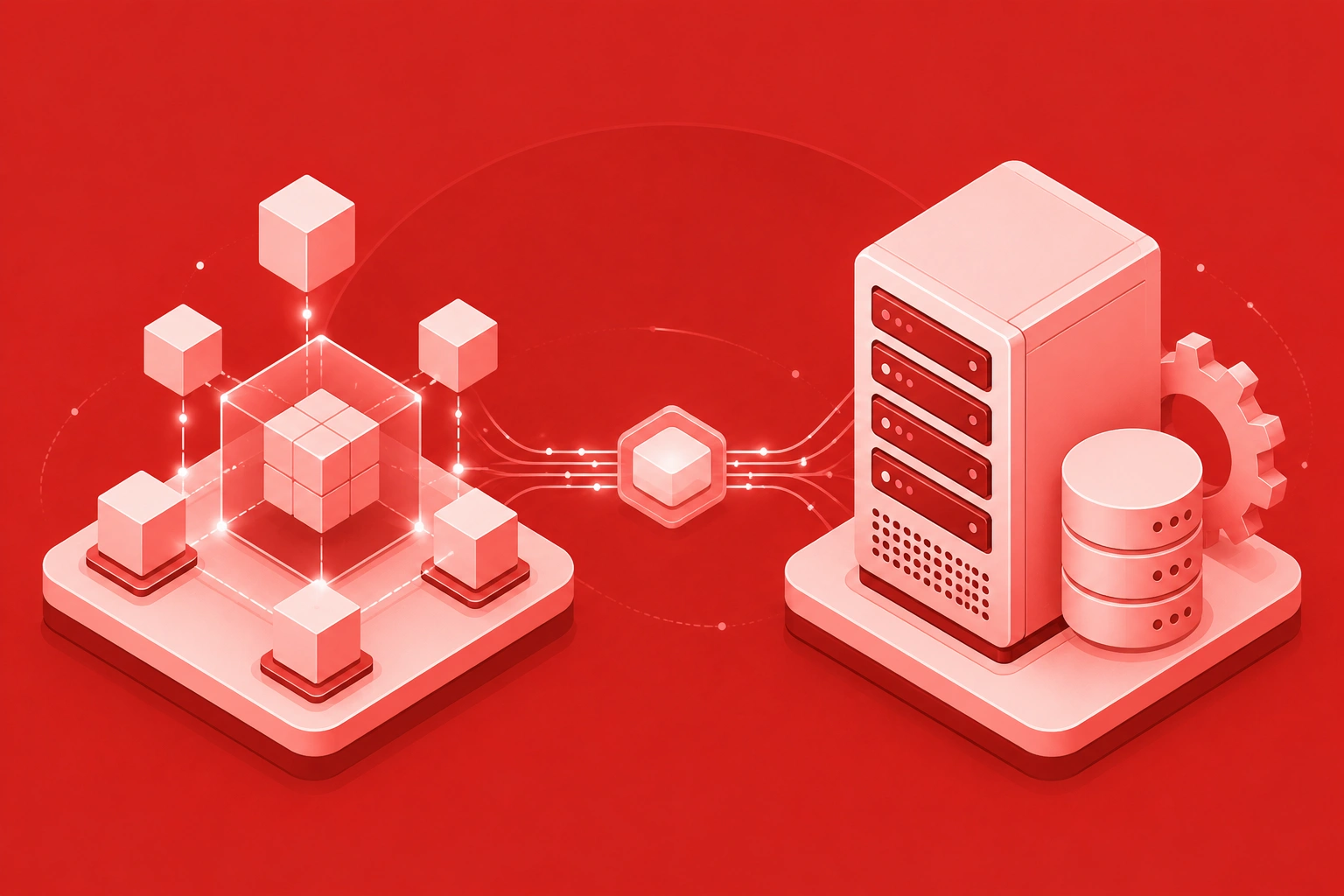
State management in dApps fundamentally differs from traditional application architectures due to the distributed nature of blockchain systems. While conventional applications maintain state in centralized databases with predictable latency and immediate consistency, decentralized applications must coordinate state across wallet extensions, blockchain networks operating on consensus mechanisms, smart contracts executing on distributed virtual machines, and frontend interfaces rendered in user browsers. This multi-layered architecture introduces unique challenges including asynchronous transaction processing, eventual consistency models, and the need to synchronize on-chain and off-chain data sources.
The complexity amplifies when considering user wallet interactions, where connection states, account switches, network changes, and permission updates must propagate through the entire application architecture. This is where State Management in DApps becomes crucial. Professional dApp services implement sophisticated state coordination strategies that handle these distributed concerns while maintaining responsive user interfaces and secure transaction flows. Understanding these fundamental challenges forms the foundation for implementing effective state management patterns in web3 applications serving global markets.
dApp Data Flow Explained with Transactions Nodes and State Management
Core State Layers in Web3 Applications
Wallet Connection State
Manages provider selection, account addresses, network configurations, and permission status for wallet integrations like MetaMask.
Transaction State
Tracks pending, confirmed, and failed transactions with status updates, confirmation counts, and error handling mechanisms.
Blockchain Data State
Caches on-chain information including balances, contract states, event logs, and historical transaction data for application functionality.
Real-World Example
A DeFi lending platform serving users across the USA and UK implements multi-layered state management coordinating wallet connections through RainbowKit, transaction queues using Redux middleware, real-time balance updates via ethers.js event listeners, and optimistic UI updates for seamless borrowing experiences. This architecture handles thousands of concurrent users while maintaining sub-second response times.
Implementing Secure Wallet Connection Workflows
Wallet connection represents the entry point for all dApp interactions, making its state management critical for security and user experience. Modern web3 wallet integration requires supporting multiple providers including MetaMask, WalletConnect, Coinbase Wallet, and emerging solutions while maintaining consistent state across provider switches, network changes, and account updates. Leading dApp services implement connection workflows using specialized libraries like Web3Modal or RainbowKit that abstract provider complexity while exposing necessary state hooks for application logic.
The connection state lifecycle begins with provider detection, where applications probe for available wallet extensions and mobile wallet connections. Following successful detection, applications request user authorization, receiving account addresses and initial network configurations. Critical state management involves listening for provider events including accountsChanged, chainChanged, and disconnect events, updating application state immediately to reflect user wallet modifications. Professional implementations persist connection preferences in local storage while maintaining security by never storing private keys or sensitive credentials in application state.
Decentralized Apps – Architecture, Use Cases, Development Process & Best Practices
| Connection Stage | State Requirements |
|---|---|
| Initial Detection | Track available providers, browser extension status, and mobile wallet protocol support. |
| Authorization Request | Manage pending connection requests, user approval status, and permission scopes requested. |
| Active Connection | Store connected accounts, active network, provider instance, and connection timestamp. |
| Event Monitoring | Subscribe to account changes, network switches, disconnection events, and permission updates. |
Industry Standard Practice
Professional dApp teams implement connection state with automatic reconnection logic that restores previous sessions on page reload, reducing friction for returning users. This pattern stores connection preferences while implementing security timeouts, clearing sensitive state after inactivity periods to prevent unauthorized access in shared computing environments common in enterprise settings across Canadian and UK markets.
MetaMask Integration and State Synchronization
MetaMask dominates the web3 wallet landscape, making robust MetaMask integration essential for dApps targeting mainstream adoption. MetaMask works with dApps through the ethereum provider API injected into browser windows, exposing methods for connection requests, transaction signing, and event subscriptions. State management for MetaMask integration centers on maintaining synchronization between the wallet extension and application state, particularly during account switches and network changes that users initiate directly within MetaMask rather than through the dApp interface.
Critical MetaMask state management involves subscribing to accountsChanged events that fire when users switch accounts, chainChanged events triggered by network modifications, and disconnect events indicating wallet locks or connection terminations. Applications must update their entire state tree in response to these events, refreshing balances, clearing pending transactions tied to previous accounts, and updating available features based on network capabilities. Professional services implement debounced event handlers that prevent state thrashing during rapid account switches while maintaining immediate UI responsiveness for better user experiences in markets including the USA and UAE.[1]
MetaMask Event Handling Pattern
Account Change Detection
Listen for accountsChanged events and update application state with new address, clearing cached balances and resetting transaction history.
Network Switch Handling
Process chainChanged events by updating network configuration, refreshing contract instances with new RPC endpoints, and validating feature availability.
Disconnect Management
Respond to disconnect events by clearing sensitive state, resetting UI to unauthenticated mode, and optionally persisting session data for reconnection.
| Transaction State | Management Requirements |
|---|---|
| Preparing | Collect parameters, estimate gas, validate inputs, calculate fees, and prepare transaction data. |
| Pending | Track transaction hash, monitor mempool status, provide hash for user reference and block explorer links. |
| Confirming | Count block confirmations, handle potential reorgs, update confirmation progress in real-time interfaces. |
| Confirmed | Store final receipt, extract event logs, update related application state, trigger dependent operations. |
| Failed | Parse error messages, provide actionable feedback, enable retry mechanisms, log failures for debugging. |
Critical Security Warning
Never store private keys or signing credentials in application state management systems. Transaction signing must occur through wallet providers using their secure signature methods. Applications should only maintain transaction parameters, hashes, and status information while delegating cryptographic operations to wallet software. This security principle protects users across all markets including enterprise deployments in regulated jurisdictions.
Handling Blockchain Transactions in Frontend Applications
Frontend transaction handling requires balancing blockchain realities with user experience expectations. Users accustomed to instant feedback from traditional applications face cognitive friction when encountering blockchain confirmation delays ranging from seconds to minutes depending on network congestion and gas prices. Sophisticated state management addresses this challenge through optimistic UI updates that immediately reflect expected transaction outcomes while maintaining background processes that monitor actual blockchain state and reconcile discrepancies.
Professional implementations structure transaction state with detailed metadata including transaction type, user intent, estimated completion time, and retry strategies. Applications targeting users in the USA, UK, UAE, and Canada implement transaction queues that serialize dependent operations, prevent nonce conflicts from concurrent transactions, and provide transparent status indicators throughout the process. Advanced patterns include transaction batching for gas optimization, conditional execution based on prior transaction success, and graceful degradation when network conditions prevent timely confirmations.
| Transaction Pattern | State Management Approach | Use Case |
|---|---|---|
| Optimistic Update | Immediately update UI, maintain rollback state, reconcile on confirmation | Token transfers, simple state changes |
| Pessimistic Update | Show loading state, update only after confirmation, prevent concurrent actions | Critical operations, irreversible actions |
| Queue Management | Serialize transactions, manage nonces, handle dependencies, support cancellation | Multi-step workflows, batch operations |
| Progressive Enhancement | Show immediate feedback, progressive updates, final confirmation state | Complex DeFi interactions, NFT minting |
Smart Contract Interaction and Web3 Frontend Architecture
Smart contract interaction state management bridges blockchain logic with frontend interfaces, requiring careful coordination of contract instances, method calls, event subscriptions, and data decoding. Applications must maintain contract abstractions including ABI definitions, deployed addresses across multiple networks, and provider connections configured for specific chains. State management systems track contract read operations for caching optimization, write operations requiring transaction handling, and event subscriptions providing real-time updates when contract state changes on-chain.
Professional web3 frontend architecture separates contract interaction logic into dedicated modules or hooks that encapsulate blockchain communication complexity. These abstractions expose clean interfaces to UI components while handling provider selection, network validation, gas estimation, transaction signing coordination, and result parsing. Advanced implementations include retry logic for failed RPC calls, automatic provider failover when primary endpoints become unavailable, and intelligent caching strategies that balance data freshness with API rate limits. Services targeting global markets implement multi-network support allowing users to interact with contracts deployed on Ethereum mainnet, Layer 2 solutions, and alternative chains based on their location and preferences.
Real-World Example
An NFT marketplace serving collectors in the USA and UAE implements contract interaction state using custom React hooks that manage ERC-721 and ERC-1155 contract instances, cache token metadata through IPFS gateways, subscribe to Transfer events for real-time collection updates, and coordinate complex multi-signature approval transactions. This architecture supports thousands of concurrent users browsing collections while minimizing RPC calls and gas costs.[2]
State Management Library Selection Criteria
Async Operation Support
Evaluate middleware capabilities for handling blockchain’s asynchronous nature, including transaction monitoring and event subscriptions with proper error boundaries.
Developer Experience
Consider TypeScript support, debugging tools, documentation quality, and learning curve to maximize team productivity and reduce onboarding time.
Performance Optimization
Assess bundle size impact, rendering optimization features, and memory efficiency particularly important for mobile users and bandwidth-constrained regions.
React State Management for Web3 Applications
React dominates web3 frontend development, making React-specific state management patterns essential knowledge for dApp builders. Modern React applications leverage hooks including useState for component-local state, useReducer for complex state logic, useContext for dependency injection of Web3 providers, and useEffect for synchronizing with blockchain events. Custom hooks encapsulate reusable state logic for common patterns like wallet connection management, token balance tracking, and transaction status monitoring, promoting code reuse across components and projects.
Professional React dApp architecture combines multiple state management approaches based on state scope and update frequency. Global application state including wallet connection and network configuration resides in context providers or state management libraries, while component-specific UI state uses local hooks. Blockchain data state often leverages specialized libraries like React Query or SWR that provide caching, automatic refetching, and optimistic updates optimized for asynchronous data sources. This layered approach balances simplicity for straightforward use cases with power for complex scenarios encountered in enterprise dApp deployments across North American and European markets.
Performance Principle
Minimize component re-renders by structuring state granularly, using selector patterns to subscribe only to relevant state slices, and memoizing expensive computations. React’s reconciliation algorithm performs best when state updates target specific components rather than triggering cascade re-renders throughout the component tree. This optimization becomes critical for dApps displaying real-time blockchain data or supporting high-frequency trading interfaces.
| React Pattern | Web3 Application |
|---|---|
| Custom Hooks | Encapsulate wallet connection logic, contract interactions, and transaction status tracking in reusable hooks. |
| Context Providers | Share Web3 provider instances, wallet state, and network configuration across component tree without prop drilling. |
| Effect Synchronization | Subscribe to blockchain events, maintain real-time balance updates, and cleanup listeners on component unmount. |
| Memo Optimization | Cache expensive contract call results, prevent unnecessary re-computation of derived blockchain data. |
Industry Standard Practice
Implement transaction speed tiers offering users choices between economy, standard, and fast confirmation with corresponding gas price recommendations. Display estimated confirmation times and total costs in user-friendly formats. Provide transaction replacement functionality allowing users to speed up pending transactions by increasing gas prices or cancel transactions through zero-value self-transfers with higher gas, giving users control over their blockchain interactions.
Secure Wallet Connection Implementation Patterns
Secure wallet connection in dApps requires implementing multiple security layers protecting user assets and privacy throughout the connection lifecycle. Applications must validate wallet provider authenticity, verify network configurations match expected chains, implement permission scoping requesting only necessary access levels, and maintain secure session management that clears sensitive state appropriately. Modern security patterns include connection timeouts preventing indefinite sessions in shared computing environments, permission revocation interfaces allowing users to disconnect and clear application access, and clear consent flows explaining what data applications will access.
Professional implementations follow principle of least privilege, requesting minimal permissions during initial connection and requesting additional access only when specific features require expanded permissions. State management tracks permission grants separately from connection status, enabling fine-grained access control and audit trails. Applications implement connection state encryption when storing session data locally, use secure random number generation for session tokens, and validate all wallet responses to prevent injection attacks. These security measures protect users while maintaining regulatory compliance for deployments in regulated markets.
| Security Layer | State Management Implementation |
|---|---|
| Provider Validation | Verify ethereum provider signatures, check expected interfaces, validate chain IDs against known networks |
| Permission Scoping | Track granted permissions separately, request additional access on-demand, implement permission revocation |
| Session Management | Implement connection timeouts, clear state on logout, encrypt stored session data |
| Input Validation | Sanitize wallet responses, validate addresses and signatures, prevent injection attacks |
Hybrid State Architecture for DApp Performance
Balancing on-chain and off-chain state represents a fundamental architectural decision impacting dApp performance, cost, and decentralization characteristics. On-chain state provides trustless verification and permanent immutability but incurs gas costs for every state modification and faces latency from block confirmation times. Off-chain state offers instant updates and zero gas costs but requires trust in centralized servers or decentralized storage networks. Professional dApp architecture implements hybrid approaches storing critical ownership and financial data on-chain while maintaining performance-sensitive metadata, user preferences, and cached blockchain data off-chain.
Effective hybrid state management implements clear boundaries defining which data belongs on-chain versus off-chain based on trust requirements, update frequency, and cost sensitivity. State synchronization mechanisms ensure off-chain caches remain consistent with blockchain state through event listeners, periodic polling, and optimistic updates with verification. Applications targeting users in the USA, UK, UAE, and Canada often implement regional caching strategies using content delivery networks to minimize latency for blockchain data fetches while maintaining security through cryptographic verification of cached data against on-chain roots.
Architecture Decision Framework
Store ownership records, financial balances, access control lists, and audit trails on-chain for trustless verification. Maintain user profiles, application preferences, UI state, cached aggregations, and temporary session data off-chain for performance. Implement cryptographic proofs allowing off-chain data verification against on-chain commitments when trust requirements demand blockchain security without on-chain storage costs for large datasets.
Multi-Network Configuration Management
Network Registry
Maintain centralized configuration defining supported networks, chain IDs, RPC endpoints, block explorers, and currency metadata for consistent multi-chain support.
Contract Deployment Tracking
Track contract addresses per network, version deployments across chains, and feature availability mapping for chain-specific functionality limitations.
Network Switch Coordination
Handle network change events, update provider instances, refresh contract connections, clear chain-specific cached data, and maintain transaction history per network.
Real-Time Event Subscription and State Updates
Real-time state updates through blockchain event subscriptions enable responsive dApp interfaces reflecting on-chain changes immediately without polling overhead. Smart contracts emit events during state transitions, broadcasting structured data about transfers, approvals, state changes, and custom application-specific occurrences. Applications subscribe to these events through WebSocket connections to blockchain nodes, receiving notifications when relevant events occur and updating application state accordingly. This event-driven architecture provides superior user experience compared to polling approaches while reducing API call overhead.
Professional event subscription implementations filter events by contract address and topics to receive only relevant notifications, decode event data using ABI definitions to extract structured parameters, correlate events with pending transactions to update transaction states, and implement reconnection logic handling WebSocket disconnections gracefully. State management systems aggregate related events into higher-level state updates, batch multiple event-triggered updates to prevent excessive re-renders, and maintain event history for analytics and debugging. Applications serving users across time zones implement local timestamp conversion showing event times in user-local formats for improved accessibility in international markets.
Real-World Example
A decentralized exchange serving traders in the USA and UK implements real-time event subscriptions tracking Swap, Mint, and Burn events from liquidity pools. As trades execute on-chain, the application immediately updates pool reserves, recalculates exchange rates, refreshes user positions, and updates order books without polling. This architecture supports hundreds of concurrent traders receiving microsecond-latency updates essential for competitive trading environments.
| Error Category | State Management Response |
|---|---|
| Network Failures | Implement automatic retry with exponential backoff, switch to fallback RPC providers, maintain offline state queue. |
| Transaction Reverts | Parse revert reasons, display user-friendly error messages, offer corrective actions, log for analytics. |
| Gas Estimation Failures | Provide manual gas override options, suggest transaction parameter adjustments, validate inputs earlier. |
| Provider Disconnections | Detect disconnections immediately, attempt reconnection, notify users, preserve pending operations. |
Performance Optimization for Web3 State Management
Performance optimization in web3 state management addresses unique challenges including minimizing expensive blockchain RPC calls, reducing component re-renders triggered by frequent state updates, optimizing bundle sizes for Web3 libraries, and implementing efficient caching strategies. Applications must balance data freshness with performance, determining optimal polling intervals for blockchain state, implementing selective subscriptions avoiding unnecessary event notifications, and batching related operations to reduce transaction overhead and gas costs.
Professional optimization strategies include memoizing contract instances to prevent recreation on every render, implementing virtual scrolling for large transaction lists, lazy loading Web3 libraries to reduce initial bundle sizes, and using Web Workers for computationally intensive operations like signature verification. State selectors enable granular subscriptions preventing components from re-rendering when unrelated state changes. Applications implement progressive enhancement starting with cached data immediately while fetching fresh blockchain state in background, providing instant perceived performance while maintaining data accuracy. These optimizations become critical for mobile users and bandwidth-constrained regions ensuring accessibility across diverse network conditions.
Performance Principle
Implement request deduplication preventing identical concurrent RPC calls when multiple components request same blockchain data simultaneously. Cache contract call results with appropriate time-to-live based on data volatility. Use background prefetching for predictable user navigation patterns. Lazy load wallet connection libraries until users initiate connection, dramatically reducing initial page load times for users who may browse before connecting wallets.
State Management Testing Strategy
Unit Testing
Test state reducers, hooks, and utility functions in isolation using mocked dependencies, validating state transitions and edge case handling.
Integration Testing
Verify complete workflows including wallet connection, transaction submission, and event handling against local blockchain test networks.
Network Testing
Validate behavior across multiple networks, test network switching logic, verify multi-chain state coordination and fallback mechanisms.
Professional DApp Services and State Management Expertise
Organizations seeking to build production-grade decentralized applications benefit significantly from partnering with experienced dApp services providers possessing deep expertise in state management architecture. Professional teams bring eight-plus years of accumulated knowledge navigating blockchain platform evolution, implementing proven patterns across diverse use cases, and addressing edge cases discovered through real-world deployments. These specialists understand nuanced tradeoffs between different state management approaches, select appropriate libraries matching project requirements, and implement security-first architectures protecting user assets and privacy.
Expert dApp companies provide comprehensive services spanning architecture planning, state management implementation, security auditing, performance optimization, and ongoing maintenance ensuring applications remain reliable as blockchain ecosystems evolve. Teams experienced serving clients in the USA, UK, UAE, and Canada understand regional regulatory requirements, implement compliance-ready architectures, and optimize applications for diverse network conditions across global markets. Professional partnerships accelerate time-to-market while reducing technical risk, delivering robust applications built on battle-tested state management patterns refined through numerous successful deployments across DeFi, NFT, gaming, and enterprise blockchain domains.
Ready to Build Production-Grade DApps with Expert State Management?
Partner with our experienced team to implement robust, scalable state management architectures for your decentralized application serving global markets.
Frequently Asked Questions
Q1.How does state management work in decentralized applications?
State management in decentralized applications involves coordinating data between blockchain networks, smart contracts, and frontend interfaces. Unlike traditional applications where state resides in centralized databases, dApps manage state across multiple layers including wallet connections, transaction queues, on-chain data, and local UI state. Modern web3 applications utilize specialized libraries like Web3Modal for wallet connections, ethers.js for blockchain interactions, and Redux or Zustand for frontend state coordination. The challenge lies in synchronizing real-time blockchain events with user interface updates while maintaining security and performance across distributed systems.
Q2.What are the best practices for wallet connection in web3 applications?
Secure wallet connection requires implementing multi-provider support through libraries like RainbowKit or Web3Modal, enabling users to connect via MetaMask, WalletConnect, Coinbase Wallet, and other providers. Best practices include requesting minimal permissions initially, implementing proper error handling for rejected connections, storing connection state in persistent storage for session management, and clearing sensitive data on disconnection. Applications serving users in the USA, UK, UAE, and Canada must also implement network switching capabilities to support multiple blockchain networks and provide clear feedback about connection status and transaction requirements.
Q3.How do you handle transaction states in dApp frontends?
Transaction handling in dApp frontends requires managing multiple states including pending, confirmed, failed, and reverted transactions. Developers implement transaction queues using state management libraries, track transaction hashes for status polling, and provide real-time updates through blockchain event listeners. Effective patterns include optimistic UI updates for better user experience, transaction confirmation tracking across multiple blocks, gas price estimation and adjustment mechanisms, and error recovery strategies. Modern frameworks integrate Web3 providers with React hooks or Vue composables to streamline transaction state management and provide users with transparent feedback throughout the transaction lifecycle.
Q4.What is the difference between on-chain and off-chain state in dApps?
On-chain state refers to data permanently stored on the blockchain through smart contracts, including token balances, ownership records, and transaction history. This state is immutable, publicly verifiable, and requires gas fees to modify. Off-chain state encompasses data stored locally in browsers, centralized databases, or decentralized storage solutions like IPFS, including user preferences, cached blockchain data, and application UI state. Effective dApp architecture balances these layers by storing critical, trustless data on-chain while maintaining performance-sensitive information off-chain. This hybrid approach reduces gas costs while preserving decentralization and enables responsive user interfaces.
Q5.How does MetaMask integration affect dApp state management?
MetaMask integration introduces specific State Management in DApps considerations, including wallet connection status, account switching detection, network changes, and permission management. When users switch accounts or networks in MetaMask, dApps must detect these changes through event listeners and update their state accordingly. Modern integration patterns utilize the ethereum provider API to subscribe to accountsChanged and chainChanged events, triggering state updates that refresh user balances, available networks, and accessible features. Proper MetaMask integration within State Management in DApps also requires handling edge cases like locked wallets, rejected transactions, and disconnected states while maintaining a seamless user experience.
Q6.What are common challenges in managing smart contract interactions from the frontend?
Managing smart contract interactions presents challenges including asynchronous transaction processing, gas estimation variability, network congestion handling, and ABI decoding complexity. Developers must implement robust error handling for failed transactions, manage concurrent transaction requests, coordinate contract event subscriptions with UI updates, and handle chain reorganizations that might affect transaction confirmations. Applications serving global markets including the USA, UK, UAE, and Canada face additional complexity managing multiple network configurations, currency conversions, and varying gas price strategies across different blockchain networks while maintaining consistent user experiences.
Q7.Which state management libraries work best for Web3 applications?
Popular State Management in DApps solutions for Web3 applications include Redux Toolkit with Web3 middleware for complex applications, Zustand for lightweight state coordination, Recoil for React-based dApps requiring granular state updates, and Jotai for atomic state management. Context API combined with React hooks serves simpler applications effectively. The choice of State Management in DApps depends on application complexity, team expertise, and specific requirements like transaction queue management or real-time blockchain event synchronization. Many successful dApps combine multiple approaches using Redux for global application state, React Query for server state caching, and specialized Web3 hooks for wallet and smart contract interactions.
Explore Services
Related Services
Reviewed by

Naman Singh
Co-Founder & CEO, Nadcab Labs
Naman Singh is the Co-Founder and CEO of Nadcab Labs, where he drives the company’s vision, global growth, and strategic expansion in blockchain, fintech, and digital transformation. A serial entrepreneur, Naman brings deep hands-on experience in building, scaling, and commercializing technology-driven businesses. At Nadcab Labs, Naman works closely with enterprises, governments, and startups to design and implement secure, scalable, and business-ready Web3 and blockchain solutions. He specializes in transforming complex ideas into high-impact digital products aligned with real business objectives. Naman has led the development of end-to-end blockchain ecosystems, including token creation, smart contracts, DeFi and NFT platforms, payment infrastructures, and decentralized applications. His expertise extends to tokenomics design, regulatory alignment, compliance strategy, and go-to-market planning—helping projects become investor-ready and built for long-term sustainability. With a strong focus on real-world adoption, Naman believes in building blockchain solutions that deliver measurable value, solve practical problems, and unlock new growth opportunities for organizations worldwide.