Ai Overview
An immutable ledger is a digital record keeping system where every entry is permanent. Once a transaction or piece of data is recorded, it cannot be changed, overwritten, or erased by anyone, not even the person who originally created the entry. Imagine you have a notebook where you write with permanent ink. You can add new pages, and you can write corrections on the next line, but the original entry always remains visible.
Key Takeaways
- ✔️ An immutable ledger is a record keeping system where data, once written, cannot be altered, deleted, or tampered with.
- ✔️ Blockchain is the most well known implementation of immutable ledger technology.
- ✔️ Immutability is achieved through cryptographic hashing, consensus mechanisms, and decentralized storage.
- ✔️ Industries like finance, healthcare, supply chain, and government rely on immutable ledgers for trust and transparency.
- ✔️ Immutable ledgers eliminate the need for intermediaries, reducing costs and settlement times.
- ✔️ Regulatory compliance becomes easier when every transaction is permanently recorded and auditable.
- ✔️ Data integrity, fraud prevention, and accountability are the three biggest benefits for enterprises.
- ✔️ Immutability does not mean inflexibility. Smart upgrades and governance layers allow controlled evolution.
- ✔️ Permissioned blockchains give enterprises immutability with access control and privacy.
- ✔️ Nadcab Labs helps businesses build blockchain solutions powered by immutable ledger architecture.
Every time you hear the word “blockchain,” there is one concept hiding behind the curtain that makes the entire system trustworthy: the immutable ledger. Without immutability, blockchain would be nothing more than a fancy database. With it, blockchain becomes a revolutionary tool that governments, banks, hospitals, and global enterprises trust with their most sensitive data.
But what exactly makes a ledger “immutable”? Why should a business leader, a developer, or even a curious beginner care about it? And most importantly, how does this simple concept unlock benefits worth billions of dollars across industries?
This guide will walk you through everything you need to know about immutable ledgers, from the foundational concept to real world applications, with visual flowcharts that make the technology easy to understand even if you have zero technical background.
What Is an Immutable Ledger? The Simple Explanation
An immutable ledger is a digital record keeping system where every entry is permanent. Once a transaction or piece of data is recorded, it cannot be changed, overwritten, or erased by anyone, not even the person who originally created the entry.
Think about it this way:
The Permanent Ink Analogy
Imagine you have a notebook where you write with permanent ink. Once you write something, you cannot erase it. You can add new pages, and you can write corrections on the next line, but the original entry always remains visible. Now imagine that thousands of people have an exact copy of this notebook, and they all verify every new entry together. That is an immutable ledger.
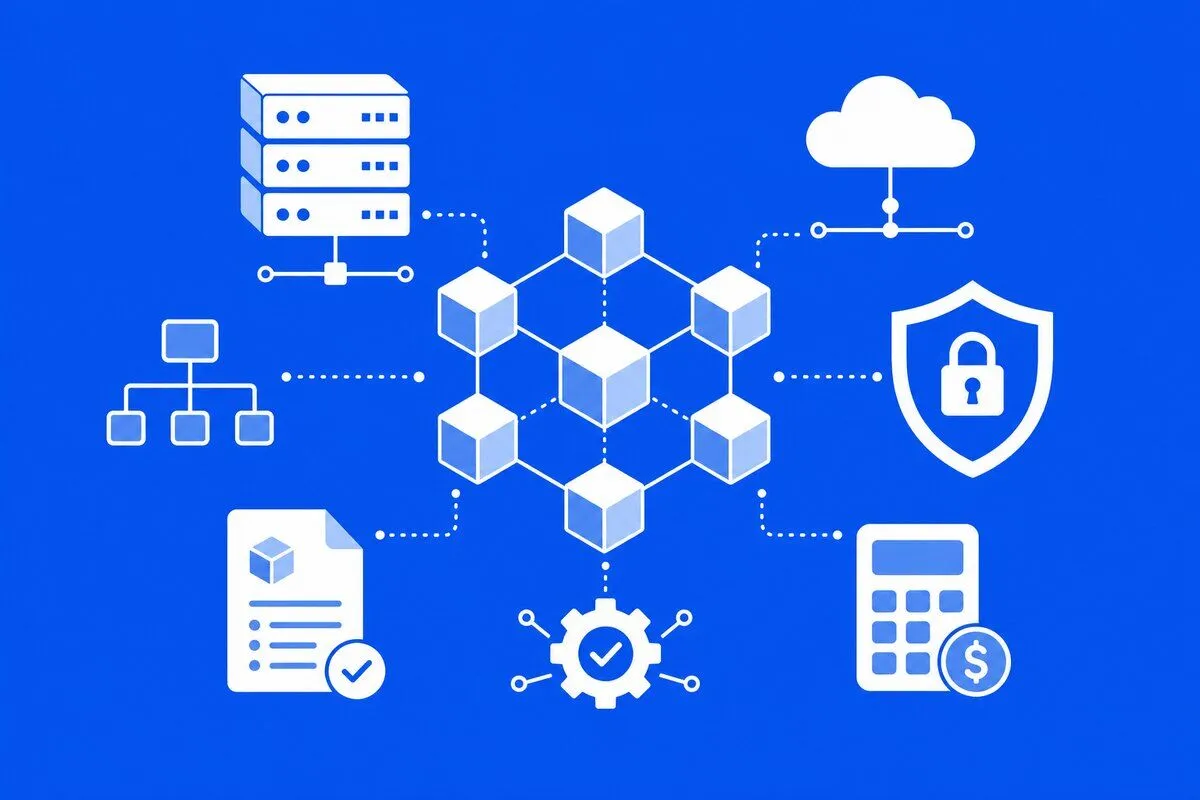
In the digital world, blockchain is the most powerful implementation of an immutable ledger. Every block in a blockchain contains a group of transactions, a timestamp, and a cryptographic link to the previous block. This chain of linked blocks makes retroactive changes virtually impossible because altering one block would require changing every subsequent block across every copy of the ledger simultaneously.
How Does Immutability Work? A Visual Flowchart
Understanding how data becomes permanent on a blockchain is easier when you see the process visually. Here is a step by step flowchart of how immutability is achieved:
Flowchart: How Data Becomes Immutable on Blockchain
Once a block is added to the chain and confirmed by the network’s consensus mechanism, the data inside becomes permanent. Changing even a single character in the block would produce a completely different hash, instantly alerting the entire network to the tampering attempt.
The Three Pillars That Make a Ledger Immutable
Immutability is not achieved by a single mechanism. It is the result of three powerful technologies working together:
Cryptographic Hashing
Each block is assigned a unique digital fingerprint (hash). Any change to the block’s data creates a completely new hash, making tampering instantly detectable.
Consensus Mechanisms
Multiple nodes must agree on the validity of each transaction before it is added. No single party can alter records without majority agreement from the network.
Decentralized Storage
Copies of the ledger are stored across thousands of computers worldwide. There is no single point of attack or failure that could compromise the data.
Immutable Ledger vs Mutable Ledger: What Is the Difference?
To truly appreciate why immutability matters, it helps to compare an immutable ledger with a traditional mutable (changeable) ledger:
| Feature | Mutable Ledger (Traditional) | Immutable Ledger (Blockchain) |
|---|---|---|
| Data Editing | Can be changed or deleted by admins | Cannot be changed once recorded |
| Trust Model | Trust the database administrator | Trust the network and cryptography |
| Audit Trail | Can be manipulated or lost | Permanent and verifiable by anyone |
| Single Point of Failure | Yes (centralized server) | No (distributed across nodes) |
| Fraud Risk | Higher (insiders can alter records) | Extremely low (requires 51% attack) |
| Transparency | Limited to authorized users | Open or permissioned visibility |
| Cost of Trust | High (auditors, intermediaries) | Low (built into the protocol) |
| Speed of Verification | Days to weeks (manual audits) | Instant (on chain verification) |
Top Benefits of an Immutable Ledger for Businesses
Immutability is not just a technical feature. It translates into real, measurable business advantages. Here is why enterprises across the world are investing in immutable ledger technology:
Unbreakable Data Integrity
Every piece of data stored on an immutable ledger is guaranteed to be exactly as it was when first recorded. This eliminates data corruption, unauthorized edits, and accidental overwrites that plague traditional databases.
Complete Audit Trail
Every transaction, from the very first to the most recent, is permanently recorded with timestamps. This provides a complete, tamper proof audit trail that simplifies compliance, regulatory reporting, and dispute resolution.
Fraud Prevention and Security
Because no single entity can modify past records, immutable ledgers dramatically reduce the risk of internal fraud, accounting manipulation, and cyberattacks targeting data integrity.
Elimination of Intermediaries
When both parties trust the ledger, there is no need for a middleman to verify the truth. This removes banks, notaries, escrow agents, and other intermediaries from processes, saving time and money.
Enhanced Trust and Transparency
All participants in the network can verify records independently. This creates a “trust but verify” environment that builds confidence between business partners, customers, and regulators.
Regulatory Compliance Made Simple
Industries like finance, healthcare, and real estate face strict record keeping regulations. An immutable ledger automatically satisfies many compliance requirements by maintaining a permanent, verifiable history of all transactions.
Real World Use Cases: Where Immutable Ledgers Are Making a Difference
Immutable ledger technology is not just theoretical. It is being used right now by some of the world’s largest organizations:
Banking and Finance
Banks use immutable ledgers for cross border payments, trade settlement, and KYC record management. JPMorgan’s Onyx platform processes billions using blockchain ledgers.
Healthcare
Patient records, drug traceability, and clinical trial data are stored on immutable ledgers to prevent tampering and ensure data accuracy across healthcare providers.
Supply Chain
Companies like Walmart and Maersk use blockchain to track products from origin to shelf, ensuring authenticity and preventing counterfeit goods from entering the supply chain.
Real Estate
Property titles and ownership records on immutable ledgers eliminate title fraud and reduce the time needed for property transfers from weeks to hours.
Education
Universities are storing academic credentials on blockchain so that employers can instantly verify degrees and certifications without contacting the institution.
Government
Governments in Estonia, Dubai, and Georgia use immutable ledgers for land registries, digital identity systems, and transparent public spending records.
How Enterprises Implement an Immutable Ledger: Process Flowchart
Here is a simplified flowchart showing how a business moves from concept to a fully operational immutable ledger system:
Flowchart: Enterprise Immutable Ledger Implementation
Blockchain development firms like Nadcab Labs guide enterprises through every phase of this implementation, providing expertise in platform selection, smart contract development, security audits, and system integration to ensure a successful deployment.
Challenges and Limitations of Immutable Ledgers
While immutability offers powerful advantages, it also introduces certain challenges that enterprises must consider:
- Data Privacy Concerns: Once data is on chain, it is permanent. If personal information is mistakenly recorded, it cannot be erased, which can conflict with regulations like GDPR’s “right to be forgotten.”
- Storage Costs: As the ledger grows over time, the storage requirements for all participating nodes increase, which can raise infrastructure costs for enterprises running their own nodes.
- Scalability: Processing and permanently storing every transaction across all nodes can create performance bottlenecks during high volume periods.
- Error Correction: If incorrect data is recorded, it cannot be deleted. Corrections must be added as new transactions, which requires well designed governance processes.
- Energy Consumption: Proof of Work based blockchains consume significant energy to maintain consensus. However, newer Proof of Stake systems have reduced this issue dramatically.
How Different Blockchains Achieve Immutability
Not all blockchains implement immutability in the same way. Here is a comparison of how leading platforms handle it:
| Blockchain | Consensus | Immutability Level | Best For |
|---|---|---|---|
| Bitcoin | Proof of Work | Highest (most decentralized) | Digital currency, store of value |
| Ethereum | Proof of Stake | Very High | DeFi, smart contracts, dApps |
| Hyperledger Fabric | PBFT (Permissioned) | High (within consortium) | Enterprise, supply chain |
| Solana | Proof of History + PoS | High | High speed applications, DeFi |
| Polygon | Proof of Stake | High (anchored to Ethereum) | Scalable enterprise dApps |
For more information on how Ethereum powers immutable smart contracts, visit Ethereum.org Smart Contracts Documentation.
The Future of Immutable Ledger Technology
The evolution of immutable ledger technology is far from over. Here are the key trends shaping its future:
- Zero Knowledge Proofs: This cryptographic innovation allows data to be verified without revealing the data itself, solving the privacy challenge of immutable ledgers.
- AI Powered Ledger Analytics: Artificial intelligence will enable enterprises to extract deeper insights from their immutable ledger data in real time.
- Interoperable Ledgers: Cross chain solutions will allow different immutable ledgers to communicate and share verified data seamlessly.
- Quantum Resistant Cryptography: Next generation hashing algorithms will ensure that immutable ledgers remain secure even against future quantum computing threats.
- Government Adoption: More nations will adopt immutable ledger systems for public records, voting, taxation, and identity management.
- Integration with IoT: Internet of Things devices will write sensor data directly to immutable ledgers, creating tamper proof records for manufacturing, logistics, and environmental monitoring.
Did You Know?
The Bitcoin blockchain, the world’s first and most famous immutable ledger, has been running continuously since January 3, 2009, without a single second of downtime. That is over 16 years of uninterrupted, tamper proof operation, making it one of the most reliable systems in the history of computing.
Build Your Business on an Immutable Foundation
Whether you need a private blockchain for enterprise operations, a public ledger for transparent transactions, or a hybrid solution that combines both, Nadcab Labs has the expertise to design, develop, and deploy immutable ledger solutions tailored to your business needs.
From smart contract development and security auditing to full blockchain architecture, our team is ready to help you build with confidence.
Final Thoughts
An immutable ledger is far more than a buzzword. It is the foundational technology that gives blockchain its power, trustworthiness, and transformative potential. From banking and healthcare to supply chains and government services, immutable ledgers are rewriting the rules of how data is stored, verified, and trusted across every industry.
For enterprises, the message is clear: building on an immutable foundation means building on trust. It means faster audits, lower fraud, reduced costs, and a level of transparency that was simply not possible with traditional systems.
As the technology matures with innovations like zero knowledge proofs, cross chain interoperability, and quantum resistant cryptography, the role of immutable ledgers in enterprise operations will only grow stronger. Businesses that embrace this technology today, with the guidance of experienced blockchain solution providers like Nadcab Labs, will be the ones leading their industries into the future.
Frequently Asked Questions
Q1.Can data ever be removed from an immutable ledger?
No, data cannot be deleted from a truly immutable ledger. However, enterprises can use techniques like encryption key destruction (making encrypted data unreadable) or off chain storage with on chain references to manage sensitive information while preserving the integrity of the ledger itself.
Q2.Is an immutable ledger the same as a blockchain?
Not exactly. Blockchain is the most well known type of immutable ledger, but it is not the only one. Other technologies like Directed Acyclic Graphs (DAGs) used by IOTA and Hashgraph also create immutable records. Blockchain is a specific architecture for building an immutable ledger using linked blocks of data.
Q3.How does an immutable ledger handle human errors in data entry?
Errors cannot be erased, but they can be corrected by adding a new transaction that references and overrides the incorrect entry. The original error remains visible for audit purposes, while the corrected information becomes the current valid record. Well designed enterprise systems include validation layers to minimize such errors before data reaches the ledger.
Q4.What is a 51% attack and how does it threaten immutability?
A 51% attack occurs when a single entity gains control of more than half of a network’s computing power or staking capacity, which could theoretically allow them to rewrite recent blocks. However, on large networks like Bitcoin and Ethereum, the cost and resources required make such an attack practically impossible. Enterprise permissioned blockchains mitigate this risk by controlling who can participate in consensus.
Q5.How much does it cost to set up an immutable ledger for a business?
Costs depend on the scope and complexity. A simple proof of concept on a public blockchain might cost a few thousand dollars, while a full enterprise deployment with custom smart contracts, security audits, and system integration can range from $30,000 to $500,000 or more. Cloud based Blockchain as a Service (BaaS) platforms offer more affordable entry points for smaller organizations.
Q6.Can immutable ledgers comply with GDPR's right to erasure?
This is a known challenge. The most common solution is storing personal data off chain while keeping only anonymized references or hashes on the ledger. When erasure is requested, the off chain data is deleted while the on chain hash becomes meaningless without the original data. Zero knowledge proofs offer another path by enabling verification without storing personal data at all.
Q7.What happens to the ledger if the blockchain company shuts down?
On public blockchains like Bitcoin or Ethereum, the ledger survives even if individual companies leave the space because it is maintained by a decentralized network of independent nodes worldwide. For private or permissioned blockchains, business continuity depends on the governance structure. Enterprises should ensure multi node redundancy and clear operational agreements among consortium members.
Q8.Is immutability useful for small businesses or only large enterprises?
Small businesses can benefit significantly from immutable ledgers, especially for use cases like verifiable invoicing, transparent supply chain records, tamper proof contracts, and secure customer data management. Cloud based blockchain platforms and Blockchain as a Service solutions have made the technology accessible and affordable for businesses of all sizes.
Q9.How fast can transactions be recorded on an immutable ledger?
Speed varies by blockchain platform. Bitcoin processes about 7 transactions per second, Ethereum handles around 30, while newer platforms like Solana can process over 65,000 transactions per second. Enterprise permissioned blockchains like Hyperledger Fabric can be optimized for even higher throughput depending on the configuration and use case requirements.
Q10.Can smart contracts work with immutable ledgers?
Absolutely. Smart contracts are self executing programs stored on an immutable ledger that automatically run when predefined conditions are met. Because the smart contract code itself is immutable once deployed, both parties can trust that the agreement will execute exactly as written without any possibility of tampering. This combination of immutability and automation is what makes blockchain so powerful for enterprise applications.
Explore Services
Related Services
Reviewed by

Aman Vaths
Founder of Nadcab Labs
Aman Vaths is the Founder & CTO of Nadcab Labs, a global digital engineering company delivering enterprise-grade solutions across AI, Web3, Blockchain, Big Data, Cloud, Cybersecurity, and Modern Application Development. With deep technical leadership and product innovation experience, Aman has positioned Nadcab Labs as one of the most advanced engineering companies driving the next era of intelligent, secure, and scalable software systems. Under his leadership, Nadcab Labs has built 2,000+ global projects across sectors including fintech, banking, healthcare, real estate, logistics, gaming, manufacturing, and next-generation DePIN networks. Aman’s strength lies in architecting high-performance systems, end-to-end platform engineering, and designing enterprise solutions that operate at global scale.