Ai Overview
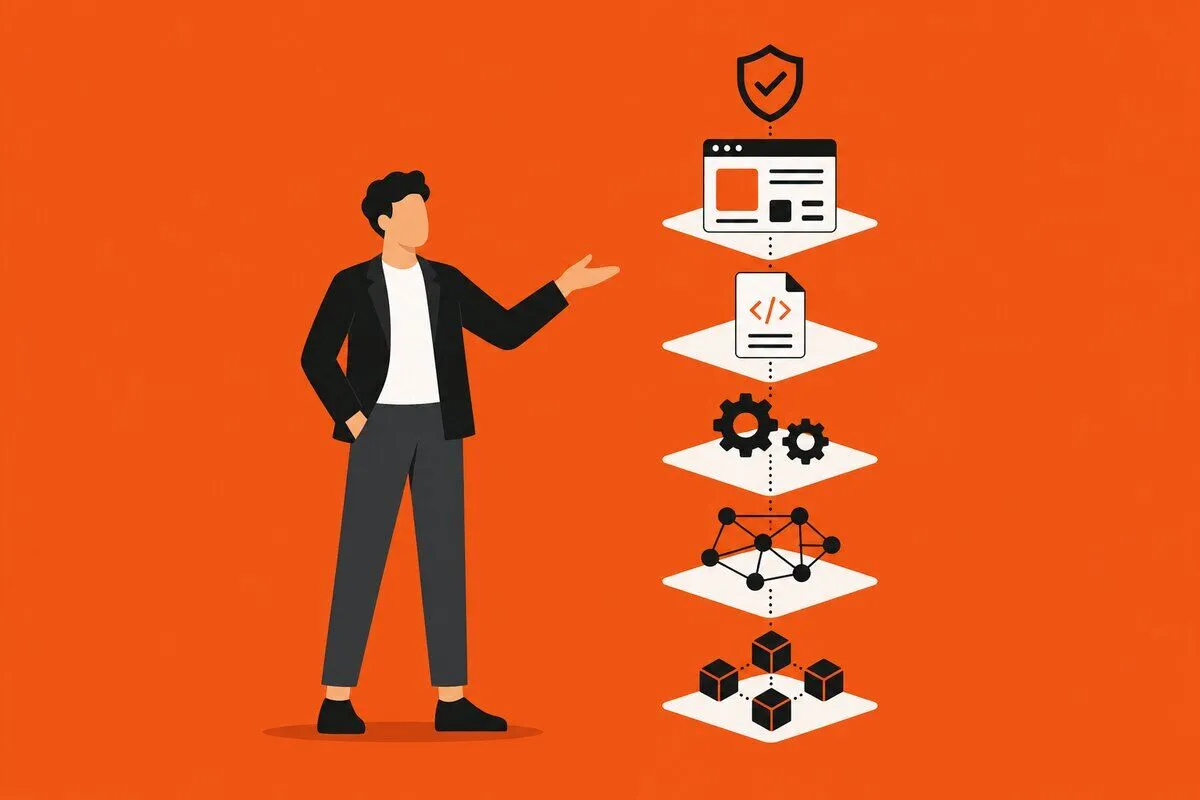
The web3 game development lifecycle begins with crystallizing a compelling game concept that genuinely benefits from blockchain integration rather than implementing technology for its own sake. Successful Web3 solutions in gaming solve real problems including true asset ownership, transparent economies, and player-driven governance that traditional games cannot address. Standard 2: Implement comprehensive unit testing achieving minimum 95% code coverage across all smart contract functions.
Key Takeaways
- The web3 game development lifecycle spans 12 to 18 months from concept validation through mainnet launch, requiring coordinated cross-functional expertise.
- Blockchain selection directly impacts transaction costs, speed, and player experience, with Polygon, Immutable X, and Avalanche leading gaming adoption.
- Play to earn game development requires sustainable tokenomics balancing player rewards, treasury reserves, and long-term ecosystem value preservation.
- NFT asset design must prioritize genuine utility and interoperability rather than speculative value to ensure lasting player engagement.
- Smart contract audits from reputable firms are mandatory before any mainnet deployment to protect player assets and studio reputation.
- Wallet integration requires seamless onboarding flows that abstract blockchain complexity for mainstream players unfamiliar with crypto mechanics.
- Studios in the USA, UK, UAE, and Canada lead web3 gaming innovation with regulatory frameworks supporting blockchain entertainment ventures.
- Testnet playtesting with community members identifies critical issues while building early adopter engagement before public launch.
- Post-launch analytics and continuous iteration based on player behavior data separate successful web3 games from abandoned projects.
- End to end web3 game development demands expertise spanning game design, blockchain engineering, economics, and community management disciplines.
Choosing the Right Blockchain for Game Development
Ethereum Layer 2s
- Polygon: Low fees, high adoption
- Arbitrum: Strong DeFi ecosystem
- Optimism: Growing gaming focus
- Immutable X: Gaming-specific L2
Alternative Layer 1s
- Avalanche: Subnet customization
- Solana: High throughput gaming
- BNB Chain: Large user base
- Flow: NFT-native architecture
Selection Factors
- Transaction costs per action
- Finality speed requirements
- Existing player community
- Tooling and SDK maturity
Blockchain selection represents one of the most consequential decisions in the web3 game development process. The chosen network determines transaction economics, player onboarding friction, interoperability options, and long-term scalability. Studios must balance current capabilities against roadmap ambitions, ensuring selected infrastructure supports both launch requirements and future expansion plans.
Defining Game Architecture and On Chain Components
Architectural decisions determine which game elements live on-chain versus off-chain, balancing decentralization benefits against performance requirements. Core ownership records, marketplace transactions, and governance voting typically require blockchain permanence, while real-time gameplay, matchmaking, and leaderboards operate through traditional backend services. This hybrid approach delivers web3 benefits without sacrificing gameplay responsiveness.
Web3 game development step by step architecture planning involves mapping every player interaction to appropriate infrastructure layers. Asset minting, transfers, and burns occur on-chain with cryptographic verification. Game state updates, player progression, and session data reside in optimized databases with periodic blockchain anchoring for auditability. This separation enables thousands of concurrent players without overwhelming network capacity.
Studios should document architecture decisions comprehensively, creating technical specifications that guide implementation teams and facilitate future maintenance. Clear boundaries between on-chain and off-chain components prevent scope creep while ensuring blockchain integration enhances rather than hinders player experiences throughout the web3 game development lifecycle.
Sustainable tokenomics form the economic foundation of successful play to earn game development projects. Token utility must extend beyond speculation to include governance rights, staking benefits, and in-game functionality that creates genuine demand. Emission schedules, vesting periods, and burn mechanisms require careful calibration to maintain value while rewarding engaged players fairly over multi-year horizons.
Backend Infrastructure and Off Chain Services
Despite blockchain’s decentralized nature, web3 games require robust traditional backend infrastructure supporting real-time gameplay, matchmaking, and data persistence. Game servers handle latency-sensitive operations including player movement, combat calculations, and session management that blockchain networks cannot process quickly enough. This hybrid architecture delivers responsive experiences while leveraging blockchain for ownership and economic functions.
Off-chain services include indexing solutions aggregating blockchain events into queryable databases, caching layers accelerating asset metadata retrieval, and analytics pipelines tracking player behavior. The Graph protocol and custom indexers transform raw blockchain data into application-friendly formats, while content delivery networks ensure global players experience minimal latency regardless of geographic location.
Infrastructure scaling requires careful planning for concurrent player peaks, marketplace activity surges, and viral growth scenarios. Studios serving players across the UAE, Canada, and other major markets must provision capacity handling demand variability while controlling costs during quieter periods. Cloud-native architectures enable elastic scaling matching resource allocation to actual usage patterns.
Game Engine Selection and Frontend Development
Unity Engine
Dominant choice for mobile and cross-platform web3 games with extensive blockchain SDK ecosystem and WebGL export capabilities.
Unreal Engine
Preferred for high-fidelity PC and console experiences requiring advanced graphics, with growing web3 integration tooling.
Web-Native Frameworks
Phaser, Three.js, and PixiJS enable browser-based games with native wallet integration and zero download friction.
Security Audits and Smart Contract Testing
Standard 1: Engage minimum two independent audit firms before any mainnet deployment handling player assets or tokens.
Standard 2: Implement comprehensive unit testing achieving minimum 95% code coverage across all smart contract functions.
Standard 3: Conduct formal verification for critical financial functions managing significant token volumes or player deposits.
Standard 4: Establish bug bounty programs incentivizing ongoing security research from the broader community post-launch.
Standard 5: Document all audit findings and remediation actions transparently, publishing reports for community verification.
Standard 6: Implement emergency pause mechanisms enabling rapid response to discovered vulnerabilities without full contract upgrades.
Standard 7: Perform economic simulation testing validating tokenomics under adversarial conditions and market stress scenarios.
Standard 8: Maintain ongoing security monitoring detecting anomalous transaction patterns indicating potential exploitation attempts.
Mainnet Launch Strategy and Go Live Execution
| Launch Phase | Timeline | Key Activities | Success Metrics |
|---|---|---|---|
| Pre-Launch | 2-4 weeks before | Marketing ramp, influencer outreach, community preparation | Waitlist signups |
| Soft Launch | Day 1-7 | Limited access, monitoring, rapid issue response | Error rates, retention |
| Full Launch | Week 2-4 | Open access, marketplace activation, token launch | DAU, transactions |
| Stabilization | Month 2-3 | Balance adjustments, feature polish, scaling | Player satisfaction |
Mainnet launch execution requires meticulous coordination across technical, marketing, and community teams. Phased rollouts reduce risk by validating production systems under controlled conditions before exposing full player populations. Studios must prepare incident response procedures, communication templates, and rollback capabilities ensuring rapid recovery from unexpected issues during critical launch windows.
Post Launch Monitoring Analytics and Upgrades
Successful web3 games require continuous monitoring and iteration long after initial launch. Analytics dashboards track player retention, economic health indicators, and engagement patterns informing data-driven improvements. On-chain metrics including daily active wallets, transaction volumes, and token velocity reveal ecosystem vitality while highlighting areas requiring intervention.
Live operations teams manage community relations, content releases, and event scheduling maintaining player engagement between major updates. Seasonal content, competitive tournaments, and collaboration events create ongoing reasons for players to return while generating marketing moments attracting new participants. This operational cadence distinguishes thriving games from those fading after initial excitement.
Smart contract upgrades address discovered issues, introduce new features, and implement governance decisions approved by token holders. Transparent upgrade processes with community notification and timelock delays build trust while enabling necessary evolution. Studios serving players across the UAE, Canada, and global markets must balance innovation pace against stability expectations from invested communities.
Launch Your Web3 Game With Expert Developers
Our expert team delivers complete web3 game creation services from concept through live operations, helping studios navigate every lifecycle phase successfully.
Frequently Asked Questions
Q1.What is web3 game development and how does it differ from traditional game creation?
Web3 game development integrates blockchain technology to enable true digital ownership, player-driven economies, and decentralized governance. Unlike traditional games where publishers control all assets, web3 games allow players to own, trade, and monetize in-game items as NFTs. Smart contracts automate economic transactions transparently, creating trustless systems where rules are verifiable on-chain rather than controlled by centralized servers.
Q2.How long does the web3 game development lifecycle typically take?
The complete web3 game development lifecycle spans 12 to 24 months depending on complexity, team size, and scope. Initial phases including concept validation, market research, and architecture design require 2 to 4 months. Smart contract engineering, backend infrastructure, and frontend integration consume 6 to 12 months. Testing, audits, testnet deployment, and community building add additional months before mainnet launch.
Q3.What blockchain should I choose for my web3 game project?
Blockchain selection depends on your game requirements including transaction volume, cost sensitivity, and target audience. High-frequency games benefit from gaming-specific chains like Immutable X or Ronin offering low fees. Ethereum provides maximum security for high-value assets. Polygon and Avalanche balance cost efficiency with Ethereum compatibility. Evaluate existing player communities, tooling maturity, and marketplace liquidity when deciding.
Q4.How do play to earn economics work in web3 games?
Play to earn models reward players with cryptocurrency or NFTs for gameplay activities. Sustainable economies require balanced tokenomics where emissions match value creation through engaging gameplay, not unsustainable token printing. Successful games implement multiple token sinks including crafting, upgrades, and governance staking. Economic modeling must anticipate various player behaviors to prevent hyperinflation that collapsed earlier projects.
Q5.What security measures are essential for web3 game development?
Essential security measures include multiple independent smart contract audits, formal verification for critical financial logic, comprehensive testing across edge cases, and bug bounty programs incentivizing ongoing security review. Implement timelocks on administrative functions, multi-signature requirements for upgrades, and emergency pause mechanisms. Security investments protect player assets and protocol reputation from exploits causing irreparable damage.
Q6.How can web3 games onboard mainstream players unfamiliar with crypto?
Successful onboarding leverages account abstraction enabling social logins and email-based wallets without seed phrase management. Gas sponsorship systems cover initial transaction costs eliminating crypto acquisition barriers. Embedded wallet solutions integrate seamlessly within game interfaces. Contextual tutorials educate players on ownership concepts and wallet security through gameplay rather than documentation.
Q7.What makes web3 game development services different from traditional game studios?
Web3 game development services combine traditional game design expertise with specialized blockchain engineering capabilities. Teams must understand smart contract architecture, tokenomics modeling, wallet integration patterns, and on-chain security considerations alongside conventional game systems. Cross-functional collaboration between designers, artists, backend engineers, and blockchain specialists creates products leveraging both gaming excellence and decentralization benefits.
Explore Services
Related Services
Reviewed by

Aman Vaths
Founder of Nadcab Labs
Aman Vaths is the Founder & CTO of Nadcab Labs, a global digital engineering company delivering enterprise-grade solutions across AI, Web3, Blockchain, Big Data, Cloud, Cybersecurity, and Modern Application Development. With deep technical leadership and product innovation experience, Aman has positioned Nadcab Labs as one of the most advanced engineering companies driving the next era of intelligent, secure, and scalable software systems. Under his leadership, Nadcab Labs has built 2,000+ global projects across sectors including fintech, banking, healthcare, real estate, logistics, gaming, manufacturing, and next-generation DePIN networks. Aman’s strength lies in architecting high-performance systems, end-to-end platform engineering, and designing enterprise solutions that operate at global scale.