Ai Overview
But during peak hours, the line stretches around the building, wait times explode, and frustrated customers start leaving. Compare that to Visa’s capacity of over 65,000 transactions per second, and the gap becomes immediately clear. Solana uses Proof of History combined with Proof of Stake to achieve up to 65,000 theoretical TPS. Major DeFi protocols like Uniswap, Aave, and GMX now operate on these Layer 2 networks, offering users the same functionality at a fraction of the cost.
Key Takeaways
- Layer 1 is the base blockchain network like Bitcoin, Ethereum, or Solana that handles consensus, security, and transaction finality.
- Layer 2 solutions are built on top of Layer 1 to process transactions faster and cheaper without weakening the underlying security.
- The blockchain trilemma forces every network to balance decentralization, security, and scalability, which is why layers exist.
- Layer 1 scaling methods include sharding, larger blocks, and faster consensus mechanisms like Proof of Stake.
- Layer 2 scaling methods include rollups (Optimistic and ZK), state channels, sidechains, and plasma chains.
- Ethereum’s rollup centric roadmap positions Layer 2 as the primary venue for user transactions in the future.
- Lightning Network on Bitcoin and Arbitrum on Ethereum are among the most adopted Layer 2 solutions today.
- Layer 2 can reduce gas fees by up to 100x compared to transacting directly on Ethereum Layer 1.
- Enterprises need to evaluate both layers carefully to choose the right infrastructure for their blockchain use cases.
- The combination of Layer 1 security and Layer 2 speed is the most promising path toward mainstream blockchain adoption.
The blockchain industry has grown from a niche experiment into a global technology movement, but one challenge continues to define its evolution: how do you make decentralized networks fast enough for billions of users without sacrificing security? The answer lies in understanding Blockchain Layer 1 and Layer 2 solutions, the two pillars that together form the backbone of scalable, high speed decentralized systems.
Whether you are a developer building decentralized applications, an investor evaluating blockchain projects, or a business leader exploring Web3 adoption, understanding how Blockchain Layer 1 and Layer 2 work is no longer optional. It is essential. In this guide, we will break down both layers with clarity, real world examples, visual explanations, and actionable insight that will help you navigate the future of blockchain scalability and speed.
The Scalability Problem: Why Blockchain Needs Layers
Imagine a single checkout counter at a grocery store. When only a few customers visit, the line moves quickly. But during peak hours, the line stretches around the building, wait times explode, and frustrated customers start leaving. That is exactly what happens on a congested blockchain.
Bitcoin processes roughly 7 transactions per second. Ethereum handles about 15 to 30. Compare that to Visa’s capacity of over 65,000 transactions per second, and the gap becomes immediately clear. As blockchain adoption grows, the demand for faster, cheaper transactions has become the single most important technical challenge in the industry.
~7
Bitcoin TPS
~30
Ethereum TPS
4,000+
Layer 2 TPS
65,000+
Visa TPS
This is where the concept of Blockchain Layer 1 and Layer 2 becomes essential. Rather than trying to solve every problem on a single chain, the blockchain industry adopted a layered strategy where Layer 1 provides the secure foundation and Layer 2 handles the heavy lifting of transaction volume and speed.
What Is Blockchain Layer 1?
Layer 1 (L1) refers to the base blockchain protocol itself. It is the main network where transactions are recorded, validated, and permanently stored. Every blockchain you have heard of, Bitcoin, Ethereum, Solana, Cardano, Avalanche, BNB Chain, is a Layer 1.
Think of Layer 1 as the foundation of a skyscraper. It must be incredibly strong because everything built above it depends on its stability. If the foundation is weak, the entire building collapses. Similarly, Layer 1 must be secure and decentralized because every Layer 2 solution built on top of it inherits its trust guarantees.
Core Functions of Layer 1
How Layer 1 Blockchains Scale Themselves
Layer 1 blockchains do not simply accept their speed limitations. They actively implement on chain scaling techniques to improve throughput without relying on external layers. Here are the primary approaches:
1. Increasing Block Size
Larger blocks can fit more transactions per block, directly increasing throughput. Bitcoin Cash took this approach by increasing its block size from 1 MB to 32 MB. However, bigger blocks require more storage and bandwidth, which can reduce decentralization as fewer participants can afford to run full nodes.
2. Sharding
Sharding splits the blockchain into smaller parallel segments called shards. Each shard processes its own set of transactions independently. Think of it like dividing a classroom test among multiple graders instead of having one teacher grade every paper. Ethereum’s long term roadmap includes sharding as a core scaling strategy.
3. Optimized Consensus Mechanisms
Newer blockchains use faster consensus algorithms to reduce the time it takes to produce each block. Solana uses Proof of History combined with Proof of Stake to achieve up to 65,000 theoretical TPS. Avalanche uses a novel consensus protocol that achieves sub second finality.
Layer 1 Throughput Comparison
What Is Blockchain Layer 2?
Layer 2 (L2) refers to any protocol, framework, or network built on top of an existing Layer 1 blockchain to improve its performance. Layer 2 handles transaction execution off the main chain while periodically reporting results back to Layer 1 for final settlement and security.
Think of Layer 2 like a fast food drive through lane built alongside a busy restaurant. The main restaurant (Layer 1) still prepares and certifies the food quality, but the drive through (Layer 2) lets customers get served much faster without crowding the dining room. At the end of the day, the drive through reports all its orders back to the main kitchen for the final record.
Types of Layer 2 Scaling Solutions
Not all Layer 2 solutions work the same way. Each type takes a different approach to moving transactions off chain while maintaining the trust guarantees of Layer 1. Here are the four primary categories:
How a Layer 2 Rollup Works: Transaction Pipeline
Rollups are the most popular and promising Layer 2 technology. Here is the step by step pipeline showing how your transaction travels through a rollup and back to Layer 1 for final security.
User Submits Transaction
You initiate a swap, transfer, or contract interaction through a dApp connected to the Layer 2 network.
Sequencer Collects Transactions
A sequencer node on the Layer 2 gathers hundreds or thousands of individual transactions into a batch.
Batch Compression
The batch is compressed into a compact summary or cryptographic proof, dramatically reducing the data footprint.
Posted to Layer 1
The compressed proof is submitted to the Ethereum mainnet (or another L1) as a single transaction, settling the entire batch.
Finality Achieved
Layer 1 validates the proof and permanently records the state change. Your transaction is now secured by the full power of the base chain.
Layer 1 vs Layer 2: Complete Comparison
| Feature | Layer 1 | Layer 2 |
|---|---|---|
| Definition | The base blockchain network | Protocol built on top of Layer 1 |
| Primary Purpose | Security, consensus, finality | Speed, scalability, lower fees |
| Transaction Speed | Slower (7 to 30 TPS typical) | Much faster (hundreds to thousands TPS) |
| Transaction Fees | Higher (especially during congestion) | Significantly lower (up to 100x cheaper) |
| Security Model | Self secured (own consensus) | Inherits security from Layer 1 |
| Decentralization | Typically highly decentralized | Varies (some have centralized sequencers) |
| Data Storage | Full transaction history on chain | Compressed data posted to Layer 1 |
| Examples | Bitcoin, Ethereum, Solana, Cardano | Arbitrum, Optimism, zkSync, Lightning |
Real World Use Cases: Layer 1 and Layer 2 in Action
Bitcoin + Lightning Network
Bitcoin’s Layer 1 is optimized for security and decentralization, making it the most trusted store of value in crypto. However, its 7 TPS limit makes it impractical for everyday payments. The Lightning Network (Layer 2) solves this by creating payment channels where users can send Bitcoin instantly and for nearly zero fees. Apps like Strike and Cash App use Lightning to enable real time Bitcoin payments at retail stores and restaurants.
Ethereum + Arbitrum and Optimism
Ethereum is the most widely used smart contract platform, but its gas fees during high demand can make simple transactions prohibitively expensive. Arbitrum and Optimism are Optimistic Rollups that process Ethereum transactions off chain and post compressed proofs back to mainnet. Major DeFi protocols like Uniswap, Aave, and GMX now operate on these Layer 2 networks, offering users the same functionality at a fraction of the cost.
Ethereum + zkSync and StarkNet
ZK Rollups represent the cutting edge of Layer 2 technology. zkSync and StarkNet use zero knowledge proofs to validate thousands of transactions in a single proof submitted to Ethereum. This approach is faster than Optimistic Rollups (no 7 day challenge period) and is considered by many, including Vitalik Buterin, to be the long term future of Ethereum scaling. You can explore Ethereum’s scaling roadmap on Ethereum.org.
Gas Fee Comparison: Layer 1 vs Layer 2 on Ethereum
| Transaction Type | Ethereum L1 (approx.) | Arbitrum L2 (approx.) | zkSync L2 (approx.) |
|---|---|---|---|
| Simple ETH Transfer | $1.50 to $15 | $0.03 to $0.10 | $0.01 to $0.05 |
| Token Swap (Uniswap) | $5 to $50 | $0.10 to $0.30 | $0.05 to $0.15 |
| NFT Mint | $10 to $100+ | $0.15 to $0.50 | $0.08 to $0.25 |
| Smart Contract Deploy | $50 to $500+ | $0.50 to $5 | $0.30 to $3 |
Note: Gas fees are approximate and fluctuate based on network congestion. Values shown represent typical ranges during moderate usage periods.
How Layer 1 and Layer 2 Complement Each Other
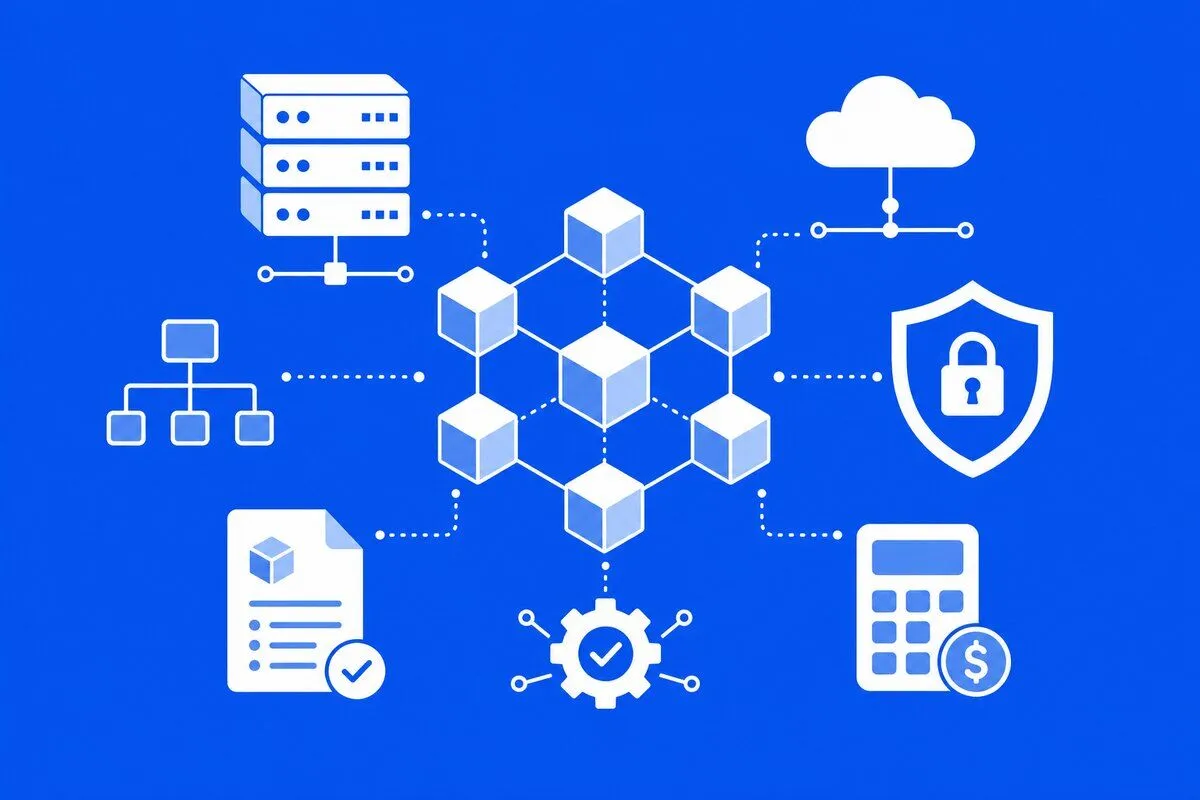
Layer 1 and Layer 2 are not competitors. They are partners in a carefully designed system where each layer does what it does best. Understanding this relationship is key to grasping why the industry is moving toward a multi layer architecture.
Together, they create a system that is secure at its core and fast at its edges, exactly what is needed for blockchain to scale to millions and eventually billions of users.
Enterprise Perspective: Choosing Between Layer 1 and Layer 2
For enterprises and startups building on blockchain, the choice between Layer 1 and Layer 2 depends on the specific requirements of your application:
- High value settlement and compliance: Use Layer 1. Financial institutions handling large transactions need the maximum security and finality that only the base chain provides.
- High volume, low value transactions: Use Layer 2. Payment systems, gaming platforms, and social apps benefit from L2’s speed and low fees.
- Supply chain and logistics: A hybrid approach works best, using L2 for frequent tracking updates and L1 for critical milestone verification.
- DeFi and trading platforms: Layer 2 is increasingly the default, with protocols like GMX and SynFutures running entirely on rollups for better user experience.
- Identity and credential verification: Layer 1 for issuing credentials (immutability matters) and Layer 2 for verifying them at scale (speed matters).
Security Considerations for Layer 1 and Layer 2
Both layers have unique security profiles that developers and users should understand:
- Layer 1 risks: 51% attacks (especially on smaller PoW chains), smart contract bugs, consensus mechanism vulnerabilities, and governance attacks.
- Layer 2 risks: Bridge exploits (billions have been lost to bridge hacks), sequencer centralization (a single entity ordering transactions), data availability gaps, and escape hatch failures.
- Shared risk: Both layers are vulnerable to oracle manipulation, front running, and social engineering attacks targeting users.
The most secure approach is to use well audited Layer 2 solutions that post full transaction data to Layer 1, ensuring that even if the L2 goes offline, users can always recover their funds through the base chain. Learn more about protecting your crypto assets on Bitcoin.org.
The Future of Blockchain Layer 1 and Layer 2
The relationship between Layer 1 and Layer 2 is evolving rapidly. Here are the major trends that will define the next era of blockchain scalability:
- Layer 1 becomes the settlement layer: Ethereum’s roadmap explicitly positions L1 as a security and data availability layer, with the expectation that most user activity will happen on Layer 2.
- ZK technology dominance: Zero knowledge proofs are expected to become the standard for Layer 2 scaling, offering instant finality, better privacy, and lower costs than optimistic approaches.
- Chain abstraction: Future wallets and interfaces will automatically route transactions to the optimal layer, so users will not need to think about whether they are on L1 or L2.
- Modular blockchains: Projects like Celestia are separating consensus, execution, and data availability into independent modular components, blurring the traditional line between L1 and L2.
- Application specific rollups: Instead of sharing a general purpose L2, high demand applications will launch their own dedicated rollups (appchains) for maximum performance and customization.
- Cross L2 interoperability: Seamless bridging between different Layer 2 networks will become standard, creating a unified ecosystem where assets flow freely across rollups.
Scale Your Blockchain Project with the Right Layer Strategy
Building on blockchain requires more than just choosing a chain. It requires choosing the right layer architecture for your specific use case. Whether you need Layer 1 smart contract development, Layer 2 rollup integration, or a complete Web3 solution from infrastructure to interface, Nadcab Labs delivers expert blockchain development and strategic consulting that helps startups and enterprises build scalable, secure, and future ready products.
Final Thoughts
The future of blockchain is not about choosing between Blockchain Layer 1 and Layer 2. It is about understanding how they work together to create a system that is simultaneously secure, fast, affordable, and scalable. Layer 1 provides the unbreakable foundation of consensus and trust. Layer 2 builds the highways of speed and efficiency on top of that foundation.
As the technology matures with ZK rollups, modular designs, and chain abstraction, the distinction between layers will become invisible to everyday users. But for developers, investors, and enterprise leaders, understanding the mechanics of Blockchain Layer 1 and Layer 2 remains a decisive advantage in navigating the rapidly evolving Web3 landscape.
Whether you are building decentralized applications, investing in blockchain projects, or planning your enterprise’s blockchain strategy, the knowledge of how these layers complement each other will help you make smarter, more informed decisions that stand the test of time.
Frequently Asked Questions
Q1.Can I use Layer 2 without owning any Layer 1 tokens?
In most cases, you still need a small amount of the Layer 1 native token (like ETH) to pay for bridging and initial transactions. However, some Layer 2 networks are experimenting with gasless transactions and account abstraction, where the dApp itself covers gas costs on behalf of users.
Q2.What happens to my funds if a Layer 2 network shuts down permanently?
For well designed rollups, your funds remain safe because all transaction data is posted to Layer 1. You can use the rollup’s escape hatch mechanism to withdraw your assets back to the base chain, even if the Layer 2 operators disappear. This is one of the key safety guarantees that distinguishes rollups from sidechains.
Q3.Is Solana a Layer 1 or Layer 2 solution?
Solana is a Layer 1 blockchain. It achieves high throughput directly on its base chain through its Proof of History mechanism combined with Proof of Stake, rather than relying on a separate Layer 2 for scalability. This is a different approach from Ethereum, which uses Layer 2 rollups for scaling.
Q4.How do I move my tokens from Layer 1 to Layer 2 and back?
You use a bridge, which is a smart contract that locks your tokens on one layer and mints equivalent tokens on the other. Most Layer 2 networks provide an official bridge interface. Moving from L1 to L2 is usually fast, while moving from L2 back to L1 can take longer, especially on Optimistic Rollups where a 7 day challenge period may apply.
Q5.Will Layer 2 eventually replace Layer 1?
No. Layer 2 depends on Layer 1 for its security and finality. Without the base chain, Layer 2 has no anchor of trust. The future model is Layer 1 serving as the secure settlement backbone while Layer 2 handles the majority of user facing transaction volume. Both layers are essential and neither can replace the other.
Q6.Can Layer 2 solutions work across different Layer 1 blockchains?
Most Layer 2 solutions are designed for a specific Layer 1. Arbitrum and Optimism are built specifically for Ethereum. Lightning Network is built for Bitcoin. However, some cross chain Layer 2 projects and interoperability protocols are emerging that aim to bridge different L1 ecosystems, though this technology is still maturing.
Q7.Are Layer 2 transactions private or can they be tracked like Layer 1?
Most Layer 2 transactions are publicly visible, similar to Layer 1. However, ZK Rollups have a natural advantage here because zero knowledge proofs can verify transaction validity without revealing the underlying details. Some privacy focused L2 projects like Aztec are specifically building private transaction layers using ZK technology.
Q8.How do I know if a Layer 2 project is trustworthy?
Check whether the project has been audited by reputable security firms, whether its code is open source, how decentralized its sequencer is, and whether it posts full transaction data to Layer 1. Resources like L2Beat provide detailed risk assessments and maturity ratings for every major Layer 2 network.
Q9.Do Layer 2 networks have their own tokens?
Some do. Optimism has the OP token, Arbitrum has ARB, and Polygon has MATIC (now POL). These tokens are used for governance, staking, and incentivizing network participants. However, not all Layer 2 networks have their own tokens. Some, like Base (built by Coinbase), operate without a native token and use ETH for gas fees.
Q10.Can gaming and social media apps really work on blockchain Layer 2?
Yes, and many already do. Blockchain games like Axie Infinity use Layer 2 (Ronin sidechain) for fast, cheap in game transactions. Social platforms like Lens Protocol are exploring Layer 2 deployment for on chain social interactions. The low fees and high speed of Layer 2 make it practical for applications that require frequent microtransactions, which would be cost prohibitive on Layer 1.
Explore Services
Related Services
Reviewed by

Aman Vaths
Founder of Nadcab Labs
Aman Vaths is the Founder & CTO of Nadcab Labs, a global digital engineering company delivering enterprise-grade solutions across AI, Web3, Blockchain, Big Data, Cloud, Cybersecurity, and Modern Application Development. With deep technical leadership and product innovation experience, Aman has positioned Nadcab Labs as one of the most advanced engineering companies driving the next era of intelligent, secure, and scalable software systems. Under his leadership, Nadcab Labs has built 2,000+ global projects across sectors including fintech, banking, healthcare, real estate, logistics, gaming, manufacturing, and next-generation DePIN networks. Aman’s strength lies in architecting high-performance systems, end-to-end platform engineering, and designing enterprise solutions that operate at global scale.