Ai Overview
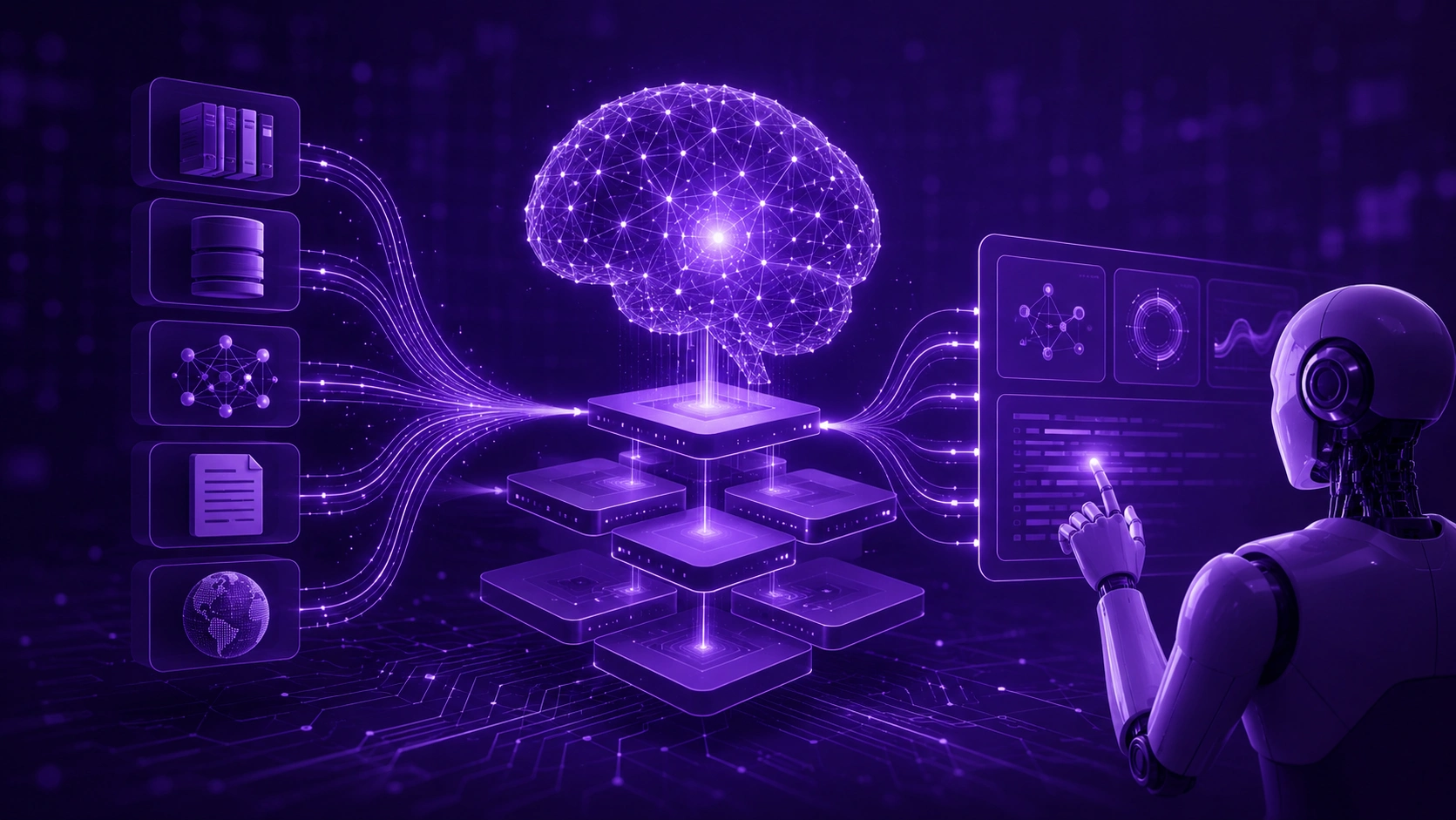
Think about how Netflix knows what show you want to watch next, or how your bank catches a fraudulent transaction before you even notice it. It is not magic, and it is not some distant future technology. It is already running quietly inside the systems you use every day. Machine learning is a subset of artificial intelligence and machine learning that gives computers the ability to learn from experience.
Introduction to Machine Learning Technology
Think about how Netflix knows what show you want to watch next, or how your bank catches a fraudulent transaction before you even notice it. That is ml at work. It is not magic, and it is not some distant future technology. It is already running quietly inside the systems you use every day.
Machine learning is a subset of artificial intelligence and machine learning that gives computers the ability to learn from experience. Instead of writing a long list of rules telling a computer exactly what to do, you feed it data and let it figure out the patterns on its own. The more data it sees, the smarter it gets.
With over eight years of experience building ml systems for businesses across healthcare, finance, retail, and logistics, we have seen firsthand how transformative this technology can be when applied correctly. This guide breaks down everything you need to know, from the basics of how machine learning works to the most advanced production architectures.
Understanding the Fundamentals of Machine Learning
At its core, machine learning is about finding patterns. A machine learning model looks at thousands or millions of examples, identifies what they have in common, and uses those patterns to make predictions about new, unseen data. This is the fundamental loop that powers everything from spam filters to self-driving cars.
The process always starts with data. Without good, clean, representative data, even the most sophisticated ml models will fail. Once you have data, you choose an algorithm, train the model, evaluate how well it performs, and then deploy it to handle real predictions.
Collect Data
Gather structured and unstructured data from relevant sources, clean it, and prepare it for the learning process.
Train Model
Feed data into a chosen algorithm and allow it to iteratively adjust internal parameters to minimize prediction error.
Evaluate
Test model accuracy on unseen validation data using precision, recall, F1, and AUC-ROC metrics.
Deploy
Integrate trained models into production systems with monitoring, version control, and continuous retraining pipelines.
Key Principles Behind Machine Learning Systems
Every effective machine learning system is built on a handful of core principles. These are not just theoretical concepts. They are practical rules that experienced ml engineers apply daily to build systems that actually work in the real world.
Generalization
A model must perform well on data it has never seen before, not just on training data. Overfitting to training examples is the most common failure mode in machine learning projects.
Bias-Variance Balance
Too simple a model underfits the data. Too complex a model memorizes noise. Finding the right balance is a core skill that separates average ML work from excellent results.
Feature Engineering
The variables you feed into a model matter more than the algorithm itself in most cases. Crafting meaningful features from raw data is where domain knowledge and ML expertise combine.
Iterative Refinement
Machine learning is not a one-time task. Models drift as the real world changes. Continuous monitoring, retraining, and improvement pipelines are essential for sustained performance.
Different Types of Machine Learning Models
Not all machine learning approaches are the same. The type you choose depends entirely on what kind of problem you are trying to solve and what data you have available. Here is a breakdown of the main ml types and when to use each one.
Supervised Learning
Trained on labeled input-output pairs. The model learns to map inputs to correct outputs. Used for classification and regression tasks.
Examples: Email spam filters, house price prediction, medical diagnosis
Unsupervised Learning
Finds hidden patterns in data without predefined labels. The algorithm groups or structures data based on natural similarities.
Examples: Customer segmentation, anomaly detection, recommendation systems
Reinforcement Learning
An agent learns by interacting with an environment and receiving rewards or penalties for actions taken. Optimizes for long-term cumulative reward.
Examples: Game AI, robot navigation, trading strategies
Semi-Supervised Learning
Combines a small amount of labeled data with a large amount of unlabeled data. Useful when labeling data is expensive or time-consuming.
Examples: Image classification, web content classification, speech analysis
Supervised, Unsupervised, and Reinforcement Learning
Let’s go deeper into how each of these three primary machine learning types actually works in practice, using plain language and real-world examples that make the differences immediately clear.
| Feature | Supervised | Unsupervised | Reinforcement |
|---|---|---|---|
| Training Data | Labeled pairs | Unlabeled data | Environment rewards |
| Goal | Predict outcomes | Find patterns | Maximize reward |
| Algorithms | SVM, Random Forest, Neural Nets | K-Means, DBSCAN, PCA | Q-Learning, PPO, A3C |
| Best Use | Classification, regression | Clustering, compression | Sequential decisions |
| Difficulty | Moderate | Moderate-High | Very High |
Core Architecture of Machine Learning Frameworks
A machine learning framework provides the foundational infrastructure that allows data scientists and ml engineers to build, train, and deploy models efficiently. Understanding the architecture layers helps teams make smarter tooling decisions from day one.
Data Ingestion Layer
Handles raw data collection from databases, APIs, files, and streaming sources. Tools like Apache Kafka, Spark, and Airflow manage data pipelines at scale.
Feature Engineering Layer
Transforms raw data into meaningful numerical representations that ml algorithms can process. Includes normalization, encoding, dimensionality reduction, and feature selection steps.
Model Training Layer
Where algorithms iteratively learn from prepared data. Modern frameworks like TensorFlow and PyTorch support GPU acceleration, distributed training, and automatic differentiation.
Evaluation and Validation Layer
Measures model performance using cross-validation, holdout sets, and statistical tests to ensure models generalize well before entering production.
Serving and Monitoring Layer
Deploys trained models as REST APIs or embedded components and continuously monitors prediction quality, latency, and data drift using tools like MLflow and Seldon Core.
Role of Data in Machine Learning
Data is the fuel of machine learning. Without enough of it, and without high enough quality, even the best algorithms will produce unreliable results. In our eight years of working on ml projects, data quality issues have been the root cause of more than 70 percent of project failures we have encountered.
Volume
More data generally means better model performance, especially for deep learning. Complex models need millions of examples to learn robust patterns without overfitting.
Quality
Noisy, inconsistent, or incorrectly labeled data corrupts the learning process. Data cleaning and validation pipelines are non-negotiable before any training begins.
Diversity
Training data must represent the full range of real-world scenarios the model will encounter. Biased training sets produce biased models with poor real-world generalization.
Freshness
Outdated data leads to model drift. Real-world patterns shift over time, making regular data updates and retraining pipelines essential for sustained accuracy.
Training and Optimization of ML Models
Training a machine learning model is the process of adjusting its internal parameters so that it makes increasingly accurate predictions. Optimization is how you guide this adjustment process efficiently.
The most widely used optimization method is gradient descent, which calculates how to adjust model weights to reduce prediction error step by step. Modern variations like Adam, RMSprop, and AdaGrad make this process faster and more reliable for complex neural network architectures.
Popular Machine Learning Algorithms Explained
These are the machine learning algorithms that power most real-world applications today. Each one has strengths, weaknesses, and ideal use scenarios that every ml engineer should understand deeply.
| Algorithm | Type | Best For | Complexity |
|---|---|---|---|
| Linear Regression | Supervised | Numerical prediction | Low |
| Decision Trees | Supervised | Classification, interpretability | Low-Medium |
| Random Forest | Supervised | Robust classification | Medium |
| SVM | Supervised | High-dimensional data | Medium |
| K-Means | Unsupervised | Customer segmentation | Low |
| Neural Networks | Supervised/Unsupervised | Images, speech, text | Very High |
| XGBoost | Supervised | Structured data competitions | Medium-High |
Real-World Applications of Machine Learning
Machine learning applications are everywhere, even when we do not notice them. According to IBM Insights, Every time YouTube recommends a video, your GPS recalculates a better route, or your phone unlocks using your face, ml is doing the work behind the scenes.
Machine Learning Applications Across Industries
Healthcare
- Early cancer detection from scans
- Drug interaction prediction
- Patient readmission risk scoring
- Medical image analysis (radiology)
- Personalized treatment planning
Finance
- Real-time fraud detection
- Credit risk assessment
- Algorithmic trading strategies
- Customer churn prediction
- Anti-money laundering systems
Retail & E-Commerce
- Product recommendation engines
- Dynamic pricing models
- Demand forecasting
- Visual search and product discovery
- Inventory optimization
Machine Learning in Healthcare, Finance, and Business
Three sectors have seen the most dramatic transformation from machine learning. Each one has unique data characteristics, regulatory requirements, and use case profiles that make ML both challenging and enormously valuable.
Real-World Example: Healthcare
Google DeepMind’s AlphaFold uses ml to predict protein structures with near-laboratory accuracy. This has accelerated drug discovery by years and opened new possibilities in treating diseases that were previously considered impossible to target. In radiology, ML models now detect diabetic retinopathy in fundus images with specialist-level accuracy across thousands of scans per hour.
Real-World Example: Finance
PayPal processes over 40 billion transactions annually using machine learning fraud detection models that analyze over 400 signals per transaction in real time. JPMorgan Chase uses ML to review loan agreements in seconds, a task that previously required 360,000 hours of lawyer time annually. These are not pilot projects. They are core infrastructure.
Real-World Example: Business Operations
Amazon’s supply chain optimization uses reinforcement learning and demand forecasting ML models to ensure products are positioned in the right warehouses before customers even order them. This anticipatory shipping approach has reduced delivery times by over 40 percent in core markets, demonstrating how machine learning creates competitive advantages that compound over time.
Benefits and Limitations of Machine Learning
Machine learning is powerful, but it is not a silver bullet. Honest conversations about where it excels and where it falls short lead to better project outcomes and more realistic stakeholder expectations.
- Handles massive datasets that humans cannot
- Finds non-obvious patterns in complex data
- Improves automatically with more data
- Scales to billions of predictions per day
- Reduces human error in repetitive tasks
- Personalizes experiences at individual level
- Operates 24/7 without fatigue
- Requires large volumes of quality data
- Black-box models lack explainability
- Can inherit and amplify data biases
- High compute costs for deep learning
- Fails on truly novel, unseen scenarios
- Needs ongoing monitoring and maintenance
- Regulatory compliance adds complexity
Challenges in Building ML Systems
Having built hundreds of ml systems over the years, we know that technical challenges are often the least of your worries. Organizational, data, and deployment challenges cause far more project delays than algorithm selection ever does.
Data Scarcity
Collecting enough high-quality, labeled training data is consistently the hardest part of most real-world ml projects.
Model Drift
Real-world data distribution shifts over time, causing model accuracy to degrade without proper monitoring and retraining systems.
Explainability
Regulators and business stakeholders increasingly demand that ML decisions be explainable, which conflicts with the complexity of high-performance models.
Infrastructure Cost
Training large models on GPUs and maintaining production inference infrastructure represents significant ongoing cost that must be justified by business value.
Model Selection Criteria: 3-Step Framework
Choosing the right machine learning model is not about picking the fanciest algorithm. It is about matching the right tool to your specific problem, data, and business constraints. Here is our proven three-step evaluation process.
Define the Problem Type
Are you predicting a number, a category, or finding groups? Regression, classification, and clustering each narrow your algorithm choices significantly from the start.
- Numerical output – use regression
- Category output – use classification
- No labels – use clustering
Assess Data Availability
Complex models need more data. If you have fewer than 10,000 records, start with simpler algorithms. Deep learning typically needs 100,000+ examples to show its full advantage over classical approaches.
- Under 10K rows: Linear/Tree models
- 10K-100K: Gradient Boosting
- 100K plus: Deep Learning
Weigh Business Constraints
Explainability requirements, latency budgets, compute costs, and regulatory mandates often matter more than peak accuracy when selecting the right machine learning approach for production.
- Regulated industry: explainable models
- Real-time: latency-optimized models
- Edge device: lightweight models
Authoritative Industry Standards for Machine Learning Systems
Standard 1: Always establish a baseline model before attempting complex architectures to ensure added complexity genuinely improves performance.
Standard 2: Version control all training datasets alongside model code to ensure reproducibility and facilitate regulatory audits of ml decisions.
Standard 3: Run fairness audits on all ml models used in hiring, lending, healthcare, and legal decisions before any production deployment.
Standard 4: Implement automated data drift monitoring with alerting thresholds to catch model degradation before it impacts user experience or business outcomes.
Standard 5: Conduct adversarial robustness testing on all machine learning models deployed in security-critical applications to prevent exploitation by malicious actors.
Standard 6: Document model cards for every production ML system, including intended use, evaluation results, limitations, and ethical considerations as a governance baseline.
ML Compliance and Governance Checklist
Every machine learning system going into production should pass through a governance review. This checklist reflects the standards we apply to all client engagements where ML models affect real users or business decisions.
| Governance Area | Requirement | Priority |
|---|---|---|
| Data Privacy | GDPR/CCPA compliance for all training data sources and user-facing predictions | Critical |
| Fairness Testing | Bias evaluation across protected demographic groups before deployment | Critical |
| Model Documentation | Model cards with intended use, limitations, and performance benchmarks published | High |
| Audit Trail | Full logging of model inputs, outputs, and versions for all automated decisions | High |
| Human Oversight | Human-in-the-loop review for high-stakes ML decisions in healthcare and legal contexts | Critical |
| Performance Monitoring | Automated alerts for accuracy drops exceeding defined thresholds in production | High |
Emerging Trends in Machine Learning Technology
The machine learning landscape is evolving faster than ever. Staying current is not just academically interesting. It is commercially essential, as today’s emerging trend often becomes next year’s competitive baseline.
Future Scope of Machine Learning Applications
The next decade of machine learning will be defined by three major shifts: greater autonomy, broader accessibility, and tighter integration with physical systems. Here is where we see the most significant growth areas based on current technology trajectories and market signals.
Autonomous AI Agents
ML will power agents that independently browse the web, write code, execute workflows, and coordinate with other AI systems to complete complex multi-step business processes without human intervention.
Scientific Discovery
Following AlphaFold’s success in biology, ML is being applied to material science, climate modeling, and particle physics. AI-assisted scientific discovery could compress decades of research into years across multiple domains.
Personalized Education
Adaptive ml online courses and learning platforms will provide each student with a fully personalized curriculum that adjusts in real time based on their pace, knowledge gaps, and learning style.
Edge AI Deployment
Machine learning models will increasingly run on-device in smartphones, sensors, and industrial equipment without requiring cloud connectivity, enabling real-time inference in environments with unreliable internet access.
Machine Learning Tools and Platforms Comparison
Choosing the right ml tools for your stack is just as important as choosing the right algorithm. This comparison covers the most widely adopted options across different use cases and organizational sizes.
| Tool / Platform | Best For | Skill Level | Cost |
|---|---|---|---|
| TensorFlow | Deep learning, production deployment | Advanced | Free |
| PyTorch | Research, flexible experimentation | Advanced | Free |
| Scikit-learn | Classical algorithms, prototyping | Intermediate | Free |
| AWS SageMaker | End-to-end ML at enterprise scale | Intermediate | Paid |
| Google Vertex AI | AutoML, managed pipelines | Beginner-Advanced | Paid |
| Hugging Face | NLP, transformer models, model sharing | Intermediate | Free/Paid |
How to Learn Machine Learning: A Structured Path
Whether you are looking for a machine learning course to start your career or a ml certification to validate your skills, a structured learning path makes the difference between slow progress and rapid mastery. Here is the roadmap we recommend based on helping dozens of professionals transition into ML roles.
Foundations
Python, statistics, linear algebra basics, and data manipulation with Pandas and NumPy
Core ML Algorithms
ML algorithms using scikit-learn, model evaluation, cross-validation, feature engineering
Deep Learning
Neural networks with TensorFlow or PyTorch, CNNs, RNNs, and transformer architectures
MLOps and Certification
Model deployment, monitoring, portfolio projects, and machine learning certification preparation
Final Thoughts
Machine learning is no longer a specialized niche or a future technology. It is the engine driving competitive advantage across every major industry today. From the machine learning algorithms powering fraud detection at global banks to the recommendation systems shaping what billions of people watch and buy, ML is already woven into the fabric of modern business.
The companies winning with machine learning development are not necessarily the ones with the biggest budgets or the most PhDs on staff. They are the ones who understand the fundamentals, ask the right business questions, invest in data quality, and build ML into their products iteratively rather than treating it as a one-time initiative.
Whether you are just starting to learn machine learning, looking for a ml certification to advance your career, or exploring machine learning services for your organization, the core principles in this guide give you the conceptual foundation to make smart decisions and build real systems that deliver real results.
The best time to start working with machine learning was five years ago. The second best time is today. The technology is mature, the tools are accessible, and the competitive cost of waiting grows every quarter.
Frequently Asked Questions
Q1.What is machine learning and how does it work?
Machine learning is a branch of artificial intelligence where systems learn from data to improve their performance over time without being explicitly programmed. Instead of following fixed rules, ML models identify patterns, make predictions, and refine their accuracy through repeated exposure to training data across many iterations.
Q2.What are the main types of machine learning?
The three core types of machine learning are supervised learning, unsupervised learning, and reinforcement learning. Supervised learning trains on labeled data, unsupervised learning finds patterns in unlabeled data, and reinforcement learning trains agents through reward-based feedback. Semi-supervised and self-supervised learning are emerging as powerful hybrid approaches used widely today.
Q3.What are the best machine learning courses for beginners?
Top machine learning courses for beginners include Andrew Ng’s ML Specialization on Coursera, Fast.ai’s practical deep learning course, and Google’s Machine Learning Crash Course. For structured machine learning certification, edX, Udacity, and DeepLearning.AI offer verified programs. The best machine learning online course depends on your goal — theory or applied practice.
Q4.What skills does a machine learning engineer need?
A machine learning engineer needs strong Python programming skills, knowledge of statistics and linear algebra, experience with ML frameworks like TensorFlow and PyTorch, and familiarity with data pipelines. Practical experience building and deploying machine learning models, combined with cloud platform knowledge, is essential for any production-facing ML engineering role in 2026.
Q5.What are the most common machine learning algorithms?
Common machine learning algorithms include linear regression, logistic regression, decision trees, random forests, support vector machines, k-nearest neighbors, naive Bayes, and gradient boosting methods like XGBoost. For deep learning, neural network architectures including CNNs, RNNs, transformers, and diffusion models are the dominant machine learning algorithms used in modern applications today.
Q6.What are real-world machine learning applications?
Machine learning applications are everywhere: email spam filters, recommendation engines, fraud detection, medical image diagnosis, self-driving vehicles, language translation, voice assistants, and credit scoring. Almost every major technology product you use today has ml models running behind the scenes to personalize and improve your experience continuously over time.
Q7.How is generative AI related to machine learning?
Generative AI and machine learning are deeply connected. Generative AI models like GPT-4, Gemini, Stable Diffusion, and Sora are built using advanced machine learning techniques including transformers, diffusion models, and reinforcement learning from human feedback. Generative AI is a specialized subset of ml focused on creating new content from learned patterns rather than just classifying existing data.
Q8.What tools are used for machine learning projects?
Essential machine learning tools include Python, Jupyter Notebooks, TensorFlow, PyTorch, Scikit-learn, Keras, Pandas, and NumPy for model building. For deployment, MLflow, Kubeflow, and cloud platforms like AWS SageMaker, Google Vertex AI, and Azure ML are widely used. Data labeling, model monitoring, and experiment tracking tools are also critical for production ml systems.
Explore Services
Related Services
Reviewed by

Aman Vaths
Founder of Nadcab Labs
Aman Vaths is the Founder & CTO of Nadcab Labs, a global digital engineering company delivering enterprise-grade solutions across AI, Web3, Blockchain, Big Data, Cloud, Cybersecurity, and Modern Application Development. With deep technical leadership and product innovation experience, Aman has positioned Nadcab Labs as one of the most advanced engineering companies driving the next era of intelligent, secure, and scalable software systems. Under his leadership, Nadcab Labs has built 2,000+ global projects across sectors including fintech, banking, healthcare, real estate, logistics, gaming, manufacturing, and next-generation DePIN networks. Aman’s strength lies in architecting high-performance systems, end-to-end platform engineering, and designing enterprise solutions that operate at global scale.