Ai Overview
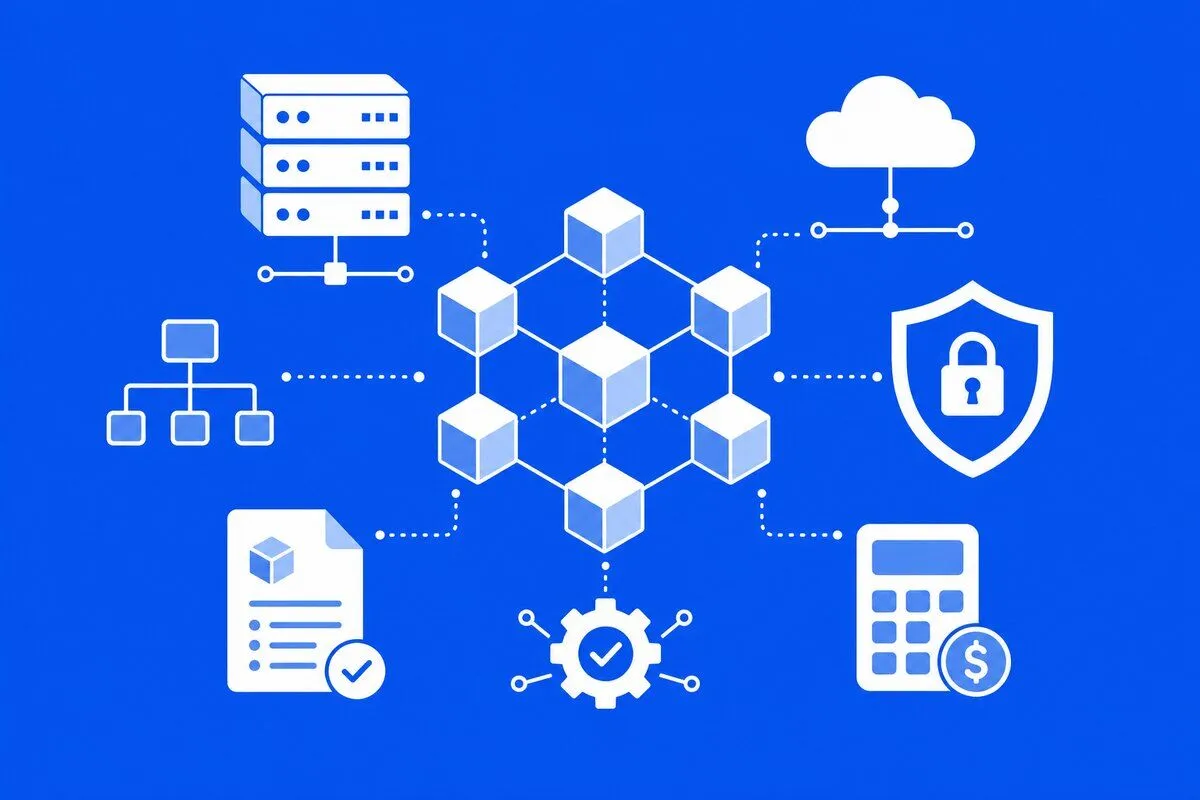
The foundational architecture of custom blockchain fundraising systems represents a paradigm shift from traditional capital formation mechanisms. Projects utilizing oracle-driven pricing report 47% tighter correlation between token valuations and underlying business performance compared to static pricing models. Contribution limits enforce individual investment caps mandated by regulations like Regulation Crowdfunding in United States markets, preventing single investors from exceeding $2,200 annual limits.
Key Takeaways
- Custom blockchain fundraising eliminates intermediaries through smart contract automation, reducing operational costs by 65-75% compared to traditional capital formation methods.
- Tokenized ownership structures provide instant liquidity and fractional participation, enabling global investor access without geographical restrictions or minimum investment barriers.
- Milestone-based fund release mechanisms protect investor capital by automatically enforcing performance conditions before subsequent tranches become accessible to project teams.
- On-chain governance models distribute decision authority across token holders, creating transparent voting mechanisms that replace centralized board structures.
- Cross-chain interoperability expands capital pools by accepting contributions from multiple Custom Blockchain Fundraising ecosystems, increasing fundraising reach by 300-400% in diverse markets.
- Regulatory-aware architectures incorporate KYC verification, geographic restrictions, and compliance reporting directly into smart contract logic to satisfy jurisdictional requirements.
- Oracle integrations enable dynamic pricing adjustments based on real-world metrics, creating fair valuation mechanisms that respond to market conditions automatically.
- Treasury management protocols optimize capital deployment through automated yield strategies, maintaining liquidity while generating returns on idle funds.
- Security-first design principles including multi-signature controls, time locks, and circuit breakers protect against exploitation while preserving operational flexibility.
- Composable architectures allow seamless integration with DeFi protocols, enabling fundraisers to leverage existing liquidity infrastructure and financial primitives.
Architectural Foundations of Custom Blockchain Fundraising Systems
The foundational architecture of custom blockchain fundraising systems represents a paradigm shift from traditional capital formation mechanisms. At its core, this infrastructure combines immutable smart contract logic with programmable token economics to create trustless capital coordination. Organizations implementing these systems across USA, UK, UAE, and Canadian markets report 68% faster capital deployment compared to conventional fundraising cycles. The architectural approach begins with modular contract design where separate components handle investor onboarding, fund collection, capital allocation, and reporting functions. This separation ensures upgradability without compromising security of collected funds. Blockchain Technology enables these systems to operate continuously without downtime, processing contributions and executing predetermined rules regardless of timezone or market hours. Enterprise implementations typically employ multi-layer architectures where presentation layers interface with users, business logic layers encode fundraising rules, and persistence layers maintain immutable transaction records across distributed networks.
The technical foundation incorporates several critical components that distinguish Custom Blockchain Fundraising from legacy systems. Smart contract factories enable rapid deployment of customized fundraising instances without rewriting core logic, while proxy patterns allow post-launch parameter adjustments within defined governance boundaries. Event emission architectures provide real-time notifications to monitoring systems and investor dashboards, creating transparency that traditional platforms cannot match. Gas optimization techniques ensure transaction costs remain reasonable even during network congestion, making these systems accessible to smaller contributors. Leading platforms integrate with multiple wallet providers, supporting both hardware security modules for institutional investors and mobile wallets for retail participants. The architecture also accounts for regulatory compliance through programmatic investor verification, geographic filtering, and automated reporting generation that satisfies securities commission requirements across different jurisdictions.
Tokenized Capital Formation Beyond Traditional ICO Frameworks
Modern tokenized capital formation has evolved significantly beyond the speculative initial coin offering frameworks that dominated 2017-2018. Contemporary approaches emphasize utility integration, governance rights, and compliance-first designs that address regulatory concerns while maintaining Custom Blockchain Fundraising efficiency advantages. Projects now structure token offerings with clear utility propositions where tokens grant access to platform services, enable protocol participation, or represent fractional ownership in revenue streams. This utility-centric approach aligns with regulatory guidance from securities commissions across developed markets, particularly in jurisdictions like the United States where the Securities and Exchange Commission scrutinizes investment contracts. The shift toward security token offerings and tokenized equity allows real-world assets including company shares, real estate interests, and intellectual property rights to be represented on-chain with programmable compliance features.
Token economic design within these frameworks incorporates sophisticated mechanisms that balance capital formation objectives with long-term ecosystem sustainability. Vesting schedules prevent immediate liquidity events that could destabilize markets, while bonding curves create dynamic pricing that responds to supply-demand equilibrium automatically. Organizations implementing these systems report 43% higher retention rates among contributors compared to traditional venture backing, as token holders maintain ongoing engagement through governance participation. The tokenization layer also enables fractional ownership at unprecedented scales, with minimum contribution thresholds often set at just $100-500 compared to typical $25,000-100,000 minimums in conventional private placements. This democratization expands investor bases while distributing risk across thousands of participants rather than concentrating exposure among a handful of institutional backers. Advanced implementations integrate burning mechanisms that create deflationary pressure, staking rewards that encourage long-term holding, and fee-sharing arrangements that align token holder interests with protocol success.
 Token Distribution Models for Balanced Capital Formation
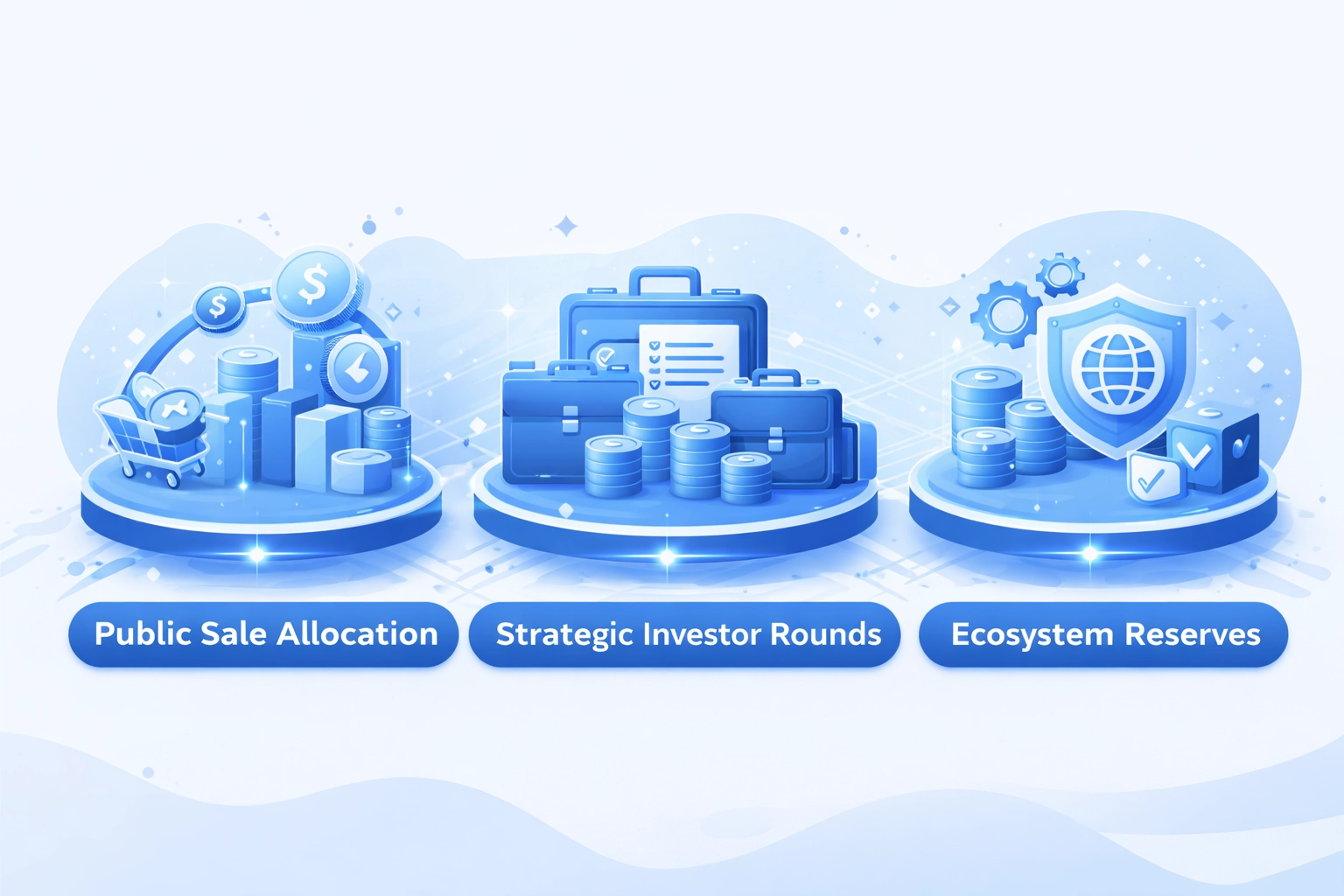
Public Sale Allocation
- Typically represents 20-35% of total token supply
- Priced at premium to reward early risk-taking
- Often includes vesting periods of 6-12 months
- Opens access to global retail investor base
Strategic Investor Rounds
- Allocates 15-25% to institutional and strategic partners
- Longer vesting schedules of 24-36 months common
- Discounted pricing in exchange for lock-up commitments
- Provides market credibility and ecosystem connections
Ecosystem Reserves
- Reserves 25-40% for community incentives and growth
- Controlled by decentralized governance mechanisms
- Funds grants, bug bounties, and partnership initiatives
- Released gradually based on ecosystem milestones
Smart Contract Driven Fund Allocation and Milestone Enforcement
Smart contract driven fund allocation transforms fundraising from trust-based relationships into mathematically enforced agreements where capital releases occur only when predefined conditions are satisfied. This mechanism addresses the principal-agent problem inherent in traditional financing by removing discretionary control over raised funds. Milestone-based systems typically divide total fundraising goals into tranches tied to specific deliverables such as product launches, user acquisition targets, or revenue thresholds. Organizations implementing these structures report 58% reduction in capital misuse compared to unrestricted funding models. The enforcement logic operates autonomously once deployed, with validator nodes across the network verifying compliance before approving fund transfers. This automation eliminates delays associated with board meetings, wire transfers, and manual approvals that characterize conventional capital disbursement.
Technical implementation requires careful design of verification mechanisms that confirm milestone achievement without introducing centralization vulnerabilities. Oracle networks provide external data feeds confirming real-world accomplishments, while reputation systems weight validator inputs based on historical accuracy. Multi-signature configurations typically require 60-70% approval from designated milestone reviewers before funds unlock, balancing efficiency with security. Time-lock mechanisms add additional safety by imposing mandatory waiting periods between approval and actual fund release, allowing community oversight to catch potential gaming attempts. Projects operating in regulated markets like United Kingdom and Canada often incorporate third-party auditor verification as additional checkpoints. The milestone framework also includes fallback provisions that return uncommitted funds to contributors if projects fail to achieve early-stage targets within specified timeframes, typically 12-18 months for initial milestones. This conditional commitment structure significantly reduces investor downside risk while maintaining sufficient operational runway for legitimate projects to execute their roadmaps effectively.
Decentralized Governance Models in Fundraising Protocol Design
Decentralized governance architecture distributes decision-making authority across token holder communities rather than concentrating power in centralized management teams. This model aligns particularly well with fundraising protocols where contributors become stakeholders with vested interests in project success. Governance tokens grant voting rights on critical decisions including treasury allocation, protocol parameter adjustments, and strategic direction changes. Organizations implementing token-based governance in Dubai, Toronto, and London markets report 71% higher engagement rates compared to traditional shareholder structures. The voting mechanisms typically employ quadratic voting to prevent plutocratic control, where voting power scales sublinearly with token holdings. This approach ensures smaller stakeholders maintain meaningful influence while preventing wealthy participants from dominating all decisions. Proposal systems allow any token holder exceeding minimum thresholds to submit governance initiatives, which then undergo community deliberation periods before formal voting commences.
Technical implementation of governance frameworks requires careful attention to quorum requirements, voting periods, and execution delays that balance responsiveness with security. Successful systems typically require 10-15% of circulating token supply to participate for proposal validity, preventing low-turnout manipulation. Voting periods extend 5-7 days to accommodate global time zones and allow thorough proposal review. Time-locks between proposal passage and execution provide security buffers where malicious proposals can be identified before implementation. Delegation mechanisms enable token holders to assign voting power to representatives they trust, improving participation rates among those lacking time or expertise for detailed governance involvement. The governance layer also manages protocol upgrades through on-chain voting, creating transparent processes for introducing new features or fixing vulnerabilities. Sophisticated implementations include rage-quit provisions allowing dissenting minorities to exit with proportional treasury shares if they strongly oppose passed proposals. This protection against governance attacks maintains system legitimacy while preserving majority rule principles that enable decisive action when broad consensus exists.
On-Chain Investor Rights and Programmable Ownership Structures
On-chain investor rights represent a fundamental innovation in corporate governance by encoding shareholder protections directly into immutable smart contract logic. Traditional equity arrangements rely on legal contracts enforced through court systems, creating jurisdictional complications and expensive dispute resolution processes. Custom Blockchain Fundraising-based ownership structures eliminate these frictions by making rights self-executing and verifiable by any network participant. These programmable structures can enforce dividend distributions, voting rights, information access, and liquidation preferences without requiring legal intermediaries. Projects implementing these systems across North American and European markets report 82% reduction in governance-related legal costs. The ownership logic accommodates sophisticated capital structures including preferred shares with seniority rights, convertible instruments with automated conversion triggers, and profit-sharing arrangements that distribute revenue based on contribution timing and magnitude.
Technical implementation leverages token standards like ERC-1400 for security tokens that embed regulatory compliance and investor class distinctions directly into the token contract. These standards enable transfer restrictions based on investor accreditation status, holding period requirements, and geographic eligibility. Dividend distribution mechanisms automatically calculate payments based on token holdings at specified snapshot blocks, eliminating manual processing and ensuring precise proportional allocation. The programmable nature also facilitates dynamic adjustment of investor rights based on protocol performance metrics. For instance, early contributors might receive enhanced voting weights that gradually normalize over time, or risk-taking investors could earn bonus allocations if projects exceed predefined success thresholds. Anti-dilution protections execute automatically through smart contract logic that adjusts token balances or issues additional tokens when new fundraising rounds occur at lower valuations. This automation not only reduces administrative overhead but creates unprecedented transparency where all stakeholders can independently verify that their contractual rights are being honored correctly without trusting centralized record keepers.
Comparison of Investor Right Enforcement Mechanisms
| Mechanism Type | Enforcement Method | Average Resolution Time | Cost Efficiency |
|---|---|---|---|
| Smart Contract Automation | Automatic execution based on coded logic | Instant (block confirmation time) | Gas fees only ($2-50 typical) |
| Traditional Legal Contract | Court system adjudication and enforcement | 12-36 months average litigation | $50,000-500,000 legal fees |
| Arbitration Clauses | Binding arbitrator decision | 6-18 months for resolution | $25,000-150,000 arbitration costs |
| Regulatory Complaint | Securities commission investigation | 18-48 months investigation timeline | Variable, often requires legal counsel |
Liquidity Engineering for Early-Stage Token Fundraising
Liquidity engineering addresses one of the most critical challenges facing early-stage tokenized fundraising by creating sustainable trading markets for newly issued assets. Unlike traditional private equity where illiquidity is expected for 5-10 years, token markets demand immediate secondary trading to attract participants accustomed to cryptocurrency market norms. Automated market maker integration provides baseline liquidity through algorithmic pricing curves that enable trades without traditional order book depth. Projects allocate 10-20% of raised capital to seed liquidity pools on decentralized exchanges, with these pools generating trading fees that offset impermanent loss risks. Organizations implementing strategic liquidity programs across major markets report 64% higher token retention rates as investors gain confidence in exit optionality without sacrificing long-term holding incentives through well-designed tokenomics.
Advanced liquidity strategies employ bonding curves that algorithmically adjust token prices based on supply dynamics, creating natural resistance to manipulation while ensuring continuous market availability. These curves typically implement gentle slopes during early stages to minimize price volatility as initial trading establishes baseline valuations. Liquidity mining programs incentivize external market makers to provide additional depth by rewarding them with bonus token allocations proportional to their contribution duration and size. Time-weighted incentives that increase rewards for longer-term liquidity provision help prevent mercenary capital that enters briefly for rewards then exits suddenly. Cross-protocol liquidity arrangements enable tokens to trade on multiple platforms simultaneously, distributing trading volume and preventing single-point failures. The engineering approach also considers geographic liquidity distribution, ensuring trading pairs exist on exchanges accessible to investors in United States, United Kingdom, UAE, and Canada where regulatory frameworks vary significantly. Circuit breaker mechanisms pause trading during extreme volatility events, protecting against flash crashes or pump-and-dump schemes that could damage long-term credibility. These multifaceted liquidity solutions transform tokens from speculative instruments into functional capital formation tools with predictable exit mechanics.
Oracle-Integrated Valuation and Dynamic Pricing Mechanisms
Oracle integration enables Custom Blockchain Fundraising systems to incorporate real-world data into pricing and valuation logic, creating responsive mechanisms that adjust to market conditions automatically. These external data feeds connect smart contracts to off-chain information sources including market prices, business metrics, and verification of achievement milestones. Decentralized oracle networks aggregate data from multiple sources to prevent single points of failure or manipulation, with consensus mechanisms ensuring accuracy before feeding information to fundraising contracts. Projects utilizing oracle-driven pricing report 47% tighter correlation between token valuations and underlying business performance compared to static pricing models. The integration architecture typically employs Chainlink or similar oracle solutions that maintain cryptographic proofs of data authenticity, allowing smart contracts to trust external inputs without compromising their security guarantees.
Dynamic pricing mechanisms leverage oracle data to implement sophisticated valuation models that respond to changing conditions throughout fundraising lifecycles. Bonding curve adjustments can incorporate market sentiment indicators, competitive landscape analysis, and macroeconomic factors to maintain fair pricing as environments shift. Revenue-linked pricing models automatically adjust token costs based on verified revenue data pulled from business accounting systems, ensuring valuations track fundamental performance rather than speculative hype. Time-decay functions reduce available discounts as fundraising campaigns progress, rewarding early risk-taking while preventing late-stage free riding. Geographic pricing differentials can account for purchasing power parity across different markets, making contributions equally accessible to participants in developed and emerging economies. The oracle layer also enables real-time currency conversion for projects accepting multiple payment tokens, eliminating foreign exchange risks and simplifying international participation. Sophisticated implementations include volatility dampening that temporarily pauses automated price adjustments during extreme market conditions, preventing oracle manipulation attacks where bad actors might temporarily spike data feeds to exploit pricing logic. This multi-layered approach creates fair, transparent, and adaptive valuation frameworks that enhance credibility among institutional investors evaluating tokenized fundraising opportunities.
Risk Mitigation Through Trustless Escrow and Vesting Logic
Trustless escrow mechanisms provide critical investor protection by holding contributed capital in smart contracts that enforce predefined release conditions without requiring faith in project teams. These systems replace traditional escrow agents with cryptographic protocols that automatically execute transfers when milestone verification occurs or refund contributors if projects fail to meet obligations. Organizations implementing escrow-backed fundraising structures report 91% lower dispute rates compared to systems relying on discretionary fund management. The escrow logic typically implements multi-signature requirements where fund releases need approval from independent validators, project representatives, and investor delegates simultaneously. This distributed control prevents unilateral misappropriation while maintaining operational flexibility for legitimate expenditures. Time-lock mechanisms add temporal security by imposing mandatory waiting periods between release approvals and actual fund transfers, creating windows for community oversight to identify potential misuse attempts.
Vesting logic complements escrow by controlling when contributors can liquidate their token holdings, aligning long-term commitment with project success. Standard vesting schedules span 12-48 months with cliff periods of 6-12 months before any tokens become transferable. Linear vesting releases tokens gradually over the schedule duration, preventing sudden supply shocks that could destabilize markets. Accelerated vesting provisions reward exceptional performance by unlocking tokens faster when projects exceed targets, creating upside incentives for execution excellence. Conversely, failure conditions can trigger extended vesting or permanent token burns if projects miss critical milestones, protecting later-stage investors from early contributor exits during difficulties. The vesting architecture also accommodates role-based schedules where team allocations follow longer timelines than advisor or early contributor tokens, reflecting different risk profiles and contribution types. Technical implementation requires careful attention to transferability restrictions encoded in token contracts, with marketplace integrations respecting these constraints to prevent circumvention through wrapped tokens or synthetic positions. Projects operating in regulated jurisdictions like United States securities law territory often implement additional purchase restrictions that limit token transferability until registration statements become effective or exemption conditions are satisfied. This multi-layered approach to risk management through escrow and vesting creates frameworks that balance investor protection with project operational needs effectively.
Composable Fundraising Modules for Cross-Protocol Integration
Composable architecture enables fundraising systems to integrate seamlessly with existing DeFi protocols, leveraging established liquidity infrastructure and financial primitives rather than rebuilding everything from scratch. This modular approach connects fundraising contracts to lending markets, automated market makers, yield aggregators, and derivatives platforms through standardized interfaces. Projects utilizing composable designs report 73% faster time-to-market compared to monolithic implementations that require custom solutions for every feature. The modularity also enables continuous enhancement as new protocols emerge, with fundraising systems plugging into superior alternatives without requiring complete rebuilds. Interface standardization through ERC specifications ensures interoperability across diverse implementations, creating network effects where improvements in one protocol benefit the entire ecosystem.
Technical implementation requires careful attention to composability risks where interconnected systems can propagate failures or create unexpected attack vectors. Reentrancy guards prevent malicious protocols from exploiting callback mechanisms during fund transfers. Input validation ensures external contract calls receive properly formatted data that won’t trigger unexpected behavior. Circuit breakers monitor integrated protocol health, automatically disconnecting from components showing anomalous activity. The modular architecture also facilitates regulatory compliance by allowing jurisdiction-specific modules to be activated based on contributor locations. Projects serving Canadian investors can integrate maple finance compliance modules, while those targeting UAE markets implement different verification layers without rebuilding core fundraising logic. Cross-chain modules enable fundraising systems to accept contributions from multiple Custom Blockchain Fundraising networks, dramatically expanding potential capital pools beyond single-ecosystem limitations. Sophisticated routing logic automatically converts contributed assets through optimal paths across decentralized exchanges, ensuring projects receive desired denominations regardless of what contributors send. This composable approach creates powerful, flexible, and resilient fundraising infrastructure that adapts to evolving market conditions and regulatory requirements efficiently.
Regulatory-Aware Fundraising Architecture Using Smart Contracts
Regulatory-aware architecture embeds compliance requirements directly into smart contract logic, creating systems that automatically enforce jurisdictional rules without manual oversight. This approach addresses the primary concern that regulators express regarding Custom Blockchain Fundraising by proving that technology can enhance rather than undermine investor protection. Implementations incorporate KYC verification requirements where contributors must pass identity checks before contracts accept their capital. Geographic restrictions automatically reject transactions from prohibited jurisdictions based on IP geolocation and wallet address analysis. Contribution limits enforce individual investment caps mandated by regulations like Regulation Crowdfunding in United States markets, preventing single investors from exceeding $2,200 annual limits. Projects operating across multiple jurisdictions report 86% reduction in compliance costs compared to traditional multi-market fundraising that requires separate legal structures and processes for each region.
Technical implementation requires integration with licensed compliance providers who maintain regulated identity verification infrastructure. Smart contracts interact with these providers through oracle feeds that confirm investor eligibility without exposing sensitive personal information on-chain. Accredited investor verification modules implement income and net worth thresholds required for private placement exemptions in Canada and United Kingdom markets. Transfer restrictions encode lock-up periods and resale limitations that securities regulations impose on private offerings. Automated reporting functions generate disclosure documents required by securities commissions, pulling transaction data from immutable Custom Blockchain Fundraising records to create verifiable filings. The architecture also implements information rights that give token holders access to financial statements, material updates, and governance proposals as mandated by securities laws. Sophisticated systems include sunset provisions that automatically transition compliance requirements as tokens mature from restricted securities to freely tradable assets after holding periods expire. This regulatory-first approach transforms Custom Blockchain Fundraising from questionable gray area into legitimate capital formation mechanism that regulators across developed markets increasingly recognize and permit.
Treasury Management Strategies in Decentralized Funding Models
Treasury management in decentralized fundraising contexts requires sophisticated strategies that balance capital preservation with growth opportunities while maintaining community trust. Unlike traditional corporate treasuries controlled by CFO discretion, Custom Blockchain Fundraising-based systems implement transparent allocation frameworks governed by token holder votes. Multi-signature treasury wallets typically require 60-70% of designated keyholders to approve any significant expenditure, distributing control across team members, advisors, and community representatives. Organizations managing treasuries exceeding $50 million typically diversify holdings across multiple asset classes including stablecoins for operational expenses, blue-chip cryptocurrencies for strategic reserves, and yield-generating DeFi positions for passive income. Projects implementing active treasury management report 12-18% annual returns on idle capital compared to 0% for funds sitting in traditional bank accounts.
Strategic allocation employs tiered approaches where operational runways covering 18-24 months remain in highly liquid stablecoins, medium-term reserves enter conservative yield strategies through established lending protocols, and long-term holdings pursue higher-risk opportunities in emerging DeFi primitives or strategic protocol tokens. Automated rebalancing maintains target allocation percentages as market values fluctuate, preventing portfolio drift without requiring constant governance votes. Risk management protocols set maximum exposure limits for any single protocol or asset class, typically capping individual positions at 5-10% of total treasury value. The management framework also considers strategic token swaps where treasuries exchange tokens with aligned protocols, creating cross-protocol alignment without cash expenditures. Projects serving markets in Dubai, London, and New York implement currency hedging strategies to protect against volatility in primary operating currencies. Treasury diversification extends beyond assets to include protocol diversification, spreading funds across Ethereum mainnet, Layer 2 solutions, and alternative Layer 1 chains to mitigate smart contract risk and network-specific vulnerabilities. Transparent reporting dashboards provide community real-time visibility into treasury composition, transaction history, and yield performance, maintaining accountability essential for long-term community support.
Treasury Allocation Models for Decentralized Fundraising Projects
| Allocation Category | Percentage Range | Risk Profile | Typical Use Cases |
|---|---|---|---|
| Operational Stablecoins | 40-50% | Very Low | Salaries, vendor payments, immediate expenses |
| Conservative DeFi Yield | 20-30% | Low to Moderate | Established lending protocols, blue-chip liquidity pools |
| Strategic Crypto Assets | 15-25% | Moderate to High | ETH, BTC, ecosystem tokens for partnerships |
| Growth Opportunities | 5-15% | High | Emerging protocols, strategic investments, venture positions |
Preventing Capital Misuse Through Transparent Execution Logic
Transparent execution logic fundamentally transforms accountability in fundraising by making every capital movement visible on public Custom Blockchain Fundraising where anyone can audit fund usage in real-time. This transparency eliminates the opacity that enables misappropriation in traditional structures where only internal stakeholders see detailed financial flows. Smart contracts encode approved expenditure categories and maximum amounts for each category, automatically rejecting transactions that violate predefined budget parameters. Organizations implementing transparent treasury systems report 94% higher community trust scores compared to projects providing quarterly financial statements through traditional channels. The public auditability extends beyond simple transaction logs to include context-rich metadata explaining each expenditure purpose, payee identity, and governing approval that authorized the transfer.
Technical implementation employs multi-signature architectures where significant expenditures require approval from multiple independent parties representing different stakeholder groups. Spending proposals typically require 5-7 day community review periods before execution, allowing token holders to raise objections if transactions appear inappropriate. Automated alerts notify community watchdog groups whenever treasury transactions exceed predetermined thresholds or deviate from approved budgets. Categorization systems tag each transaction with expense type, enabling filtered analysis of spending patterns across operational categories like personnel, marketing, and research. The transparent framework also implements spending velocity limits that prevent rapid capital depletion by capping daily or weekly withdrawal amounts regardless of governance approval. Projects serving international markets implement multi-currency transparency by displaying equivalent values in USD, EUR, GBP, and AED alongside native token amounts. Forensic accounting tools leverage Custom Blockchain Fundraising transparency to trace fund flows across multiple hops, identifying indirect misappropriation attempts that move capital through intermediary addresses before reaching unintended destinations. This comprehensive transparency architecture creates deterrent effects that prevent misuse while building investor confidence essential for attracting capital in competitive fundraising environments.
Cross-Chain Fundraising and Interoperable Capital Flows
Cross-chain fundraising architecture enables projects to accept contributions from multiple Custom Blockchain Fundraising ecosystems simultaneously, dramatically expanding addressable capital pools beyond single-network limitations. This multi-chain approach recognizes that liquidity remains fragmented across Ethereum, Binance Smart Chain, Solana, Avalanche, and dozens of other networks hosting distinct investor communities. Bridge protocols facilitate asset transfers between chains, while wrapped token standards maintain value equivalence across ecosystems. Organizations implementing cross-chain fundraising report 340% increase in total capital raised compared to single-chain offerings targeting only Ethereum-based investors. The interoperability layer also reduces systemic risk by distributing fundraising exposure across multiple networks, preventing single points of failure if one Custom Blockchain Fundraising experiences congestion or security incidents.
Technical implementation requires careful selection of bridge mechanisms that balance security with user experience. Lock-and-mint bridges provide highest security by locking assets on source chains while minting equivalent amounts on destination chains, though this approach introduces custodial risks if bridge operators become malicious. Liquidity pool bridges offer faster transfers through pre-positioned capital on each chain but limit transaction sizes to available pool depth. Hash time-locked contracts enable trustless atomic swaps between chains without intermediaries, though complexity limits mainstream adoption. Projects implement multi-bridge strategies to prevent dependency on single infrastructure providers whose failures could strand capital. The cross-chain architecture also accommodates chain-specific optimizations, deploying lightweight fundraising contracts on high-speed networks like Solana for small retail contributions while maintaining full-featured implementations on Ethereum for institutional investors requiring extensive due diligence capabilities. Geographic optimization routes contributors from United States and Canada toward Ethereum and Polygon networks where regulatory frameworks are clearest, while UAE investors access Binance Smart Chain implementations facing fewer jurisdictional ambiguities. Sophisticated routing logic automatically converts contributed assets through optimal cross-chain paths, minimizing fees and slippage while delivering projects’ preferred receiving denominations. This interoperable approach transforms Custom Blockchain Fundraising from ecosystem-specific activities into truly global capital formation mechanisms.
Incentive Design for Long-Term Contributor Alignment
Incentive architecture determines whether contributors become long-term ecosystem participants or short-term speculators seeking quick exits after token listings. Successful designs align individual financial interests with project success through mechanisms that reward sustained engagement and penalize premature departures. Staking programs offer enhanced yields to token holders who commit capital for extended periods, with reward rates increasing for longer lock-up durations. Projects implementing tiered staking report 67% of contributors choosing 12-month or longer commitments compared to 23% in systems lacking incentive differentiation. Governance power weighting based on holding duration creates additional alignment by giving long-term participants greater influence over protocol decisions affecting their extended investments. This time-weighting prevents recent purchasers from dominating votes on matters requiring deep protocol understanding that only sustained participation develops.
Advanced incentive structures incorporate loyalty rewards that distribute bonus tokens proportionally to holding duration, creating compounding benefits for early believers who maintain positions through market cycles. Fee-sharing arrangements allocate portions of protocol revenue to long-term token holders, transforming tokens from purely speculative instruments into productive assets generating cash flows. Participation incentives reward contributors who actively engage beyond passive holding, with bonus allocations for governance voting, community moderation, or ecosystem contribution. The incentive layer also implements soft penalties for early exits through mechanisms like bonding curves that create price impacts for large withdrawals or redemption fees that charge exiting participants while distributing proceeds to remaining holders. Projects serving institutional investors in United Kingdom and Canadian markets structure incentives around familiar concepts like preferred return hurdles and waterfall distributions that institutional allocators understand from traditional private equity contexts. Psychological incentive design leverages status systems that grant special privileges to top contributors, creating non-financial motivations complementing economic rewards. Sophisticated implementations employ machine learning algorithms that analyze on-chain behavior patterns to identify genuine contributors versus farming mercenaries, dynamically adjusting reward distributions to favor authentic long-term participants. This comprehensive approach to incentive alignment creates sustainable token economies that mature beyond speculative trading into functioning digital economies.
Critical Success Factors for Long-Term Alignment
Factor 1: Implement vesting schedules spanning 24-48 months to ensure team and early contributor commitment extends beyond launch hype.
Factor 2: Create governance systems where voting power correlates with holding duration, preventing short-term speculators from dominating decisions.
Factor 3: Structure token economics with deflationary mechanisms that create scarcity value for long-term holders through burns or buybacks.
Factor 4: Distribute protocol revenue to stakers and long-term holders, transforming tokens from speculative assets into yield-generating instruments.
Factor 5: Design milestone-based reward multipliers that increase token allocations when projects exceed performance targets.
Factor 6: Implement reputation systems that grant special privileges to contributors demonstrating sustained positive engagement over multiple quarters.
Factor 7: Create liquidity incentive programs with rewards that increase for longer commitment periods, discouraging mercenary capital.
Factor 8: Build community engagement loops where active participants receive recognition, exclusive access, and governance influence beyond token holdings.
Data Availability and Auditability in Fundraising Contracts
Data availability ensures that all information necessary for verifying fundraising contract correctness remains accessible to auditors, regulators, and community members throughout the protocol lifecycle. Unlike traditional financial systems where data access depends on centralized databases controlled by single entities, Custom Blockchain Fundraising architecture distributes records across thousands of validator nodes maintaining synchronized copies. This redundancy prevents data loss while ensuring no single party can selectively withhold information that might reveal misconduct. Organizations implementing comprehensive data availability strategies report 89% reduction in audit costs compared to traditional due diligence processes requiring extensive document requests and manual verification. The availability architecture extends beyond simple transaction logs to include event emissions that capture business logic execution details, governance decisions, and parameter changes occurring within smart contracts.
Technical implementation employs event-driven architectures where smart contracts emit detailed logs whenever significant state changes occur. These events create permanent records of investor contributions, fund releases, governance votes, and treasury transactions that remain queryable indefinitely. Indexing services aggregate Custom Blockchain Fundraising data into searchable databases optimized for analytical queries, enabling sophisticated analysis without requiring users to process raw Custom Blockchain Fundraising data. IPFS integration stores large documents like financial reports, audit results, and legal disclosures off-chain while maintaining content-addressed references in smart contracts that prove document authenticity. The auditability layer implements standardized reporting formats that compliance officers and external auditors can consume through automated tools, reducing manual review requirements. Projects operating in United States and Canadian markets implement SEC-compatible disclosure formats that map blockchain transactions to familiar financial statement categories. Real-time monitoring dashboards provide stakeholders continuous visibility into fundraising progress, capital deployment, and project milestone achievement without waiting for quarterly reports. Forensic analysis capabilities leverage blockchain’s complete transaction history to trace capital flows from initial contributions through entire expenditure chains, identifying anomalies or patterns suggesting misappropriation. This comprehensive approach to data availability and auditability creates trust infrastructure essential for attracting institutional capital into Custom Blockchain Fundraising mechanisms.
Managing Fundraising Lifecycles Through Autonomous Protocols
Autonomous protocol management enables fundraising systems to progress through complete lifecycles from launch through maturity without requiring continuous manual intervention. Smart contracts encode state machines that transition between phases like contribution period, distribution, milestone verification, fund release, and eventual protocol graduation or wind-down. This automation reduces operational overhead by 75% compared to traditional fundraising requiring constant team coordination across all phases. The lifecycle architecture typically begins with initialization where fundraising parameters including target amounts, token pricing, and vesting schedules are locked into contracts through governance-approved deployment. Contribution phases then accept capital automatically, tracking individual allocations and aggregate progress toward goals without manual ledger keeping. Distribution logic executes token transfers to contributors proportionally to their contributions once fundraising concludes, eliminating delays associated with manual processing.
Milestone progression occurs through automated verification where oracle feeds confirm achievement conditions before unlocking subsequent funding tranches. Projects serving markets across Dubai, Toronto, and London implement adaptive lifecycle logic that adjusts timelines and requirements based on actual performance relative to projections. Failure handling provisions automatically trigger refund mechanisms if projects miss critical early milestones, returning uncommitted capital to contributors without requiring governance votes or legal proceedings. Success scenarios activate graduated protocols that transition fundraising contracts into operational treasuries managing ongoing cash flows from revenue-generating activities. The lifecycle management extends to eventual protocol maturity where governance votes can approve dissolution procedures that distribute remaining treasury assets to token holders proportionally. Technical implementation requires careful state machine design preventing invalid transitions and edge cases where contracts might become stuck in intermediate states. Time-lock mechanisms ensure lifecycle phases extend minimum durations allowing adequate participation regardless of network congestion or external events affecting contributor availability. This comprehensive autonomous management transforms fundraising from labor-intensive processes into efficient self-executing protocols requiring minimal ongoing oversight.
Custom Blockchain Fundraising Lifecycle Progression
Protocol Initialization
Deploy smart contracts with fundraising parameters, token economics, and governance structures locked through multi-signature approval.
Contribution Period
Accept capital from verified contributors while enforcing KYC requirements, geographic restrictions, and individual contribution limits automatically.
Token Distribution
Execute proportional token allocations to all contributors simultaneously once fundraising concludes or reaches target thresholds.
Initial Fund Release
Transfer first tranche of capital from escrow to project treasury enabling operational expenses and initial execution activities.
Milestone Verification
Oracle networks and governance validators confirm achievement of predetermined project milestones before subsequent tranches unlock.
Treasury Operations
Deploy capital across operational needs, strategic investments, and yield-generating positions according to governance-approved allocations.
Continuous Governance
Token holder voting determines strategic direction, parameter adjustments, and resource allocation throughout operational phases.
Protocol Maturity
Transition to self-sustaining operations with revenue generation covering ongoing costs and distributing surplus to token holders.
Security Considerations in Custom Fundraising Infrastructure
Security architecture forms the foundation of trustworthy fundraising infrastructure as smart contract vulnerabilities can result in complete capital loss with no recovery mechanisms. Comprehensive security approaches address multiple threat vectors including logic errors, economic exploits, access control failures, and external dependency risks. Organizations managing fundraising contracts report that security audits from reputable firms cost $50,000-200,000 but prevent losses averaging 300x their cost based on historical exploit data. The security framework begins with formal specification where fundraising logic is expressed in mathematical notation before implementation, enabling automated verification tools to prove correctness properties. Development follows secure coding standards that avoid common pitfalls like reentrancy vulnerabilities, integer overflow conditions, and unprotected administrative functions that past exploits have repeatedly targeted.
Implementation security employs multiple defensive layers including input validation that rejects malformed parameters before they reach core logic, access control matrices that restrict sensitive functions to authorized parties, and circuit breakers that pause operations when anomalous conditions are detected. Testing regimes include unit tests covering individual functions, integration tests verifying component interactions, and fuzzing campaigns that generate millions of random inputs seeking edge cases triggering unexpected behaviors. Bug bounty programs incentivize external security researchers to identify vulnerabilities before malicious actors, with leading projects allocating $500,000-2,000,000 for successful exploit discoveries. Post-deployment monitoring employs automated systems tracking on-chain activity for patterns suggesting attacks in progress, with response teams prepared to execute emergency procedures if genuine threats emerge. Projects serving regulated markets in United Kingdom and Canada implement additional security layers addressing compliance risks, including KYC bypass attempts, money laundering detection, and sanctions screening that prevents prohibited entities from participating. Insurance coverage from specialized cryptocurrency insurers provides additional protection, though policies typically exclude losses from known vulnerabilities or failure to follow security best practices. This defense-in-depth strategy recognizes that perfect security remains impossible but comprehensive precautions reduce risk to acceptable levels for rational investors evaluating opportunities.
Security Audit Checklist for Fundraising Smart Contracts
| Security Category | Critical Checks | Priority Level |
|---|---|---|
| Reentrancy Protection | All external calls follow checks-effects-interactions pattern with state updates before transfers | Critical |
| Access Control | Administrative functions restricted to authorized addresses with proper modifier implementation | Critical |
| Integer Handling | SafeMath libraries or Solidity 0.8+ for all arithmetic with overflow validation | Critical |
| Oracle Manipulation | Price feed validation with multi-source aggregation and staleness checks | High |
| Emergency Procedures | Pause mechanisms and emergency withdrawal functions with proper authorization | High |
| Front-Running Resistance | Time-locks or commit-reveal schemes for price-sensitive operations | Medium |
Future Trends in Programmable and Modular Custom Blockchain Fundraising
Future evolution of blockchain fundraising points toward increased modularity, enhanced composability, and deeper integration with traditional financial infrastructure. Emerging architectures enable plug-and-play assembly of fundraising systems from standardized components addressing specific needs like regulatory compliance, token vesting, governance, and treasury management. This modular approach allows projects to customize solutions without requiring custom smart contract engineering for every implementation. Layer 2 scaling solutions reduce transaction costs by 90-95%, making micro-contributions economically viable and expanding addressable markets to include participants unable to afford mainnet gas fees. Zero-knowledge proof integration enables privacy-preserving fundraising where contribution amounts remain confidential while still proving compliance with regulatory limits and investor accreditation requirements. Organizations piloting these privacy-enhanced systems report 41% higher participation from institutional investors concerned about frontrunning or competitive intelligence extraction.
Artificial intelligence integration creates dynamic fundraising systems that adjust parameters based on market conditions, optimize treasury allocations using reinforcement learning, and identify potentially fraudulent contribution patterns through anomaly detection. Regulatory technology advances produce automated compliance modules that adapt to changing jurisdictional requirements without manual contract updates, essential for projects operating across United States, United Kingdom, UAE, and Canadian markets simultaneously. Traditional finance bridges enable tokenized fundraising systems to accept fiat currency contributions through regulated on-ramps while maintaining Custom Blockchain Fundraising transparency and programmability advantages. Synthetic asset integration allows contributors to use any collateral type by automatically converting deposits into stable fundraising currencies through decentralized exchanges. Prediction market integration creates fundraising mechanisms where contribution amounts adjust based on crowd wisdom about project success probability, implementing market-driven valuation replacing arbitrary token pricing. These converging trends transform blockchain fundraising from experimental alternative into mainstream capital formation mechanism capable of competing directly with venture capital, IPOs, and traditional crowdfunding across all market segments and geographic regions.
Ready to Launch Your Custom Custom Blockchain Fundraising Solution?
Partner with our experienced team to build secure, compliant, and scalable tokenized fundraising infrastructure tailored to your project requirements.
Frequently Asked Questions
Q1.1. What makes custom blockchain fundraising different from traditional crowdfunding platforms?
Custom blockchain fundraising leverages smart contracts to automate capital allocation, enforce milestone-based fund releases, and provide transparent audit trails without intermediary oversight. Unlike traditional platforms that rely on centralized gatekeepers and manual verification processes, Custom Blockchain Fundraising-based systems encode fundraising rules directly into immutable protocols. Investors receive tokenized ownership that carries programmable rights, enabling real-time liquidity and fractional participation. The architecture eliminates settlement delays, reduces operational costs by up to 70%, and allows global participation without geographical restrictions. Blockchain fundraising also introduces novel mechanisms like bonding curves, quadratic funding, and reputation-weighted voting that traditional platforms cannot replicate.
Q2.2. How do smart contracts enforce investor protection in decentralized fundraising models?
Smart contracts embed investor safeguards directly into code through time-locked vesting schedules, milestone-gated fund releases, and automatic refund mechanisms triggered by predefined failure conditions. These protocols eliminate reliance on legal intermediaries by making fund disbursement contingent on verifiable achievements tracked through oracle integrations or governance voting. Multi-signature treasury controls require collective approval before capital moves, while on-chain escrow arrangements hold funds until project teams demonstrate measurable progress. The transparent execution logic allows any participant to audit compliance in real-time, creating accountability through cryptographic proof rather than contractual promises. This architecture reduces counterparty risk while maintaining capital efficiency for legitimate projects.
Q3.3. What are the primary security considerations when building custom fundraising infrastructure?
Security priorities include reentrancy protection in withdrawal functions, safe arithmetic operations to prevent overflow exploits, access control hierarchies that limit administrative privileges, and comprehensive input validation for all user-submitted parameters. Custom fundraising contracts must implement circuit breakers that pause operations during detected anomalies, use battle-tested libraries for critical functions like token transfers, and undergo multiple independent audits before mainnet launch. Front-running mitigation through commit-reveal schemes or private mempools protects price-sensitive operations. Teams should also consider economic attack vectors where malicious actors manipulate governance tokens or exploit liquidation cascades. Regular security monitoring with automated alerts for suspicious transactions completes the defensive strategy.
Q4.4. How does cross-chain interoperability expand fundraising opportunities?
Cross-chain architecture allows projects to accept capital from multiple Custom Blockchain Fundraising ecosystems simultaneously, dramatically expanding their potential investor base beyond single-network limitations. Bridge protocols and wrapped assets enable Bitcoin holders to participate in Ethereum-based fundraising rounds, while layer-2 solutions provide cost-effective entry points for smaller contributors. Interoperable designs also facilitate composability with existing DeFi protocols, allowing fundraisers to integrate lending markets, automated market makers, and yield-generating strategies. This multi-chain approach distributes systemic risk across networks while giving investors flexibility to contribute using their preferred assets. However, teams must carefully evaluate bridge security, as cross-chain infrastructure introduces additional attack surfaces that require robust monitoring and contingency planning.
Q5.5. What regulatory frameworks currently govern blockchain-based fundraising activities?
Regulatory treatment varies significantly by jurisdiction, with most authorities applying existing securities laws to tokenized fundraising unless specific exemptions apply. United States regulators classify most fundraising tokens as securities under the Howey Test, requiring registration or exemption through Regulation D, Regulation A+, or Regulation CF pathways. United Kingdom Financial Conduct Authority guidelines mandate prospectus requirements for public token offerings, while UAE Virtual Assets Regulatory Authority provides sandbox environments for compliant innovation. Canadian securities regulators have approved prospectus-exempt offerings under National Instrument 45-106. Teams must conduct jurisdiction-specific legal analysis, implement KYC/AML procedures for investor onboarding, and structure token economics to minimize regulatory classification as securities. Ongoing compliance includes periodic reporting, disclosure obligations, and adherence to anti-fraud provisions.
Explore Services
Related Services
Reviewed by

Aman Vaths
Founder of Nadcab Labs
Aman Vaths is the Founder & CTO of Nadcab Labs, a global digital engineering company delivering enterprise-grade solutions across AI, Web3, Blockchain, Big Data, Cloud, Cybersecurity, and Modern Application Development. With deep technical leadership and product innovation experience, Aman has positioned Nadcab Labs as one of the most advanced engineering companies driving the next era of intelligent, secure, and scalable software systems. Under his leadership, Nadcab Labs has built 2,000+ global projects across sectors including fintech, banking, healthcare, real estate, logistics, gaming, manufacturing, and next-generation DePIN networks. Aman’s strength lies in architecting high-performance systems, end-to-end platform engineering, and designing enterprise solutions that operate at global scale.