Ai Overview
The smart contracts market is growing very quickly and changing how businesses work around the world. Smart contracts are digital agreements that run automatically when certain conditions are met. In 2025, the banking and finance sector (BFSI) will be the biggest user, with over 34% of the market. By 2030, the smart contracts market size could grow to $2.
- The Smart Contracts Market Size is growing rapidly as businesses adopt automation, security, and transparency.
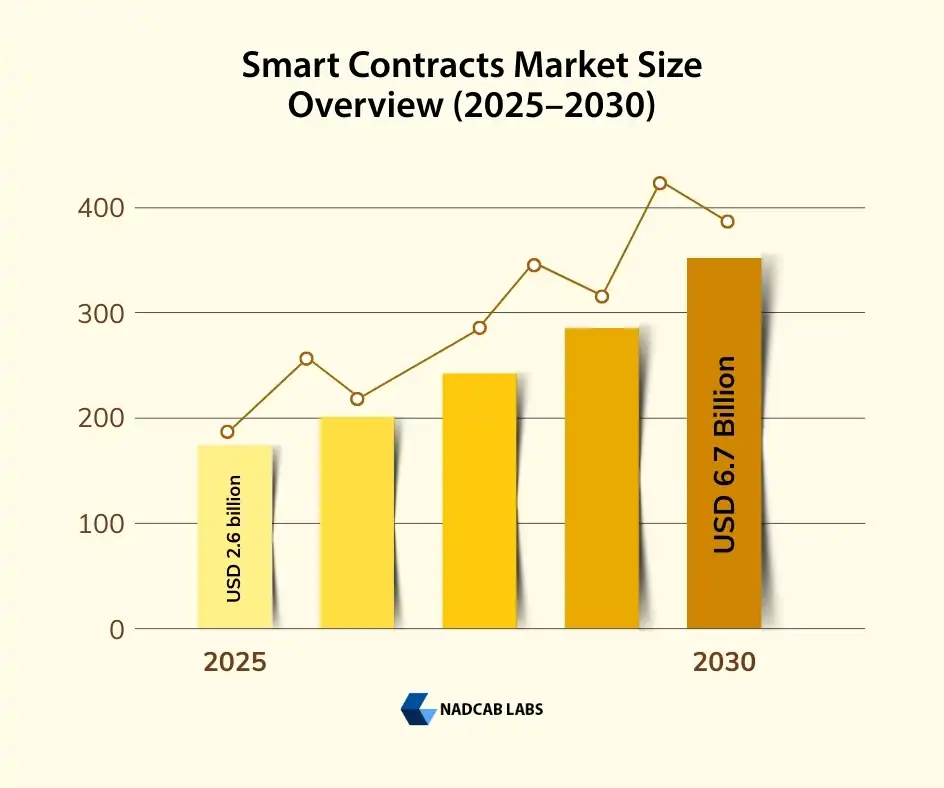
- Market size is expected to grow from around USD 2.6 billion in 2025 to nearly USD 6.7 billion by 2030.
- DeFi, Web3, tokenization, and enterprise automation are the main drivers of smart contract adoption.
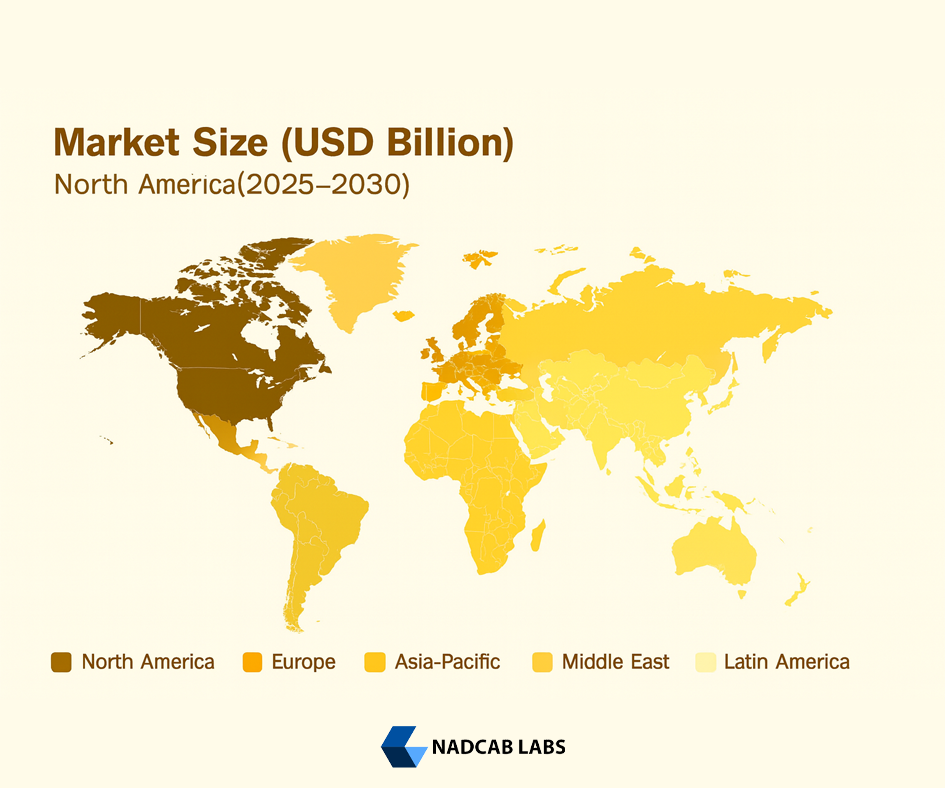
- North America currently leads the market, while Asia-Pacific is the fastest-growing region.
- BFSI remains the largest user of smart contracts, while legal and government sectors are expanding quickly.
- AI-powered, cross-chain, and privacy-focused smart contracts will define the next phase of innovation.
- Governments and smart cities are increasingly using smart contracts for public services and infrastructure.
- By 2030, smart contracts will become intelligent, autonomous, and deeply embedded in global digital systems.
The smart contracts market is growing very quickly and changing how businesses work around the world. Smart contracts are digital agreements that run automatically when certain conditions are met. This means there is no need for middlemen or long waiting times. They make business faster, safer, and more reliable. Industries like finance, healthcare, real estate, supply chains, and legal services are already using them to save time, cut costs, and build trust. The rise of cryptocurrencies and DeFi is also making smart contracts more important than ever.
North America is leading the market with strong blockchain systems, clear rules, and big companies driving innovation. At the same time, the Asia-Pacific region is catching up fast, with countries like China, India, and Singapore embracing blockchain and digital technologies. Smart contracts are not just for traditional businesses anymore. They are now being used in gaming, energy, intellectual property, and even government services, showing a future that is faster, fairer, and more efficient.
Big companies are creating new smart contract platforms, giving developers better tools, and teaming up with others to help businesses use this technology smoothly. As tech keeps getting better and governments support digital solutions, the smart contracts market will keep growing in the next few years. In the future, business will be more automated, faster, and built on trust that’s directly written into the code.
Why Smart Contracts Market Size Matters?
Smart contracts market size matters because it shows how fast businesses are accepting automated agreements powered by blockchain. The bigger the market gets, the more companies will shift from manual processes to smart automation. This means more real-world use cases, better technology, stronger platforms, and more job opportunities in the future. It also helps businesses understand whether investing in smart contracts right now will give them long-term benefits and growth.
As the market grows, more industries like finance, healthcare, supply chain, gaming, and real estate will start depending on smart contracts for daily operations. This growth also pushes companies to build safer, faster, and more reliable systems. In simple words, the bigger the smart contracts market size becomes, the more useful and mature this technology will be for everyone in the future.
Smart Contracts Market Size Overview (2025–2030)
Experts predict huge growth between 2025 and 2030, driven by businesses adopting blockchain, the rise of Web3, tokenization, and large-scale digital transformations. According to the Analysis Report, More companies are realizing the value of automation, security, and transparency that smart contracts bring, making this technology a key part of the future digital economy.
Summary-
- In 2025, the market is worth around USD 2.6 billion.
- Every year after that, it keeps rising as more companies start using smart contracts for automation and security.
- By 2030, the market jumps to about USD 6.7 billion, which shows that smart contracts are becoming a regular part of how businesses work.
Why Smart Contracts Are Growing So Fast
The smart contracts market is growing fast because of several key factors. Decentralized finance (DeFi) is a major driver. Activities like lending, borrowing, staking, decentralized exchanges, yield farming, and automated asset management all rely on smart contracts.
Tokenization of real-world assets, such as real estate, commodities, stocks, and intellectual property, is creating a need for secure and reliable smart contracts to manage ownership, transfers, and compliance.
Businesses are adopting blockchain to improve workflow automation, supply chain management, procurement, and compliance, which further increases demand for smart contracts. Governments are also using blockchain for land registries, identity management, taxation, and public service automation, boosting adoption worldwide.
AI makes smart contracts even smarter by enabling predictive automation, autonomous workflows, and detecting anomalies. Multi-chain solutions allow smart contracts to work across different networks like Ethereum, Solana, Polygon, BNB Chain, Cardano, and Avalanche.
All these factors together make smart contracts a key part of digital transformation between 2025 and 2030.
Smart Contracts Market Report Coverage
Smart contracts can be divided based on the type of blockchain, their components, industries, deployment methods, and how they are used.[1]
| Parameter | Details |
|---|---|
| Largest Market | North America |
| Fastest Growing Market | North America |
| Base Year | 2025 |
| Smart Contracts Market Size in 2025 | USD 2.6 Billion |
| CAGR (2025–2030) | 20.60% |
| Forecast Years | 2025–2035 |
| Historical Data | 2018–2025 |
| Smart Contracts Market Size in 2030 | USD 6.7 Billion |
| Countries Covered | United States, Canada, Mexico, Germany, France, United Kingdom, Italy, Spain, Netherlands, Switzerland, Ukraine, Poland, China, Japan, India, Australia, South Korea, Vietnam, Thailand, Indonesia, Philippines, Singapore, Brazil, Argentina, Colombia, Venezuela, Saudi Arabia, UAE, Kuwait, Bahrain, Oman, Qatar, Turkey, South Africa, Nigeria |
| What We Cover | Market growth drivers, challenges, opportunities, Porter’s Five Forces analysis, PESTLE analysis, value chain evaluation, regulatory and technological landscape, ESG governance, emerging use cases, adoption trends, customer insights by region, company market share analysis, and a detailed overview of 10 companies (with the option to include 15 more upon request) |
| Segments Covered | Technology, Application, Business Model, End User |
Regional Market Analysis
Smart contract adoption is growing differently across regions, but all major markets are seeing strong growth. This is driven by factors like government policies supporting digital innovation, how quickly businesses are adopting new technology, the readiness of local blockchain infrastructure, and supportive regulations.[2]
Smart Contracts Industry Segmentation
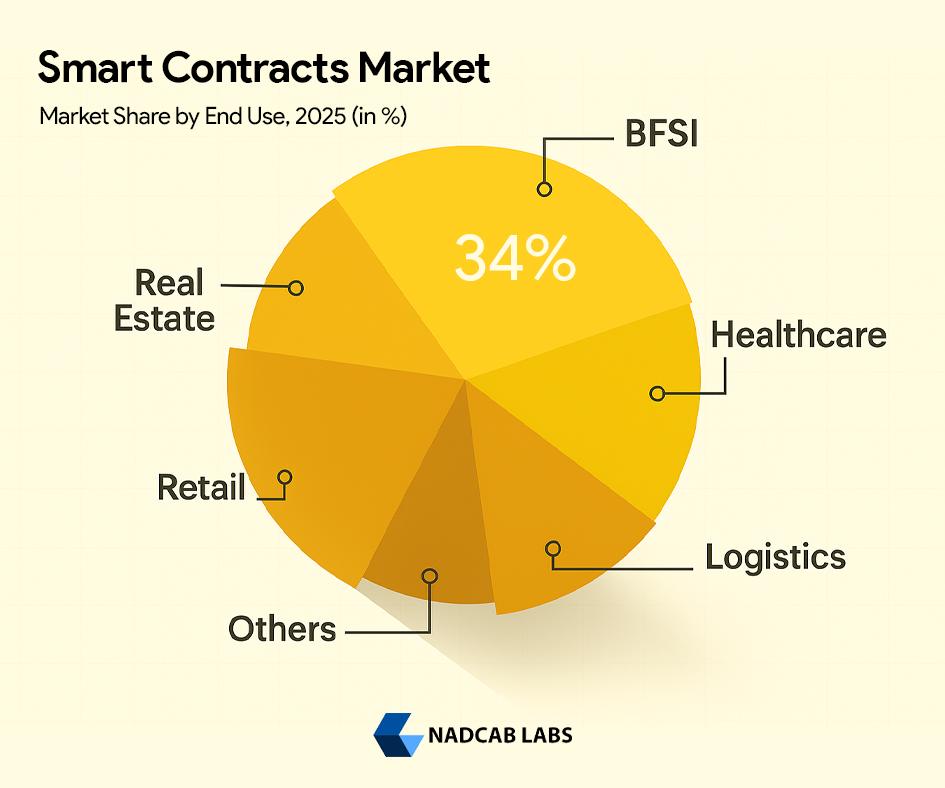
Smart contracts are changing many industries by automating tasks, building trust, and making processes more transparent. Here’s how different sectors are using them:[3]
- BFSI
- Retail
- Healthcare
- Real Estate
- Logistics
- Others
The smart contracts market is used by many types of users like government, banks (BFSI), healthcare, farming, transport, cars, property, legal services, education, and others. In 2025, the banking and finance sector (BFSI) will be the biggest user, with over 34% of the market. This is because smart contracts help make financial work faster, safer, and better protected from cyber threats.
At the same time, the legal sector is expected to grow the fastest. This is happening because law firms are using smart contracts service with new technologies like AI, machine learning, and blockchain. These tools help create self-running contracts and make legal work more efficient. Many companies are also building smart contract platforms, and law firms are starting to use subscription-based legal services to save time and money.
Also Read: Benefits of Smart Contracts in Business Automation
Smart Contracts Market Trends 2025-2030
Smart contracts are constantly improving to be more efficient, flexible, and widely used. Some of the latest trends include:
- AI-Powered Contracts: These contracts can predict outcomes, check themselves for errors, and adjust automatically based on conditions.
- Cross-Chain Contracts: They can work on multiple blockchains at the same time, making them more connected and versatile.
- Tokenization of Real-World Assets: Smart contracts are helping people buy and sell fractions of assets like real estate, stocks, and commodities, with instant settlement and global trading.
- Upgradable and Modular Contracts: Businesses can change or update contract rules without starting from scratch, making them easier to maintain and scale.
- Smart Legal Contracts: These combine traditional legal rules with blockchain automation, making them useful for businesses that must follow regulations.
- DAOs (Decentralized Autonomous Organizations): These organizations use smart contracts to manage decisions, budgets, and operations automatically.
- Zero-Knowledge Contracts: They protect privacy, which is important for industries like finance and healthcare.
These trends show that smart contracts are becoming more ready for big businesses, easier to use, and likely to be adopted everywhere in the coming years.
Start Building with Smart Contracts
If you have an idea, Nadcab Labs can help you turn it into a working smart contract that runs automatically and keeps your business safe and simple.
New Opportunities for Smart Contracts Market Size in 2025–2030
The next five years will bring huge opportunities for the smart contracts market size across industries, governments, and global markets. Some key areas of growth include:
- DeFi Expansion: Automates financial services like asset management, lending, insurance, and derivatives.
- Enterprise Automation: Helps businesses manage procurement, HR, compliance, and workflows automatically.
- Government Adoption: Improves public services, digital identity
- , taxation, and land registries.
- Smart City Integration: Supports energy management, transportation, and city services.
- AI-Driven Contracts: Enables businesses to make predictions and run operations autonomously.
- IoT Ecosystems: Connects devices for automated actions in industries and consumer sectors.
- Global Trade & Supply Chains: Provides real-time tracking, automated trade finance, and faster dispute resolution.
Smart Contracts Market Size- Key Competitors
The smart contract world has a lot of competition. Different blockchain platforms, auditing companies, middleware providers, and solution developers are all working to offer better services. This competition drives innovation, improves quality, and helps businesses and users get more reliable and efficient digital contract solutions.
| Company / Platform | Focus Area | Strength |
|---|---|---|
| Ethereum | Public Blockchain | dApps, Developer Ecosystem |
| Solana | High-speed Contracts | Gaming & DeFi |
| Polygon | Layer-2 Scaling | Multi-chain integration |
| Avalanche & Near | Enterprise Smart Contracts | High performance |
| Hyperledger & Corda | Private Blockchain | Regulated enterprises |
| Chainlink | Oracles | Secure real-world data |
| Auditing Firms | Security & Compliance | Risk mitigation |
| Middleware Providers | Analytics & Automation | Monitoring & integration[4] |
Did You Know How Smart Contracts Will Evolve by 2030?
By 2030, smart contracts will become far more advanced. They will be intelligent, fully automated, and able to work across multiple blockchains without any issues. These upgraded contracts will handle multi-chain transactions, digital asset ownership, DAOs, and even global trade on their own.
AI will make smart contracts even smarter. They will be able to learn from data, adapt to situations, and fix small issues automatically. Tokenized real-world assets will become a major part of global investing, making ownership more flexible, faster, and accessible to everyone.
Governments will use smart contracts for public services, taxes, land records, and digital identity systems, making processes more transparent and secure. Smart cities will run on smart contracts for energy, transport, water, and municipal services, creating smoother and more efficient operations. Financial systems will run directly on blockchain without middlemen, reducing delays and cutting costs. Privacy-focused contracts will protect sensitive information while still proving trust and accuracy.[5]
Overall, by 2030, smart contracts will bring speed, transparency, and reliability into every digital interaction, creating a world where trust is automated and value flows smoothly across borders.
The Future After 2025 – What’s Next for Smart Contracts?
Smart contracts are becoming a big part of the digital world. They help automate tasks, remove middlemen, make things more transparent, and speed up daily work. That’s why they’re now used in many areas like DeFi, business tools, AI systems, smart cities, and even government services.
By 2030, the smart contracts market size could grow to $2.6 to $6.7 billion. This shows it’s no longer just a new idea. It’s becoming the main technology behind modern digital systems. Businesses, governments, and investors should understand this change. Those who start using smart contracts early will stay ahead, find new opportunities, and lead the way in digital innovation.
The future is automatic. It’s clear and fair. And it’s powered by smart contracts, a technology that’s shaping how the world works digitally.
If you want to use blockchain now or later, Nadcab Labs helps you understand how smart contracts will grow from 2025 to 2030 and how this can help your business. We also guide you in choosing the right technology so your project becomes future-ready.
Frequently Asked Questions - Smart Contracts
Q1.What is the smart contracts market growth?
The smart contracts market is growing very quickly. Experts say it will keep expanding at a very high rate over the next few years, with strong demand from finance, healthcare, and supply chains. This growth is powered by blockchain adoption, decentralized finance (DeFi), and automation. As more industries trust digital solutions, smart contracts are becoming a normal part of business and everyday transactions worldwide.
Q2.How big is the smart contract market?
The smart contracts market size is already worth billions of dollars globally. In 2022, it was valued at around USD 684 million, and by 2030, it is expected to reach over USD 70 billion. This huge growth shows how important smart contracts are becoming in industries like banking, healthcare, and real estate. Their ability to automate agreements makes them one of the fastest-growing digital technologies today.
Q3.What is the significance of the smart contracts market?
Smart contracts are important because they make agreements automatic, secure, and transparent. Instead of needing a middleman like a lawyer or bank, the contract runs itself when conditions are met. This saves time, reduces costs, and avoids mistakes. They are the backbone of Web3, DeFi, and NFTs, and they help businesses and people work together in a faster, safer, and more trustworthy way.
Q4.Which is the leading region in the market?
The leading region in the smart contracts market size is North America. This is because the United States has many blockchain companies, developers, and investors who are building and using smart contracts. Big tech firms and startups there are driving innovation, and strong infrastructure makes adoption easier. With early investments and active projects, North America continues to lead the global smart contracts market size today.
Q5.Which region is expected to grow the fastest?
Asia-Pacific is expected to grow the fastest in smart contracts. Countries like India, China, and Singapore are investing heavily in blockchain and have large tech communities. Governments are supporting innovation, and businesses are experimenting with digital solutions. While North America and Europe are strong leaders today, Asia-Pacific is catching up quickly and may become the biggest driver of smart contract adoption in the future.
Q6.Which segment accounted for the largest smart contracts market share?
The financial services segment is the biggest user of smart contracts. Banks, insurance companies, and DeFi platforms use them to handle payments, loans, and claims automatically. This makes finance faster and more secure. Because money and trust are central to blockchain, financial contracts naturally became the largest part of the market, and they continue to lead adoption compared to other industries like healthcare or supply chains.
Q7.How concentrated is the competitive landscape?
The smart contracts market size is moderately concentrated. A few big platforms like Ethereum, Solana, and BNB Smart Chain dominate, but many new players are entering. Layer-2 networks like Polygon and Arbitrum are also growing fast. This means competition is strong, but no single company controls everything. Innovation is happening everywhere, making the market dynamic and full of opportunities for new projects and developers worldwide.
Q8.What is the biggest restraint facing the smart contracts industry?
The biggest challenge is security. If a smart contract has a bug, hackers can exploit it and cause big losses. Other problems include scalability, high fees on some blockchains, and unclear government rules. Interoperability between different platforms is also tricky. These issues slow down adoption, but developers and regulators are working to solve them so smart contracts can be safer and easier to use globally.
Q9.Who are the key players in the smart contracts market?
Some of the main players are Ethereum Foundation, IBM, Chainlink, Hyperledger, Solana Labs, and R3 (Corda). These companies and organizations build platforms, tools, and services that make smart contracts possible. Security firms like Nadcab Labs play a big role by auditing contracts. Together, they shape the ecosystem and help smart contracts grow across industries worldwide, making them more reliable and trusted.
Q10.Do smart contracts have a future?
Yes, smart contracts have a very bright future. They are already used in finance, real estate, healthcare, and gaming, and adoption is growing every year. As technology improves and rules become clearer, more businesses and people will trust them. Smart contracts will likely become a normal part of digital life, powering Web3 apps, decentralized finance, and many everyday transactions across industries and countries worldwide.
Explore Services
Related Services
Reviewed by

Aman Vaths
Founder of Nadcab Labs
Aman Vaths is the Founder & CTO of Nadcab Labs, a global digital engineering company delivering enterprise-grade solutions across AI, Web3, Blockchain, Big Data, Cloud, Cybersecurity, and Modern Application Development. With deep technical leadership and product innovation experience, Aman has positioned Nadcab Labs as one of the most advanced engineering companies driving the next era of intelligent, secure, and scalable software systems. Under his leadership, Nadcab Labs has built 2,000+ global projects across sectors including fintech, banking, healthcare, real estate, logistics, gaming, manufacturing, and next-generation DePIN networks. Aman’s strength lies in architecting high-performance systems, end-to-end platform engineering, and designing enterprise solutions that operate at global scale.