Ai Overview
Before you contact a single developer, you need absolute clarity about your business model. Many companies rush into hiring and end up with platforms that don’t match their vision because they never defined what they actually wanted. Software that handles 1,000 users performs poorly at 100,000 users without proper architecture. Get detailed cost breakdowns before committing to any developer.
Key Takeaways
Define your requirements clearly before approaching developers
Verify MLM-specific experience with multiple projects and references
Prioritize security and compliance from the beginning
Demand transparency in process, timeline, and costs
Choose scalability over cheap solutions
Evaluate developers on business strategy, not just coding
Get detailed references and verify them personally
Plan for post-launch support and ongoing maintenance
Quick Context: Hiring the wrong MLM developer can cost your company tens of thousands of dollars and months of wasted time. This article provides the exact questions and evaluation criteria you need to make an informed decision.
Understanding Your MLM Business Requirements First
Before you contact a single developer, you need absolute clarity about your business model. Many companies rush into hiring and end up with platforms that don’t match their vision because they never defined what they actually wanted. This foundational step separates successful implementations from expensive failures.
Start by documenting your MLM model clearly. Are you planning a binary compensation structure, a matrix system, a unilevel plan, or something more complex? According to resources on network marketing at Investopedia, different compensation models require fundamentally different backend logic. A developer who understands your specific structure will build the right platform from the ground up.
Define your target audience explicitly. Will your MLM operate domestically or internationally? What’s your expected user base in year one, year three, and year five? Are your distributors primarily mobile users or desktop users? These questions drive every architectural decision your developer makes.
Document your scalability needs thoroughly. If you expect to grow from 500 to 500,000 users, your infrastructure requirements differ dramatically from a niche operation. Your developer needs to know this upfront to design systems that grow with you instead of requiring a complete rebuild when you expand.
Read Also: What is MLM? Meaning, Types, Earnings, and Global Legality
| Planning Element | Why It Matters | Questions to Ask Yourself |
|---|---|---|
| Business Model | Determines software architecture and complexity | What compensation plan fits your vision? |
| Target Audience | Drives feature development priorities | Who are your ideal distributors? |
| Growth Timeline | Influences infrastructure scaling | What’s your 5-year user projection? |
| Geographic Scope | Impacts compliance and currency needs | Will you operate across multiple countries? |
What Experience Do the Developers Have in MLM Software Development?
Not all software developers understand network marketing systems. A developer skilled in e-commerce or SaaS platforms may struggle with the unique complexities of MLM software. You need developers with specific, hands-on experience building these systems.
Ask potential developers directly: How many MLM projects have you completed? Request names of actual companies using their platforms. Ask for client references you can contact independently. Generic software companies that claim they can “do anything” often lack the specialized knowledge that makes MLM platforms work.
Industry-specific experience matters because MLM software requires understanding commission calculations, downline tracking, genealogy trees, and compensation payout systems. These are not standard features in typical software applications. A developer who has built these systems multiple times knows the pitfalls and edge cases.
Ask about their experience with different network marketing models. Have they built binary plans? Matrix structures? Unilevel systems? Hybrid models? Each structure requires different programming logic. A developer experienced with only one type of compensation plan might struggle when you need modifications later.
Expert Insight: Companies with 8+ years of MLM development experience like Nadcab Labs have worked through countless scenarios and edge cases. They understand not just the programming but the business logic that makes network marketing systems function correctly. This expertise is invaluable when you hit unexpected challenges.
Have They Built Different MLM Compensation Plans Before?
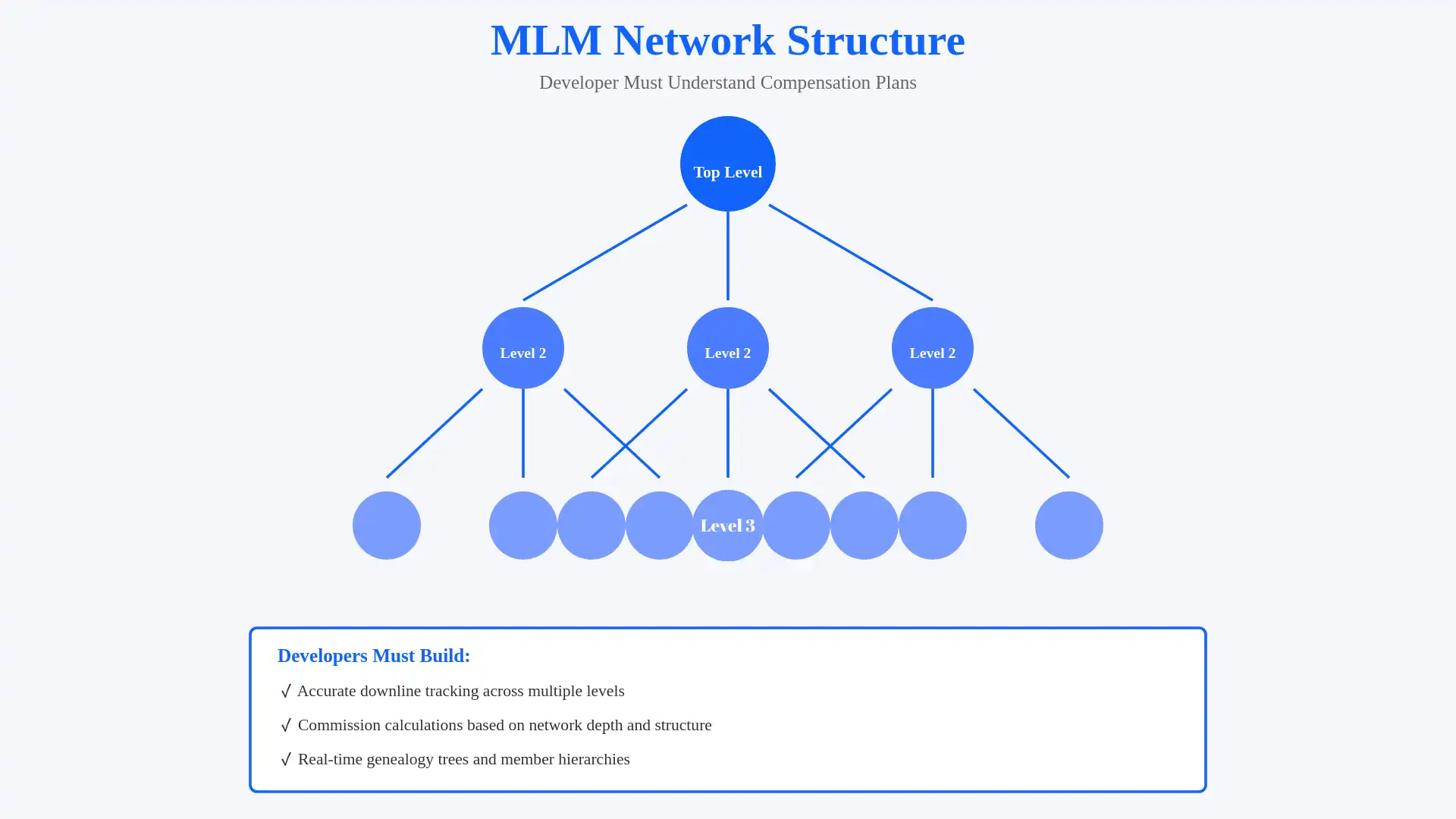
Compensation plans are the heart of every MLM system. Different structures create different user behaviors and business dynamics. A developer who has only built one type of compensation plan lacks the flexibility you need as your business evolves. Given the complexity of different MLM structures, it’s crucial to hire remote Java developers who are experienced in creating adaptable and scalable systems, ensuring your platform can evolve and grow with your business needs. Given the complexity of different MLM structures, it’s crucial to hire remote Java developers who are experienced in creating adaptable and scalable systems, ensuring your platform can grow and evolve with your business needs.
Binary plans operate with two downlines and typically cap earnings at a lower level but with higher earning percentages. Matrix systems use a fixed width and depth, creating strict organizational structures. Unilevel plans allow unlimited width with specific depth, offering more individual control. Board plans use a cycling mechanism where members move through levels. Each requires entirely different calculation logic.
Many successful MLM companies modify their compensation structures as they mature. If your developer can only work with one type of plan, you’ll be stuck when you want to add a new bonus tier or adjust commission percentages. Experienced MLM developers design systems with flexibility built in from the start.
Ask detailed questions about their compensation plan experience. How many different structures have they implemented? Can they explain the technical differences between each? Have they built hybrid plans combining multiple structures? These answers reveal whether they truly understand MLM architecture or just followed a template.
| Compensation Plan Type | Structure Characteristics | Technical Complexity |
|---|---|---|
| Binary | Two downlines, spillover rules | Medium |
| Matrix | Fixed width and depth structure | High |
| Unilevel | Unlimited width, limited depth | Medium |
| Board | Cycling through board levels | High |
| Hybrid | Multiple structures combined | Very High |
Do They Offer Custom MLM Software or Only Readymade Solutions?
This decision fundamentally shapes your platform’s future. Custom development means building exactly what you need. Readymade solutions offer speed and lower initial costs but limit flexibility. Most growing MLM companies eventually need custom solutions.
Off-the-shelf MLM software works if your business model matches existing templates. But here’s the reality: successful MLM companies rarely operate exactly like competitors. You have unique positioning, compensation structures, and market strategies. Forcing your business into a generic software template damages your competitive advantage.
Custom development takes longer initially but provides long-term advantages. Your system is built around your specific requirements, not the other way around. You can modify features without vendor approval. You own your intellectual property and business logic. Custom platforms scale more efficiently because they’re designed for your specific user patterns.
Ask developers whether they offer both options. The best partners understand when custom development makes sense and when readymade solutions serve clients better. A developer pushing only one approach regardless of your needs is thinking about their process, not your success.
Key Consideration: If your MLM model is truly innovative, you need custom development. If you’re following an established compensation structure, readymade software might work. Many smart companies use readymade platforms initially, then transition to custom solutions as they grow and differentiate.
How Secure Is the MLM Platform They Develop?
Security in MLM platforms is non-negotiable. Your system handles financial transactions, personal data, and commission records. A security breach destroys trust instantly and exposes your company to legal liability. Ask detailed security questions before hiring any developer.
Inquire about encryption standards. Are database communications encrypted? Do they use SSL/TLS protocols? What’s their approach to storing sensitive data like passwords and payment information? Industry standards require never storing full payment card details on your servers. Ask whether they follow Payment Card Industry Data Security Standards (PCI DSS).
Fraud prevention must be built into the system architecture. MLM platforms attract fraudsters because they involve financial incentives. Legitimate developers implement systems that detect suspicious activities like artificial commission inflation, fake member creation, or unusual payment patterns. Ask about their fraud detection mechanisms and how they prevent commission manipulation.
Wallet protection is critical if your system handles cryptocurrency or stored value. Ask about multi-signature wallets, cold storage options, and withdrawal protocols. If developers seem unclear about crypto security best practices, that’s a red flag for blockchain-based features.
Request information about their security audit practices. Have third parties audited their code? Do they conduct penetration testing? What’s their vulnerability disclosure process? Professional developers document their security practices and welcome scrutiny.
Is the MLM Software Scalable for Future Growth?
Software that handles 1,000 users performs poorly at 100,000 users without proper architecture. Scalability isn’t an afterthought, it’s a foundational design decision. You need developers who build systems expecting rapid growth.
Ask about their database architecture. Do they use relational databases optimized for MLM operations? Have they implemented caching layers to reduce database load? Can the system handle database replication and failover? These technical decisions determine whether your platform remains responsive as users multiply.
Discuss server infrastructure scaling. Will your platform work with cloud infrastructure like AWS, Azure, or Google Cloud? Can the system handle horizontal scaling, adding more servers as demand increases? Are there architectural bottlenecks that prevent easy scaling?
Multi-currency support is essential for global expansion. Does the system handle currency conversions? Are exchange rates updated automatically? Can commission calculations work across multiple currencies? If you plan international growth, these features must be built in from the start.
Performance testing reveals scalability limits. Ask whether developers conduct load testing before deployment. What’s the maximum concurrent user capacity? How many transactions per second can the system handle? These specifications matter when you’re planning growth.
Real Example: A scalable MLM platform should handle millions of commission calculations simultaneously when commission cycles run. If your system slows down during peak calculation periods, it’s not properly scaled. Experienced developers build commission calculation engines that process millions of transactions in minutes, not hours.
What Technologies and Programming Languages Do They Use?
Technology choices have long-term implications for your platform. Outdated technology stacks make future modifications expensive and slow. Modern frameworks improve security, performance, and developer availability when you need upgrades.
Ask about backend frameworks. Do they use established technologies like Node.js, Java, Python, or PHP? Are these frameworks current with recent versions? Outdated frameworks indicate the developer hasn’t kept up with industry standards. Check whether they use version control systems like Git and follow modern development practices.
Frontend technology matters for user experience. Is the system built with modern frameworks like React, Vue, or Angular? Will it work smoothly on mobile devices? Progressive Web App capabilities enable offline functionality and faster loading. Ask whether they prioritize responsive design and mobile-first development.
Database selection impacts performance and scalability. SQL databases like PostgreSQL or MySQL work well for most MLM systems. Some modern platforms use NoSQL databases for specific advantages. Ask about their database reasoning and whether they’ve considered both options for your use case.
API development is crucial for modern platforms. Does the system use RESTful APIs or GraphQL? Can third-party integrations connect easily? A well-designed API architecture makes your system future-proof because you can add integrations without rebuilding core systems.
Do They Support Cryptocurrency and Wallet Integration?
Cryptocurrency integration is increasingly important in MLM platforms. Whether you plan to accept crypto now or in the future, your developer should understand blockchain technology and wallet integration.
Ask about supported cryptocurrencies. Can the system work with Bitcoin, Ethereum, and stablecoins like USDT? Different cryptocurrencies have different requirements and transaction speeds. A knowledgeable developer understands these differences and recommends appropriate coins based on your needs.
Smart contract capability is valuable if you want blockchain-based commission calculations. Smart contracts automate commission payments using programmable code on the blockchain. They increase transparency but require specialized Solidity programming skills. Ask whether your developer has this expertise.
Wallet integration security is critical. Cold storage keeps cryptocurrencies offline, protecting against hacking. Hardware wallet integration adds another security layer. Ask how the developer ensures cryptocurrency security and whether they use established wallets or build custom solutions.
Payment gateway integration for crypto should be seamless. Does the system automatically convert crypto to fiat currency if needed? Can users deposit fiat and purchase crypto? These features provide flexibility that modern MLM distributors expect.
How Transparent Is Their Development Process?
Development transparency separates professional partners from mediocre ones. You should know what’s happening at every stage without asking repeatedly. Clear communication saves time, prevents surprises, and builds trust.
Ask about project management tools. Do they use established platforms like Jira, Asana, or Monday.com? Can you view project progress in real-time? Professional developers provide visibility into development sprints, completed tasks, and upcoming milestones. If they’re vague about tracking, that’s concerning.
Establish communication protocols upfront. How often do you meet? Are communication channels clearly defined? Weekly status meetings are standard for MLM projects. Some developers offer daily standups for faster-moving projects. Determine what works for your team and ensure the developer commits to it.
Documentation is essential for long-term success. Does the developer provide regular progress reports? Will they document code thoroughly so future developers can understand the system? Poor documentation causes expensive problems later when you need modifications.
Change management processes prevent scope creep and confusion. Ask how the developer handles requests for modifications during development. A clear process protects both your budget and the developer’s timeline. Understanding this prevents the “project never ends” scenario many companies experience.
| Communication Element | Importance | Questions to Ask |
|---|---|---|
| Status Reports | Tracks progress and identifies delays | How frequently do you report progress? |
| Meetings | Ensures alignment and quick decisions | What’s your meeting frequency? |
| Project Tools | Provides visibility into development | Can we access real-time project tracking? |
| Documentation | Ensures long-term system understanding | Will you provide complete documentation? |
What Testing and Quality Assurance Methods Do They Follow?
Quality assurance separates professional developers from amateurs. Poor testing leads to bugs that damage user experience and destroy credibility. Ask detailed questions about QA processes before committing to any developer.
Functional testing verifies that features work as designed. Do they test commission calculations, payout processing, member registration, and reporting? Ask for test plans showing what they test and how. Comprehensive functional testing catches most user-facing issues before launch.
Load testing reveals performance limits. How many concurrent users can the system handle? What happens when commission calculation cycles run? Load testing identifies bottlenecks before they impact real users. Professional developers conduct load testing before deployment and provide results.
Security audits and penetration testing protect your platform from attacks. Does the developer conduct code reviews for security vulnerabilities? Do they perform penetration testing to find security weaknesses? These tests cost money but prevent expensive security incidents later.
Automated testing catches bugs faster and more reliably than manual testing. Ask whether they use unit testing, integration testing, and end-to-end testing. Modern development practices include continuous testing throughout development, not just at the end. This approach catches bugs early when they’re cheap to fix.
Browser and device testing ensures functionality across platforms. Does the system work on Chrome, Firefox, Safari, and Edge? Do mobile apps work on both iOS and Android? Testing across platforms is essential for modern software.
Critical Insight: Bugs discovered after launch are exponentially more expensive than bugs found during development. A developer who invests heavily in testing before deployment saves you money in the long run, even if their development costs seem higher initially.
Do They Provide Post-Launch Support and Maintenance?
Launching your platform is not the end, it’s the beginning. Post-launch support separates partners who care about your success from vendors who disappear after collecting payment. Clarify support expectations before signing contracts.
Ask about software updates and patch schedules. How frequently do they release updates? What’s their process for applying security patches? Your system needs regular updates to stay secure and compatible with modern browsers and devices. Developers should provide these updates without charging premium rates.
Bug fix processes matter significantly. When users report bugs, how quickly does the developer respond? What’s their commitment for critical versus non-critical bugs? A professional developer has clear SLAs (Service Level Agreements) guaranteeing response times and fix timelines.
Feature upgrades should be discussed before launch. As your MLM grows, you’ll want new features. Will the developer prioritize your requests? What’s the pricing model for feature additions? Understanding this prevents surprises later.
Technical support availability is crucial. When your system has problems, can you reach someone quickly? What are support hours? Is 24/7 support available for critical issues? MLM platforms operating globally often need round-the-clock support options.
Ask about support tiers and pricing. Many developers offer several support levels from basic to premium. Basic support might mean email-only help within 24 hours. Premium might include phone support and faster response times. Determine what level matches your needs and budget.
How Do They Handle Legal and Compliance Requirements?
MLM compliance is complex and varies by jurisdiction. Non-compliance creates legal liability and can result in regulatory action against your company. Your developer must understand these requirements and build compliance into the platform architecture.
Ask about their knowledge of MLM regulations. Do they understand FTC guidelines for multi-level marketing? Have they worked with companies operating in regulated jurisdictions? Ask specific questions about how they ensure compensation plans comply with anti-pyramid scheme regulations. If the developer seems unclear, that’s a serious red flag.
Regional compliance varies worldwide. The EU requires GDPR compliance. Canada has regulations specific to MLM. China has different rules than the United States. If you operate internationally, your developer must understand compliance for each region. The same cross-border thinking applies to your own team: if you’re building out distributors or staff abroad, an employer of record can keep you compliant without setting up a local entity in every market, which is exactly the kind of friction Remote People helps companies avoid Ask what jurisdictions they have experience with.
Know Your Customer (KYC) and Anti-Money Laundering (AML) protocols are increasingly important. Does the platform support KYC verification? Can it implement AML screening for suspicious transactions? If you’re handling cryptocurrency, these requirements become more stringent. Ask about their approach.
Data privacy compliance is non-negotiable. Your platform collects personal information. Does it comply with GDPR, CCPA, and other privacy regulations? Ask about their data handling practices, consent management, and right-to-be-forgotten functionality. Privacy violations result in substantial fines.
Documentation of compliance features is essential. The developer should provide documentation showing which compliance features are built in and how they work. This documentation becomes important if regulators ever question your platform’s compliance.
Can They Integrate Third-Party Tools and APIs?
Your MLM platform doesn’t exist in isolation. You’ll want to connect it with CRM systems, payment gateways, email marketing tools, analytics platforms, and more. Ask whether the developer can build these integrations seamlessly.
CRM integration connects customer data across platforms. If you use Salesforce, HubSpot, or another CRM, can your MLM system share data? This integration improves customer insights and enables better marketing. Ask about their CRM integration experience and whether they can work with your specific platform.
Payment gateway integrations are critical for commission payouts and member purchases. Can the system integrate with Stripe, PayPal, 2Checkout, or other payment processors? Does it support bank transfers, cryptocurrency, and multiple payment methods? A good developer has experience with various payment gateways.
Email marketing integration enables automated communicati with distributors. Does your platform integrate with Mailchimp, ActiveCampaign, or ConvertKit? Can it trigger automated emails based on MLM events like rank advancement or commission milestones? These integrations save time and improve engagement.
Analytics and reporting integrations provide business intelligence. Can your platform connect with Google Analytics, Mixpanel, or custom BI platforms? Does it provide APIs so you can build custom reporting? Understanding user behavior through analytics is essential for growth.
Mobile app integration matters if you want native apps alongside the web platform. Can the developer build iOS and Android apps that connect with your backend? How do they handle data synchronization and offline functionality? Modern MLM companies increasingly use native mobile apps.
What Is the Total Cost and Pricing Structure?
Cost discussions are uncomfortable but necessary. Hidden charges and unexpected expenses damage relationships and budgets. Get detailed cost breakdowns before committing to any developer.
Development costs are typically the largest expense. Ask for detailed breakdowns of how they calculate quotes. What’s included in the estimate? Are there costs for design, architecture, development, testing, and deployment? Understanding component costs helps you evaluate whether the quote is reasonable.
Hidden charges plague many development projects. Ask explicitly about potential hidden costs. Will you pay extra for hosting? Are updates included after launch or charged separately? What about scaling costs as users multiply? Understanding all potential costs prevents budget surprises.
Licensing and software costs matter for long-term expenses. Does the platform use open-source software, proprietary tools, or a combination? Will you own your source code or license it from the developer? These decisions affect your flexibility and long-term costs.
Maintenance and support costs are ongoing. How much does annual support cost? Are there separate charges for hosting, backups, and security updates? Understanding lifetime costs helps you evaluate true return on investment. The cheapest development often costs the most over time.
Payment terms should be clearly specified. Do you pay a deposit upfront? Are there milestone-based payments? Get details about when payments are due and what happens if the project exceeds timeline or budget. Clear payment terms prevent disputes.
Return on investment calculation should guide your decision. A platform costing $50,000 that generates millions in additional revenue is valuable. A platform costing $15,000 that sits underutilized wastes money. Think about ROI, not just upfront cost.
Budget Advice: MLM platforms from experienced developers typically cost $30,000 to $100,000+ for custom development. Readymade solutions cost $5,000 to $20,000 annually. Your company size, complexity needs, and growth plans determine what’s appropriate. The cheapest option isn’t always the best value.
What Do Client Reviews and Case Studies Reveal?
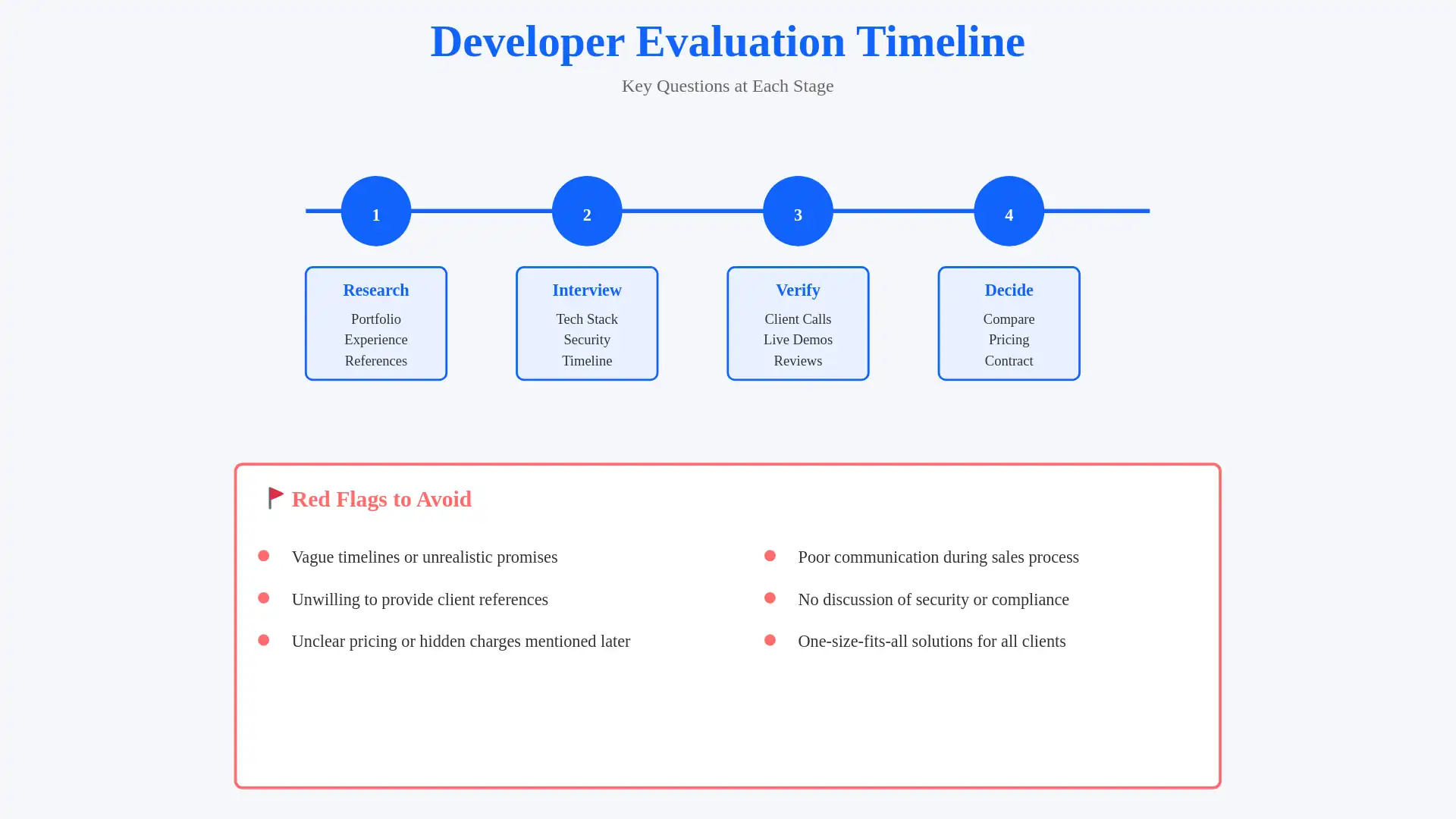
Testimonials from actual clients reveal more than marketing claims. Successful developers have happy clients willing to discuss their experiences. Ask for multiple references and actually contact them.
Request case studies showing successful implementations. Good case studies explain the client’s challenges, the solution provided, results achieved, and lessons learned. They show specific numbers and real outcomes. Read multiple case studies to identify patterns in how the developer approaches projects.
Check online reviews on platforms like Google, Clutch, or industry-specific sites. Read both positive and negative reviews carefully. Negative reviews reveal how developers handle problems. Do they take criticism constructively? Do they acknowledge shortcomings? A developer’s response to negative reviews matters more than the reviews themselves.
Request live demos with current clients. Seeing the platform in action is more valuable than screenshots. Ask clients about their experience during development, post-launch support, and overall satisfaction. Ask specific questions about challenges they faced and how the developer handled them.
LinkedIn and industry forums provide additional perspective. What do people say about the developer in professional networks? Are they respected in the MLM industry? Industry reputation matters because MLM is a specialized field.
Ask about failed projects honestly. Every developer has faced challenges. Ask directly about projects that didn’t meet expectations and what they learned. Developers who hide failures are problematic. Those who acknowledge challenges and explain improvements are professional.
Build a Future-Ready MLM Platform
Launch a powerful MLM solution backed by secure architecture, smart automation, and scalable blockchain technology built for long-term success.
How Well Do They Understand MLM Business Strategy?
Technical skill is necessary but insufficient. Developers who understand MLM business strategy make better architectural decisions and suggest improvements that impact your bottom line.
Ask about their understanding of network marketing dynamics. Can they explain how different compensation structures impact distributor behavior? Do they understand the difference between recruitment-focused and product-focused MLM models? A developer limited to pure technical knowledge misses business implications of their choices.
Discuss how the platform supports your business goals. Rather than just asking what features they can build, ask what features would strengthen your MLM. A developer who makes strategic suggestions based on business understanding is more valuable than one who just implements requested features.
Ask about their perspective on MLM regulations and ethical practices. How do they approach building compliant systems? Do they warn clients against potentially problematic compensation structures? A developer who cares about ethical practices helps you build a sustainable business.
Understanding user psychology is important. How do they design dashboards and features to encourage desired distributor behaviors? Do they consider factors like earning transparency, achievement recognition, and community building? These business-focused considerations separate average platforms from exceptional ones.
Ask about scaling strategies. How does the platform support your growth from launch to maturity? How do features evolve as your MLM matures? A developer who thinks strategically about your journey provides more value than one who just builds what you ask for today.
Final Checklist Before Making the Hiring Decision
You’ve gathered information through countless questions. Now systematically evaluate everything before committing. This final section provides a checklist ensuring you haven’t overlooked critical factors.
| Evaluation Category | Must Have Questions | Assessment |
|---|---|---|
| Experience | MLM projects completed? Comp plans built? References available? | Verified with clients |
| Technology | Modern tech stack? Scalable architecture? Mobile ready? | Meets requirements |
| Security | Encryption? Fraud prevention? Audit history? Compliance? | Comprehensive plan |
| Process | Clear timeline? Communication plan? Testing process? QA? | Documented process |
| Cost | Detailed quote? Hidden charges identified? Support costs clear? | Total cost understood |
| References | Client references verified? Reviews checked? Demos watched? | Positive feedback |
Red Flags to Avoid
Certain warning signs indicate you should look elsewhere. If a developer exhibits multiple red flags, move forward carefully or reconsider.
Vague project timelines: A developer who can’t provide a specific timeline or estimates are consistently off suggests poor planning. MLM platforms have predictable features that experienced developers can estimate accurately.
Unwillingness to provide references: Professional developers have happy clients willing to discuss their work. Refusal to provide references is suspicious.
Unclear pricing:Developers who avoid detailed cost discussions or downplay hidden charges create problems. Complete transparency about costs is essential.
Poor communication: If communication during the sales process is slow or unclear, it will be worse during development. Communication quality now predicts communication quality later.
One-size-fits-all solutions: Every MLM company is different. A developer pushing the same solution to everyone without customization misses your unique needs.
No security discussion: If security isn’t discussed thoroughly during sales conversations, it won’t be prioritized during development. Security matters significantly.
Unfamiliar with MLM regulations: A developer unfamiliar with compliance requirements will create compliance problems. MLM-specific knowledge is non-negotiable.
Making Your Final Decision
After evaluating all factors, step back and consider gut feelings. Do you trust this developer? Does your team feel comfortable working with them? Trust and comfort matter as much as technical qualifications.
Compare multiple developers, not just one. Interview at least three candidates. Different developers approach problems differently. Comparing approaches helps you understand what’s standard and what’s exceptional.
Ask for trial projects if you’re uncertain. Some developers offer small projects to evaluate working relationships before committing to large platforms. This approach costs less and reveals whether collaboration works well.
Sign clear contracts protecting both parties. Specify deliverables, timelines, payment terms, intellectual property ownership, and support obligations. Don’t trust handshakes. Professional developers expect detailed contracts.
Plan for the relationship to extend beyond launch. You’ll want improvements, new features, and ongoing support. Choose a developer you can work with for years, not just months.
Hiring MLM Developers is an Investment in Your Future
Choosing the right MLM development partner is one of the most important decisions you’ll make. The wrong choice costs money and damages your company’s potential. The right choice sets you up for scalable, sustainable growth.
Taking time to ask thorough questions before committing saves exponentially more time and money than rushing into hiring. Experienced developers with proven MLM expertise like Nadcab Labs, which has 8+ years of specialized experience, understand the unique requirements of network marketing platforms just as businesses rely on digital hiring solutions to make more informed and efficient hiring decisions. Recruit CRM is the all-in-one ATS + CRM built specifically for recruitment and staffing agencies.
Your MLM platform is more than software. It’s the infrastructure supporting your entire business model. It enables commission calculations, manages your distributor network, and represents your company to members. Getting this right matters immensely.
Use the questions and checklist in this guide to evaluate developers systematically. Don’t skip steps because of time pressure. Don’t compromise on experience or security because of cost concerns. Your future success depends on making smart decisions today.
Need more guidance on MLM development? Consider consulting with specialized MLM development firms or visiting resources at Wikipedia’s MLM resource page[1] and Investopedia[2] for additional context on network marketing models and industry standards.
Frequently Asked Questions
Q1.What should I check before hiring an MLM software developer?
Before hiring an MLM software developer, check their experience with MLM platforms, compensation plans, and scalability. Review their past projects, security practices, and ability to customize features. Also evaluate post-launch support, pricing transparency, and compliance knowledge. A reliable developer should understand both MLM business logic and modern technology requirements.
Q2.Why is MLM-specific experience important when hiring developers?
MLM-specific experience is critical because MLM software involves complex genealogy structures, commission calculations, and payout rules. Developers without MLM experience may build technically sound software that fails in real-world scenarios. Experienced MLM developers understand edge cases like spillover, rank logic, and dispute handling, which reduces errors and long-term risks.
Q3.How do I know if an MLM developer can build scalable software?
To assess scalability, ask how the software handles growing users, high transaction volume, and global expansion. Scalable MLM software uses optimized databases, cloud infrastructure, and modular architecture. Developers should explain how their system performs under load and how it supports future features without affecting performance or stability.
Q4.Is custom MLM software better than readymade MLM solutions?
Custom MLM software is usually better for long-term growth because it aligns with your unique compensation plan and business goals. Readymade solutions may be faster to launch but often limit customization and scalability. Custom development allows better security, performance tuning, and future upgrades, making it more suitable for serious MLM businesses.
Q5.What security features should MLM software include?
MLM software should include data encryption, secure login authentication, role-based access control, and fraud prevention mechanisms. If crypto payments are involved, wallet security and transaction validation are essential. Developers should also follow secure coding practices and regular security audits to protect user data and financial records.
Q6.Can MLM developers integrate cryptocurrency and blockchain features?
Yes, experienced MLM developers can integrate cryptocurrency wallets, blockchain payments, and smart contracts. This requires knowledge of blockchain networks, wallet security, and transaction transparency. Crypto MLM platforms benefit from faster payouts, reduced fraud, and global accessibility, but only when implemented by developers with real blockchain experience.
Q7.How important is post-launch support for MLM software?
Post-launch support is very important because MLM software requires regular updates, bug fixes, and security patches. Business rules, regulations, and user expectations change over time. A good MLM development partner provides ongoing maintenance, performance optimization, and feature enhancements to ensure smooth operations after launch.
Q8.What legal and compliance features should MLM software support?
MLM software should support KYC, AML, GDPR compliance, and region-specific regulations. These features help prevent fraud and ensure lawful operations. Developers should understand how to implement compliance workflows without affecting user experience. Ignoring legal requirements can result in penalties, platform suspension, or loss of business credibility.
Q9.How much does it cost to hire MLM developers?
The cost of hiring MLM developers depends on features, customization level, technology stack, and support requirements. Low-cost solutions may lack scalability or security. It is important to request a detailed cost breakdown, including development, maintenance, upgrades, and integrations, and focus on long-term return on investment rather than initial price.
Q10.How can client reviews help in choosing MLM developers?
Client reviews and case studies reveal how reliable and professional an MLM developer is. They provide insights into project delivery, communication, and problem-solving skills. Live demos and real-world examples help verify claims made by the developer. Consistent positive feedback indicates experience, trustworthiness, and technical competence.
Explore Services
Related Services
Reviewed by

Aman Vaths
Founder of Nadcab Labs
Aman Vaths is the Founder & CTO of Nadcab Labs, a global digital engineering company delivering enterprise-grade solutions across AI, Web3, Blockchain, Big Data, Cloud, Cybersecurity, and Modern Application Development. With deep technical leadership and product innovation experience, Aman has positioned Nadcab Labs as one of the most advanced engineering companies driving the next era of intelligent, secure, and scalable software systems. Under his leadership, Nadcab Labs has built 2,000+ global projects across sectors including fintech, banking, healthcare, real estate, logistics, gaming, manufacturing, and next-generation DePIN networks. Aman’s strength lies in architecting high-performance systems, end-to-end platform engineering, and designing enterprise solutions that operate at global scale.