Ai Overview
Blockchain-based multi-level marketing platforms have pulled in millions of participants worldwide over the past decade. In this scenario, the development team allocates a large portion of the total token supply to their own wallets at launch, often disguised as “team allocation,” “development reserve,” or “marketing budget. According to Investopedia’s analysis of rug pull mechanics, developer wallet concentration above 20% of total supply is one of the clearest red flags in any token project.
Key Takeaways
- A rug pull is an intentional exit scam where developers drain investor funds after building artificial hype around a token or MLM platform.
- Crypto MLM projects are particularly vulnerable because they depend on continuous recruitment and rarely have audited, transparent smart contracts.
- The four most common types of rug pulls are liquidity withdrawals, developer token dumps, hidden smart contract backdoors, and fake token utility schemes.
- Anonymous founding teams, unaudited contracts, and unrealistic return promises are the clearest early warning signs.
- Investors can reduce risk significantly by checking liquidity locks, demanding audit reports, and verifying team identities before committing funds.
- Regulatory scrutiny of blockchain MLM platforms is increasing globally, making secure and compliant development more important than ever.
Introduction: Why Crypto MLM Projects Attract and Betray Investors
Blockchain-based multi-level marketing platforms have pulled in millions of participants worldwide over the past decade. The combination of passive income promises, token rewards, and community-driven recruitment has made crypto MLM one of the fastest-growing segments in decentralized finance. But this same combination has also made it one of the most exploited.
To understand why, you need to understand how a crypto MLM works at its core. Participants join a network, invest in a native token or staking pool, and earn commissions by recruiting others into the same structure. When the underlying product has real utility and the compensation plan is transparent, this can be a legitimate business model. You can read more about
MLM types, benefits, and global regulation to understand where the line sits.
The problem is that bad actors have learned to dress up fraud in the language of blockchain innovation. They launch a token, build an MLM-style referral system around it, gather enormous liquidity in a matter of weeks, and then disappear. This is a rug pull, and in crypto MLM it happens more frequently than most people realize.
According to data tracked by blockchain security firm CertiK, rug pulls and exit scams accounted for over $2.8 billion in losses in 2023 alone. The crypto MLM sector, which blends token speculation with recruitment incentives, consistently ranks among the highest-risk categories. This article breaks down exactly how these scams operate, what the warning signs look like, and what both investors and developers need to do to avoid them.
What Exactly Is a Rug Pull in Cryptocurrency?
The term rug pull, as defined in the broader blockchain security community, refers to a type of exit scam where a development team builds a project, generates investment interest, and then suddenly removes all value from the platform, leaving investors with worthless tokens and no way to recover their funds.
The name comes from the expression of pulling the rug out from under someone. The investor is standing on what looks like solid ground, and then in a single transaction or a series of coordinated ones, that ground disappears.
It is important to separate a rug pull from a project that simply fails. When a crypto startup runs out of money, loses technical talent, or launches a product the market does not want, that is an unfortunate failure but not necessarily fraud. A rug pull is deliberate. The team builds the project with the intent to exit. Every marketing decision, every staking reward structure, every promise of future utility is designed to attract as much capital as possible before the exit is executed.
Rug Pull vs. Legitimate Project Failure: Key Differences
| Factor | Rug Pull | Legitimate Failure |
|---|---|---|
| Intent | Fraudulent from the start | Genuine attempt to build |
| Team Behavior | Disappears overnight | Communicates with community |
| Fund Handling | Drained to private wallets | Spent on development costs |
| Contract Transparency | Hidden backdoors present | Usually open source |
| Warning Signs | Anonymous team, no audit | May have all best practices |
| Investor Recovery | Near zero | Partial refunds sometimes possible |
Why Crypto MLM Projects Are Especially Vulnerable to Rug Pulls
Most crypto projects carry some level of rug pull risk, but MLM-structured blockchain platforms carry it at a much higher level. Three structural characteristics explain why.
Continuous recruitment dependency. The economics of most crypto MLM platforms require a growing user base to sustain returns. When recruitment slows, the reward pool shrinks. To keep participants from exiting, developers either pump token prices artificially or make increasingly aggressive claims about upcoming features and partnerships. This cycle of hype management creates a perfect cover for bad actors who were always planning to exit.
Opaque fund management. Many crypto MLM projects pool investor funds in smart contracts that participants cannot fully read or verify. Even when contract addresses are published, the logic inside them may be deliberately complex to obscure owner privileges. Investors trust the platform based on referral network relationships, not on technical verification.
Smart contract manipulation risk. Unlike traditional MLM companies that operate through legal entities, blockchain MLM projects run through code. If that code contains a function allowing the developer to mint unlimited tokens, pause withdrawals, or drain the liquidity pool, the investor has no legal recourse. The blockchain transaction is irreversible. Our team at the cryptocurrency MLM software development level has reviewed dozens of contracts over the years where these exact functions were hidden behind misleading variable names.
The Four Most Common Types of Rug Pulls in Crypto MLM
1. Liquidity Rug Pulls
This is the most straightforward and the most common type. Developers create a token, list it on a decentralized exchange like Uniswap or PancakeSwap, and attract buyers who add funds to the liquidity pool to enable trading. Once enough capital is sitting in that pool, the developer uses their admin key or a pre-planted contract function to withdraw all liquidity in a single transaction. The token price crashes to zero in seconds.
In a crypto MLM context, this is especially damaging because participants have often already staked tokens, referred friends, and built earnings expectations on the platform’s token value. When liquidity disappears, both the token value and the compensation plan collapse simultaneously.
2. Developer Wallet Token Dumps
In this scenario, the development team allocates a large portion of the total token supply to their own wallets at launch, often disguised as “team allocation,” “development reserve,” or “marketing budget.” After the token gains traction and price appreciation within the MLM network, they dump their holdings on the open market in a coordinated sell-off.
The sell pressure collapses the price, and regular participants who bought at higher prices are left holding near-worthless tokens. According to Investopedia’s analysis of rug pull mechanics, developer wallet concentration above 20% of total supply is one of the clearest red flags in any token project.
3. Hidden Smart Contract Functions
More technically sophisticated attackers embed hidden functions inside the token or staking contract. These can include unlimited minting capabilities that allow the developer to create new tokens on demand, diluting the value of existing holdings. Another common technique is a withdrawal freeze function that blocks investors from moving their tokens while the developer prepares their exit.
These functions are often named in ways that look harmless to a casual reviewer. A function called updateRewardConfig might actually contain logic to drain the treasury. Without a professional smart contract audit, investors have no way to identify this risk.
4. Fake Token Utility Schemes
This type operates over a longer timeline and is often harder to detect early. The project announces ambitious use cases for its token: a decentralized marketplace, a travel rewards system, a healthcare data platform. The MLM recruitment machine drives thousands of people to invest in the token based on these promises. Roadmap milestones get delayed repeatedly, and eventually the team disappears with the accumulated investment, citing market conditions or technical challenges.
The deception in this type is in the false utility narrative. The token was never backed by a real product. The promises were marketing tools, not genuine development plans.
Comparison of Rug Pull Types: Speed, Detectability, and Investor Impact
| Type | Execution Speed | Detectability | Typical Loss Severity |
|---|---|---|---|
| Liquidity Rug Pull | Seconds to minutes | Low (before it happens) | Near Total (90-100%) |
| Dev Wallet Dump | Hours | Moderate (on-chain visible) | Severe (60-80%) |
| Hidden Contract Functions | Variable | Very Low (requires audit) | Total (up to 100%) |
| Fake Token Utility | Weeks to months | Medium (roadmap gaps) | High (40-70%) |
Step-by-Step: How a Rug Pull Actually Unfolds in a Crypto MLM Project
Understanding the process from launch to exit helps investors recognize which stage a project is at and when to get out. Here is how a typical crypto MLM rug pull moves through its lifecycle.
Step 1 — The Attractive Launch. The project launches with polished branding, a detailed whitepaper, and promises of high annual yields. The team may present themselves as blockchain veterans, though their identities are often unverifiable. A native token is created and listed on a decentralized exchange. Early buyers see rapid price appreciation as the MLM recruitment machine drives demand.
Step 2 — Aggressive Marketing and Recruitment. Influencer endorsements flood social media. Telegram groups and Discord servers grow rapidly. Referral commissions reward existing members who bring in new investors. The compensation plan, structured across multiple levels, incentivizes recruiting over product usage. This is where the overlap with traditional MLM structure becomes dangerous: see how blockchain MLM networks accelerate this dynamic.
Step 3 — Rapid Token Investment Inflow. Millions of dollars flow into the token and staking contracts. The liquidity pool on the DEX grows. The token price chart shows a sharp upward trajectory that gets shared widely as proof of legitimacy. Early participants who show earnings screenshots recruit more aggressively, compounding the capital inflow.
Step 4 — Liquidity Withdrawal or Token Dump. In a single transaction or a coordinated sequence of them, the developer executes the exit. Liquidity is removed from the pool, staking withdrawals are frozen, or the developer’s allocation is sold in bulk. On-chain explorers like Etherscan show the movement, but by the time most investors notice, the damage is done.
Step 5 — Project Abandonment. Social media accounts go dark. Telegram admins delete channels. The website comes down. Any remaining participants find that the token is untradeable, the staking dashboard returns errors, and support tickets go unanswered. In most jurisdictions, because the developers were anonymous and the transactions were executed on-chain, legal recourse is almost non-existent.
Major Warning Signs Investors Should Watch Before Joining
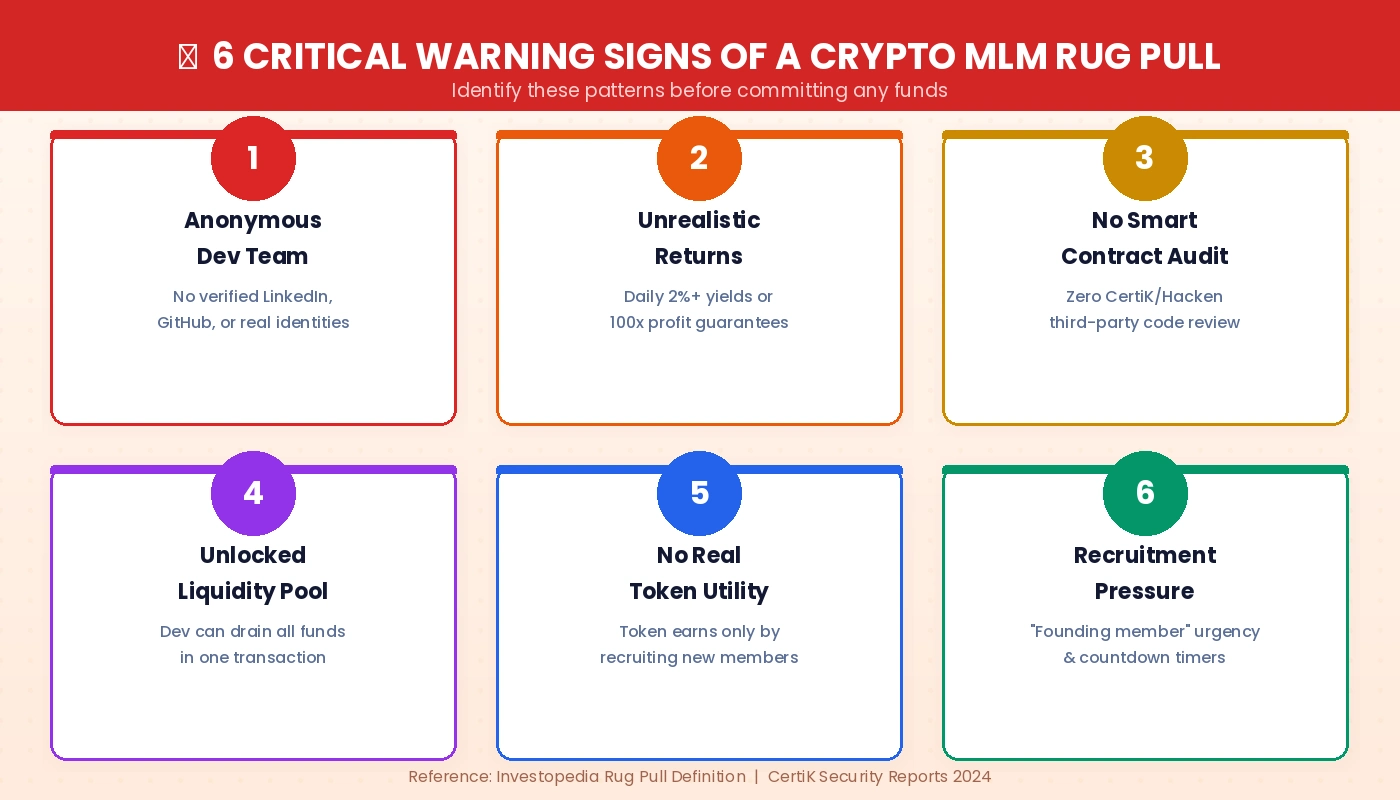
Fig 3: Six warning signs that commonly precede rug pulls in crypto MLM platforms
After reviewing hundreds of crypto MLM projects over the past eight years, our team has found that the following warning signs appear in the vast majority of projects that eventually execute a rug pull.
Anonymous Development Teams. Legitimate blockchain projects, especially those asking investors to commit funds, have identifiable founders with verifiable backgrounds. When a project’s LinkedIn page has just been created, the GitHub profile has no history, and the “team” section of the website features AI-generated profile photos, you are looking at an anonymous operation. That is not a reason to reject a project outright, but it is a reason to apply every other check on this list before committing a single dollar.
Unrealistic Profit Promises. No blockchain infrastructure produces 2% daily returns sustainably. When a crypto MLM platform promises daily yields that would amount to 700% annually, the maths only work if there is a continuous flow of new investor capital. That is the definition of a Ponzi scheme, and when recruitment slows, the project collapses whether or not a rug pull is executed.
No Audited Smart Contracts. A credible project publishes its smart contract addresses and links to third-party audit reports from firms like CertiK, Hacken, or QuillAudits. If a project says its code is “under review” or “proprietary,” that is a significant red flag. Asking to see the contract address and checking it on a block explorer yourself is one of the most important due diligence steps any investor can take.
Unlocked Liquidity Pools. Check whether the project’s liquidity is locked using services like Unicrypt or Team.Finance. Unlocked liquidity means developers can withdraw it at any time. Most legitimate projects lock liquidity for at least 12 months as a trust signal.
No Clear Product or Utility. The token should have a purpose beyond paying referral commissions. Can you actually use it to buy services, access a platform, or participate in governance? If the only stated use case is earning more of the same token by recruiting, the entire structure depends on new money entering the system.
Aggressive Time-Limited Recruitment Pressure. Manufactured urgency, such as “first 1,000 members only,” “bonus closes in 48 hours,” or “founding member” tiers that expire, are psychological pressure tactics designed to prevent careful thinking. Legitimate platforms do not need to rush investors. Pressure is a manipulation signal.
The Real Impact of Rug Pulls on the Crypto MLM Industry
The damage from a rug pull does not stop at financial loss. It radiates outward in ways that affect the entire ecosystem, including legitimate projects that are doing the right things.
Documented Financial Impact of Crypto Exit Scams (2021-2024)
| Year | Total Exit Scam Losses | MLM-Related Share (Est.) | Notable Regulatory Action |
|---|---|---|---|
| 2021 | $2.8B | ~35% | SEC warnings on DeFi |
| 2022 | $3.9B | ~40% | Multiple FCA advisories |
| 2023 | $2.0B | ~38% | MiCA regulations passed (EU) |
| 2024 | $1.3B | ~32% | Global AML crackdowns |
Source: Industry aggregates from CertiK, Chainalysis, and public regulatory records
Beyond the headline numbers, rug pulls damage the credibility of every blockchain-based business model, including legitimate ones. When a well-structured crypto MLM platform tries to recruit participants in a market scarred by fraud, it faces a trust deficit that has nothing to do with its own conduct. Regulatory pressure increases for everyone, compliance costs rise, and building sustainable communities becomes much harder.
The regulatory landscape is shifting quickly in response. You can review the current state of global compliance requirements in our detailed overview of blockchain MLM regulation worldwide. Projects that fail to adapt to these requirements are finding themselves excluded from major markets entirely.
How Investors Can Avoid Rug Pulls in Crypto MLM Projects
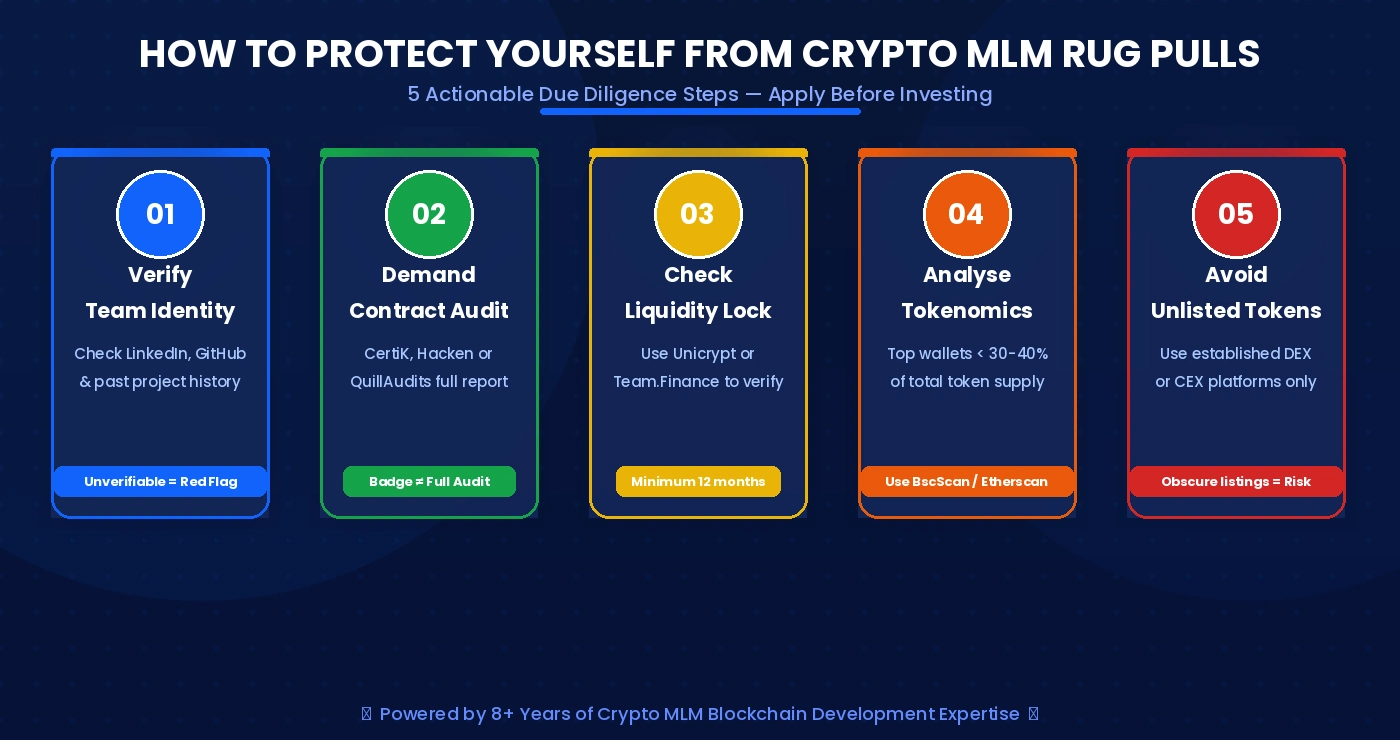
Fig 4: Five actionable steps to protect yourself before committing to any crypto MLM platform
Protecting yourself does not require deep technical expertise in every case. Most of the highest-value due diligence checks can be done in less than an hour using publicly available tools.
1. Research the Development Team. Search for each named founder on LinkedIn, GitHub, and Twitter. Check whether their stated work history is verifiable. Look for any connection to previous projects, especially failed ones. Use services like Crunchbase or AngelList to verify company registration claims. If the team is completely anonymous or if their profiles were created within the past few months, treat this as a serious risk signal.
2. Verify Smart Contract Audits. Ask for the audit report, not just the audit badge. Real audit reports from firms like CertiK, Hacken, or Solidproof are published documents that list every function, every identified issue, and the resolution status. A logo on a website with no linked report is a common deception tactic. If the project refuses to share the full report, walk away.
3. Check Token Liquidity Locks. Navigate to the project’s DEX page and find the liquidity pool address. Paste it into Unicrypt or DexTools to confirm whether the liquidity is locked and for how long. Locked liquidity does not eliminate all risk, but it eliminates the fastest and most common exit mechanism. A legitimate project will have this information publicly available and be happy to direct you to it.
4. Analyse Tokenomics and Wallet Distribution. Use a block explorer to check the top wallet holders for the project’s token. If the top 5 wallets hold more than 30-40% of the total supply, the token can be manipulated by a small group. Tools like BscScan’s “Token Holders” tab or Etherscan’s equivalent make this check straightforward. Our team routinely uses this as the first on-chain check on any project review.
5. Use Transparent, Secure Platforms. If you are looking to participate in a legitimate blockchain MLM network, the infrastructure matters as much as the promise. Choosing to work with an established, properly architected platform built by a team with a verifiable track record dramatically reduces exposure to these risks. This is not just advice for investors; it applies equally to entrepreneurs who want to launch a platform without building on a foundation that puts their own participants at risk.
Build a Fraud-Proof Crypto MLM Platform
Our team has over 8 years of hands-on experience building audited, transparent, and scalable cryptocurrency MLM software that investors can trust. We engineer platforms that eliminate backdoors, lock liquidity, and meet global compliance requirements from day one.
The Developer’s Responsibility: Building Crypto MLM Platforms That Cannot Be Rug-Pulled
The conversation about rug pulls is not only for investors. Developers and entrepreneurs who want to build legitimate crypto MLM businesses carry a significant responsibility to build in ways that make these attacks impossible, not just improbable.
Audited Smart Contracts as a Non-Negotiable. A professional-grade blockchain MLM platform should never launch without a completed third-party audit. The audit process identifies security vulnerabilities, checks for centralization risks, verifies token economic logic, and documents any upgrade mechanisms that could introduce future risk. At our development practice, every contract we deliver goes through an internal security review before it is submitted to a third-party auditor. Both reports are provided to the client and made available publicly as a trust signal.
Transparent Compensation Plan Architecture. A well-built crypto MLM platform should allow any participant to verify their earnings calculation on-chain. The compensation plan logic should be encoded in the smart contract, not managed off-chain through a centralized database that can be altered. When participants can trace every commission payment to its source on a block explorer, the trust equation changes entirely. This is one of the core design principles we apply when developing cryptocurrency MLM software for our clients.
Regulatory Compliance from Launch Day. Building a crypto MLM platform without considering the legal framework it will operate within is one of the most common developer mistakes we see. KYC/AML integration, jurisdiction-specific compliance, and proper legal structuring are not optional extras for a serious platform. They are table stakes in 2025. The European Union’s MiCA regulation and similar frameworks in the US, UK, and Southeast Asia all set clear expectations for crypto asset platforms that engage in structured referral programs.
Time-Locked Team Token Allocations. If the founding team holds tokens, those tokens should be subject to a vesting schedule enforced on-chain, not a promise in a whitepaper. A standard vesting arrangement might release 10% at launch and distribute the remainder over 24-36 months. When this schedule is hard-coded in the contract and visible to any investor, it removes the developer’s ability to dump holdings immediately after launch and provides a meaningful commitment signal to the community.
Developer Security Checklist for Crypto MLM Launch
| Security Requirement | Why It Matters | Priority |
|---|---|---|
| Third-Party Smart Contract Audit | Eliminates hidden backdoors and malicious functions | Critical |
| Liquidity Lock (12+ months) | Prevents instant liquidity withdrawal | Critical |
| Team Token Vesting (24-36 months) | Removes incentive for early sell-off | High |
| KYC/AML Integration | Regulatory compliance and fraud prevention | High |
| On-Chain Compensation Logic | Makes earnings verifiable and tamper-proof | Standard |
| Multi-Sig Treasury Wallet | No single developer controls all funds | Standard |
Conclusion: The Future of Trustworthy Crypto MLM
Rug pulls do not happen because blockchain technology is inherently unsafe. They happen because bad actors exploit the information gap between developers and investors, and because the absence of mandatory standards in early-stage crypto projects gave them room to operate. That room is getting smaller.
Regulators across the EU, US, UK, and Asia-Pacific are building frameworks that will require disclosure, auditing, and accountability from any project that asks the public to invest. Investors are becoming more sophisticated. Third-party security tools are making on-chain analysis accessible to non-technical users. The conditions that made rug pulls so devastatingly effective five years ago are eroding.
For investors, the message is straightforward: no promised return justifies skipping the basic due diligence outlined in this article. Verify the team, check the audit, confirm the liquidity lock, and examine the tokenomics. These four steps will not catch every scam, but they will filter out the vast majority of them.
For developers and entrepreneurs, the opportunity is real. There is genuine demand for blockchain MLM platforms that combine community-driven growth with real product utility, transparent compensation, and enterprise-grade security. The projects that will define this space in the next decade are being built with security-first architecture today. If you want to build something that participants can trust, start with the infrastructure that makes fraud structurally impossible.
Explore what a properly built platform looks like in our guide to blockchain MLM networks, and see the standards we apply in every client build at our cryptocurrency MLM software practice page.
Frequently Asked Questions
Q1.What is a rug pull in a crypto MLM project?
A rug pull in a crypto MLM project happens when developers suddenly withdraw all liquidity or dump their token allocation after attracting significant investor capital. The project shuts down, often overnight, and participants lose their funds with virtually no avenue for recovery.
Q2.How can I tell if a crypto MLM project is planning a rug pull?
Look for anonymous teams with no verifiable history, absence of published smart contract audits, unrealistic daily or weekly return promises, unlocked liquidity pools, and a compensation structure that rewards recruitment over product usage. Any one of these is a reason for caution; several of them together is a strong reason to walk away.
Q3.Are all crypto MLM projects scams?
No. There are legitimate blockchain MLM platforms built on audited smart contracts with transparent compensation plans and real product utility. The problem is that the MLM model is frequently misused to disguise fraudulent schemes, so thorough due diligence is essential before joining any platform.
Q4.What is the difference between a rug pull and a regular project failure?
A project failure results from poor decisions, market conditions, or bad execution, with the team making genuine attempts to build something. A rug pull is deliberate. The exit is planned from the start, and the marketing and fundraising are designed specifically to maximise the amount drained before disappearing.
Q5.Can smart contract audits prevent rug pulls?
Audits from firms like CertiK or Hacken significantly reduce the risk of hidden backdoors, unrestricted minting, and admin override functions. However, they do not guarantee safety if the team manipulates off-chain fund management or deploys new unaudited contracts after launch. An audit is a strong trust signal, but it should not be the only check you perform.
Q6.What should I do if I suspect a crypto MLM project is a rug pull?
Stop investing immediately. Do not recruit additional participants. Document all transaction records and wallet addresses. Report the project to relevant financial regulators such as the SEC, FCA, or your local authority. Share findings with the broader community on forums like Reddit or Bitcointalk to prevent further losses for others.
Explore Services
Related Services
Reviewed by

Aman Vaths
Founder of Nadcab Labs
Aman Vaths is the Founder & CTO of Nadcab Labs, a global digital engineering company delivering enterprise-grade solutions across AI, Web3, Blockchain, Big Data, Cloud, Cybersecurity, and Modern Application Development. With deep technical leadership and product innovation experience, Aman has positioned Nadcab Labs as one of the most advanced engineering companies driving the next era of intelligent, secure, and scalable software systems. Under his leadership, Nadcab Labs has built 2,000+ global projects across sectors including fintech, banking, healthcare, real estate, logistics, gaming, manufacturing, and next-generation DePIN networks. Aman’s strength lies in architecting high-performance systems, end-to-end platform engineering, and designing enterprise solutions that operate at global scale.