Ai Overview
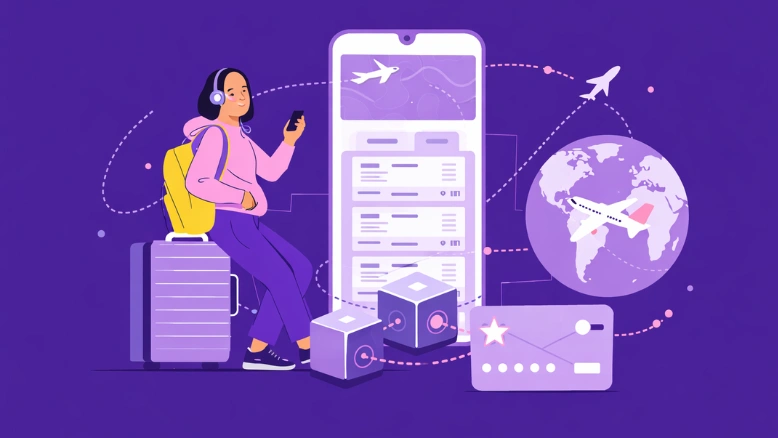
A travel experience management app is a mobile application that helps users handle every part of their trip through a single platform. Over 80% of travelers use mobile apps during their trips. 68% of travelers prefer using mobile apps for their booking needs, showing a clear preference for convenience over traditional methods. 67% of Gen Z travelers prefer apps over desktop platforms.
Key Takeaways
- The global travel app industry had a market size of over $1 trillion in 2024, with the accommodation sector alone accounting for nearly $500 billion of that total revenue.[1]
- The Global Mobile Travel App Market is valued at USD 29.97 billion in 2025 and is projected to reach USD 66.75 billion by 2032, growing at a CAGR of 12.2%.[2]
- More than 70% of travelers use at least one dedicated travel app when planning or managing a trip, and roughly 40% complete bookings exclusively on mobile devices.[3]
- A simple travel app with basic features costs between $30,000 and $50,000 to develop, while a full-featured app with AI personalization, payment gateways, and real-time updates can cost $50,000 to $200,000 or more.[4]
- Over 60% of travelers globally now use AI-powered tools for trip planning, and nearly one in four travelers in the US and Canada used generative AI for trip planning in early 2024.[5]
- 52% of hospitality and travel marketers are investing in AI-driven personalization by late 2025, making it one of the fastest-growing areas of travel app development.[6]
- The Travel Management Software Market was estimated at $10.05 billion in 2024 and is projected to grow from $10.96 billion in 2025 to $26.04 billion by 2035 at a CAGR of 9.04%.[7]
- Asia-Pacific leads travel app adoption with a 41% share, followed by North America at 32% and Europe at 21%, showing strong global demand for travel experience management mobile apps.[8]
Think about the last time you traveled. You probably used your phone to search for flights, compare hotel prices, check your itinerary, and find a good restaurant nearby. That is exactly what travel experience management apps are built for. These apps bring everything a traveler needs into one place so that the whole journey, from planning to coming back home, feels easy and enjoyable.
The demand for such apps is growing at a speed that is hard to ignore. Travel app revenues reached approximately $60 billion in 2024, with projections pointing toward $67 to $70 billion in 2025. Businesses that invest in mobile app development for travel experience management today are putting themselves ahead of a market that is only going to get bigger.
This blog breaks down what these apps are, what they should include, how much they cost to build, and what makes a good travel app development company worth trusting.
Travel Technology Solutions: Personalization, Automation & Experience
What Is a Travel Experience Management App?
A travel experience management app is a mobile application that helps users handle every part of their trip through a single platform. It is not just a booking tool. It manages itineraries, gives real-time travel updates, helps with navigation, tracks expenses, and even suggests local things to do based on where the user is.
The difference between a simple travel booking app and a full travel experience management app is depth. A booking app helps you buy a ticket. A travel experience management app walks with you through the entire journey, before you leave, while you are there, and even after you return.
Businesses that build these kinds of apps for their customers, whether they are travel agencies, hospitality companies, or tour operators, see much better customer retention because travelers do not need to switch between five different apps to manage one trip.
Why Travel Mobile App Development Matters Right Now
The numbers speak clearly. The global travel and tourism apps market was valued at USD 650.7 billion in 2024 and is expected to reach USD 3,552.7 billion by 2034, growing at a CAGR of 18.50%. That kind of growth does not happen in industries where the product does not matter. People are choosing apps over travel agents, desktop websites, and phone calls.
Here is what is pushing this shift:
1. Smartphones Are Now the Primary Travel Tool
As of 2024, there are over 6.8 billion smartphone users globally. People book flights, check in, navigate, and find restaurants all from their phones. Over 80% of travelers use mobile apps during their trips. If a travel business does not have a strong mobile presence, it is not reachable to most of its potential customers.
2. Travelers Want Everything in One Place
Switching between multiple apps to manage one trip is frustrating. A well-built travel experience app removes this frustration by putting flights, hotels, activities, maps, and updates all under one roof. 68% of travelers prefer using mobile apps for their booking needs, showing a clear preference for convenience over traditional methods.
3. Younger Travelers Have Different Expectations
67% of Gen Z travelers prefer apps over desktop platforms. They want faster responses, personalized suggestions, and apps that understand their travel style. Businesses that build travel apps designed for this audience are building loyalty with the generation that will dominate travel spending over the next two decades.
Core Features Every Travel Experience Management App Should Have
| Feature | What It Does | Why It Matters |
|---|---|---|
| Smart Itinerary Builder | Organizes flights, hotels, activities, and transport in one timeline | Reduces confusion, saves time, and keeps travelers on track |
| Real-Time Flight and Hotel Updates | Sends alerts for delays, gate changes, price drops, and check-in windows | Keeps travelers informed without them having to manually check |
| Offline Maps and Content | Let users access maps, itineraries, and booking details without internet | Critical for international travel, where data may not work |
| AI-Powered Recommendations | Suggests restaurants, activities, and spots based on user behavior and location | Makes the experience feel personal, not generic |
| In-App Booking System | Allows users to book flights, hotels, and experiences without leaving the app | Keeps users inside your platform and drives direct revenue |
| Multi-Currency Payment Support | Handles payments in different currencies with secure gateways | Removes friction for international travelers |
| Expense Tracking | Tracks spending by category during the trip | Very useful for both solo travelers and corporate travel teams |
| AR Navigation | Uses camera and location to show directions and points of interest in the real world | 59% of apps are now integrating AR or VR for a more immersive experience |
How AI Is Changing Travel Experience Management App Development
Artificial Intelligence is no longer a bonus feature in travel apps. It is quickly becoming the foundation of how good travel apps work. Over 62% of travel apps now use chatbots, and 59% integrate AR or VR for more engaging trip planning.
1. Personalized Trip Planning
AI looks at what a user has done in the past, where they usually travel, what kind of hotels they like, and how they spend their time during trips. Based on all of that, it gives suggestions that actually match what the person wants. This is very different from a simple search result that shows the most popular options without caring about individual taste.
2. Chatbot Travel Assistants
87% of consumers are comfortable communicating with virtual assistants for vacation planning. AI chatbots inside travel apps can resolve around 70% of user queries just as effectively as a human agent. They help users rebook missed connections, find nearby pharmacies, or change hotel check-in times, all without calling a helpline. They also reduce customer support costs for businesses by up to 40%.
3. Price Prediction
AI tools inside travel planning mobile apps can track price patterns for flights and hotels, and alert users when prices are likely to go up or when booking now would save money. This is one of the features that keeps users coming back to an app regularly, not just when they are actively planning a trip.
4. Generative AI for Itinerary Creation
Nearly one in four travelers in the US and Canada used generative AI for trip planning in early 2024. This trend has picked up speed since then. Modern travel itinerary apps are now using generative AI to create full day-by-day travel plans from just a few inputs like destination, travel dates, and budget.
AI-Powered Travel Recommendation Systems
Types of Travel Apps You Can Build
Not every travel business needs the same kind of app. Before you approach a travel app development company, it helps to know what type of app fits your use case best.
1. Travel Booking Apps
These focus on searching and reserving flights, hotels, and rental cars. They need strong API integrations with global distribution systems and a smooth payment experience. Booking.com, Expedia, and MakeMyTrip are well-known examples. Airbnb was the most downloaded travel app in 2024, with over 70 million app downloads.
2. Travel Itinerary Apps
These apps are built around organizing and presenting a traveler’s full schedule in one view. They pull in booking confirmations, add activity slots, and show the day-by-day plan clearly. They are highly useful for travel agencies that want to give clients a polished travel experience from a single screen.
3. Travel Experience Apps
These apps go beyond booking and planning. They help travelers discover local food spots, hidden attractions, guided tours, and cultural experiences based on where they are at that moment. They are a great fit for tourism boards and tour operators who want travelers to explore more deeply.
4. Mobile Travel Management Apps for Businesses
Corporations use these to manage employee travel. They handle approvals, track budgets, manage bookings within company policies, and generate reports. The Travel Management Software Market is expected to reach $26.04 billion by 2035, which shows strong corporate demand for this type of solution.
5. Custom Travel Apps
Built from scratch to match a specific brand or niche, custom travel app development is the right path for businesses that want complete control over features, design, and user experience. These apps are not template-based, so they can include exactly what the business and its users need without any unnecessary extras.
Travel App Development Cost Breakdown
| App Type | Estimated Cost | What It Includes | Build Time |
|---|---|---|---|
| Simple Travel App | $30,000 to $50,000 | Hotel or flight search, basic booking, simple UI, single platform | 3 to 6 months |
| Mid-Level Travel App | $50,000 to $100,000 | Real-time notifications, user reviews, maps, cross-platform support | 4 to 8 months |
| Full-Featured Travel Experience App | $100,000 to $200,000 | AI recommendations, multi-currency, full booking suite, social integration | 6 to 12 months |
| AI-Powered Custom Travel App | $150,000 to $300,000+ | AI personalization, AR navigation, extensive API integrations, enterprise backend | 9 months and above |
| AI Personalization Module | $4,000 to $10,000 (add-on) | Smart suggestions, behavioral learning, preference-based recommendations | Included in main timeline |
| Loyalty and Rewards System | $2,000 to $5,000 (add-on) | Points tracking, personalized offers, repeat booking incentives | Included in main timeline |
How to Choose the Right Travel App Development Company
Picking a travel app development company is one of the most important decisions you will make in this process. A bad choice can cost you time, money, and a product that does not work the way it should. Here is what to look for:
1. They Have Worked on Travel or Related Projects Before
Travel apps have specific needs like GDS integrations, real-time data feeds, and geo-based services. A team that has done this before will understand the technical challenges from day one, rather than learning them at your expense.
2. They Are Transparent About Pricing
A trustworthy travel mobile app development team will give you a detailed breakdown of costs by feature. They will not give you a vague total number and disappear. Look for teams that explain what each part of the build costs and why.
3. They Understand Both iOS and Android
Android holds over 45.7% of the travel and tourism apps market as of 2024. But iOS users tend to spend more. The right team should be able to build for both platforms without cutting corners on either one, or build a cross-platform solution that works well on both.
4. They Think About User Experience First
A travel experience app that looks cluttered or takes too many steps to complete a booking will not succeed no matter how many features it has. Look for a development team that talks about user flows, interface design, and usability testing as seriously as they talk about backend infrastructure.
5. They Have a Plan for Post-Launch Support
Your app is not done when it goes live. It needs updates, bug fixes, new features, and performance monitoring. A reliable travel app development company will offer an ongoing maintenance plan and be available after launch, not just until the handover.
Upcoming Trends in Travel Experience Management App Development
The travel app market changes fast. Businesses that keep their apps updated with the latest trends stay ahead. Here are the trends shaping travel mobile app development in the near future:
1. Super-App Strategy
Instead of one app for flights and another for hotels and another for things to do, many developers are building super-apps that cover all travel needs in one place. Trip.com saw over 50% more downloads in 2024, partly because travelers want fewer apps to manage. The super-app model is growing fast.
2. Sustainability Features
Travelers, especially younger ones, are paying more attention to their environmental impact. Travel experience apps are beginning to include carbon footprint tracking, eco-friendly accommodation filters, and travel certifications that show how green a trip option is.
3. Contactless and Biometric Travel
Digital check-ins, biometric verification, and mobile boarding passes are becoming standard expectations. Apps that support these features reduce friction at airports and hotels, which directly improves traveler satisfaction scores.
4. In-App Loyalty Programs
Loyalty programs built directly into travel apps encourage users to keep coming back to the same platform. When a traveler knows they are earning points toward a free night every time they book through your app, they have a strong reason not to go to a competitor. Adding a loyalty and rewards system costs roughly $2,000 to $5,000 on top of the base build but delivers long-term returns.
5. Voice Search and Commands
Travelers are increasingly using voice to interact with apps, especially while on the move. “Find me a hotel near central station under $100 per night” is the kind of query voice-enabled travel apps need to handle accurately. This is a growing development priority for travel planning mobile apps in 2025 and beyond.
Blockchain in Travel Booking & Loyalty
Build Your Travel Experience Management App Today:
We bring deep expertise in travel mobile app development to every project we take on. Our team handles everything from itinerary builders and real-time booking systems to AI-powered personalization and offline functionality. Whether you need a travel planning mobile app for your agency, a mobile travel management app for your corporate clients, or a fully custom travel experience platform, we build solutions that travelers actually enjoy using.
Final Thoughts
Travel is one of the most experience-driven industries in the world. People remember their trips for years, and the tools they use during those trips become part of the memory. A well-built travel experience management app is not just a utility. It is part of the journey itself.
The market data is clear. Travel app revenues are growing, AI adoption in travel is accelerating, and travelers across every age group are making mobile apps their first point of contact for everything from finding a flight to discovering a hidden restaurant in a new city. Businesses that build smart, user-first travel apps right now are setting themselves up to lead their segment for years ahead.
Whether you are starting from scratch or upgrading an existing product, the right approach is to work with a travel app development company that understands not just code but the way people actually travel. That combination of technical skill and real-world understanding is what separates apps that get deleted in a week from apps that people open every single trip.
Frequently Asked Questions
Q1.What is a travel experience management app?
A travel experience management app is a mobile application that helps users plan, organize, and manage every part of a trip in one place. It goes beyond just booking flights or hotels. It handles itineraries, gives real-time updates, provides navigation, tracks expenses, and suggests local activities based on the user’s preferences and current location.
Q2.How much does it cost to build a travel mobile app?
The cost depends on the type and complexity of the app. A simple travel app with basic booking features costs between $30,000 and $50,000. A mid-level app with real-time updates, maps, and reviews ranges from $50,000 to $100,000. A full-featured travel experience app with AI personalization and multi-currency support can cost $100,000 to $200,000 or more.
Q3.How long does travel app development take?
Build time varies with complexity. Basic apps take 3 to 6 months. Mid-level apps typically take 4 to 8 months. Advanced apps with AI features, extensive API integrations, and AR navigation can take 9 months or longer. Having a clearly defined feature list before development starts helps keep timelines on track.
Q4.What features should a travel itinerary app include?
A travel itinerary app should include a central booking dashboard that pulls together flights, hotels, activities, and transport. It should also have offline access so users can view their plans without internet, real-time alerts for delays or changes, and personalized suggestions based on location and preferences. Expense tracking and in-app maps are also highly valued by users.
Q5.Why should I choose custom travel app development over a ready-made solution?
Ready-made solutions come with fixed features that may not match what your users need or what your brand requires. Custom travel app development gives you full control over the user experience, the feature set, and how the app grows over time. It also allows you to integrate with the specific booking platforms, payment gateways, and third-party services that your business actually uses.
Q6.How does AI improve a travel experience management app?
AI improves travel apps in several practical ways. It personalizes recommendations based on past behavior and stated preferences, powers chatbots that resolve most user queries without human support, predicts price fluctuations so users know when to book, and generates full itineraries from simple inputs like destination and budget. Over 60% of travelers globally now use AI-powered tools for trip planning, which shows how much user expectations have shifted.
Explore Services
Related Services
Reviewed by

Aman Vaths
Founder of Nadcab Labs
Aman Vaths is the Founder & CTO of Nadcab Labs, a global digital engineering company delivering enterprise-grade solutions across AI, Web3, Blockchain, Big Data, Cloud, Cybersecurity, and Modern Application Development. With deep technical leadership and product innovation experience, Aman has positioned Nadcab Labs as one of the most advanced engineering companies driving the next era of intelligent, secure, and scalable software systems. Under his leadership, Nadcab Labs has built 2,000+ global projects across sectors including fintech, banking, healthcare, real estate, logistics, gaming, manufacturing, and next-generation DePIN networks. Aman’s strength lies in architecting high-performance systems, end-to-end platform engineering, and designing enterprise solutions that operate at global scale.