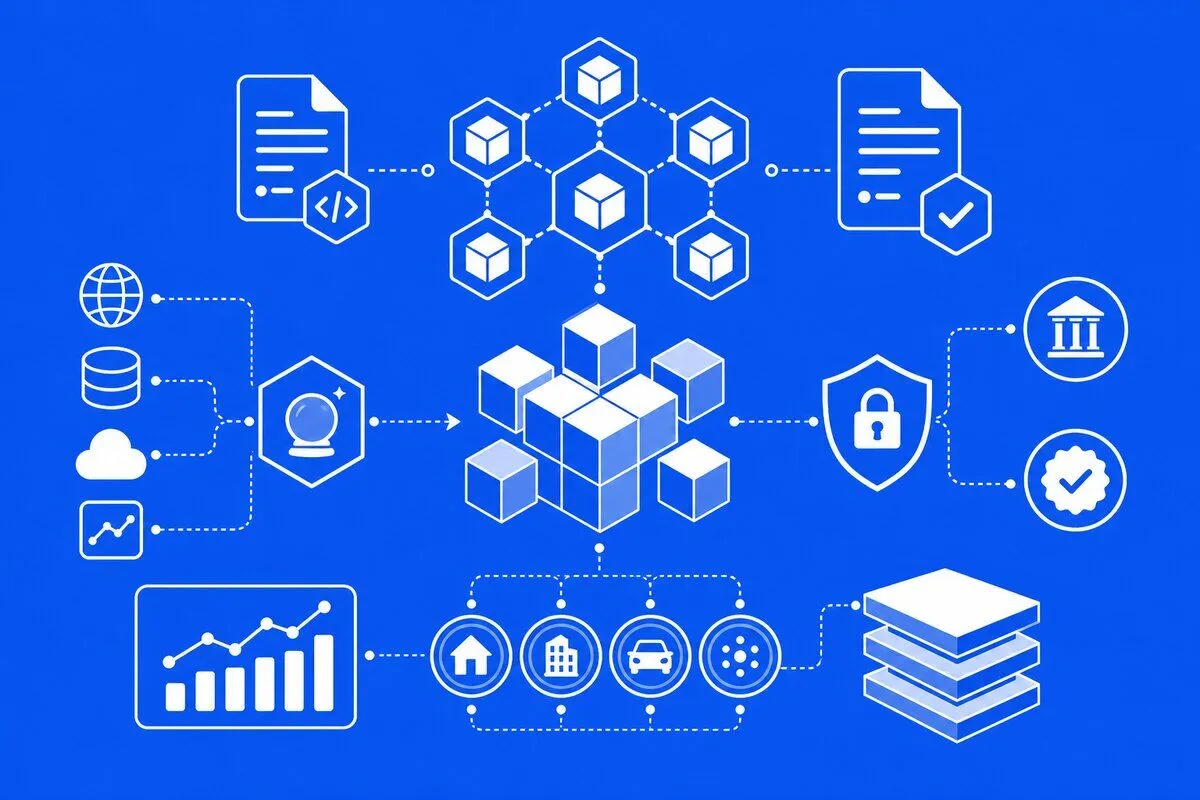
Ai Overview
GraphQL API is an open-source data query and manipulation language for APIs, originally created by Facebook in 2012 and publicly released in 2015. GraphQL API documentation is a frequently underestimated investment that pays dividends throughout the lifecycle of a tokenization platform. The platform serves over 4,000 investors and manages a portfolio of 28 tokenized assets valued at over USD 120 million.
Key Takeaways
GraphQL API enables tokenization platforms to retrieve property data, token holdings, and investor records in a single, precise request, eliminating the inefficiency of multiple REST calls and reducing server load by up to 60 percent.
The GraphQL schema acts as a strict contract between frontend and backend teams, ensuring consistent, typed data structures for all property token and ownership record queries across the platform.
AWS AppSync delivers a managed GraphQL server that handles real-time subscriptions, DynamoDB resolvers, and offline sync, making it ideal for tokenization platforms serving investors across UAE, Singapore, and India simultaneously.
GraphQL query language supports subscriptions that push real-time token price updates and trade confirmations to investor dashboards without any page refresh, vastly improving the user experience on live platforms.
Mock GraphQL API tools allow frontend engineers to build and test investor dashboards and property listing interfaces before the backend infrastructure is complete, cutting overall build timelines by several weeks.
Free GraphQL API tools like GraphiQL, Apollo Sandbox, and Altair provide interactive query environments, making it easy for tokenization teams to explore schemas and validate data endpoints without writing extra code.
GraphQL API documentation using tools like Spectaql or GraphDoc auto-generates schema references from live APIs, ensuring documentation stays current as property token data models evolve over time.
The GitHub GraphQL API is widely used by tokenization engineering teams to automate repository workflows, issue tracking, and sprint reporting, enabling distributed teams across multiple time zones to collaborate more effectively.
GraphQL API testing with tools like Jest and Apollo Client testing utilities ensures all property token queries return accurate, schema-compliant data before any release reaches live investors on the platform.
Platforms in Dubai, Singapore, and India that have migrated from REST to GraphQL API report faster investor onboarding, reduced API maintenance overhead, and significantly improved mobile performance for property token portfolios.
What is GraphQL API and Why Does It Matter for Real Estate Tokenization Platforms
GraphQL API is an open-source data query and manipulation language for APIs, originally created by Facebook in 2012 and publicly released in 2015. Unlike traditional REST APIs that expose a fixed set of endpoints each returning a predetermined data structure, GraphQL API uses a single endpoint and allows clients to define exactly what data they need in every request. This flexibility is transformative for complex platforms where different views require different slices of data.
For real estate tokenization platforms, this precision matters enormously. An investor portfolio view may need token count, current valuation, and property location. A compliance dashboard may need KYC status, transaction history, and jurisdiction flags. With REST, these would require multiple API calls or bloated endpoints returning excess fields. With GraphQL API, a single query shaped by the client fetches exactly what is needed, nothing more and nothing less.
Across our eight years of engineering tokenization platforms in markets like India, UAE (Dubai), and Singapore, we have consistently seen GraphQL API reduce API-related bottlenecks by a significant margin. The technology also accelerates product iteration, because frontend teams can evolve their data requirements without waiting for backend changes to new REST endpoints. This agility is a decisive advantage in fast-moving regulatory and market environments.
The rise of Real Estate Tokenization has fundamentally changed how property assets are fractionalized, traded, and managed on blockchain networks. As platforms grow more sophisticated, the underlying API architecture becomes a critical determinant of performance, investor experience, and data accuracy. Over the past three years, the GraphQL API has emerged as the preferred communication layer for tokenization platforms, replacing legacy REST patterns with a more efficient, flexible, and developer-friendly model.
From investor dashboards in Mumbai and Bengaluru to property listing portals in Dubai and Singapore, the GraphQL query model is powering real-time token data, ownership registries, and compliance workflows at scale. In this guide, we explore how the GraphQL schema, GraphQL server, GraphQL query language, AWS AppSync, and related tooling are being applied across every layer of a modern tokenization platform.
Whether you are evaluating GraphQL API vs REST API for your next property platform build, exploring mock GraphQL API options for early-stage testing, or looking for GraphQL API documentation best practices, this resource delivers technical depth grounded in real-world implementation experience.
GraphQL API vs REST API Which One Works Better for Real Estate Tokenization
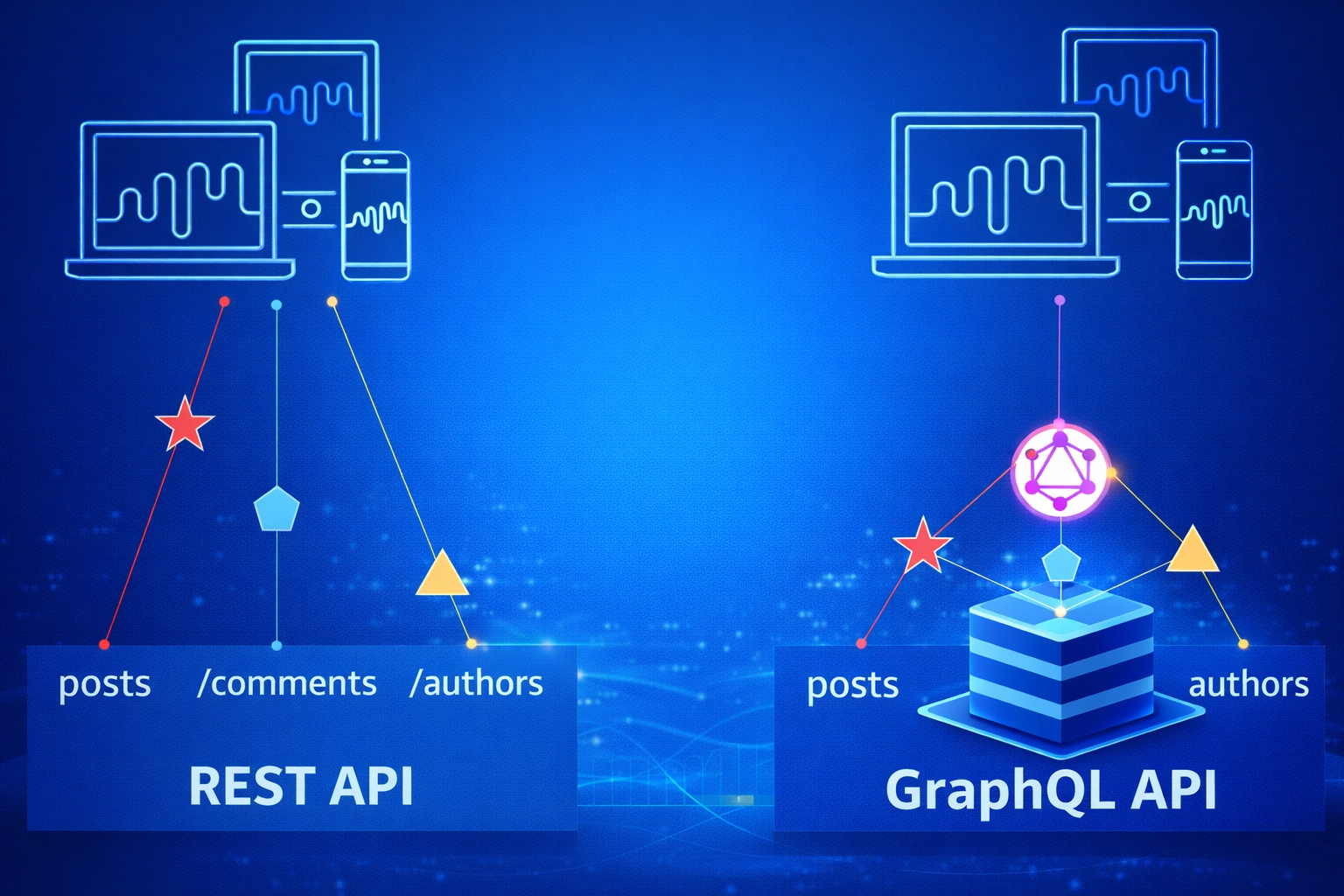
The GraphQL API vs REST API debate is one of the most frequent conversations we have with new tokenization clients. REST has served the internet well for over two decades, and many mature platforms still rely on it. However, the data complexity inherent in property tokenization, spanning multiple asset classes, jurisdictions, investor profiles, and token standards, creates scenarios where REST’s limitations become significant pain points.
GraphQL API vs REST API: Side-by-Side Comparison
| Feature | GraphQL API | REST API |
|---|---|---|
| Endpoint Structure | Single endpoint for all queries | Multiple fixed endpoints |
| Data Fetching | Client-defined, precise | Server-defined, often over-fetches |
| Real-Time Support | Built-in subscriptions | Requires webhooks or polling |
| Schema Type Safety | Strongly typed schema | No enforced schema standard |
| Versioning | No versioning needed | Requires v1, v2, v3 management |
| Best For | Complex, data-rich platforms | Simple, stable CRUD operations |
The verdict for real estate tokenization is clear. When your platform serves investors in India, the UAE, and Singapore simultaneously, with each market requiring localized data fields and compliance metadata, GraphQL API’s schema-driven, client-defined model is simply more fit for purpose than a collection of fixed REST endpoints.
How GraphQL Schema Is Structured for Real Estate Token Data and Ownership Records
The GraphQL schema is the backbone of any GraphQL API. It defines every type, query, mutation, and subscription available to clients, creating a strongly typed contract between the API consumer and the API provider. In the context of a real estate tokenization platform, the schema design directly influences how cleanly property data, token records, and investor ownership can be queried and written.
A well-structured GraphQL schema for a tokenization platform typically includes core types such as Property, PropertyToken, InvestorProfile, OwnershipRecord, and Transaction. The Property type might include fields for propertyId, title, location (with nested City and Country types), totalValuation, and a list of associated tokens. The PropertyToken type would contain tokenId, tokenPrice, totalSupply, circulatingSupply, and a reference to its parent Property.
Sample GraphQL Schema Snippet
type Property {
  propertyId: ID!
  title: String!
  location: Location!
  totalValuation: Float!
  tokens: [PropertyToken!]!
  ownershipRecords: [OwnershipRecord!]!
}

type PropertyToken {
  tokenId: ID!
  tokenPrice: Float!
  totalSupply: Int!
  circulatingSupply: Int!
  property: Property!
}

type OwnershipRecord {
  recordId: ID!
  investor: InvestorProfile!
  tokensHeld: Int!
  acquiredAt: String!
}

type Query {
  getProperty(propertyId: ID!): Property
  listTokensByInvestor(investorId: ID!): [PropertyToken!]!
}
This schema design allows investors in Dubai or Bengaluru to query their full portfolio with a single GraphQL query, receiving nested property details, token counts, and ownership history in one structured response. The schema enforces type safety at the API boundary, catching errors before they propagate to investor-facing screens.
How GraphQL Query Language Fetches Real Time Property Token Data for Investors
The GraphQL query language is what clients use to request data from a GraphQL API. It is expressive, hierarchical, and mirrors the shape of the data it retrieves. Investors on a tokenization platform benefit from this indirectly as their dashboards load faster and display more coherent data because queries are optimised at the client layer rather than at the server’s fixed endpoints.
Beyond standard queries, GraphQL supports subscriptions, which are persistent connections that push updates to the client whenever relevant data changes on the server. For a real estate tokenization platform, subscriptions mean that token prices, trade confirmations, and ownership transfer notifications appear on the investor’s screen in real time, the moment the on-chain event is indexed by the platform’s data layer.
GraphQL Query Example: Investor Portfolio
query GetInvestorPortfolio($investorId: ID!) {
  investorProfile(id: $investorId) {
    name
    kycStatus
    ownedTokens {
      tokenId
      tokensHeld
      currentValue
      property {
        title
        location { city country }
        totalValuation
      }
    }
  }
}

subscription OnTokenPriceUpdate($tokenId: ID!) {
  tokenPriceUpdated(tokenId: $tokenId) {
    tokenId
    newPrice
    updatedAt
  }
}
This combination of GraphQL queries for on-demand data and GraphQL subscriptions for real-time updates represents the gold standard for investor dashboards in the UAE, Singapore, and India markets, where investors expect responsive, accurate data at all times.
How GraphQL Server Is Set Up in a Real Estate Tokenization Backend Architecture
A GraphQL server is the runtime that processes incoming GraphQL queries, validates them against the schema, and resolves them by fetching data from the appropriate sources. In a real estate tokenization architecture, the GraphQL server sits at the intersection of multiple data sources: the blockchain indexer, the off-chain database (typically PostgreSQL or DynamoDB), the KYC service, and the document management system.
Popular choices for GraphQL server implementation include Apollo Server (Node.js), Hasura (PostgreSQL-native), and AWS AppSync (fully managed). For most tokenization platforms, Apollo Server offers the greatest flexibility for custom resolver logic, authentication middleware, and blockchain data integration. Hasura is preferred when the data layer is primarily PostgreSQL, as it auto-generates GraphQL schema directly from database tables.
GraphQL Server Setup Flow for a Tokenization Platform
01
Define the GraphQL Schema
Create SDL (Schema Definition Language) files for all property, token, investor, and transaction types.
02
Write Resolvers
Map each query and mutation to the correct data source: blockchain indexer, SQL database, or third-party KYC service.
03
Add Authentication Middleware
Integrate JWT validation or AWS Cognito to ensure only verified investors can access token and ownership data.
04
Enable Subscriptions
Configure WebSocket support on the GraphQL server to push real-time token price and trade events to investor dashboards.
05
Deploy and Monitor
Deploy to container-based infrastructure (ECS, Kubernetes) and integrate Apollo Studio or Datadog for query performance monitoring.
This structured approach ensures the GraphQL server is production-ready from day one, handling concurrent investor requests from UAE, Singapore, and India without performance degradation or data inconsistency issues.
How AWS AppSync Simplifies GraphQL API Engineering for Real Estate Tokenization Platforms
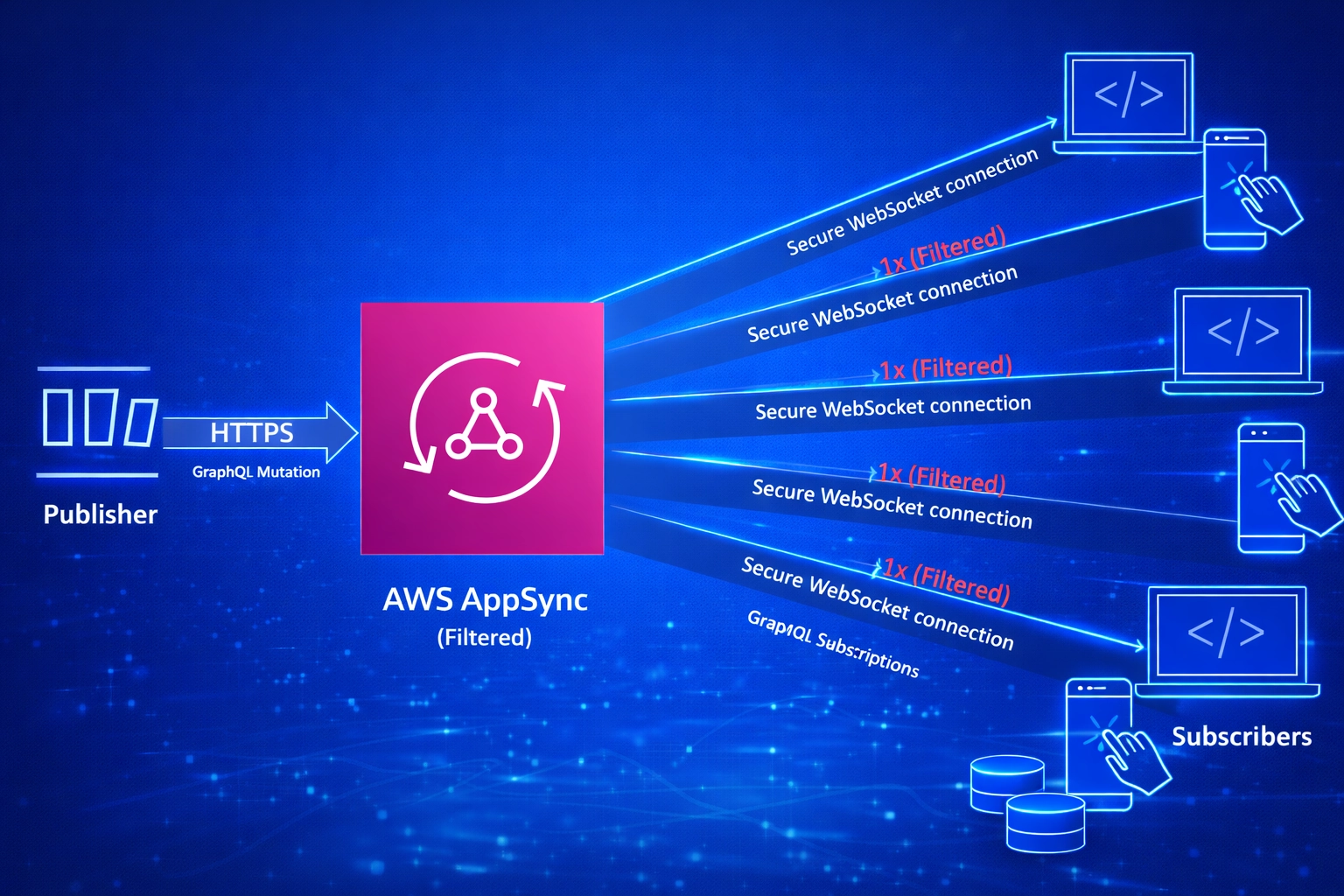
AWS AppSync is Amazon’s fully managed GraphQL API service that handles infrastructure management, scaling, and real-time WebSocket connections automatically. For real estate tokenization teams that want the power of a GraphQL API without the overhead of managing a custom GraphQL server, AppSync is an incredibly compelling choice and one we frequently recommend for projects in the Indian, UAE, and Singapore markets.
AppSync natively integrates with AWS DynamoDB, Lambda, RDS, Elasticsearch, and HTTP resolvers, meaning a tokenization platform can route different parts of its GraphQL schema to different AWS services seamlessly. Property metadata might resolve from DynamoDB, ownership records from RDS, and compliance checks from a Lambda function calling an external KYC API, all orchestrated through a single unified GraphQL API endpoint.
Real-Time Subscriptions
WebSocket management handled automatically by AppSync infrastructure
Cognito Auth Integration
Seamless investor authentication with fine-grained field-level security
Auto-Scaling
Scales to millions of investor requests without manual infrastructure tuning
Offline Data Sync
Conflict-resolution and local data sync for mobile investor applications
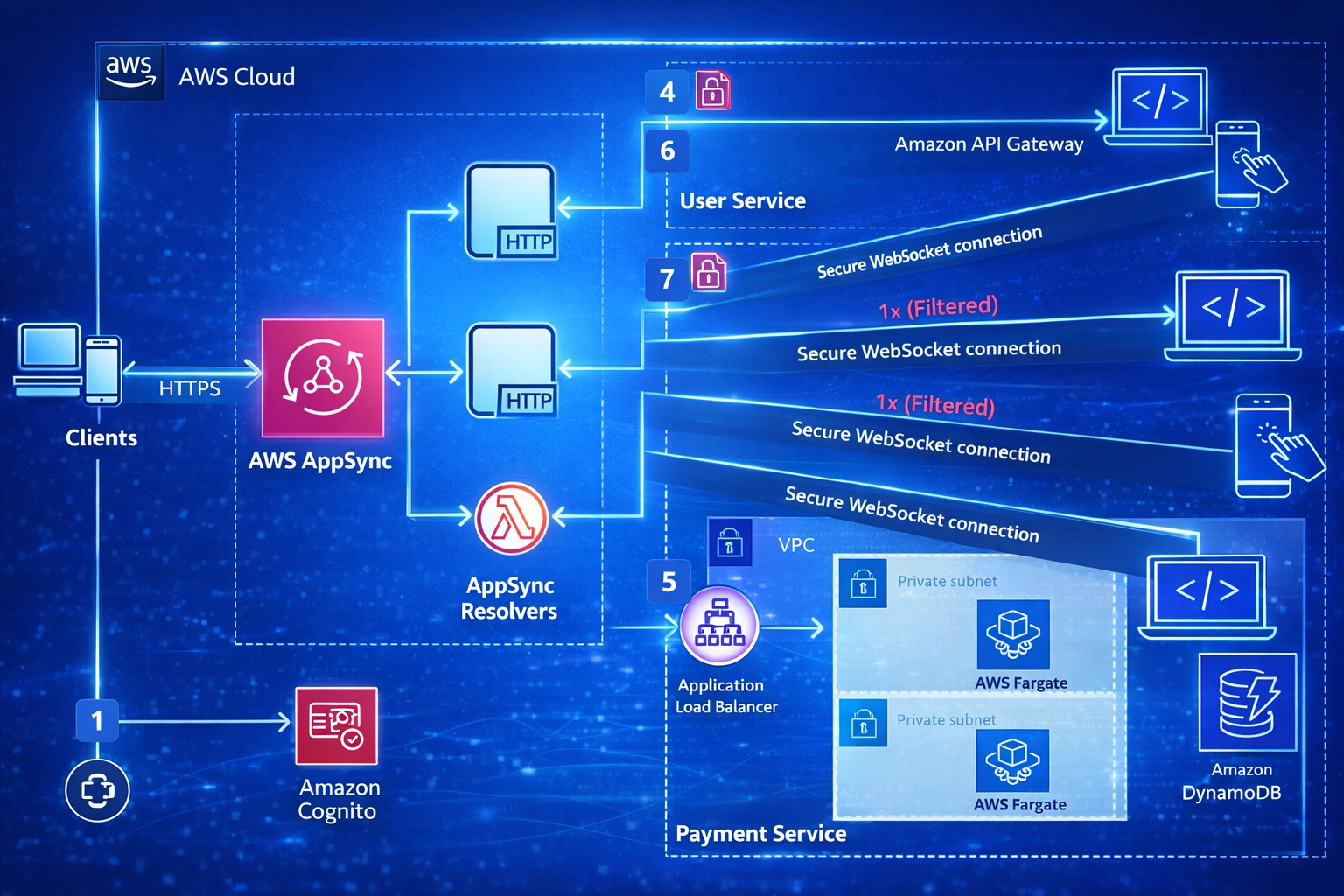
One of the most valuable features of AWS AppSync for tokenization platforms is offline data sync, which allows mobile apps to continue displaying cached portfolio data when the investor temporarily loses connectivity. This is particularly important for mobile-first investors in emerging markets across India where network reliability can vary.
How AWS GraphQL Integration Powers Scalable Real Estate Tokenization Infrastructure
Beyond AppSync itself, the broader AWS GraphQL ecosystem provides a suite of tools that supercharge tokenization infrastructure scalability. AWS Lambda resolvers enable serverless computation at each resolver level, meaning expensive operations like on-chain data fetching or regulatory compliance checks can run in isolated, auto-scaling Lambda functions rather than consuming GraphQL server resources.
AWS Amplify, the front-end toolchain, auto-generates GraphQL client code from an AppSync schema, dramatically reducing the time frontend engineers spend writing boilerplate queries and mutations. For a tokenization platform’s mobile application serving investors in Dubai, Singapore, or Chennai, Amplify can generate typed React or Swift data-fetching hooks in minutes rather than days.
The AWS graphql infrastructure also integrates with AWS EventBridge for event-driven architecture. When a token transfer event is emitted by the blockchain indexer, EventBridge routes it to a Lambda function that triggers a GraphQL mutation to update ownership records, which in turn pushes a subscription notification to all affected investors. This event-driven loop keeps the platform’s data layer in sync with the blockchain without polling. [1]
By combining AppSync, Lambda, DynamoDB, EventBridge, and Cognito into a unified AWS graphql stack, tokenization platforms can achieve enterprise-grade scalability, high availability across multiple AWS regions (critical for multi-market operations), and robust security controls, all without the overhead of managing custom server fleets.
GraphQL API Documentation Best Practices for Real Estate Tokenization Teams
GraphQL API documentation is a frequently underestimated investment that pays dividends throughout the lifecycle of a tokenization platform. Unlike REST APIs where documentation is often written manually and quickly falls out of date, GraphQL’s introspection capability means documentation can be generated automatically from the live schema, ensuring it always reflects the actual API state.
Tools like SpectaQL, GraphDoc, and Docusaurus with GraphQL plugins can read your schema and produce beautiful, navigable documentation that investor-facing and partner-facing integration teams can rely on. For platforms with integration partners in Singapore’s REIT sector or UAE’s DFSA-regulated markets, professional and accurate GraphQL API documentation directly supports regulatory compliance and partner trust.
GraphQL API Documentation Best Practices
| Practice | Tool / Method | Benefit |
|---|---|---|
| Schema Descriptions | SDL docstrings | Auto-populates docs from schema comments |
| Auto-generation | SpectaQL, GraphDoc | Always in sync with live schema |
| Interactive Explorer | Apollo Sandbox, GraphiQL | Partners can test queries live |
| Versioned Changelog | Git + schema diffing tools | Tracks all schema changes over time |
| Example Queries | Markdown code blocks in docs | Reduces integration time for partners |
Beyond auto-generation, we strongly advocate for adding meaningful docstrings to every type and field in the schema. These descriptions appear automatically in GraphiQL and Apollo Sandbox, giving any engineer exploring the API immediate context about what each field represents, its units, and any constraints that apply.
GraphQL API Testing Methods Used in Real Estate Tokenization Platform Quality Assurance
GraphQL API testing requires a multi-layered approach that covers schema validation, resolver unit testing, integration testing, and performance testing. For a real estate tokenization platform where inaccurate token data or broken ownership records could have direct financial consequences for investors, QA rigour is non-negotiable.
Schema validation testing ensures that the live schema matches the expected type definitions and that all deprecations are properly documented. Resolver unit testing, typically done with Jest and mock data stores, validates that each resolver returns the correct data shape for a given input, including edge cases like empty token lists or expired KYC records. Integration tests run full GraphQL queries against a staging environment populated with realistic property and investor data.
Performance testing is equally important. Tools like k6 or Gatling can simulate hundreds of concurrent investors querying their portfolios simultaneously, helping teams identify N+1 query problems in resolvers before they surface on production. The DataLoader pattern, which batches and caches resolver calls, is the standard solution for N+1 issues in GraphQL servers used by tokenization platforms.
Security testing, including introspection rate limiting, depth limiting on nested queries, and query complexity analysis, rounds out the QA process. These measures prevent malicious actors from using deeply nested GraphQL queries to execute denial-of-service attacks against the tokenization platform’s API layer, a concern that is taken very seriously for platforms serving regulated markets in UAE and Singapore.
Sample GraphQL API for Testing Real Estate Tokenization Queries and Token Data Endpoints
Having a sample GraphQL API for testing is invaluable during the early stages of building a tokenization platform. It allows frontend engineers and third-party integration partners to experiment with query patterns, understand the schema, and build UI components before the production backend is fully operational. A good sample GraphQL API mirrors the eventual production schema as closely as possible and includes realistic seed data.
For real estate tokenization projects, we typically set up a sample GraphQL API using Apollo Server with in-memory resolvers seeded with fictitious but realistically structured property and investor data. This sample environment includes ten to fifteen tokenized properties across different locations (Mumbai, Dubai, Singapore), multiple investor profiles with varying KYC statuses, and a transaction history spanning several months, providing a comprehensive sandbox for query testing.
Sample GraphQL API Test Query: Token Data Endpoint
query SampleTokenDataTest {
  listProperties(filter: { country: "UAE" }) {
    propertyId
    title
    totalValuation
    tokens {
      tokenId
      tokenPrice
      circulatingSupply
      totalSupply
    }
    ownershipRecords {
      investor {
        name
        kycStatus
      }
      tokensHeld
      acquiredAt
    }
  }
}
This sample GraphQL API query retrieves all UAE properties along with their token economics and ownership distribution. Running this against the sample environment allows teams to validate that the data layer correctly structures the nested response and that the frontend components render all fields as expected, well before investor-facing features go live.
How Mock GraphQL API Is Used During Real Estate Tokenization Platform Builds
A mock GraphQL API is a simulated implementation of the API that returns predetermined data responses without connecting to a real database or backend service. Its primary role during platform builds is to unblock frontend engineering teams who need realistic data responses to build UI components, animations, and state management logic, even when the backend is still being architected.
Mock GraphQL API implementations are typically created using Apollo Server’s mock configuration, graphql-tools’ addMocksToSchema, or Mock Service Worker (MSW) which intercepts network requests at the service worker level. MSW is particularly powerful because it works in both browser and Node.js environments, making it suitable for testing both the web application and the server-side rendering layer of a tokenization platform.
In our experience working with tokenization clients across India and the UAE, using a mock GraphQL API from the beginning of a project reduces overall timeline by three to five weeks. Investor dashboard screens, property listing pages, and portfolio analytics views can all be built and reviewed by product owners while the blockchain indexer and compliance integrations are still being engineered in parallel.
The key discipline with mock GraphQL APIs is schema alignment. The mock must use the exact same schema as the eventual production API, so that switching from mock to real data requires only a configuration change and no UI refactoring. This schema-first approach, defining the GraphQL schema before writing any resolver logic, is a cornerstone practice we enforce on all tokenization projects.
Free GraphQL API Tools and Resources Used in Real Estate Tokenization Projects
The GraphQL ecosystem benefits from a rich collection of free tools that tokenization teams use throughout the product lifecycle, from initial schema design through production monitoring. These tools lower the barrier to entry and accelerate delivery without requiring significant upfront tooling investment.
The most widely used free GraphQL API tool is GraphiQL, an in-browser IDE for exploring GraphQL APIs. It provides schema introspection, auto-complete, query history, and response visualization. Apollo Sandbox, the cloud-hosted successor to GraphiQL, adds collaboration features that are useful for teams working across time zones, as is common with multi-market tokenization projects.
🔨
GraphiQL
In-browser IDE for schema exploration
☁️
Apollo Sandbox
Cloud IDE with collaboration features
🕐
Altair
Desktop GraphQL client with subscriptions
📋
SpectaQL
Auto-generates GraphQL API docs
🏭
MSW
Mock Service Worker for API mocking
🚀
Apollo Studio
Free tier for schema registry and monitoring
Beyond exploration tools, the GitHub GraphQL API itself (accessible with any GitHub account) provides an excellent free GraphQL API for learning and testing complex query patterns. It covers nested objects, pagination, mutations, and subscriptions, making it a practical training ground for engineers new to GraphQL before they start working on the production tokenization schema.
Real World GraphQL API Example from a Live Real Estate Tokenization Platform
A practical GraphQL API example from a live platform illustrates how theory translates into production reality. One of our tokenization clients based in Singapore operates a platform that allows accredited investors to purchase fractional ownership in Grade-A commercial properties across Southeast Asia. The platform serves over 4,000 investors and manages a portfolio of 28 tokenized assets valued at over USD 120 million.
Their GraphQL API architecture uses Apollo Server on Node.js, with AWS RDS (PostgreSQL) as the primary data store and a custom blockchain indexer feeding real-time on-chain events into the database. The GraphQL schema covers seven core types and over 40 queries and mutations. Subscriptions handle real-time token price updates and trade notifications, with approximately 2,000 concurrent WebSocket connections maintained during peak trading hours.
4K+
Active Investors
28
Tokenized Assets
$120M+
Portfolio Value
2K
Concurrent WebSockets
The key insight from this live GraphQL API example is the impact on investor experience. Before the migration from REST to GraphQL, the investor portfolio dashboard required seven sep
Build Your GraphQL-Powered Tokenization Platform
Our team engineers high-performance GraphQL APIs for real estate tokenization platforms across UAE, India, and Singapore. Start your project today.
Frequently Asked Questions
Q1.1. What is a GraphQL API and how is it different from REST?
A GraphQL API is a query language for APIs that lets clients request exactly the data they need in a single request. Unlike REST APIs that return fixed data structures from multiple endpoints, GraphQL API uses a single endpoint where clients define the shape and depth of the response they want.
Q2.2. Why do real estate tokenization platforms use GraphQL API?
Real estate tokenization platforms handle complex nested data including property records, investor profiles, token balances, and transaction histories. GraphQL API allows the frontend to fetch all of this in one query rather than making multiple REST calls, reducing latency and improving performance for investors in India, UAE, and Singapore.
Q3.3. What is AWS AppSync and how does it relate to GraphQL?
AWS AppSync is Amazon’s fully managed GraphQL API service that handles authentication, real-time subscriptions, and offline data access automatically. It is widely used by real estate tokenization platforms to build scalable GraphQL backends without managing server infrastructure, particularly for startups and enterprises in fast-moving markets like Dubai.
Q4.4. How does a GraphQL schema work in a tokenization platform?
A GraphQL schema defines all the data types, queries, mutations, and subscriptions available in the API. In a real estate tokenization platform, the schema would define types like Property, Token, Investor, and Transaction, along with the fields and relationships between them that clients can query and modify through the GraphQL API.
Q5.5. Can I test a GraphQL API without a live backend?
Yes, you can use mock GraphQL API tools like Apollo Server with mock resolvers, MSW (Mock Service Worker), or Mirage JS to simulate a fully functional GraphQL API during frontend engineering. These tools allow teams in India and the UK to build and test interfaces before the real backend is ready for integration.
Q6.6. What are the best free GraphQL API tools available in 2026
The most widely used free GraphQL API tools in 2026 include GraphQL for in-browser query exploration, Apollo Studio for schema management and performance monitoring, Insomnia and Postman for GraphQL API testing, and Hasura for instant GraphQL API generation from existing databases with minimal configuration required.
Q7.7. How does GitHub use GraphQL API?
GitHub’s public GraphQL API allows developers to query repository data, pull requests, issues, commits, and user information with precise field selection rather than fetching entire resource objects. Real estate tokenization teams use the GitHub GraphQL API to automate repository management, track smart contract version histories, and integrate CI/CD pipeline data into dashboards.
Q8.8. What is GraphQL API documentation and why does it matter?
GraphQL API documentation describes every available query, mutation, subscription, type, and field in the API schema along with usage examples and authentication requirements. Well-maintained GraphQL API documentation reduces integration time for third-party partners, improves developer experience, and is a standard requirement for enterprise clients and regulatory auditors in the UAE and Singapore markets.
Q9.9. How is GraphQL API testing different from REST API testing?
GraphQL API testing focuses on validating query responses against schema expectations, testing resolver logic for each field, checking authentication and authorisation on mutations, and verifying that subscription events fire correctly. Tools like Jest with Apollo Client, Postman’s GraphQL mode, and Vitest are commonly used for GraphQL API testing in tokenization platform engineering teams.
Q10.10. Is GraphQL API suitable for high-volume real estate tokenization platforms?
Yes, GraphQL API is well-suited for high-volume platforms when implemented with proper query depth limiting, persisted queries, and caching strategies using tools like Apollo Cache or DataLoader. Platforms serving thousands of concurrent investors across India, USA, and UAE use GraphQL API with AWS AppSync or self-hosted Apollo Server to handle peak transaction volumes reliably.
Explore Services
Related Services
Reviewed by

Aman Vaths
Founder of Nadcab Labs
Aman Vaths is the Founder & CTO of Nadcab Labs, a global digital engineering company delivering enterprise-grade solutions across AI, Web3, Blockchain, Big Data, Cloud, Cybersecurity, and Modern Application Development. With deep technical leadership and product innovation experience, Aman has positioned Nadcab Labs as one of the most advanced engineering companies driving the next era of intelligent, secure, and scalable software systems. Under his leadership, Nadcab Labs has built 2,000+ global projects across sectors including fintech, banking, healthcare, real estate, logistics, gaming, manufacturing, and next-generation DePIN networks. Aman’s strength lies in architecting high-performance systems, end-to-end platform engineering, and designing enterprise solutions that operate at global scale.