Ai Overview
Expert insights from decades of cloud architecture experience, revealing how GCP’s advanced analytics, AI capabilities, and global infrastructure power the next generation of intelligent applications. Premium Tier networking routes traffic across Google’s backbone, avoiding internet congestion while reducing latency by 30-50% compared to standard routing. • Preemptible VMs offer up to 80% discount for fault-tolerant workloads.
Key Takeaways
GCP leverages Google’s infrastructure powering Search, YouTube, Gmail serving billions of users daily
BigQuery analyzes petabyte-scale datasets in seconds without infrastructure management or cluster provisioning requirements
Vertex AI provides complete MLOps platform from data preparation through production model deployment
Premium tier networking delivers superior performance through Google’s private global fiber-optic backbone infrastructure
Kubernetes Engine offers most mature managed Kubernetes service built by original Kubernetes creators
Per-second billing and automatic sustained use discounts reduce costs without upfront commitments
Serverless platforms eliminate infrastructure overhead enabling developers to focus purely on application logic
Zero-trust security model with FedRAMP High, HIPAA, PCI DSS compliance certifications ensuring enterprise protection
Google Cloud Platform: The Complete Guide for Data-Driven Enterprises
Expert insights from decades of cloud architecture experience, revealing how GCP’s advanced analytics, AI capabilities, and global infrastructure power the next generation of intelligent applications
Why Businesses Are Rapidly Adopting Google Cloud Platform
The enterprise technology landscape is undergoing a fundamental transformation as organizations shift from traditional IT infrastructure to cloud-native architectures designed for the age of artificial intelligence and big data. Google Cloud Platform has emerged as the preferred choice for companies prioritizing data analytics, machine learning, and intelligent automation. Unlike competitors focused primarily on infrastructure migration, GCP was architected from the ground up to handle the same massive-scale workloads that power Google Search, YouTube, Gmail, and Google Maps, serving billions of users with sub-second response times.
What distinguishes GCP in today’s marketplace is its deep integration of advanced data processing and artificial intelligence capabilities into every layer of the platform. Organizations choosing GCP gain immediate access to the same technologies Google uses internally to analyze petabytes of data, train sophisticated machine learning models, and deliver personalized experiences to users worldwide. This technology transfer from one of the world’s most advanced technology companies to enterprise customers represents a competitive advantage that traditional infrastructure providers cannot match.
Digital Transformation and Cloud-Native Shift
The shift to cloud-native development represents more than infrastructure modernization; it fundamentally changes how organizations build, deploy, and scale applications. Traditional three-tier architectures designed for predictable workloads and manual scaling are giving way to microservices-based systems that automatically adapt to demand, process streaming data in real-time, and incorporate machine learning into core business logic.
• Legacy applications tied to physical infrastructure cannot leverage modern data processing capabilities
• Cloud-native architectures enable continuous deployment with zero downtime updates
• Containerization and serverless computing eliminate infrastructure management overhead
• Event-driven systems process billions of transactions with millisecond latency
• Kubernetes orchestration provides portable infrastructure across hybrid and multi-cloud environments
GCP leads this transformation by providing Kubernetes Engine, the most mature managed Kubernetes service built by the team that invented Kubernetes itself. Organizations adopting GCP gain infrastructure portability, avoiding vendor lock-in while leveraging Google’s operational expertise managing the largest Kubernetes deployments on the planet.
GCP’s Role in Data-Driven, AI-Powered Enterprises
Modern competitive advantage increasingly derives from an organization’s ability to extract actionable insights from data and embed intelligence into products and services. GCP provides the most comprehensive suite of data and AI tools available from any cloud provider, spanning real-time analytics, data warehousing, machine learning operations, and specialized AI services for vision, language, and structured data analysis.
BigQuery, GCP’s serverless data warehouse, can analyze petabyte-scale datasets in seconds without provisioning clusters or managing infrastructure. Organizations query billions of rows across terabytes of data using standard SQL, with results returning in under a second. This capability democratizes data access across organizations, enabling business analysts to answer complex questions without waiting for data engineering support or pre-aggregated reports.
Vertex AI unifies the entire machine learning workflow from data preparation through model deployment and monitoring. Data scientists train models on the same infrastructure Google uses for its production AI systems, automatically scaling from prototype to production without architecture changes. Pre-trained models for common tasks like image classification, sentiment analysis, and entity extraction enable organizations to incorporate AI capabilities in days rather than months of custom development.
Why Modern Organizations Trust Google’s Infrastructure
Google operates one of the world’s most advanced technology infrastructures, investing billions annually in custom hardware, networking, and data center optimization. When organizations choose GCP, they gain access to the same infrastructure serving 8 billion Google searches daily, 2 billion Gmail users, and petabytes of YouTube video streaming. This infrastructure has been battle-tested at scales few organizations will ever reach, providing confidence in reliability and performance.
Google’s commitment to sustainability also differentiates GCP. Google achieved carbon neutrality across all operations and has committed to running on 24/7 carbon-free energy by 2030. Organizations choosing GCP reduce their carbon footprint while meeting environmental sustainability goals, as Google’s data centers operate at industry-leading power usage effectiveness ratios through custom cooling systems and AI-optimized energy management.
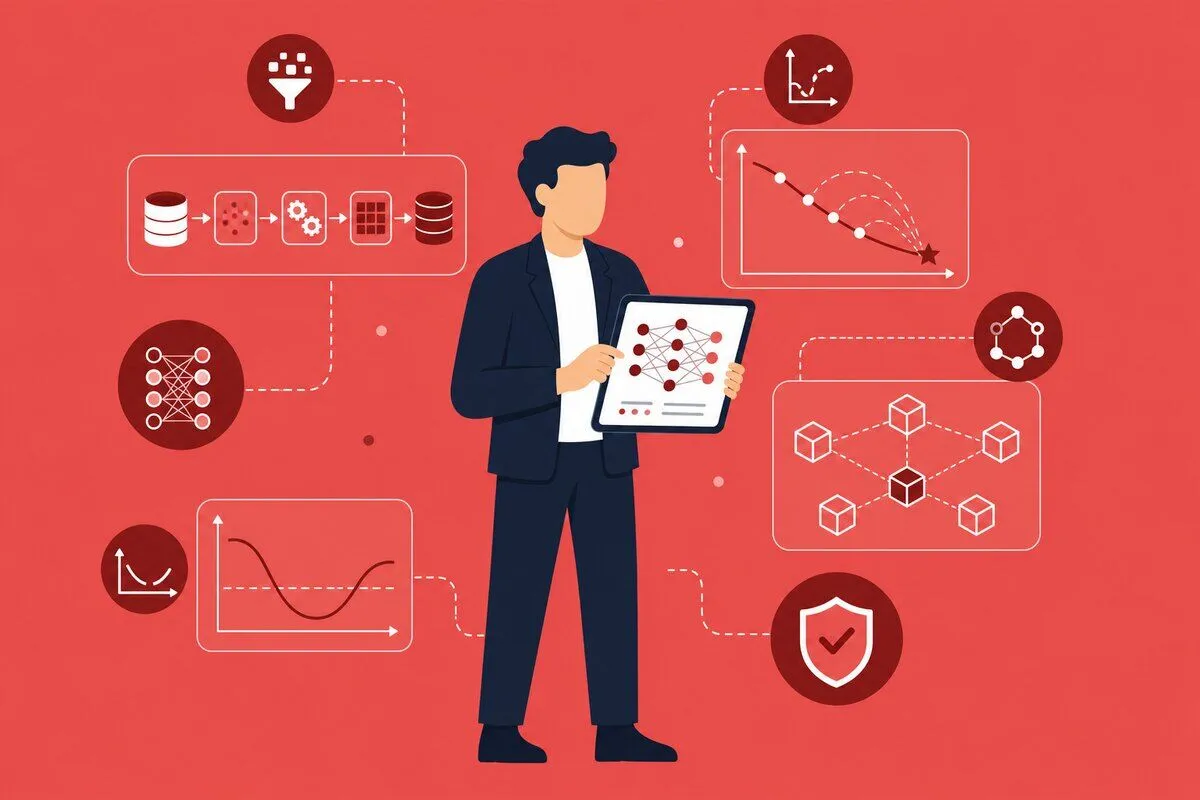
Advanced data analytics architecture on GCP: This topology demonstrates how BigQuery processes petabyte-scale queries in seconds while Dataflow handles real-time stream processing at millions of events per second. Pub/Sub provides globally distributed message queuing with exactly-once delivery semantics. Expert architects leverage this serverless stack to build data pipelines processing trillions of events daily without managing clusters or infrastructure, enabling real-time business intelligence and operational analytics at scale previously achievable only by the largest technology companies.
What Is Google Cloud Platform (GCP)? Explained Clearly
Definition of Google Cloud Platform
Google Cloud Platform is a comprehensive suite of cloud computing services running on the same infrastructure Google uses for its consumer products. Rather than building and maintaining data centers, organizations leverage Google’s global network of facilities to run applications, store data, analyze information, and deploy machine learning models. This fundamental shift transforms IT from a capital-intensive operation into a flexible, usage-based service that scales instantly with business needs.
Google’s cloud ecosystem differs from traditional hosting or infrastructure-as-a-service providers through its deep integration of data processing and artificial intelligence capabilities. Every GCP service is designed to handle massive scale efficiently, drawing on decades of experience operating systems serving billions of users. When you deploy an application on GCP, you’re not just renting virtual machines; you’re accessing the collective expertise Google has developed managing some of the largest distributed systems ever built.
Consumption-Based Pricing Model
GCP pioneered several pricing innovations that reduce cloud costs compared to competitors. The consumption-based model charges only for actual resource usage, measured per second for compute resources rather than rounding up to full hours. This granular billing ensures organizations pay precisely for what they consume, eliminating the waste inherent in hour-based pricing.
Sustained use discounts automatically reduce prices when resources run for significant portions of the month, with no upfront commitments required. As workloads exceed 25% of the month, discounts automatically apply and increase progressively to a maximum of 30% for resources running continuously. This automatic optimization contrasts with competitors requiring manual reserved instance purchases and capacity planning.
Committed use discounts provide even greater savings for predictable workloads, offering up to 57% discounts in exchange for one or three-year commitments. Unlike traditional reserved instances tied to specific machine types, GCP committed use discounts apply flexibly across instance families, enabling organizations to adapt infrastructure as needs evolve without sacrificing savings.
Core Categories of GCP Services
GCP organizes its extensive service portfolio into logical categories addressing different aspects of application infrastructure and data processing. Understanding these categories helps architects design optimal solutions leveraging the right services for specific requirements.
Compute & Application Services
Compute Engine provides customizable virtual machines with industry-leading performance and flexibility. Organizations choose from predefined machine types or create custom configurations matching specific workload requirements. Live migration moves running instances to different physical hardware during maintenance without application downtime, a capability unique to GCP.
App Engine delivers fully managed platform-as-a-service for web applications and APIs. Developers deploy code directly without managing servers, operating systems, or networking. App Engine automatically scales from zero to thousands of instances based on traffic while handling load balancing, health monitoring, and logging.
Kubernetes Engine offers the most mature managed Kubernetes service, built by the team that created Kubernetes at Google. GKE handles cluster provisioning, upgrades, and operations while providing deep integration with GCP services. Autopilot mode eliminates all cluster management, automatically optimizing configuration for production workloads.
Cloud Functions enables serverless event-driven computing where code executes in response to events without managing infrastructure. Functions automatically scale from zero to thousands of concurrent executions, charged only for actual execution time measured in 100-millisecond increments.
Storage & Database Services
Cloud Storage offers globally accessible object storage with industry-leading consistency and performance. Multi-regional storage automatically replicates data across geographic regions for maximum availability. Lifecycle management automatically transitions objects between storage classes, optimizing costs while maintaining accessibility.
Filestore provides fully managed network file storage for applications requiring file system interfaces. High-performance tiers deliver consistent low latency for demanding workloads like media rendering and scientific computing.
BigQuery revolutionizes data warehousing with serverless architecture analyzing petabytes in seconds. Standard SQL queries process billions of rows across terabytes without clusters or infrastructure management. Automatic caching and materialized views optimize query performance while controlling costs.
Cloud SQL delivers fully managed relational databases supporting MySQL, PostgreSQL, and SQL Server. Automatic replication, backups, and failover ensure high availability while machine learning-powered optimization recommendations improve performance.
Firestore provides scalable NoSQL document database with strong consistency and real-time synchronization across clients. Automatic multi-region replication ensures global availability while client SDKs enable offline-first mobile and web applications.
Networking & Content Delivery
Virtual Private Cloud (VPC) enables private networking with global reach and advanced security controls. VPC networks span all GCP regions worldwide, eliminating complex multi-region networking configuration. Shared VPC allows organizations to centrally manage networking while delegating resource management to individual teams.
Cloud Load Balancing distributes traffic across resources globally with single anycast IP addresses. Application load balancing supports HTTP(S), SSL/TLS, and TCP traffic with content-based routing. Global load balancing automatically directs users to the nearest healthy backend, reducing latency while ensuring availability.
Cloud CDN leverages Google’s globally distributed edge locations to cache content close to users. Integration with Cloud Load Balancing and Cloud Storage provides seamless content delivery with automatic cache invalidation and origin protection.
Security & Identity Services
Identity and Access Management (IAM) provides fine-grained access control across all GCP resources. Policy inheritance simplifies management while custom roles enable precise permission definitions. Service accounts enable secure application authentication without embedding credentials in code.
Security Command Center delivers unified security and risk management across GCP resources. Automatic discovery identifies security misconfigurations, vulnerabilities, and threats. Integration with third-party security tools provides comprehensive visibility.
Cloud Key Management Service (KMS) manages encryption keys with hardware security module protection. Customer-managed encryption keys maintain control over data security while delegating operational management to Google. Automatic key rotation and audit logging ensure compliance with regulatory requirements.
DevOps & Operations
Cloud Monitoring provides comprehensive observability for applications and infrastructure. Automatic metric collection from GCP services combines with custom metrics for complete visibility. Machine learning-powered anomaly detection identifies issues before they impact users.
Cloud Build delivers continuous integration and deployment with serverless architecture. Build steps execute in containers with automatic scaling and parallelization. Integration with source repositories enables automated builds triggered by code commits.
Deployment Manager enables infrastructure as code using declarative templates. Resources deploy consistently across environments while template sharing promotes standardization. Automatic dependency resolution ensures correct deployment order.
How GCP Works: Architecture & Infrastructure Design
Google Cloud Platform’s architecture reflects decades of experience building and operating massive-scale distributed systems. The infrastructure foundation consists of custom-designed servers, networking equipment, and software stack optimized specifically for cloud workloads. This vertical integration from silicon to services enables performance and efficiency levels competitors cannot match using commodity hardware and third-party software.
Google’s Global Data Center Network
Google operates one of the largest and most sophisticated private networks in the world, spanning hundreds of thousands of miles of fiber optic cable connecting data centers across continents. This private network enables Google to route traffic along optimal paths while avoiding congestion on the public internet. Organizations deploying on GCP benefit from this infrastructure investment, gaining performance and reliability characteristics impossible with traditional hosting.
Regions represent independent geographic areas containing multiple isolated data centers. Each region operates autonomously with dedicated power, cooling, and networking infrastructure. Organizations select regions based on data residency requirements, latency considerations, and disaster recovery strategies. GCP regions span North America, South America, Europe, Asia, and Australia, providing global coverage with local data processing.
Zones consist of isolated data center facilities within regions, each with independent failure domains. Resources deployed across multiple zones remain available even during zone-level failures. GCP regions typically contain three or more zones with low-latency, high-bandwidth connections enabling synchronous replication and distributed applications.
Edge Locations extend Google’s network to over 100 cities worldwide, caching content and terminating user connections close to end users. Cloud CDN leverages these locations to deliver content with minimal latency while reducing origin server load. Edge computing capabilities enable processing at network edges, reducing round-trip times for latency-sensitive applications.
Built-In High Availability and Fault Tolerance
Google’s infrastructure incorporates redundancy at every level, from individual server components through entire data center regions. Live migration technology moves running virtual machines between physical hosts without downtime during maintenance or hardware failures. This capability, developed through years of operating massive-scale services, ensures applications remain available even as underlying infrastructure evolves.
Multi-region services like Cloud Storage and Firestore automatically replicate data across geographic regions, providing both high availability and disaster recovery without manual configuration. Strong consistency guarantees ensure applications read their own writes immediately, eliminating the complexity of eventual consistency while maintaining global scale. These capabilities reflect Google’s expertise building globally distributed systems like Spanner, which powers Google’s advertising and financial systems.
Load balancing automatically distributes traffic across healthy backends while redirecting requests away from failing instances within seconds. Global load balancing enables applications to serve users from the nearest region automatically, reducing latency while providing seamless failover during regional outages. Health checks monitor application and infrastructure status continuously, triggering automatic remediation before users experience issues.
Business Use Cases of Google Cloud Platform
Data Analytics & Big Data Processing
Organizations choosing GCP often prioritize its industry-leading data analytics capabilities. BigQuery fundamentally changes how businesses interact with data by enabling anyone with SQL knowledge to analyze petabyte-scale datasets without specialized infrastructure knowledge. Marketing teams query billions of customer interactions to optimize campaigns, financial analysts process years of transaction history in seconds, and operations teams analyze sensor data from millions of IoT devices in real-time.
Real-Time Analytics with BigQuery processes streaming data at millions of rows per second while maintaining query performance. Organizations ingest clickstream data, application logs, and IoT telemetry continuously, querying current and historical data simultaneously. The serverless architecture eliminates cluster management and capacity planning while automatic scaling handles workload spikes transparently.
Large-Scale Data Warehousing consolidates enterprise data from disparate sources into unified analytics platforms. BigQuery’s separation of storage and compute enables organizations to store unlimited historical data economically while provisioning query capacity on demand. Partitioning and clustering optimize query performance while controlling costs through granular access controls.
Predictive Insights emerge from combining BigQuery with BigQuery ML for in-database machine learning. Business analysts create, train, and deploy predictive models using familiar SQL syntax without moving data to separate ML platforms. Models predict customer churn, forecast demand, and identify anomalies directly within analytical workflows.
AI & Machine Learning Solutions
GCP provides the most comprehensive machine learning platform available from any cloud provider, spanning custom model development through pre-trained APIs for common tasks. Vertex AI unifies the entire ML lifecycle from data labeling through model monitoring in production, enabling teams to iterate rapidly while maintaining governance and reproducibility.
Vertex AI & AutoML democratizes machine learning by automating model architecture selection, hyperparameter tuning, and deployment. Business users with domain expertise but limited ML knowledge create production-quality models through intuitive interfaces. AutoML handles the complexity of neural architecture search and transfer learning while data scientists retain full control over custom model development when needed.
Computer Vision, Speech Recognition, NLP leverage pre-trained models developed from Google’s massive datasets. Vision API identifies objects, faces, and text in images with accuracy rivaling human performance. Speech-to-Text supports over 125 languages with automatic punctuation and speaker diarization. Natural Language API extracts entities, analyzes sentiment, and classifies content at scale.
Intelligent Product Development embeds AI capabilities into applications through simple API calls. Recommendation systems personalize user experiences, fraud detection systems analyze transactions in real-time, and conversational interfaces enable natural language interaction. Organizations launch AI-powered features in weeks rather than months of custom development.
Startup & SaaS Application Development
Startups leverage GCP to build and scale applications rapidly without upfront infrastructure investment. The combination of serverless computing, managed databases, and automatic scaling enables small teams to build enterprise-grade applications focusing entirely on product differentiation rather than infrastructure management.
Fast Product Development leverages App Engine and Cloud Functions for backend services that scale automatically from prototype to production. Developers deploy code directly without configuring servers, load balancers, or networking. Built-in services for authentication, cron jobs, and task queues accelerate development while Firebase provides backend services for mobile and web applications.
Serverless & Microservices Architecture enables independent scaling of application components based on demand. Cloud Run deploys containerized applications without Kubernetes complexity, automatically scaling from zero to thousands of instances. Event-driven architecture using Cloud Functions and Pub/Sub decouples components while ensuring reliable message delivery.
High Scalability with Low Initial Cost results from consumption-based pricing and automatic scaling. Startups pay only for actual usage, avoiding the waste of overprovisioned infrastructure. As products gain traction, infrastructure automatically scales to handle growth without manual intervention or application re-architecture.
Enterprise Cloud Migration
Large organizations migrate to GCP to modernize legacy infrastructure while maintaining business continuity. The platform supports multiple migration strategies from simple rehosting through complete application modernization, enabling phased approaches that balance risk and reward.
Legacy System Modernization transforms monolithic applications into cloud-native architectures. Anthos enables hybrid deployments spanning on-premises infrastructure and GCP, allowing gradual migration while maintaining connectivity to legacy systems. Migrate for Compute Engine automates VM migration from on-premises or other clouds with minimal downtime.
Hybrid & Multi-Cloud Strategy addresses regulatory requirements and avoids vendor lock-in. Anthos provides consistent Kubernetes-based platform across environments while Cloud Interconnect delivers high-bandwidth, low-latency connections to on-premises infrastructure. Organizations maintain sensitive data on-premises while leveraging GCP for analytics and machine learning.
Secure Migration Frameworks ensure compliance throughout transformation. Database Migration Service handles schema conversion and continuous replication from source databases with minimal downtime. Transfer Service moves petabytes from on-premises storage or other clouds efficiently while maintaining data integrity.
Media, Gaming & Content Platforms
Media and gaming companies leverage GCP’s global infrastructure and specialized services for content processing, delivery, and real-time interaction. The platform handles demanding workloads like video transcoding, live streaming, and multiplayer game hosting at global scale.
Live Streaming utilizes Cloud CDN and Media CDN for low-latency content delivery to global audiences. Transcoder API converts video into multiple formats and resolutions for adaptive bitrate streaming. Live Stream API ingests RTMP streams and outputs HLS or DASH for worldwide distribution with second-level latency.
Content Delivery Optimization leverages Google’s edge network to cache content close to users. Premium Tier networking routes traffic across Google’s private network, bypassing internet congestion for consistent performance. Cloud CDN supports signed URLs and cookies for secure content distribution with fine-grained access control.
Global Performance Enhancement results from deploying applications across multiple regions with global load balancing. Game servers running in GKE automatically scale based on player count while maintaining low latency connections. Spanner provides globally distributed database with strong consistency for game state and player data.
Key Benefits of Google Cloud Platform for Businesses
Advanced Data & AI Capabilities
GCP’s differentiation centers on its advanced data processing and artificial intelligence capabilities. Organizations gain access to the same technologies powering Google’s internal operations, compressed into accessible services requiring minimal specialized knowledge. This technology transfer accelerates innovation while reducing development costs and time-to-market.
• BigQuery analyzes petabytes in seconds without cluster management or capacity planning
• Dataflow processes batch and streaming data with unified programming model
• Vertex AI unifies ML workflow from data preparation through model monitoring
• Pre-trained models for vision, language, and structured data accelerate development
• AutoML democratizes machine learning for non-expert users
• TPUs provide specialized hardware for training large neural networks
High Performance & Global Network
Google’s private network infrastructure delivers performance characteristics unattainable with public internet routing. Premium Tier networking routes traffic across Google’s backbone, avoiding internet congestion while reducing latency by 30-50% compared to standard routing. This infrastructure investment benefits all GCP customers without additional configuration.
• Global load balancing with single anycast IP simplifies configuration
• Premium Tier networking routes traffic on Google’s private network
• CDN with 100+ edge locations caches content near users
• Live migration moves VMs during maintenance without downtime
• Custom machine types match exact resource requirements
• Persistent disk performance scales with size automatically
Cost Efficiency & Flexible Pricing
GCP pioneered several pricing innovations reducing cloud costs compared to competitors. Per-second billing eliminates waste from hour-based rounding, sustained use discounts apply automatically without commitments, and rightsizing recommendations identify optimization opportunities continuously.
• Per-second billing for compute resources minimizes waste
• Sustained use discounts apply automatically up to 30% savings
• Committed use discounts provide up to 57% savings with flexibility
• Preemptible VMs offer up to 80% discount for fault-tolerant workloads
• BigQuery flat-rate pricing controls costs for heavy users
• Active Assist provides AI-powered recommendations for cost optimization
Enterprise-Level Security & Compliance
Google’s security expertise protects GCP infrastructure and services with the same rigor applied to protecting billions of consumer accounts. Zero-trust security model, encryption by default, and continuous monitoring provide defense-in-depth while maintaining usability and performance.
• Encryption at rest and in transit without performance penalty
• BeyondCorp enterprise zero-trust security framework
• Security Command Center for unified threat detection
• Compliance with SOC 2/3, ISO 27001, HIPAA, PCI DSS
• VPC Service Controls prevent data exfiltration
• Confidential computing encrypts data during processing
Faster Innovation & Product Scaling
GCP’s managed services and serverless platforms enable small teams to build enterprise-grade applications without operational overhead. Developers focus on business logic while Google handles infrastructure management, scaling, and operations automatically.
• Serverless platforms eliminate infrastructure management
• Automatic scaling from zero to global scale
• CI/CD with Cloud Build and Artifact Registry
• Infrastructure as code with Deployment Manager and Terraform
• Managed Kubernetes with GKE Autopilot
• Pre-built solutions accelerate common use cases
Real-World Example: How Companies Use GCP
Case Study: Global E-Commerce Platform
A multinational retailer serving 50 million monthly active users across 30 countries demonstrates GCP’s capabilities at enterprise scale.
Business Problem
The company struggled with legacy infrastructure unable to handle seasonal traffic spikes during holiday shopping periods. Their on-premises data warehouse took hours to generate sales reports, preventing real-time decision making. Customer service teams lacked personalized product recommendations, impacting conversion rates. Infrastructure costs remained high even during off-peak periods due to overprovisioned capacity.
GCP Services Implemented
• Google Kubernetes Engine hosts containerized microservices with automatic scaling from 100 to 10,000 pods during traffic spikes
• Cloud SQL manages transactional databases with automatic failover and read replicas across regions
• BigQuery processes 500 million daily transactions enabling real-time analytics dashboards
• Cloud CDN caches product images and static content at 100+ edge locations worldwide
• Recommendations AI generates personalized product suggestions increasing conversion by 35%
• Pub/Sub handles order processing events at 1 million messages per second with exactly-once delivery
• Cloud Functions processes image uploads, inventory updates, and notification delivery serverlessly
Architecture Approach
The platform deployed a cloud-native architecture using Kubernetes for container orchestration and Istio service mesh for traffic management. Frontend applications running in GKE serve dynamic content while Cloud CDN caches static assets globally. Order processing flows through Pub/Sub topics triggering Cloud Functions for inventory updates, payment processing, and shipping notifications. BigQuery ingests clickstream data, order histories, and inventory changes in real-time, powering analytics dashboards that update every 30 seconds. Machine learning models trained in Vertex AI predict demand patterns, optimize pricing, and detect fraudulent transactions automatically.
Performance & Business Results
• Reduced infrastructure costs by 60% through automatic scaling and sustained use discounts
• Improved page load times from 3 seconds to under 500 milliseconds globally
• Increased conversion rate by 35% through personalized recommendations
• Achieved 99.99% uptime during peak shopping periods
• Enabled real-time analytics replacing overnight batch processing
• Launched new features weekly instead of quarterly release cycles
• Reduced fraud losses by 45% through ML-powered detection
GCP vs AWS vs Azure: When GCP Is the Best Choice
Selecting the optimal cloud platform requires understanding each provider’s strengths and how they align with specific business requirements. While AWS leads in service breadth and Azure excels in Microsoft ecosystem integration, GCP distinguishes itself through superior data analytics, machine learning capabilities, and networking performance.
Platform Comparison
| Aspect | Google Cloud | AWS | Azure |
|---|---|---|---|
| Data Analytics | Industry leading (BigQuery) | Strong (Redshift) | Good (Synapse) |
| Machine Learning | Best (Vertex AI, TPUs) | Comprehensive (SageMaker) | Growing (Azure ML) |
| Kubernetes | Creator (GKE Autopilot) | Mature (EKS) | Solid (AKS) |
| Network Performance | Superior (Premium Tier) | Good (Global infrastructure) | Good (Azure backbone) |
| Pricing Model | Per-second, automatic discounts | Per-second, reserved instances | Per-minute, reserved |
| Service Breadth | Focused (100+ services) | Broadest (200+ services) | Extensive (150+ services) |
Strength in Data, AI & Analytics
GCP’s competitive advantage centers on data processing and artificial intelligence capabilities derived from Google’s core competencies. BigQuery provides capabilities competitors cannot match for ad-hoc analysis of massive datasets. Organizations requiring real-time analytics at petabyte scale find GCP’s serverless data warehouse architecture compelling compared to cluster-based alternatives requiring extensive tuning and management.
Machine learning tools like Vertex AI and AutoML democratize AI development while TPUs provide specialized hardware for training large neural networks faster and more economically than GPUs. Organizations building AI-first products leverage these advantages to accelerate development while reducing infrastructure costs.
Kubernetes Leadership
Google created Kubernetes and maintains the most mature managed Kubernetes service through GKE. Organizations adopting container orchestration benefit from Google’s operational expertise managing massive Kubernetes deployments internally. GKE Autopilot eliminates cluster management entirely, automatically configuring optimal settings for production workloads while enforcing best practices.
Anthos extends GKE to multi-cloud and on-premises environments, providing consistent platform across hybrid infrastructure. This portability prevents vendor lock-in while enabling gradual cloud migration as business requirements evolve.
Pricing and Network Comparison
GCP’s pricing innovations often result in lower costs for similar workloads compared to competitors. Per-second billing eliminates waste from hour-based rounding. Sustained use discounts apply automatically without requiring reserved instance purchases or capacity planning. Custom machine types enable precise resource matching, avoiding overprovisioning inherent in fixed instance sizes.
Premium Tier networking routes traffic across Google’s private network backbone, delivering 30-50% better performance than public internet routing. Organizations serving global users benefit from this infrastructure investment without additional configuration or cost optimization effort.
GCP Adoption Journey
Assessment Phase
Evaluate current infrastructure, identify cloud-ready applications, define success metrics, assess team capabilities, establish governance framework
Pilot Implementation
Deploy non-critical workload, establish networking and security baseline, implement monitoring and logging, train initial team members, validate cost models
Migration Execution
Migrate applications in priority order, modernize architecture where beneficial, establish CI/CD pipelines, implement cost optimization, expand team skills
Optimization Phase
Refine resource allocation, implement advanced security controls, optimize costs continuously, leverage managed services, enhance observability
Innovation Acceleration
Integrate AI and ML capabilities, implement real-time analytics, adopt cloud-native patterns, expand globally, drive continuous improvement
When Should Your Business Choose GCP?
Selecting GCP as your cloud platform makes strategic sense when your organization prioritizes certain capabilities and business characteristics. Understanding these optimal use cases helps organizations make informed decisions aligned with long-term technology strategies.
Data-Heavy Operations
Organizations processing large volumes of data for analytics, reporting, or machine learning benefit significantly from GCP’s data-centric architecture. BigQuery enables business analysts to query terabyte-scale datasets without waiting for data engineering support or pre-aggregated reports. The serverless architecture eliminates cluster management while automatic scaling handles workload variations transparently.
Companies generating petabytes of data from IoT sensors, customer interactions, or operational systems leverage Dataflow for real-time stream processing and batch analytics using unified programming models. This capability enables real-time dashboards, fraud detection, and operational intelligence previously requiring complex infrastructure.
AI-Driven Growth Strategy
Organizations building competitive advantage through artificial intelligence find GCP’s comprehensive ML platform accelerates development while reducing operational complexity. Vertex AI unifies data preparation, model training, deployment, and monitoring in cohesive workflows. AutoML democratizes model development for business users while data scientists retain full control for custom architectures.
Pre-trained models for common tasks like image classification, speech recognition, and natural language understanding enable organizations to incorporate AI capabilities in applications without months of custom development. Organizations leverage these services to build recommendation systems, conversational interfaces, and intelligent automation rapidly.
Global User Base
Companies serving users worldwide benefit from Google’s global network infrastructure and Premium Tier networking. The private backbone routes traffic across continents while avoiding public internet congestion, reducing latency by 30-50% compared to standard routing. Global load balancing with single anycast IP addresses simplifies configuration while automatically directing users to nearest healthy backends.
Cloud CDN caches content at 100+ edge locations globally, delivering static assets with minimal latency. Organizations building multiplayer games, streaming platforms, or global SaaS applications leverage this infrastructure to provide consistent user experiences regardless of geographic location.
Need for Cost-Efficient Scaling
Startups and growing businesses appreciate GCP’s pricing innovations that reduce cloud costs without sacrificing performance. Per-second billing eliminates waste from hour-based rounding. Sustained use discounts apply automatically as resources run longer, providing up to 30% savings without reserved instance commitments or capacity planning.
Preemptible VMs offer up to 80% discounts for fault-tolerant batch processing workloads. Organizations leverage these short-lived instances for data processing, rendering, and scientific computing, dramatically reducing infrastructure costs while maintaining throughput.
Challenges in GCP Adoption & Best Practices
Successfully adopting GCP requires addressing common challenges through proven best practices. Organizations that plan thoroughly and invest in team enablement achieve better outcomes with fewer setbacks during cloud transformation.
Migration Planning
Comprehensive migration planning prevents costly mistakes and ensures smooth transitions. Organizations should inventory applications, assess dependencies, and prioritize migration candidates based on business value and technical complexity. The six R’s framework (Rehost, Replatform, Repurchase, Refactor, Retire, Retain) guides strategic decisions about each application’s cloud journey.
Best Practices: Start with non-critical applications to build experience, establish networking and security baselines early, implement monitoring before migrating production workloads, validate performance and costs in pilot environments, document lessons learned for subsequent migrations.
Cost Governance
Cloud’s flexibility creates cost management challenges without proper governance. Organizations must establish budgets, implement monitoring, and enforce policies preventing wasteful spending. Uncontrolled resource creation, forgotten development environments, and over-provisioned instances inflate costs unnecessarily.
Best Practices: Implement billing alerts and budgets, tag resources for cost allocation, establish approval workflows for expensive resources, schedule automatic shutdown of development environments, review cost optimization recommendations regularly, train teams on cost-conscious architecture patterns.
Skills & Training
Cloud platforms require different skills than traditional infrastructure. System administrators must learn infrastructure as code, developers need cloud-native architecture patterns, and database administrators should understand managed database services. This skill gap creates hesitation and slows adoption without investment in training.
Best Practices: Leverage Google Cloud Skills Boost for free training, pursue professional certifications to validate knowledge, partner with Google Cloud consultants during initial migrations, establish centers of excellence sharing best practices, encourage experimentation in sandbox environments.
Security Configuration
Cloud security differs from traditional perimeter-based approaches. Organizations must implement identity-based access controls, encrypt data appropriately, and monitor for threats continuously. Misconfigured security settings create vulnerabilities that attackers exploit through exposed storage buckets, overly permissive IAM policies, or unencrypted data.
Best Practices: Follow principle of least privilege for IAM permissions, enable VPC Service Controls to prevent data exfiltration, implement organization policies enforcing security baselines, use Security Command Center for continuous monitoring, conduct regular security assessments, encrypt sensitive data at rest and in transit.
Why GCP Is a Strategic Cloud Partner for the Future
Google Cloud Platform represents more than infrastructure modernization; it provides the technological foundation for data-driven, AI-powered organizations competing in increasingly digital markets. The platform’s deep integration of advanced analytics and machine learning capabilities enables business transformation impossible with traditional infrastructure or commodity cloud services.
Long-Term Growth Enablement
Organizations partnering with GCP gain access to Google’s continuous innovation in data processing, artificial intelligence, and distributed systems. As Google develops new capabilities for internal operations, these technologies become available to customers through managed services. This technology transfer accelerates innovation while reducing research and development investments required to build equivalent capabilities independently.
The platform’s commitment to open standards and multi-cloud interoperability through Anthos prevents vendor lock-in while enabling gradual adoption aligned with business priorities. Organizations maintain flexibility to evolve infrastructure strategies as requirements change without abandoning prior investments.
Innovation at Scale
GCP’s serverless platforms and managed services enable small teams to build and operate applications at global scale without proportional increases in operational complexity. Developers focus on business logic and user experiences while Google handles infrastructure management, scaling, and operations automatically. This abstraction accelerates development cycles while improving reliability through Google’s operational expertise.
Kubernetes Engine, Cloud Run, and Cloud Functions provide deployment flexibility from fully managed platforms to container orchestration for complex microservices architectures. Organizations select appropriate abstraction levels for different workloads, optimizing for development velocity, operational control, and cost efficiency.
BigQuery and Vertex AI democratize data science and machine learning, enabling business analysts and domain experts to extract insights and build predictive models without specialized infrastructure knowledge. This capability broadens innovation beyond engineering teams, fostering data-driven decision making across organizations.
Competitive Business Advantage
The competitive landscape increasingly favors organizations leveraging data and artificial intelligence effectively. GCP provides the infrastructure and tools enabling companies to build intelligent applications, optimize operations through analytics, and personalize customer experiences at scale. These capabilities translate directly into business advantages through improved efficiency, better decision making, and superior products.
Organizations embracing GCP position themselves at the forefront of cloud-native development, benefiting from Google’s expertise operating some of the world’s largest distributed systems. The platform’s global infrastructure, advanced networking, and comprehensive security enable applications serving billions of users with the same reliability and performance characteristics Google’s own products deliver.
Whether launching innovative startups, modernizing enterprise infrastructure, or building next-generation applications, GCP provides the technological foundation for sustained competitive advantage. The question facing organizations today is not whether to adopt cloud infrastructure, but how quickly they can leverage GCP’s unique capabilities to accelerate their digital transformation and capture market opportunities.
Frequently Asked Questions
Q1.What is Google Cloud Platform (GCP)?
GCP is a suite of cloud services offering computing, storage, databases, networking, analytics, and AI solutions.
Q2.Why do businesses use Google Cloud?
For scalability, performance, advanced data analytics, and strong security.
Q3.Which companies should use GCP?
Data-driven businesses, startups, SaaS, media, fintech, and enterprises.
Q4.How does GCP help reduce costs?
With pay-as-you-use pricing, sustained-use discounts, and resource optimization.
Q5.Is GCP good for small businesses?
Yes, GCP helps startups and small businesses launch faster with lower infrastructure costs.
Explore Services
Related Services
Reviewed by

Aman Vaths
Founder of Nadcab Labs
Aman Vaths is the Founder & CTO of Nadcab Labs, a global digital engineering company delivering enterprise-grade solutions across AI, Web3, Blockchain, Big Data, Cloud, Cybersecurity, and Modern Application Development. With deep technical leadership and product innovation experience, Aman has positioned Nadcab Labs as one of the most advanced engineering companies driving the next era of intelligent, secure, and scalable software systems. Under his leadership, Nadcab Labs has built 2,000+ global projects across sectors including fintech, banking, healthcare, real estate, logistics, gaming, manufacturing, and next-generation DePIN networks. Aman’s strength lies in architecting high-performance systems, end-to-end platform engineering, and designing enterprise solutions that operate at global scale.