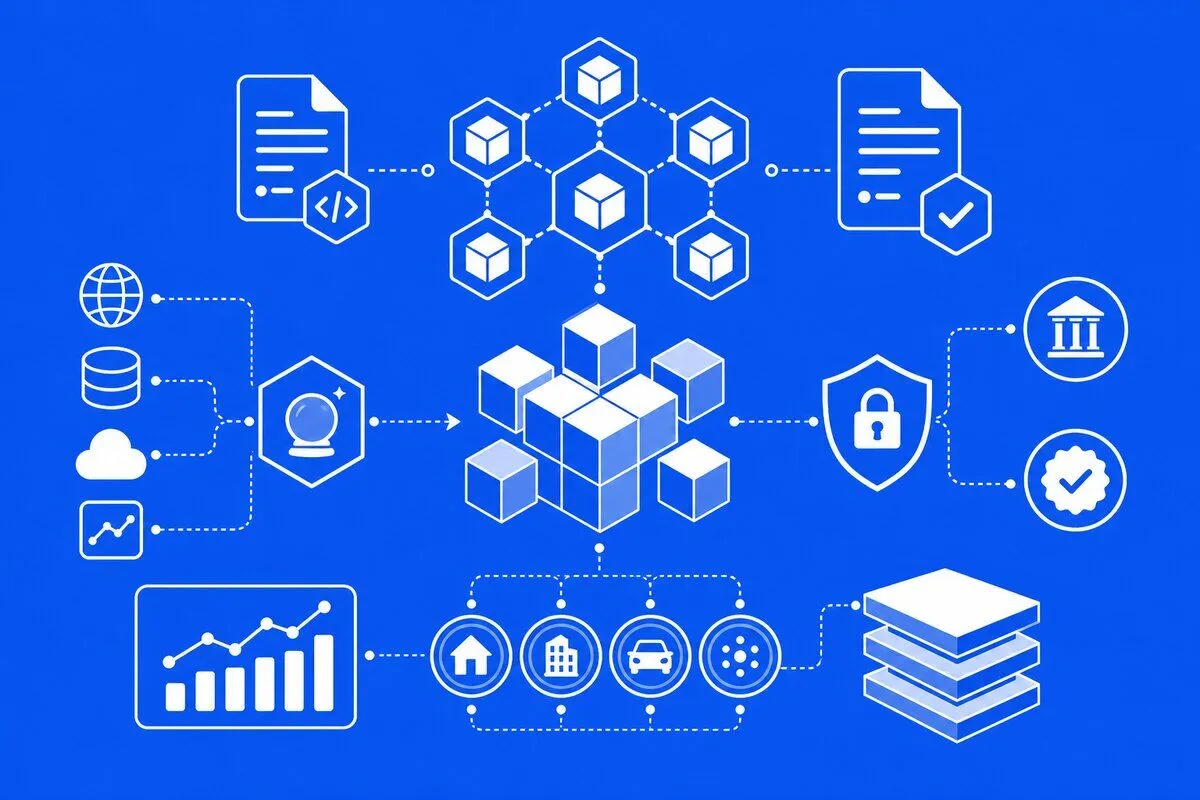
Ai Overview
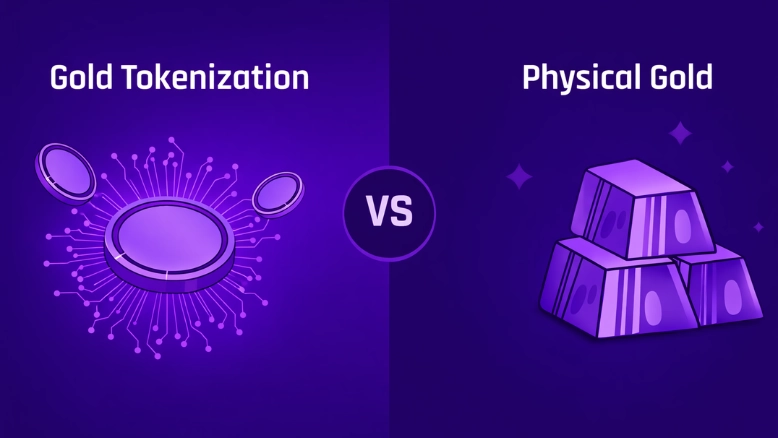
The Gold Tokenization Market in 2026 stands at an inflection point that we have not seen since the early adoption phase of cryptocurrency exchanges. In 2020, the total tokenized gold market cap was below $200 million. Gold at $5,000+ per ounce has made physical gold inaccessible for millions of retail investors. India gold tokenization market growth is propelled by the country’s $4 trillion gold wealth, 750M+ smartphone users, and a deeply gold-centric savings culture.
Key Takeaways
- ✓ The global Gold Tokenization Market cap surpassed $5.8 billion in early 2026, with trading volumes reaching a record $178 billion globally.
- ✓ India gold tokenization market growth is accelerating, driven by record domestic gold demand and rising retail investor interest in digital gold token adoption.
- ✓ Dubai and UAE are emerging as top-tier hubs for blockchain gold market expansion with progressive regulatory frameworks supporting tokenized asset markets.
- ✓ Paxos Gold (PAXG) recorded a $248 million inflow in January 2026, pushing its market cap over $2.2 billion amid surging gold prices near $5,300 per ounce.
- ✓ Gold tokenization market trends show retail investors can now buy fractions of gold as small as $0.01, removing traditional entry barriers in India and UAE markets.
- ✓ Tokenized gold investment market products now offer yields of 2.3% to 4% annually, solving the traditional problem of idle, non-yielding physical gold holdings.
- ✓ Institutional players including BlackRock and JPMorgan are actively entering the gold tokenization industry outlook, validating long-term market credibility at scale.
- ✓ Tokenized asset market in India is projected to benefit from UPI integration and SEBI’s evolving digital asset frameworks, boosting mainstream gold token adoption.
- ✓ DeFi integration is expanding gold backed token market demand by enabling tokenized gold to serve as programmable collateral in lending protocols worldwide.
- ✓ Digital gold token market analysis confirms 24/7 settlement, transparent vault attestations, and instant liquidity as the three defining advantages over traditional gold ETFs.
Over the past eight-plus years, our team has tracked the transformation of real-world asset markets, and few sectors have shown momentum as compelling as the Gold Tokenization market. What began as a niche experiment on blockchain rails has now evolved into a multi-billion dollar global asset class, reshaping how investors in India, Dubai, and across international markets think about owning, trading, and leveraging gold.
The Gold Tokenization Market is no longer a future possibility. It is a present reality. As gold prices breached the $5,000 per ounce mark in early 2026, the urgency for accessible, liquid, and programmable gold ownership solutions has never been higher. Retail investors in Mumbai, institutional desks in Dubai, and DeFi protocols across the globe are all converging on the same conclusion: tokenized gold is the most efficient form of gold exposure available today.
This expert analysis dives deep into gold tokenization market trends, what is gold tokenization as a concept and practice, the competitive landscape, regional dynamics, and the structural forces behind this historic market expansion. Whether you are an institutional allocator, a retail investor in India, or a blockchain entrepreneur in the UAE, this report delivers the intelligence you need to navigate 2026 with confidence.
Gold Tokenization Market Overview 2026
The Gold Tokenization Market in 2026 stands at an inflection point that we have not seen since the early adoption phase of cryptocurrency exchanges. With gold shattering psychological price barriers and blockchain infrastructure reaching enterprise-grade maturity, the conditions for sustained, scalable tokenized gold adoption are firmly in place. The gold tokenization industry outlook has shifted from speculative potential to confirmed commercial reality.
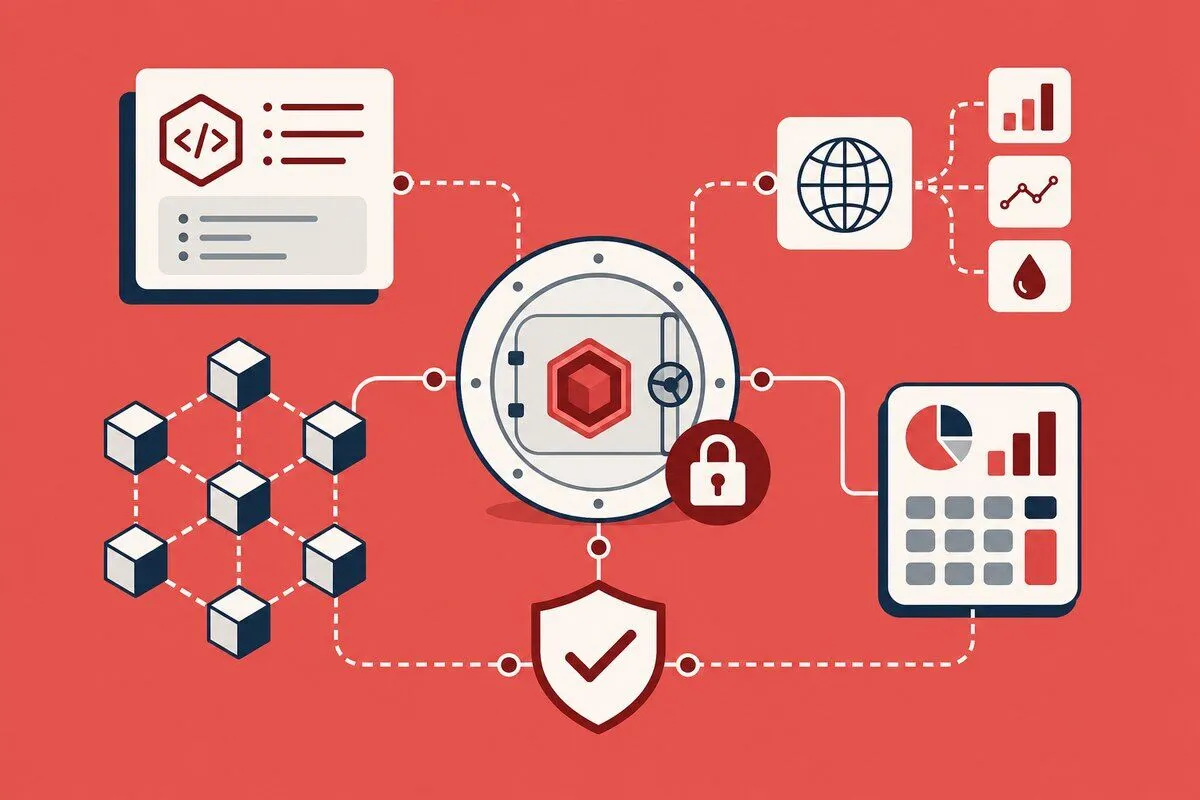
What is gold tokenization in the context of 2026 markets? It is the process of representing ownership rights over physically stored, audited gold through blockchain-based digital tokens. Each token carries a direct claim to real bullion held in secure, insured vaults. Investors can trade these tokens 24 hours a day, 7 days a week, settle transactions instantly, and even use tokens as collateral within DeFi lending protocols.
From our field experience working with asset tokenization projects across India and the UAE, the 2026 Gold Tokenization Market is marked by one defining characteristic: urgency. Investors are no longer asking whether they should consider tokenized gold. They are asking which platform to use and how quickly they can allocate.
Market Size and Historical Development
Understanding the tokenization market size in India and globally requires a look at the trajectory of this asset class over the past several years. The Gold Tokenization Market did not emerge overnight. It was built through a series of structural shifts in both gold markets and blockchain infrastructure that our team monitored closely from inception.
In 2020, the total tokenized gold market cap was below $200 million. By 2023, it had crossed the $1 billion milestone. By the end of 2025, it had scaled to approximately $4.5 billion, driven by institutional interest, rising gold prices, and growing awareness of digital gold token market analysis reports confirming superior liquidity outcomes compared to ETFs.
| Year | Market Cap (USD) | Key Milestone | Leading Token |
|---|---|---|---|
| 2020 | ~$180M | PAXG and XAUT launch phase | PAXG |
| 2022 | ~$680M | Institutional onboarding begins | PAXG / XAUT |
| 2023 | $1.1B | First billion milestone crossed | XAUT |
| 2024 | $2.8B | DeFi collateral integration grows | PAXG / XAUT |
| 2025 | $4.5B | Yield-bearing tokens emerge | XAUT / thGOLD |
| 2026 (Q1) | $5.8B+ | Mainstream breakout year | PAXG / XAUT / thGOLD |
Current Growth Trends in the Gold Tokenization Market
The gold tokenization market trends of 2026 point clearly toward accelerated mainstream adoption. Several converging forces have aligned to push this market from niche to necessary. Our team has identified five dominant trends shaping the current landscape across India, UAE, and global markets.
Record Gold Prices
Gold at $5,000+ per ounce has made physical gold inaccessible for millions of retail investors. Tokenization solves the affordability problem through fractional ownership at micro-scale entry points.
Yield-Bearing Innovation
Products like thGOLD now offer 2.3% annual yields on gold holdings. This innovation addresses a historic weakness of gold as a non-yielding asset, dramatically improving its appeal.
DeFi Collateral Growth
Tokenized gold is increasingly used as collateral in DeFi lending protocols, unlocking liquidity from gold holdings without requiring asset sales, a critical advancement for the market.
Regulatory Clarity
UAE’s VARA and India’s SEBI are establishing clearer frameworks for tokenized real-world assets. This reduces compliance uncertainty and attracts institutional capital into the ecosystem.
Institutional Validation
BlackRock, JPMorgan, and BNY Mellon’s active participation in the RWA tokenization space is sending a powerful signal to markets worldwide about the credibility of tokenized gold.
India digital gold token adoption is particularly significant within these trends. India’s deep cultural relationship with gold, combined with a highly mobile-first population and expanding fintech infrastructure, creates a natural environment for blockchain gold market expansion at scale.
Global Gold Tokenization Market Growth and Current Industry Overview
The global Gold Tokenization Market is now an integral part of the broader real-world asset (RWA) tokenization ecosystem. The total tokenized asset market nearly quadrupled through 2025 to reach approximately $20 billion across all asset classes, according to RWA.xyz data. Within this landscape, tokenized gold commands a disproportionately large share due to gold’s universal recognition as a store of value. [1]
The gold tokenization industry outlook for the remainder of 2026 is exceptionally positive. Industry leaders predict that total value locked in RWA tokens will exceed $100 billion by year-end. Tokenized gold is expected to be one of the primary contributors to this milestone, given the sustained elevation of gold prices and growing institutional comfort with blockchain-based asset management.
Gold Tokenization Market Share by Region (2026 Estimate)
The Asia-Pacific region, with India leading its growth contribution, is one of the fastest-growing segments. The tokenization market size in India is projected to scale significantly as mobile internet penetration, UPI infrastructure maturity, and greater retail awareness of digital gold token market analysis findings drive higher participation rates.
Market Size Evolution of Tokenized Gold Across Recent Years
The quantitative evolution of the Gold Tokenization Market tells a story of compounding momentum. Each year has brought not only larger absolute values but also qualitative improvements: more tokens, more platforms, more regulatory clarity, and more investor segments participating in the gold backed token market demand cycle.
| Year | Global Market Cap | YoY Growth | Notable Factor |
|---|---|---|---|
| 2021 | $320M | +78% | Crypto bull market spillover |
| 2022 | $680M | +112% | Inflation hedge demand surge |
| 2023 | $1.1B | +62% | First billion milestone |
| 2024 | $2.8B | +154% | Institutional entry and DeFi |
| 2025 | $4.5B | +60% | Yield-bearing tokens launched |
| 2026 Q1 | $5.8B+ | +29% QoQ | Gold price breach of $5,000 |
This trajectory in the tokenized gold investment market confirms that growth is not cyclical or speculative. It is structural. Each new year has brought additional investor segments, improved infrastructure, and stronger regulatory backing, creating compounding momentum that is unlikely to reverse.
Key Drivers of Gold Tokenization Market Expansion
The blockchain gold market expansion is not accidental. It is the result of multiple structural forces operating simultaneously across technology, finance, regulation, and investor behavior. Based on our experience working with tokenization projects in both India and the UAE, we identify the following as the most decisive market drivers in 2026.
Soaring Gold Prices
With gold trading above $5,000 per ounce, physical ownership has become prohibitive. Tokenization enables fractional exposure, making gold accessible to retail investors in India, UAE, and beyond.
Regulatory Progress
The UAE’s VARA regulations and India’s SEBI-backed digital asset guidelines are removing compliance ambiguity. Clear legal frameworks are the single most important catalyst for large-scale institutional adoption.
Maturing Blockchain Infrastructure
Enterprise-grade smart contract platforms, multi-party computation custody solutions, and cross-chain interoperability now enable gold tokenization platforms to operate at institutional scale with full auditability.
Geopolitical Uncertainty
Systemic distrust in traditional financial institutions is driving investors globally toward hard assets. Tokenized gold offers the safety of physical gold with the accessibility and liquidity of digital assets.
24/7 Liquidity Demand
Traditional gold trading halts on weekends and outside banking hours. Tokenized gold trades around the clock, meeting modern investor expectations for instant, always-on market access.
Emerging Market Leadership
India and UAE are at the forefront of emerging market adoption. Their large gold-consuming populations and progressive fintech ecosystems make them natural leaders for tokenized asset market in India and the Gulf region.
Market Demand for Tokenized Gold Investments
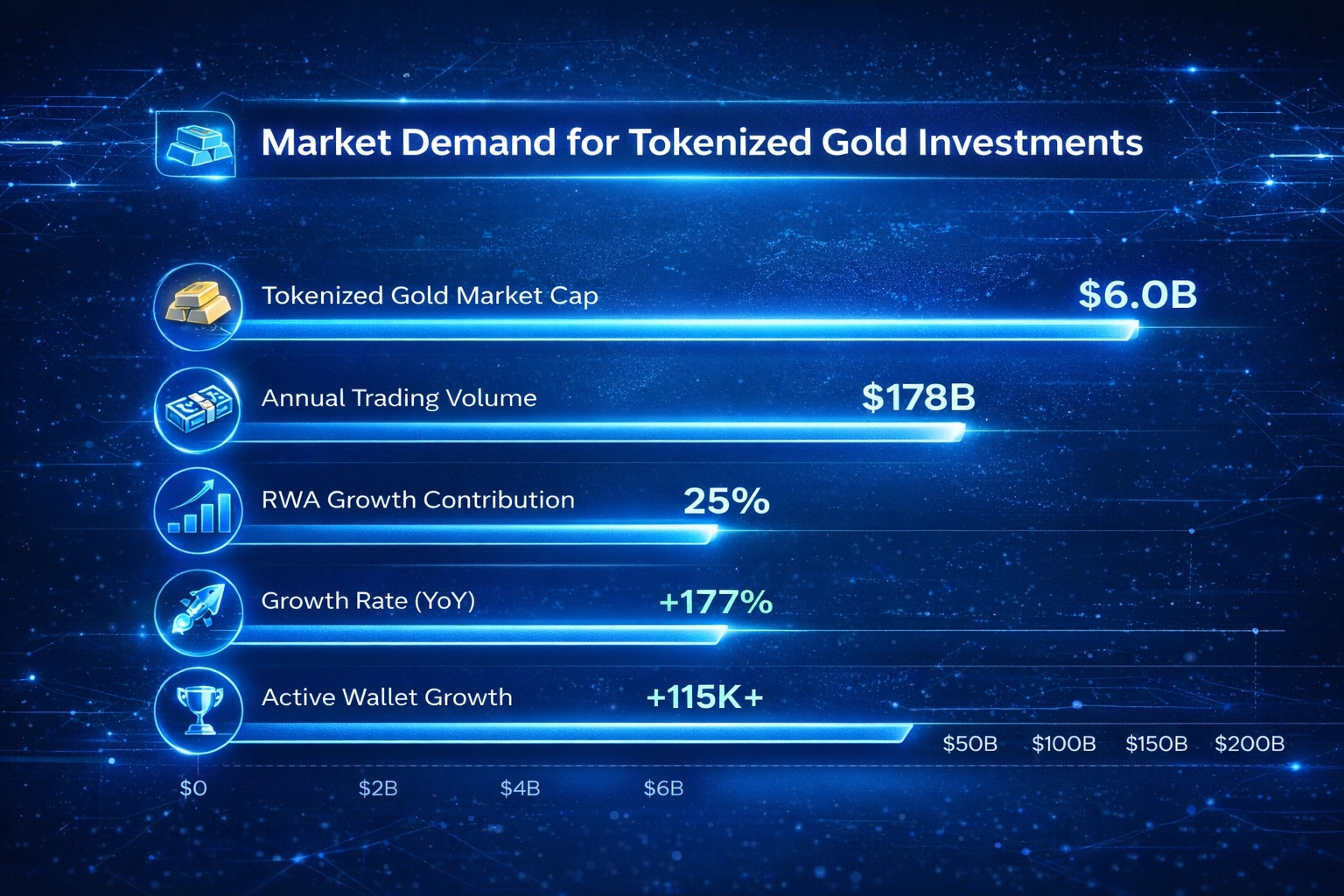
Gold backed token market demand is being shaped by a dual engine: institutional capital allocation and retail investor adoption. Both segments are growing, but for distinct reasons. Understanding this demand structure is essential for anyone operating in or analyzing the Gold Tokenization Market in 2026.
On the institutional side, major treasury desks and asset managers are evaluating tokenized gold as a collateral alternative to cash. The programmability of blockchain-based gold allows it to be deployed in lending protocols, used as margin across DeFi platforms, and transferred peer-to-peer without clearing delays. Paxos Gold alone saw $248 million in institutional inflows in January 2026, an unprecedented single-month figure that underscores the depth of this demand.
On the retail side, what is gold tokenization becoming for everyday investors? It is becoming their primary vehicle for gold exposure. In India, where gold is deeply culturally embedded and millions of households already participate in Sovereign Gold Bond schemes and digital gold platforms, the transition to tokenized gold is a natural progression. India digital gold token adoption surveys show that investors aged 25 to 40 are the fastest-growing cohort entering the tokenized gold investment market.
Institutional Demand Drivers
- ✓ Programmable collateral for DeFi protocols
- ✓ Instant cross-border settlement capability
- ✓ On-chain audit trails for regulatory compliance
- ✓ Yield-generating gold via structured DeFi vaults
Retail Demand Drivers
- ✓ Fractional access starting below $1 investment
- ✓ No physical storage or insurance cost required
- ✓ Mobile-first platforms accessible in India and UAE
- ✓ 24/7 trading with transparent blockchain records
Market Structure and Competitive Landscape
The Gold Tokenization Market in 2026 features a competitive landscape that is simultaneously consolidating at the top and expanding at the edges. Two tokens, PAXG by Paxos and XAUT by Tether, command the dominant share of total tokenized gold supply. Together, they represent the majority of gold backed token market demand across institutional and retail investor segments worldwide.
However, the market structure is evolving. A new tier of specialized products is emerging, including yield-bearing tokens like thGOLD, supply-chain-focused tokens like AurusGOLD (AWG), and platform-specific offerings from regulated fintech providers targeting markets such as India and the Gulf Cooperation Council. This diversification is a sign of market maturity rather than fragmentation.
Competitive Tier Structure of the Gold Tokenization Market
Tier 1: Global Dominants
PAXG and XAUT lead with combined market cap above $4 billion. Both tokens are backed 1:1 by physically allocated gold with regular third-party audits, and they set the liquidity benchmark for the entire market.
Tier 2: Innovation Leaders
thGOLD and Falcon Finance’s yield-bearing vaults are redefining what tokenized gold can offer. These platforms add income generation on top of price appreciation, dramatically expanding the investor value proposition.
Tier 3: Regional Specialists
Platforms targeting the tokenization market size in India and UAE markets specifically. These include SEBI-aligned offerings, Shariah-compliant gold tokens for the UAE, and UPI-integrated platforms designed for India’s mobile-first investors.
Tier 4: Supply Chain Solutions
Projects like AurusGOLD and Valcambi’s blockchain initiative focus on supply chain transparency, tracking gold from mining through refining and storage. These serve enterprise and ESG-focused investor segments.
Market Performance and Trading Dynamics
The trading dynamics within the Gold Tokenization Market in 2026 reflect a market that has come of age. Trading volumes of $178 billion in January 2026 alone position tokenized gold among the most liquid alternative asset classes available on blockchain rails. This volume is driven not just by speculative activity but by genuine buy-and-hold demand, DeFi collateral deployment, and cross-border portfolio rebalancing.
Digital gold token market analysis reveals three key trading behaviors emerging in 2026. First, there is a strong correlation between gold spot price movements and tokenized gold trading volumes, confirming that investors are using blockchain markets as a real-time proxy for physical gold. Second, DeFi protocols on Ethereum, Solana, and other major chains are showing significant tokenized gold collateral deposits, reflecting use beyond pure price exposure. Third, institutional desks in Dubai and London are using tokenized gold as an intraday liquidity management tool, a function previously reserved for T-bills and stablecoins.
Retail Investment Growth Patterns in Tokenized Gold Adoption
Retail participation in the tokenized gold investment market is following a distinct growth pattern that mirrors the early adoption curves of mobile payments and e-commerce in emerging markets. The entry point innovation made possible by what is gold tokenization technology, specifically the ability to buy fractional gold for as little as $0.01, has unlocked a previously untapped segment of hundreds of millions of potential investors.
In India, the India gold tokenization market growth at the retail level is being fueled by smartphone penetration exceeding 750 million users, widespread UPI familiarity, and growing financial literacy programs that highlight the advantages of digital asset ownership. The SIP (Systematic Investment Plan) culture that dominates mutual fund adoption in India is now finding an equivalent in tokenized gold, where investors make small, regular purchases through mobile apps.
In Dubai and across the UAE, the retail gold tokenization market is benefiting from a population that is highly internationally mobile, comfortable with digital platforms, and deeply familiar with gold as a financial and cultural asset. UAE-based exchanges and licensed platforms are registering growing user sign-ups specifically for tokenized gold products, with transaction frequency outpacing traditional gold ETF purchases.
Retail Adoption Journey in India and UAE
Regional and Comparative Analysis
A rigorous regional analysis of the Gold Tokenization Market reveals distinct patterns of adoption, regulation, and infrastructure maturity across key geographies. India and UAE represent the two most strategically significant growth markets for the tokenized gold investment market in 2026, each bringing unique characteristics that shape investor behavior and market structure.
Comparison Between Domestic and International Gold Tokenization Markets
A structured comparison between domestic markets like India and international markets reveals both the maturity gaps and the growth opportunities within the Gold Tokenization Market. Understanding these differences is essential for platform builders, investors, and regulators navigating this asset class in 2026.
| Factor | India (Domestic) | UAE / Dubai (International Hub) | Global Average |
|---|---|---|---|
| Regulatory Status | Evolving, SEBI-led framework | Advanced, VARA-regulated | Varies by jurisdiction |
| Primary Investor Type | Retail-first, SIP-oriented | HNW and institutional-led | Institutional dominant |
| Platform Maturity | Growing, mobile-native | Mature, multi-chain | Advanced in key centers |
| DeFi Integration | Early stage, growing rapidly | Active collateral use in DeFi | Expanding globally |
| Gold Cultural Affinity | Extremely High | Very High | Moderate to High |
| Growth Potential (2026) | Highest globally | Significant, gateway market | Steady institutional growth |
This comparison underscores a critical insight from our eight-plus years of operating at the intersection of traditional finance and blockchain: the markets with the highest cultural affinity for gold, namely India and UAE, are precisely the markets where the tokenized asset market in India and the Gulf will generate the most transformative growth in the years ahead. The digital gold token market analysis consistently confirms this geographic prioritization is strategically sound for platform builders and capital allocators alike.
The Gold Tokenization Market Is at a Historic Turning Point
The Gold Tokenization Market in 2026 represents one of the most compelling convergences of technological innovation, financial necessity, and cultural alignment that our team has encountered in eight-plus years of practice. Gold’s eternal appeal as a store of value has not diminished. What has changed is the infrastructure through which investors access, hold, and leverage it.
What is gold tokenization ultimately delivering? It is delivering the world’s most trusted asset class in a format that matches the speed, accessibility, and programmability of the modern digital economy. For investors in India, it means owning real gold without physical storage, starting from any investment size. For investors in Dubai and the UAE, it means 24/7 access to gold with the regulatory confidence of a world-class financial hub.
The gold tokenization market trends of 2026 point unmistakably forward. Market size is growing. Regulatory frameworks are clarifying. Institutional validation is deepening. And the India gold tokenization market growth and UAE adoption curve are only beginning to reflect the full potential of this asset class. For those positioned correctly, this market represents a generational opportunity in the intersection of gold, blockchain, and global finance.
Ready to Enter the Gold Tokenization Market?
Explore how our expert team can help you launch a compliant, scalable tokenized gold platform built for India and UAE investors.
Frequently Asked Questions
Q1.1. What is gold tokenization and how does it actually work?
Gold tokenization is the process of converting physical gold into digital tokens on a blockchain, where each token represents ownership of a specific quantity of real, vaulted gold. Investors can buy, sell, and transfer these tokens instantly without needing physical delivery.
Q2.2. Is the gold tokenization market growing in India right now?
Yes, the India gold tokenization market growth is accelerating rapidly. With India being one of the world’s largest gold consumers, platforms offering digital gold tokens are gaining adoption among retail and institutional investors seeking regulated, accessible gold exposure.
Q3.3. How big is the tokenized gold market in 2026?
The tokenized gold market cap surpassed $5.8 billion in early 2026, with trading volumes reaching $178 billion. This reflects strong gold backed token market demand driven by record gold prices and growing blockchain adoption among investors globally.
Q4.4. Is tokenized gold safe to invest in?
Tokenized gold backed by audited vaults and on-chain attestations is considered relatively safe. Risks include smart contract vulnerabilities, issuer insolvency, and gold price fluctuations. Choosing regulated platforms with transparent custody significantly reduces investment risk for most users.
Q5.5. What is the difference between digital gold and tokenized gold?
Digital gold typically refers to platform-held gold accounts, while tokenized gold lives on a public blockchain as a verifiable token. Tokenized gold offers greater transparency, 24/7 trading, and DeFi compatibility, making it more flexible than traditional digital gold products.
Q6.6. Can I buy tokenized gold in Dubai or UAE?
Yes, the UAE including Dubai is an active market for tokenized gold investments. Regulatory frameworks in the UAE support blockchain-based asset tokenization, and several licensed platforms allow residents to access gold backed crypto tokens as part of their digital asset portfolios.
Q7.7. Why are investors choosing tokenized gold over physical gold?
Investors choose tokenized gold because it offers fractional ownership, instant liquidity, 24/7 trading, and no storage costs. The gold tokenization market trends show a clear shift toward digital formats especially among younger, tech-savvy investors in India and the UAE.
Q8.8. What are the top tokenized gold tokens available in 2026?
The leading tokens in the tokenized gold investment market are Paxos Gold (PAXG) and Tether Gold (XAUT). Both are backed 1:1 by physical gold stored in audited vaults and are widely traded on major global crypto exchanges with strong liquidity.
Q9.9. How is blockchain helping the gold tokenization market expand?
Blockchain gold market expansion is driven by smart contracts that automate token issuance, transfer, and redemption. Blockchain removes intermediaries, reduces transaction costs, enables instant settlement, and provides immutable audit trails, making gold investments more efficient and globally accessible.
Q10.10. What are the main drivers of gold tokenization market growth?
Key drivers include record gold prices, rising demand for fractional investing, regulatory clarity in markets like UAE and India, growing DeFi integration, and the shift toward on-chain real-world assets. Institutional interest from firms like BlackRock and JPMorgan is also accelerating market growth.
Explore Services
Related Services
Reviewed by

Aman Vaths
Founder of Nadcab Labs
Aman Vaths is the Founder & CTO of Nadcab Labs, a global digital engineering company delivering enterprise-grade solutions across AI, Web3, Blockchain, Big Data, Cloud, Cybersecurity, and Modern Application Development. With deep technical leadership and product innovation experience, Aman has positioned Nadcab Labs as one of the most advanced engineering companies driving the next era of intelligent, secure, and scalable software systems. Under his leadership, Nadcab Labs has built 2,000+ global projects across sectors including fintech, banking, healthcare, real estate, logistics, gaming, manufacturing, and next-generation DePIN networks. Aman’s strength lies in architecting high-performance systems, end-to-end platform engineering, and designing enterprise solutions that operate at global scale.