
Key Takeaways
- Fractional Ownership Simplifies Access: Tokenization lets investors own shares of high-value properties with lower capital requirements.
- Define Investment Goals First: Know whether you seek rental income, capital appreciation, or portfolio diversification to pick the right tokenized assets.
- Platform Credibility is Crucial: Evaluate legal compliance, asset transparency, and security of platforms before investing.
- Due Diligence Protects Investors: Check property fundamentals, token economics, and platform track record to reduce risks.
- Start Small, Scale Gradually: First-time investors should allocate a small amount to learn the process and assess performance.
- Monitor and Manage Digitally: Blockchain records allow investors to track ownership, rental income, and token performance easily.
- Diversify Across Assets and Locations: Spread investments across multiple properties, asset types, or regions to reduce dependency on a single market.
- Be Aware of Risks: Understand market fluctuations, platform operations, regulatory changes, and liquidity constraints before committing.
- Leverage Expert Advice: Consult financial advisors, mentors, or communities to refine strategies and avoid common pitfalls.
- Fractional Tokenization is Strategic: When approached with planning, it enhances portfolio efficiency, liquidity, and real estate market exposure.
Real estate fractional tokenization is no longer an experimental concept, it is quickly becoming a structured investment pathway for property investors seeking lower entry barriers, portfolio flexibility, and digitally managed ownership. For investors, getting started is less about understanding blockchain mechanics and more about knowing where to begin, what to evaluate, and how to participate safely.
How to Get Started with Real Estate Fractional Tokenization?
Getting started with real estate fractional tokenization requires a structured approach that combines investment clarity, legal awareness, and platform evaluation. Unlike traditional property purchases, fractional ownership allows investors to enter the real estate market digitally while maintaining exposure to tangible assets.
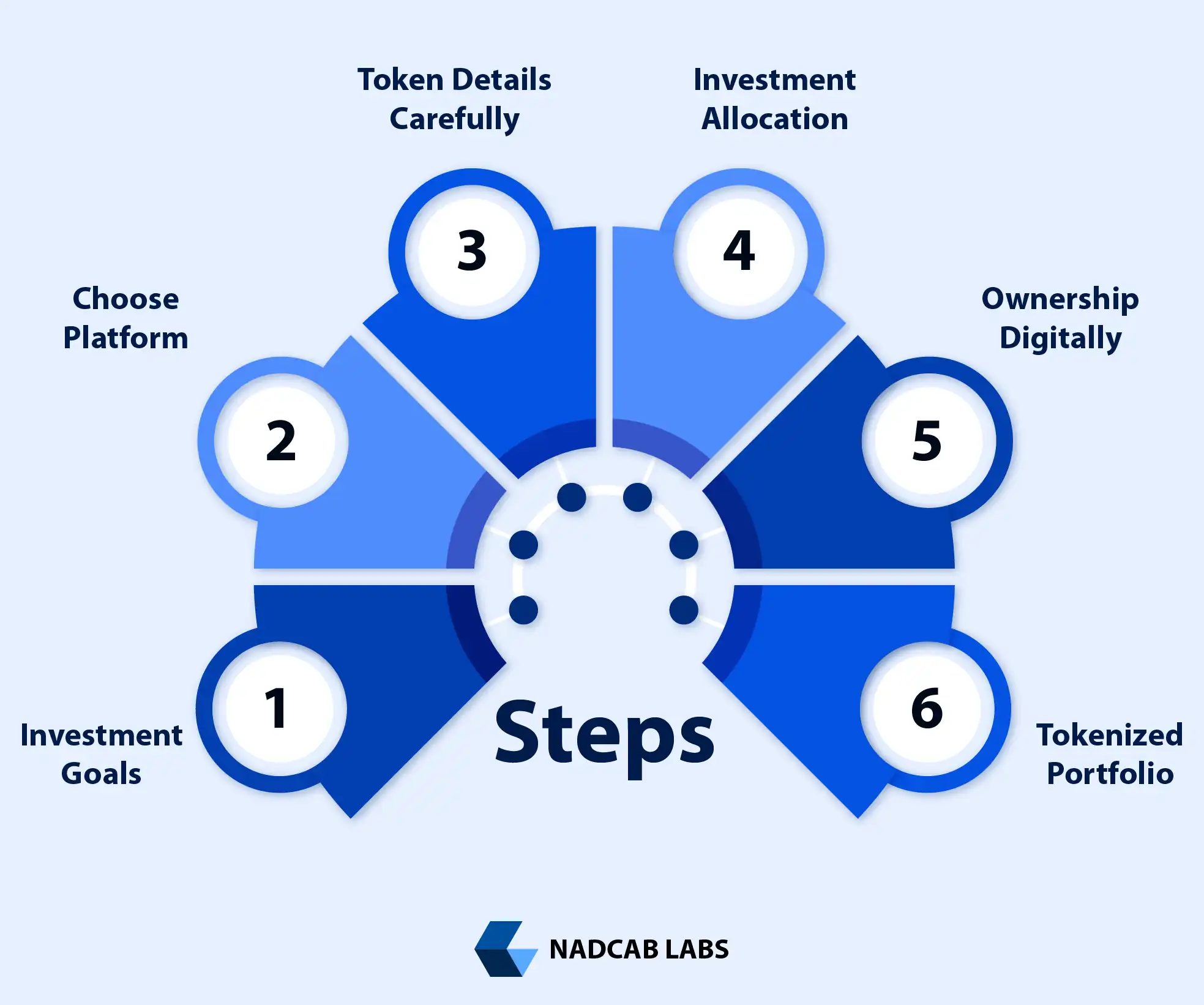
Step 1 Define Your Investment Goals
Before participating in real estate fractional tokenization, investors should clearly define their objectives. Some investors focus on steady rental income, while others aim for long-term capital appreciation or portfolio diversification across multiple properties.
Clear goals help determine:
- Suitable property types
- Investment duration
- Risk tolerance
- Capital allocation strategy
This foundational step ensures that fractional ownership aligns with broader financial planning.
Step 2 Choose a Compliant Fractional Tokenization Platform
Selecting the right platform is critical when getting started with real estate fractional tokenization. A reliable platform should operate under legally compliant frameworks and provide transparent documentation for every listed property.
Key factors to review include:
- Legal structure such as SPVs or trusts
- Clear ownership and income rights
- Verified property valuations
- Secure and audited digital contracts
A compliant platform ensures that blockchain-based tokens are legally linked to real-world real estate assets.
Step 3 Review Property and Token Details Carefully
Each fractional tokenized property comes with specific investment parameters. Investors should review all available information before purchasing tokens.
Important details to analyze:
- Property location and asset quality
- Expected rental yield or return profile
- Token price and total supply
- Lock-in periods or exit options
This step helps investors understand what they are investing in and how returns are generated through real estate fractional tokenization.
Step 4 Start with a Small Investment Allocation
For first-time investors, starting small is a practical way to understand how real estate fractional tokenization works in real conditions. Fractional ownership allows investors to participate with lower capital while gaining experience in income distribution, reporting, and platform operations.
Gradual entry helps:
- Reduce exposure to early risks
- Evaluate platform performance
- Build confidence before scaling investments
Step 5 Track Performance and Ownership Digitally
Once invested, fractional ownership is managed digitally through blockchain records. Investors should regularly monitor:
- Ownership details
- Rental income distribution
- Token performance
- Platform updates and disclosures
This ongoing visibility is a key advantage of real estate fractional tokenization and supports informed decision-making.
Step 6 Expand and Diversify Your Tokenized Portfolio
After gaining experience, investors can gradually expand into multiple tokenized properties across different asset types or regions. Real estate fractional tokenization enables diversification without requiring large capital commitments to a single property.
A diversified tokenized portfolio can improve risk management while maintaining consistent exposure to real estate markets.
How Property Investors Can Start with Real Estate Fractional Tokenization?
Getting started with real estate fractional tokenization requires a shift from traditional property-buying methods to a more structured, digital-first investment approach. Instead of purchasing entire physical assets, investors participate through fractional ownership enabled by blockchain technology. This means greater emphasis is placed on platform credibility, asset fundamentals, and legally compliant ownership structures rather than location visits or manual paperwork.
For property investors, real estate fractional tokenization simplifies access to high-value assets while preserving exposure to rental income and long-term appreciation. However, successful participation depends on understanding how digital ownership aligns with real-world property value and legal enforceability.
Understanding Your Investment Objective
Before entering real estate fractional tokenization, investors should clearly define their investment objectives. Just like traditional real estate, fractional ownership can serve different financial goals depending on the asset structure and return model.
Some investors prioritize stable rental income, while others focus on capital appreciation or portfolio diversification across multiple properties and regions. Identifying the primary objective helps investors select the right tokenized assets and avoid misaligned investments.
Clear objectives help determine:
- Property type selection Residential, commercial, hospitality, or income-generating assets each serve different risk and return profiles within real estate fractional tokenization.
- Investment horizon Short-term income strategies differ from long-term appreciation goals. Understanding your time frame helps evaluate lock-in periods and exit flexibility.
- Risk tolerance Some tokenized properties offer predictable cash flows, while others depend on future value growth. Risk tolerance guides allocation decisions.
- Expected liquidity needs Fractional ownership improves liquidity compared to traditional real estate, but investors should still assess how easily tokens can be transferred or exited.
This clarity ensures that real estate fractional tokenization becomes a strategic extension of a broader investment plan rather than a speculative decision driven by technology trends. When investment goals are well defined, fractional ownership delivers predictable participation in real estate markets with improved efficiency and transparency.
Evaluating Fractional Tokenization Platforms for Investors
Choosing the right platform is one of the most critical decisions when entering real estate fractional tokenization. These platforms act as the operational and legal bridge between physical real estate assets and blockchain-based digital ownership. A strong platform ensures that fractional ownership is secure, compliant, transparent, and efficiently managed throughout the investment lifecycle.
For property investors, platform quality directly impacts ownership protection, return reliability, and long-term confidence in fractional investments.
Key Factors Investors Should Assess
When evaluating platforms offering real estate fractional tokenization, investors should focus on three core pillars: legal compliance, asset transparency, and technology security.
1. Legal and Regulatory Compliance
A reliable fractional tokenization platform must operate within established legal and regulatory frameworks. Real estate assets should be held under legally recognized structures such as Special Purpose Vehicles (SPVs) or trusts, ensuring that token holders have enforceable economic rights tied to the underlying property.
Strong legal compliance:
- Protects investors from ownership disputes
- Aligns tokenized assets with property and securities laws
- Ensures off-chain assets are properly linked to on-chain tokens
Without compliant legal structuring, real estate fractional tokenization loses its foundation as a secure investment model.
2. Asset Transparency
Transparency is essential for investor trust and long-term participation in real estate fractional tokenization. Investors should have full visibility into the property and its financial performance before committing capital.
Investors should have access to:
- Property valuation reports prepared by certified professionals
- Legal documentation outlining ownership and income rights
- Rental yield projections and income assumptions
- Ownership structure details, including SPV or trust arrangements
3. Technology and Security
The technology stack behind a real estate fractional tokenization platform plays a vital role in safeguarding investor interests. Platforms should use audited digital contracts and secure blockchain infrastructure to manage ownership records, token transfers, and revenue distribution.
Key technology benefits include:
- Automated ownership tracking
- Transparent and tamper-proof transaction history
- Accurate and timely income distribution
- Reduced reliance on manual intermediaries
Strong security practices ensure that efficiency does not come at the cost of investor protection.
Platform Evaluation Checklist for Real Estate Fractional Tokenization
| Evaluation Factor | What Investors Should Look For | Why It Matters |
|---|---|---|
| Legal Structure | SPV or trust-based asset holding | Ensures enforceable ownership rights |
| Regulatory Compliance | Alignment with property and securities laws | Reduces legal and regulatory risk |
| Asset Transparency | Valuation reports, legal docs, yield data | Builds investor trust and clarity |
| Ownership Clarity | Clear mapping of tokens to property rights | Avoids ambiguity in fractional ownership |
| Blockchain Infrastructure | Secure and widely used blockchain networks | Enhances transparency and reliability |
| Digital Contract Audits | Third-party audited digital contracts | Minimizes technical and security risks |
| Income Distribution | Automated and proportional payouts | Ensures accuracy and efficiency |
| Reporting & Dashboards | Real-time access to performance data | Supports informed investment decisions |
Entry Strategy for First-Time Property Investors
For many new investors, stepping into real estate fractional tokenization can feel both exciting and unfamiliar. Unlike traditional property investing where you buy and manage a physical asset, fractional tokenization lets you own a share of a property digitally. This modern investment model opens doors to high-value assets without huge upfront costs, but it’s still important to approach it with a thoughtful strategy.[1]
1. Start with Clear Financial Planning
Before you invest in any real estate fractional tokenization opportunity, get a clear picture of your finances. First-time investors often underestimate the importance of a solid financial foundation. This includes evaluating your savings, understanding your risk tolerance, and knowing how much capital you’re willing to allocate to fractional property investments. Traditional real estate advice suggests that having a financial plan helps you avoid rash decisions and focus on long-term wealth goals.[2]
A clear financial plan should include:
- Your investment capital available for fractional tokens
- Emergency funds separate from your investment allocation
- Expected holding period and liquidity needs
Approaching fractional investments with a disciplined financial plan reduces stress and increases your ability to stay invested through market cycles.
2. Learn About the Market and Platforms
One of the biggest advantages of real estate fractional tokenization is accessibility, but that doesn’t eliminate the need for research. Before you commit to any platform, understand how fractional real estate works, how tokens represent ownership, and how rental income and capital gains are distributed.
Reputable fractional investing platforms provide detailed property data, legal documentation, rental projections, and income potential information. Accessing this due diligence helps you make informed choices rather than decisions based on marketing alone.
3. Start with Small Allocations
As a first-time investor, don’t feel pressured to deploy all your capital at once. A smart entry strategy is to start with a small investment in one or two tokenized properties. Starting small lets you experience real-world results and understand how token ownership works in practice. It also allows you to evaluate platforms, income distributions, and secondary market activity without overcommitting.
Industry experts often recommend beginning with conservative allocations to preserve capital while learning the ropes. This gives you flexibility to scale your investment over time as your confidence and understanding grows.
4. Diversify Across Assets and Locations
One major advantage of real estate fractional tokenization is that you can diversify far more easily than traditional real estate. Instead of investing all your capital in one property, you can spread it across multiple tokenized offerings, residential, commercial, or industrial assets, sometimes even across different regions.
Diversification helps mitigate risk. For example:
- Commercial tokenized properties may deliver steadier rental income
- Residential tokenized assets might offer stable demand
- Tokenized portfolios with global exposure can benefit from different market cycles
This approach lets you reduce dependency on a single asset while still benefiting from overall real estate growth.
5. Use Professional and Community Resources
Even though fractional tokenization simplifies access to property investments, first-time investors still benefit greatly from guidance. Talking to financial advisors, investment mentors, or joining investor communities gives you insights beyond basic research. Experienced investors can help you avoid common pitfalls, refine your strategy, and understand market trends.
By leveraging professional advice and learning from others’ experiences, you strengthen your foundation as a fractional investor and reduce the risk of common early mistakes.
6. Monitor and Reassess Your Investments
Investing isn’t a one-time action, it’s an ongoing process. After getting started with real estate fractional tokenization, track the performance of your assets regularly. Monitor rental distributions, changes in property valuations, platform updates, and market trends.
Setting periodic review checkpoints—like every quarter or annually—helps you reassess your strategy and decide whether to increase your exposure, diversify further, or rebalance your portfolio.
Due Diligence Checklist for Fractional Property Investments
Real estate fractional tokenization simplifies ownership, access, and management, but it does not remove the responsibility of making informed investment decisions. Just like traditional real estate, fractional property investments require careful evaluation of the asset, the structure, and the platform involved. Strong due diligence helps investors reduce risk, set realistic expectations, and build long-term confidence in tokenized ownership models.
For property investors, due diligence is the foundation that separates strategic participation in real estate fractional tokenization from speculative decision-making.
Key Areas to Review
When evaluating opportunities in real estate fractional tokenization, investors should focus on three core areas: property fundamentals, token economics, and platform credibility.
1. Property Fundamentals
Even though ownership is fractional and digital, the underlying asset remains a physical property. Investors should begin their due diligence by evaluating the real estate itself, as property performance ultimately drives returns.
Key factors to assess include:
- Location quality, including connectivity, infrastructure, and neighborhood growth
- Tenant stability, especially for income-generating assets
- Rental demand, vacancy trends, and lease terms
- Long-term growth prospects, such as urban development or economic expansion
Strong property fundamentals ensure that real estate fractional tokenization is backed by tangible value rather than short-term market hype.
2. Token Economics
Understanding token economics is essential when investing through real estate fractional tokenization. Tokens represent proportional ownership or income rights, so investors must clearly understand how value and returns are structured.
Important elements to review include:
- Total token supply and how it reflects the property’s valuation
- Price per token and minimum investment requirements
- Income rights, including rental distributions or profit-sharing models
- Exit mechanisms, such as resale options, secondary markets, or planned asset liquidation
Clear and well-defined token economics reduce ambiguity and help investors align expected returns with their investment goals.
3. Platform Track Record
The platform facilitating real estate fractional tokenization plays a critical role in execution, transparency, and investor protection. A strong track record signals operational maturity and long-term reliability.
Investors should assess:
- Past projects and their performance history
- Investor reviews and testimonials for credibility and trust signals
- Operational transparency, including disclosures and reporting standards
- Audit history, covering legal frameworks and digital contract security
A platform with a consistent track record reduces operational risk and reinforces confidence in fractional ownership structures.
Why Due Diligence Matters in Fractional Tokenization?
Real estate fractional tokenization introduces efficiency and accessibility, but it still exposes investors to property market risks, platform dependencies, and regulatory considerations. Performing thorough due diligence allows investors to identify quality opportunities, avoid misaligned investments, and participate with realistic expectations.
Strong due diligence protects investors, improves decision-making, and reinforces long-term confidence in tokenized real estate ownership as a sustainable investment model.
Risk Awareness in Real Estate Fractional Tokenization
While real estate fractional tokenization significantly improves accessibility, transparency, and investment efficiency, it does not eliminate risk. Like traditional property investment, fractional ownership remains exposed to market dynamics, operational dependencies, and regulatory environments. Investors who understand these risks are better positioned to make informed decisions and maintain realistic return expectations.
Risk awareness is not about discouraging participation in real estate fractional tokenization, but about ensuring investors enter the market with clarity and strategic intent.
Common Investor Risks to Consider
Before allocating capital to real estate fractional tokenization, investors should carefully evaluate the following risk categories.
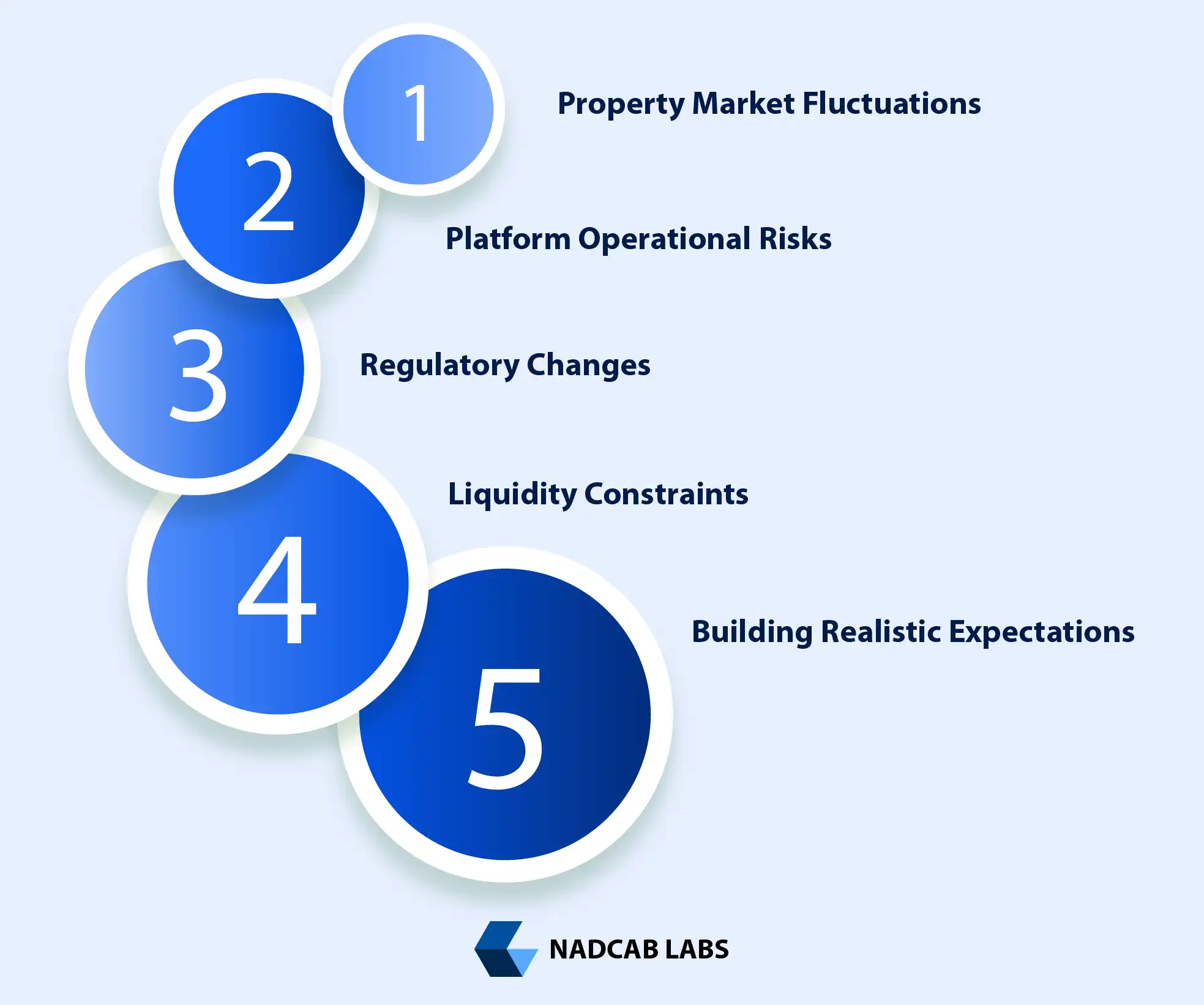
1. Property Market Fluctuations
Tokenized properties are still subject to real estate market cycles. Changes in demand, interest rates, economic conditions, or local infrastructure development can impact property valuations and rental income.
Even with fractional ownership, investors may experience:
- Variations in rental yield
- Delays in appreciation timelines
- Temporary reductions in asset value
Understanding market exposure helps investors avoid unrealistic short-term expectations.
2. Platform Operational Risks
Real estate fractional tokenization relies on platforms to manage asset onboarding, ownership records, income distribution, and reporting. Operational failures, poor governance, or lack of transparency can affect investor outcomes.
Key considerations include:
- Platform governance and management experience
- Security of digital ownership infrastructure
- Continuity of operations in adverse scenarios
Selecting established platforms with strong compliance and audit practices reduces operational risk.
3. Regulatory Changes
The regulatory landscape for real estate fractional tokenization is still evolving across jurisdictions. Changes in securities laws, property regulations, or digital asset policies can influence how fractional ownership is structured or traded.
Potential impacts include:
- Restrictions on token transfers
- Changes in investor eligibility
- Compliance-related delays or restructuring
Investors should stay informed about applicable regulations and choose platforms that proactively adapt to legal requirements.
4. Liquidity Constraints
Although real estate fractional tokenization improves liquidity compared to traditional property ownership, liquidity is not guaranteed. Exit opportunities often depend on secondary markets or platform-specific mechanisms.
Liquidity risks may arise due to:
- Limited secondary market participation
- Lock-in periods for certain assets
- Market conditions affecting buyer demand
Understanding liquidity constraints helps investors align tokenized property investments with their cash flow needs.
5. Building Realistic Expectations
Awareness of these risks allows investors to approach real estate fractional tokenization with a balanced perspective. By diversifying across assets, evaluating platforms carefully, and aligning investments with long-term objectives, investors can reduce overexposure while benefiting from the efficiencies of tokenized ownership.
Getting Started the Right Way
Real estate fractional tokenization offers property investors a modern pathway to access high-value assets with lower capital requirements and improved flexibility. By focusing on platform credibility, asset quality, structured entry strategies, and informed risk assessment, investors can participate confidently in this evolving investment model.
For property investors seeking a regulated, transparent, and scalable approach to real estate ownership, real estate fractional tokenization represents a practical next step rather than a speculative leap.
People Also Ask
Before investing in fractional real estate tokens, evaluating the underlying property’s true value is crucial. This involves reviewing professional property appraisals, historical rental performance, occupancy rates, and the surrounding market conditions. Investors should also analyze macroeconomic trends, local infrastructure development, and potential regulatory impacts. A thorough understanding of these factors ensures that the token price accurately reflects the property’s real-world value rather than speculative hype.
Token economics determine how ownership, income, and potential gains are distributed among investors. Factors such as total token supply, minimum investment per token, dividend structures, and exit options directly influence returns. For instance, properties with high token supply and broad investor participation may offer smaller proportional rental yields, whereas limited supply with strategic pricing can yield higher income per token. Understanding the token model is critical to aligning investment expectations with potential outcomes.
Liquidity in secondary markets varies widely across platforms and assets. While fractional tokenization offers higher liquidity than traditional property ownership, secondary markets may have low trading volumes for niche properties or new platforms. Investors should assess past trading history, market depth, and the ease of transferring tokens before committing capital. Awareness of these factors prevents surprises and ensures that exit strategies are realistic.
Operational risk includes platform management, governance, cybersecurity, and continuity of services. A platform with poor operational oversight or outdated infrastructure can delay payouts, mismanage property records, or even risk token ownership disputes. Investors should verify platform audits, governance transparency, and contingency measures for operational failures to reduce exposure to avoidable losses.
Regulations for digital assets and fractional property ownership are evolving rapidly. Changes in securities laws, property transfer restrictions, or digital asset policies can alter how tokens are issued, traded, or transferred. Investors need to stay updated on jurisdiction-specific regulations, choose platforms that proactively comply, and understand potential legal implications to safeguard their investments.
While fractional tokenization allows portfolio diversification and easier access to multiple properties, it does not eliminate market risk. Investors remain exposed to fluctuations in property values, rental demand, and macroeconomic trends. However, the ability to hold smaller allocations across different assets and geographies provides flexibility in managing volatility and balancing risk compared to concentrating capital in a single physical property.
Governance structures determine how decisions regarding property management, rental policies, or asset liquidation are made. Platforms that incorporate clear governance frameworks, voting rights for token holders, and transparent operational protocols give investors confidence that management aligns with their interests. Weak or opaque governance increases the likelihood of mismanagement, delayed decisions, or disputes among investors.
Income predictability depends on the type of property, lease structures, tenant stability, and platform efficiency. Residential properties with long-term tenants may offer steady rental income, while commercial or hospitality assets may have more variable returns. Fractional platforms automate distributions through smart contracts, but investors should analyze historical performance, occupancy patterns, and contract terms to form realistic expectations.
Mitigating risks requires diversification across property types, geographies, and platforms. Investors should avoid concentrating capital in a single asset or relying solely on one platform. Combining tokenized residential, commercial, and mixed-use assets, along with monitoring liquidity options and regulatory changes, helps create a resilient portfolio capable of weathering market fluctuations and operational uncertainties.
Platform credibility extends beyond compliance; it includes operational track record, property selection criteria, technology infrastructure, and investor support. Reviewing past projects, audits, token issuance protocols, and feedback from current investors provides insights into reliability. Established platforms with transparent reporting, secure smart contracts, and professional governance significantly reduce risks associated with fractional tokenized investments.
Reviewed By

Aman Vaths
Founder of Nadcab Labs
Aman Vaths is the Founder & CTO of Nadcab Labs, a global digital engineering company delivering enterprise-grade solutions across AI, Web3, Blockchain, Big Data, Cloud, Cybersecurity, and Modern Application Development. With deep technical leadership and product innovation experience, Aman has positioned Nadcab Labs as one of the most advanced engineering companies driving the next era of intelligent, secure, and scalable software systems. Under his leadership, Nadcab Labs has built 2,000+ global projects across sectors including fintech, banking, healthcare, real estate, logistics, gaming, manufacturing, and next-generation DePIN networks. Aman’s strength lies in architecting high-performance systems, end-to-end platform engineering, and designing enterprise solutions that operate at global scale.