Key Takeaways – Smart Contract
- Smart contracts are self-executing agreements smart contracts are digital programs that run on blockchain networks and automatically execute actions when predefined conditions are met.
- “Smart” means automated, not intelligent the term smart refers to automation and predefined logic, not decision-making or artificial intelligence.
- Code replaces traditional enforcement smart contracts define rules and obligations like traditional contracts, but enforcement is handled by blockchain code instead of people or institutions.
- Used far beyond cryptocurrencies smart contracts power real-world applications across finance, real estate, supply chains, healthcare, governance, and digital services.
- Security depends on code quality bugs or logical errors can cause irreversible losses, making thorough testing and professional audits essential.
- Immutability increases risk once deployed, most smart contracts cannot be easily changed, so mistakes are difficult and costly to fix.
- Legal frameworks are still evolving smart contracts often operate alongside traditional legal agreements due to unclear or developing regulations.
- Strong long-term potential advances in scalability, interoperability, enterprise adoption, and legal recognition are driving the future growth of smart contracts.
Smart contracts are changing the way agreements work in the digital world. Instead of using paper contracts, lawyers, or middlemen, smart contracts work automatically using computer code on a blockchain. When certain conditions are met, the contract completes the task on its own without any human help.
Today, smart contracts are not limited to cryptocurrencies. They are used in many areas like finance, real estate, supply chains, healthcare, and online services. By removing middlemen, smart contracts save time, reduce costs, and increase trust between people who may not know each other.
In this guide, you will learn what smart contracts are, why they are called “smart,” how they work, their benefits, risks, real-world uses, and what the future looks like.
What is a Smart Contract?
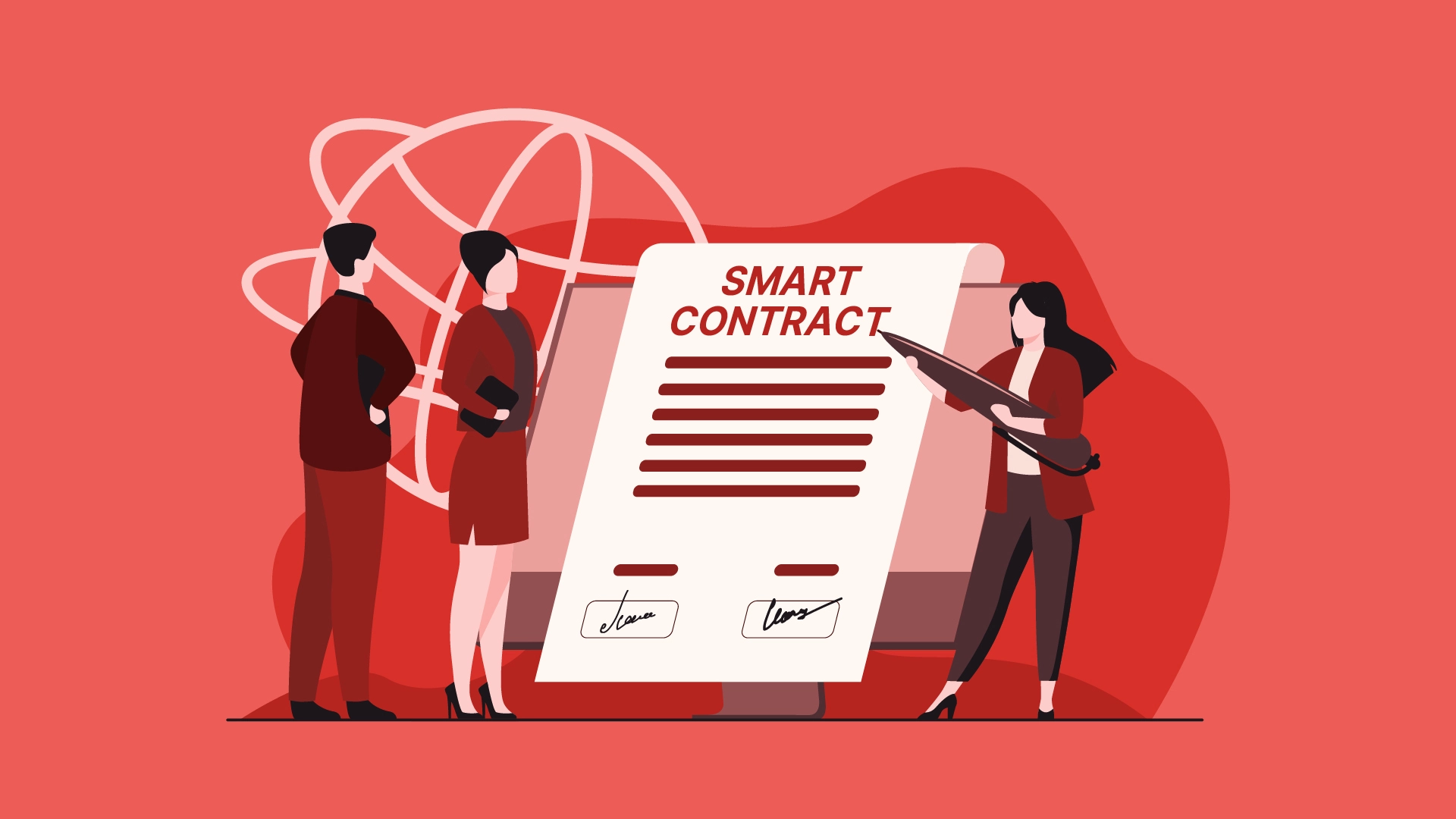
A smart contract is a self-executing computer program that runs on a blockchain. It automatically performs predefined actions when certain conditions are met. Once executed, the transaction is permanently recorded on the blockchain and cannot be changed or reversed.
A simple way to understand a smart contract is to think of a vending machine. When you insert the correct amount of money and select a product, the machine automatically delivers the item without needing a shopkeeper. Similarly, smart contracts execute agreements automatically without human involvement.
Smart contracts enable secure and transparent transactions between parties who may not know or trust each other. They remove the need for intermediaries such as banks, brokers, or legal authorities, making processes faster and more cost-effective. You can explore more in Investopedia’s detailed guide on smart contracts.
Although blockchain technology is commonly associated with Bitcoin, its use has expanded far beyond cryptocurrencies. Today, blockchains support smart contracts that power decentralized applications across many industries.
For example:
-
If payment is received → ownership is transferred
-
If goods are delivered → funds are released
-
If conditions are violated → penalties are applied
All of this happens automatically and transparently.
Why Are Smart Contracts Called “Smart”?
The term smart in smart contracts does not mean that the contract can think or make decisions like a human. Instead, it refers to the way the contract operates using programmed rules. A smart contract works on predefined logic written into code. When specific conditions are met, the contract automatically performs the required action without needing human involvement.
Smart contracts are considered smart because they execute automatically once conditions are satisfied. This automation removes the need for manual intervention, approvals, or third parties. As a result, processes become faster, more reliable, and more efficient. Since execution is handled entirely by code, the chances of human error such as delays, incorrect calculations, or manipulation are significantly reduced.
They are called contracts because they function like traditional agreements. A smart contract clearly defines the obligations of each party involved, specifies the exact conditions under which actions should occur, and enforces outcomes automatically. Once deployed, the contract ensures that all agreed terms are followed exactly as written, without relying on trust, legal enforcement, or intermediaries.
In simple terms, smart contracts are smart because they automate execution based on logic, and they are contracts because they define, control, and enforce agreements in a secure and transparent way.
Why Are They Called Contracts?
Smart contracts are called contracts because they serve the same fundamental purpose as traditional agreements. They establish a clear framework that governs how participating parties interact and what outcomes should occur.
They clearly define rules and obligations, ensuring that each party understands its responsibilities. They also specify the conditions under which certain actions must take place. Once those conditions are met, the contract enforces the agreed outcomes automatically.
The main difference from traditional paper contracts lies in enforcement. Instead of relying on people, intermediaries, or legal institutions, smart contracts are enforced by code deployed on a blockchain. This code executes exactly as written, without bias, delay, or manual intervention, making the agreement more reliable and transparent.
In essence, they are called contracts because they formalize and enforce agreements, but in a digital, automated, and trustless way.
The Evolution of Smart Contracts
The concept of smart contracts was first introduced in 1994 by Nick Szabo, an American computer scientist and cryptographer. He described smart contracts as digital protocols designed to automatically enforce the terms of an agreement.
Later, Szabo proposed a digital currency concept called Bit Gold, which existed years before Bitcoin. Although some speculate that he could be Satoshi Nakamoto, the creator of Bitcoin, Szabo has denied these claims. To know more about smart contracts, explore 101blockchains.
Szabo believed smart contracts could extend traditional electronic transaction systems, such as point-of-sale terminals, into the digital space. He also predicted the use of smart contracts in complex financial instruments like derivatives and synthetic assets. Many of these predictions became reality even before blockchain technology became widely adopted.
Key Features of Smart Contracts
Smart contracts are basically digital agreements that run on their own, follow fixed rules, and help people transact safely, openly, and without depending on any middleman.
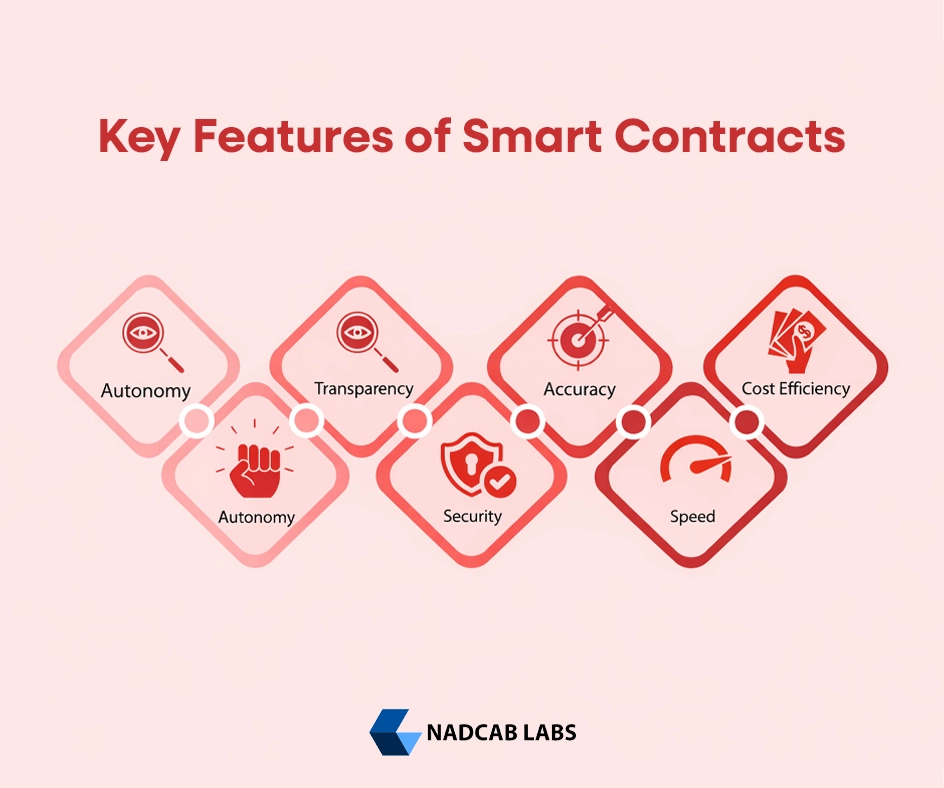
- Automation – Smart contracts execute actions automatically when predefined conditions are met. There is no need for human involvement, approval, or manual processing once the contract is deployed on the blockchain.
- Transparency – All smart contract rules and transactions are visible on the blockchain. Anyone can verify how the contract works, which builds trust and prevents hidden changes or unfair manipulation.
- Immutability – Once deployed, smart contracts cannot be easily changed. This ensures rules remain fixed and predictable, protecting users from sudden changes or unauthorized modifications after execution.
- Security – Smart contracts use blockchain cryptography for protection. When written properly, they prevent fraud, unauthorized access, and data tampering, making transactions more secure than traditional systems.
- Trustlessness – Smart contracts remove the need to trust third parties. Users only trust the code, which executes rules fairly and equally for everyone without bias or favoritism.
- Decentralization – Smart contracts run on decentralized blockchain networks. No single authority controls them, which reduces censorship, downtime, and reliance on central servers or organizations.
- Accuracy – Smart contracts follow coded logic exactly as written. This reduces human errors and ensures consistent execution of rules across all transactions and users.
- Cost Efficiency – By removing intermediaries like banks and agents, smart contracts lower transaction costs and operational expenses while improving speed and overall efficiency.
Benefits of Smart Contracts
Smart contracts offer several powerful advantages over traditional agreements, making them ideal for digital and blockchain-based systems. To learn more about smart contracts in detail, you can explore IBM,
- Reduced Costs – Smart contracts remove the need for intermediaries such as lawyers, brokers, or agents. Since execution is handled by code, operational and legal costs are significantly lowered.
- Faster Transactions – Automated execution eliminates manual approvals and paperwork. Once conditions are met, transactions are completed almost instantly.
- Trustless Environment – Parties do not need to trust each other. The blockchain and the contract code ensure that rules are followed exactly as defined.
- Global Access – Anyone with an internet connection can use smart contracts, enabling borderless participation without relying on local institutions.
- Immutable Records – All transactions are permanently recorded on the blockchain. They cannot be changed, deleted, or tampered with, ensuring transparency and accountability.
These benefits make smart contracts a key building block for decentralized applications, digital finance, and enterprise automation.
Where Are Smart Contracts Used?
Smart contracts can be used in many real-world scenarios. One common use case is automated payments between businesses. For example, a buyer and supplier can agree that payment will be released automatically once goods are shipped or delivered.
It is important to understand that while smart contracts handle digital execution, physical processes still require human involvement. For instance, when a customer pays a retailer using cryptocurrency, the smart contract processes the payment, but packing and shipping are handled manually. Implementing an auditing service can help ensure that these smart contracts function correctly and remain secure throughout their lifecycle.
Despite these limitations, smart contracts are being explored and adopted in several industries, including:
-
Real estate transactions
-
Stock and commodity trading
-
Lending and borrowing platforms
-
Corporate governance systems
-
Supply chain management
-
Healthcare systems
-
Dispute resolution processes
Build My Smart Contract Now!
Turn your dream into reality with a powerful, secure smart contract built just for you. Start building now and watch your idea come alive!
Challenges & Risks of Smart Contracts
While smart contracts offer automation and efficiency, they also come with certain risks that must be carefully considered.
- Coding Errors – Smart contracts run exactly as programmed. Even a small bug or logic error in the code can lead to serious financial losses or unintended behavior.
- Irreversibility – Once a smart contract is deployed and executed, transactions cannot be reversed. Mistakes or exploits are often permanent.
- Regulatory Uncertainty – Laws and regulations related to smart contracts are still developing in many countries. This creates legal ambiguity around enforcement, liability, and compliance.
- Scalability Issues – Popular blockchain networks can experience congestion, leading to slower transactions and higher fees, especially during peak usage.
Because of these challenges, smart contracts require thorough testing, professional audits, and careful legal consideration before deployment.
Future of Smart Contracts
The future of smart contracts looks very promising. As blockchain technology improves, smart contracts will become faster, cheaper, and easier to use. New blockchain networks and scaling solutions will help them handle more transactions without high costs.
In the coming years, smart contracts will be able to work across different blockchains, allowing data and assets to move smoothly from one network to another. They will also connect better with real-world information like prices, delivery status, or weather through reliable data sources.
For businesses, smart contracts will become simpler to create and manage. Ready-made templates and easy tools will reduce technical complexity. Governments and legal systems are also moving toward recognizing smart contracts, which will increase trust and adoption.
In the future, smart contracts will work quietly in the background, automatically handling agreements and processes, making digital systems more efficient and trustworthy.
Final Words
Smart contracts make agreements simple, fast, and automatic. They follow fixed rules written in code and run on a blockchain, which means they cannot be changed or cheated. This helps people and businesses complete transactions safely without relying on trust or third parties.
Even though smart contracts have some challenges, like coding mistakes or unclear laws, their benefits are much bigger. As technology improves, smart contracts will become easier to use and more common in everyday life.
In the future, smart contracts will work quietly in the background, handling payments, agreements, and processes automatically. Understanding smart contracts today helps you prepare for a smarter and more digital future.
FAQs - Smart Contract Guide
A smart contract is a digital agreement that runs automatically on a blockchain. It follows fixed rules written in code. When certain conditions are met, it completes actions on its own, like sending money or transferring ownership, without needing people or intermediaries.
An example of a smart contract is an online payment release system. If a buyer sends payment and the seller delivers the product, the smart contract automatically releases the funds. If delivery does not happen, the payment is not released. Everything works automatically.
There is no single “best” smart contract. The best one depends on your use case, such as payments, NFTs, or DeFi. A good smart contract is secure, simple, well-tested, and designed specifically for the problem it is meant to solve.
Once deployed, smart contracts are not controlled by any single person. They run automatically on the blockchain. Some contracts may include admin controls for upgrades, but generally, the contract follows its coded rules without interference from users or authorities.
You can read smart contracts on blockchain explorers like Etherscan, Polygonscan, or Solscan. These platforms show the contract code, transactions, and activity. Many open-source smart contracts are also available on GitHub for learning and review.
Smart contracts are written in programming languages designed for blockchains. The most common is Solidity, used on Ethereum and similar networks. Other languages include Rust, Vyper, and Move, depending on the blockchain platform being used.
A smart contract is safe if it is written correctly and audited by experts. Blockchain security protects the contract, but the code itself must be secure. Most risks come from human mistakes in coding, not from the blockchain technology itself.
Smart contracts can be legal, but their legal status depends on country laws. In many regions, they are recognized as valid agreements if they meet legal requirements. However, laws are still evolving, and smart contracts often work alongside traditional legal contracts.
Yes, smart contracts can be risky if they are poorly written or not properly tested. Coding errors, security bugs, or unclear logic can lead to financial losses. Once deployed, most smart contracts cannot be changed, which makes careful development and audits very important.
Bitcoin itself is not a full smart contract platform. It supports only very basic scripts, mainly for sending and receiving BTC. Advanced smart contracts, like those used in DeFi or NFTs, are built on blockchains such as Ethereum, Solana, or Polygon.
Author

Aman Vaths
Founder of Nadcab Labs
Aman Vaths is the Founder & CTO of Nadcab Labs, a global digital engineering company delivering enterprise-grade solutions across AI, Web3, Blockchain, Big Data, Cloud, Cybersecurity, and Modern Application Development. With deep technical leadership and product innovation experience, Aman has positioned Nadcab Labs as one of the most advanced engineering companies driving the next era of intelligent, secure, and scalable software systems. Under his leadership, Nadcab Labs has built 2,000+ global projects across sectors including fintech, banking, healthcare, real estate, logistics, gaming, manufacturing, and next-generation DePIN networks. Aman’s strength lies in architecting high-performance systems, end-to-end platform engineering, and designing enterprise solutions that operate at global scale.