Ai Overview
At its core, digital money is any form of currency that exists exclusively in electronic format. In the UK, contactless payment limits were raised, and usage surged by over 30%. Sweden, for instance, has seen cash usage drop below 10% of all transactions, and the UK is on a similar trajectory. In the USA alone, cybercrime losses related to financial fraud exceeded $10 billion in recent years, highlighting the critical need for robust security infrastructure.
Key Takeaways
- ✓ Digital money encompasses all electronic forms of currency, including mobile wallets, e-wallets, and Central Bank Digital Currencies (CBDCs).
- ✓ The cashless economy is expanding rapidly across the USA, UK, UAE, and Canada, driven by fintech innovations and consumer demand.
- ✓ Blockchain technology plays a critical role in ensuring transparency, security, and decentralization within modern digital currency ecosystems.
- ✓ Understanding the differences between cryptocurrency vs digital currency helps consumers and businesses make informed financial decisions today.
- ✓ Benefits of digital money include faster transactions, lower costs, improved traceability, and greater financial inclusion for underserved populations.
- ✓ Risks of digital currency include cybersecurity threats, regulatory uncertainty, privacy concerns, and the digital divide affecting access.
- ✓ CBDCs are being piloted or launched by over 130 countries, signaling a global shift toward government-backed digital payments.
- ✓ UPI payments and mobile wallets have transformed economies like India, processing billions of transactions monthly through digital infrastructure.
- ✓ Secure online transactions require multi-factor authentication, encryption, biometric verification, and adherence to regulatory compliance standards.
- ✓ The future of cashless economy will be shaped by AI integration, programmable money, embedded finance, and cross-border payment innovations.
The way the world handles money is undergoing a profound transformation. Digital money has moved from a niche technological concept to a fundamental pillar of the global financial system, reshaping how individuals, businesses, and governments interact with value. From contactless payments at a London coffee shop to UPI payments powering street vendors across India, electronic money is redefining what it means to transact in the 21st century. As an agency with over eight years of experience building fintech solutions and crypto exchange solutions, we have witnessed this shift firsthand and helped organizations across the USA, UK, UAE, and Canada adapt to the realities of a cashless economy.
This guide explores everything you need to know about digital money: what it is, how it works, the types available, its benefits and risks, and where it is headed. Whether you are a business leader evaluating online payment systems, a consumer curious about digital wallets, or a policy analyst studying the impact of digital money on economy, this resource provides the authoritative insights you need.
What Is Digital Money? A Simple Explanation
So, what is digital money? At its core, digital money is any form of currency that exists exclusively in electronic format. It is not printed on paper or minted into coins. Instead, it lives on servers, blockchain networks, mobile devices, and cloud-based platforms. When you transfer funds through a banking app, pay with a contactless card, or send cryptocurrency to another wallet, you are using digital money.[1]
Digital money can be broadly categorized into three groups: centralized electronic money managed by banks, decentralized cryptocurrency operating on peer-to-peer networks, and government-issued Central Bank Digital Currencies (CBDCs). Each of these categories serves distinct purposes, but all share the common trait of existing without a physical form. In the USA, the Federal Reserve is actively researching CBDC frameworks, while in the UK, the Bank of England has been evaluating a “digital pound” since 2021. The UAE and Canada have similarly invested in digital currency infrastructure to modernize their financial ecosystems.
Understanding digital money is no longer optional for businesses or consumers. As online payment systems and mobile wallets become the default method for commerce, grasping how electronic money functions and its implications is essential for making informed financial decisions.
Evolution from Physical Cash to Digital Payments
The journey from physical cash to digital payments spans centuries, but the pace of change has accelerated dramatically in the last two decades. Bartering gave way to coins and paper notes, which eventually led to credit cards, ATMs, and online banking. Today, contactless payments and mobile wallets represent the latest chapter in this evolution, and the shift toward a fully cashless economy is gaining momentum worldwide.
The COVID-19 pandemic served as a significant catalyst for digital payments adoption globally. In the UK, contactless payment limits were raised, and usage surged by over 30%. Canada reported similar trends, with tap-to-pay becoming the preferred method for in-store purchases. The UAE invested heavily in fintech innovations, positioning itself as a regional hub for digital financial services. These shifts underscore a clear trajectory: digital money vs physical money is no longer a debate about the future; it is the reality of the present.
Types of Digital Money You Should Know
Understanding the types of digital money available today is crucial for anyone participating in the modern economy. Each type serves different functions, carries different risk profiles, and is governed by distinct regulatory frameworks.
1. Bank-Issued Electronic Money
This is the most common form of digital money. Your bank balance, accessible via debit cards, online banking apps, and wire transfers, represents electronic money. In the USA and UK, this type accounts for the vast majority of daily transactions. It is fully regulated and insured up to specified limits by government agencies like the FDIC in the USA and the FSCS in the UK.
2. Cryptocurrency and Stablecoins
Cryptocurrencies like Bitcoin and Ethereum operate on decentralized blockchain networks. They are not controlled by any central authority, which makes them attractive for peer-to-peer transfers and as investment assets. Stablecoins, such as USDT and USDC, are pegged to fiat currencies to reduce volatility. In Canada and the UAE, regulatory bodies have begun establishing frameworks for cryptocurrency trading and custody.
3. Central Bank Digital Currencies (CBDCs)
CBDCs represent government-backed digital currency issued directly by central banks. Unlike cryptocurrencies, they are centralized and carry the full faith and credit of the issuing nation. The digital rupee in India is a notable example, while the Bank of England, the Federal Reserve, and the Central Bank of the UAE are all actively exploring or piloting their own CBDC programs.
How Digital Money Works Behind the Scenes?
Understanding how digital payments work requires a look at the infrastructure that powers them. When you tap your phone at a checkout terminal, several layers of technology activate simultaneously. Your mobile wallet communicates with the point-of-sale terminal using Near Field Communication (NFC) or QR codes. The transaction request travels through encrypted payment gateways to the acquiring bank, then to the card network (Visa, Mastercard, or a local network), and finally to your issuing bank for authorization.
For cryptocurrency transactions, the process differs significantly. A transaction is broadcast to a network of nodes, validated through consensus mechanisms like proof-of-work or proof-of-stake, and then recorded on an immutable blockchain ledger. This eliminates the need for intermediary banks but introduces different considerations around transaction speed and energy consumption.
In countries like the UAE and Canada, real-time payment systems allow instant settlement of transactions between banks, reducing the traditional 2-3 day clearing period. The UK’s Faster Payments Service and the USA’s FedNow initiative represent critical infrastructure upgrades that make digital money more efficient and accessible for everyday use.
Choosing the Right Digital Payment Model
Step 1: Assess Your Needs
Evaluate transaction volume, target markets, and compliance requirements. Businesses in the USA may prioritize ACH and card processing, while UAE-based firms may focus on mobile wallets.
Step 2: Evaluate Security Standards
Ensure PCI-DSS compliance, end-to-end encryption, and tokenization. Review fraud detection capabilities and data residency requirements for UK and Canadian markets.
Step 3: Plan for Scalability
Select infrastructure that supports growth across regions. Consider cross-border payment capabilities, multi-currency support, and integration with existing banking systems.
Digital Money vs Physical Money: Key Differences
The comparison between digital money vs physical money reveals fundamental differences that affect consumers, businesses, and governments alike. While physical cash offers anonymity and does not require technology to use, digital money provides speed, traceability, and the ability to transact across borders instantly.
| Parameter | Digital Money | Physical Money |
|---|---|---|
| Accessibility | Available 24/7 via devices | Limited to physical possession |
| Transaction Speed | Instant to minutes | Immediate for in-person only |
| Security | Encryption, 2FA, biometrics | Risk of theft, counterfeiting |
| Cross-Border Use | Seamless global transfers | Requires currency exchange |
| Traceability | Fully traceable and auditable | Largely anonymous |
| Cost of Handling | Minimal processing fees | Printing, storage, transport costs |
In the UK, contactless payments now account for a dominant share of in-store transactions, while the USA continues to see rapid adoption of e-wallets and tap-to-pay solutions. The shift from physical to digital is not about eliminating cash entirely but about providing more efficient, inclusive, and secure alternatives for everyday commerce.
Role of Blockchain in Modern Digital Currency
The role of blockchain in digital money extends far beyond powering cryptocurrencies. Blockchain technology provides a distributed, tamper-proof ledger that records every transaction transparently. This makes it particularly valuable for cross-border payments, supply chain finance, and identity verification in the digital payments ecosystem.
In the USA, major financial institutions are integrating blockchain into their settlement processes to reduce costs and increase speed. The UAE has positioned itself as a blockchain-friendly jurisdiction, with Dubai launching several government initiatives built on distributed ledger technology. Canada’s regulatory approach balances innovation with consumer protection, creating a supportive environment for blockchain-based fintech innovations.
However, it is important to note that not all digital money relies on blockchain. Traditional electronic money processed through banking networks uses centralized databases rather than distributed ledgers. The choice between these architectures depends on the use case, with blockchain excelling in scenarios that require trustless verification and transparency, and centralized systems performing better for high-volume, low-latency consumer transactions.
What Is a Cashless Economy and Why It Matters?
A cashless economy is one in which financial transactions are conducted entirely through digital channels, eliminating the need for physical currency. While no country has achieved a fully cashless state, several nations are advancing rapidly in that direction. Sweden, for instance, has seen cash usage drop below 10% of all transactions, and the UK is on a similar trajectory.
The move toward a cashless economy matters because it brings measurable economic benefits. Digital transactions create auditable trails that improve tax compliance and reduce corruption. They lower the costs associated with printing, distributing, and securing physical currency. For businesses, accepting digital payments means faster settlement times and broader customer reach. In the UAE, government-backed initiatives like the Smart Payment Strategy aim to make Dubai a fully cashless city, while Canada’s Interac network has made debit-based digital payments ubiquitous across the country.
However, the future of cashless economy also raises important questions about inclusivity. Not everyone has equal access to smartphones, internet connectivity, or digital literacy. Addressing these gaps is essential to ensuring that the transition to digital money benefits all segments of society rather than deepening existing inequalities.
Benefits of Digital Money in Today’s Economy
The benefits of digital money extend across individuals, businesses, and national economies. For consumers, the convenience of paying with a smartphone or smartwatch eliminates the friction of carrying cash and making exact change. For businesses, digital payments reduce cash-handling costs, minimize theft risk, and enable real-time revenue tracking.
In practical terms, businesses in the USA report that accepting digital payments increases average transaction values by 12-18% compared to cash-only transactions. The UK’s embrace of open banking has created a competitive ecosystem where fintech innovations deliver better rates and experiences for consumers. These tangible outcomes illustrate why the shift to digital money is not merely a technological trend but an economic imperative.
Risks and Challenges of Digital Currency
While the advantages are compelling, the risks of digital currency must be addressed thoughtfully. Cybersecurity threats remain the most pressing concern. Phishing attacks, data breaches, and ransomware targeting financial institutions have increased substantially. In the USA alone, cybercrime losses related to financial fraud exceeded $10 billion in recent years, highlighting the critical need for robust security infrastructure.
Regulatory uncertainty poses another significant challenge. The lack of uniform global standards for digital currency creates compliance complexity for businesses operating across multiple jurisdictions. What is permissible in the UAE may require additional licensing in Canada, and the regulatory landscape in the UK differs from that in the USA. This fragmentation increases costs and slows innovation.
Privacy concerns also warrant attention. As digital money creates detailed transaction records, questions about surveillance, data ownership, and the right to financial privacy become increasingly relevant. Striking the right balance between transparency and privacy is one of the most challenging policy questions facing governments worldwide. Additionally, the digital divide, where certain populations lack access to the technology needed for digital payments, risks creating a two-tier financial system.
Central Bank Digital Currencies (CBDCs) Explained
Central Bank Digital Currency (CBDC) represents a new frontier in the evolution of digital money. Unlike decentralized cryptocurrencies, CBDCs are issued and regulated by a nation’s central bank, making them legal tender with the same stability as physical currency. They combine the efficiency of digital payments with the trust and oversight of traditional monetary systems.
Over 130 countries are currently exploring or piloting CBDCs. The digital rupee in India has already entered pilot phases across multiple cities. The Bank of England is conducting extensive research on a potential digital pound, while the Federal Reserve has published detailed white papers examining the implications of a digital dollar for the US economy. The Central Bank of the UAE is collaborating with regional partners to test cross-border CBDC transfers.
| Country | CBDC Name | Status | Key Features |
|---|---|---|---|
| India | Digital Rupee (e-INR) | Pilot Phase | Retail and wholesale use cases |
| United Kingdom | Digital Pound | Research Phase | Privacy-focused design exploration |
| USA | Digital Dollar | Evaluation Phase | Financial inclusion focus |
| UAE | Digital Dirham | Cross-Border Pilot | mBridge collaboration |
| Canada | Digital CAD | Research Phase | Contingency planning model |
Popular Digital Payment Methods Worldwide
The global landscape of digital payments is diverse, with different regions favoring different platforms and technologies. In the USA, credit and debit cards remain dominant, complemented by Apple Pay, Google Pay, and PayPal. The UK has embraced contactless payments more aggressively than nearly any other market, with over 80% of in-person transactions now completed via tap-to-pay.
In the UAE, mobile wallets like Samsung Pay and local platforms have gained significant traction, supported by government initiatives to reduce cash dependency. Canada’s Interac e-Transfer system processes billions in peer-to-peer payments annually, making it one of the most widely used online payment systems in North America. Meanwhile, India’s UPI payments system has become a global model for real-time digital payments, inspiring similar initiatives in other countries.
E-Wallets
Apple Pay, Google Pay, Samsung Pay for in-store and online purchases
UPI Payments
Instant bank-to-bank transfers via mobile, pioneered in India
Contactless Cards
NFC-enabled tap-to-pay debit and credit cards for fast checkout
Crypto Wallets
Self-custody wallets for Bitcoin, Ethereum, and stablecoin transactions
Is Digital Money Safe? Security Measures & Best Practices
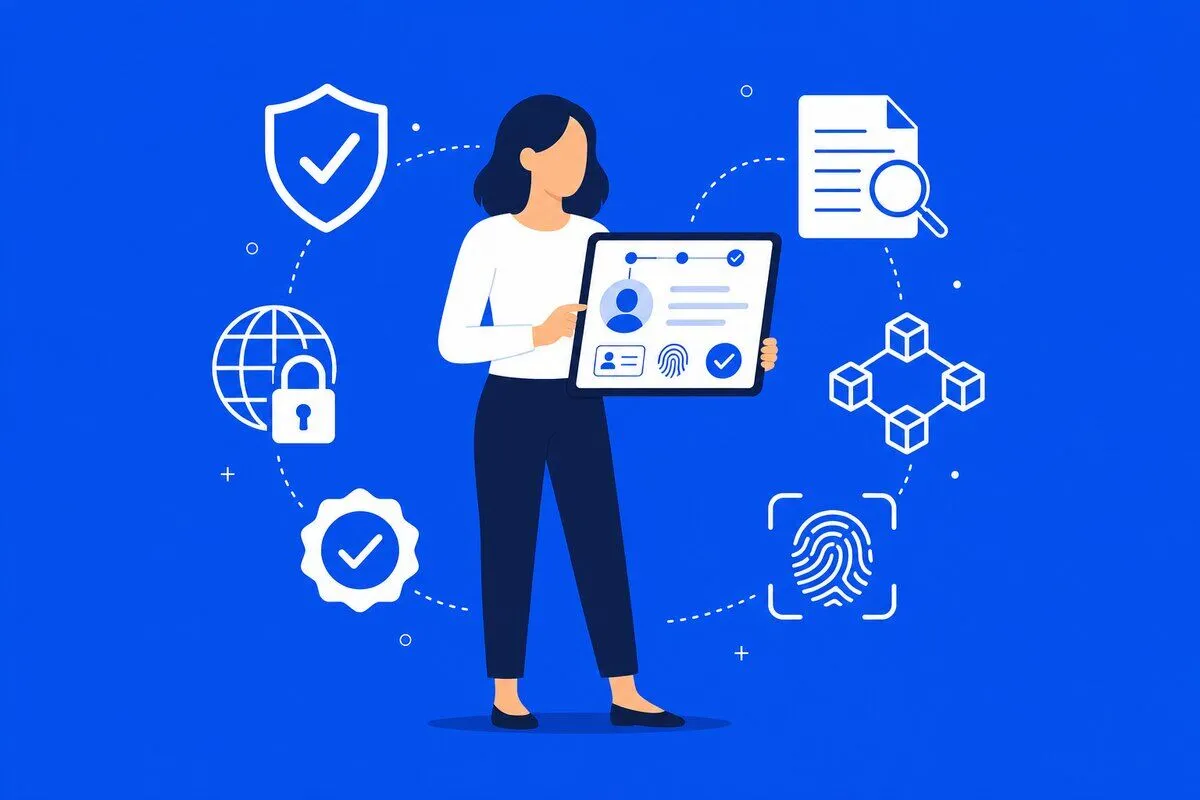
Is digital money safe? This question concerns consumers and businesses alike. The short answer is that digital money is safe when proper security protocols are implemented and followed. Modern digital payment systems employ multiple layers of protection, including AES-256 encryption, tokenization (which replaces sensitive data with non-exploitable tokens), and multi-factor authentication.
Financial regulators in the USA (SEC, FinCEN), UK (FCA), UAE (CBUAE), and Canada (FINTRAC) mandate specific security standards for all institutions handling electronic money. These include Know Your Customer (KYC) verification, Anti-Money Laundering (AML) compliance, and regular security audits. For consumers, best practices include enabling biometric authentication, using unique passwords, avoiding public Wi-Fi for financial transactions, and regularly monitoring account activity for unauthorized access.
Digital Money Compliance & Security Checklist
KYC & AML Compliance
Verify customer identities and monitor transactions for suspicious activity as mandated by regulators in the USA, UK, UAE, and Canada.
Data Encryption Standards
Implement end-to-end encryption for all transaction data, using AES-256 or equivalent standards to ensure secure online transactions.
PCI-DSS Certification
Maintain PCI-DSS compliance for all card payment processing, with annual audits and quarterly vulnerability scans.
Incident Response Planning
Maintain documented breach response procedures with defined escalation paths, notification timelines, and recovery protocols.
Impact of Digital Money on Businesses and Consumers
The impact of digital money on economy is visible across every sector. For businesses, digital payment acceptance has become a baseline expectation rather than a competitive advantage. Retailers, restaurants, service providers, and e-commerce platforms that fail to offer seamless digital payment options risk losing customers to competitors who do. In the USA, studies consistently show that businesses accepting multiple digital payment methods see higher customer satisfaction and repeat purchase rates.
For consumers, digital money has fundamentally changed spending behavior. The ease of contactless payments and e-wallets can encourage impulsive purchases, which is a double-edged sword for personal financial management. On the positive side, digital payment platforms increasingly offer budgeting tools, spending analytics, and automated savings features that help consumers manage their finances more effectively.
Small and medium enterprises (SMEs) in the UK and Canada have particularly benefited from the digital payments revolution. Affordable point-of-sale systems, integrated invoicing, and instant settlement have leveled the playing field, allowing smaller businesses to compete with larger enterprises on payment experience. In the UAE, government programs actively support SME digitization, recognizing that widespread digital payment adoption strengthens the broader economy.
Real-World Example
A mid-sized retail chain in Canada implemented a unified digital payments platform integrating e-wallets, contactless cards, and QR code payments. Within six months, they reported a 22% increase in average transaction value, a 15% reduction in checkout time, and significant savings from reduced cash-handling operations. The transition also enabled better inventory management through real-time sales data analytics.
Digital Financial Inclusion in Developing Countries
One of the most transformative benefits of digital money is its potential to drive financial inclusion. Globally, approximately 1.4 billion adults remain unbanked, lacking access to traditional financial services. Digital money, through mobile wallets and simplified account structures, offers a pathway to bring these populations into the formal financial system.
India’s UPI payments system stands as the most successful example of technology-driven financial inclusion. By enabling instant transfers through basic smartphones, UPI has connected millions of previously unbanked individuals to the digital economy. Similar models are emerging in Africa (M-Pesa), Southeast Asia (GrabPay), and Latin America (Pix in Brazil). These platforms demonstrate that digital money can leapfrog traditional banking infrastructure entirely.
For developed markets like the USA, UK, UAE, and Canada, financial inclusion takes a different form. It involves ensuring that elderly populations, rural communities, and individuals with disabilities can access and use digital payment tools effectively. Accessibility features in mobile wallets, multilingual support, and offline transaction capabilities are all critical components of an inclusive digital money strategy.
The Future of Digital Money and Cashless Transactions
The future of cashless economy is being shaped by several converging trends. Artificial intelligence is being integrated into payment systems to provide smarter fraud detection, personalized financial recommendations, and automated compliance monitoring. Embedded finance, where payment capabilities are built directly into non-financial applications, is expanding the reach of digital money into every consumer touchpoint.
Programmable money, enabled by smart contracts on blockchain networks, represents another frontier. Imagine funds that automatically release when contractual conditions are met, or government subsidies that can only be spent on approved categories. These capabilities could revolutionize how governments, businesses, and individuals manage financial flows.
Cross-border digital payments are also set for significant improvement. Current international transfers are slow and expensive, often involving multiple intermediary banks. Initiatives like Project mBridge (involving the UAE, China, Thailand, and other nations) aim to create interoperable CBDC networks that enable near-instant cross-border settlements. In the USA and UK, regulators are working to create frameworks that support innovation while protecting consumers.
Looking ahead, the convergence of 5G connectivity, Internet of Things (IoT) devices, biometric authentication, and AI-powered fintech innovations will create a payment ecosystem that is faster, more secure, and more accessible than anything we have today. Digital money is not replacing the financial system; it is evolving it into something fundamentally more efficient, inclusive, and responsive to the needs of a connected world.
Ready to Build Future-Proof Digital Payment Solutions?
Partner with our team of fintech experts to create secure, scalable digital money platforms tailored to your market and regulatory environment.
Frequently Asked Questions
Q1.What is digital money and how does it work?
Digital money refers to any form of currency or payment that exists purely in electronic format. Unlike physical cash or coins, digital money is stored, transferred, and managed through online systems, mobile wallets, or banking platforms. It works by leveraging secure networks, encryption protocols, and financial infrastructure to enable real-time transactions between parties. Whether you use UPI payments in India, contactless cards in the UK, or e-wallets in the UAE, digital money eliminates the need for tangible currency by processing value digitally through authorized financial channels.
Q2.Is digital money the same as cryptocurrency?
While both are forms of electronic money, they differ significantly. Cryptocurrency operates on decentralized blockchain networks without central authority oversight, whereas digital currency issued by banks or governments is centrally regulated. Central Bank Digital Currencies (CBDCs) like the digital rupee in India represent government-backed digital money, while Bitcoin and Ethereum are decentralized cryptocurrencies. Understanding the distinction between cryptocurrency vs digital currency is essential for investors, businesses, and consumers navigating the evolving landscape of cashless transactions across the USA, Canada, and beyond.
Q3.What are the benefits of using digital money?
The benefits of digital money include faster transaction speeds, reduced costs, enhanced financial transparency, and improved accessibility for underserved populations. Businesses benefit from streamlined operations, lower cash-handling expenses, and real-time payment tracking. For consumers, digital payments offer convenience through mobile wallets and contactless payments, eliminating the need to carry physical cash. Countries like the UAE and UK have seen increased economic efficiency through widespread digital payment adoption, making secure online transactions a cornerstone of their financial ecosystems.
Q4.What types of digital money exist today?
Types of digital money include bank deposits accessed via debit cards, mobile wallet balances on platforms like Apple Pay or Google Pay, cryptocurrencies such as Bitcoin, stablecoins pegged to fiat currencies, and Central Bank Digital Currencies (CBDCs). Prepaid digital cards, online payment systems like PayPal, and UPI-based transfers also fall under this umbrella. Each type serves different purposes, from everyday retail purchases to cross-border remittances, and their adoption varies across markets in the USA, UK, Canada, and the UAE.
Q5.Is digital money safe to use?
Digital money is generally safe when proper security measures are followed. Reputable platforms use encryption, multi-factor authentication, tokenization, and real-time fraud detection to protect users. However, risks include phishing attacks, unauthorized access, and data breaches. To ensure secure online transactions, users should enable two-factor authentication, avoid sharing credentials, use trusted platforms, and regularly monitor account activity. Regulatory frameworks in countries like the USA, UK, and Canada further strengthen consumer protection in the digital payments ecosystem.
Q6.How does digital money impact the economy?
The impact of digital money on the economy is substantial. It accelerates GDP growth by boosting transaction efficiency, reducing the shadow economy, and increasing tax compliance through traceable payments. Digital payments foster financial inclusion by connecting unbanked populations to formal financial services. In countries like India, UPI payments have revolutionized small business transactions. The USA and UK have seen fintech innovations drive competition, lower costs for consumers, and create new employment opportunities across the financial technology sector.
Q7.What is the future of digital money and cashless transactions?
The future of cashless economy points toward widespread adoption of CBDCs, integration of AI-driven financial services, and expansion of blockchain-based payment systems. Countries worldwide are piloting or launching digital currencies to complement existing monetary systems. Biometric authentication, embedded finance, and programmable money are emerging trends. By 2030, analysts predict that digital payments will dominate global commerce, with the USA, UK, UAE, and Canada leading the transition. The convergence of fintech innovations and regulatory clarity will shape this transformation significantly.
Explore Services
Related Services
Reviewed by

Aman Vaths
Founder of Nadcab Labs
Aman Vaths is the Founder & CTO of Nadcab Labs, a global digital engineering company delivering enterprise-grade solutions across AI, Web3, Blockchain, Big Data, Cloud, Cybersecurity, and Modern Application Development. With deep technical leadership and product innovation experience, Aman has positioned Nadcab Labs as one of the most advanced engineering companies driving the next era of intelligent, secure, and scalable software systems. Under his leadership, Nadcab Labs has built 2,000+ global projects across sectors including fintech, banking, healthcare, real estate, logistics, gaming, manufacturing, and next-generation DePIN networks. Aman’s strength lies in architecting high-performance systems, end-to-end platform engineering, and designing enterprise solutions that operate at global scale.