Ai Overview
Imagine walking into a bank where there are no employees, no managers, and no paperwork. Instead, everything runs automatically through a system of rules that everyone can see and verify. This is essentially what DeFi platform architecture represents in the world of finance. Architectural decisions directly impact DeFi platform cost factors.
Key Takeaways
- ✓ DeFi platform architecture consists of four main layers: settlement, protocol, application, and aggregation, each serving distinct functions in the ecosystem.
- ✓ Smart contracts form the core logic layer of DeFi, executing financial rules automatically without human intervention or trust requirements.
- ✓ Liquidity pools and automated market makers revolutionize trading by replacing traditional order books with algorithmic pricing mechanisms.
- ✓ Oracles are critical infrastructure that securely bridge off chain data to blockchain smart contracts for price feeds and external information.
- ✓ Security architecture in DeFi requires multiple layers including audits, multisig controls, timelocks, and emergency pause functions.
- ✓ Governance systems enable community ownership through DAOs, token voting, and decentralized decision making processes.
- ✓ Layer 2 solutions and rollups address scalability challenges while maintaining security through Ethereum settlement.
- ✓ Cross chain infrastructure enables asset movement and communication between different blockchain networks through bridges and messaging protocols.
- ✓ Emerging trends like real world asset tokenization, intent based trading, and modular DeFi are reshaping platform architecture.
- ✓ Architectural decisions directly impact cost factors including gas fees, security audit expenses, and ongoing infrastructure maintenance.
Introduction to DeFi Platform Architecture
Imagine walking into a bank where there are no employees, no managers, and no paperwork. Instead, everything runs automatically through a system of rules that everyone can see and verify. This is essentially what DeFi platform architecture represents in the world of finance.
Decentralized Finance, commonly known as DeFi, has transformed from a niche experiment into a multi billion dollar ecosystem. At its heart lies a carefully designed architecture that enables financial services to operate without traditional intermediaries. Understanding how DeFi platforms work is essential for anyone looking to participate in, invest in, or build within this revolutionary space.
Simple Analogy: Think of DeFi platform architecture like a vending machine for financial services. Just as a vending machine follows preprogrammed rules to dispense products when you insert money, DeFi platforms execute financial transactions automatically based on coded instructions. No cashier needed, no bank hours to worry about, and the rules are the same for everyone.
The DeFi protocol architecture encompasses multiple interconnected layers, each serving a specific purpose. From the foundational blockchain network to the user facing interface, every component must work in harmony to deliver secure, efficient, and accessible financial services.
In this comprehensive guide, we will explore every aspect of DeFi system design, breaking down complex concepts into digestible explanations. Whether you are an entrepreneur planning to launch a DeFi project, an investor seeking to understand where your funds go, or simply a curious learner, this guide will provide the foundational knowledge you need.
What Defines a DeFi Platform?
Before diving deeper into architecture, it is crucial to understand what separates a true DeFi platform from traditional financial applications or even centralized crypto services. The distinction lies in several fundamental characteristics that define the DeFi infrastructure.
Core Characteristics of DeFi Platforms
- Permissionless Access: Anyone with an internet connection and a crypto wallet can participate. There are no application forms, credit checks, or geographic restrictions. Like a public library where anyone can walk in and read books, DeFi platforms welcome all users equally.
- Non Custodial Operations: Users maintain control of their assets at all times. Unlike banks that hold your money, DeFi platforms never take custody. Think of it as keeping your cash in your own safe rather than a bank vault.
- Transparent Code: All rules governing the platform are visible in smart contracts. Anyone can audit how the system works, similar to how a restaurant might have an open kitchen where diners can watch their food being prepared, and even understand how processes like inventory tracking and waste management are handled efficiently behind the scenes to maintain sustainability and hygiene standards.
- Composability: DeFi protocols can interact with each other like building blocks. This creates an ecosystem where applications can be combined to create new financial products.
- Automated Execution: Once conditions are met, transactions execute automatically without human intervention. No waiting for approvals or business hours.
The DeFi platform structure fundamentally differs from traditional finance in its trust model. Traditional systems require trust in institutions and intermediaries. DeFi replaces this with trust in code and cryptographic verification. When you deposit money in a traditional bank, you trust they will return it. In DeFi, mathematical certainty ensures your funds behave exactly as programmed.
Real World Example: Consider buying a coffee. Traditionally, you might pay with a credit card, trusting the payment processor, your bank, and the merchant’s bank to handle the transaction correctly. In a DeFi equivalent, the payment would execute through a smart contract that automatically transfers value when you receive your coffee, with every step verifiable on the blockchain.
Key Layers in a DeFi Platform Architecture
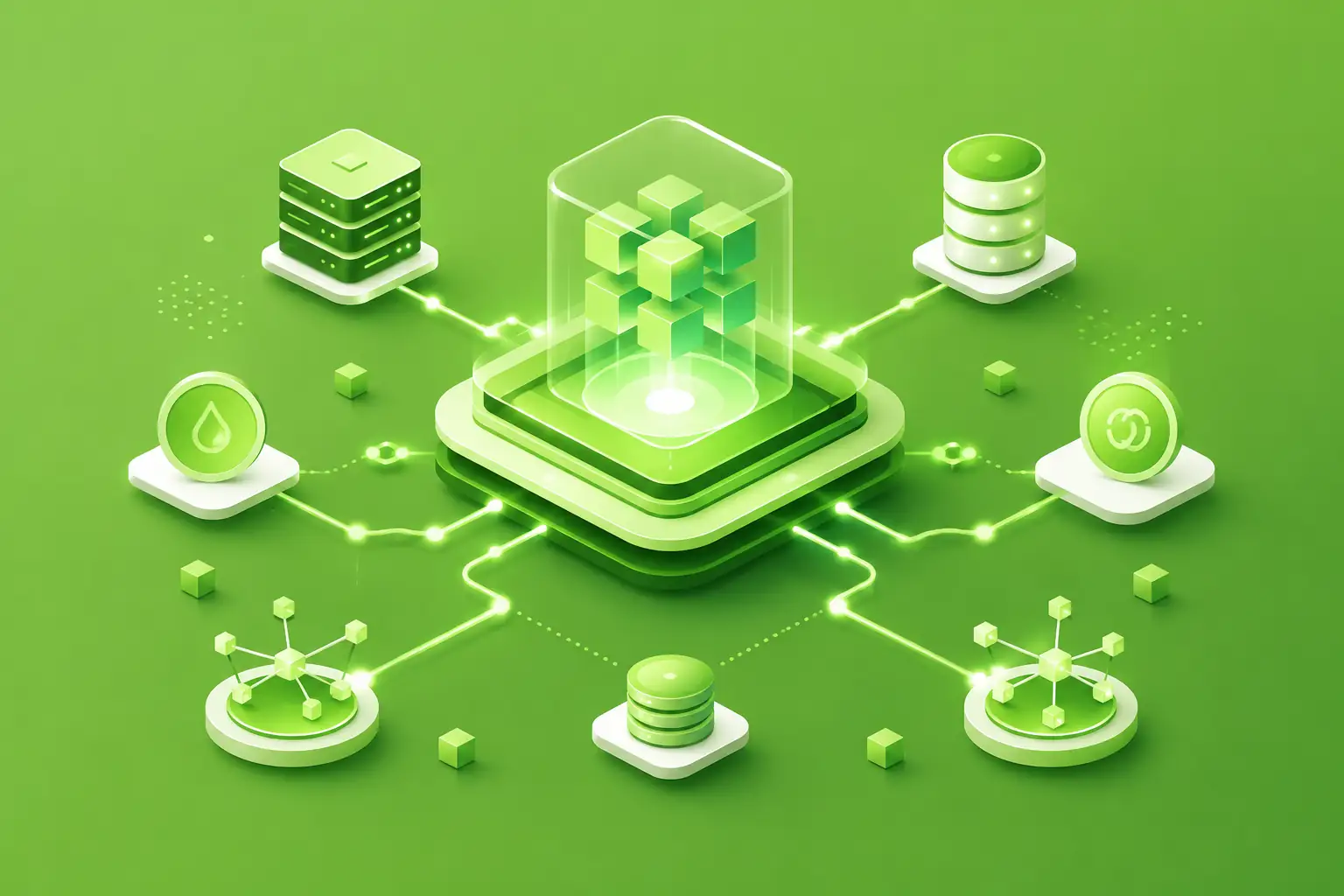
Understanding the DeFi tech stack requires visualizing it as a layered system, similar to how a building has a foundation, structural floors, and a roof. Each layer serves a distinct purpose and depends on the layers beneath it.
| Layer | Function | Components | Real World Analogy |
|---|---|---|---|
| Settlement Layer | Provides the foundational blockchain network | Ethereum, Solana, Avalanche, Base | Building foundation |
| Protocol Layer | Contains smart contracts with financial logic | Lending protocols, DEX contracts, Vaults | Building systems (plumbing, electrical) |
| Application Layer | User facing applications connecting to protocols | Web apps, Mobile apps, Aggregators | Interior design and furniture |
| Aggregation Layer | Combines multiple protocols for better rates | Yield aggregators, DEX aggregators | Travel agencies comparing flights |
Step by Step: How Layers Interact
- Step 1: A user opens a DeFi application on their browser or phone (Application Layer)
- Step 2: They connect their wallet and initiate a transaction (Application Layer)
- Step 3: The application calls the relevant smart contract functions (Protocol Layer)
- Step 4: Smart contracts execute the financial logic and update state
- Step 5: The blockchain validates and permanently records the transaction (Settlement Layer)
- Step 6: The application displays the updated balances to the user
This layered approach to DeFi ecosystem components enables specialization and modularity. Teams can focus on building excellent applications without worrying about blockchain consensus, while protocol developers can create financial primitives that multiple applications can utilize.
Blockchain Networks Powering DeFi Platforms
The choice of blockchain network forms the bedrock of any DeFi platform architecture. Just as a city’s infrastructure determines what buildings can be constructed, the underlying blockchain determines what financial applications are possible.
Ethereum
The original DeFi home with the largest ecosystem. Offers maximum security and decentralization but with higher costs. Best for high value transactions where security is paramount.
Layer 2 Solutions
Networks like Arbitrum, Optimism, and Base that inherit Ethereum security while offering faster and cheaper transactions. Ideal for everyday DeFi activities.
Alternative Layer 1s
Chains like Solana, Avalanche, and BNB Chain offer different tradeoffs between speed, cost, and decentralization. Each attracts specific types of DeFi applications.
When designing DeFi infrastructure, platform architects must consider several blockchain characteristics. Transaction throughput determines how many users can interact simultaneously. Finality time affects how quickly transactions become irreversible. Gas costs impact the economic viability of different financial operations.
Real World Example: Imagine choosing between shipping methods. Ethereum mainnet is like armored truck delivery: secure and reliable but expensive. Layer 2 solutions are like regular courier services: fast, affordable, and still trackable. Alternative chains might be like local delivery: extremely fast and cheap within their zone but with different coverage and guarantees.
Smart Contracts as the Core Logic Layer
At the heart of every DeFi platform lies smart contracts, self executing programs that encode financial rules directly on the blockchain. Understanding smart contracts is essential to grasping how DeFi platforms work.
Simple Analogy: Think of smart contracts like a vending machine combined with a safety deposit box. When you insert money and select an item, the machine automatically dispenses it. No human needs to be present, no trust in a cashier is required, and the process is identical for every customer. Smart contracts work the same way for financial transactions.
What Smart Contracts Handle in DeFi
- Asset Management: Holding, transferring, and tracking token balances
- Financial Logic: Calculating interest rates, swap ratios, and collateral requirements
- Access Control: Determining who can perform specific actions
- State Management: Recording all positions, debts, and ownership records
- Event Emission: Broadcasting transaction details for applications to display
The immutability of smart contracts provides both advantages and challenges. Once deployed, the code cannot be changed arbitrarily, giving users confidence that the rules will not shift unexpectedly. However, this also means bugs cannot be simply patched. Modern DeFi security architecture addresses this through upgradeable patterns and emergency pause functions.
Real World Example: When you use a lending protocol, a smart contract acts like an automated loan officer. It checks your collateral value, calculates how much you can borrow, releases funds instantly upon approval, and continuously monitors your position to ensure it remains healthy. All without any human reviewing your application or making subjective decisions.
Liquidity Infrastructure in DeFi Platforms
Liquidity is the lifeblood of any financial system. DeFi liquidity design represents one of the most innovative aspects of decentralized finance, replacing traditional market makers with algorithmic solutions.
Understanding Liquidity Pools
In traditional finance, if you want to exchange dollars for euros, a bank or exchange maintains inventory of both currencies. In DeFi, this role is filled by liquidity pools: shared pots of tokens that anyone can contribute to and earn fees from.
How Liquidity Pools Work
- Liquidity providers deposit pairs of tokens (like ETH and USDC) into a smart contract pool
- The pool uses a mathematical formula to determine exchange rates
- When traders swap tokens, they trade against the pool rather than a counterparty
- Each trade pays a small fee that goes to liquidity providers
- Providers can withdraw their share of the pool plus earned fees at any time
Types of DeFi Liquidity Systems
Automated Market Makers (AMMs)
Use mathematical formulas to price assets. Common in decentralized exchanges like Uniswap. Simple and permissionless but may have higher slippage for large trades.
Lending Pools
Aggregate deposits from many users to fund loans. Protocols like Aave and Compound use this model. Interest rates adjust based on supply and demand.
Concentrated Liquidity
Advanced systems allowing providers to specify price ranges. More capital efficient but requires active management. Used in Uniswap V3 and similar protocols.
Real World Example: Imagine a community currency exchange booth where anyone can contribute cash in different currencies. Instead of one exchange owner setting rates, a simple rule adjusts prices based on how much of each currency is available. More people wanting to buy euros? The price rises automatically. Contributors earn a share of the exchange fees proportional to their contribution.
Token Models Within DeFi Ecosystems
Tokens are more than just cryptocurrencies in the DeFi ecosystem components. They serve as governance rights, utility keys, incentive mechanisms, and representations of complex financial positions.
Types of Tokens in DeFi Architecture
- Governance Tokens: Grant voting rights on protocol decisions. Holding UNI allows voting on Uniswap proposals. Like shares in a company but for decentralized protocols.
- Utility Tokens: Required to use platform features or pay fees. Similar to arcade tokens needed to play games.
- Liquidity Provider Tokens: Represent ownership shares in liquidity pools. Like a receipt for your deposit that also earns interest.
- Wrapped Tokens: Represent assets from other blockchains. WBTC is Bitcoin made usable on Ethereum.
- Stablecoins: Maintain a stable value, usually pegged to fiat currencies. Essential for DeFi as a unit of account.
- Yield Bearing Tokens: Automatically increase in value over time. Represent deposits plus accumulated interest.
Token Economics Tip: The incentive design of tokens can make or break a DeFi platform. Well designed tokenomics align the interests of all participants: users, liquidity providers, and protocol developers. Poor design leads to unsustainable yields, mercenary capital, and eventual protocol decline.
Real World Example: Think of governance tokens like membership cards at a cooperative grocery store. As a member, you can vote on what products to stock, how the store operates, and even how profits are distributed. The more invested you are, the more influence you have in shaping the organization.
Role of Oracles in DeFi Architecture
Blockchains are isolated systems that cannot natively access external data. Oracles solve this problem by securely bringing off chain information onto the blockchain, making them critical infrastructure in DeFi protocol architecture.
Simple Analogy: Imagine a judge in a sealed courtroom who can only make decisions based on evidence presented inside. Oracles are like trusted messengers who bring verified information from the outside world into the courtroom, allowing the judge to make informed rulings.
What Data Oracles Provide
- Price Feeds: Current market prices for cryptocurrencies, stocks, commodities
- Random Numbers: Verifiable randomness for lotteries and games
- Weather Data: For parametric insurance products
- Sports Results: For prediction markets and betting
- Reserve Proofs: Verification that off chain assets exist
The reliability of oracles directly impacts DeFi security architecture. A compromised price feed could trigger incorrect liquidations or enable profitable exploits. Leading solutions like Chainlink use decentralized networks of data providers, cryptographic proofs, and economic incentives to ensure data integrity.
Real World Example: When a lending protocol needs to check if your collateral value has dropped below the liquidation threshold, it cannot check CoinGecko directly. Instead, an oracle network aggregates prices from multiple exchanges, removes outliers, and delivers a tamper proof price to the smart contract, similar to how credit agencies provide verified credit scores to lenders.
Frontend Layer and Wallet Connectivity
While smart contracts handle the financial logic, users interact with DeFi through frontend applications. This layer translates complex blockchain operations into intuitive interfaces, forming a crucial part of the DeFi platform structure.
Components of the Frontend Layer
Web Application
The primary interface users see, typically a React or Vue application displaying balances, forms for transactions, and real time data.
Wallet Connectors
Libraries that enable integration with various wallets like MetaMask, Coinbase Wallet, and WalletConnect compatible options.
Blockchain Indexers
Services like The Graph that organize blockchain data for efficient querying, enabling fast loading of transaction histories.
RPC Providers
Infrastructure services that relay transactions to the blockchain and retrieve current state, like Infura or Alchemy.
How Wallet Connection Works
- User clicks “Connect Wallet” on the DeFi application
- The app requests permission to view the wallet address
- User approves the connection in their wallet
- The app now displays personalized information like balances and positions
- When transacting, the app prepares the transaction details
- User reviews and signs the transaction in their wallet
- The signed transaction is broadcast to the blockchain
Real World Example: Think of the frontend like online banking. Your actual money stays secure in bank systems (the blockchain), but you interact through a website or app. When you click “transfer,” the bank prepares the transaction, and you confirm with a password or fingerprint (wallet signature). The frontend makes complex operations feel simple.
Security Architecture of DeFi Platforms
Security is paramount in DeFi where code vulnerabilities can lead to immediate, irreversible financial losses. Robust DeFi security architecture employs multiple layers of protection to safeguard user funds.
The Stakes Are High
According to Chainalysis research, billions of dollars have been lost to DeFi exploits. Unlike traditional finance where banks might reverse fraudulent transactions, blockchain transactions are final. This makes prevention through strong architecture absolutely critical.
Key Security Components
- Smart Contract Audits: Professional security firms review code to identify vulnerabilities before deployment. Multiple audits from different firms provide higher assurance.
- Bug Bounty Programs: Incentivize white hat hackers to find and report vulnerabilities rather than exploit them.
- Multisig Controls: Critical functions require multiple authorized parties to sign, preventing single points of failure.
- Timelocks: Delay between proposing changes and execution, giving users time to exit if they disagree.
- Emergency Pause Functions: Ability to halt the protocol if an attack is detected.
- Rate Limits: Caps on transaction sizes or frequencies to limit damage from exploits.
- Formal Verification: Mathematical proofs that code behaves as intended.
Security Analogy: Think of DeFi security like protecting a bank vault. Audits are like regular inspections by security consultants. Multisig is requiring multiple keys held by different people to open the vault. Timelocks are like time delayed vault doors. Together, these measures create defense in depth where an attacker would need to overcome multiple barriers.
Real World Example: Major protocols like Uniswap have undergone multiple audits, maintain active bug bounty programs, and use multisig wallets controlled by reputable community members. When vulnerabilities are discovered, timelocks give users days to withdraw before any changes take effect. This layered approach has protected billions in user funds.
Governance Systems in DeFi Platforms
Unlike traditional companies with boards of directors, DeFi platforms are often governed by their communities through Decentralized Autonomous Organizations (DAOs). This governance layer is integral to the DeFi system design.
How DeFi Governance Works
- Proposal Creation: Token holders can submit proposals for protocol changes, from adjusting interest rates to adding new features.
- Discussion Period: Community members debate the proposal in forums, analyzing potential impacts.
- Voting: Token holders vote, typically with voting power proportional to their holdings.
- Execution: If passed, the proposal is implemented, often through automated on chain execution.
Governance Models
- Token Voting: One token equals one vote. Simple but can concentrate power among large holders.
- Quadratic Voting: Voting power increases with square root of tokens, giving smaller holders more influence.
- Delegation: Token holders can delegate their voting power to trusted representatives.
- Optimistic Governance: Proposals pass automatically unless vetoed, speeding up routine decisions.
Real World Example: Think of DeFi governance like a homeowners association where all residents vote on community rules. Owning more property (tokens) gives more votes. Proposals might include changing pool hours (adjusting protocol parameters), hiring a new landscaper (integrating a new oracle), or building a new amenity (launching a new product). Everyone affected has a say.
Cross Chain and Interoperability Infrastructure
As DeFi expands across multiple blockchains, interoperability becomes essential. Cross chain infrastructure enables assets and messages to move between different networks, expanding the reach of DeFi platform architecture.
Types of Cross Chain Solutions
Token Bridges
Lock tokens on one chain and mint equivalent tokens on another. Like exchanging currency at a border crossing. Examples include Wormhole and Across.
Messaging Protocols
Enable smart contracts on different chains to communicate. Allows for cross chain function calls and data sharing. LayerZero and Axelar are leaders here.
Liquidity Networks
Maintain liquidity pools across chains for instant transfers without wrapping. Faster but requires active liquidity management.
Cross chain functionality introduces additional security considerations. Bridges have historically been targets for exploits due to their complexity and the value they hold. Modern DeFi infrastructure design carefully weighs the tradeoffs between interoperability and security risk.
Real World Example: Consider international wire transfers. When you send money from a US bank to a European bank, your dollars are converted, moved through correspondent banks, and arrive as euros. Blockchain bridges work similarly, but instead of trusting banks, you trust code and cryptographic proofs to ensure your assets arrive safely on the destination chain.
Compliance Aware Architectural Considerations
As DeFi matures and attracts institutional interest, compliance considerations increasingly influence DeFi platform structure. Forward thinking architectures build in flexibility to meet evolving regulatory requirements.
Compliance Ready Components
- Identity Layers: Optional KYC modules that can verify user identity when required, without making verification mandatory for all users.
- Permissioned Pools: Separate liquidity pools accessible only to verified participants, enabling institutional participation.
- Transaction Monitoring: Integration points for compliance tools that screen for sanctioned addresses or suspicious activity.
- Geographic Restrictions: Frontend level controls that limit access from restricted jurisdictions.
- Audit Trails: Comprehensive logging of all transactions for regulatory reporting.
Compliance Balance: The challenge is maintaining DeFi’s permissionless nature while enabling compliance where needed. Well designed architectures offer compliance as an option rather than forcing it on all users, allowing the same protocol to serve both retail users seeking accessibility and institutions requiring oversight.
Real World Example: Consider how some protocols offer both a main interface and a “Pro” version for institutions. The underlying smart contracts are the same, but the Pro interface includes identity verification and may restrict certain high risk activities. This modular approach satisfies regulators while preserving the core DeFi experience.
Cost Factors Influenced by Platform Architecture
Architectural decisions directly impact DeFi platform cost factors. Understanding these relationships helps teams make informed tradeoffs between functionality, security, and economics.
| Cost Factor | Architectural Influence | Optimization Strategy |
|---|---|---|
| Gas Fees | Smart contract complexity and blockchain choice | Optimize code, use Layer 2s, batch transactions |
| Oracle Costs | Frequency and number of price feeds needed | Use efficient oracle designs, minimize updates |
| Security Audits | Code complexity and number of contracts | Modular design, reuse audited components |
| Infrastructure | Node requirements and indexing needs | Leverage shared infrastructure, efficient queries |
| Liquidity Costs | Pool design and incentive structures | Capital efficient designs, sustainable rewards |
| Maintenance | Upgradability patterns and monitoring needs | Automated monitoring, well documented code |
Real World Example: Consider the difference between buying a coffee with DeFi on Ethereum mainnet versus a Layer 2. On mainnet during high congestion, gas fees might exceed the coffee price. The same transaction on a Layer 2 costs pennies. This is why many consumer focused DeFi applications are architected primarily for Layer 2 networks, accepting the tradeoff of slightly less decentralization for dramatically lower costs.
Scalability Strategies in DeFi Systems
As DeFi aims for mass adoption, scalability becomes crucial. The DeFi tech stack has evolved various strategies to handle increased transaction volume without sacrificing decentralization.
Scalability Solutions
Optimistic Rollups
Process transactions off chain and post summaries to Ethereum. Assume validity unless challenged. Arbitrum and Optimism use this approach, offering 10 to 100x throughput improvement.
ZK Rollups
Use cryptographic proofs to verify off chain computations. More complex but offer faster finality. zkSync and StarkNet lead this category with even greater scaling potential.
Modular Architecture
Separate consensus, data availability, and execution into specialized layers. Celestia and EigenDA provide dedicated data availability, enabling purpose built execution environments.
Application Specific Chains
Deploy dedicated chains optimized for specific DeFi applications. Provides maximum customization and performance for high volume protocols.
Real World Example: Think of scalability like a highway system. Ethereum mainnet is the main highway that becomes congested during rush hour. Layer 2s are like express lanes that bundle cars together and process them faster. Application specific chains are like dedicated bus routes for frequent travelers. Each solution trades off different aspects of cost, speed, and connectivity.
Common Architectural Challenges in DeFi Platforms
Building robust DeFi infrastructure involves navigating numerous challenges. Understanding these helps teams make better design decisions and users evaluate protocol quality.
Major Challenges
- Security vs Upgradability: Immutable contracts are secure but cannot be fixed. Upgradeable contracts can be improved but introduce trust assumptions.
- Liquidity Fragmentation: As DeFi expands across chains, liquidity splits into smaller pools, reducing efficiency and increasing slippage.
- Oracle Dependencies: Reliance on external price data creates potential points of failure or manipulation.
- MEV Exploitation: Miners and validators can reorder transactions for profit, affecting user outcomes.
- Governance Attacks: Large token holders or flash loan attackers can potentially manipulate voting outcomes.
- Composability Risks: Building on other protocols creates dependency chains where one failure cascades through the ecosystem.
Mitigation Strategies
Experienced DeFi architects address these challenges through careful design. Security audits and bug bounties reduce smart contract risk. Cross chain liquidity solutions address fragmentation. Multiple oracle sources and circuit breakers protect against bad data. MEV protection services and fair ordering mechanisms reduce extraction. Governance timelocks and vote escrow systems prevent attacks.
Real World Example: When a major stablecoin depegged in 2023, protocols with robust oracle systems and multiple data sources detected the issue and adjusted parameters automatically, protecting users. Protocols relying on single oracle sources experienced incorrect liquidations and losses. The architectural difference in oracle design directly determined user outcomes.
Emerging Trends Shaping DeFi Platform Architecture
The DeFi platform architecture landscape continues to evolve rapidly. Several trends are reshaping how protocols are designed and operated.
Real World Asset Integration
Tokenization of real estate, bonds, and other traditional assets is bringing trillions in value on chain. This requires new architecture patterns for compliance, custody, and price discovery.
Intent Based Trading
Instead of specifying exact transactions, users express desired outcomes. Solvers compete to fulfill these intents optimally, improving execution and reducing MEV exposure.
Modular DeFi
Breaking protocols into specialized, composable modules. Risk management, interest rate models, and liquidation engines can be mixed and matched for customized products.
AI Integration
Machine learning models are being integrated for risk assessment, strategy optimization, and automated portfolio management, adding intelligence to DeFi protocols.
Account Abstraction
Smart contract wallets that enable social recovery, spending limits, and automated transactions. Makes DeFi more accessible and secure for everyday users.
Restaking Protocols
Allowing staked assets to secure multiple protocols simultaneously, improving capital efficiency and enabling new security models for DeFi applications.
According to DeFiLlama, the total value locked in DeFi continues to grow as these innovations attract new capital and users. Understanding these trends is essential for anyone building or investing in DeFi ecosystem components.
Ready to Build Your DeFi Platform?
Partner with Nadcab Labs to design and implement secure, scalable DeFi architecture that stands the test of time. Our expert team brings years of experience in blockchain infrastructure and smart contract security.
How Nadcab Labs Designs Secure DeFi Platform Architectures
At Nadcab Labs, we approach DeFi platform architecture with a comprehensive methodology honed through years of blockchain expertise. Our team understands that successful DeFi platforms require more than just functional code; they need thoughtfully designed systems that balance security, scalability, and user experience.
Our Architectural Approach
- Security First Design: Every architecture begins with threat modeling and security considerations. We implement defense in depth, including multisig controls, timelocks, and emergency mechanisms from day one.
- Modular Architecture: We design systems as composable modules that can be upgraded, replaced, or extended without disrupting core functionality. This future proofs your platform against evolving requirements.
- Gas Optimization: Our smart contracts are optimized for efficiency, minimizing transaction costs for users while maintaining security and functionality.
- Multi Chain Readiness: We architect platforms to deploy across multiple blockchains and Layer 2 solutions, maximizing reach and giving users choice.
- Compliance Flexibility: Our architectures include optional compliance modules that can be activated as regulatory requirements evolve, without restructuring the entire system.
- Thorough Documentation: Every system we design includes comprehensive documentation, enabling your team to maintain and extend the platform confidently.
Why Teams Choose Nadcab Labs
Our portfolio spans lending protocols, decentralized exchanges, yield aggregators, and custom DeFi applications. We have successfully designed architectures handling hundreds of millions in total value locked, with zero security incidents. Our team includes specialists in Solidity, Rust, cryptography, and economic mechanism design.
Whether you are launching a new DeFi protocol, expanding an existing platform to new chains, or seeking to improve your current architecture’s security and efficiency, Nadcab Labs provides the expertise and partnership you need.
Final Thoughts
DeFi platform architecture represents a fundamental reimagining of financial infrastructure. By understanding the layers, components, and design patterns that make DeFi work, you are better equipped to evaluate protocols as a user, make informed investment decisions, or build successful decentralized applications.
From the foundational blockchain layer through smart contracts, liquidity systems, and governance mechanisms, each architectural element serves a purpose in creating trustless, permissionless financial services. Security remains paramount, with multiple layers of protection required to safeguard user funds in an environment where code is law.
As the DeFi ecosystem continues to evolve with innovations like real world asset tokenization, intent based systems, and modular protocols, architectural best practices will continue to advance. Staying informed about these developments positions you at the forefront of financial technology.
Whether you are building, investing, or simply participating in DeFi, understanding how DeFi platforms work at an architectural level empowers you to make better decisions and contribute to this transformative ecosystem.
Frequently Asked Questions
Q1.What is DeFi platform architecture?
DeFi platform architecture refers to the structural design and technical components that enable decentralized financial applications to operate. It includes the blockchain layer, smart contracts, liquidity systems, oracles, frontend interfaces, and governance mechanisms that work together to provide financial services without intermediaries.
Q2.How do DeFi platforms ensure security?
DeFi platforms employ multiple security measures including professional smart contract audits, bug bounty programs, multisignature controls for critical functions, timelock delays on major changes, emergency pause mechanisms, and formal verification of code logic. Defense in depth ensures that multiple layers of protection safeguard user funds.
Q3.What blockchain is best for DeFi applications?
The optimal blockchain depends on specific requirements. Ethereum offers maximum security and ecosystem compatibility but with higher costs. Layer 2 solutions like Arbitrum and Base provide Ethereum security with lower fees. Alternative chains like Solana offer high speed and low costs. Many modern DeFi platforms deploy across multiple chains to serve different user needs.
Q4.Why are oracles important in DeFi?
Oracles are essential because blockchains cannot access external data directly. For DeFi to function, smart contracts need accurate price feeds, interest rates, and other real world information. Oracles securely deliver this data on chain, enabling lending protocols to calculate collateral ratios, DEXs to offer accurate swaps, and derivatives to settle correctly.
Q5.How much does it cost to build a DeFi platform?
DeFi platform costs vary significantly based on complexity, security requirements, and blockchain choice. Key cost factors include smart contract development and audits, frontend and backend infrastructure, oracle integration, liquidity bootstrapping, and ongoing maintenance. A well architected platform with proper security can range from tens of thousands to millions of dollars depending on scope.
Explore Services
Related Services
Reviewed by

Aman Vaths
Founder of Nadcab Labs
Aman Vaths is the Founder & CTO of Nadcab Labs, a global digital engineering company delivering enterprise-grade solutions across AI, Web3, Blockchain, Big Data, Cloud, Cybersecurity, and Modern Application Development. With deep technical leadership and product innovation experience, Aman has positioned Nadcab Labs as one of the most advanced engineering companies driving the next era of intelligent, secure, and scalable software systems. Under his leadership, Nadcab Labs has built 2,000+ global projects across sectors including fintech, banking, healthcare, real estate, logistics, gaming, manufacturing, and next-generation DePIN networks. Aman’s strength lies in architecting high-performance systems, end-to-end platform engineering, and designing enterprise solutions that operate at global scale.