Ai Overview
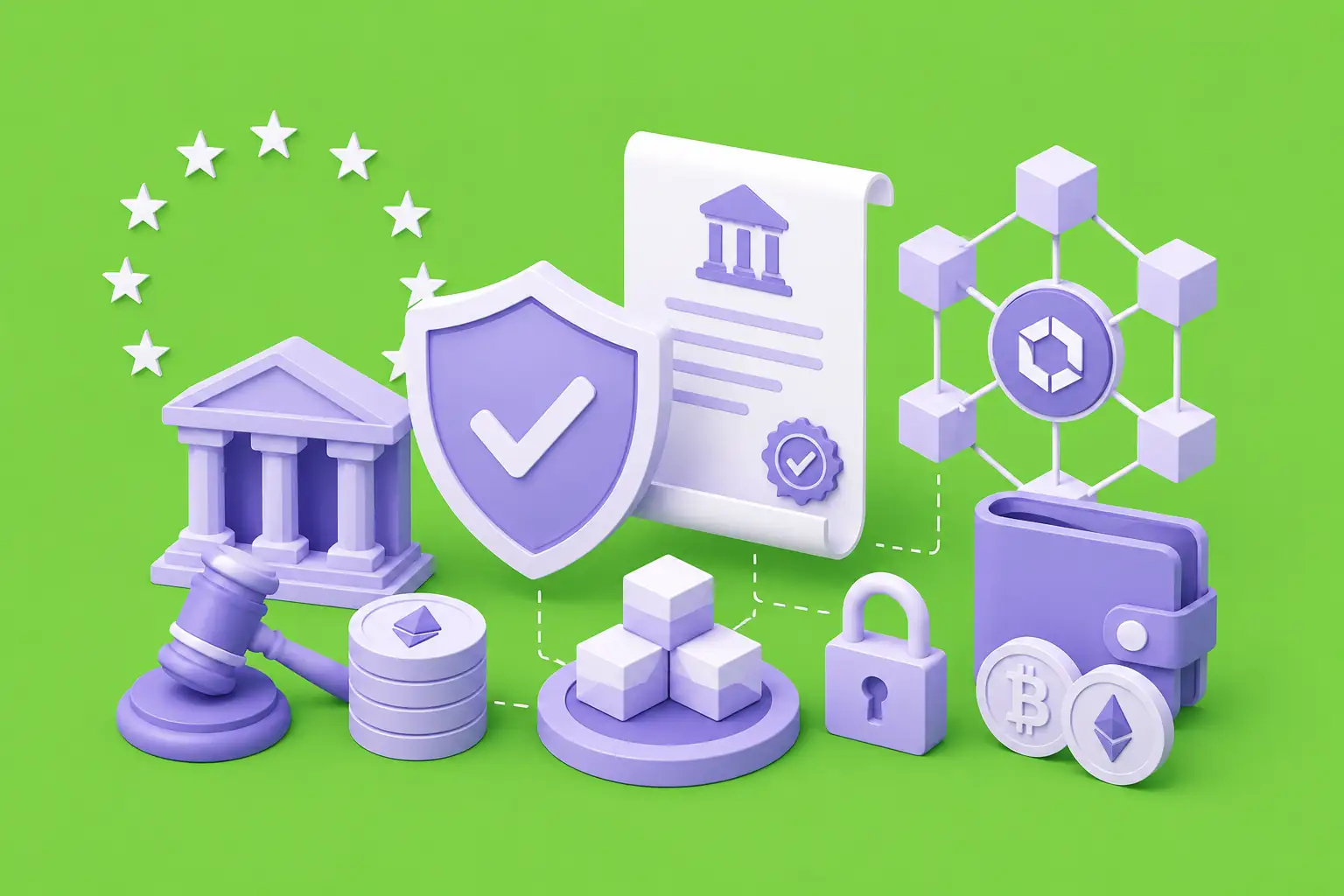
DeFi data privacy laws are not a singular regulation but rather a complex intersection of multiple global frameworks designed to protect user information, prevent financial crimes, and ensure transparency in blockchain systems. These laws emerge from traditional financial regulation, data protection statutes, and rapidly evolving blockchain specific legislation. Challenges: Fully homomorphic encryption remains computationally expensive, with ciphertext sizes larger than plaintext and slowdowns of 1,000x or more.
Key Takeaways
- DeFi data privacy laws are governed by global frameworks including GDPR, FATF guidelines, and emerging MiCA regulations that impose strict requirements on blockchain platforms handling user data.
- Public blockchains create inherent privacy challenges due to transparent transaction records, making truly private DeFi difficult without privacy enhancing technologies.
- On chain data is permanently immutable, creating legal conflicts with GDPR’s right to be forgotten and data deletion requirements.
- KYC and AML compliance in DeFi requires sophisticated approaches to verify identities while maintaining decentralization principles.
- Smart contract code transparency exposes business logic and user behavior, creating unintended privacy risks through data leakage and pattern analysis.
- Zero knowledge proofs and homomorphic encryption offer cryptographic solutions for privacy but introduce computational overhead and implementation complexity.
- Off chain data storage combined with on chain verification is increasingly used to balance transparency with privacy in regulated DeFi platforms.
- Decentralized identity solutions enable privacy preserving KYC without centralizing personal data with individual platforms.
- DeFi startups face significant legal uncertainty regarding liability, data controller definitions, and jurisdictional compliance responsibilities.
- Privacy architecture must be designed at the protocol level, not as an afterthought, to ensure both user protection and regulatory compliance.
The intersection of decentralized finance and data privacy regulations represents one of the most complex challenges in modern blockchain development. As DeFi platforms grow exponentially, they increasingly attract regulatory scrutiny from global authorities concerned with user data protection, financial security, and anti-money laundering compliance. Understanding DeFi data privacy laws is no longer optional for blockchain companies, developers, and fintech entrepreneurs—it is essential for building sustainable and legally compliant Web3 ecosystems. This article explores the technical architectures, global regulatory frameworks, and practical strategies for implementing privacy-aware DeFi solutions.
Understanding DeFi Data Privacy Laws and Regulatory Frameworks
DeFi data privacy laws are not a singular regulation but rather a complex intersection of multiple global frameworks designed to protect user information, prevent financial crimes, and ensure transparency in blockchain systems. These laws emerge from traditional financial regulation, data protection statutes, and rapidly evolving blockchain specific legislation.
The primary challenge lies in the fundamental incompatibility between blockchain transparency and data privacy requirements. Traditional databases allow for access control, selective data visibility, and complete information deletion. Blockchain systems, by design, create immutable records accessible to all network participants. This architectural difference creates a regulatory gray zone where DeFi platforms must implement sophisticated technical solutions to comply with laws designed for centralized systems.
Global regulatory bodies including the European Union, Financial Action Task Force (FATF), and national financial authorities have increasingly focused on DeFi compliance. The European Union’s Markets in Crypto-Assets Regulation (MiCA) explicitly addresses cryptocurrency service providers. The FATF’s guidance on virtual assets and virtual asset service providers (VASPs) establishes international standards for KYC, AML, and transaction monitoring. Meanwhile, national regulators in Singapore, Hong Kong, and the United States apply existing securities laws and financial regulations to DeFi platforms.
Understanding these frameworks requires distinguishing between different types of DeFi actors: protocol developers, liquidity providers, users, and custodial platforms. Each party faces different regulatory obligations and privacy responsibilities, creating a layered compliance landscape.
Evolution of Data Protection in Blockchain Systems
The blockchain industry’s approach to data privacy has evolved significantly since Bitcoin’s introduction in 2009. Early blockchain systems treated privacy as a feature limited to pseudonymity (users identified by wallet addresses rather than real names). This approach proved insufficient for regulatory compliance and user protection.
The first major evolution came with the recognition that blockchain transaction data, while pseudonymous, is not truly private. Researchers demonstrated that transaction patterns, flow analysis, and metadata could be used to deanonymize users, linking blockchain addresses to real world identities. This led to the development of privacy coins like Monero and Zcash, which implement zero knowledge proofs and ring signatures to obscure transaction details.
The second evolution focused on privacy in smart contract platforms. Ethereum’s transparent architecture, while enabling programmable finance, exposed user data through visible contract interactions, balances, and transaction history. This led to the development of layer 2 solutions, sidechains, and privacy focused protocols designed to separate sensitive data from the public ledger.
The third evolution, currently underway, recognizes that true DeFi compliance requires integrating privacy protection with regulatory participation. Rather than viewing privacy and compliance as opposing forces, modern DeFi architects design systems where zero knowledge proofs, decentralized identity, and cryptographic commitments enable regulatory compliance without exposing user information to third parties or the public network.
How DeFi Protocols Handle User Data: A Technical Deep Dive
Understanding data handling in DeFi requires examining the journey of user information from wallet interaction through transaction execution, settlement, and historical record. This process involves multiple actors, systems, and data states.
Stage 1: Wallet Interaction and Initial Data Collection
When a user initiates a DeFi transaction, their wallet client generates a transaction object containing sender address, recipient address, amount, gas parameters, and contract interaction data. At this stage, the wallet software may collect additional metadata including IP address, timestamp, device fingerprint, and browser information. Unlike centralized platforms, this metadata is not inherently part of the blockchain record but is captured by wallet providers, DEX interfaces, or bridge services.
Modern DeFi platforms increasingly use Web3 RPC providers like Infura and Alchemy to relay transactions Tools like Whoer can help users check their online anonymity and IP exposure when interacting with decentralized applications
. These services capture connection logs including IP addresses and wallet identifiers, creating centralized data repositories despite the underlying decentralized infrastructure.
Stage 2: On Chain Transaction Recording
Once a transaction is submitted to the blockchain network, the following data becomes permanently visible:
- Sender wallet address (public key derived address)
- Recipient/contract address
- Token amounts transferred
- Transaction hash and timestamp
- Gas spent and mining rewards
- Contract function calls and parameters
- State changes in contract storage
This data is replicated across thousands of blockchain nodes, making it globally accessible and immutable. Any party can analyze this data using blockchain explorers, chain analysis tools, or direct node querying.
Stage 3: Off Chain Data Processing and Storage
While on chain data is limited to transaction records and state changes, DeFi platforms typically maintain off chain databases containing:
- User account information and identity verification data (KYC documents)
- Communication logs and customer support interactions
- Withdrawal and deposit records
- User settings, preferences, and account metadata
- Risk assessment data and compliance screening results
- Transaction history indexed for quick querying
This off chain data is subject to traditional data protection laws including GDPR, CCPA, and other privacy regulations. It requires proper encryption, access controls, and retention policies.
Stage 4: Data Analytics and Pattern Recognition
The permanent nature of blockchain data enables sophisticated analytics that would be impossible in traditional finance. Researchers and analysts can examine:
- Transaction flow and fund movement patterns
- Temporal analysis revealing user behavior and trading strategies
- Network analysis linking addresses to identities through interaction patterns
- Smart contract interaction analysis revealing user preferences and risk profiles
This analytical capability, while valuable for research and security, exposes user information through metadata and inference rather than direct storage.
Data Journey in DeFi Protocol
┌──────────────────────┐
│  User Wallet Setup   │
│  (Address Created)   │
└──────────┬───────────┘
           │
           ▼
┌──────────────────────────────────┐
│ Web3 Interface / DApp Interaction │
│ (IP, Device Data Collected)      │
└──────────┬───────────────────────┘
           │
           ▼
┌──────────────────────────────────┐
│ Transaction Construction         │
│ (Parameters, Function Calls)     │
└──────────┬───────────────────────┘
           │
           ▼
┌──────────────────────────────────┐
│ RPC Provider Relay               │
│ (Metadata Captured)              │
└──────────┬───────────────────────┘
           │
           ▼
┌──────────────────────────────────┐
│ Blockchain Network Transmission  │
│ (Mempool visibility)             │
└──────────┬───────────────────────┘
           │
           ▼
┌──────────────────────────────────┐
│ Consensus and Block Inclusion    │
│ (Permanent Record)               │
└──────────┬───────────────────────┘
           │
           ▼
┌──────────────────────────────────┐
│ Global Blockchain State Update   │
│ (Immutable, Replicated)          │
└──────────┬───────────────────────┘
           │
           ▼
┌──────────────────────────────────┐
│ Data Analysis & Chain Indexing   │
│ (Pattern Recognition)            │
└──────────────────────────────────┘
Key Global Regulations Affecting DeFi: GDPR, FATF, and MiCA
GDPR: The European Data Protection Standard
The General Data Protection Regulation (GDPR) applies to any organization processing personal data of EU residents, regardless of the organization’s location. For DeFi, GDPR creates several complications:
- Data Controller Definition: GDPR requires identifying who controls personal data. In decentralized protocols, this responsibility is ambiguous. Protocol developers, smart contract deployers, and interface operators may all be considered controllers.
- Consent Requirements: GDPR requires explicit, informed consent before processing personal data. DeFi smart contracts execute automatically without traditional consent mechanisms.
- Right to Be Forgotten: GDPR article 17 grants users the right to have their data deleted. Blockchain immutability directly conflicts with this requirement.
- Data Minimization: GDPR requires collecting only necessary data. Public blockchains record extensive transaction data not required for DeFi functionality.
- Privacy by Design: Organizations must implement privacy considerations from inception, not after problems arise.
DeFi platforms must implement privacy enhancing technologies and off chain data architectures to address GDPR compliance. Some projects use zero knowledge proofs to verify compliance with defi regulations without storing personal information on chain. Others implement separate identity systems integrated with privacy preserving smart contracts.
FATF Guidelines: Virtual Assets and AML Compliance
The Financial Action Task Force, an intergovernmental organization focusing on anti money laundering and counter terrorist financing, issued recommendations specifically addressing virtual assets and virtual asset service providers. Key FATF requirements include:
- Know Your Customer (KYC): VASPs must verify customer identity and keep records for at least five years.
- Beneficial Ownership: VASPs must identify individuals who control or benefit from customer accounts.
- Suspicious Activity Reporting: VASPs must report transactions suspected of involvement in money laundering or terrorist financing.
- Transaction Monitoring: VASPs must implement systems to detect and report suspicious transaction patterns.
- Travel Rule: FATF mandates that VASPs include originating customer information on blockchain transactions, similar to wire transfer requirements in traditional banking.
The FATF Travel Rule presents acute challenges for decentralized protocols. Implementing customer information transmission on blockchain violates privacy principles and creates liability for decentralized exchanges that cannot control transaction data.
MiCA: EU Crypto Asset Regulation
The Markets in Crypto-Assets Regulation (MiCA), effective in 2024, provides the first comprehensive EU framework for cryptocurrency services. MiCA distinguishes between different service types and assigns specific obligations:
- Custodians: Must hold customer assets securely, implement KYC procedures, and maintain detailed records.
- Cryptocurrency Exchange Platforms: Must screen users, monitor transactions, and report suspicious activity.
- Wallet Providers: Must verify customer identity for non custodial wallet services above certain thresholds.
- Stablecoin Issuers: Must maintain reserves, implement governance, and ensure consumer protection.
- Data Requirements: Service providers must maintain detailed data on transaction origination, destination, and customer identity.
MiCA explicitly acknowledges that decentralized protocols fall outside its scope but clarifies that interface operators and custodians facilitating user access to DeFi must comply with MiCA obligations. This creates a regulatory moat where compliant intermediaries emerge while purely decentralized interfaces face regulatory uncertainty.
Comparison: Traditional Finance vs DeFi Data Privacy
| Aspect | Traditional Finance | DeFi |
|---|---|---|
| Data Visibility | Limited to authorized personnel and regulatory auditors | Publicly visible on blockchain; accessible to all network participants |
| Data Immutability | Mutable; records can be corrected or deleted | Immutable; records permanent and unchangeable |
| Access Control | Centralized; institution controls access | Permissionless; anyone can access historical data |
| Pseudonymity | Identified by legal name and credentials | Initially pseudonymous but deanonymizable through analysis |
| Data Deletion | Possible under regulatory and legal requirements | Technically impossible; conflicts with blockchain immutability |
| Encryption Standards | AES-256 and similar symmetric encryption common | Public key cryptography; transaction data readable if account identified |
| Compliance Verification | Through centralized audits and regulatory inspections | Through on chain analysis and zero knowledge proofs |
| User Consent | Explicit consent forms required | Smart contract execution implies consent; unclear GDPR compliance |
| Data Recovery | Through database backups and recovery procedures | Through full node operation or blockchain archival |
| Third Party Data Sharing | Controlled through agreements and legal frameworks | Automatic; public ledger accessible to all analytics providers |
Technical Privacy Challenges in Public Blockchains
Transaction Linkability and Flow Analysis
Public blockchains maintain complete transaction histories, enabling researchers to trace fund movement and create transaction graphs. Even with pseudonymous addresses, sophisticated analysis can link addresses through:
- Change Address Detection: Identifying which output in a transaction is the user’s change
- Temporal Analysis: Observing transaction timing patterns and correlating with external events
- Cluster Analysis: Linking addresses that share common spending patterns or characteristics
- Heuristic Analysis: Using spending patterns, interaction behaviors, and contract usage to identify address owners
Companies like Chainalysis and TRM Labs provide commercial blockchain analysis services that create comprehensive user profiles by correlating on chain data with exchange KYC information, creating privacy risks for DeFi users.
Smart Contract State Exposure
Smart contracts maintain publicly visible state variables. A DeFi lending protocol, for example, stores user collateral amounts, loan balances, and interest accrued in public storage slots. This allows anyone to determine:
- User positions and portfolio allocation
- Leverage ratios and risk exposure
- Historical deposit and withdrawal patterns
- User behavior changes and trading patterns
This state transparency, while necessary for smart contract security and auditability, reveals sensitive financial information about users.
Mempool Visibility and Front Running Risks
Before blockchain inclusion, transactions remain visible in the network mempool. This creates several privacy and security risks:
- Intent Revelation: Transaction parameters reveal user intentions (e.g., swap amounts, target prices)
- Front Running: Malicious actors can observe and execute transactions before legitimate users
- Sandwich Attacks: Inserting transactions before and after target transactions to extract value
- Network Level Tracking: RPC providers and node operators can correlate transaction submissions with IP addresses
Metadata Inference and Behavioral Analysis
Even encrypted transaction content would reveal sensitive information through metadata:
- Transaction Frequency: Regular trading patterns reveal user habits and strategies
- Value Patterns: Repeated transaction amounts or ratios reveal algorithmic strategies
- Temporal Correlation: Time based analysis can identify geographic location or schedule information
- Graph Analysis: Network analysis of interacting addresses reveals relationships and participation in specific protocols
Smart Contract Transparency vs User Confidentiality: The Core Conflict
Smart contracts present an inherent paradox in DeFi: they must be transparent for security and auditability, yet this transparency exposes user financial information and behavioral patterns.
Why Smart Contract Code Must Be Public
Smart contract transparency serves critical security functions:
- Security Auditing: Public code enables independent security researchers and professional auditors to identify vulnerabilities
- Economic Model Verification: Users can verify that incentive structures and reward mechanisms function as claimed
- Correctness Assurance: Public code is more resistant to hidden backdoors or malicious logic than closed source systems
- Regulatory Compliance Verification: Authorities can verify compliance logic without trusting developers
Keeping smart contract code private would undermine the fundamental value proposition of blockchain: trustless operation enabled by transparent, verifiable code.
How Contract State Exposes User Data
While contract code is transparently visible, contract state (the data stored in the smart contract) directly reveals user financial information:
Example: A lending protocol with a public mapping from user addresses to their loan balances:
mapping(address => uint256) public userLoanBalance;
Anyone can query any user’s loan balance by address. Combined with address clustering techniques, this reveals individuals’ financial positions, debt levels, and borrowing behaviors.
Solutions: Balancing Transparency and Privacy
Commit Reveal Schemes: Instead of storing actual data, store hashes (cryptographic fingerprints) of data. Users prove correctness through zero knowledge proofs without revealing underlying values.
Homomorphic Encryption: Perform computations on encrypted data without decryption. Contract logic operates on ciphertexts rather than plaintext values, enabling privacy preserving verification.
Private Computation Layers: Off chain computation for sensitive data with on chain verification of results using zero knowledge proofs.
Differential Privacy: Add noise to data in controlled ways that obscure individual values while maintaining statistical accuracy for protocol operations.
On Chain vs Off Chain Data Privacy Models
| Characteristic | On Chain Privacy | Off Chain Privacy |
|---|---|---|
| Data Location | Stored in smart contracts and blockchain ledger | Stored in private databases and centralized systems |
| Access Control | Enforced by smart contract code; user control primary | Enforced by database permissions; provider control |
| Visibility | Public by default unless encrypted or off chain | Private by design; queryable only by authorized parties |
| Immutability | Permanent and unchangeable | Mutable and deletable per GDPR requirements |
| Decentralization | Replicated across network; no single point of control | Depends on infrastructure; often centralized |
| Verification | Cryptographically verifiable by anyone | Requires trusting provider; can use external audits |
| Privacy Tech Required | Zero knowledge proofs, encryption, commit reveal | Traditional encryption, access controls, backups |
| Regulatory Compliance | Difficult; conflicts with immutability and transparency | Easier; aligns with GDPR and traditional privacy law |
| Ideal Use Cases | Core protocol logic, transaction execution, settlement | KYC data, customer service, audit trails |
| Examples | Token balances, governance votes, liquidity pools | Identity documents, banking information, compliance records |
Decision Tree: On Chain vs Off Chain Data Architecture
┌─────────────────────────────┐
│  Data Privacy Decision      │
│  for DeFi Application       │
└──────────────┬──────────────┘
               │
      ┌────────┴────────┐
      │                 │
      ▼                 ▼
┌──────────────┐  ┌──────────────┐
│ Is this      │  │ Requires     │
│ core to      │  │ regulatory   │
│ protocol?    │  │ compliance?  │
└──┬───────────┘  └──────┬───────┘
   │                     │
   │ YES                 │ YES
   │                     │
   ▼                     ▼
┌──────────────────────────────┐
│ Consider On Chain Privacy    │
│ Use: ZK Proofs, Encryption  │
└──────────────────────────────┘

   │ NO                  │ NO
   │                     │
   ▼                     ▼
┌──────────────────────────────┐
│ Consider Off Chain Storage   │
│ + On Chain Verification      │
│ Use: Databases + Commits     │
└──────────────────────────────┘
               │
               ▼
┌──────────────────────────────┐
│ Hybrid Model Implementation  │
│ Critical: Decentralized ID   │
└──────────────────────────────┘
Cryptographic Techniques for Privacy Protection
Zero Knowledge Proofs
Zero knowledge proofs (ZKPs) enable one party to prove the truth of a statement to another party without revealing any information beyond the validity of the statement itself.
How they work: A prover demonstrates that they know a secret (like a password) or that a computation was performed correctly, without revealing the secret or intermediate results. The verifier gains mathematical certainty of correctness without accessing underlying information.
DeFi applications:
- Privacy preserving asset transfers without revealing sender, receiver, or amounts
- KYC compliance proofs: proving age, nationality, or regulatory approval without revealing identity
- Solvency proofs: demonstrating that an exchange has sufficient reserves without revealing all holdings
- Computation verification: proving loan calculations are correct without exposing individual terms
Challenges: ZK proofs require significant computational resources, specialized cryptographic knowledge, and careful implementation to avoid proof bypasses or soundness issues. Recent protocols like ZK rollups (zkSync, StarkNet) bring ZK efficiency gains through batching.
Homomorphic Encryption
Homomorphic encryption enables computation on encrypted data without decryption. A computation performed on encrypted values produces results that decrypt to the same output as if the computation were performed on plaintext.
Types:
- Partially Homomorphic: Supports either addition or multiplication but not both
- Fully Homomorphic: Supports arbitrary computations but with significant computational overhead
- Somewhat Homomorphic: Supports limited levels of computation; more practical than fully homomorphic
DeFi applications:
- Private smart contracts performing financial calculations without exposing values
- Encrypted lending protocols where collateral is verified without revealing amounts
- Privacy preserving price oracles that provide accurate data without exposing individual feed values
Challenges: Fully homomorphic encryption remains computationally expensive, with ciphertext sizes larger than plaintext and slowdowns of 1,000x or more. Practical implementations use somewhat homomorphic encryption with specific operation limits.
Commit Reveal Schemes
Commit reveal separates the commitment phase (where users hash their data) from the reveal phase (where they provide evidence of commitment).
Process:
- User commits to a value by hashing it:
commitment = hash(secret_value) - User submits commitment to blockchain
- Later, user reveals the secret value along with proof of correctness
- Contract verifies that hash(revealed_value) equals committed value
DeFi applications:
- Sealed bid auctions where winning bids are hidden until reveal phase
- Privacy preserving voting where votes are committed but tallying is delayed
- Oracle price feeds where providers commit to prices before revelation
Advantages: Simple to implement, gas efficient, and widely supported. Disadvantages: requires two phase transactions and trust that users will eventually reveal.
Ring Signatures and Mixing Protocols
Ring signatures allow users to sign transactions such that verifiers cannot determine which user in a group performed the signature. Mixing protocols combine user transactions together, obscuring the source and destination of funds.
DeFi applications:
- Privacy coin implementations (Monero, Zcash) using ring signatures
- Mixing services that combine transactions from multiple users
- Coinjoin implementations where users combine transactions to break transaction linkability
Regulatory risks: Mixing services face regulatory pressure as they may facilitate money laundering. Some jurisdictions restrict mixing service access, and regulations may require prohibiting unverified user mixing.
KYC and AML in Decentralized Ecosystems
Know Your Customer (KYC) and Anti Money Laundering (AML) procedures represent the most significant challenge at the intersection of DeFi and regulation. These requirements demand user identification while DeFi’s fundamental value proposition is trustless participation without intermediaries.
The KYC Paradox in Decentralization
Traditional KYC flows require:
- Identity verification through government ID documents
- Proof of address using utility bills or similar documentation
- Source of funds verification
- Beneficial ownership determination for corporate entities
- Enhanced due diligence for high risk customers
DeFi smart contracts cannot verify physical documents or assess source of funds. Purely decentralized protocols cannot implement traditional KYC without introducing centralized intermediaries who verify users before blockchain interaction.
This creates the fundamental question: can truly decentralized DeFi implement KYC compliance, or do regulations inevitably require centralized interfaces?
Hybrid Solutions: Decentralized Identity and Privacy Preserving KYC
Modern approaches combine decentralized identity (DID) systems with privacy enhancing technologies:
Self Sovereign Identity (SSI): Users control their own identity credentials without relying on centralized issuers. A user obtains a credential from an authorized verifier (e.g., bank, government) that cryptographically proves they meet KYC requirements. The user can then prove compliance to DeFi protocols without revealing personal information.
Selective Disclosure: Users reveal only necessary information for compliance. Instead of sharing full identity documents, a user proves they are an adult non US resident without disclosing age, address, or name.
Zero Knowledge Compliance Proofs: Using zero knowledge proofs, users can prove they have passed KYC without revealing their identity to the DeFi protocol itself. The proof simply states “this user has a valid KYC credential” without identifying the user.
Examples of DID based KYC:
- Polygon ID: A privacy focused identity system enabling users to prove verifiable credentials on chain without exposing identities
- Worldcoin: Biometric identity verification providing a verified humanness credential usable across protocols
- ENS NameWrapper: Ethereum Name Service working with third party identity providers to associate verified credentials with ENS names
Regulatory Reporting Without Identity Exposure
Privacy preserving systems enable DeFi protocols to meet AML reporting requirements without centralizing user data:
Risk Assessment Proofs: Using ZK proofs, users prove their transaction history does not match known risk patterns without revealing the actual history.
Transaction Monitoring: Protocols can flag suspicious activities (unusual transaction volumes, high risk destinations, rapid fund movements) without personal data breach.
Selective Reveal Under Regulatory Request: Privacy preserving systems can be designed to remain private under normal circumstances but enable selective data revelation during regulatory investigations, with appropriate legal process.
The Travel Rule Challenge
FATF’s Travel Rule requires VASPs to share customer information on transactions exceeding $3,000, similar to wire transfer requirements in traditional banking. This presents an acute technical and practical challenge for DeFi:
The Problem: Decentralized protocols have no mechanism to intercept transactions and attach customer data. On chain, all transactions are symmetric; everyone sees everyone’s information. Forcing information attachment onto blockchain violates privacy.
Potential Solutions:
- Bridge Compliance: Centralized bridges and on ramps handle Travel Rule compliance for fiat to crypto conversion; DeFi itself remains exempt
- Privacy Preserving Protocols: Using encrypted channels and zero knowledge proofs, protocols could prove compliance without exposing information
- Regulatory Exemptions: Some jurisdictions may exempt pure DeFi protocols from Travel Rule if sufficient AML controls exist elsewhere in the system
Real World Case Studies: DeFi Privacy and Compliance Challenges
Case Study 1: Tornado Cash Sanctions and Privacy Protocol Regulation
Tornado Cash, a privacy focused DeFi protocol using zero knowledge proofs to obscure transaction origins, was sanctioned by the US Treasury’s Office of Foreign Assets Control (OFAC) in August 2022. The protocol itself contains no sensitive personal data, yet it was deemed a national security threat due to its potential use in money laundering and sanctions evasion.
Key implications: Privacy mechanisms themselves, regardless of legitimate uses, face regulatory action. Using privacy technology does not guarantee protection from compliance obligations. Organizations providing privacy tools face liability even when users misuse those tools.
Case Study 2: Uniswap and MEV Privacy
Uniswap, the largest decentralized exchange, faces ongoing privacy challenges through maximal extractable value (MEV). Miners and block builders observe pending transactions in the mempool and reorganize block order to profit from transaction ordering knowledge. Users lose value through front running and sandwich attacks.
Privacy implications: Users’ intentions are observable in the mempool, enabling extractive behavior. Proposed solutions like encrypted mempools and threshold encryption add complexity and require protocol changes across the entire ecosystem.
Nadcab Labs’ approach: When designing DeFi protocols, architecture decisions at inception can significantly reduce MEV exposure through mechanisms like batch auctions, encrypted transaction pools, and private order flow systems.
Case Study 3: Aave and Regulatory Data Requirements
Aave, a major decentralized lending protocol, has explored implementing governance mechanisms and compliance features to address regulatory concerns. The Aave DAO has discussed implementing optional kyc mechanisms and creating compliant version of the protocol with enhanced monitoring.
Key insights: Large protocols recognize that voluntary compliance mechanisms differentiate them from purely unregulated alternatives. Governance decisions can implement privacy preserving safeguards without sacrificing decentralization.
Compliance Challenges for DeFi Startups
Liability and Data Controller Ambiguity
Under GDPR and similar regulations, a data controller is the entity determining the purposes and means of data processing. For DeFi smart contracts, determining who is the data controller remains unclear:
- Protocol developers who created the code
- Smart contract deployer who instantiated the protocol
- Interface operators providing user access
- Mining/validator operators who execute transactions
- Decentralized governance token holders making protocol decisions
This ambiguity creates significant liability risk. If regulators determine that a DeFi startup is a data controller, retroactive compliance requirements could impose substantial penalties for past data handling practices, including those related to data scraping company, collection, storage, and processing activities.
Global Regulatory Fragmentation
Unlike traditional software operating under unified regulations, DeFi startups must consider:
- EU Regulation: GDPR, MiCA, DLT Pilot Regime
- US Regulation: State money transmitter laws, SEC securities regulation, FinCEN guidance
- APAC Regulation: Singapore Monetary Authority guidelines, Hong Kong Securities and Futures Commission rules
- Emerging Markets: Rapidly changing and often restrictive crypto policies
Complying with all applicable jurisdictions requires understanding dozens of regulatory regimes with conflicting requirements.
Technical Debt from Privacy Afterthoughts
Many early DeFi protocols designed without privacy considerations must retrofit compliance features, creating technical debt and potential security vulnerabilities. Privacy architecture should be designed at inception, not added afterward.
Key recommendations for DeFi startups:
- Conduct privacy impact assessments before protocol launch
- Design data minimization principles into protocol logic
- Implement off chain data separation from on chain mechanisms
- Integrate decentralized identity systems early
- Document regulatory assumptions and limitations
- Establish governance mechanisms for future compliance updates
Privacy Enhancing Technologies and Web3 Infrastructure
Layer 2 Solutions and Privacy
Layer 2 scaling solutions (Optimism, Arbitrum, StarkNet) operate as separate execution layers that periodically commit state roots to the main blockchain. This architecture enables privacy mechanisms impossible on the base layer:
- Reduced Data on Chain: Only state roots and essential proofs appear on layer 1, while detailed transaction data remains on layer 2
- Confidential Execution: ZK rollups can hide transaction details while proving correct execution
- Selective Disclosure: Data availability is controlled by layer 2 operators, enabling privacy preserving transparency
Encrypted Mempools and MEV Solutions
Addressing MEV requires hiding transaction order until block finality:
- Threshold Encryption: Transactions encrypted until block producer reveals encryption key, hiding order
- Builder Separation: Proposer Builder Separation (PBS) in Ethereum 2.0 separates block construction from block proposal, reducing MEV extraction
- Encrypted Relays: Privacy preserving transaction pools that aggregate transactions without revealing individual details until commitment
Decentralized Sequencing and Light Client Privacy
Current layer 2 solutions rely on centralized sequencers (entity that orders transactions). Decentralized sequencing enables:
- Reduced single point of control over transaction ordering
- Privacy through cryptographic commitment schemes
- Censorship resistance for sensitive transactions
Example: Cosmos chain validators running encrypted transaction pools where encryption keys are revealed only after consensus, hiding transaction order and details from external observers.
Privacy Technology Stack for Compliant DeFi
┌─────────────────────────────────────┐
│   User Interface Layer              │
│   (Wallet, DApp, Browser)           │
└──────────────┬──────────────────────┘
               │
      ┌────────┴─────────┐
      │                  │
      ▼                  ▼
┌──────────────┐  ┌──────────────────┐
│ RPC Provider │  │ Privacy Proxy     │
│ (IP masking) │  │ (VPN, Tor)        │
└──────┬───────┘  └────────┬──────────┘
       │                   │
       └───────────┬───────┘
                   │
                   ▼
         ┌─────────────────────┐
         │ Transaction Creation │
         │ (Signed Locally)     │
         └──────────┬──────────┘
                    │
      ┌─────────────┼──────────────┐
      │             │              │
      ▼             ▼              ▼
  ┌────────┐  ┌──────────┐  ┌──────────┐
  │ Public │  │ Privacy  │  │ Encrypted│
  │ Pool   │  │ Mixing   │  │ Mempool  │
  └───┬────┘  └────┬─────┘  └────┬─────┘
      │            │             │
      └────────────┼─────────────┘
                   │
                   ▼
        ┌──────────────────────┐
        │ Blockchain Network   │
        │ (Validation/Ordering)│
        └──────────┬───────────┘
                   │
         ┌─────────┼──────────┐
         │         │          │
         ▼         ▼          ▼
      ┌──────┐ ┌────────┐ ┌────────┐
      │ Public│ │Private │ │State   │
      │ Log  │ │Storage │ │Roots   │
      └──────┘ └────────┘ └────────┘
Immutability vs Right to Be Forgotten: An Unsolved Conflict
One of the deepest conflicts in DeFi compliance is the fundamental incompatibility between blockchain immutability and GDPR’s right to be forgotten (article 17). This isn’t merely a technical problem; it represents a philosophical divide between two competing values.
GDPR’s Right to Be Forgotten
Under GDPR, individuals can request erasure of their personal data when:
- The data is no longer necessary for its original purpose
- Consent is withdrawn
- The individual objects to processing
- The data was unlawfully processed
- The data must be erased for legal compliance
Organizations must erase data within 30 days of such requests, with limited exceptions for legal obligations or legitimate interests.
Why Blockchain Immutability is Essential
Blockchain immutability serves critical security and integrity functions:
- Historical Integrity: The ability to rewrite history undermines the core value of blockchain as an immutable record
- Security: If past transactions could be deleted, attackers could retroactively eliminate evidence of thefts or frauds
- Trust: Users rely on immutability to ensure their transactions will not be reversed or erased by other parties
- Consensus: All nodes must maintain identical historical records; selective deletion breaks this requirement
Potential Approaches to Resolution
Approach 1: Off Chain Data with On Chain Commitments
Store personal data off chain in GDPR compliant databases. On chain, store only hashes or commitments proving data was processed correctly. When deletion requests arrive, erase off chain data while commitments remain. Users can no longer query their data, though the commitment remains as historical proof.
Approach 2: Selective Data Separation
Design protocols to minimize personal data on chain. Store only essential identifiers, transaction parameters, and cryptographic proofs. Personal information (identity, source of funds, contact details) remains entirely off chain, subject to GDPR deletion rights. The transaction data itself, being less personal, may have different regulatory treatment.
Approach 3: Jurisdictional Differentiation
Implement different data handling for different jurisdictions. EU users’ personal data stored off chain with deletion rights. Non EU users’ data follows blockchain immutability principles. This creates complexity but potentially satisfies both requirements.
Approach 4: Privacy through Anonymization
Aggregate data deletion by removing identifying information rather than erasing records. If transaction records contain no personally identifiable information, they may fall outside GDPR scope. Zero knowledge proofs enable this by proving transaction validity without revealing identity.
Future of Privacy Focused DeFi Infrastructure
Emerging Privacy Protocols
Next generation DeFi infrastructure incorporates privacy as a foundational principle:
Intent Based Architectures: Rather than transparent transactions revealing full details, users express intent (e.g., “swap 10 ETH for USDC at best price”) without revealing execution details until settlement. Solvers execute intents competitively while preserving user privacy.
Confidential Transactions: Transaction amounts encrypted while maintaining verifiable arithmetic. Validators confirm that inputs equal outputs without seeing actual values.
Private State Machines: Smart contracts executing in isolated, encrypted environments with proven outputs committed on chain. Computation remains private; results become public only at settlement.
Regulatory Technology Integration
Future DeFi systems will integrate privacy with compliance through:
Programmable Privacy: Privacy rules configurable by governance, adapting to regulatory changes without protocol modifications.
Privacy Proofs for Compliance: Zero knowledge proofs demonstrating regulatory compliance (KYC verified, not on sanctions lists) without exposing identity to the protocol.
Decentralized Compliance Oracles: Independent validators certifying that transactions or users meet compliance requirements, without centralizing compliance authority.
Cross Chain Privacy
As multi chain ecosystems mature, privacy preserving cross chain bridges become critical. Current bridges reveal the nature and destination of cross chain transactions. Future bridges will use cryptographic proofs to enable verification without visibility.
Build Compliant, Privacy Focused DeFi with Nadcab Labs
The intersection of privacy, compliance, and decentralization requires expert architectural decisions, sophisticated cryptographic implementation, and deep regulatory understanding. At Nadcab Labs, we specialize in designing DeFi protocols and Web3 infrastructure that balance user privacy with regulatory requirements.
Our team of blockchain architects, cryptography specialists, and compliance experts work with fintech founders and blockchain companies to build secure, scalable, and legally compliant DeFi solutions. From privacy enhancing technology implementation to regulatory framework guidance, we help your organization navigate the complex landscape of decentralized finance.
DeFi data privacy laws represent one of the most dynamic and consequential frontiers in blockchain development. The fundamental tension between transparent, immutable blockchain systems and privacy protective, mutable data regulations will shape DeFi’s evolution for years to come. Rather than viewing privacy and compliance as obstacles to overcome, forward thinking DeFi architects recognize them as critical infrastructure components.
The future of DeFi belongs to protocols that successfully integrate privacy protection with regulatory compliance through sophisticated cryptographic techniques, thoughtful architectural decisions, and governance mechanisms that adapt to changing regulatory environments. Privacy enhancing technologies like zero knowledge proofs, decentralized identity systems, and layer 2 solutions offer pathways forward, but only when implemented with deep understanding of both technical requirements and regulatory landscapes.
As global regulators clarify their approaches to cryptocurrency and decentralized finance, the baseline for competitive DeFi platforms will rise. Privacy and compliance are no longer nice to have features; they are fundamental requirements for sustainable, institutional grade DeFi infrastructure. Organizations that build privacy into their protocols from inception, that understand their regulatory obligations across multiple jurisdictions, and that implement robust data protection measures will lead the next generation of Web3 development.
The technical complexity is significant, the regulatory landscape remains uncertain, and the implementation challenges are real. Yet the opportunity is equally substantial: building financial systems that are simultaneously transparent, private, compliant, and accessible represents one of the most important challenges in technology today. Those who successfully solve this problem will define the future of decentralized finance.
Frequently Asked Questions
Q1.Are DeFi transactions completely anonymous?
No. DeFi transactions are pseudonymous, not anonymous. Your wallet address is publicly visible, and sophisticated analysis can link addresses to real world identities through transaction patterns, exchange interactions, and chain analysis tools. True anonymity requires privacy coins (Monero, Zcash) or mixing services, though these face regulatory scrutiny.
Q2.Can blockchain data be deleted to comply with GDPR?
Blockchain data itself cannot be deleted due to immutability. However, personal data can be stored off chain in GDPR compliant databases that allow deletion. Protocols can store only hashes or non identifying information on chain while personal data remains separately controlled and deletable upon user request.
Q3.What is the FATF Travel Rule and how does it affect DeFi?
The Travel Rule requires Virtual Asset Service Providers to include originating and beneficiary customer information with transactions over $3,000, similar to banking wire transfers. This is challenging for DeFi because decentralized protocols cannot intercept transactions. Solutions include compliance at centralized on ramps and bridges, or using privacy preserving proofs of compliance.
Q4.How do zero knowledge proofs enable privacy while maintaining compliance?
Zero knowledge proofs allow users to prove statements (like passing KYC) without revealing underlying information. A user can prove they have a valid KYC credential without disclosing their identity to the DeFi protocol, satisfying both privacy requirements and compliance obligations.
Q5.What is the difference between blockchain immutability and regulatory data retention?
Blockchain immutability means recorded data cannot be changed or deleted. Regulatory data retention requires maintaining data for compliance purposes (e.g., 5 years for KYC). These can coexist: off chain personal data stored for required periods then deleted, while on chain transaction records remain immutable for historical integrity.
Q6.Can MiCA regulate decentralized protocols?
MiCA explicitly exempts decentralized protocols themselves from direct regulation. However, it regulates the infrastructure around DeFi: custodians, exchanges, wallet providers, and other service providers. This creates a regulatory moat where centralized intermediaries must comply while purely decentralized interfaces face uncertainty.
Q7.What is data controller liability in DeFi?
Under GDPR, a data controller determines purposes and means of data processing. In DeFi, it’s unclear who is the controller: developers, deployers, interface operators, or governance token holders. This ambiguity creates liability risk. DeFi startups should design clear data governance structures and document their controller relationships.
Q8.How do layer 2 solutions improve DeFi privacy?
Layer 2 solutions process transactions off the main blockchain and periodically commit results on chain. This architecture enables storing less detailed data on chain. Zero knowledge rollups can hide transaction details while proving correct execution, and sequencers can implement encrypted transaction pools to prevent MEV.
Q9.What happens if I use a DeFi protocol to launder money?
Blockchain transactions are permanent and traceable. Even with privacy tools, law enforcement and blockchain analysts can often identify users through exchange interactions, on chain behavior, and digital forensics. Criminal use of DeFi carries significant legal penalties. Privacy technology does not protect against criminal prosecution.
Q10.How can DeFi startups prepare for evolving privacy regulations?
Design privacy as a founding principle, not an afterthought. Implement off chain data separation, use decentralized identity systems, document regulatory assumptions, maintain governance mechanisms for compliance updates, and monitor regulatory developments across target jurisdictions. Engaging with legal counsel experienced in blockchain is essential.
Explore Services
Related Services
Reviewed by

Aman Vaths
Founder of Nadcab Labs
Aman Vaths is the Founder & CTO of Nadcab Labs, a global digital engineering company delivering enterprise-grade solutions across AI, Web3, Blockchain, Big Data, Cloud, Cybersecurity, and Modern Application Development. With deep technical leadership and product innovation experience, Aman has positioned Nadcab Labs as one of the most advanced engineering companies driving the next era of intelligent, secure, and scalable software systems. Under his leadership, Nadcab Labs has built 2,000+ global projects across sectors including fintech, banking, healthcare, real estate, logistics, gaming, manufacturing, and next-generation DePIN networks. Aman’s strength lies in architecting high-performance systems, end-to-end platform engineering, and designing enterprise solutions that operate at global scale.